All posts by Lilly Bucher

Reflecting and Processing

I was not expecting there to be much of a difference between my reflection from the Beyond Borders 2025 trip to this one. We went to the same county to do the same kind of work, so I was expecting to be prepared for the field work and confident in how I would emotionally handle being there. Reflecting now, I see how misguided that was. Despite going over the same week as last year, with the same amount of physical preparation, the circumstances were vastly different. 
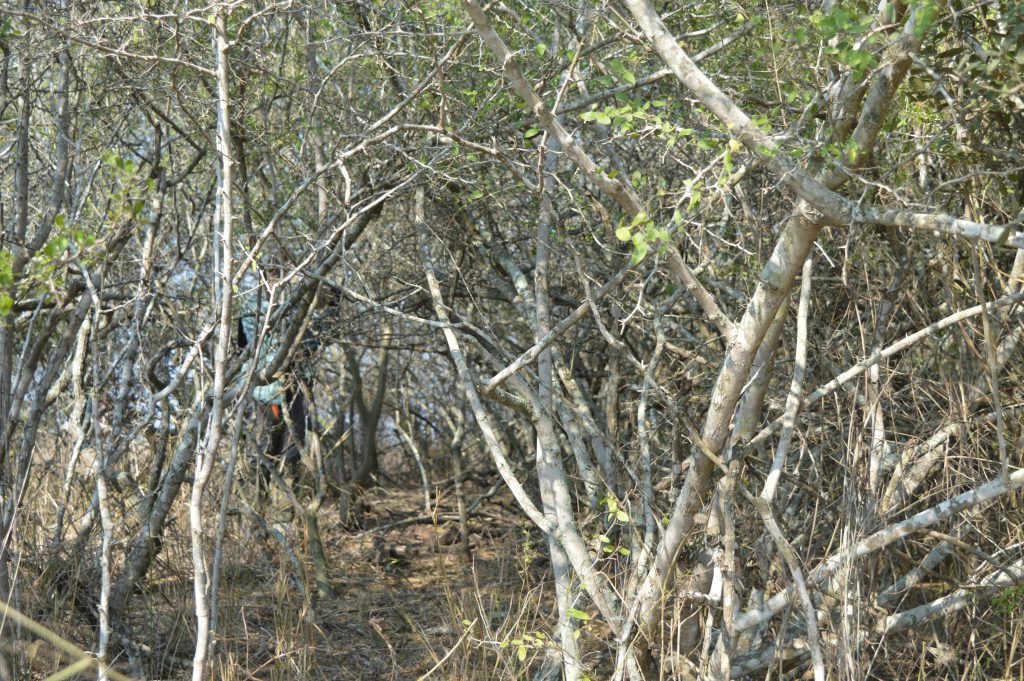
Team member obscured by the dense brush.
Team member obscured by the dense brush

The climate that we had encountered last year was cool during the day, so with our gear we were mostly comfortable to search without fearing for heat exhaustion. A big lesson that I took away last year was that the cool weather was a double edged sword. Yes, the days weren’t hot but the nights were dangerously cold. For migrants traveling on foot for days through the ranch landscapes, layers weren’t practical, making travel exhausting and dangerous. During this year’s trip, it was hot. Every day was above 80 degrees and we were only afforded a breeze for some of them. Back in Indy, this would be considered a nice summer day, but on the ranches, where shade can be sparse and covered in thorns and bugs, it was draining. We were incredibly lucky that if it was too hot we could be done for the day, or if we ran out of water, there was more back at the trucks to fill up. A migrant who has already been traveling for days, or more, by the time they reach Brooks County, is not afforded this. The weather that we were experiencing was not even the hottest that area gets, as summers are mostly over 100 degrees everyday. So whether oppressive heat or debilitating cold, there is no time when the climate makes this journey easier. 
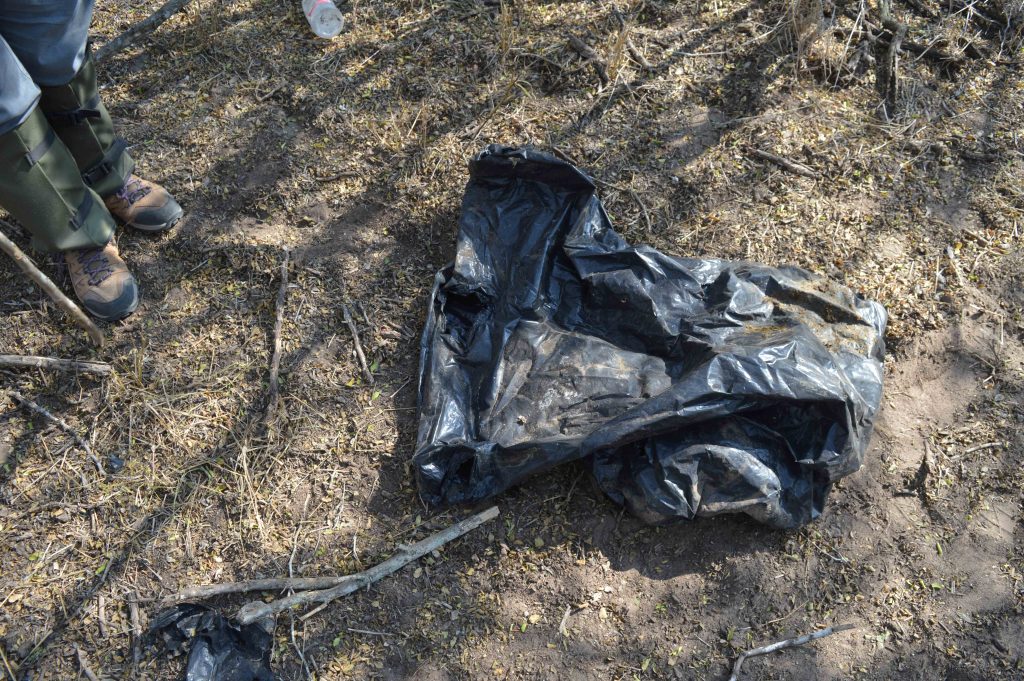
Trash bag that has head and arm holes cut into it so it could be used as covering

Migrants are paying thousands of dollars to cross the border and alongside every weather condition sapping their strength, there is staggering violence that they have to endure. This past year has enhanced a lot of animosity to the migrant community and even just watching the news, you can see incredibly hateful rhetoric being spouted. People believe that a migrant can just cross the border and go back to living their life, but that is not even close to the truth. A migrant’s journey is filled with violence, as well as after they are done. This year, some of the artifacts that we were able to identify showed us how this violence is fostered by the coyotes leading the groups. It was jarring to see the evidence of the treatment that migrants are encountering while already being physically and mentally exhausted. I feel lucky that I can go home, live in comfort, and call my family and friends but I also feel inadequate that there isn’t more that I can do. 

On our last day, our whole team was gathered to share a final meal and we were discussing the things we had learned and why it was important for us to do search and recovery work. Something that particularly stuck with me in our discussion was the belief that migrants that are recovered deserve to be returned to their families because that is what we would want someone to do for us. Many of these individuals are in a forced migration situation and they pay exorbitant amounts of money to go north. But that does not guarantee safety. They endure horrific conditions that will either stick with them forever or kill them.
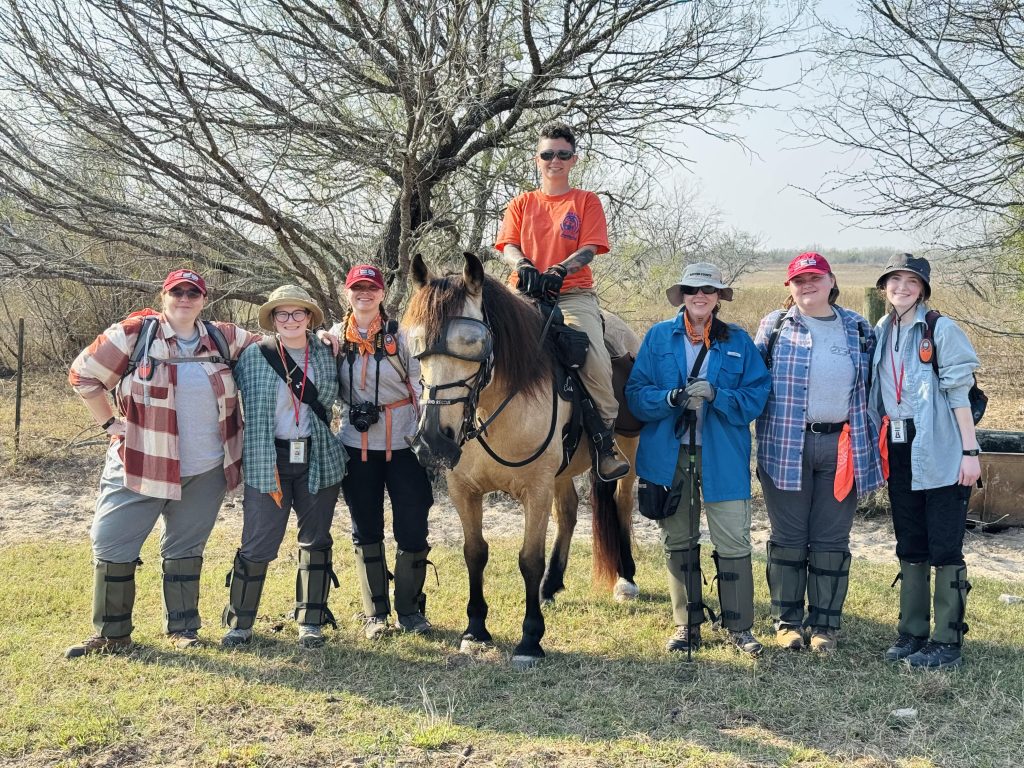
The Beyond Borders team with another team members Melissa and Danny
The Beyond Borders team with other team members Melissa and Danny

So yes, we went to the same county, to do the same work, but the circumstances of this trip gave me a glimpse of how there is more to a migrant’s journey than I could ever truly understand. I feel even more emboldened in my beliefs surrounding the situation and that I should continue to advocate for migrants who are risking everything to return to their families or to have a better life. I am so grateful for this opportunity and to have been able to return to this experience with an incredibly impressive team, and I am thankful that I was able to learn from and be supported by them all. I have learned there is no true way to prepare for this because it is a complex situation and that having people there with you to discuss and reflect is the best way to do so. My reflections do not end with this post, just as my previous reflections did not end after I wrote it. These past two experiences will stick with me forever, and I will use them to continue to learn, educate, and advocate for human rights in every area of my life, now and beyond. 
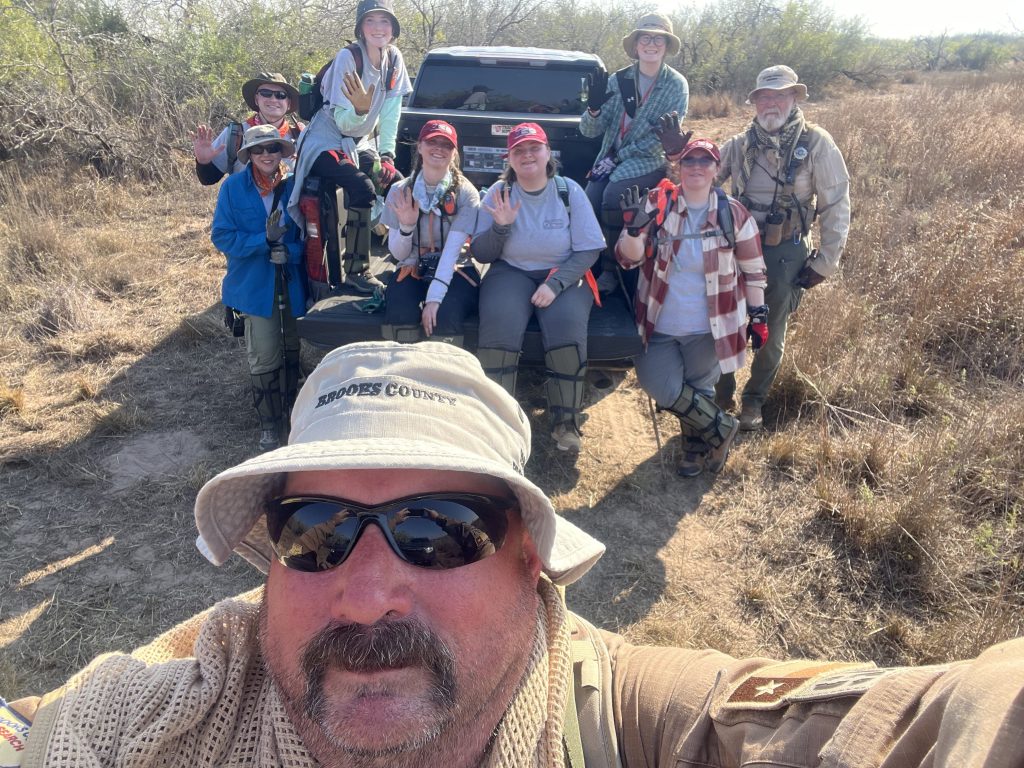
The Beyond Borders team at the end of our final day in the field

Lilly

Day 4: Looking Beyond a Border

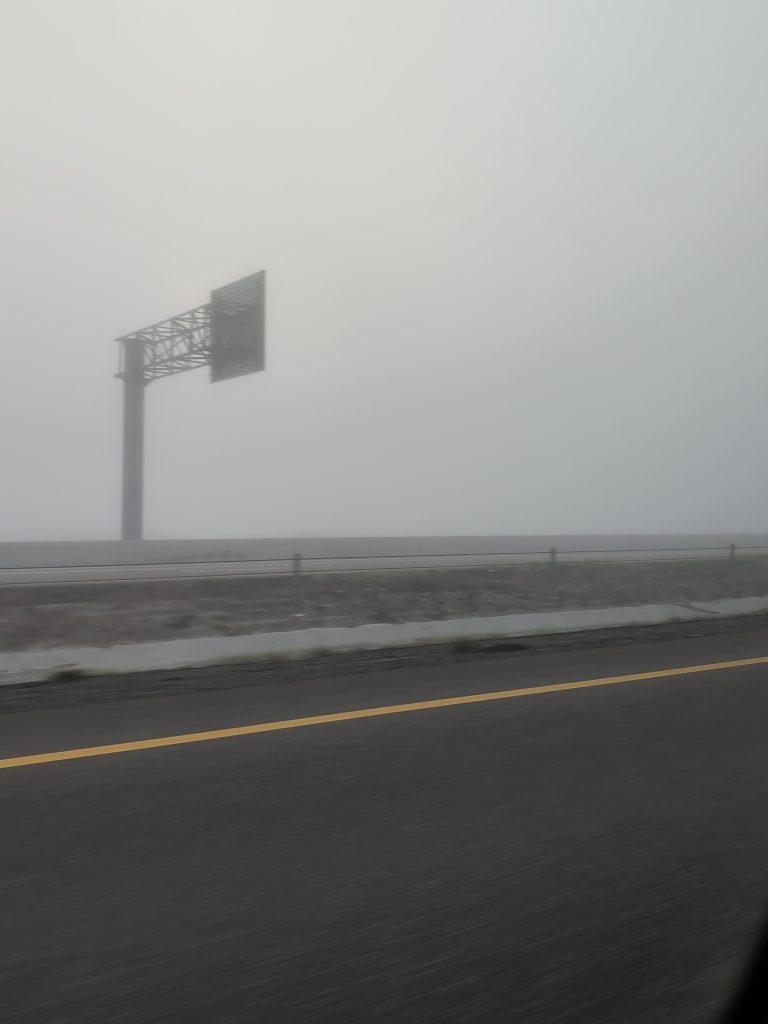
Similarly to yesterday we had a later start than we did the first work day. As soon as we walked out of our hotel room this morning, we were hit with a dense fog so thick we could barely see the adjacent hotel rooms. Even the entrance of the hotel wasn’t visible as we made our way to breakfast. Where we would usually discuss what ranch we were going to go to that day and the circumstances surrounding the search, we were informed of a change in our typical day. Because of the changing ranch availability, there was an opportunity to begin our day by visiting the border and searching in the afternoon. So after breakfast, we went to pick up Reed and then we began the hour and a half drive south. 

Fog obscuring the drive to the border.
Fog obscuring the drive to the border, blocking the view of ranches that are next to the highway.

As we drove, I examined the ranches we had passed on the highway for the past three days and thought about the constant barriers that exist to individuals who are trying to traverse these massive expanses of land. Because the land is mostly flat, coyotes will lead migrant groups through easily identifiable structures such as power lines, gas lines, and wind mills. On a perfectly clear day (as our trip has been thus far) being able to locate these identifiers was still extremely difficult unless you were very close and not under the brush cover. Looking out onto the highway and the ranches, where we could only see about 50 feet in front of us because of the fog, I couldn’t help but reflect on the shifting circumstances migrants face while walking. We are lucky that we have Don and Ray who know the terrain and can guide us when we feel lost (which I do most of the time) but migrants who are left behind by their group don’t have anyone to tell them what to look for. And if they cannot return to the path their group was taking, they may wonder indefinitely. 

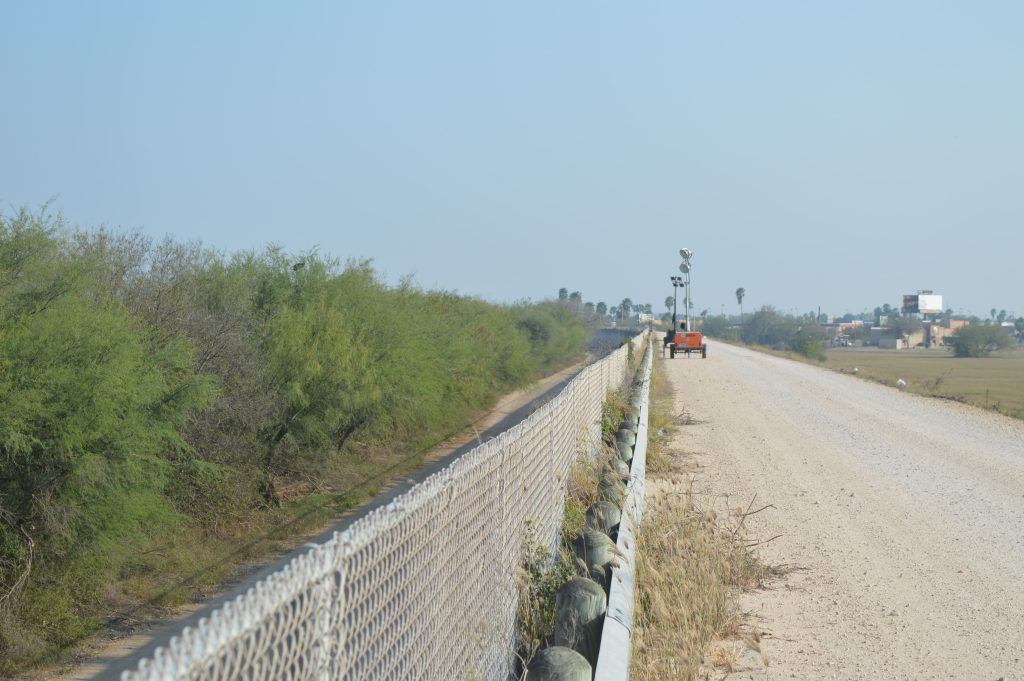
The fence located at the southern US-Mexico border.

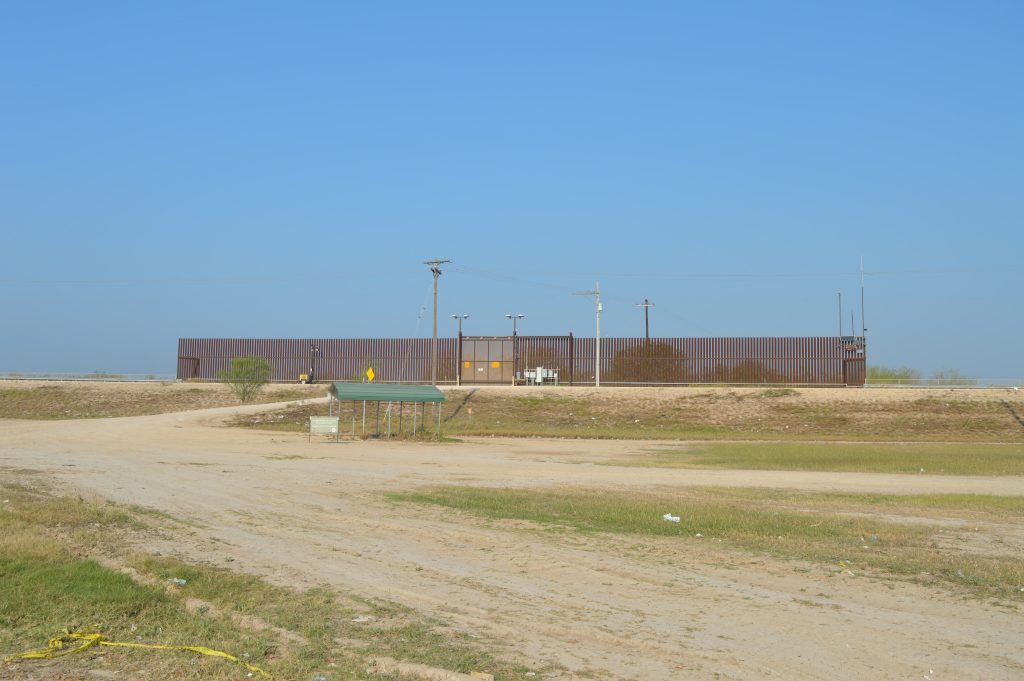
Having this on my mind when we arrived at the border provided a more introspective experience than I was expecting. Unlike last year, when we arrived there was no one at the gate. We parked and were able to walk all the way up the hill that the gate and fence sits on to look through. While we were able to see Mexico, the other side of the fence we were looking to was still US territory, with the actual border being about a mile away. As we looked, a border patrol agent started to drive towards us. We worried that we would be told to leave or questioned about why we were there, but he told us that since traffic over that area of the border had been very slow, we could walk to another gate in the distance for a chance to see the Rio Grande river. We headed to the other gate on the dirt road that runs along the fence, but we couldn’t see the river. However, we could see the incredibly tall and dense vegetation that lay on the other side of the fence.

A checkpoint at the US-Mexico border.

This was the beginning of a migrants journey in the US, and seeing how hostile it is from the get go was hard to imagine. In our searches, where we are equipped for dealing with the vegetation, the heat, the vastness of the land, and the chance of changing weather conditions, migrants are not. We see the proof of their adaptability in the artifacts we find on the ranches and at the wall itself. This is another moment in our trip that I found myself affected by the evidence of trauma and resilience migrants face in their journey.

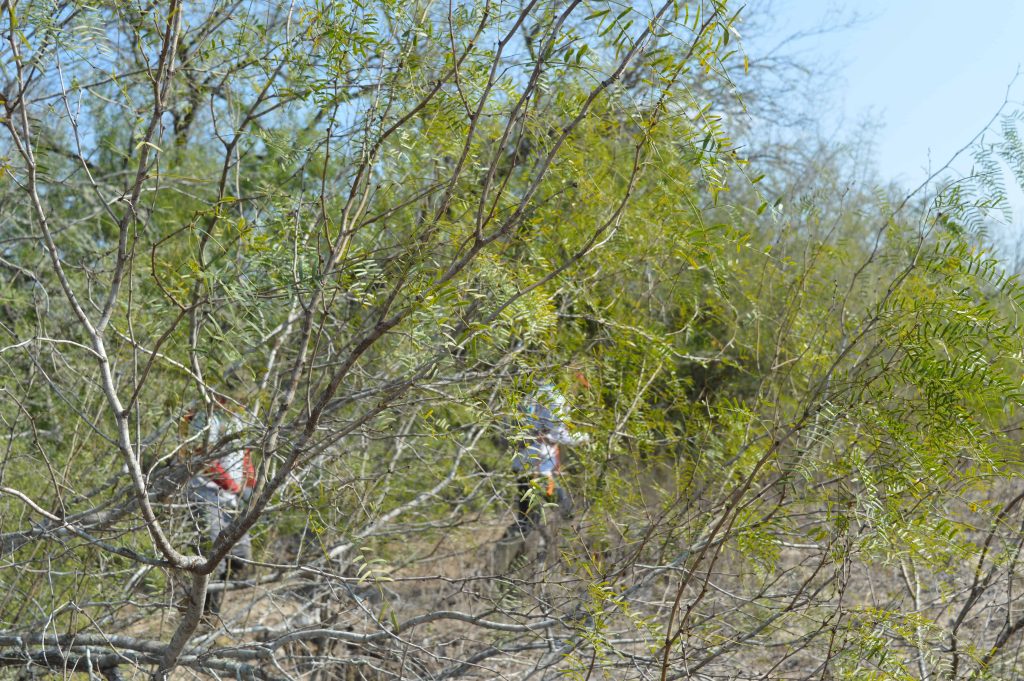
Thorny trees in the field.
Thorny trees in the field, almost obscuring team members from view.

While we were at the border, we had to continue the tradition of stopping at Delia’s for fresh tamales. We needed to be back at the ranch to meet the rest of the team at noon, so with our tamales, we headed back to Falfurrias. The ranch we were going to search had hunters coming in at 3:30 pm, so as soon as we got back to Don, Ray, and Melissa, we headed out. Don brought us to an area where he had searched the base of a hill, but had not been able to check the hill itself. There had been previous recoveries to the south and to the east, so it was important to clear this middle section of land.

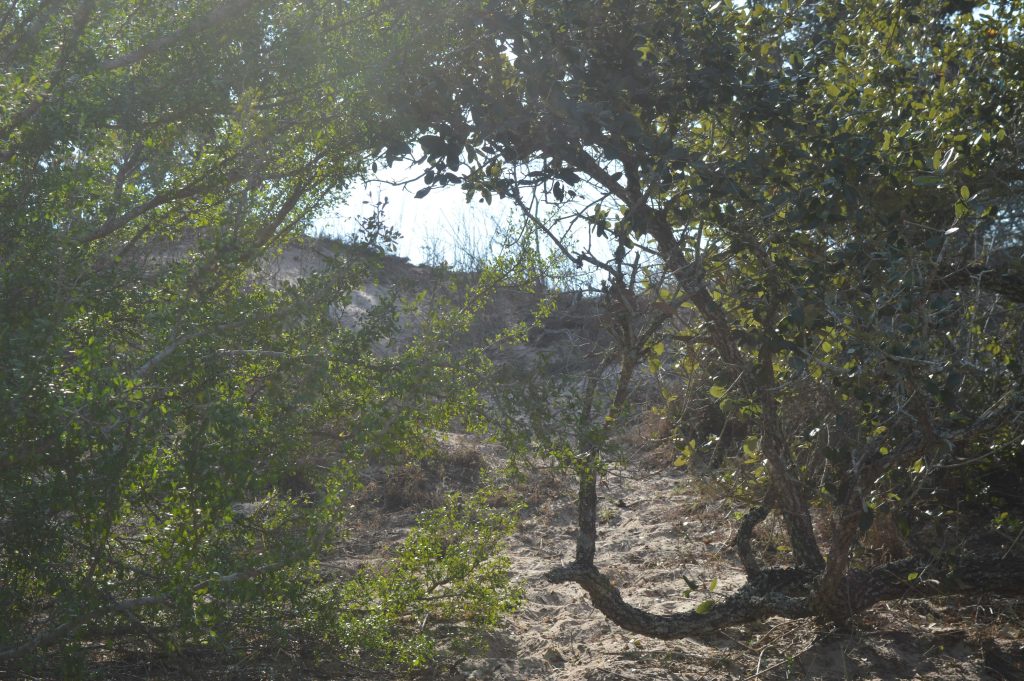
A thicket leading to a sandy hill.

The terrain was immensely different from what we have covered thus far, with the landscape being hilly while still being covered in sand. The brush was dense and thorny and any flat land that we encountered was covered in dense high grass. We conducted an unsystematic search of the hill, as the vegetation was too thick to effectively get through in a line search. So today it was crucial to keep an eye on at least one member of the team while thoroughly searching. We were able to systemically line search the open areas to assess the presence of artifacts. There were a few items found along our search, proving that this had been an active pathway. We reached the time we were allotted to search this ranch, and returned to the ranch Don, Ray, Reed, and Melissa were staying on to divvy out our tamale haul and replenish our energy.

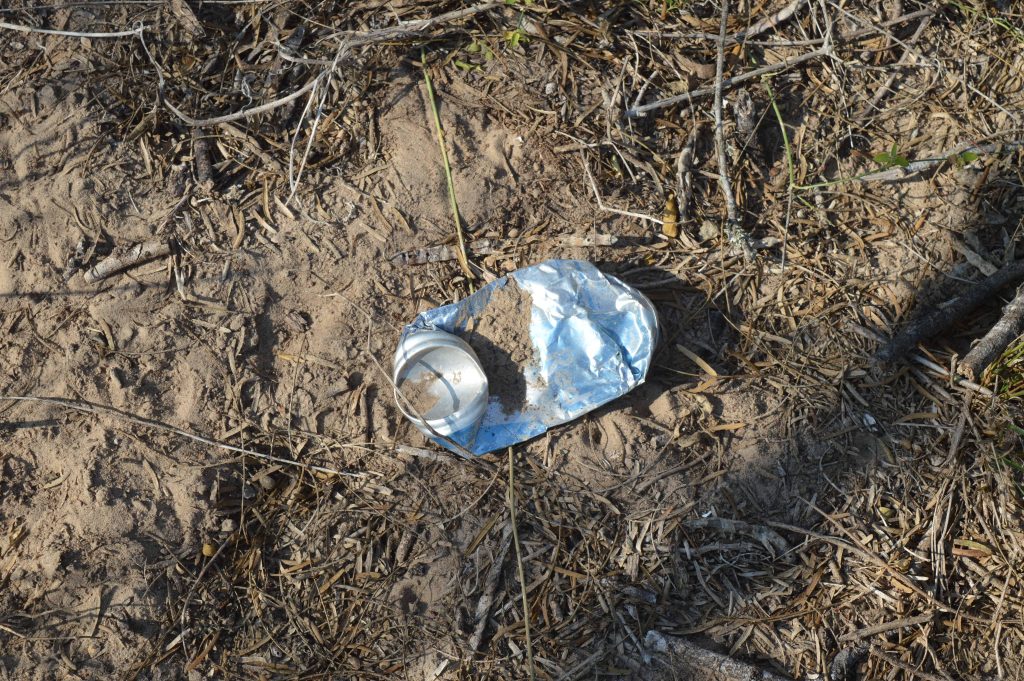
An older can found in the field.
An older aluminum can found in the field.

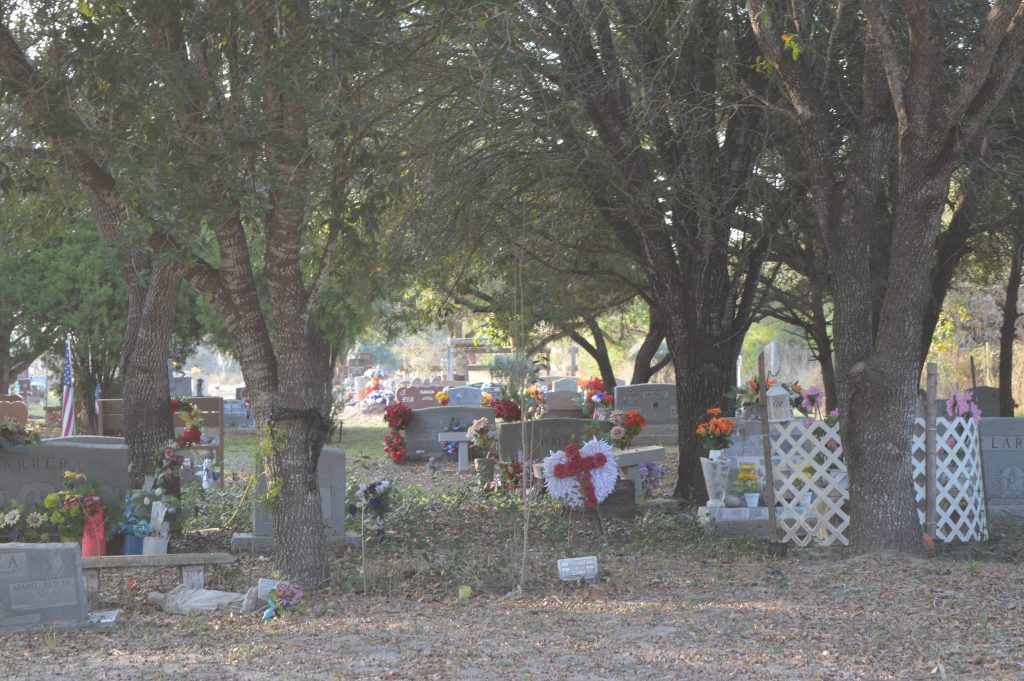
We finished searching earlier in the day, which gave us time to visit the cemetery that started it all. Sacred Heart Burial Park was the very first place UIndy was able to work at in Falfurrias. Dr. Latham showed us each place where UIndy had excavated and took the time to explain the circumstances surrounding each excavation. We started by visiting the grave of Wilmer, a migrant who was potentially identified. We put flowers on his grave and gave a moment of silence and remembrance to the individuals found in the earlier excavations. Each grave is decorated with things that that person enjoyed in life, bright and beautiful flowers, and a multitude of arches and decorations to show how loved each individual is. Even though I had visited the cemetery before, it was still an experience that elicited strong emotions in me. Knowing that UIndy was brought here because people cared so much about the migrants who died here and seeing this community that cares so much for their loved ones is beautiful and puts our shared and differing experiences into perspective. 

Sacred Heart Burial Park

After the visit to the cemetery, we returned to the hotel to clean up from the hot day and get ready for our evening plans. Tonight, we were able to take out Don’s drone. He taught us how to fly it and how to spot different animals in the brush using infrared vision. Bonding with the whole team, where we could share stories and discuss our lives in an informal setting was memorable and was a great bonding experience. 

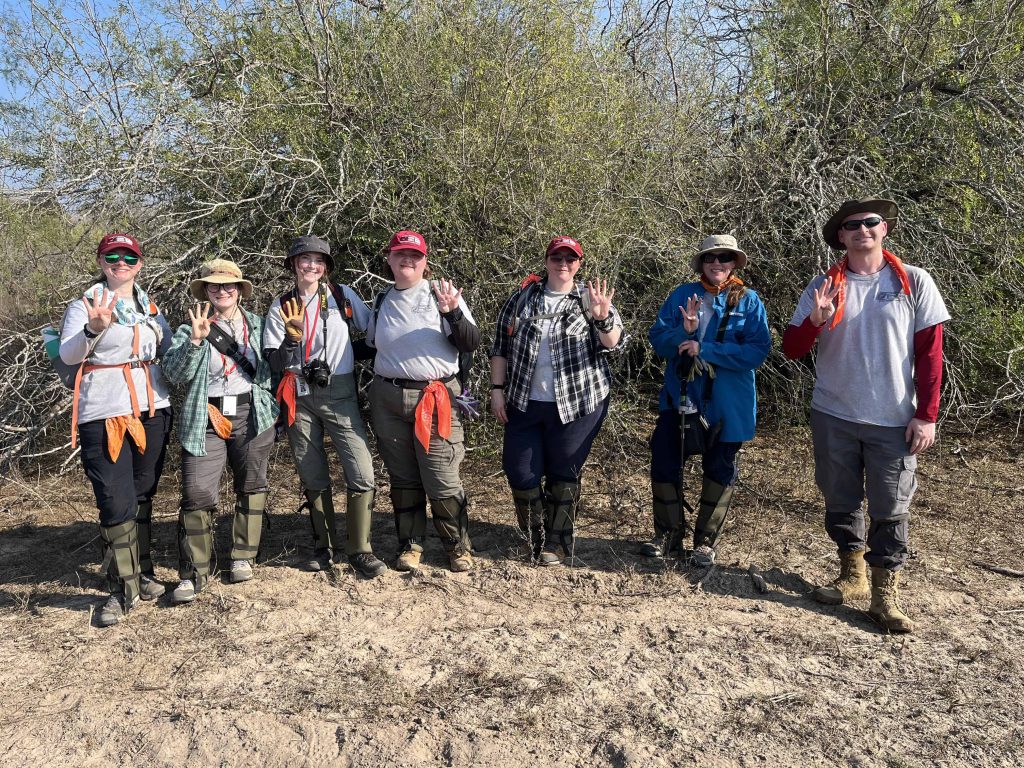
Beyond Borders 2026 team at the end of day 4.
Beyond Borders 2026 team at the end of day 4. From left to right, Amanda, Peytin, Makenna, Lilly, Amandine, Krista, and Reed.

Today was an unexpectedly busy day. Not only were we able to search, we also went to places where we were able to reflect more on the work that we traveled here to assist with and the individuals that we are doing it for. All of our experiences from this trip and the people I have met have made this field season incredibly unique and this has been a great group of people to work with. Our experiences have been incredibly memorable so far, and I have learned a lot from them. I will carry these reflections with me as we continue into our last day and beyond as we return to Indy.

Lilly

Travel Day: To Texas We Go

Today officially begins the 2026 Beyond Borders Humanitarian Forensic Science Team trip! We started bright and early, meeting at the airport at 5:30 am to check our multitude of luggage. Getting through TSA was mostly a breeze (with the exception of the 20 minute delay where they thought I was smuggling something in my shoes) and we got to the gate with just enough time to get a quick breakfast. We snapped a picture to kick off our day, and then boarding began.

Beyond Borders 2026 team at the Indianapolis Airport
Beyond Borders 2026 team at the Indianapolis Airport.

All morning it felt like I was forgetting something, but I had checked and double checked, so I thought I was in the clear. Lo and behold, while in the line to board our first flight I was rooting through my purse and my earbuds were nowhere to be found. In my head, I can see exactly where I left them on the couch. But if that is the only thing that I forgot on this trip, then I count it as a win. 

Our first flight was scheduled to depart at 7:25 am, but we did not end up taking off for Dallas for another hour due to deicing. Despite landing later than expected, we were right on time for our second flight to San Antonio. After being in a plane/at an airport for about eight hours, the hunger was catching up to us. So after securing the rental van, we continued the tradition of going to Torchy’s Tacos for lunch. 

The drive to Falfurrias from San Antonio is about three hours, so we booted up our new and improved Beyond Borders 2026 Spotify playlist and started our drive. The excitement of beginning the last leg of our travel day was definitely present as we made our way out of the city. The Spotify was shuffling upbeat tunes and chatter was flowing as we appreciated the warm and sunny weather. As our views switched from apartments, suburbs, and restaurants to cactuses, motts, and dense brush, the fatigue of traveling all day began to weigh on the group. A couple of small naps later and we had made it to Falfurrias. 

A shot of Falfurrias
A building in Falfurrias on the drive to HEB.

Once settling into our rooms, the next step was to prepare for the first day of field work. Before heading to HEB to get supplies, we were able to meet Dr. Reed McKinney, a University of Indianapolis alum who will be joining us this trip. We are excited to learn about his expertise and learn more in the field alongside him. After our HEB run, we met up with Deputy Don White and Socks of Remote Wildlands Search and Recovery at Whataburger for dinner.  

HEB supply run
From left to right, Peytin, Amanda, Makenna, and Lilly at the HEB getting supplies for the first day in the field.

We ended our travel day with a group meeting where we discussed and assigned our roles for the field tomorrow. The camera and walkie talkies were dispersed and we took stock of our compasses, bandanas, snake gators and whistles . While we are not sure of exactly what our schedule holds, we will go into our first field day prepared and ready to provide our forensic expertise.

Lilly