Latest Posts

Photo of sunlight through trees

Day 1: Back to the Brush

I woke up this morning with a lot of anticipation for the day, so much so that I kept waking up before my alarm had gone off, hours before even. Every time I checked my phone, and it wasn’t 6 am, I felt an odd sense of disappointment. I think there was a level of anticipation there, but also a level of needing to get out there. To just rip the bandage off and start the day so that I could feel a little less anxious. Even though we woke up early, we were running behind as we grabbed all of our things to head out for breakfast and into the brush. For some of us, this wasn’t the first time, but for others it was, and yet I think we all shared a similar sense of anxiety and anticipation for the day.

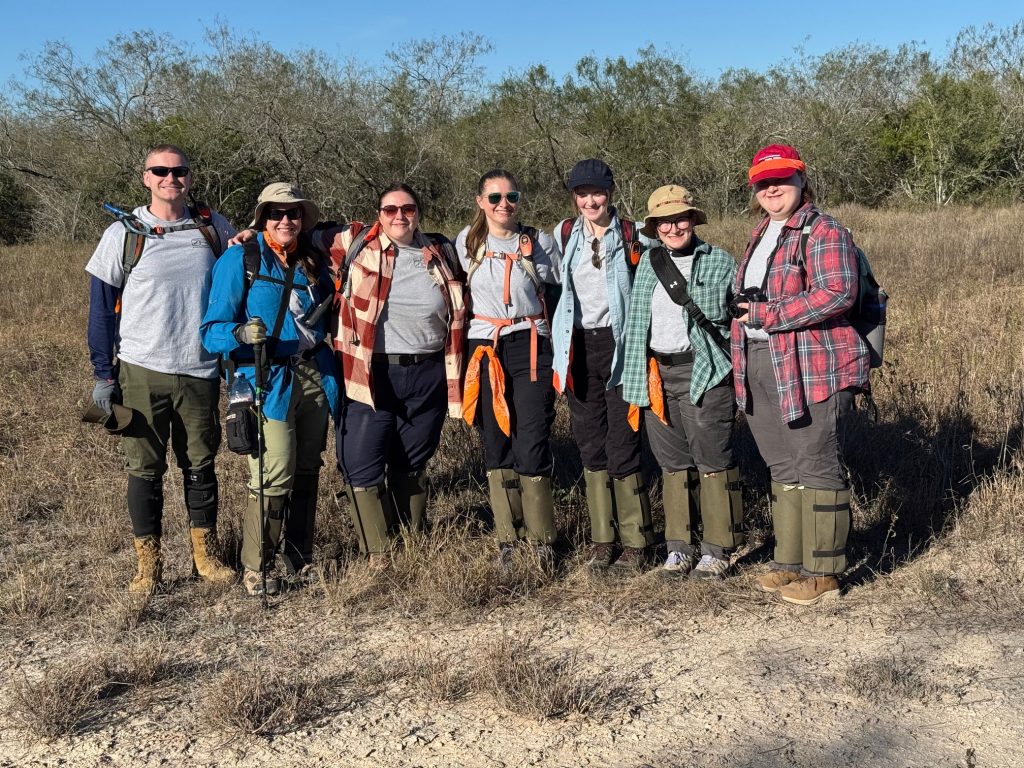
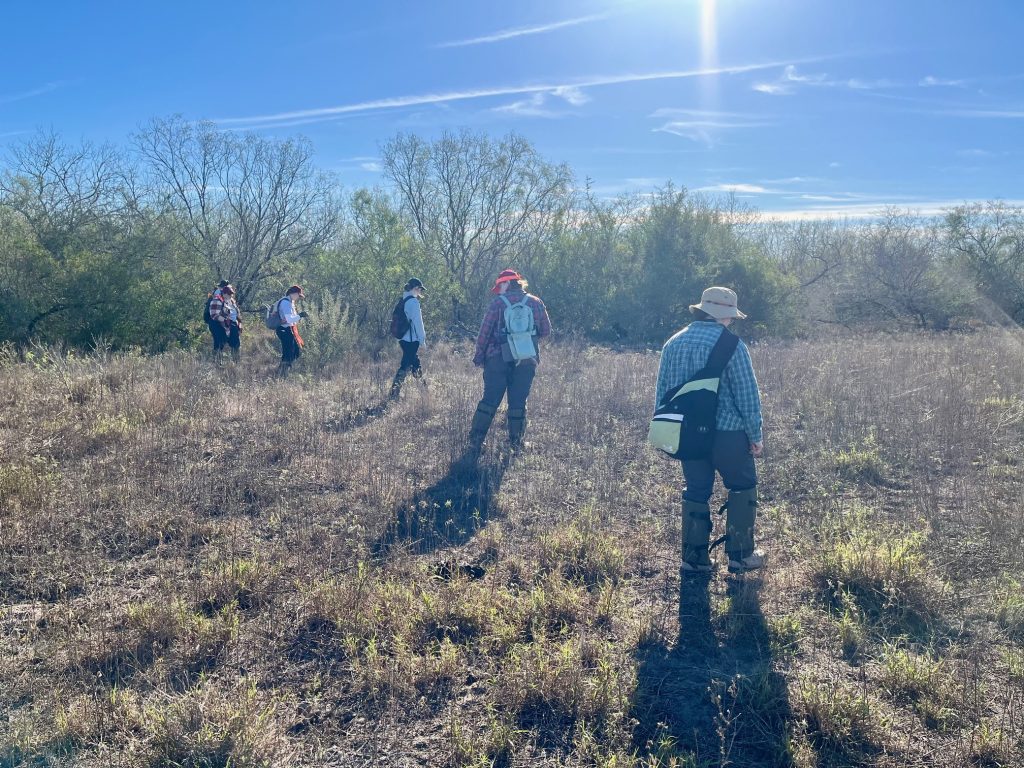
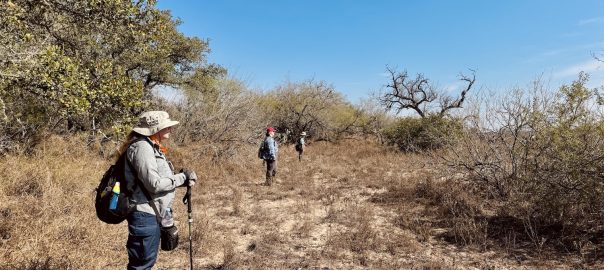
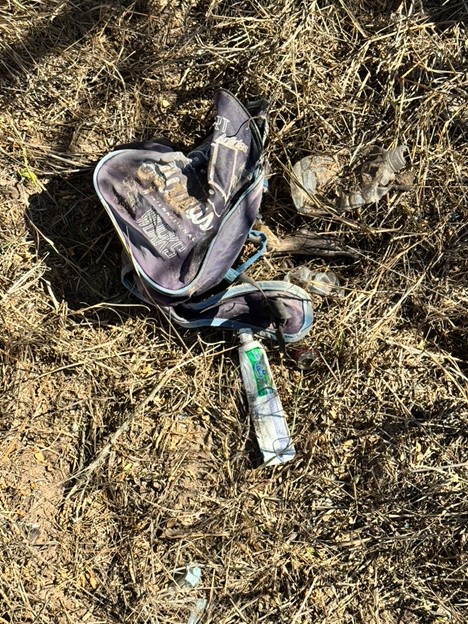
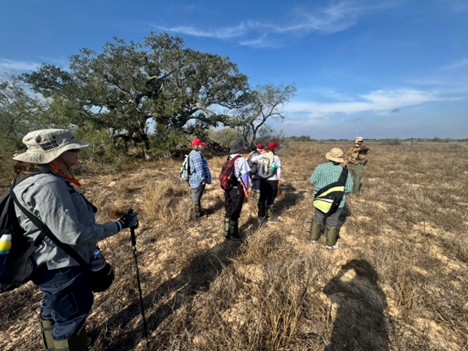
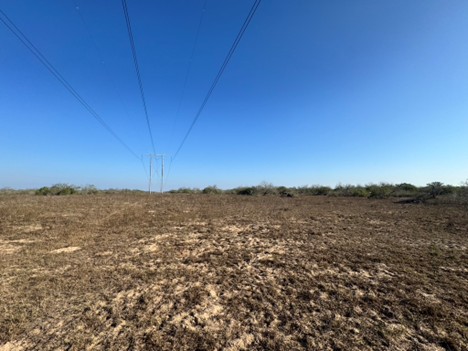
We headed out to meet up with Don and Ray at the ranch they were staying at. We loaded into their four wheel trucks and headed south to the ranch where we would be searching for active migrant pathways. In one section, there is a large power line that runs north-south along the property, and we stopped there to begin setting up to conduct our line searches along the power line. We worked in half a mile segments in each direction, walking along the clearing as well as looking into the brush for areas where migrants may have stopped to eat, rest, or drop off items they were no longer able to carry.

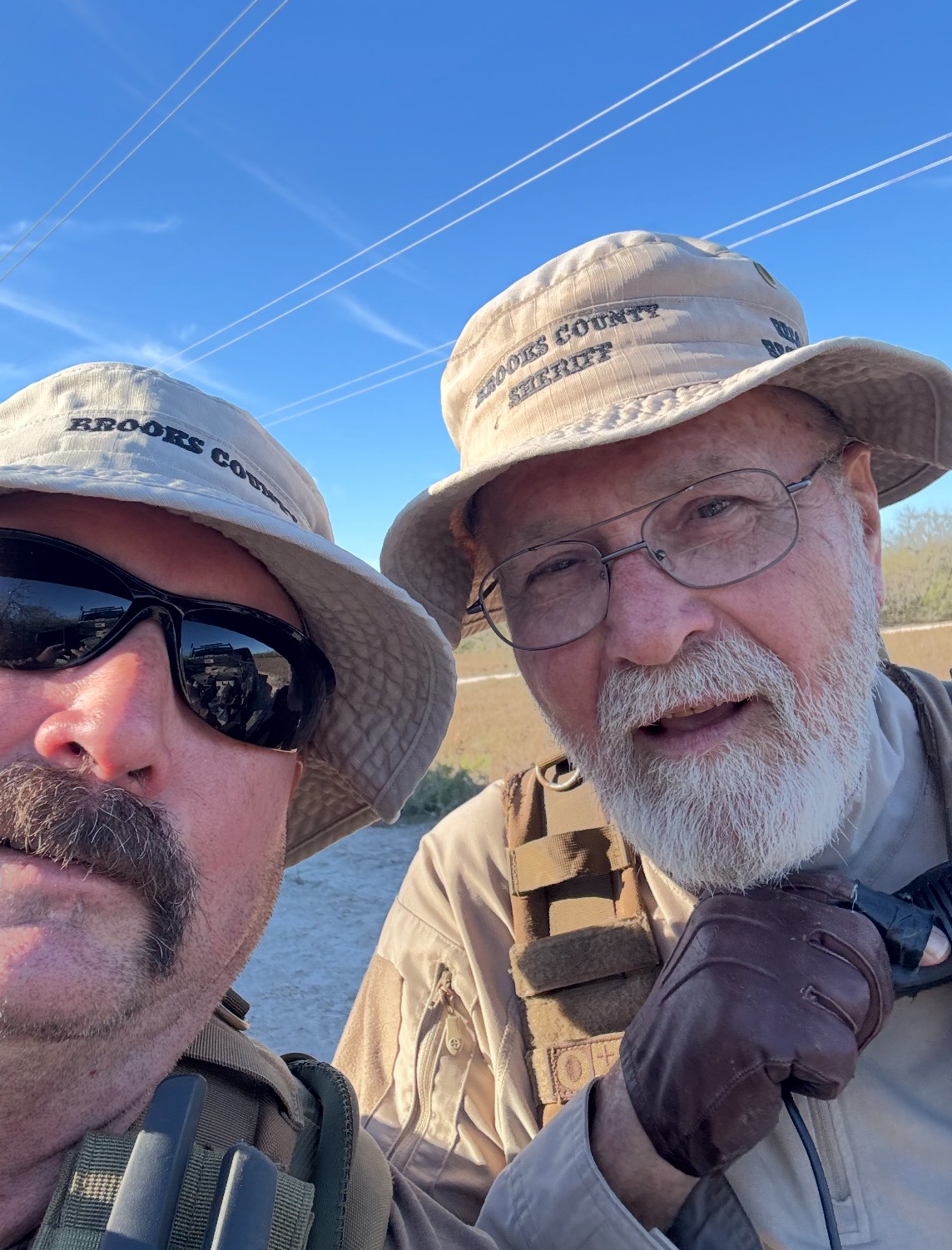
Amanda and Peytin work with Don.
Amanda and Peytin chat with Don.

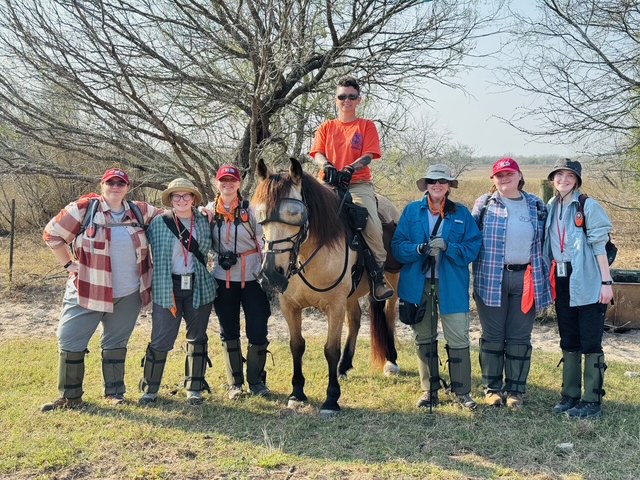
Besides Amanda and Peyton being new for the year, we were also joined by Reed and Melissa (and Melissa’s horse, Danny) to help in the search. I think the added people really made this feel a bit more manageable, as Melissa went ahead on her horse to search the area while Reed assisted in our line searches and delved into the brush whenever we spotted something that may be an artifact or skeletal in nature.

Melissa and Danny
Melissa and Danny
Reed holds up a nonhuman bone he found.

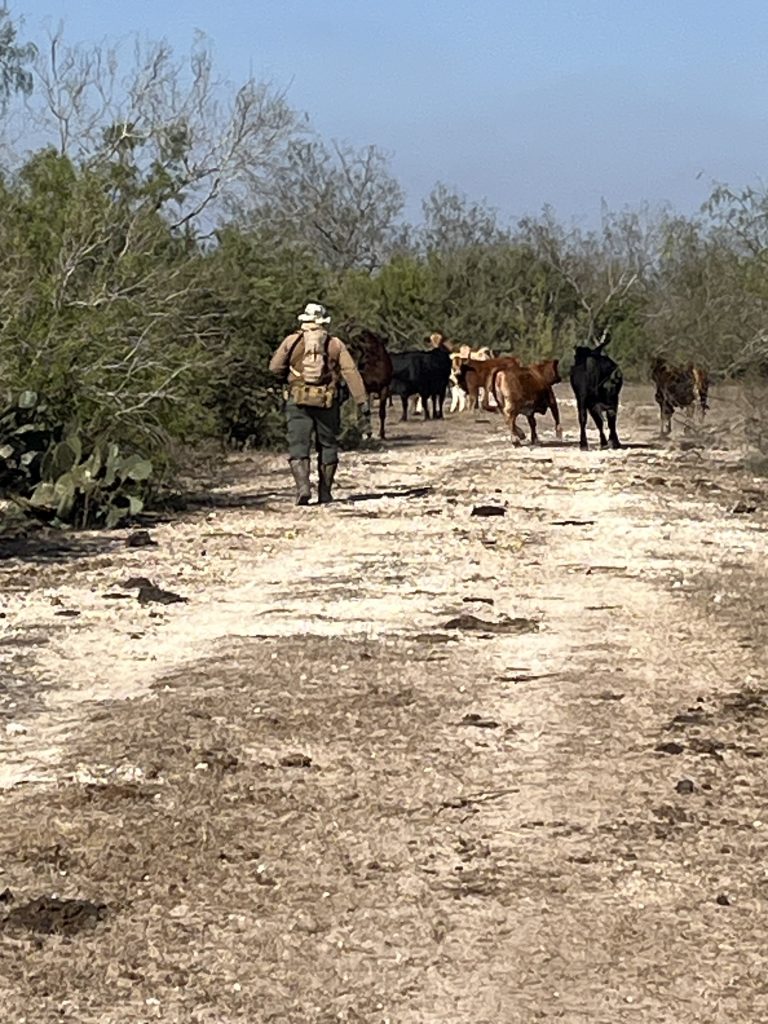
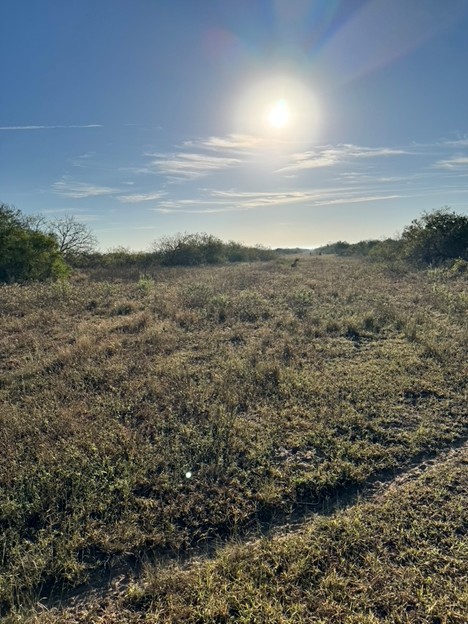
Every time I am out in the brush, I am reminded of just how vast the ranches are. I grew up thinking that owning 14 acres was a lot of land, but in Brooks County, ranches can span thousands, or even hundreds of thousands of acres. The ranch we were on today was huge, and standing in the middle of it made the scale feel almost unreal, with the brush and horizon seeming to extend endlessly in every direction. Even within the small area we covered, it was easy to get turned around when the power line wasn’t visible. When you couple that with the fact that many of the migrants are traveling in the dark, already exhausted, and moving quickly, it becomes easy to understand how someone could lose their sense of direction.

The temperature was another factor to contend with, with highs in the upper 80s to low 90s and feeling even warmer under clear skies and direct sun. We downed our water quickly, especially compared to last year. As we headed back to the truck, drenched in sweat, Don talked about how high temperatures in Texas often influence when migrants travel through the area. He explained that they typically avoid traveling during the day due to the heat and the open visibility, though he noted that he had once encountered a group that had been traveling during the day.

He explained that the group was exhausted and that their water had become warm and contaminated, rendering it essentially undrinkable. I thought about my own water, how I had chosen not to take a sip during one of our recent water breaks because it was too warm, opting instead to wait for the cooler water I had left in Ray’s truck. In that moment, I think I fully recognized that migrants often do not have access to a steady supply of clean water during their journey, relying only on what they can carry with them or what they happen to find along the way… typically small ponds or watering holes intended for livestock or wildlife, not for human use.

Amanda looks at some nonhuman bones.

After we left, dirty and exhausted, we took a small tour of the ranch that Don, Ray, Reed, and Melissa are staying at, which provided a welcome opportunity to slow down and relax after the day’s work. We then went to Strickland’s, a local restaurant in the area with some of the best food I have ever had, to unwind and catch up after the long day. Being able to talk with everyone in such a casual setting felt like a moment of calm amidst the chaos of it all.

I was especially struck by how grateful I felt to be there, to be a part of this team and to contribute, in whatever small way I can, to the work that Don, Ray, and Dr. Latham have devoted so much time and effort to over the years.

As I write this, I’m tired, dirty, and yet reflective and grateful for the people, the purpose, and the opportunity to be here, with that same sense of anticipation from this morning returning as we prepare for tomorrow.

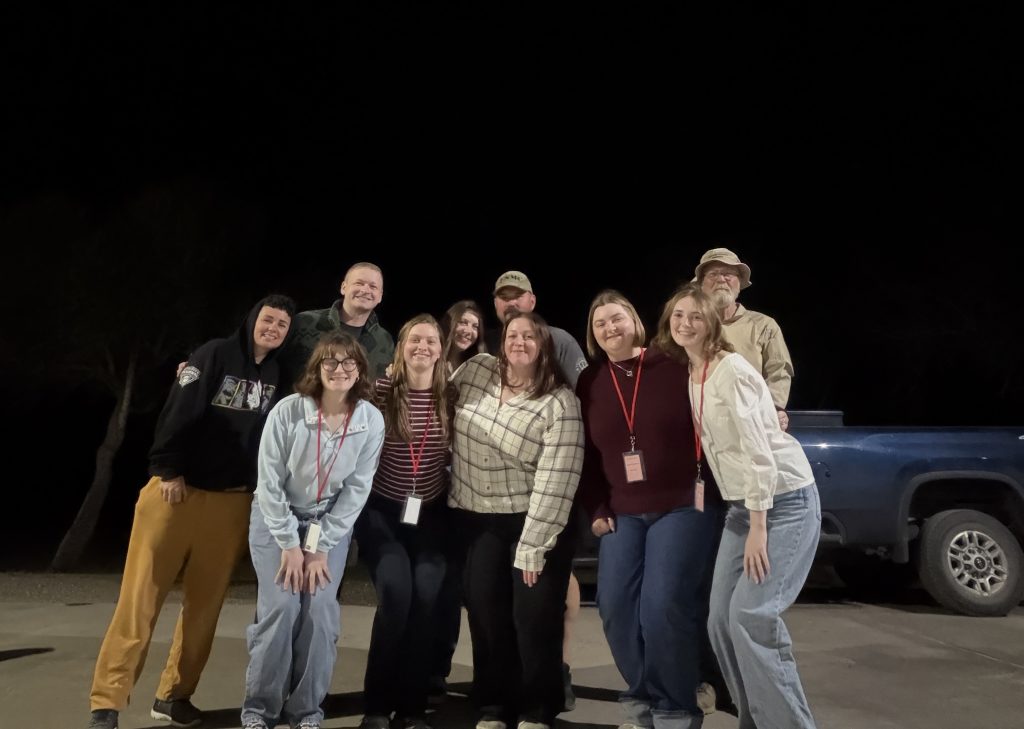
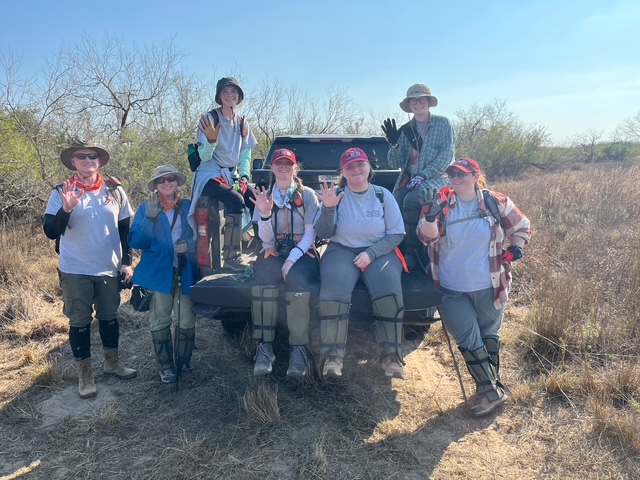
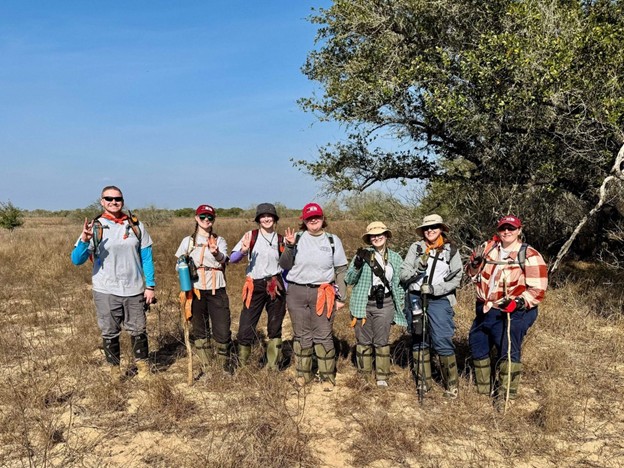
The 2026 Beyond Borders team after day 1.

Makenna

Travel Day: To Texas We Go

Today officially begins the 2026 Beyond Borders Humanitarian Forensic Science Team trip! We started bright and early, meeting at the airport at 5:30 am to check our multitude of luggage. Getting through TSA was mostly a breeze (with the exception of the 20 minute delay where they thought I was smuggling something in my shoes) and we got to the gate with just enough time to get a quick breakfast. We snapped a picture to kick off our day, and then boarding began.

Beyond Borders 2026 team at the Indianapolis Airport
Beyond Borders 2026 team at the Indianapolis Airport.

All morning it felt like I was forgetting something, but I had checked and double checked, so I thought I was in the clear. Lo and behold, while in the line to board our first flight I was rooting through my purse and my earbuds were nowhere to be found. In my head, I can see exactly where I left them on the couch. But if that is the only thing that I forgot on this trip, then I count it as a win. 

Our first flight was scheduled to depart at 7:25 am, but we did not end up taking off for Dallas for another hour due to deicing. Despite landing later than expected, we were right on time for our second flight to San Antonio. After being in a plane/at an airport for about eight hours, the hunger was catching up to us. So after securing the rental van, we continued the tradition of going to Torchy’s Tacos for lunch. 

The drive to Falfurrias from San Antonio is about three hours, so we booted up our new and improved Beyond Borders 2026 Spotify playlist and started our drive. The excitement of beginning the last leg of our travel day was definitely present as we made our way out of the city. The Spotify was shuffling upbeat tunes and chatter was flowing as we appreciated the warm and sunny weather. As our views switched from apartments, suburbs, and restaurants to cactuses, motts, and dense brush, the fatigue of traveling all day began to weigh on the group. A couple of small naps later and we had made it to Falfurrias. 

A shot of Falfurrias
A building in Falfurrias on the drive to HEB.

Once settling into our rooms, the next step was to prepare for the first day of field work. Before heading to HEB to get supplies, we were able to meet Dr. Reed McKinney, a University of Indianapolis alum who will be joining us this trip. We are excited to learn about his expertise and learn more in the field alongside him. After our HEB run, we met up with Deputy Don White and Socks of Remote Wildlands Search and Recovery at Whataburger for dinner.  

HEB supply run
From left to right, Peytin, Amanda, Makenna, and Lilly at the HEB getting supplies for the first day in the field.

We ended our travel day with a group meeting where we discussed and assigned our roles for the field tomorrow. The camera and walkie talkies were dispersed and we took stock of our compasses, bandanas, snake gators and whistles . While we are not sure of exactly what our schedule holds, we will go into our first field day prepared and ready to provide our forensic expertise.

Lilly

Pay no attention to that man behind the curtain

As I prepare to return to Brooks County for a 14th year of volunteer humanitarian forensic science in the Texas borderlands I find myself pausing as I write. I’ve never been short on words as this work is deeply meaningful to me both in the practical purpose we serve and in the educational opportunities it provides to students. Our main goal is to assist in identification efforts for individuals who have perished while crossing our southern border. I believe strongly that everyone deserves the dignity in death of a name.  What started as a one year trip has now lasted 14 years demonstrating the extent of the need for forensic specialists at our southern border. In regards to educational experiences, my goal is to provide students with an experience that elicits empathy and understanding in a way that no book could ever do.  I began this work thinking we would quickly be irrelevant in this context because I was hopeful things would change. Whether that be a change in policy, a change in funding or a change in perspective. I fear my loss of words is because I’ve said much of this before and nothing has changed.

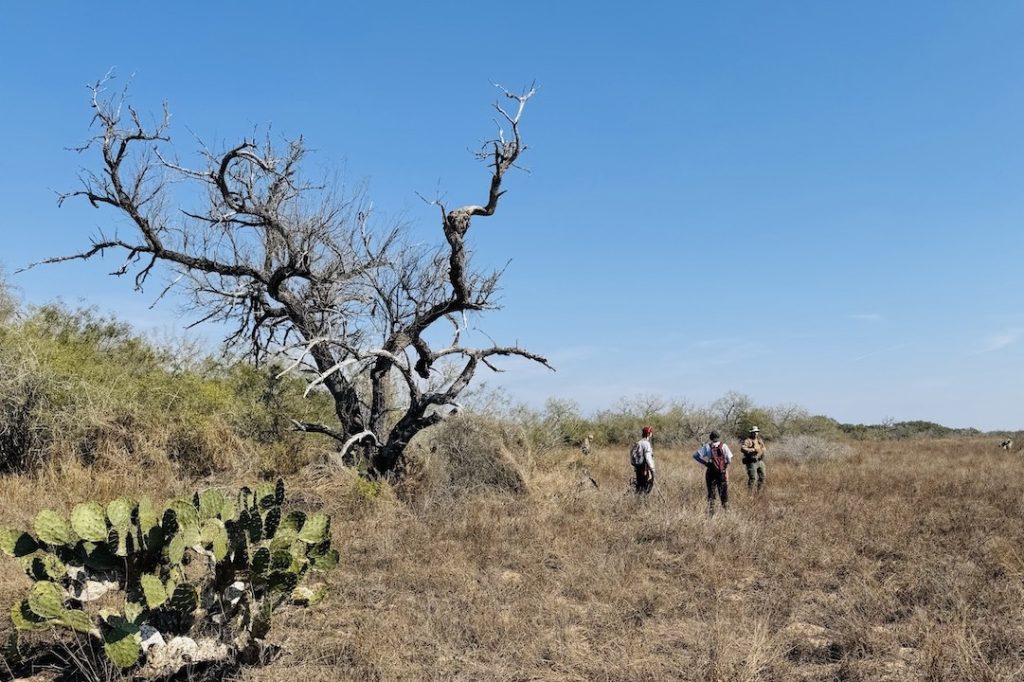
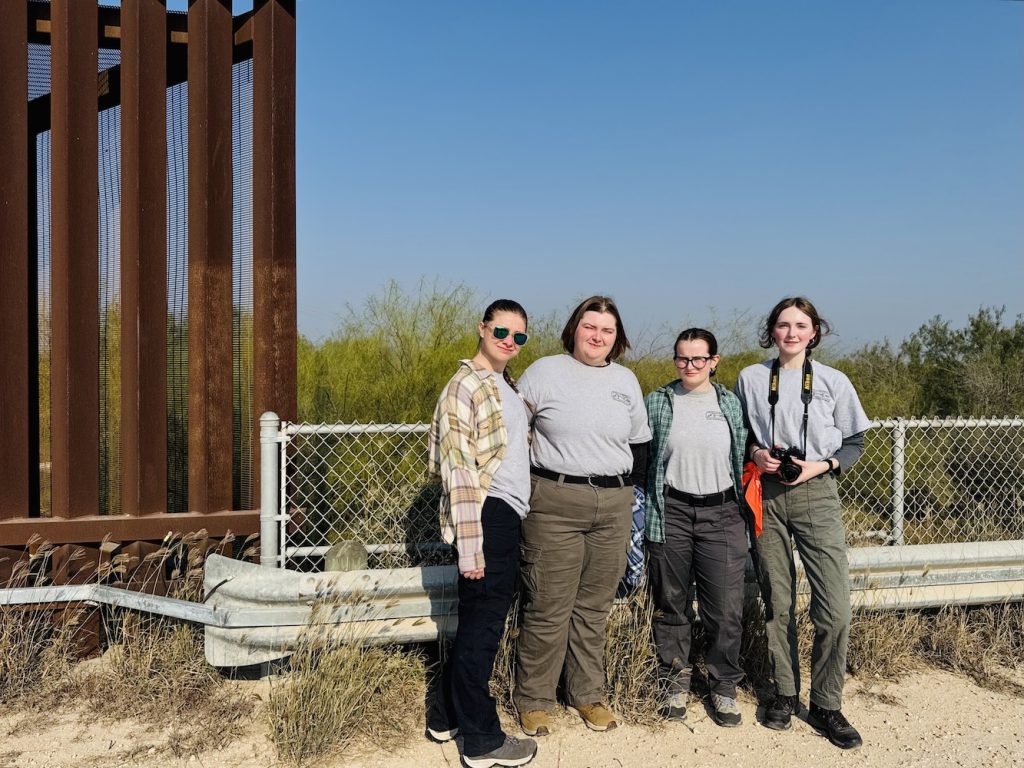
Team members search in the brush

My daughter is obsessed with the Wicked movies. My first introduction to them is recent, even though I know the story has been around for a awhile. I grew up with the Wizard of Oz. We would look forward to the time it was played once a year on tv, and it would be an event in our household. We would cheer for Glenda the good witch and for all the bad things that happened to the wicked witches of the east and west. We knew the wizard would end up being a fraud, but Glinda was good and the other witches were not. Wicked really challenged my childhood beliefs and showed me that the popular narrative is not always the truth. The man behind the curtain has more power in controlling the story than I originally thought. The truth is often a much more complicated web of rights, wrongs, goods and evils all woven together to form the fabric of the person or issue at hand. The fibers glisten with meaning based on motivation and perspective. To further complicate things, what is considered right and good by one is considered wrong and evil by another. This is the story of the border. Everyone in the US has thoughts and opinions about the border, but the more time you spend there the more you realize it is not that simple. That is why the issues remain.

Team members searching in the brush

This year the Beyond Borders Team will work with our colleagues from Remote Wildlands Search and Recovery. We will also be joined by South Texas Mounted Search and Rescue and UIndy alum Dr. Reed McKinney, DDS (a dentistry practitioner in Fort Sam Houston, TX). We will be revisiting areas where partial human skeletal remains were recovered with the hopes of locating more of the individuals that can be returned to their families. We will also be searching new areas that have GPS coordinates of missing persons in the hope of locating them. It’s physically demanding and emotionally heavy work. We have a wonderful group of people coming together for the same goal: to find those that have gone missing, provide them with a name and return them to their families.

We invite you to check in each day to follow our work. Thank you for your support!
~KEL