Category Archives: Human Rights, Migrant Death

Talking about the project itself

Sunlight through the trees as Sacred Heart Burial Park

Bearing Witness: Reflections on Compassion and Responsibility

I was unsure how I felt about the trip after last year. I remember sitting and trying to think of something meaningful to say, something that would help me seem intelligent, introspective, and as though I fully understood the experience. This year has shown me just how much I still do not know.

Very little was the same this year, aside from the knowledge that we would again be heading out onto ranches to assist in the search and recovery of migrants who had become lost or injured along their journey through Falfurrias and Brooks County. The heat was a real factor, hot and at times relentless, different from the cooler and often breezy days of last year. The heat made everything more difficult, not only the physical work, but the mental and emotional toll as well.

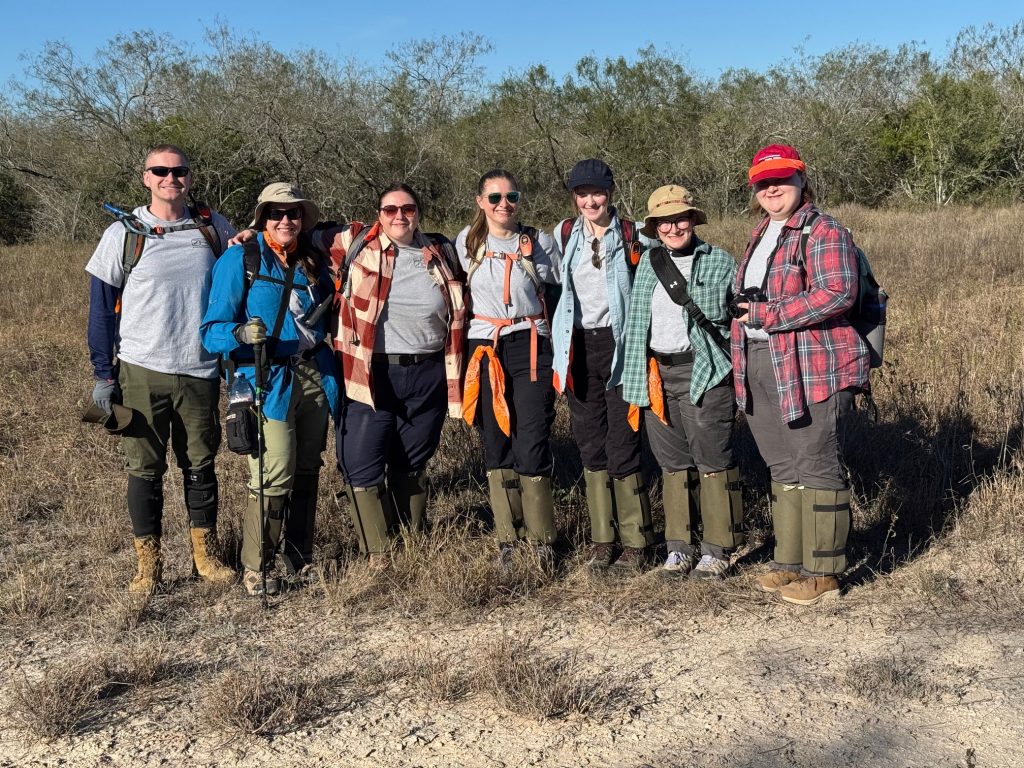
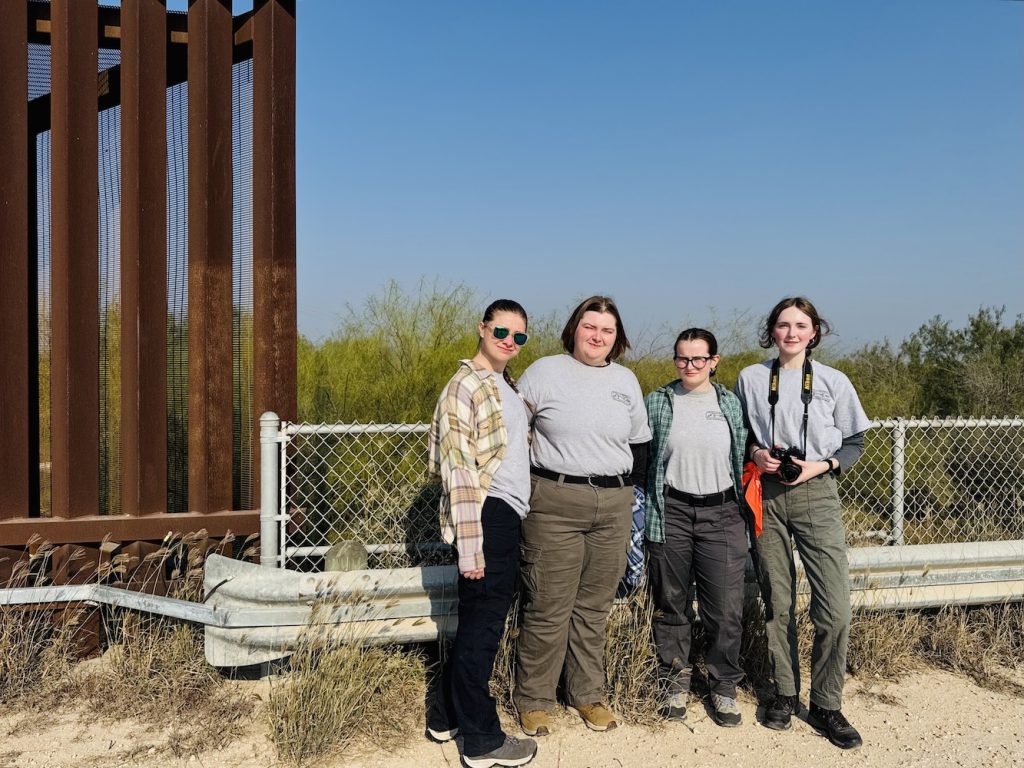
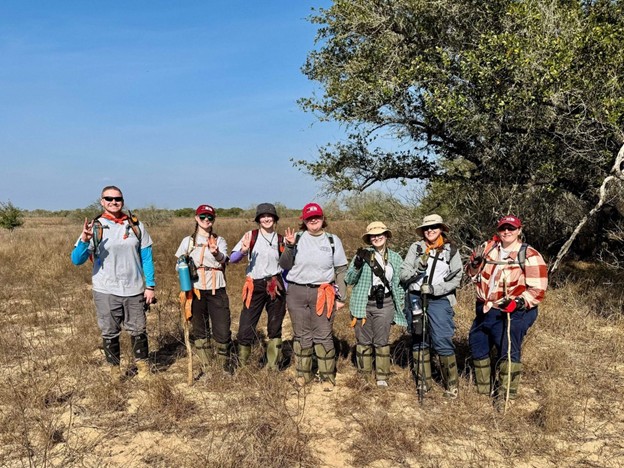
Team members lined up.
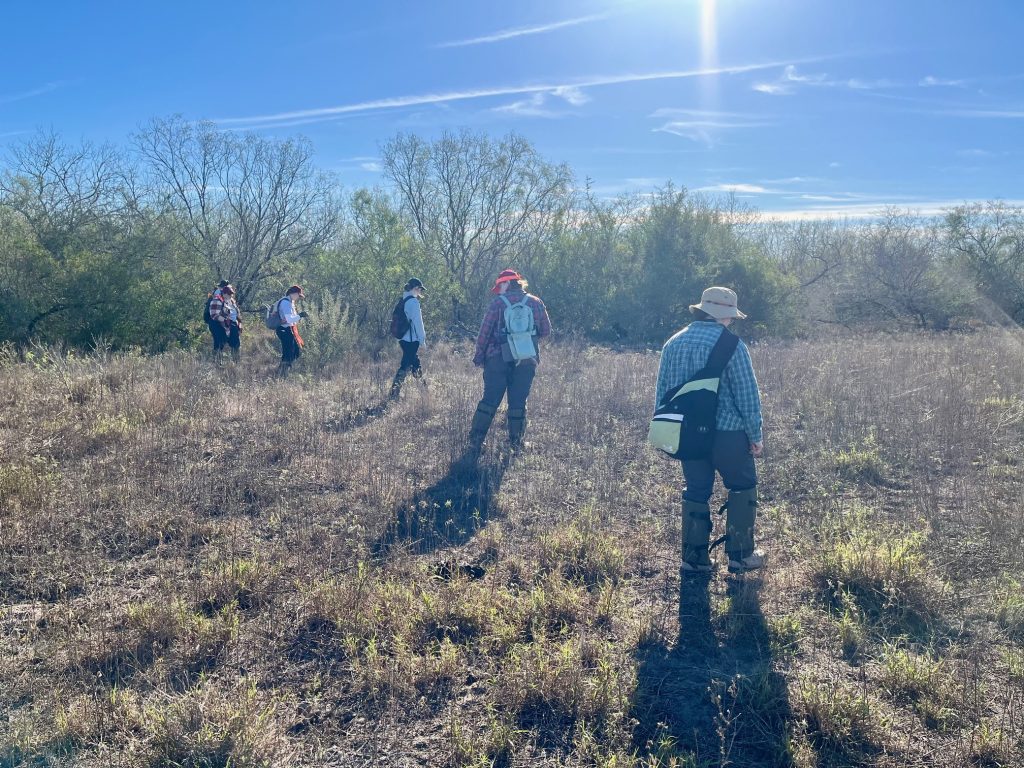
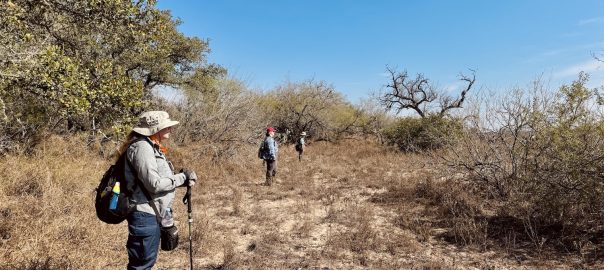
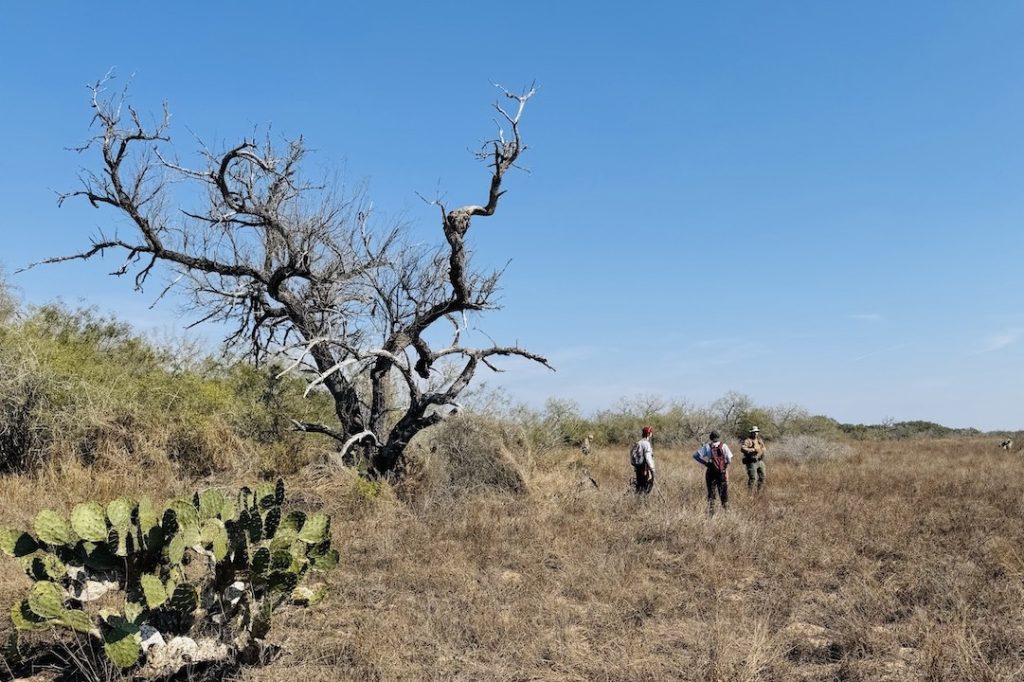
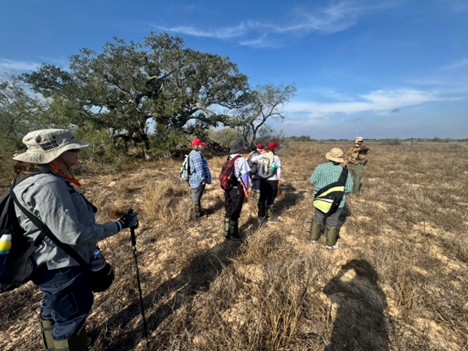
Some team members out in the brush.

Last year, the milder temperatures left me less exhausted. I felt more comfortable after the long days, allowing me the mental space to think and reflect in the evenings, to really sit with the reality of what we were there to do. This year, with the temperatures hot and the work hard, most evenings were spent simply waiting for bedtime or scrolling mindlessly on my phone, doing anything to give myself a break. To focus on something that did not require the mental bandwidth that I did not feel that I had.

I understand that this is exactly what I hoped to avoid when I wrote my initial post: avoiding difficult emotions and retreating into comfort. At the same time, I have come to understand how easy avoidance can be, especially when everything already feels so heavy.

Some team members lined up in the brush.
Some team members out in the brush.

On the last day of the trip, while sitting in an airport restaurant eating TexMex, we talked as a group about how there was no easy answer to how to solve this so-called “border crisis”. Because if there were, it would have been solved by now. I’ve thought a lot about that conversation, and about how I wish I had more answers after having experienced this trip twice now.

The conversation lingered with me because it underscored how uncomfortable it is to sit with problems that do not have clean solutions. How easy it is to push things aside when they get hard. As humans, we are a social species, and in a way, I think that relates to how we want resolution. Something concrete to point to as progress. However, what we encountered along the border resisted that kind of superficial closure that I think people are always speaking about. Because I’m not sure that there ever can really be “closure” for a person.

Instead, it demanded patience, humility, and the understanding of a shared humanity among us, the migrants, you reading this, and even those out there without any clue that this trip even took place. These values transcend culture, belief systems, and even time periods.

View from a lookout on one of the ranches.

While scrolling through my phone one night, a video popped up that featured a Bible quote: Leviticus 19:33, which speaks to how strangers are treated within a community. The message is strikingly relevant today: recognize the humanity of those who are vulnerable, displaced, or in trouble, and resist the impulse to view them as problems rather than people. In the context of this trip, that idea felt less like a moral principle and more like a quiet responsibility.

“When a stranger resides among you in your land, do not mistreat them” (Leviticus 19:33).

A responsibility to show compassion, to bear witness, and to treat every individual we encounter with dignity, even when the larger system feels overwhelming and unchanged.

Photo of flower left in the dirt.
Photo of a flower left in the dirt.

I don’t think that I will ever have all of the answers, no matter how many times I reflect on this trip and the work that we do at the border. But I want to understand, and I think that it is that desire to listen, to learn, and to grow in compassion for the people directly and indirectly impacted in Brooks County and in so many other places like it, that matters most. It is a commitment to seeing individuals not as statistics or symbols, but as people whose lives are shaped by circumstances far more complex than any single narrative can capture.

Ultimately, this trip did not leave me with the clarity that I wanted it to. Instead, it left me more aware of my own limits of what I can know, what I can carry, and what I can change. As I write this, I think that is the point. Not to leave with answers, or a clear solution, but with a deeper sense of responsibility to keep paying attention, to resist indifference, and to remain open to the discomfort that comes with truly seeing others. If there is anything this experience has given me, it is the understanding that compassion is not a conclusion but a practice. The responsibility we have is not to attempt to solve everything, but to seek and recognize humanity where it is easiest to look away.

Photo of Don White.
Sheriff Don White determining the next location.

Thank you for all of your support this year—whether through reading this blog, sharing it, or donating. Your support does not go unnoticed. And thank you to Don and Ray, Reed, Melissa, Dr. Latham and Dr. Eriksen, Amanda, Lilly, and Peytin for walking this journey with me.

– Makenna

Reflecting and Processing

I was not expecting there to be much of a difference between my reflection from the Beyond Borders 2025 trip to this one. We went to the same county to do the same kind of work, so I was expecting to be prepared for the field work and confident in how I would emotionally handle being there. Reflecting now, I see how misguided that was. Despite going over the same week as last year, with the same amount of physical preparation, the circumstances were vastly different. 

Team member obscured by the dense brush.
Team member obscured by the dense brush

The climate that we had encountered last year was cool during the day, so with our gear we were mostly comfortable to search without fearing for heat exhaustion. A big lesson that I took away last year was that the cool weather was a double edged sword. Yes, the days weren’t hot but the nights were dangerously cold. For migrants traveling on foot for days through the ranch landscapes, layers weren’t practical, making travel exhausting and dangerous. During this year’s trip, it was hot. Every day was above 80 degrees and we were only afforded a breeze for some of them. Back in Indy, this would be considered a nice summer day, but on the ranches, where shade can be sparse and covered in thorns and bugs, it was draining. We were incredibly lucky that if it was too hot we could be done for the day, or if we ran out of water, there was more back at the trucks to fill up. A migrant who has already been traveling for days, or more, by the time they reach Brooks County, is not afforded this. The weather that we were experiencing was not even the hottest that area gets, as summers are mostly over 100 degrees everyday. So whether oppressive heat or debilitating cold, there is no time when the climate makes this journey easier. 

Trash bag that has head and arm holes cut into it so it could be used as covering

Migrants are paying thousands of dollars to cross the border and alongside every weather condition sapping their strength, there is staggering violence that they have to endure. This past year has enhanced a lot of animosity to the migrant community and even just watching the news, you can see incredibly hateful rhetoric being spouted. People believe that a migrant can just cross the border and go back to living their life, but that is not even close to the truth. A migrant’s journey is filled with violence, as well as after they are done. This year, some of the artifacts that we were able to identify showed us how this violence is fostered by the coyotes leading the groups. It was jarring to see the evidence of the treatment that migrants are encountering while already being physically and mentally exhausted. I feel lucky that I can go home, live in comfort, and call my family and friends but I also feel inadequate that there isn’t more that I can do. 

On our last day, our whole team was gathered to share a final meal and we were discussing the things we had learned and why it was important for us to do search and recovery work. Something that particularly stuck with me in our discussion was the belief that migrants that are recovered deserve to be returned to their families because that is what we would want someone to do for us. Many of these individuals are in a forced migration situation and they pay exorbitant amounts of money to go north. But that does not guarantee safety. They endure horrific conditions that will either stick with them forever or kill them.

The Beyond Borders team with another team members Melissa and Danny
The Beyond Borders team with other team members Melissa and Danny

So yes, we went to the same county, to do the same work, but the circumstances of this trip gave me a glimpse of how there is more to a migrant’s journey than I could ever truly understand. I feel even more emboldened in my beliefs surrounding the situation and that I should continue to advocate for migrants who are risking everything to return to their families or to have a better life. I am so grateful for this opportunity and to have been able to return to this experience with an incredibly impressive team, and I am thankful that I was able to learn from and be supported by them all. I have learned there is no true way to prepare for this because it is a complex situation and that having people there with you to discuss and reflect is the best way to do so. My reflections do not end with this post, just as my previous reflections did not end after I wrote it. These past two experiences will stick with me forever, and I will use them to continue to learn, educate, and advocate for human rights in every area of my life, now and beyond. 

The Beyond Borders team at the end of our final day in the field

Lilly

Day 5: A Bittersweet Ending

It was strange to wake up this morning knowing that it would be the last day in Falfurrias with Don and Ray and everyone, and our last day out in the brush. There was a level of anticipation there, an excitement and motivation to get out there and make the final day count. At the same time, there was a level of sadness I felt about the trip coming to an end. About not having a tomorrow to wake up and do it all again.

Those thoughts stayed with me as we got ready for the morning, moving quietly and still half-asleep, before Don and Ray arrived at the hotel to pick us up and take us to breakfast.

We stopped at Rebecca’s, a local breakfast spot in town that serves homemade breakfast tacos and more. It was nice to just sit in this moment together, crowded around three tables that had been pushed into one, enjoying our eggs, waffles, and tacos while we talked in that easy, almost familiar way that we had developed over the course of the week.

Logo on the wall of Rebecca's restaurant.
Rebecca’s Restaurant in Falfurrias, Texas

The pause helped quiet some of the lingering thoughts that I had been carrying about the day ahead. For a little while, there was nothing to focus on or worry about except the food in front of us and the people beside me. It felt grounding to sit with the people I had spent the past week working alongside—to share a meal, to laugh, and to enjoy a brief moment of reprieve before heading back out and into the brush for our final day.

– Makenna

As we headed to the last ranch of the trip, we all felt a quiet sadness knowing it would be our final day of searching. We were visiting a new ranch where two skulls were previously found, so our focus would be searching for additional remains belonging to these individuals, similar to what we did on day 3. Around 3 years ago, Don had also received a 911 call about a missing person in the area, who has yet to be found. So we had two goals for today: first, to search for skeletal remains that may be connected to the two skulls previously found, and second, search for the missing person. 

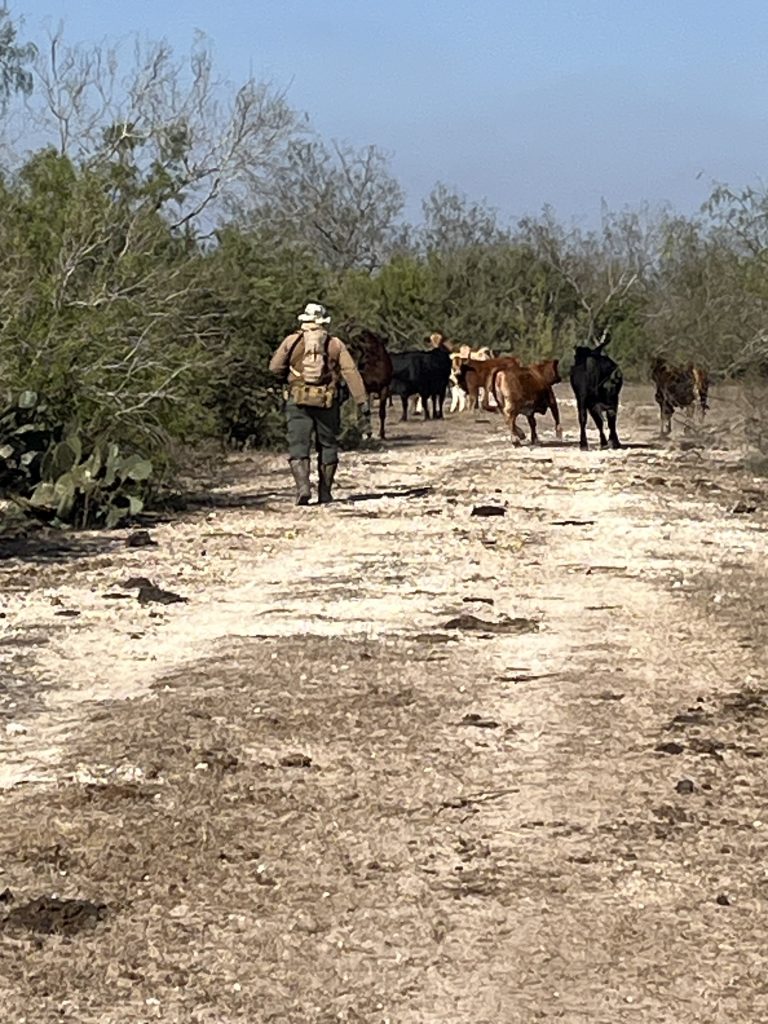
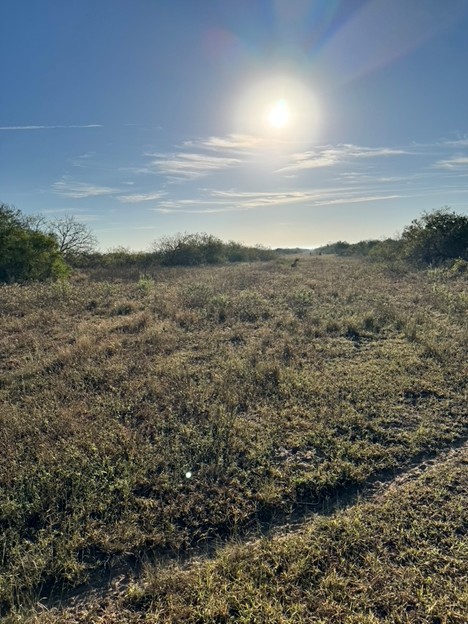
Dirt road on a ranch
Ranch dirt road

We began the day splitting into two groups and searching along each side of a dirt road. We weaved in and out of mottes, checking in tall grasses, and dirt piles along the way. We found a couple of artifacts and a few more animal bones before we got a transmission from Melissa over our walkie-talkies. She reported finding a fairly large layup with recent looking artifacts. After finishing our current search, we headed over to that area, with Melissa and Danny leading the way.

Nonhuman bone in a motte
Nonhuman bone in the middle of a motte

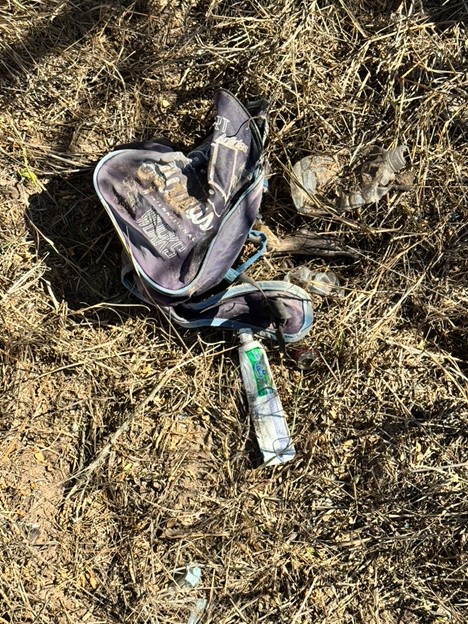
We observed the layup and were shocked by how recent it seemed. There were multiple black trash bags with holes stretched out for a head and arms to fit through. The quality and condition of the items suggested this was a high-traffic area. Next, Don had us spread out again in teams and search either side of the dirt road nearby to try to estimate what direction the migrants may have travelled to reach this area. Various artifacts were found on either side of the road, including backpacks, clothing, and discarded food and drink containers. We found a backpack, and as we began carefully unzipping and cutting open pockets, a small scorpion ran across the fabric. Moments like these are why we are so cautious when searching through clothing and other items, as there are dangers lurking and hiding almost everywhere. While we were able to take extra caution while out in the filed, migrants may not have that same luxury as they lie down to rest in a motte and open their bags at a later time. This furthered my realization of just how dangerous the entire journey is. Even during the times for rest and recovery, there are scorpions, snakes, spiders, thorns, cacti, and other predators nearby. 

Trash bags within a large layup
Melissa and Don are searching through black trash bags in a layup
Trash bag showcasing head and arm holes
Backpack with its contents laid out
Backpack with its contents, including Pedialyte, isopropyl alcohol, and Emergen-C packets

Just as we were finishing our search in that area, Reed transmitted that he found an Android smartphone. We were all pretty surprised about this, as we had not expected at all to find a phone, especially a smartphone. Many of us initially wondered if it was a burner phone or a flip phone. However, learning that it was a newer smartphone was a surprise, a valuable item to either lose or leave behind. It was pretty beat up, and the screen was cracked, but Don said he was pretty sure he could still figure out who it belonged to through the SIM card or serial number. 

Android phone on the ground
An Android phone with a cracked phone case and screen

It was another hot, long morning of surprises. We all remained flexible when moving around to different search areas and we solidified the fact that we were searching in a high-traffic area. Afterwards we had a lunch break to refuel for the second half of our day searching within the brush.

Amanda

A water jug found in the field.

Because the layup that we found had newer artifacts and there had been recoveries in the area, our next goal was to search going north. If we continued to find artifacts from a similar time period, this could indicate how recent the pathway is and the general direction that it is moving. To do this, we conducted systematic line searches for the rest of the day.

A sweatshirt in a clearing of trees in the field.

Line searches are utilized as a way to search an open space to thoroughly clear an area. Spacing, direction, and pacing are incredibly important during these searches, especially when sweeping an area where the ground is obscured by dense grass and bushes. While conducting the line search, we were able to sweep through high, thick grass and some mottes that were along our route north, where we found few items, including monster energy cans, water jugs, and a sweatshirt. However, they were older than the artifacts found in the lay up. 

Some of the Beyond Borders 2026 team conducting a line search.

This search reminded me of the disorienting nature of being out on these ranches. Even with landmarks and compasses, it is incredibly easy to lose track of yourself in the brush. As I led the line search, I was incredibly lucky to have the team with me to ensure that we conducted a thorough search and stayed on track. I cannot imagine having to traverse this terrain without this support. As this was our last day in the field, I was able to reflect back on our previous searches and why we are here. No matter how difficult we may find the terrain, we had the opportunity to assist Don and Ray in their efforts to recover individuals who deserve to be returned to their family and what we were traversing is only a fraction of what migrants encounter as they cross the border.

Lilly

After a long, hot, emotional week of searching, we met up with the rest of the crew at the ranch to have one last meal together as a team. It was joyful but bittersweet, reminiscing about the trip and what we learned while getting to know each other better, all while enjoying Ray’s delicious burgers. As I sat there with everyone—some I met only a few months ago and some just this week—I truly felt at home. Besides working together under extremely strenuous conditions, we were bonded by a shared commitment to honesty. Seeing how vulnerable Don, Ray, Reed, and Melissa were being with us, sharing stories about their personal lives, military experience, and search/recovery work, we couldn’t help but reciprocate. In addition to our experiences in the brush, these stories are what I will carry with me when I leave Falfurrias.

I will never forget those I’ve met during this trip and what they taught me, nor will I forget those whose paths we crossed and the evidence left by their efforts to achieve a reality in which I live  each and every day. I hope that by sharing these stories and experiences with those outside of the Texas Borderlands, I will be able generate conversations that force people to think critically about the individuals they seek to dehumanize and the motivations behind an individual’s decision to migrate.

Peytin

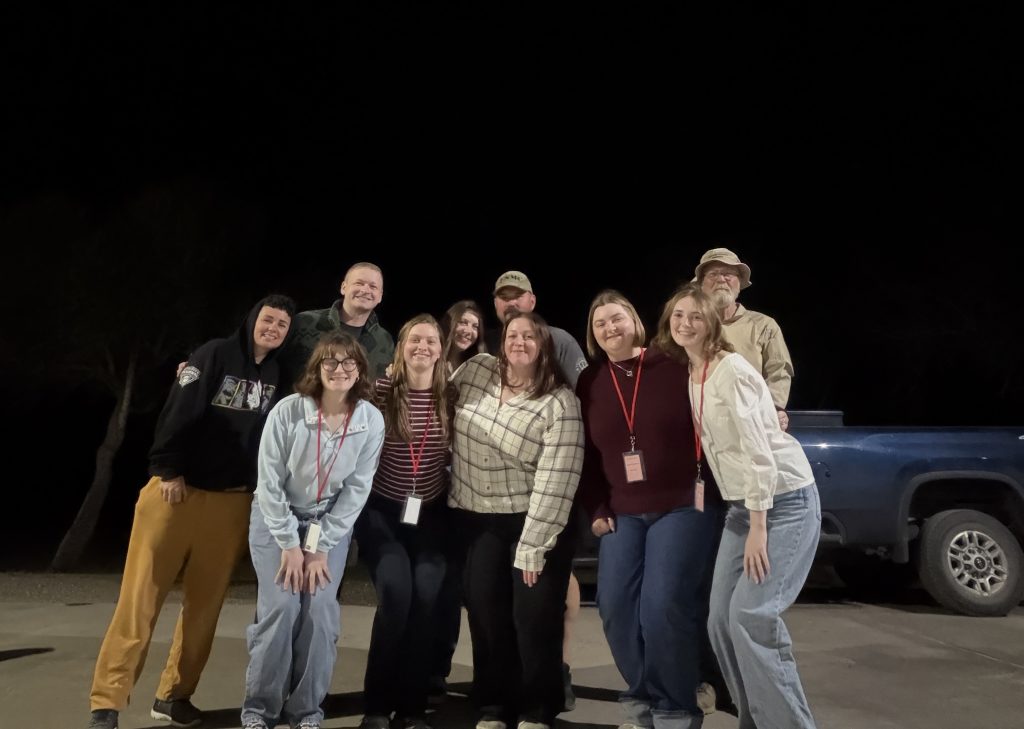
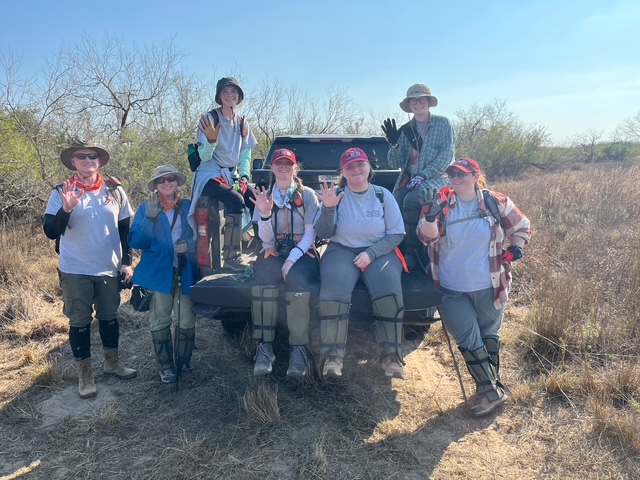
The Beyond Borders 2026 Team poses under the night sky for the last time
The Beyond Border 2026 Team after a final meal together

Thank you to everyone who took the time to read our blog and those who supported and donated the Beyond Borders Team during our 2026 trip. 

In the words of our new friend, “thank you much” to Deputy Sheriff Don White and Paramedic Ray Gregory for keeping us safe and guiding our journeys in this unfamiliar territory. Thank you to Dr. Reed Mckinney and Melissa Schmalhorst for joining us this year and sharing your expertise with us. We thoroughly enjoyed the laughs, lessons, and stories shared by each of you on this trip. To Socks, Oakley, and Danny, thank you for the smiles, pets, and distractions as we worked in this physically and emotionally challenging atmosphere. 

Thank you to Dr. Latham and Dr. Eriksen for making this trip possible and for giving us this unique and memorable opportunity.

Thank you to the city of Falfurrias, Texas for embracing us and our work.

Makenna, Lilly, Amanda, and Peytin

We will continue to post daily over the next week!

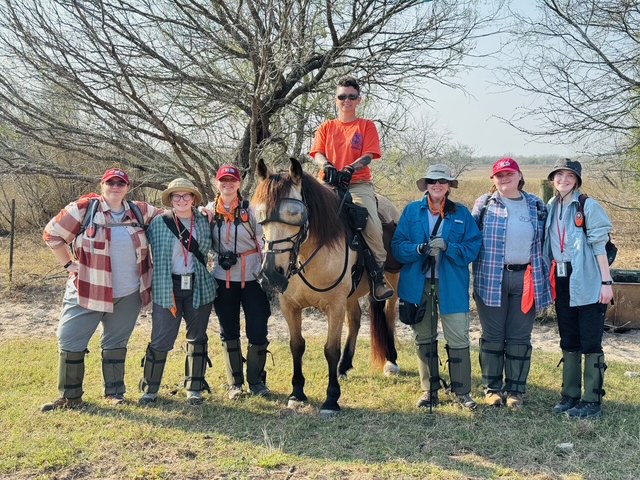
The Beyond Border 2026 Team posing in front of the brush with Melissa and Danny of Mounted Search and Rescue
The Beyond Borders Team with Melissa and Danny of Mounted Search and Rescue
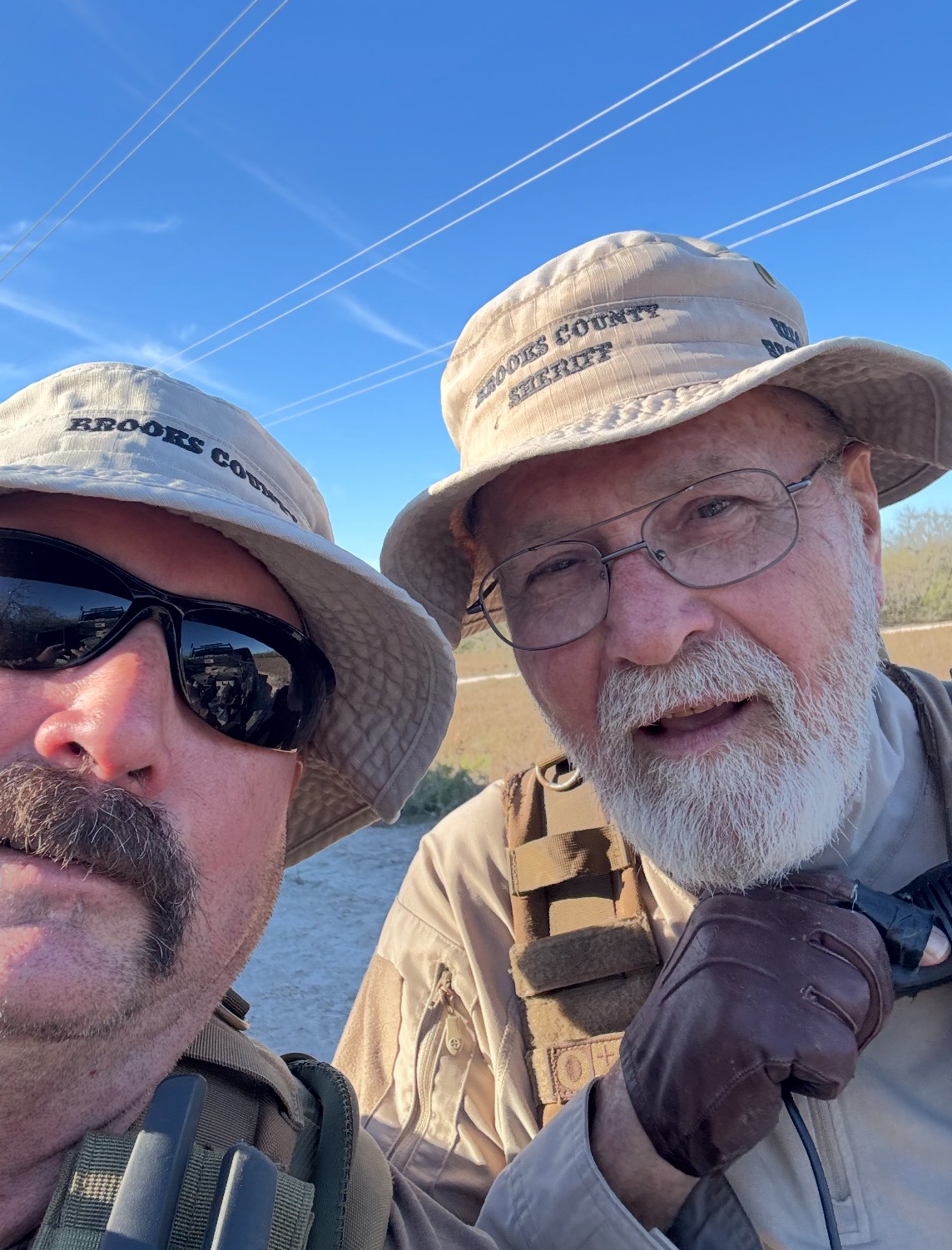
Don and Ray pose for a selfie together
Don and Ray
Reed holds up a partial deer skull with antlers to his head, mimicking a deer
Reed with a partial deer skull and antlers he found
Oakley the dog of Mounted Search and Rescue standing in a road
Oakley of Mounted Search and Rescue