Category Archives: Human Rights, Migrant Death

Talking about the project itself

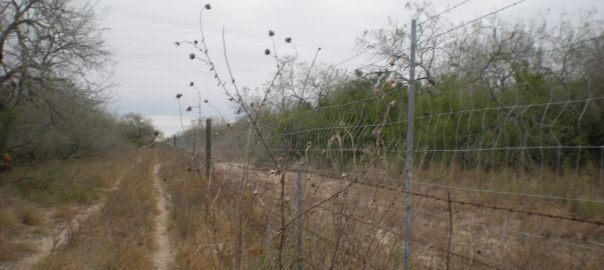
pathway along fenceline

Preparing to Return

It feels strange to say that just a year ago I was sitting down to write my first blog post in preparation to head to Texas. It feels even stranger to be sitting here now, preparing to return, and realizing I’m unsure what there is to say.

I thought that I would feel excited at the prospect of returning, or perhaps even ready for what I will experience there, but all that I feel right now is an odd sense of uncertainty. Uncertainty of what Texas will be like this year, of how I can be the best teammate for the others on the trip, and even what I will face emotionally while there.

Over this past year, I have reflected briefly on my time in Texas and the things I experienced, but I have spent even more time neatly compartmentalizing those memories– placing them onto a shelf that I don’t have to look at, even though I know they are there. I have not thought much about my time in Texas since the summertime, perhaps because I became busier with classes and work and just life in general, but also because it is undoubtedly easier to surround myself with a protective bubble of not having to think about these things to avoid grappling with the sheer magnitude of weight that they carry. It’s easier, and that’s the unfortunate truth.

At the same time, as I write this, I find that I am becoming aware of just how privileged it is to put those thoughts aside, to not think about the complex and painful truth that is the crisis happening at the border. I get to go on this trip, spend a week experiencing things that are so unfamiliar and new to me, and then I get to return home and push the thoughts aside because it is more comfortable not to have to think of them. It’s easier, and it’s safer, than sitting and living with that knowledge. But the migrants crossing the border every day, in all seasons, from all walks of life, heading towards uncertainty, are not afforded that option.

Returning to Texas means opening these thoughts back up and facing what it means to be privileged in this country. It means confronting the reality that my participation is, in many ways, temporary and voluntary. It’s a choice, not a necessity, and yet I know it matters even if I am only a small part of it. It matters to show up, to listen, to be a witness, and to lean into the discomfort instead of stepping around or avoiding it.

This time, I think returning means choosing not just to observe, but to engage more fully, to think about how the things I learn there shape what I do when I come home: how I talk about this work, how I honor those whose lives intersect with it, and how I use my position and education to move beyond momentary empathy towards sustained advocacy.

This year, I hope to ask harder questions, of myself and of the world I am part of. And I hope that in the end, when it becomes easier again to not think about it, I will choose the harder path that keeps me open, connected, and accountable.

Because if it doesn’t change me, then why go?

– Makenna
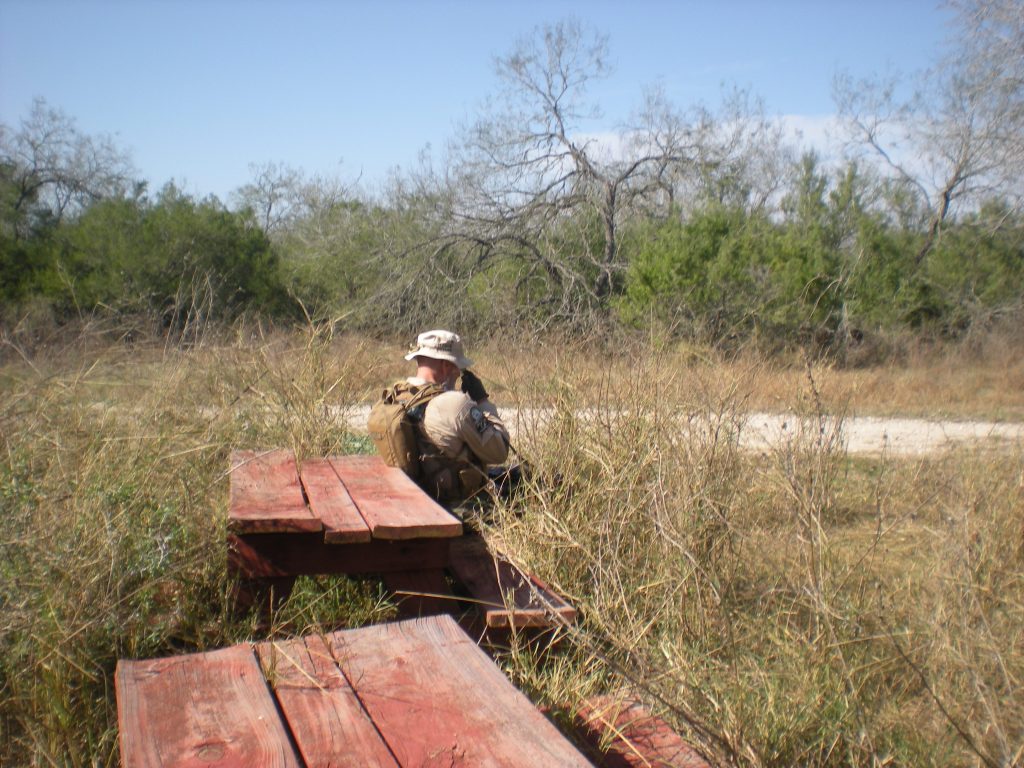
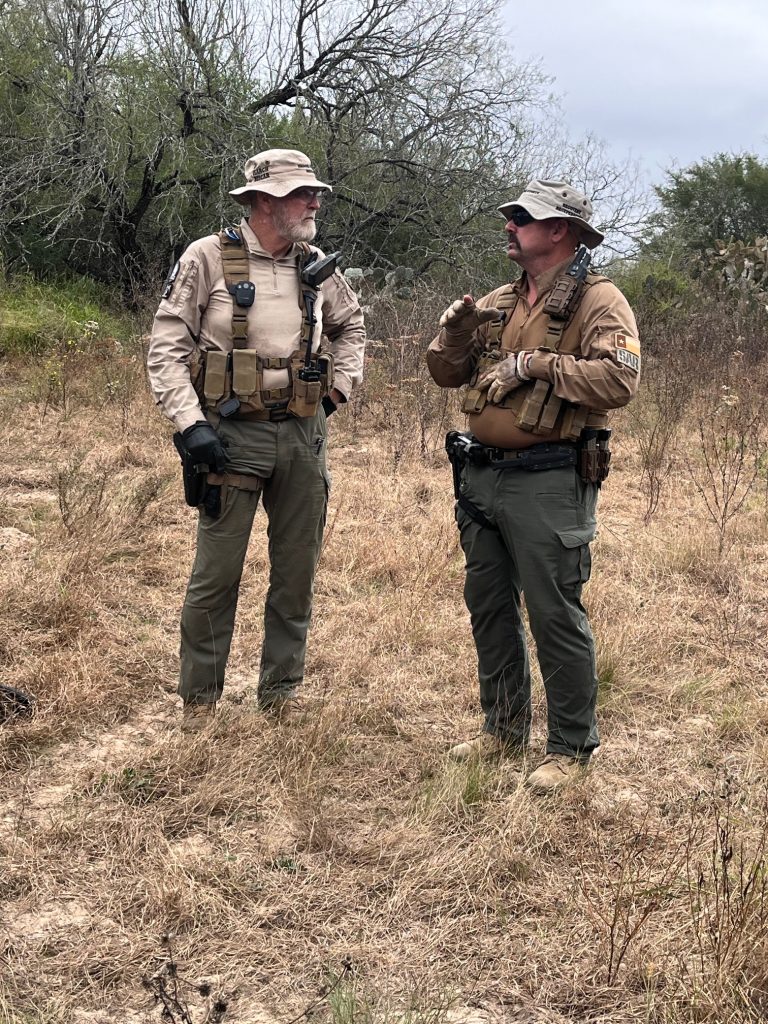
Deputy Don White rests while out on a ranch.

Reflecting on the Past to Prepare for the Future

As I was at this same time last year, I am currently preparing to travel to Falfurrias, TX with the 2026 Beyond Borders team. I find myself in the same boat as last year, where most of my preparation has been to get together all of my clothes, gear, and toiletries. Are all of my shirts clean, do my boots still fit the same? Do I have all of the gear necessary to be safe, such as a compass and a bright colored bandana? These are important things for me to consider, but I also find myself thinking back on how I was feeling while preparing for last year’s trip. I felt prepared because I had all of the right gear and I felt excited because this is similar work I hope to do in my future career. However, I remember my reflection at the end of the trip, where I looked back at my original post and noticed how surface level I sounded. We were there to be of assistance to individuals devoted to the search and recovery of individuals who lost their lives. Searching for a word, like excited or prepared, to describe how I feel going into this experience again is impossible. They were not the right words to use then, as I couldn’t truly know what to expect yet, and they are not the right words now, as no one experience will be the same.

This one lesson, that it is impossible to truly prepare for this experience, really stuck with me from last year’s trip. Getting ready for the upcoming trip is only proving this point. My goal for last year was to become a more empathetic and active listener in advocating for migrants. This was a goal I thought would be easily achievable through education of the situation and experiencing Falfurrias for myself. This was a limited understanding of the climate I was walking into, but I would like to go into this trip with the same goal. I realize this goal does not have an end game, but is an intention to consistently work towards during my time in Falfurrias, as well as in my everyday life. I am striving to be empathetic and attentive while conducting this work as well as in my communication to others about it. I also strive to keep in mind that this experience isn’t about me, but about the individuals caught in the cross hairs of the systemic injustices that neglect them. So while there is no way to truly prepare myself again, I know that listening to those who know more than me on the topic and to my team members who I know provide valuable input will be essential to beginning this experience again. Cooperating with those around me, who are my support system and who I would like to support, is the best kind of preparation that I will actively aim towards, knowing what I know now about participating in this experience.

Lilly

Beyond Borders Day 1 2025
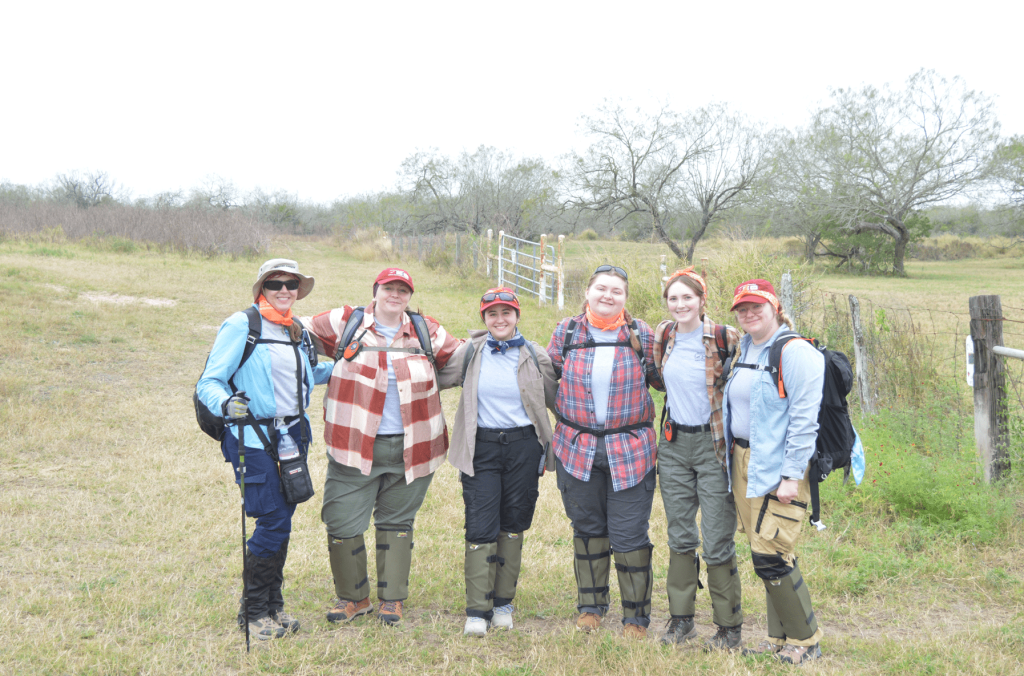
Beyond Borders 2025 Team From left to right: Dr Latham, Dr Eriksen, Frankey, Lilly, Makenna, Chastidy

The Helpers

“When I was a boy and I would see scary things in the news, my mother would say to me, “Look for the helpers. You will always find people who are helping.” ― Fred Rogers

This quote is commonly shared after tragic events like natural disasters to emphasize finding the good in every situation.  Helpers are the ones that run into danger, fully aware of the potential risks as well as what needs to be done to provide aid and assistance.  Helpers are the ones who extend kindness, calm fears and treat those in need with empathy and without judgement. Helpers often occupy a space where they witness pain and suffering, but they continue to aid because the heart of a helper is focused on acts of kindness over all else. As I reflect upon our time in the Texas Borderlands this year, I want to focus on the helpers. We have met many people that volunteer their time to aid in various capacities at the border out of a sense of responsibility and not for personal gain. This year we spent our time working with Deputy Don White and Paramedic Ray Gregory of Remote Wildlands Search and Recovery, who volunteer their time and resources year-round for search, rescue and recovery operations in Brooks County.

Deputy White and Paramedic Gregory in the Texas brush
Deputy Don White and Paramedic Ray Gregory talking during one of our breaks in the field

I enjoy our time talking with Don and Ray, learning more about them and hearing the stories of work they have done during the rest of the year. Don told us stories about the crosses he’s placed at recovery sites at the request of grieving families and the people he’s rescued and kept in touch with over the years.  Ray told us he does this work because everyone deserves to be found. He says he does this because he would hope someone would do it for him or his family if they were in a similar situation.  They have invested a lot into this work over the years, both financially and emotionally.  They have stories of time away from paid work, specialized equipment they personally purchased, injuries they suffered in the field, and traumatic stories from survivors and of the things they have witnessed. But they also have stories about saving lives and bringing answers to grieving families. They are the helpers who run into the brush when everyone else is trying to get out of it.

The helpers we’ve met at the border are a diverse group of people that range in age, experiences, educational and technical backgrounds, beliefs and political affiliations but they all come together to provide aide.  It demonstrates how the things we consider to be our differences don’t define us when faced with the harsh realities of the border where people are trafficked, assaulted, robbed, bribed and left for dead. It’s easy to ignore the situation when you haven’t heard the stories, looked in the eyes of parents fearful for the life of their children, translated desperate 911 calls for help, walked the clandestine paths through the brush or searched for the bodies of those that went missing. Once you experience this aspect of the border you never forget it and the helpers return again and again knowing the things they will see and the conditions they will face.

Our trip to Brooks County was successful in that we searched over 15 miles of clandestine wildlands and performed one recovery of an individual that will now begin the process of identification.  We were able to learn new techniques from Don and Ray regarding search and recovery work in this environment as well as strategies for our own personal safety here.  The trip was also successful in student growth. They honed their forensic skills, tried new things, met new people and got to experience a situation that challenged their assumptions and preconceived notions of the border.  Thank you for reading and following our journey. The groups you read about this year are all volunteer. You can support them here if you feel inspired to do so.

Remote Wildlands Search and Recovery

Beyond Borders

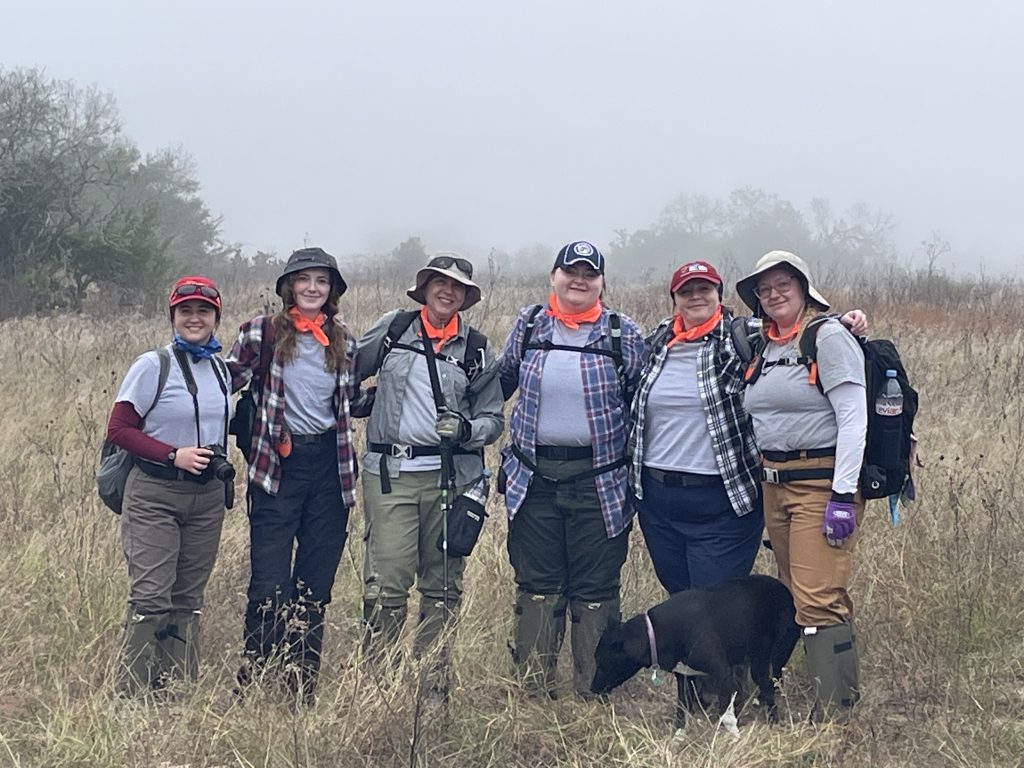
The 2025 Beyond Borders Team atthe start of day 2
The 2025 UIndy Beyond Borders Team (with Socks)

~KEL