Our team reflection posts are written after our last day in the field and meant to be a way to assess what we experienced on our trip and how we have grown after our time at the border. Even after fourteen years of working in the south Texas borderlands I can say I am continually learning new lessons and information. Many of my learning experiences highlight naïve assumptions regarding how others view the world around them or how identification efforts make (or don’t make) progress across national borders. I’ve always been clear that our team goals are twofold: 1) to provide forensic archaeological and anthropological expertise where needed and 2) to provide our students with an immersive experience aimed at better understanding the complexities at the border and of practicing forensic science in sensitive contexts. There is one moment I experienced on this trip that addressed both goals.
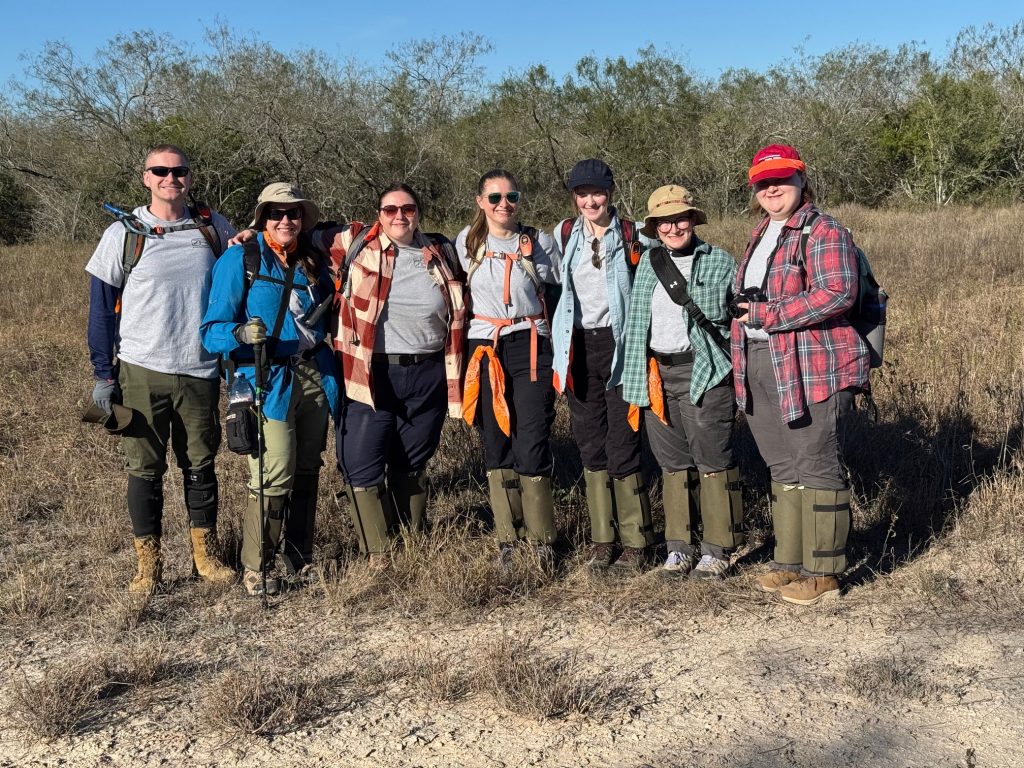
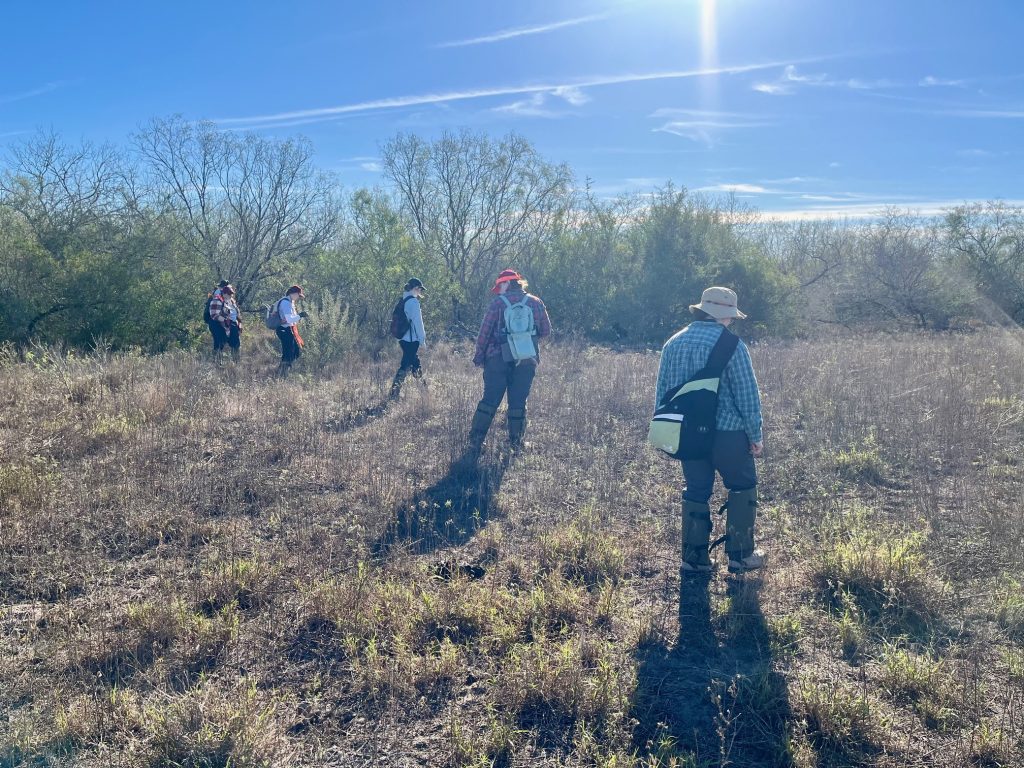
We were leaving a ranch on one of our last days in the field in a caravan of the three four-wheel drive vehicles needed to transport the people, animals and equipment required for search and recovery work. The group came to an abrupt stop as we saw a large, recently deceased cow on the side of the caleche road. Based on the condition, the cow would have been there on our drive into the ranch that morning, but we missed it due to the high grass. This is our first lesson. When conducting a line search you should look behind you every few steps. When dealing with grass, shadows and debris you must consider viewing things from different angles and perspectives. The fact we missed a huge cow just feet from the road was a valuable learning lesson. It highlights the challenges of searching in this environment. It’s easy to assume searching flat ground is easy, but tall grass and blowing sand act to cover the scattered bones we are hoping to locate.
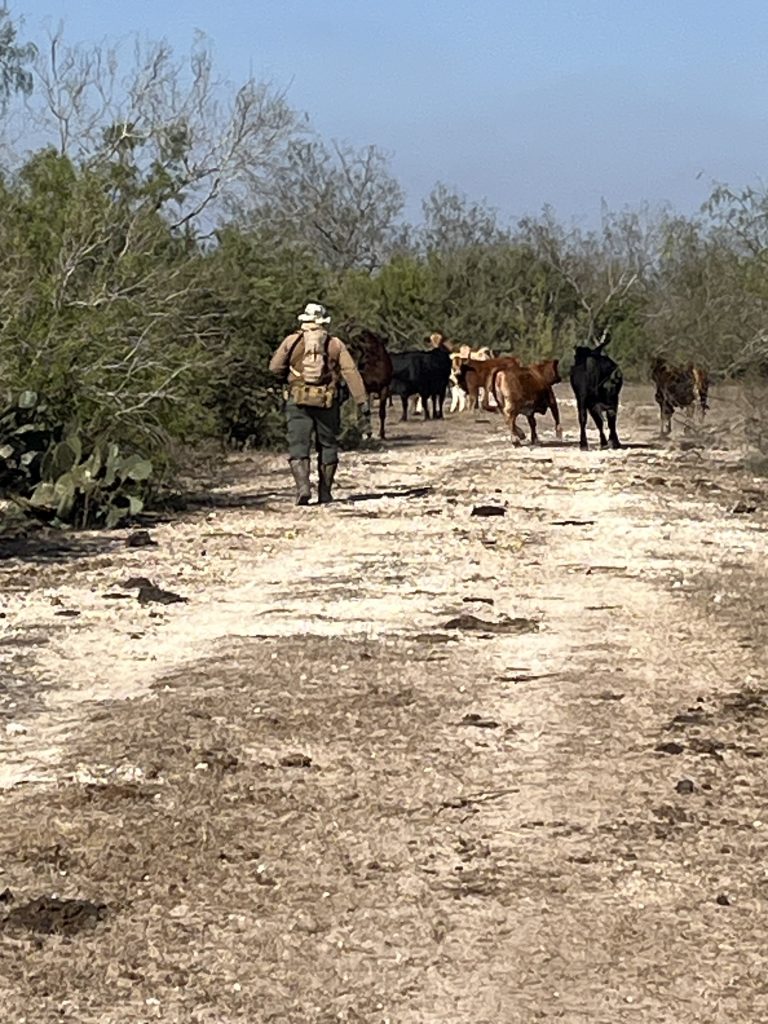
The second lesson regarded the identity of the cow. One team member yelled “Check the ear tag!” referring to recording the information on the tag so the landowner could be alerted to the identity of the deceased cow. In that moment I thought this cow is being afforded more dignity in death than the individuals we are searching for. Yes, I understand the economics of cattle and that they cost money. But we are looking for people that are treated worse than cattle when they are left in the remote wildlands of Brooks County by their coyotes or groups. It’s the harsh reality of the work here when you are forced to see how people are treated and what they endure on their journey. No amount of reading can prepare you for it and it sticks with you. Often lingering in the background but ready to consume your thoughts if you let it.
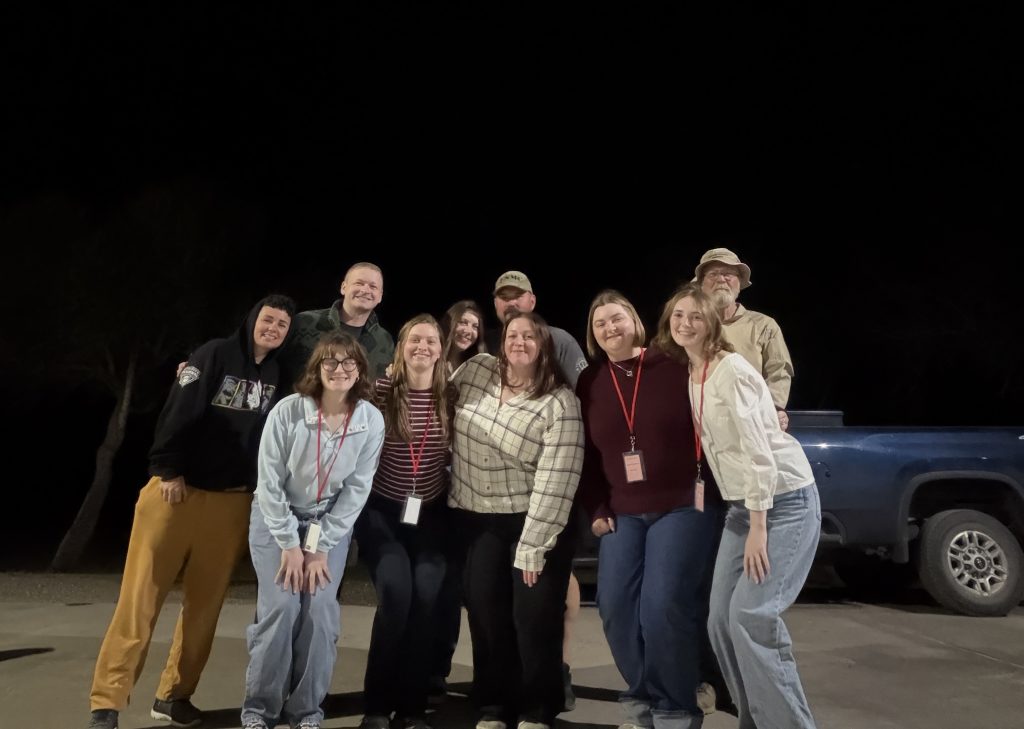
I’m so thankful that our colleagues in Texas continue this work year round and allow us to join them when we are able to do so. Looking at the ten of us working together on search and recovery operations this year, you see a group that has bonded over a common goal. Not only working well together but spending time over meals and in the evenings sharing stories, laughing together and being vulnerable in a way that is rare today. We are all born in different places, have different histories, different viewpoints and beliefs. But we know there is more that unites us than divides us and that is another thing I love about these trips. We meet people we may have never met otherwise. We talk to people who may be outside our usual friend group. That is also a valuable experience that is often lost in the division we see in our country today.
Thank you to everyone that has followed us over the last few weeks. Your support means a lot to us. The hope is that these posts convey a reality of the border that is not biased through a media lens. We pour ourselves into these posts as a way to share our experiences but also as a way to cope with what we see there. The groups you are reading about are all volunteers and responsible for their own expenses. If you are interested in supporting any of these teams I am including links below.
Beyond Borders Humanitarian Forensic Science Team
Remote Wildlands Search and Recovery
South Texas Mounted Search and Rescue
~KEL