All posts by Amandine Eriksen

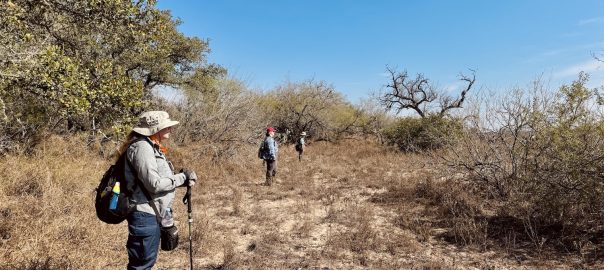
Beyond Borders team line up for search

Looking, Learning, and Leading

Content Warning: This post contains reference to sexual violence.

I started reflecting on this post-trip blog a few days before our return. Initially, my goal was to focus solely on the efforts of Dr. Krista Latham, my amazing colleague and mentor who started the Beyond Borders forensic science humanitarian project 14 years ago. Although brief, each trip to Texas requires significant funding, energy, time, and dedication — before leaving, during the work itself, and long after returning home. This post will highlight the immense work that goes into planning annual field seasons and maintaining relationships with colleagues.

I returned to the Texas borderlands believing I understood what migrants go through because I had experienced the thorny, rugged, and sandy terrain the year before. I was wrong. The heat this year was 30-40 degrees hotter than last, reaching temperatures of over 90° F. In January. Each day, I wished for even the slightest breeze to help cool us down.
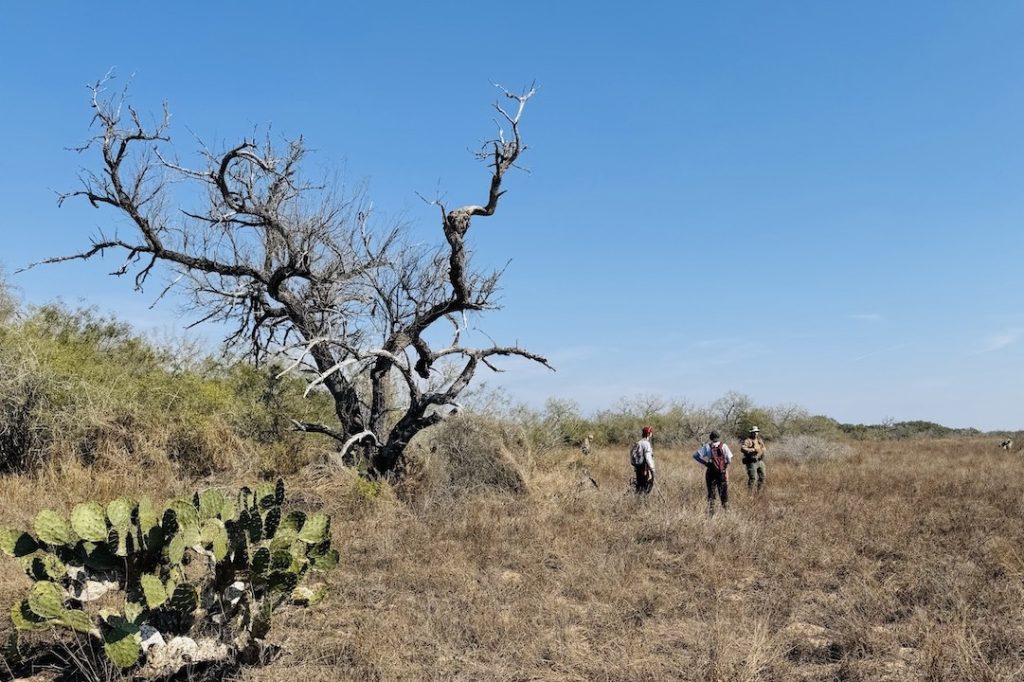
Rural Texas landscape
Landscape of rural Texas peppered with thick grasses, cacti, and thorny bushes, and mottes

Upon returning home, I honestly struggled more than I expected. Waking up with no one there to guide my day made me feel incomplete. When my partner asked about my trip, I said it went well and explained that we conducted various searches across different areas of rural Texas ranch land. Keeping it vague felt easier. How do you casually describe encountering evidence of sexual violence? As the day went on, I continued processing the week’s experiences. It’s difficult to see, with your own eyes, the evidence of what humans are capable of. The things that people leave behind tell a story, even when those people have long since passed through the area.

Facing this reality has been humbling and unsettling. It’s one thing to know these stories exist but it’s another thing to stand in the places where they have unfolded.

These eye-opening moments remind me why I wanted to become an Anthropologist. People fascinate me, and I feel compelled to help prepare the next generation to navigate and confront the challenges they will certainly face. As core faculty in the Human Biology Master’s Program at the University of Indianapolis (UIndy), Dr. Latham and I are committed to ensuring that students receive meaningful experiential learning opportunities, where they can apply their academic training in real-world contexts.

This year, I paid much closer attention to the many ways that Dr. Latham supports the team. While no amount of preparation can fully ready someone for this work, thoughtful pre-planning is essential. Before we leave, she holds multiple team meetings on campus in the preceding weeks to ensure students understand what to expect from the environment and can plan accordingly. This includes packing lists, detailed itineraries, discussions about allergies, and assigned readings to help students familiarize themselves with the project and the history of border crossing. She also takes care of all arrangements, including travel, lodging, and meals.
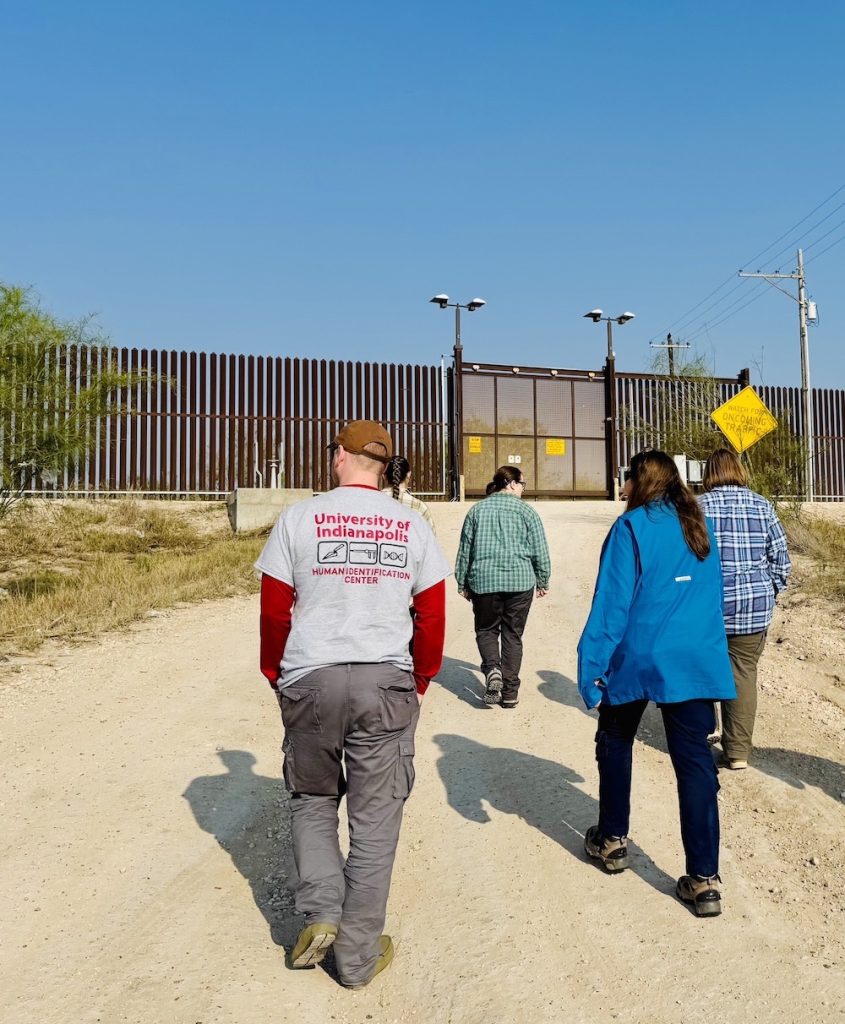
Dr. Latham walks up to the US-Mexico border wall the with the team

This year, I paid much closer attention to the many ways that Dr. Latham supports the team. While no amount of preparation can fully ready someone for this work, thoughtful pre-planning is essential. Before we leave, she holds multiple team meetings on campus in the preceding weeks to ensure students understand what to expect from the environment and can plan accordingly. This includes packing lists, detailed itineraries, discussions about allergies, and assigned readings to help students familiarize themselves with the project and the history of border crossing. She also takes care of all arrangements, including travel, lodging, and meals.
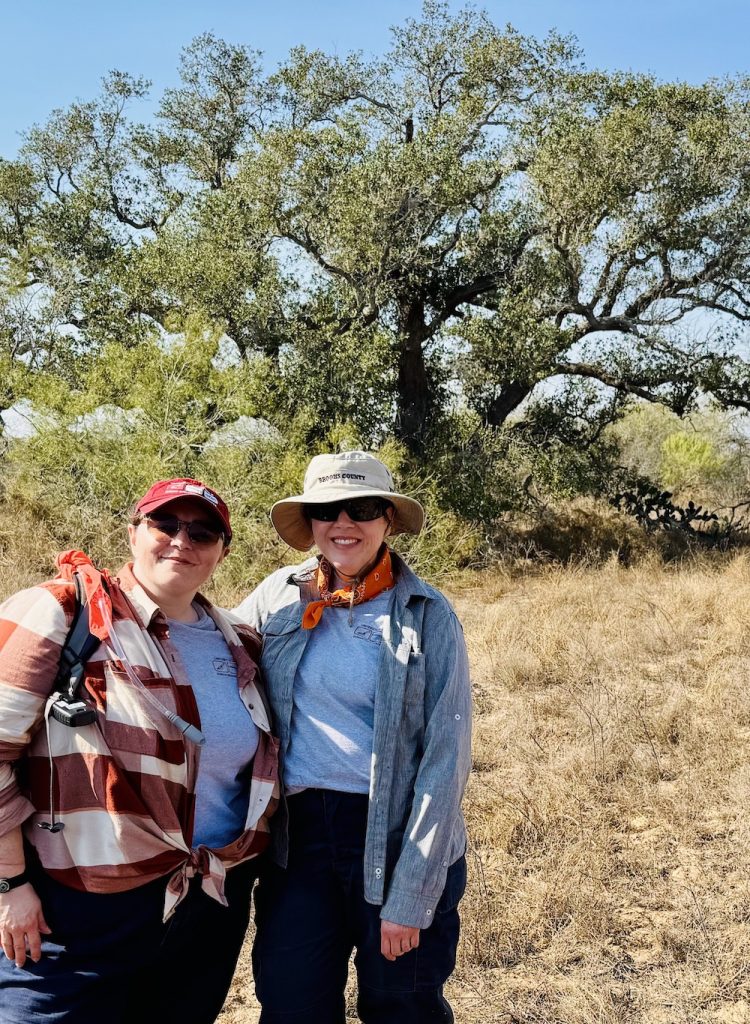
Dr. Eriksen and Dr. Latham standing in front of motte
Dr. Eriksen and Dr. Latham standing in front of a motte

Once we arrive, she drives early in the morning and late at night, allowing others to rest when we grow tired. This helps keep everyone on track and on time. In the field, Dr. Latham carries a backpack that includes not just the water and basic supplies we all bring, but also the specialized equipment required to recover human remains, quite literally bearing the weight of the work on her shoulders. She wakes up at a ridiculously early hour each morning to proofread and post the daily blogs highlighting student experiences. And each evening concludes with a group debrief, during which the team reflects on what we learned that day, what went well, and what we can improve the following day.

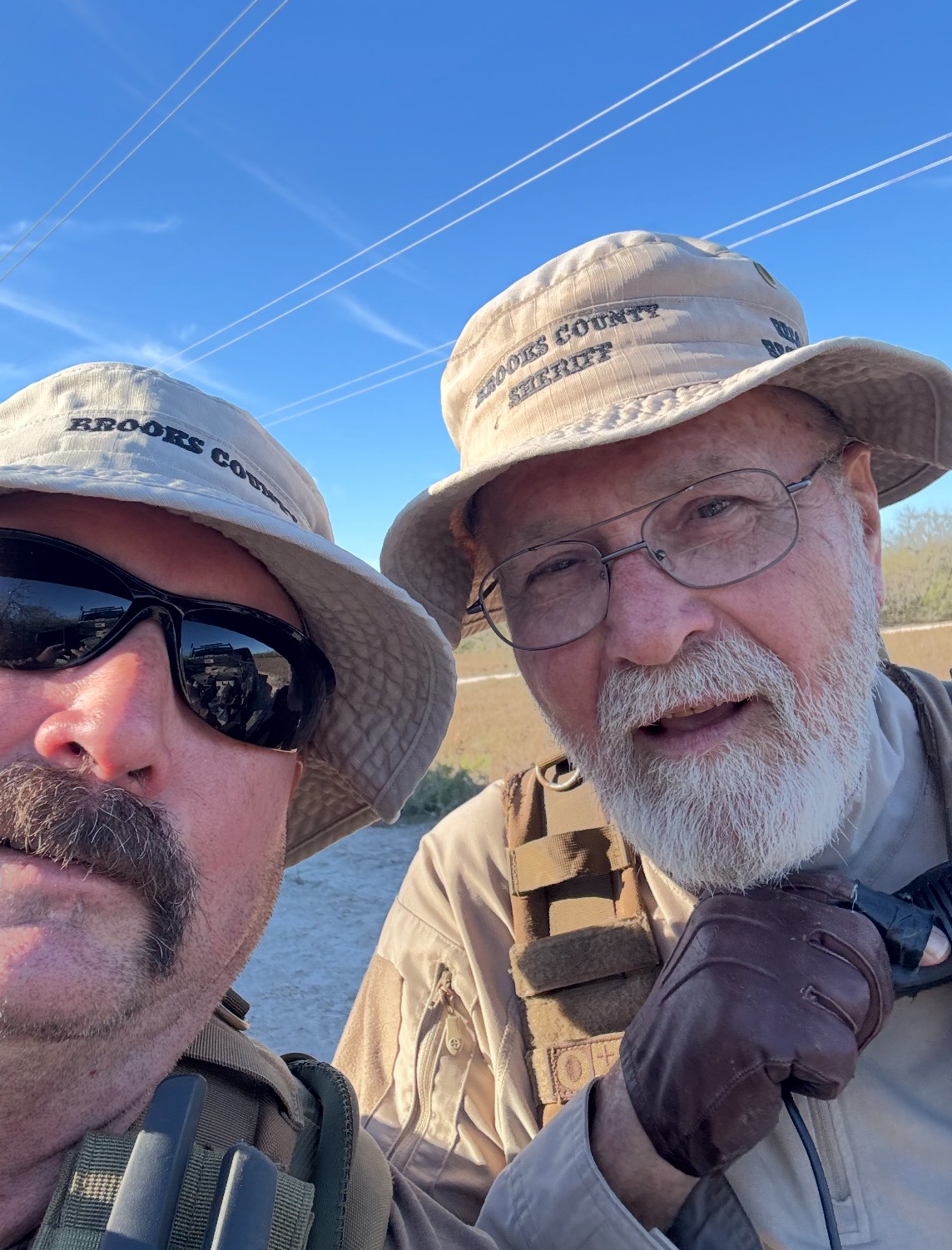
Dr. Latham is committed to ensuring that our students leave with something transformative, whether it be improved forensic skills, a deeper understanding of border dynamics and migrant experiences, or strengthened soft skills such as communication and teamwork. On one evening, we discuss why making mistakes and learning from them can be an important and defining moment in life. These conversations deepen our understanding of the work and of one another, making it easier to connect with the many amazing individuals we worked alongside this year, including Deputy Don White and Paramedic Ray Gregory, UIndy alum Dr. Reed McKinney, DDS, and Melissa (and her horse, Danny) of South Texas Mounted Search and Rescue.
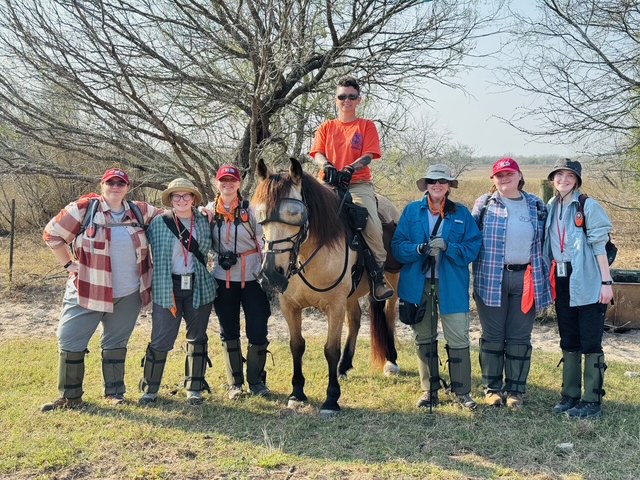
Team with Melissa and Danny
2026 Beyond Borders team with Melissa and Danny
Don and Ray pose for a selfie together
Don and Ray

After returning home, we gradually slip back into our daily routines and journaling helps ease this transition. Post-trip reflections are a crucial component of the Beyond Borders experience, which can be deeply cathartic. Ultimately, this project is about more than just fieldwork; it is also about commitment, care, and continuity. Dr. Latham’s leadership exemplifies how persistent dedication can create a meaningful impact, not only for the missing and their families, but also for the students who will carry these lessons forward. I look forward to seeing how our UIndy students of the 2026 Beyond Borders team (Makenna, Lilly, Amanda, and Peytin) integrates this experience into their academic and professional journeys.
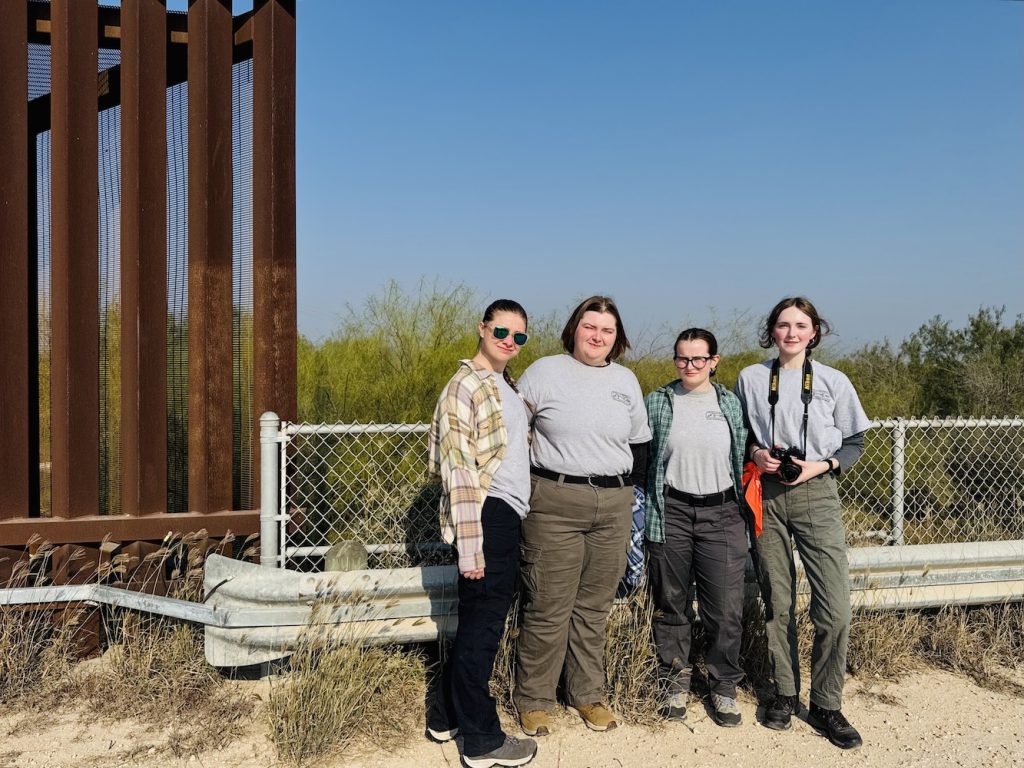
Students standing in front of the US-Mexico border wall
Left to right: Amanda, Lilly, Peytin, and Makenna stand in front of the US-Mexico border wall

AE

Beyond Borders 2026 team
Final day of the Beyond Borders 2026 field season

The Work That Stays With You

As I prepare to return to Falfurrias, TX for a second year, I am eager to once again be part of the Beyond Borders project. Experiential learning is a central component of the Human Biology Master’s Program at the University of Indianapolis (UIndy), and Beyond Borders exemplifies what it means to learn through meaningful and real-world engagement.

While the project’s primary goal is to assist in the search for and identification of undocumented migrants who have gone missing while attempting to cross into the United States, it also offers profound opportunities for personal growth among everyone involved. Working alongside students and colleagues in this setting reinforces the importance of teamwork, trust, and shared responsibility. It is remarkable how much learning (both personal and professional) can occur in just a few days.

I am humbled by the dedication that Dr. Krista Latham has poured into this humanitarian effort since its inception. Over the past 14 years, she has thoughtfully shaped an experience that encourages self-reflection, collaboration, and empathy. One of the most meaningful parts of each day is the evening debrief, when the team comes together to reflect on what we have learned, what we have done well, and where we can improve. These conversations deepen our understanding of the work and of one another, fostering the sense of community that is so essential to Beyond Borders.

One moment from the field that has stayed with me is the realization of just how physically and emotionally demanding this work is. Last year, I wrongly assumed I would have “spare time” to edit upcoming course syllabi, which was quickly proven wrong. In such a short amount of time, it can feel as though we make only a small dent. Yet Beyond Borders is not defined solely by what can be accomplished in the field. As an educator at the University of Indianapolis, I see this project as an extension of the classroom, which challenges students to confront firsthand the realities of forensic anthropology, ethical responsibility, and humanitarian work. These experiences impact how this generation of students think, learn, and approach their future careers in ways that traditional coursework cannot do alone.

As I return for a second year, I look forward to continuing assisting, strengthening relationships with students and colleagues, and carrying the lessons learned in Texas back into the classroom and beyond. Returning brings a different perspective which is shaped by experience, humility, and a deeper understanding of the emotional and logistical realities of this work.

AE

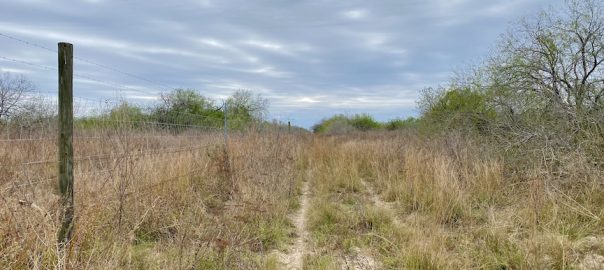
View of a two track road next to a wire fence marking the edge of a ranch.

Reflecting on the 2025 Beyond Borders Team

When I was invited to join the Beyond Borders team this year, I anticipated it would be an eye-opening experience. Despite having heard countless stories from Dr. Krista Latham and former participants, I had never fully grasped the depth of their experiences. With that in mind, I set out with two main goals: (1) to understand the history of the Beyond Borders project, and (2) to gain insight into the work my students and colleagues carry out each year.

From the very beginning of this trip, it was impossible not to imagine myself in the position of the individuals we were there to search for. Navigating the harsh environment—pushing through thorny shrubs and cacti—was challenging enough, but I am privileged to do so without the desperation or danger that migrants face. I will never truly comprehend the strength it takes to undertake such an arduous journey or the circumstances that drive people to consider this much risk.

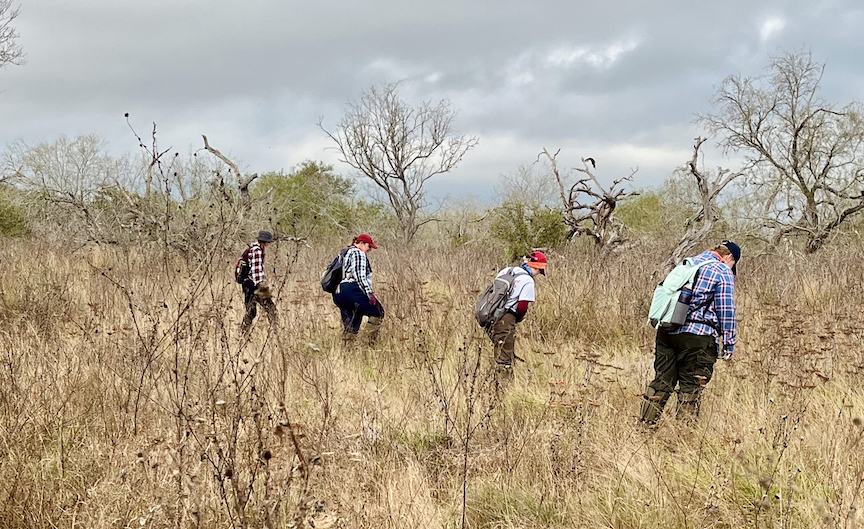
Four UIndy team members walk through thick grass, looking at the ground, searching for a missing person.
UIndy team members walk through thick grass, searching for a missing person.
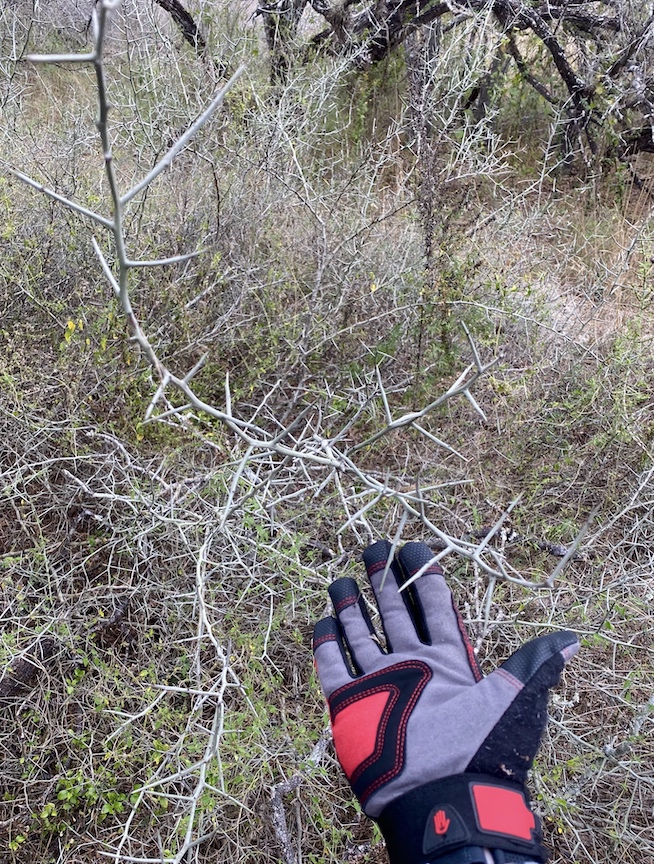
Example of large thorny shrubs in south Texas. A gloved hand is in the foreground for a size reference.
Example of large thorny shrubs in south Texas.

Throughout this trip, I became aware of realities I had never fully considered. For example, I learned that migrants typically travel at night, maneuvering through dense terrain filled with unpredictable vegetation, sinking sand, and wild animals such as large boars and coyotes. Travelers rest during the day, often seeking shelter under the low-hanging branches of thorny trees, leaving behind few materials nor any evidence of flashlights. The thought of moving through South Texas’ rough terrain without proper gear, light, or protection from wildlife is unimaginable to me.

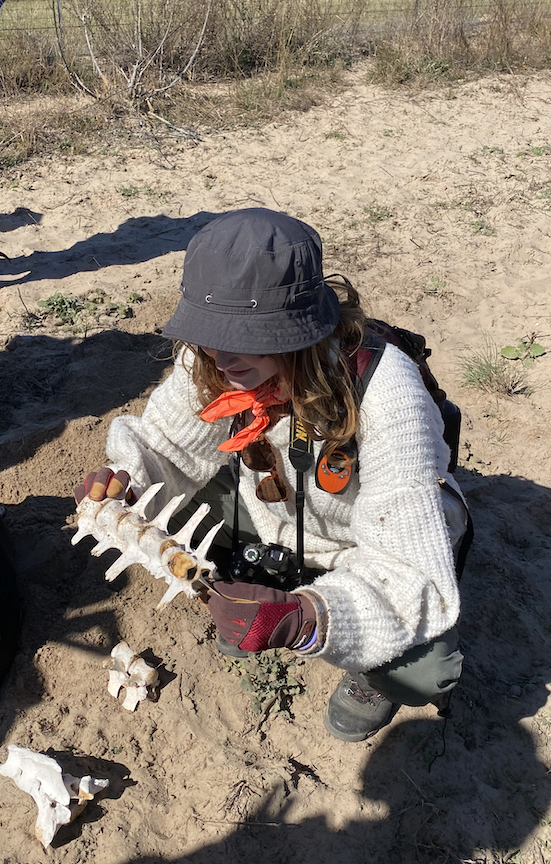
A student examines several non-human bones.
UIndy student, Makenna, closely examines several non-human bones.

Some days yielded discoveries of numerous animal bones, which turned into impromptu teaching moments for the students to compare their knowledge of human and non-human skeletal remains. While this was engaging for a day, I soon realized that not everything needed to become a lesson, especially when it detracted from our primary goal of searching for missing persons and for signs of recent routes on which migrants might have been left behind.

One of the most rewarding aspects of this project was observing the graduate students adapt and support one another in the field. Experiential learning is a cornerstone of the Human Biology Master’s Program at the University of Indianapolis (UIndy), and this project exemplifies that. Beyond its humanitarian purpose, it fosters trust and strengthens relationships among UIndy and team members Deputy Don White and Paramedic Ray Gregory of Remote Wildlands Search and Recovery. Despite it being my first time in the field with this group, I was struck by how seamlessly we worked together. The students’ thoughtful daily reflections—both written and spoken—were a testament to their growth and the power of shared experiences.

I was especially struck by each team member’s strong qualities:

  • Chastidy’s openness: Though this was her second time on the Beyond Borders team, we shared several new experiences and her ability to verbalize her thoughts so poignantly was touching.
  • Frankey’s positivity: Even after long days crawling through thorny brush, she maintained a joyful demeanor, which uplifted the group’s morale.
  • Lilly’s resilience: After a minor mishap with camera settings during her turn as photographer, she embraced a second chance and captured the day beautifully.
  • Makenna’s responsiveness: As the line leader, she rose to the challenge, quickly implementing constructive feedback to keep us better aligned and doing an excellent job.
  • Krista’s leadership: Her ability to foster a strong team dynamic through daily exercises of reflection—what each member learned, excelled at, and could improve upon—was inspiring.
  • Don’s dedication: His commitment to helping others and in-depth knowledge of the key areas most in need of searching was invaluable. This was possible because of the relationships he built with ranch owners providing us with essential access to conduct searches.
  • Ray’s vigilance: As a paramedic, he took on the critical role of safeguarding our team’s well-being, ensuring we stayed hydrated and were safe as we navigated through remote and challenging terrain.
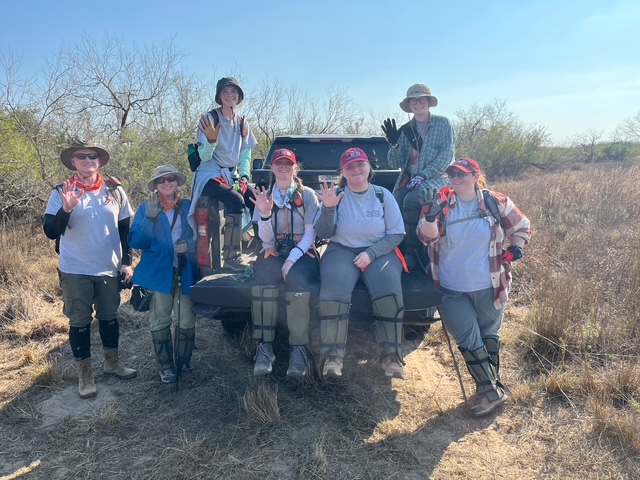
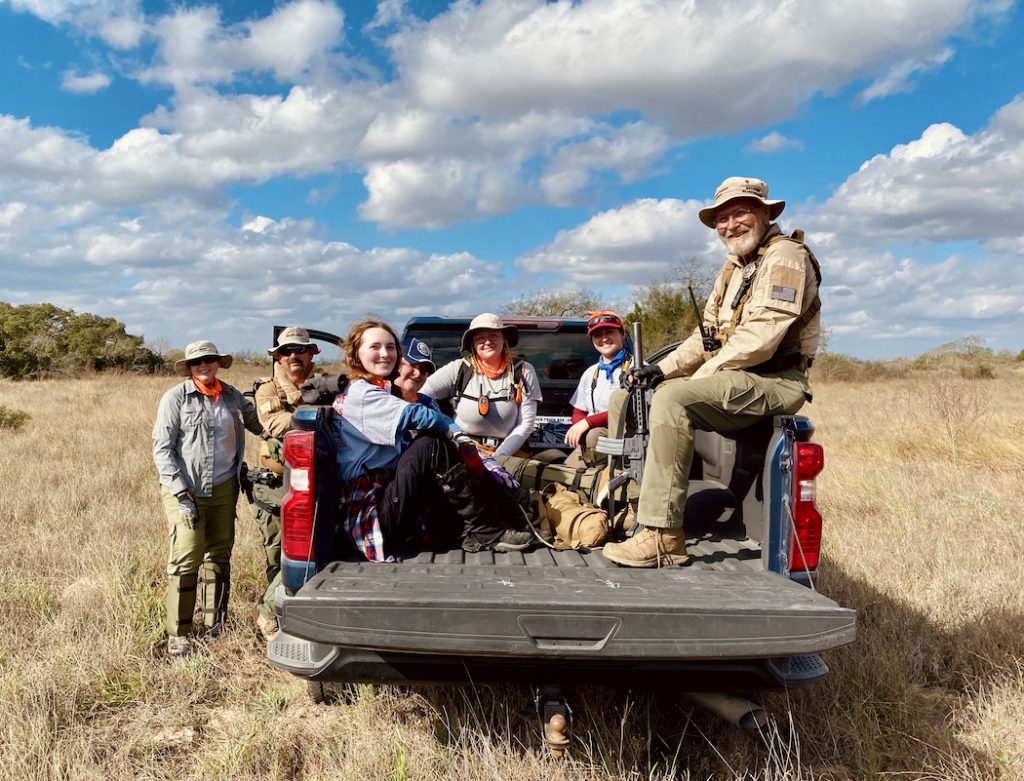
The team at the end of a day in the field, loading up in a truck to start the drive home. Five people sit in the back of a pick up truck bed while two stand to the left.
The team (from left to right): Krista, Ray, Makenna, Lilly, Chastidy, Frankey, and Don.

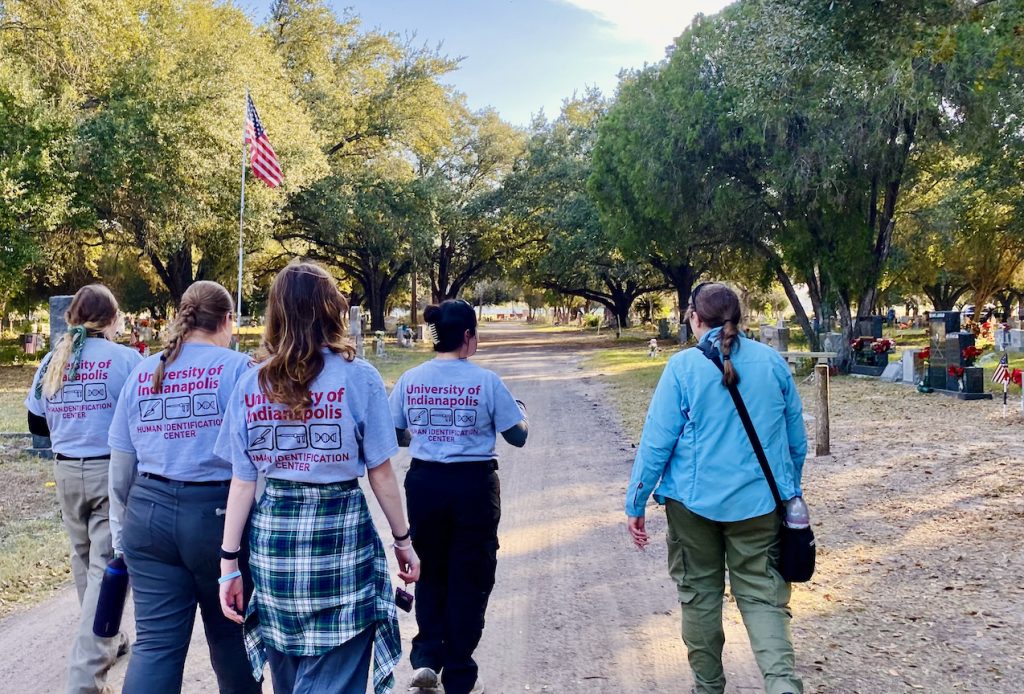
The week was not solely about fieldwork. On days when we left a ranch by mid-afternoon, we engaged in activities that deepened our understanding of the community and the project’s history. These included a guided tour of the Falfurrias cemetery where the project began, a visit to the shrine of Don Pedrito (a renowned faith healer), and a trip to the U.S.–Mexico border.

Four UIndy students take a walking tour of the Falfurrias Cemetery, guided by Dr. Krista Latham.
UIndy students take a walking tour of the Falfurrias Cemetery, guided by Dr. Krista Latham (right).

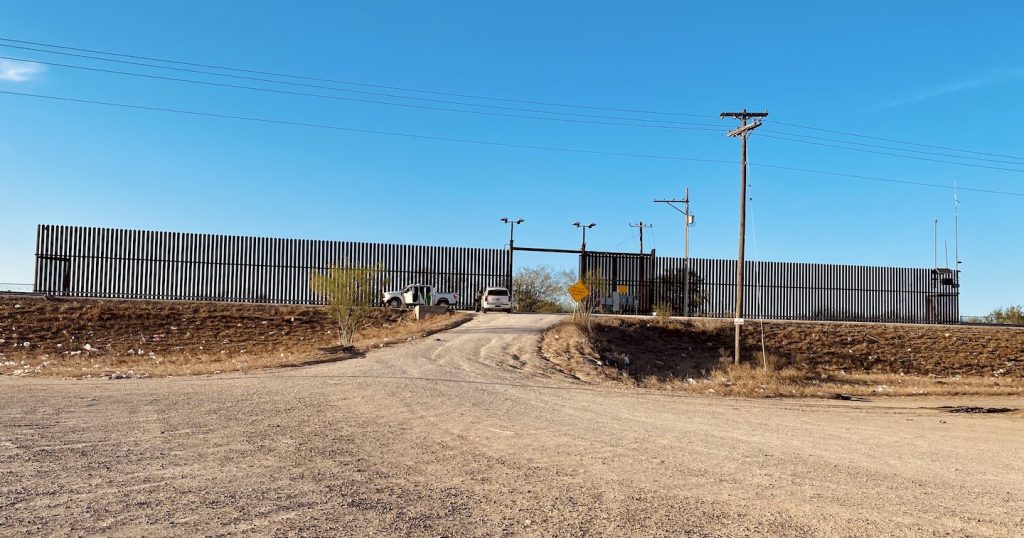
At the border, we encountered Border Patrol agents stationed at a large, gated fence. While speaking with an agent who welcomed our questions, we witnessed a patrol truck return to the U.S. carrying two individuals seeking asylum. This moment was profoundly impactful, knowing that such opportunities may soon become unavailable under the incoming administration. It left me wondering how many more people will attempt the long and dangerous trek across the South Texas plains willing to risk everything—including their lives—to seek something different and potentially better.

View of the US-Mexico border wall, with an open gate and two Border Patrol vehicles.
View of the US-Mexico border wall and gate.

There is no simple solution to this humanitarian crisis, but after this experience, I feel better equipped to speak about the Beyond Borders project with better understanding and compassion. I am deeply grateful to have been part of the 2025 team.

~AE