All posts by lathamke

Progress is Impossible Without Change

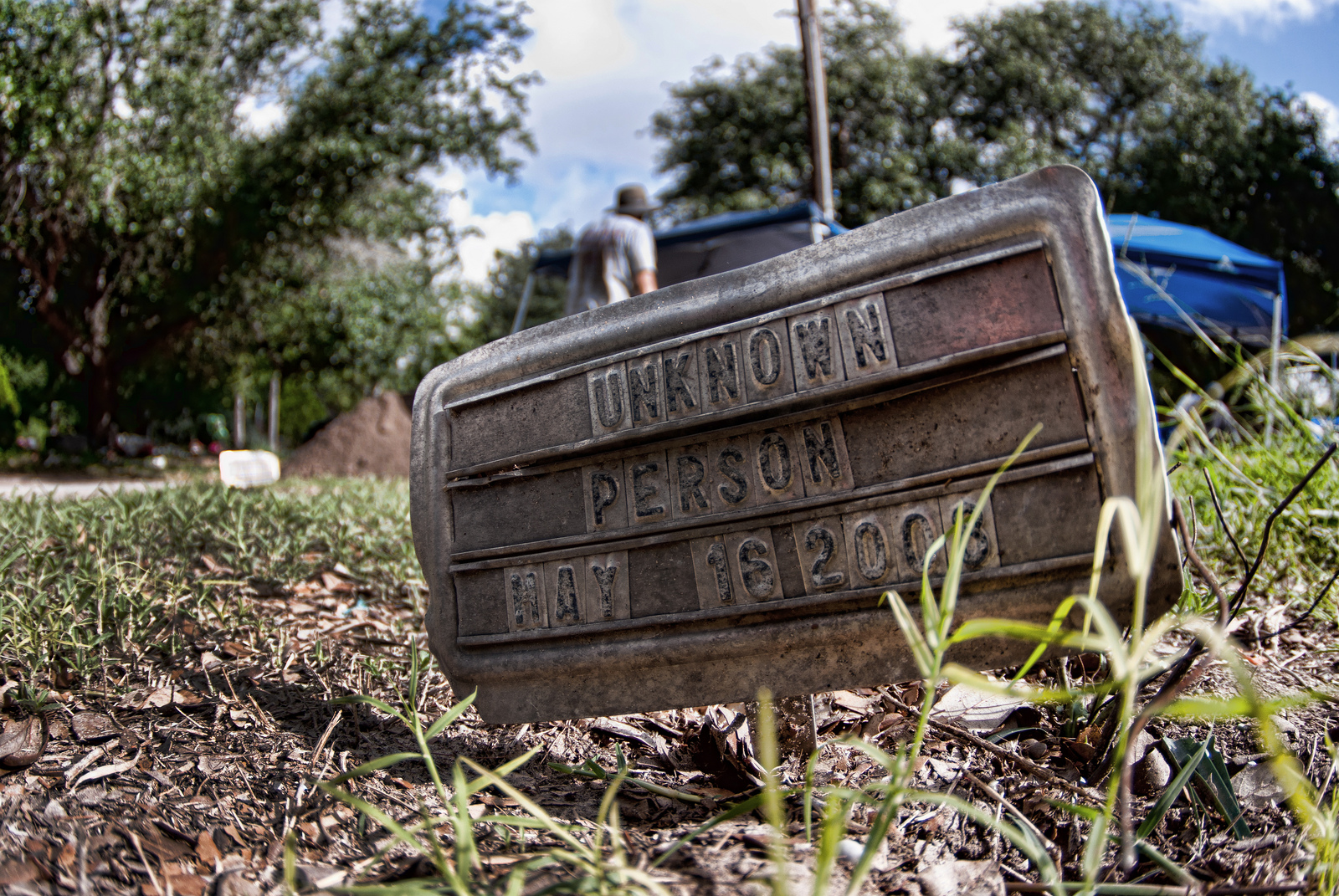
A metal grave marker for an unknown person.

On May 16 the UIndy Forensics Team will once again head south to work with colleagues at Texas State University on a large scale migrant identification initiative.  While we have been involved in these efforts since 2013, this mission bears some pretty dramatic changes for our team. Each mission has been different in its own right and we have come to embrace the motto “Expect the Unexpected”, but there are changes that warrant mentioning before we depart.
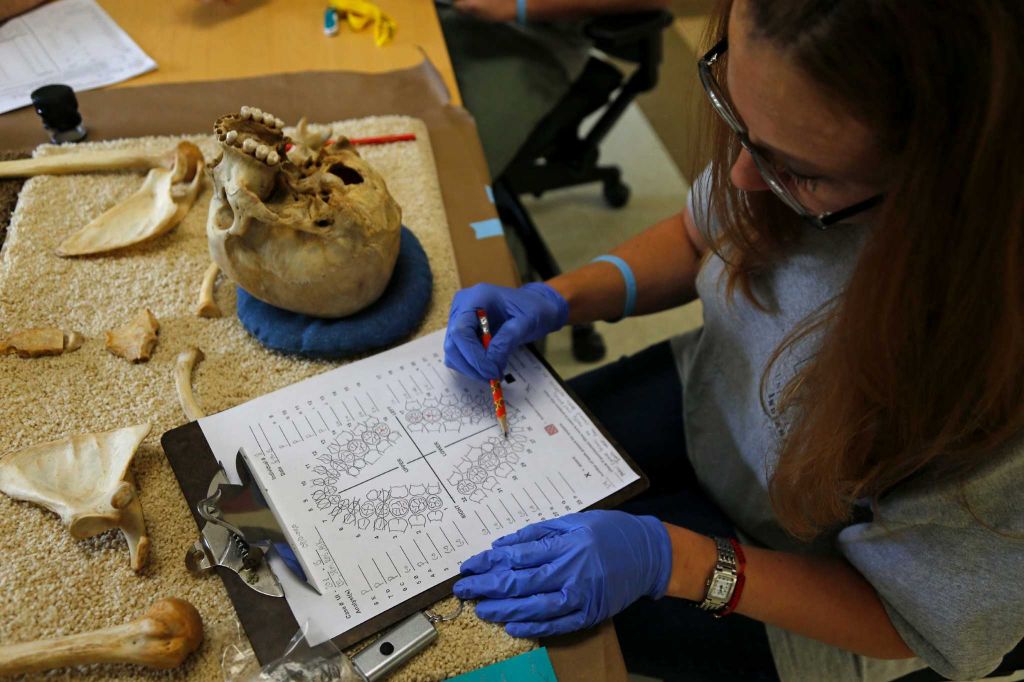
Dr. Latham analyzing a skull in the lab.
photo by the Houston Chronicle

1 – For the first time we will be conducting skeletal analyses and exhumations in one trip. Our prior missions have focused on one or the other: exhumations at Sacred Heart Burial Park in Brooks County or skeletal analyses at Texas State University.  Both activities are intense and exhausting in their own way. Conducting multiple skeletal analyses per day requires mental stamina, as one wandering thought or eye can cause the analyst to miss an important detail or feature that could be potentially important in the identification efforts. Cemetery excavations are physically exhausting and bring the added dangers of environmental exposure (heat, dehydration, bugs, etc…) or injury. I have always been proud of the dedication of the UIndy student volunteers and am especially proud of this team, who didn’t hesitate when I explained the demands that this mission entails.  Each member sees the contribution they can make in this crisis situation as the most important deciding factor in their decision to embark on this trip.
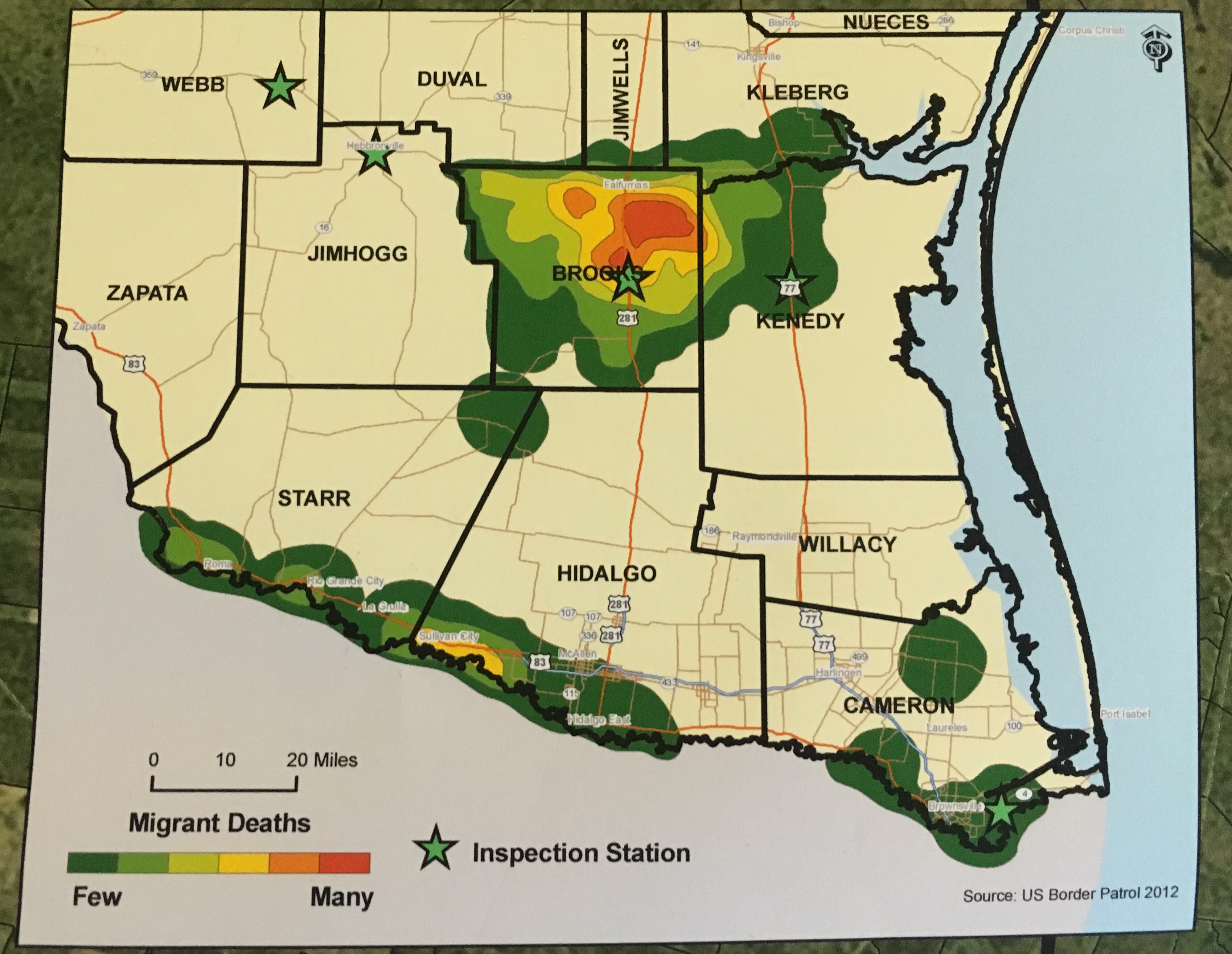
Migrant activity map of South Texas.
Migrant Deaths in South TX

2 – We will be moving our exhumation efforts to a different county. Since 2013 our focus has been on the identification of migrants who perished in Brooks County Texas, and were buried without a forensic investigation into their identity. However, Brooks is only one of many counties facing a similar crisis situation. The excavations on this trip will occur in Starr County Texas. We are humbled that we were invited by our colleagues at Texas State University to participate in this expanding identification effort and are eager to begin this new phase of the project. However, we will miss the familiar places and the familiar faces of our friends in Falfurrias.
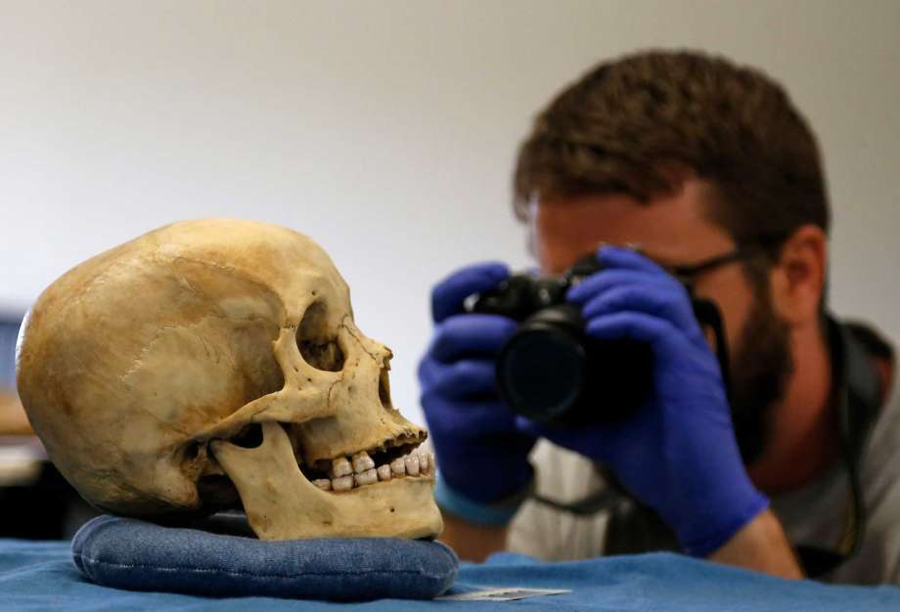
Justin taking a photo of a skull
Photo by the Houston Chronicle

3 – Our veteran team member Justin has retired. Justin has participated in  the entirety of every field mission since 2013. He has been our muscles when we needed strength in the field. He has been our senior analyst when we needed brains in the lab. He has been our shoulder when we needed to cry, and an outstretched hand when we needed support. He has been our translator when we needed a Spanish speaker, our nature
conservationist when we needed bugs, snakes, frogs and other critters relocated from our excavation spots, and our chef when we were hungry. He has been our comic relief when we needed a reason to smile and our motivational speaker when we needed a reason to not give up. He has been an invaluable part of the UIndy efforts towards migrant identification and I want to make sure that his decision year after year to put his heart and soul into this work does not go unnoticed. We will miss Justin, but wish him the best as he enters the next phase of his educational career in Forensic Anthropology: starting work on his doctorate.

The team for this mission consists of Leann, Erica, Jessica and Haley. Please continue to check back daily for updates on our work and progress regarding the entire initiative in general. Thank you for your support and please feel free to share this information to bring awareness to this humanitarian crisis situation.

~KEL
Why You Should Care

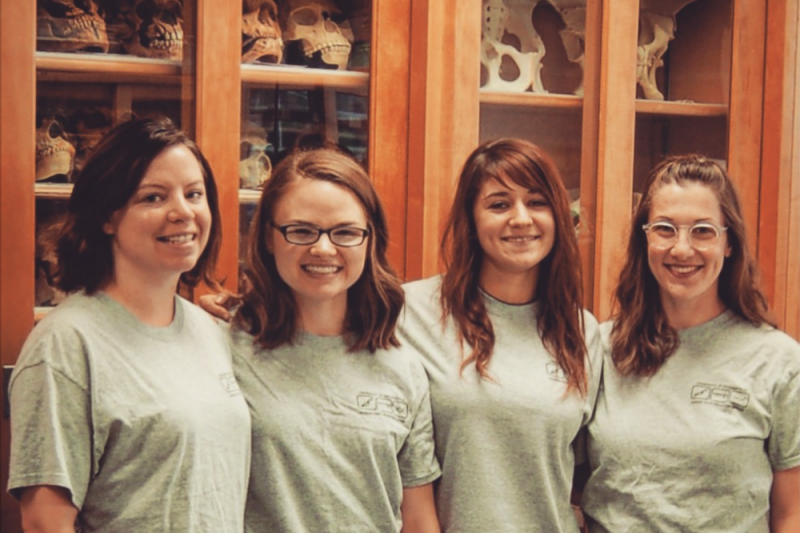
Team photo in front of anatomical skulls.
Jessica, Haley, Erica & Leann

The graduate students (Jessica, Haley, Erica & Leann) that will be embarking our next Humanitarian Mission (beginning next week) worked with UIndy team alum Justin to create a 5 minute video  reflecting on why you should care about the crisis at our southern border.  They highlight issues of human rights, respect for others, treating others the way you would want yourself and your family members treated and misconceptions about the migrant population seeking asylum in this country. Please take the time to watch the video by clicking HERE.

We also invite you to begin checking the blog daily for highlights as begin our journey to Texas. There we will meet our colleagues from Texas State University to work towards migrant identifications in the lab, as well as in the field. Stay tuned for more details. We appreciate your support!

Do you know Wilmer Guardado?

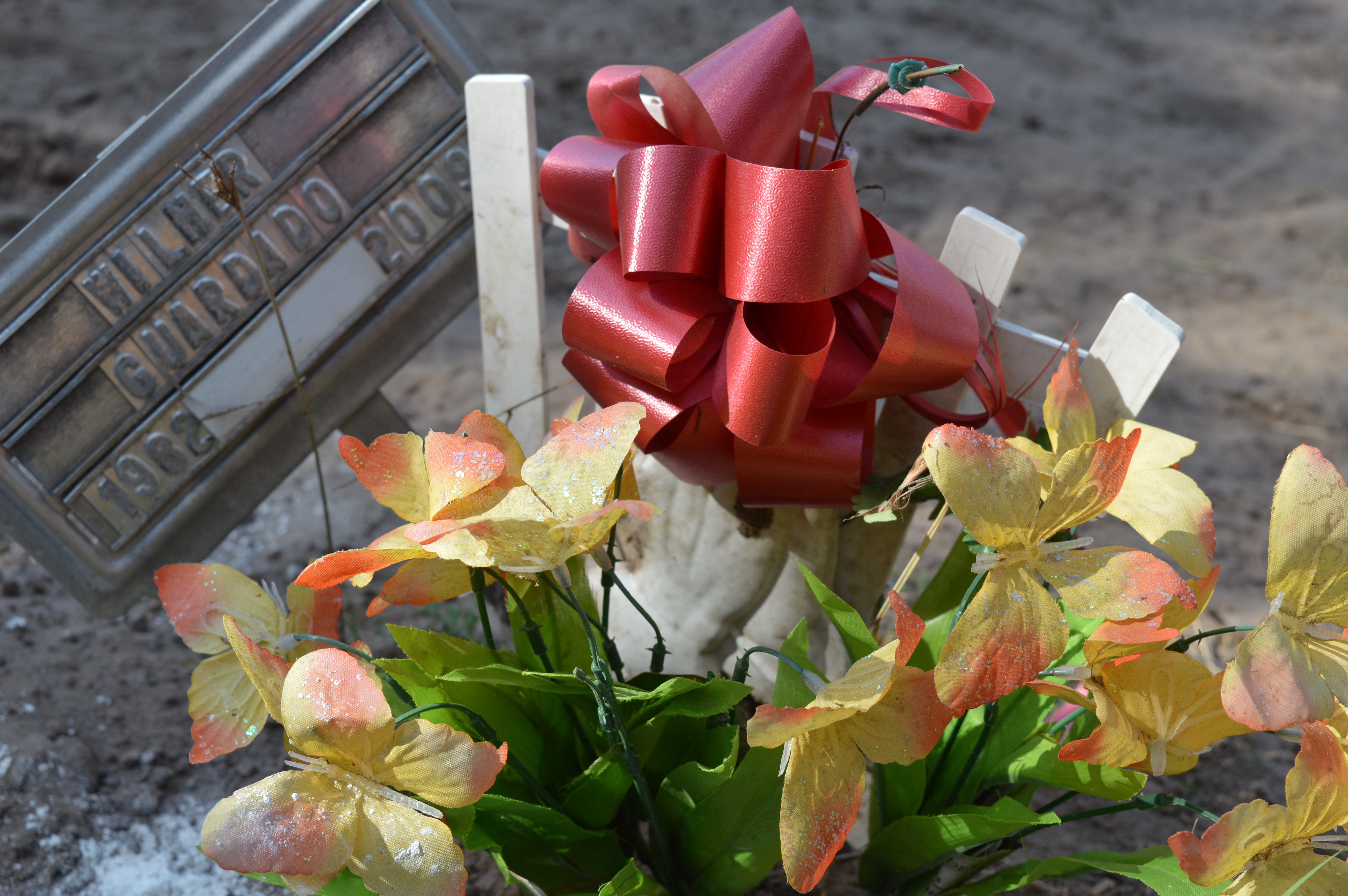
Metal grave marker with flowers.
Wilmer Guardado 1982-2009

This was our 5th trip to TX. In 2013 we were invited to do exhumations in the Sacred Heart Burial Park side by side Dr. Lori Baker and her students from Baylor University. Like every long term project, there are lessons learned as progress occurs. Towards the end of that first field season we had a concern that the excavations were not going deep enough and were not being systematically conducted in all quadrants. But we moved to a different area of the cemetery in 2014. That year we were able to work more collaboratively with Baylor University and were allowed a leadership role in the cemetery where we supervised the exhumations. We made sure each quadrant was systematically excavated and explored to a standard depth below the ground surface. In 2015 and 2016, we were invited to conduct skeletal analyses on the individuals who had been removed from the cemetery and were being housed at Texas State University until identification and repatriation.  As leadership of the project was transferred to Dr. Kate Spradley at Texas State University under Operation identification, we  were honored to once again be invited to assist in exhuming the remaining unidentified burials in Sacred Heart.

For five years we have been working to exhume and identify migrants who perished in Brooks County, TX. For five years individuals from a variety of university, governmental and nongovernmental agencies have been working to reduce the number of deaths and identify those who lost their lives in Brooks County. Countless people, volunteers, hours, days, weeks, years and dollars have gone towards assisting one county during this humanitarian crisis (and there are more).

We thought this would be our last year of exhumations in Brooks County. We started in a third area of the cemetery that contained six markers for unidentified individuals. There was one more marker near the area exhumed in our second field season (area 2).  As we began to work we were soon informed by community members who worked in or frequented the cemetery that there were more areas that needed our attention. After the 6 from area 3 were completed we split up into three groups: two Texas State groups working on area 2 and a new area (4) and one UIndy group going back to area 1.  When we got to area 1 we were greeted by Wilmer’s marker. Wilmer was buried in a quadrant worked on by the UIndy team in 2013.  Even back then we wondered about Wilmer: Was he a migrant? How was he identified? Where is he from? Was there any attempt to notify his family? Does anyone know he is here?  Now we find ourselves back in that same area of the cemetery 4 years later and are still wondering about Wilmer. We proceeded to re-excavate the area but were careful to not disturb Wilmer. We did found additional burials in this area, as well as bundles of personal effects. Four more individuals will now be able to start their journeys towards identification. But I can’t help but wonder about Wilmer.  As we were leaving we made sure to put new flowers at Wilmer’s marker.

We went to Sacred Heart with the hopes of recovering 7 individuals and we ended up recovering 24.  And there are more. The work continues on a daily basis by many people across TX and beyond. Their dedication to identifying these individuals is extraordinary. I am proud that the UIndy team was able to contribute to the efforts and hope we are invited to continue working  towards these identification and repatriation efforts.

KEL