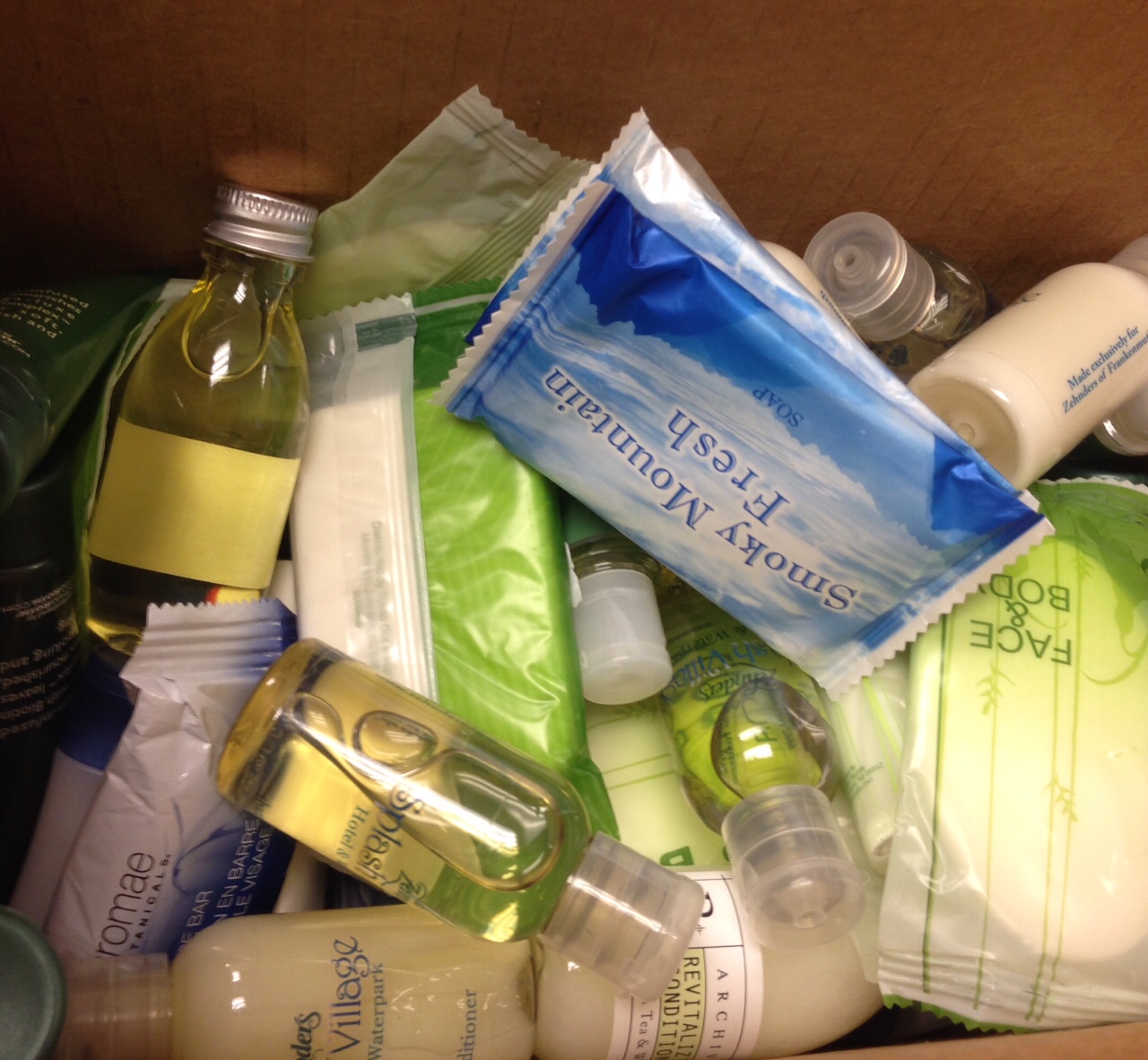
We spent just a few hours at the Humanitarian Respite Center at Sacred Heart Church in McAllen, TX back in June. Yet, we will never forgot our time there. Hundreds of tired, hungry and broken migrant refugees come through their doors weekly and the volunteers never skipped a beat. Through the sadness they witness daily they keep smile and hope on their faces. What started as a temporary response to the influx of migrant refugees across the border has been going for over a year. Sister Norma Pimentel and her volunteers provide assistance and a place to rest for men, women and children along their journey. Their ability to provide food, clean clothing, baby supplies, toiletries and humanitarian aid is based solely on donations and volunteers. We view their donation request list frequently to see what supplies are needed. This month we noticed a need for toiletries and began collecting items. Many people do not donate to various causes because they think their contributions are too small. We have learned over our course of working with the humanitarian crisis on the border, that many small contributions can make a huge difference. So please consider a donation of new or gently used items or a monetary contribution.
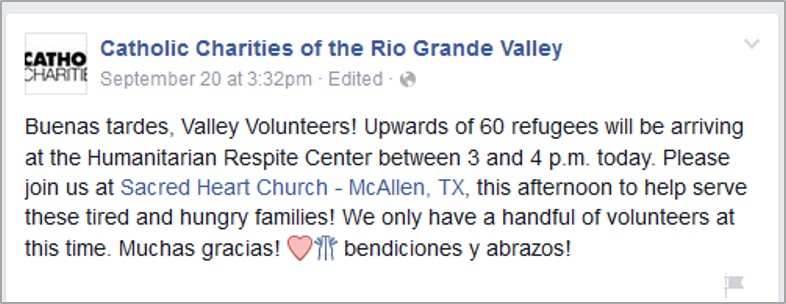
Daily requests for the Humanitarian Respite Center for volunteers
If you live near McAllen, TX or can travel there for a few days please consider volunteering. You can keep up with their needs on their Facebook Page where they post daily how many refugees are arriving. Sister Norma and the Humanitarian Respite Center were recently acknowledged by Pope Francis for their selfless acts of courage and aid in the face of this crisis. Please click on the red shaded words in this passage for links to more information.
A society will be judged on the basis of how it treats its most vulnerable members
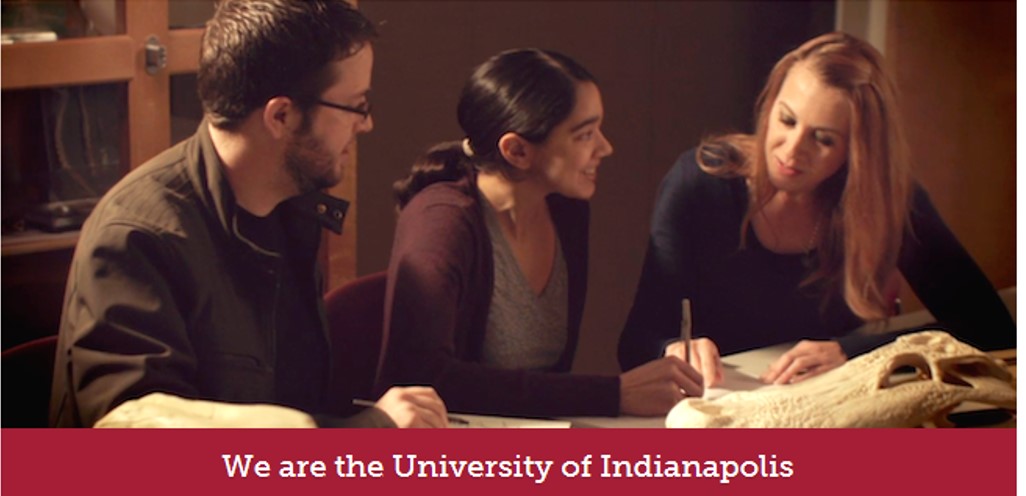
I receive many inquiries about the University of Indianapolis Human Biology MS Degree regarding educational, forensic case and human rights work experiences. This graduate program combines elements of forensics and biological anthropology and provides the opportunity for professional experience such as assisting archeological fieldschools and contract excavations, presenting original research and case studies at professional meetings, and working alongside professors to assist them in their own research. This program also prepares students for doctoral work in anthropology, anatomy, biology or medical school and is a foundation for careers in the forensic and clinical sciences and public health.
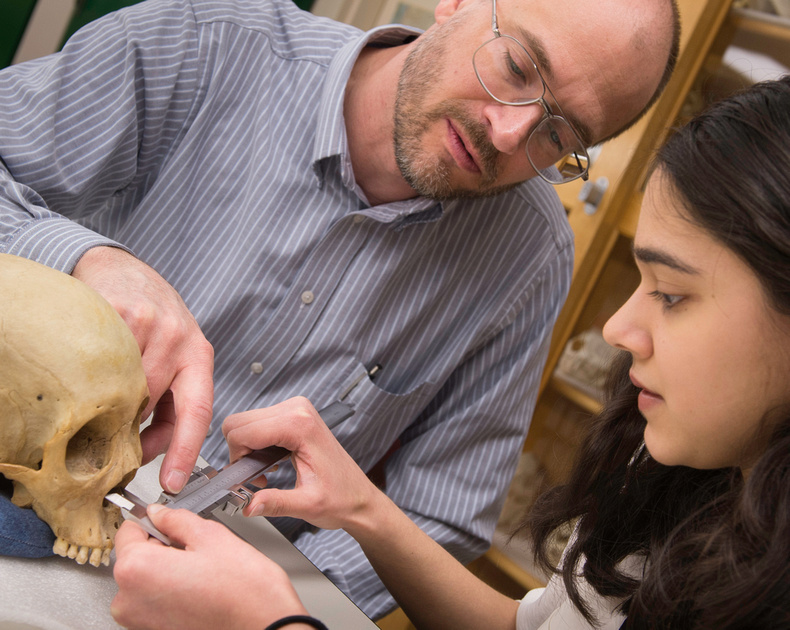
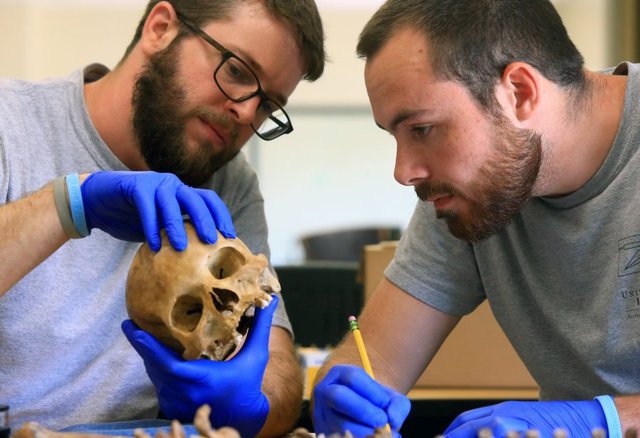
Dr. Nawrocki and graduate student Amanda Khan taking measurements from a human cranium
Students can specialize in: Anatomy and Physiology, Skeletal Biology/Human Osteology, Human Variation and Adaptation, Forensic DNA, Forensic Anthropology, Forensic Archeology, Taphonomy and Trauma Analysis, Human Evolution or Historic Period Cemetery Osteoarcheology. Three faculty members who specialize in these topics serve as the main advisers in the program: Dr. Krista Latham, Dr. Stephen Nawrocki and Dr. John Langdon. The Master’s in Human Biology is a full-time program that requires a minimum of 36 hours of coursework in three core areas: Anatomy and Physiology, Human Variation and Evolutionary Science.
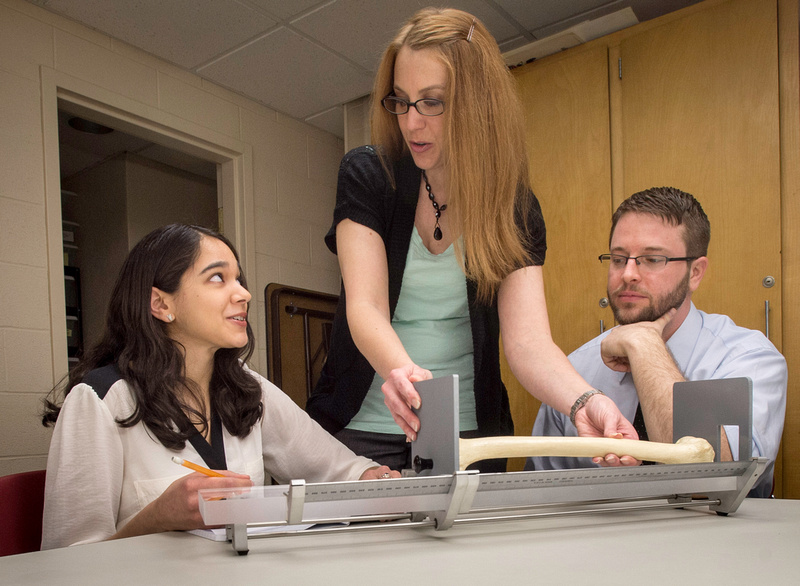
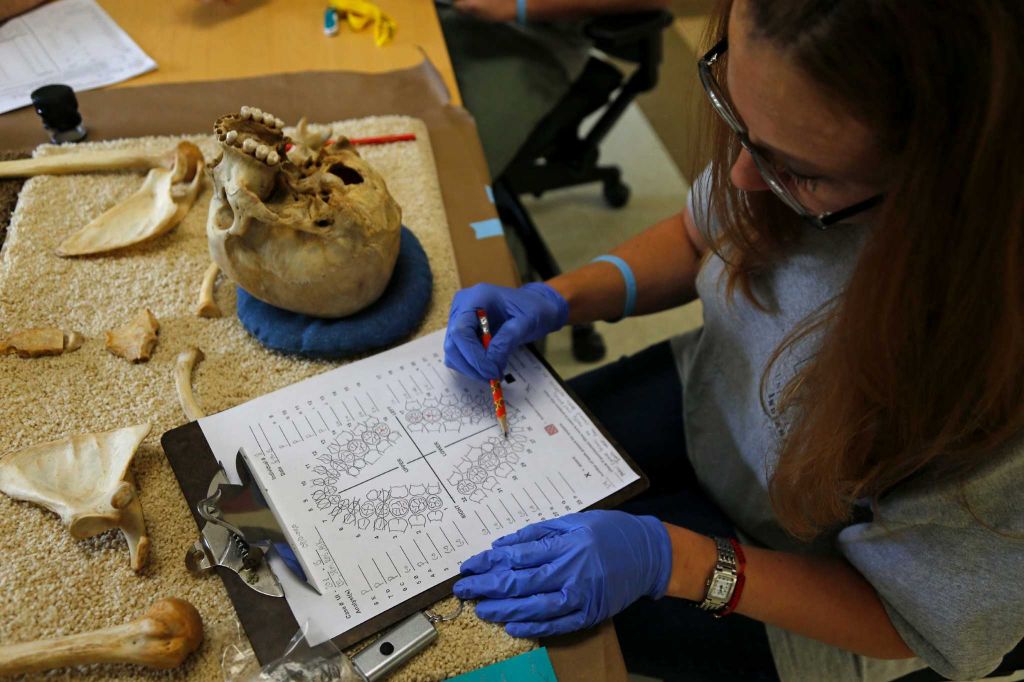
Dr. Latham and graduate students Amanda Khan & Justin Maiers take measurements from a human bone.
The faculty in the Human Biology program take a mentoring approach to education, with lots of individualized attention, informal instruction outside of the classroom, and ample opportunities for hands-on learning. This individualized approach to education is possible because of the small average cohort size that ranges from three to five students. Most students in a cohort rotate as a group through the same classes, which are generally small seminars with ample opportunity for discussion.
Graduate student Erica Christensen swabs a spent bullet casing for DNA analysis.
There are opportunities for both international and national research. Students have collected data across the US, as well as in Rwanda, Belize, South Africa and Chile. If your primary interest is in forensic anthropology, you will be expected to volunteer on forensic casework in the field and in the lab, starting your first semester. If you’re pursuing study in forensic anthropology or historical osteoarcheology, you will need to demonstrate proficiency in archeological field methods. The Human Biology faculty includes two board certified forensic anthropologists: Dr Latham and Dr Nawrocki. Board certification is the highest achievement in the field of forensic anthropology and is a distinction shared with about 80 active and practicing forensic anthropologists around the world.
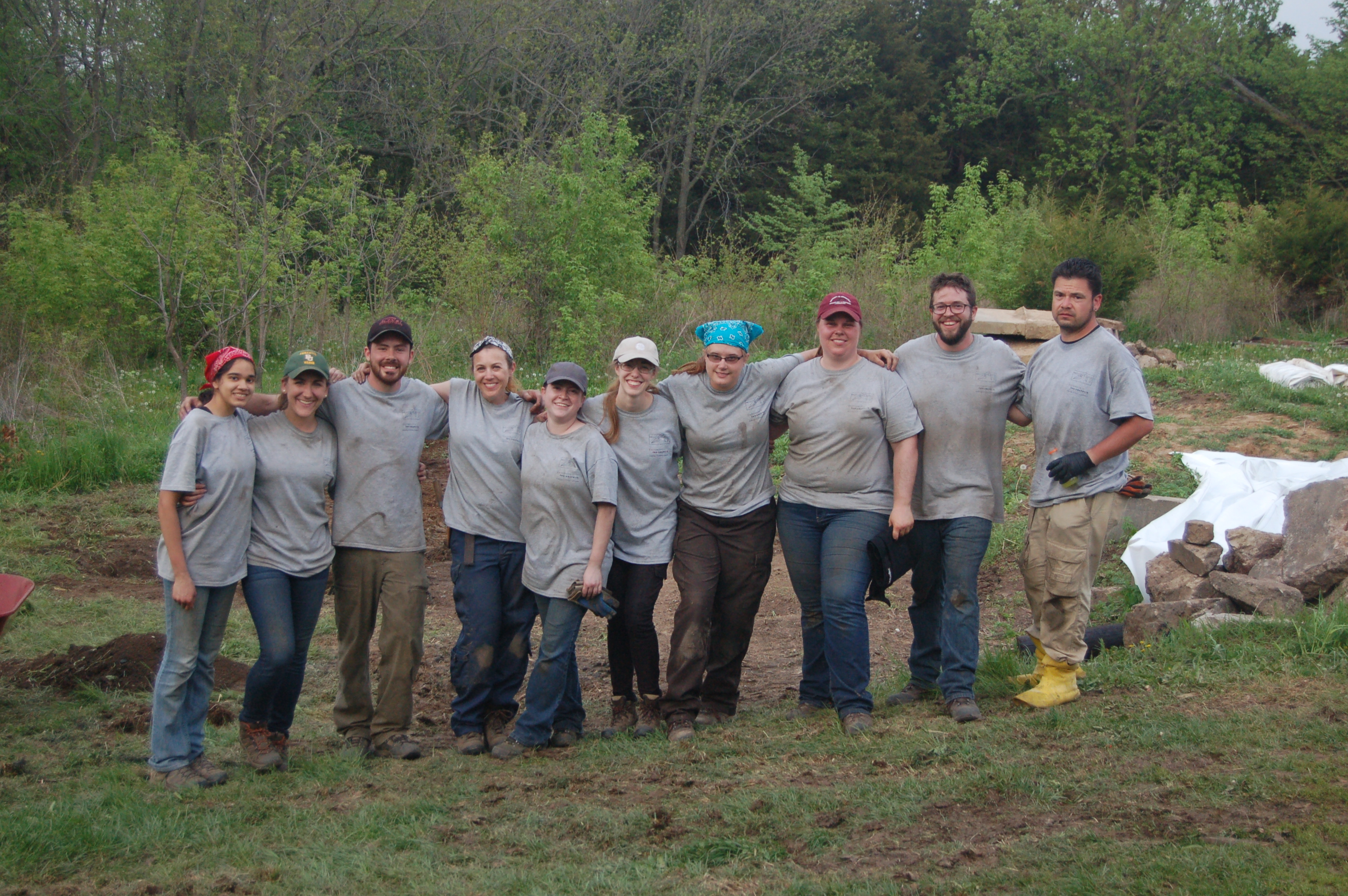
The University of Indianapolis Archeology & Forensics Lab team on the site of a forensic recovery in rural Iowa.
The Master’s of Science in Human Biology Degree is highly competitive because of its unique approach emphasizing scientific method and an appreciation of human biological variation in a forensic context. Application prerequisites include, but are not limited to, completed courses in anatomy (with dissection) and chemistry, a minimum undergraduate GPA of 3.0 and GRE scores equivalent to a 150 on both verbal and quantitative sections of the GRE and a score of 4.0 or better on the writing section.
Thank you to all our readers who have joined us the past few years to learn more about forensic archeology, forensic anthropology and specifically the work that we’ve been doing to assist in the exhumation and identification of unknown migrants that have died in Brooks County Texas. We plan on updating the blog at least once a month until our next human rights trip next summer. Keep in mind the work towards identifications never stops! Skeletal analyses at various institutions and human rights campaigns continue all year.
We would like to know what you are interested in reading about. Do you want to know more about the specific techniques we use, the NamUs database, our lab, our university program, our crew? Please send your questions to Dr. Latham at lathamke@uindy.edu. We look forward to hearing from you.