All posts by Amanda Walker

What Is Left Behind and What We Carry With Us

Content Warning: This post contains references to sexual assault.

I woke up at 3:30 p.m. today. Yes, literally 3:30 p.m. I slept for 16.5 hours last night. After arriving back in Indianapolis, I felt exhausted and desperately in need of a shower. I decided that everything in my suitcase needed washing, even technically clean items, because everything felt like it was coated in dirt and smelled like sweat. That was after spending only five days intensely searching the remote Texas wildlands.

Every conversation I had opened my mind to perspectives I had never considered before. I intentionally asked Don and Ray difficult questions about what the journey for migrants entails, how coyotes operate, why people cross the border, and what they have witnessed through years of fieldwork. Each day, I learned about new hardships migrants face, including how they navigate the vastness of ranches and the challenges that follow.

Vastness of the ranches in the Texas border lands
Miles of remote Texas wildlands

The food, water, and belongings migrants carry are carefully calculated to minimize weight, conserve space, and remain essential. We saw countless empty tuna packets, cans, water jugs, discarded clothing, and other items. Every object brought serves a purpose, and once that purpose is fulfilled, it is often left behind. The less weight carried, the less energy expended. I also learned about the extreme measures people have taken in attempts to cross border checkpoints: hiding in small, concealed spaces inside vehicles, breathing through straws while submerged in barrels of sewage, and other dangerous conditions. Many of these attempts end when border patrol dogs detect them. Because of this, traveling through ranches is often viewed as the “safer” option, despite the prolonged exposure to heat, limited shelter, and scarce food and water.

American Eagle shirt turned inside out as to indicate it was taken off
American Eagle shirt turned inside out

One day, we came upon a very distinct tree. Certain items of clothing were on the ground and hung in its branches. I felt confused and unsettled. I didn’t even think about sexual violence. I was aware of the hardships of navigating the harsh environment and how physically and mentally exhausting it is to partake in the journey. I failed to consider how coyotes treated migrants during this journey. At this tree, a migrant’s personal items suddenly turn into a heinous message, a system to warn others what happens when someone disobeys the coyote. 

Blanket tied to a tree

Coyotes are supposed to be the ones to protect and help migrants cross the border. However, if a migrant pays them upfront, they become expendable and their payment can be used against them. If they wait to pay in full later, a migrant may be extorted for more money than initially agreed upon and forced into a human trafficking situation. Neither is a safe option. The thought about being tired, dehydrated, and afraid, only for one’s autonomy and dignity to be stolen, has stayed with me. Migrants are aware that this major risk exists and that it is common. Some even take preventative contraceptives before embarking on the journey- just in case. It is painful to confront how broken the system is when individuals feel compelled to place themselves in such vulnerable positions, enduring the abuse by those who hold power over them. Migrants often know the risks and still proceed to leave their current situation. It forces me to reflect on how desperate their circumstances must be to make risking their lives feel like the only option. Migrants do not want to cross the border illegally; many feel they have no other choice. From the stories shared by Don and Ray, when a migrant is found alive in the field, many are done and want to be turned in so they can go home. 

Finding remains adds another complex layer to this work. I have learned how bone scatters may appear, how sand, brush, and cacti may conceal bones, and how animals transport them. Rats often carry long bones to build their nests. Larger predators tend to move bones into protective spaces for eating. Some predators will ingest bones altogether, making it unlikely to find certain bones. I was surprised by how easily bones can be hidden. Bones can roll from strong winds, be stepped on by animals, or even be covered up by natural debris like blowing sand. The movement, location, and condition of the bones tell a story. I also did not fully understand how bright-white a sun bleached bone looked until seeing them for myself, as they closely resembled the bone casts we use in class. 

Non-human bones scattered in the distance

Throughout the trip, I felt an immense amount of privilege to be surrounded by my team every day. We all looked out for each other while also serving those who lost their lives on the journey. Every day, I had proper gear, plenty of water, protection, and nutritious food, and I was still struggling. By midday, I was usually already physically and mentally exhausted. However, I stayed grounded in my values. I showed up every day ready to work and empowered to make a difference. 

Amanda with Texas brush around her
Amanda hiking through tall grasses

The conversations, emotions, and experiences from this trip will stay with me. I will carry them forward to educate others and shape my future work. I told someone today that there is absolutely no combination of words that could truly convey what I experienced. You will never fully understand until you’ve experienced it for yourself. I left nothing behind on this trip, as every part had an impact on me. I will move forward with intentionality and respect, not only those who cross the border, but those who search for them. I will cherish my memories with Don, Ray, Reed, Melissa, and the 2026 UIndy Beyond Borders Team. I am deeply grateful for this opportunity and cannot put into words the emotions and growth I have experienced this trip. This experience has changed me; I have a responsibility now to continue to learn, educate, and stay up-to-date on what is happening at the Texas border. Ultimately, I strive to carry what I have learned forward in ways that continue to make an impact and ask hard questions to think deeply and reflect on my time in the Texas borderlands.
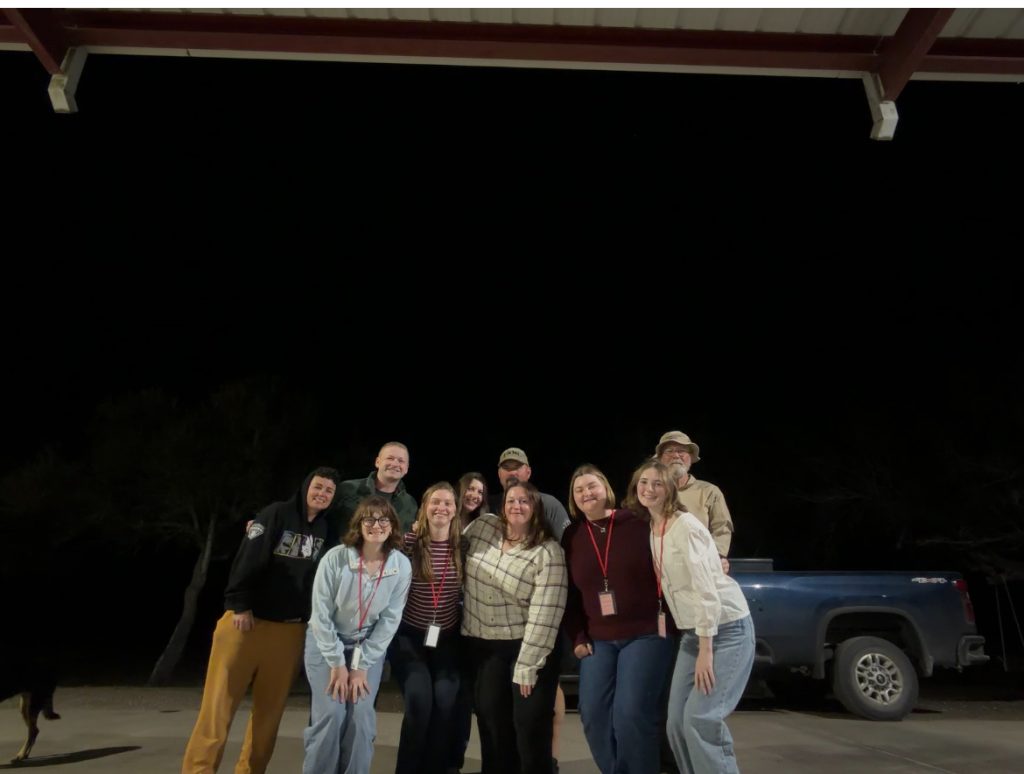
The Beyond Borders 2026 Team poses under the night sky for the last time
The Beyond Borders 2026 Team

Amanda

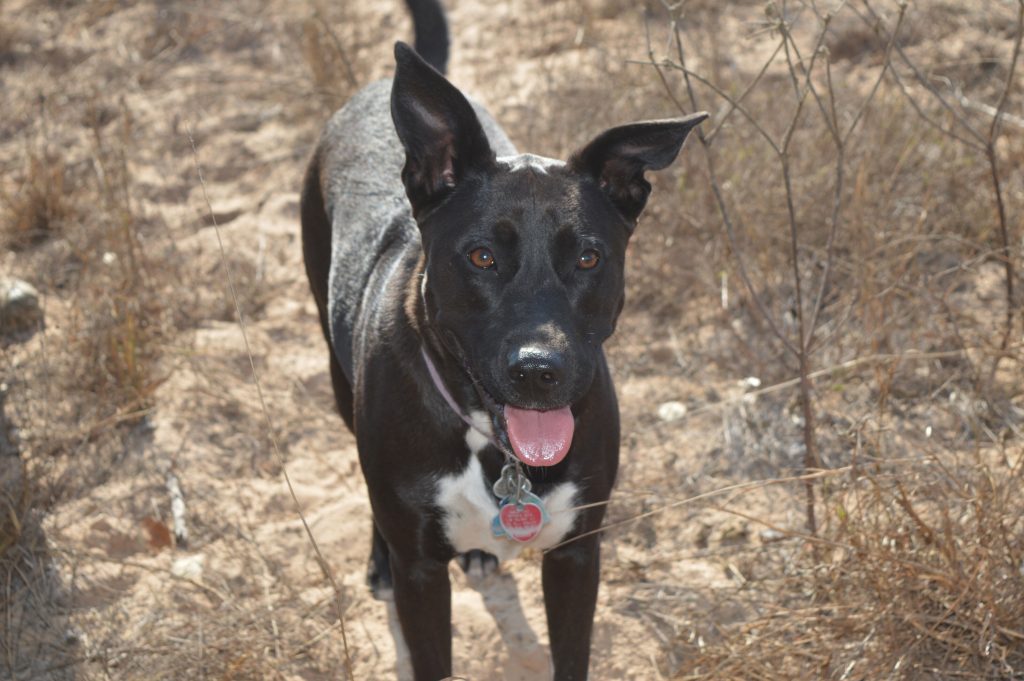
P.S. I did get plenty of dog time through Socks and Oakley, who were both very cute and sweet girls.

Amanda and Socks
Amanda and Socks

She is just so cute!

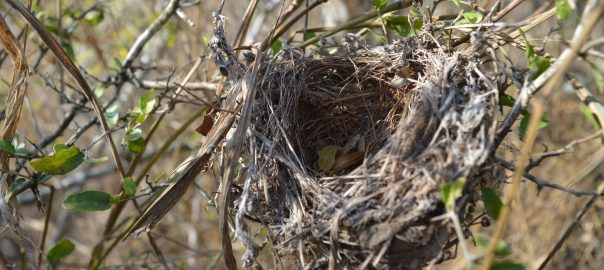
Bird nest on a branch

Day 3: Lost Within the Brush

We slept in a bit later than yesterday, got ready, ate breakfast, and then loaded up in the car. Today, we planned to head to a new ranch where remains had previously been found. We began the day knowing it would be different than the previous two; we would be searching an area more diligently, staying eagle-eyed when looking for bones, fragments, or subtle clues. We prepared physically and mentally with extra water, a focused mindset, and confidence as we leaned into the uncertainties the day ahead might bring.

The drive to the ranch was long. It took nearly 45 minutes from entering the gate to reach the coordinates where the remains were located in the past. This travel time puts into perspective the sheer size of these ranches; some are a couple of hundred acres in size, others thousands, and some are even hundreds of thousands of acres. It emphasizes how easily something or someone could be missed entirely. After the long drive, we unloaded our gear, reviewed our search plan, and then lined up to begin searching through a massive motte. 

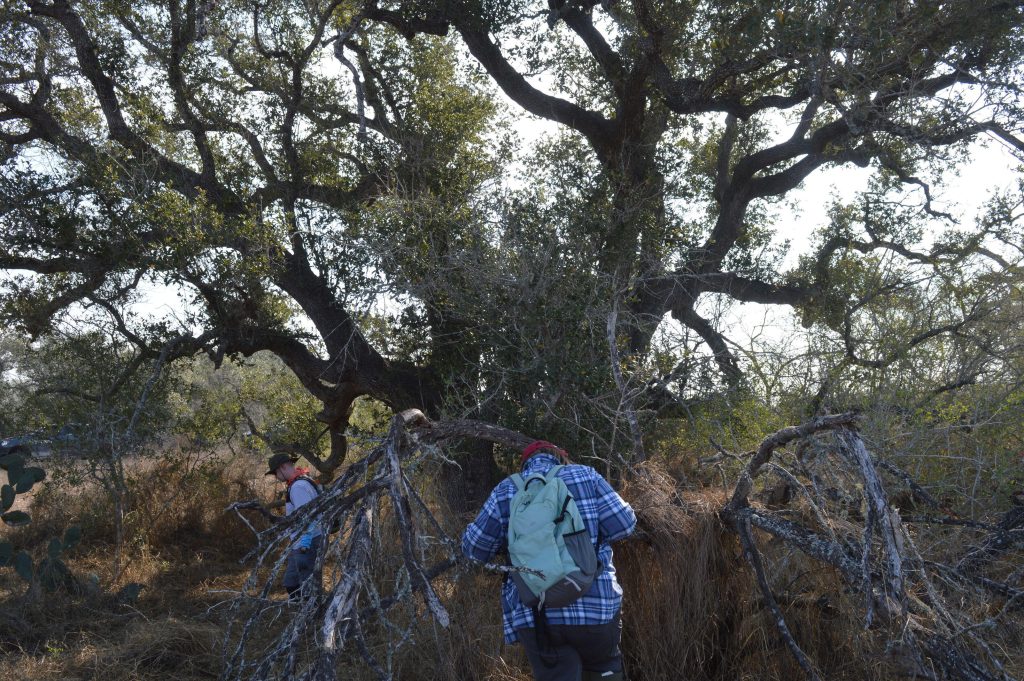
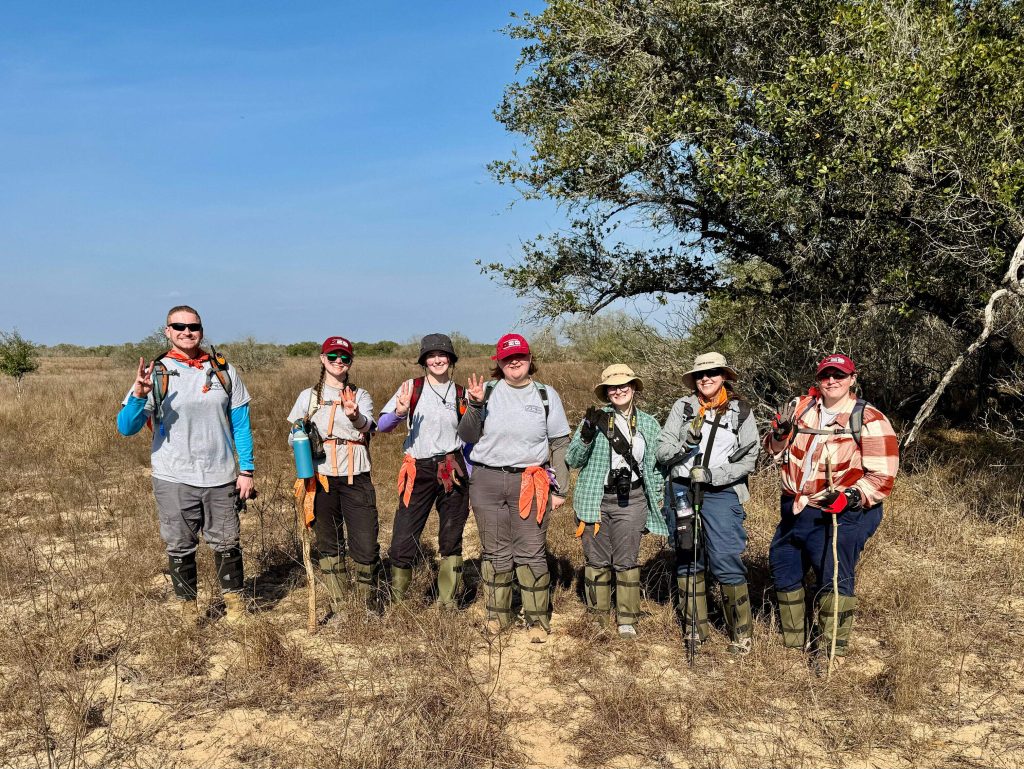
Lilly and Reed searching in a motte
Lilly and Reed searching through a motte

This motte was unlike the others we have searched through. The underbrush was thick with grasses that had grown tall during last year’s unusually wet spring, and had died during the winter drought. The grasses were still rooted in the ground, but blown over and tangled together. However, to conduct the thorough search we aimed for, it was crucial to pull away the dense underbrush to reveal the sandy soil underneath to check for any signs of bones. 

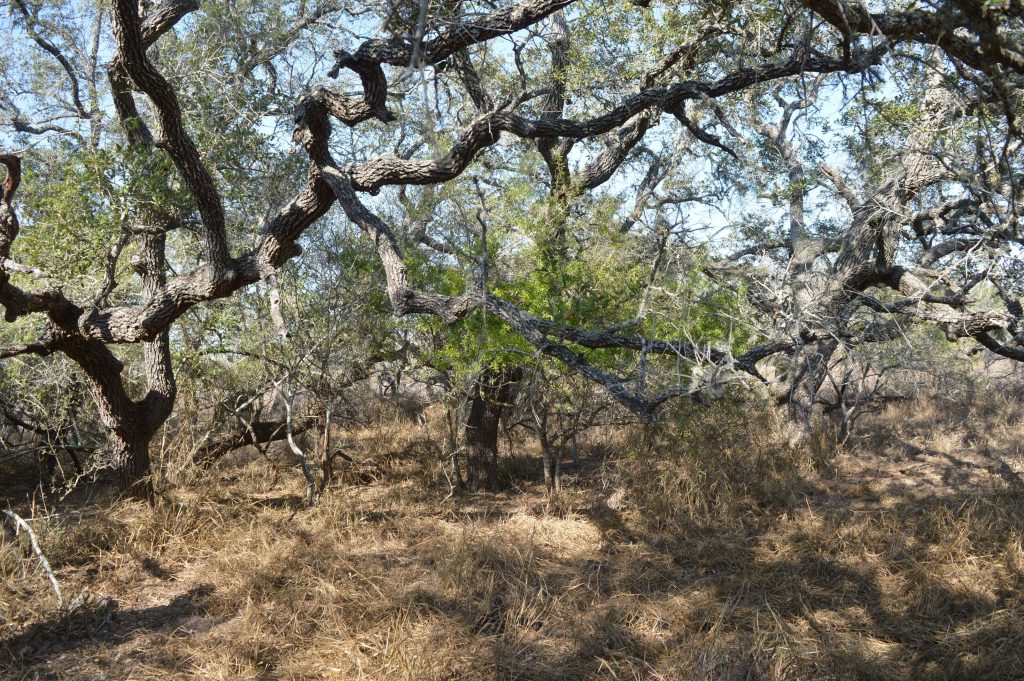
Large motte with dense brush
Large motte showcasing dense brush and trees

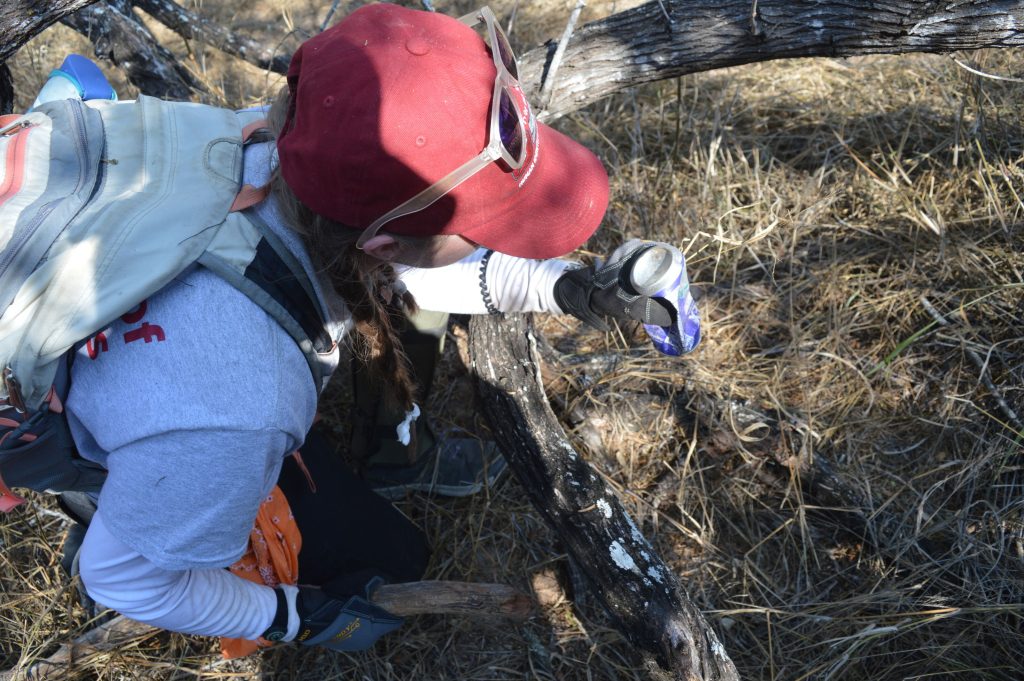
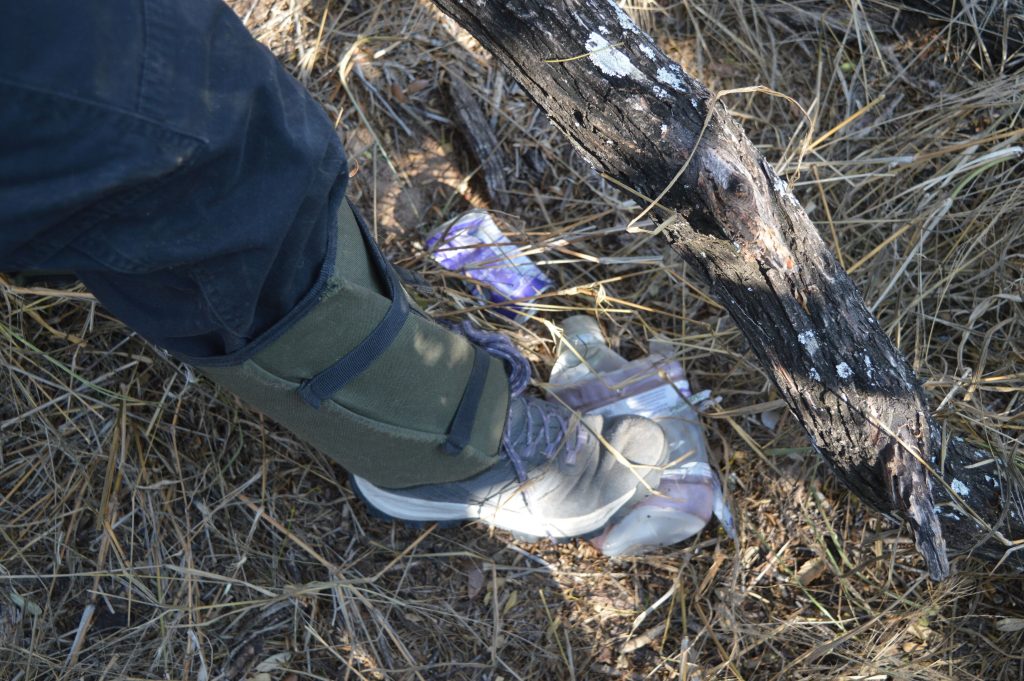
Another challenge we faced was the variation in taphonomy of the bones compared to what we have seen previously. Many of the animal bones have been sun-bleached, often presenting as bright-white, making them relatively easy to spot. However, if a bone is even partially buried (covered by blowing sand or pushed into the soft sand over time), it may be more brown in color and blend in with the soil. Searching through these mottes is especially crucial, as Don has taught us that migrants will often find a safe, shaded area to lie down and rest for a period of time. These areas often contain artifacts, which are items left behind during a migrant’s journey. Occasionally, an artifact will contain a “best by” or expiration date, which can provide context as to how long it has been there. Another technique I learned is that to tell the age of a plastic bottle, it can be stepped on. If the plastic crumbles or breaks apart, it is likely older; if it bounces back into shape, it is more recent. 

Amanda inspecting a can for an expiration date
Amanda stepping on bottle to check how old it is
Amanda stepping on a water jug to estimate how long it may have been there

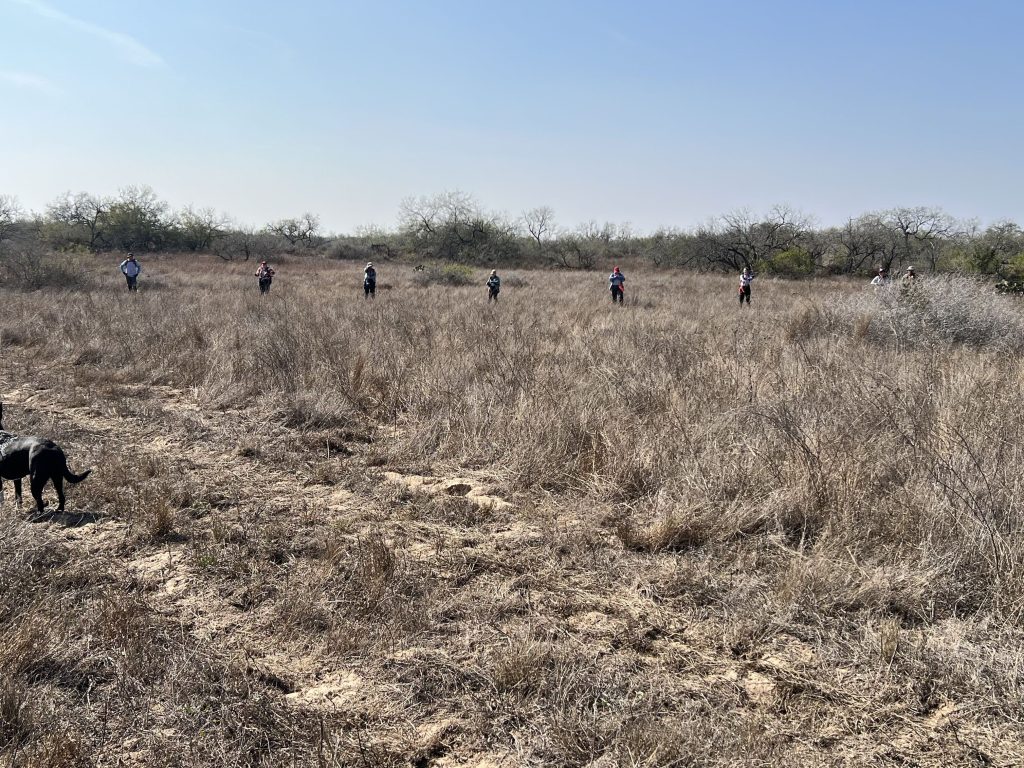
We conducted line searches through thorny cacti, dense brush, and trees with branches poking in all directions. We were also spread farther apart, which made it hard to see everyone and make sure we were maintaining the same direction and pace. It was a true test of what we are learning in the Human Biology program at UIndy. Still, communication remained strong, and we searched carefully while only being poked by a few cacti. Sometimes, the mottes seemed to go on forever and only got thicker as we went in. My internal compass spun, and I was surprised by how easy it was to feel lost within the brush. However, it is just as easy to feel disoriented when viewing how vast the ranches are. Visibility stretches for miles, yet as you walk, it feels like you are making no progress at all. 

The Beyond Borders 2026 Team lined up to begin conducting a line search
The 2026 Beyond Borders team lined up before conducting a line search

The contrast made me reflect on the length and difficulty of the journey migrants endure to walk through these ranches;  the dangers, the harsh environment, and the unknown about what lies ahead. Especially after seeing evidence of life within the dense brush, I can’t help but think about those who were here prior. The heaviness of not knowing what may be ahead is hard, but it empowers you to keep moving because finding any artifact or bones is important when recognizing who walked this path before us. 

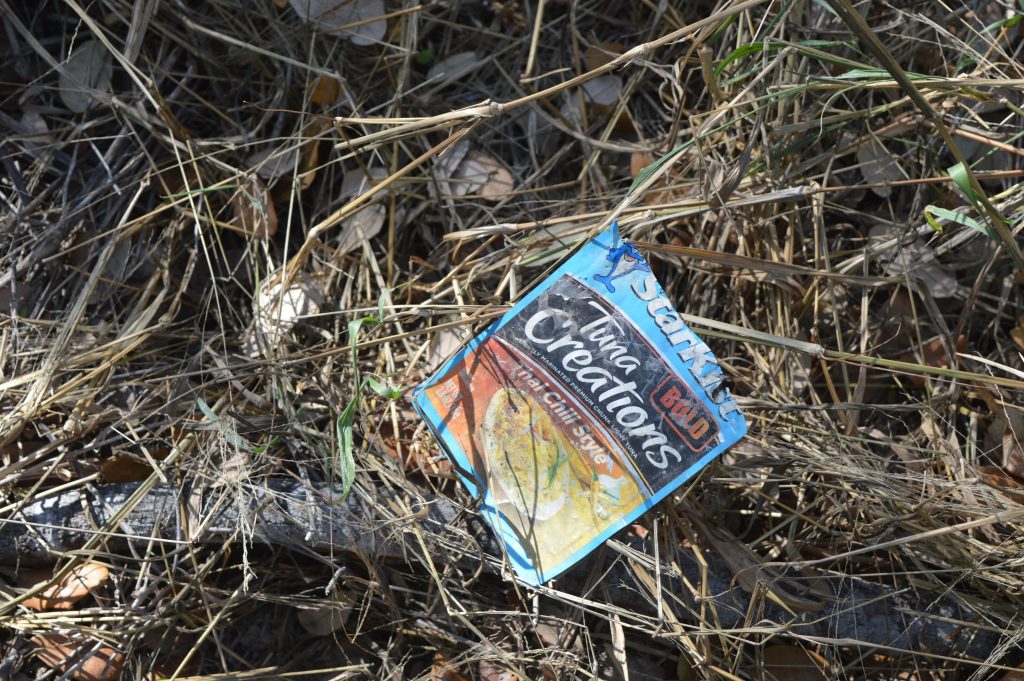
Tuna Creations packet resting on underbrush
Tuna Creations packet laying on underbrush
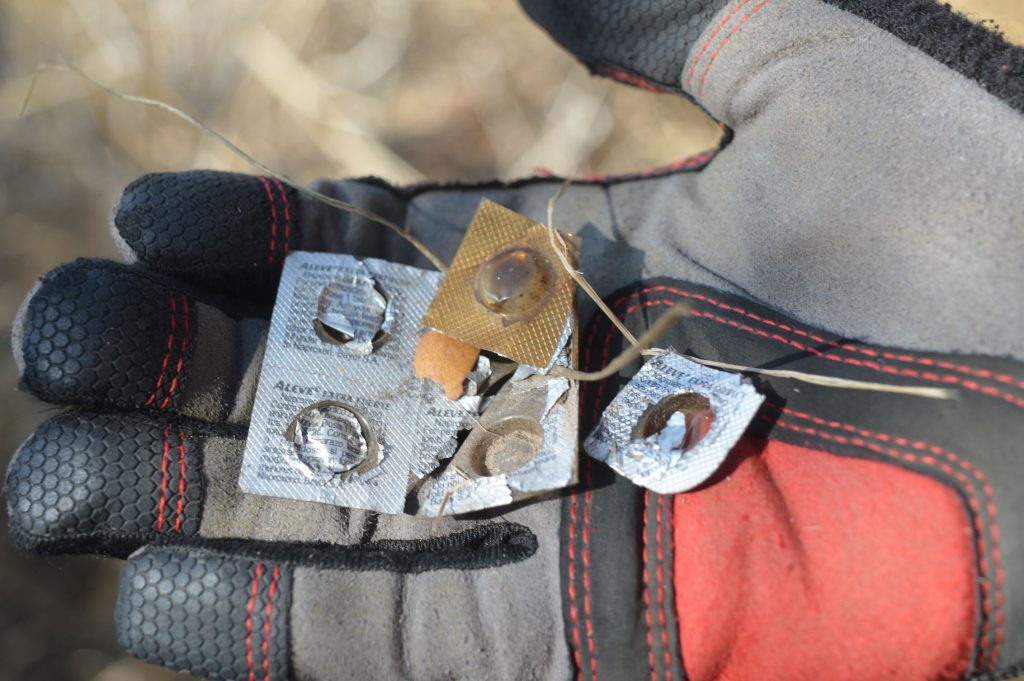
Empty Aleve packet
Empty Aleve packet

As we packed up for the day, it again took 45 minutes to exit the ranch. I sat in air-conditioning, looking forward to a warm meal, a shower, and a full night’s sleep. It had been a long, physically demanding day, but I had proper clothing, water, food, and a team beside me. I can’t fully imagine what it must feel like to walk these same areas while exhausted, exposed, and without those supports. Holding that reality with me, I leave today tired, humbled, and more aware of why this work matters. Tomorrow, we return to the brush with the same care, attention, and commitment to keep searching and showing up to land connected to many lives.

Dog Socks after a long day of hard work
Socks after a long day of work

Amanda

Finding Ground in the Unknown

I have been attempting to write this pre-trip blog post for days. It has sat on my to-do list for weeks, and yet I still feel unsure about what exactly to say. Today is Christmas, and I spent the day with my family and my sweet puppy, even opening a few gifts meant for my time in Texas. Despite the joy I felt today, the reality of this trip has quietly lingered in the background. Friends, neighbors, coworkers, and family have all asked me about this trip, if I feel ready, what we will be doing, where we are going, etc. Some have even told me to “have fun,” and I’m not quite sure how to respond to that because I know this experience will not be centered around fun. More often, I receive a “good luck with that” after I explain the long hours and difficult work ahead. Even today, on the phone with my family in England, I found myself being especially careful with my wording, knowing my 4 and 6-year-old cousins were listening. Throughout all the conversations, I have done my best to explain what our team will be doing and why this work is important. Still, it is hard to talk about something you have never done, especially when there are so many aspects of the experience that are still unknown.

As the departure date approaches, I am beginning to feel a growing sense of anxiety.  There is so much to prepare for, both physically and mentally, and my numerous packing lists are not helping to calm the whirlwind in my mind. I have struggled with anxiety for what feels like my entire life; often staying up late with thoughts swirling in my mind the night before a big event. As a child, my mom would guide me through breathing exercises and progressive muscle relaxation techniques. As an adult, I continue to use these tricks before stressful days or when my mind will not shut off. I know I will feel this way on the night of January 1st, and probably many nights in Texas. I have accepted that my anxiety will always be a part of me, but I use it to empower me, not control me. I will only let it fuel my passions, as I believe I feel anxious because I deeply care, and I want to do my best. This trip is no exception. At times, my anxiety feels small in comparison to the realities many families have faced at the border. However, I know what I can do to prepare myself for this trip. I have a general sense about what to anticipate and what I will experience, but I am prepared to expect the unexpected every day in Texas. I will approach every day with flexibility, humility, empathy, and an openness to learning.

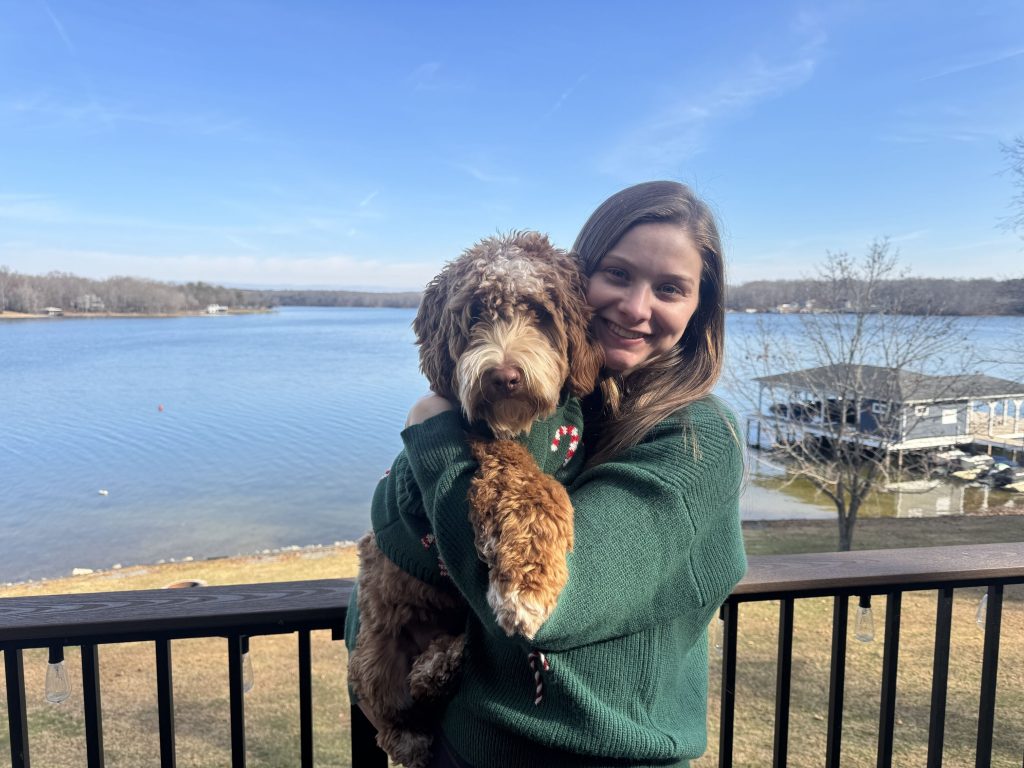
When my anxiety or negative feelings feel overwhelming, I like to ground myself in reminders of home, usually by asking my parents for a photo of our dog. So, to wrap up this post, I find myself reflecting on some simple lessons dogs offer that feel relevant as I prepare for this trip. First, practice loyalty. Stay loyal to those around you and your beliefs. I will remain loyal to my team and this mission, as I truly believe in this work. Second, patience is a virtue. No matter what hardships I may face during this trip, I will remain calm, focused, and refrain from complaining during the long, difficult days. Next, live in the present and soak in every moment. I will need to remind myself to remember why we are here and why this work is so important. I will stay present and make the most of every learning opportunity to grow my fieldwork skills. Lastly, don’t forget to drink plenty of water and make time to rest and recharge. Taking care of myself so I can fully show up and help others is essential. 

As I prepare for Texas, I understand every day will bring new challenges, but I am committed to approaching this experience with care, intention, and respect for the work and communities we are supporting. I am stocked up on dog photos, will continue to ponder my many packing lists, and prepare my mental toolkit of strategies when the unexpected occurs. Overall, I am preparing to navigate my anxiety by finding ground in the unknown. 

Amanda

Amanda and her pup Indy on Christmas