Category Archives: Community

Interaction with the community of Falfurrias

Diving Into Day 3

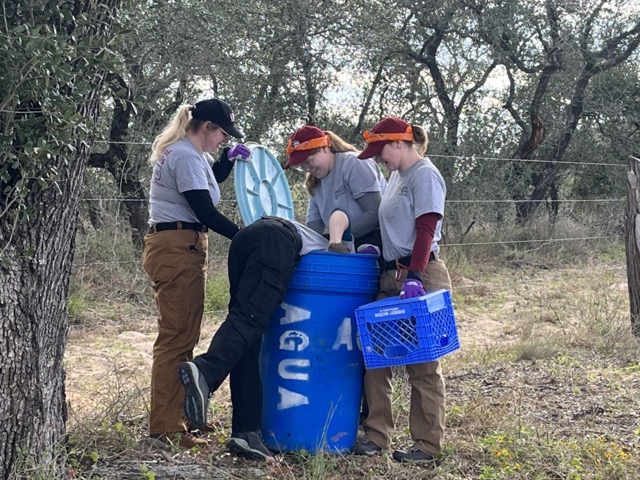
Claire head first in a blue barrel while refilling water stations.
Restocking water stations

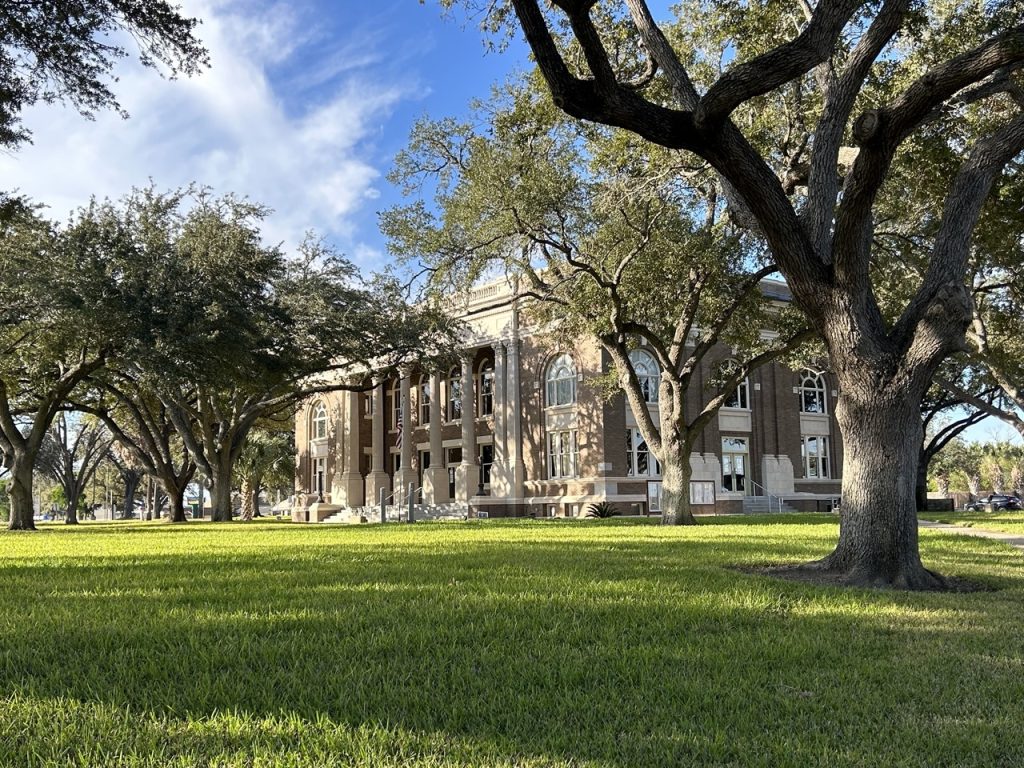
After a good night’s rest, we started day 3 at 7:30 a.m. Today was hotel waffle day, which is one of my favorite foods. We sat down for breakfast, had our vitamin C shots, and discussed more in depth our plans for the day. Our first activity was doing water stations with Eddie. We met up at the South Texas Human Rights Center. The South Texas Human Rights Center is adjacent to the Ed Rachal Memorial Library. Dr Latham explained the foundation has a focus on children, literacy and education. Across the street is the Brooks County Courthouse, which according to Dr. Latham is absolutely beautiful inside after its refurbushment, but unfortunately, we were not able to go inside today because it is closed on the weekends.
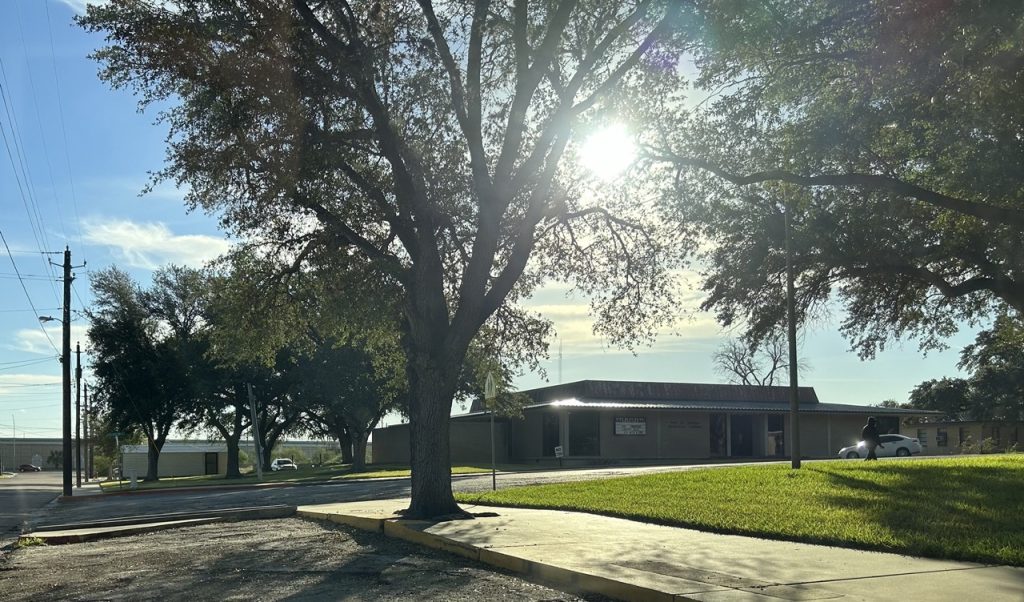
The Ed Rachal Memorial Library
Brooks County Courthouse and park
The Brooks County Courthouse

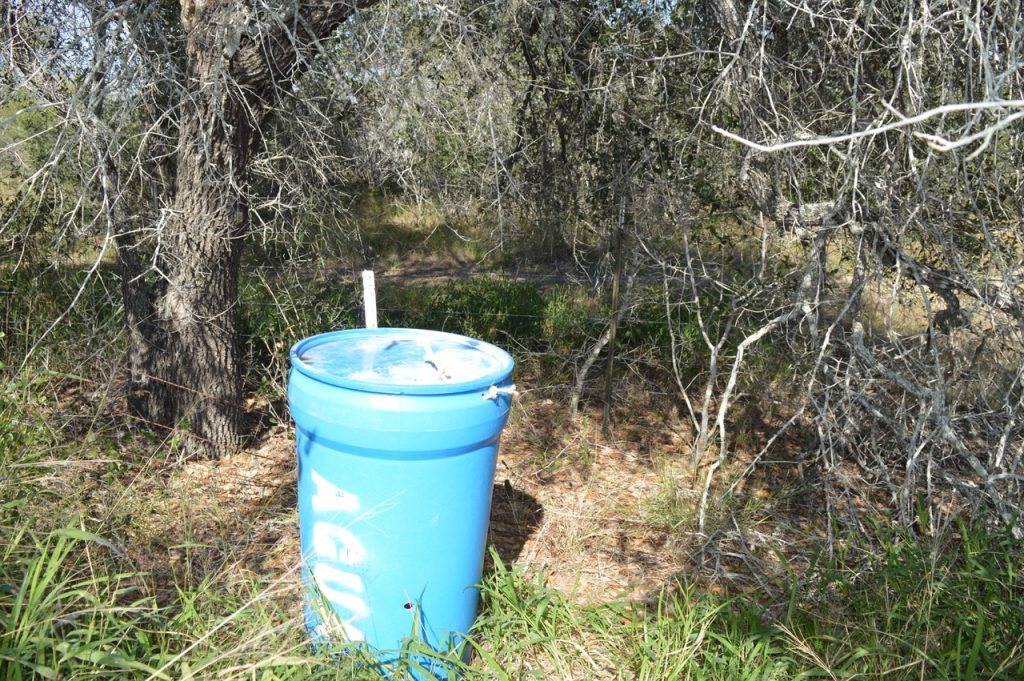
Eddie had loaded up his truck the day before with all our supplies for our water station route. We needed milk crates, gallon jugs of water, rope, metal stakes, and sharpies. After a quick stop at the hardware store and gas station, we headed out on our route. Fortunately, for part of our route I was able to ride in the truck with Eddie and chat with him. He explained a lot of his methodologies and reasons as to why he does what he does. He uses gallon jugs because they are easiest to carry and the local HEB orders them specifically for him to purchase. He started using blue barrels to store the water jugs because they stand out within the brush and the color symbolizes water. Part of our job today was to repair or reattach the lids with new rope. This was a team effort job, but we also had individual jobs as we continued to work and get into a groove. Clair and I split times riding with Eddie so whoever was with him was in charge of carrying the milk crates full of water jugs to the water station. Once our minivan pulled up behind the truck, everyone else would get out and start their jobs. Chastidy was in charge of writing the GPS coordinates of the water station on the inside lid along with the phone number of the South Texas Human Rights Center and 911. This allows anyone who arrives at the water station to know who to call if they want to ask for help. The remaining two of us would grab any empty jugs from the water station to place back in the truck to throw away. Once we figured out our jobs, it was really easy to work quickly and efficiently. A few of the water stations needed repairs so we had to place a new stake in the ground and tie the container to the stake.
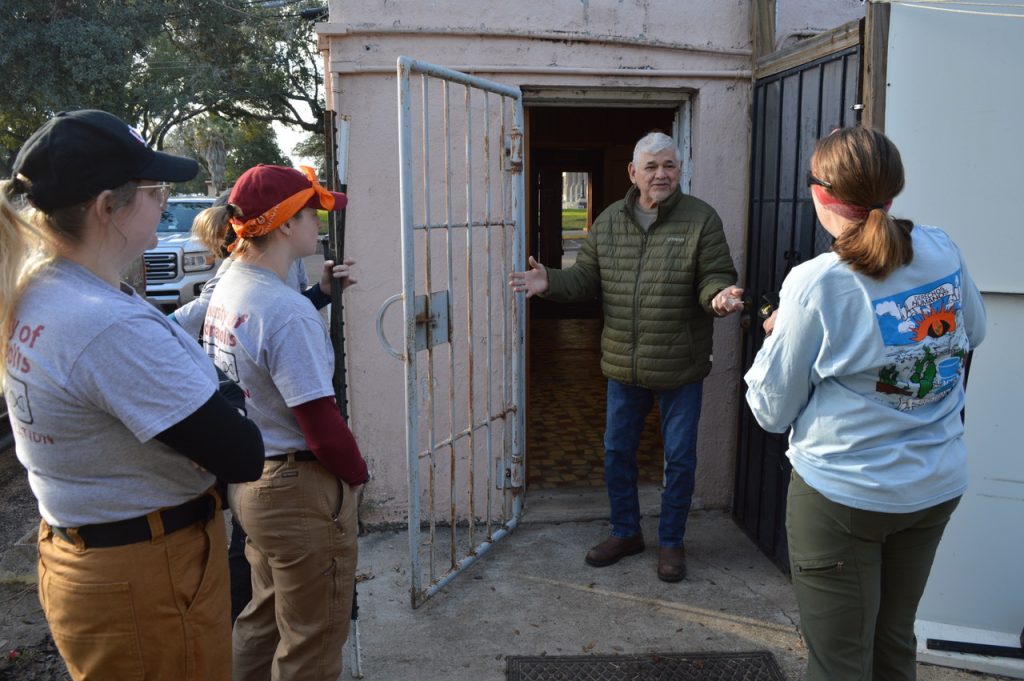
Eddie (male) speaking with the UIndy team about water stations and supplies.
Eddie speaking with the UIndy team about our water station route and supplies.
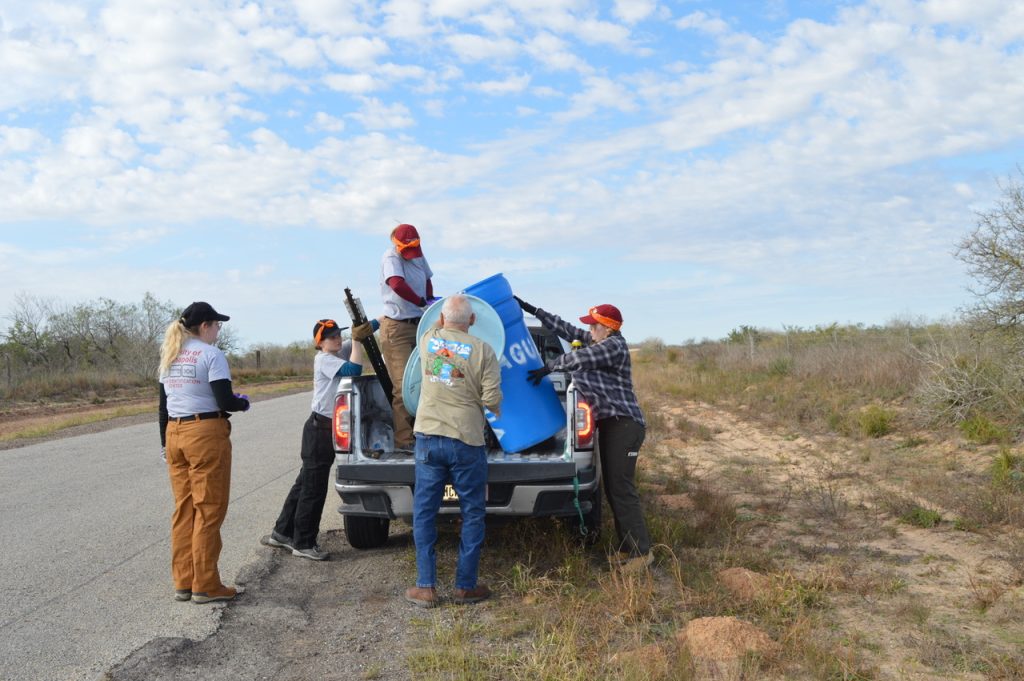
Team unloading the truck filled with water station supplies.
The UIndy team and Eddie unloading the supplies from the back of the truck.
blue barrel in front of a fence line and brush
A water station in front of a fence where a makeshift path can be seen in the background.

Recently, there has been more support from the community. At the first water station we reached, we opened it to see a case of water bottles placed inside. Eddie said it was very heartening to see support from the community and that hopefully others are starting to see the impact they can have on Brooks County. Eddie also explained how some ranch owners are willing to allow him to place water stations on their property. On a large and heavily trafficked ranch, Eddie has been able to place 30 water stations around the property with the permission of the owner.

We ran out of water after about 5 hours of work and took a short break for lunch. After our turkey sandwiches and little debbie snacks, Dr. Latham drove us to the Sacred Heart Cemetery to visit the sites they have excavated in previous trips. She gave us a brief history of the work they’ve done and had a chance to appreciate all they’ve accomplished. Sacred Heart is a beautiful cemetery where all of the family members are responsible for the upkeep of their loved one’s grave. They were all well kept with very little weeds and so many bright, colorful flowers. It is also tradition to place the loved ones’ favorite drink or snacks by their headstone. Many of them have lights so they are lit in the evenings and decorations for holidays. It was very clear to me that the deceased were deeply loved and missed by their family members.
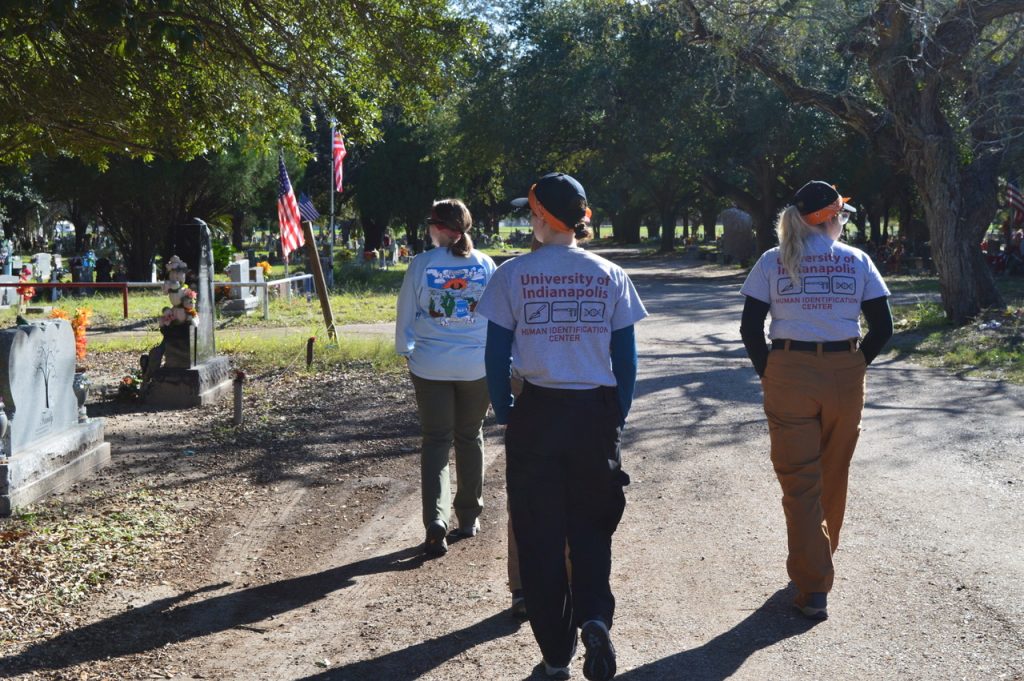
UIndy team walking through the cemetery
Dr. Latham giving us a tour of Sacred Heart Cemetery.

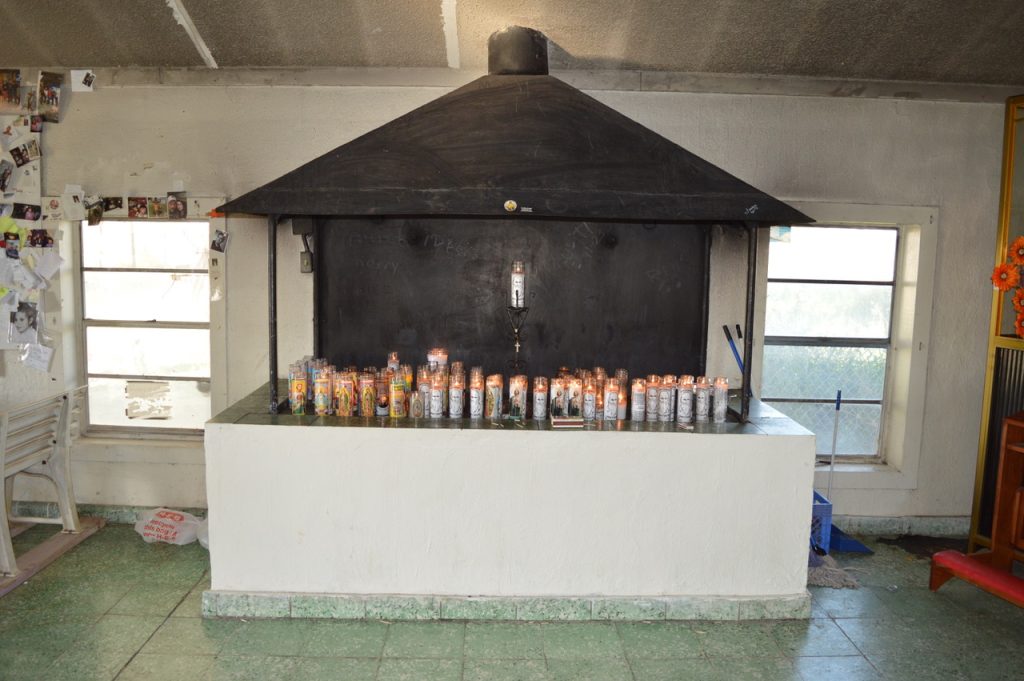
After visiting Sacred Heart, we drove to the Don Pedrito Jaramillo Shrine. It was a small little church where the walls were covered in little notes, prayers, and pictures. Don Pedrito was a community leader and folk healer, or curandero, in the 20th century. He traveled on healing missions throughout the Texas-Mexico borderlands visiting and healing sick people. Don Pedrito brought together aspects of Catholicism and traditional Spanish medicine that are still honored today. People even brought their crutches or walkers in hopes that Don Pedrito will help heal their ailments. It was overwhelming to see the pain and heartache the community places on these boards in hopes that their prayers will be answered.
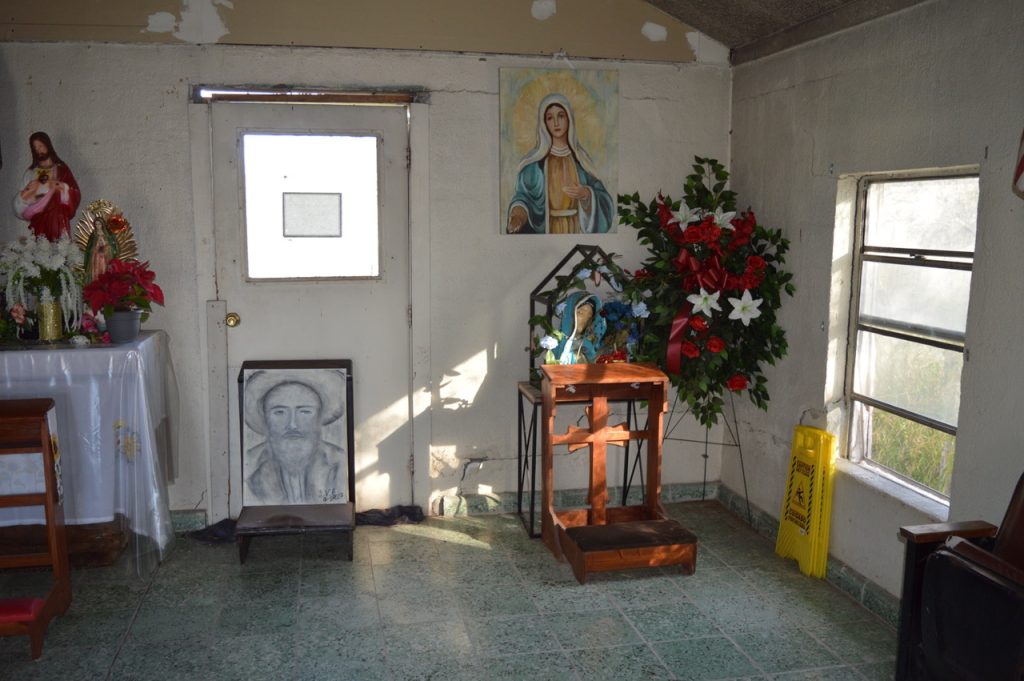
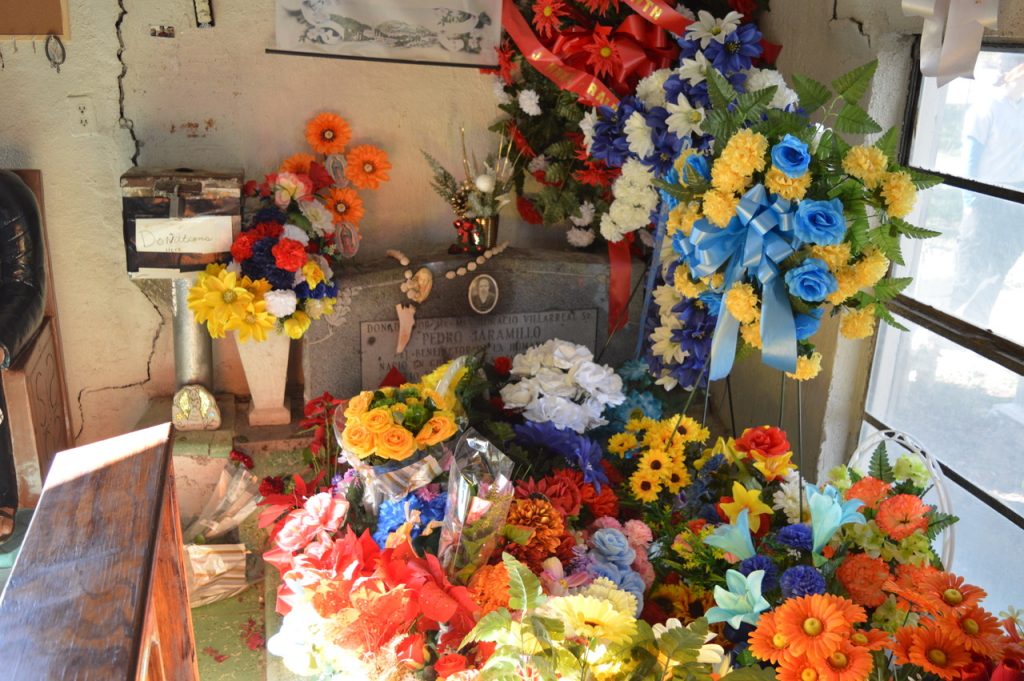
Don Pedrito Shrine with alters, crosses, and flowers.
The Don Pedrito Jaramillo Shrine
Don Pedrito headstone covered in decorations and flowers.
The Don Pedrito headstone
large table filled with lit candles as a prayer offering for Don Pedrito
The prayer and candle offering table at the Don Pedrito Shrine

We ended our day with a quick dinner at Dairy Queen and then later met up with Don and Ray. Don was able to purchase an infra-red drone with some grant money. He taught us how to fly it and what he uses it for. The drone picks up infra-red signals which are heat signatures from living plants, animals, and people. Don uses the drone to look for potential decomposition sites. With the help of the drone, Don is able to send out teams to do searches and recoveries for those in distress.
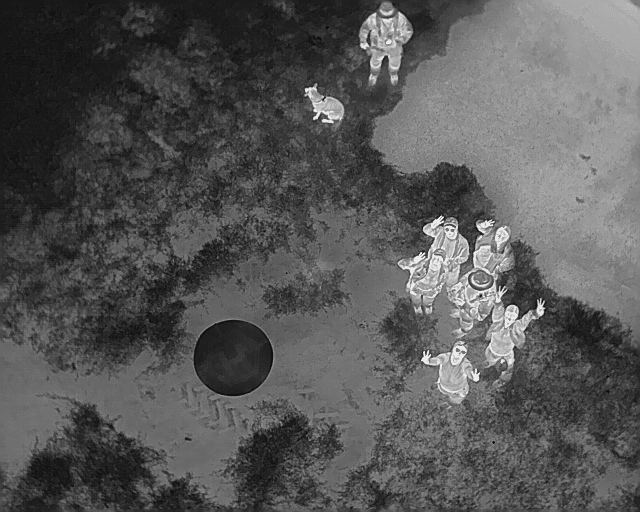
infra-red scan of a dog and people holding up 3 fingers
An infra-red Day 3 picture of our group taken from the drone

Overall, this was a less physically exhausting day and more mentally and emotionally challenging. Understanding how the migrants are traveling, the conditions they suffer through, and learning more about Spanish culture and traditions has helped our team grow and learn to think deeper and differently about the migrant crisis. Our Day 3 was filled with so much learning and respect for the Brooks County community. I am looking forward to the next few days!
Hannah

Traveling to Falfurrias

We’ve made it to Texas!  Starting with an early morning wake up, we all made it through security in Indianapolis with only two of our bags being checked (TSA questioned my bag full of quarters for laundry but after a quick check we were good to go). The rest of the trip went off without a hitch.  We flew from Indianapolis to Dallas, and then from there to San Antonio.  

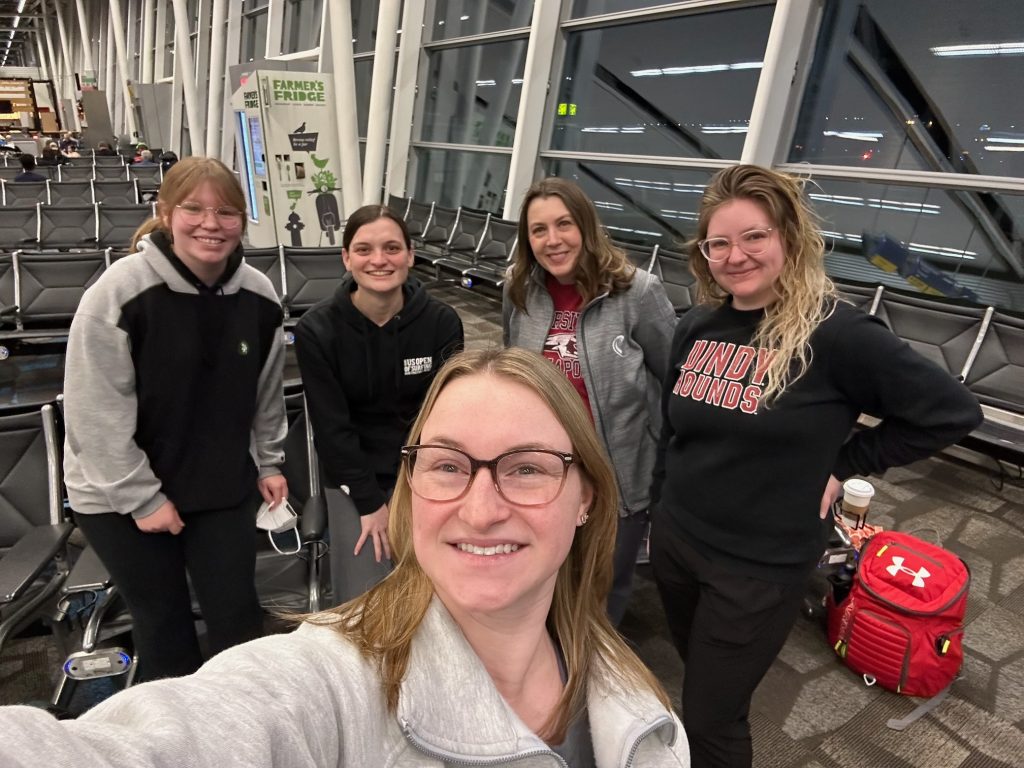
The team in the Indianapolis Airport ready to head to Texas.  In the front row is Hannah, and behind her from left to right is Ella, Claire, Dr. Latham, and Chastidy.
In the airport ready to go!

For some of us this is our first time traveling to Texas, while others have been before and can give a little more insight into what we can look forward to in the next week.  I can tell we’re all excited to finally be on our way. After several weeks of discussing and reading about what we’ll be doing we’re all anxious to begin, and our cross-country journey was the first obstacle in our way.  We landed in San Antonio and after a very delicious lunch at Torchy’s Tacos took the 2 and a half hour drive to Falfurrias.  Honestly the hardest part of our drive was playing tetris to fit all of our luggage into the minivan.  We began our drive through San Antonio and into the countryside, passing Mexican restaurants, ranches, and oil refineries.  

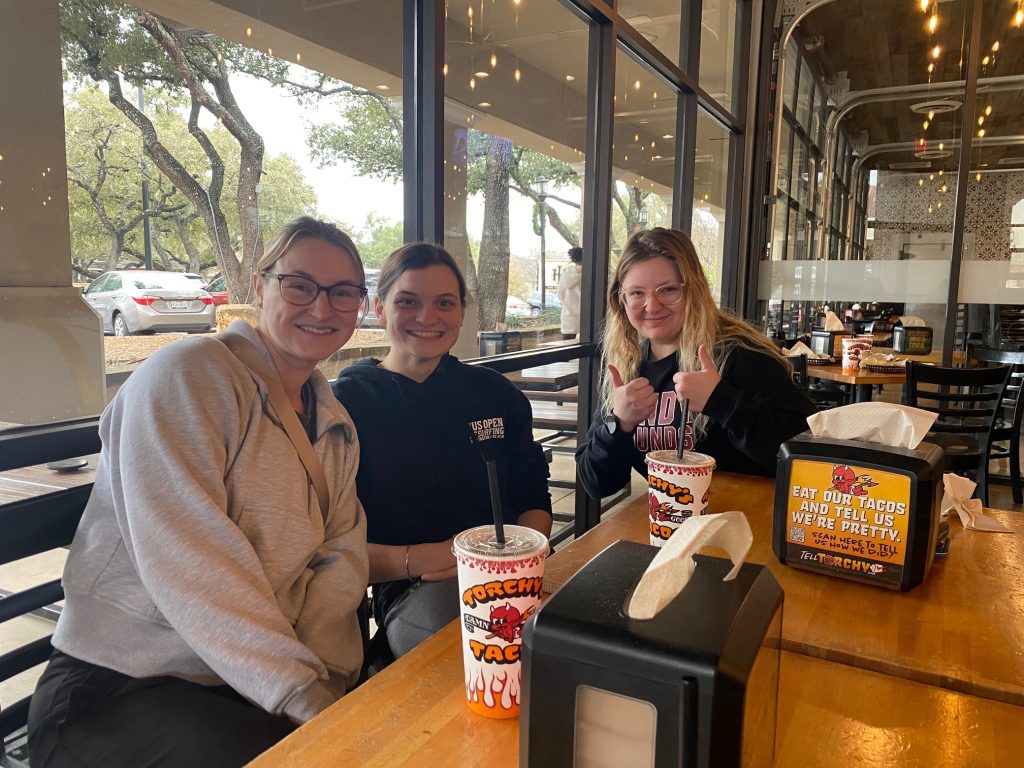
Hannah, Claire, and Chastidy smile as they wait for their lunch in San Antonio
Just landed in Texas and ready for tacos!

As much as I’m struck by how different Texas is, it still feels eerily similar to my own home thousands of miles away.  Large expanses of trees, with tiny little towns sprinkled throughout and populated by family-owned restaurants, churches, and the occasional gas station.  The food the restaurants serve is different and the trees are a lot different here, but it still has the same feeling of small town America that is surprisingly similar to how I grew up.  My hometown is even about the same size as Falfurrias, it’s been really interesting to really see first person just how much variety can exist in one country.  Driving into Falfurrias felt climactic.  We’ve been preparing so much and it feels surreal that we are actually here now.  Deputy Don White joined us for a preliminary meeting and dinner at Whataburger, where we talked a little more about the structure of Falfurrias and the work we’ll be doing this week.  

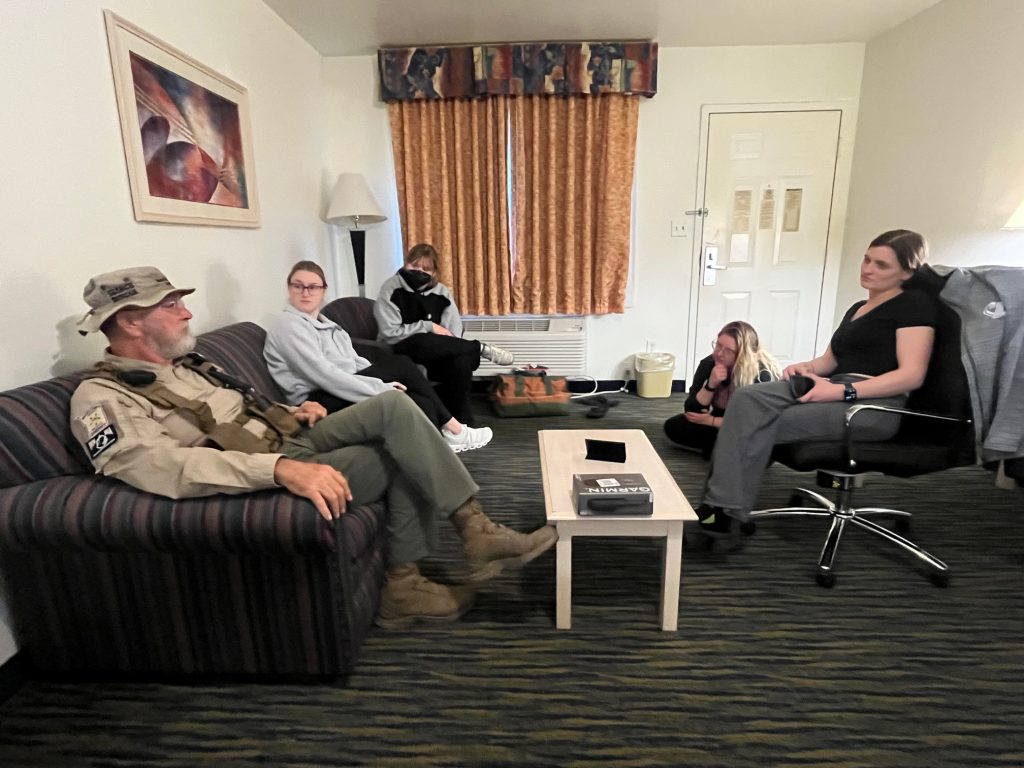
Deputy Don White, Hannah, Ella, Chastidy, and Claire sit in a circle discussing what they should expect out in the field.
Deputy Don White explains to the team what they should expect and what to look out for

It was at this point that I realized that we begin working tomorrow, and while that excites me it also scares me a little bit.  So, after a late night run to the grocery store for food and supplies, and then another tour of Falfurrias as we searched different gas stations for a Styrofoam cooler, we’ve settled down for the night to prep for our first day.  Prepping for our first day includes double checking the batteries in the camera, making sure the walkie talkies work, and triple checking our field bags to make sure we haven’t forgotten anything that could be important out in the field.  I think the worst part of a new experience is the anticipation beforehand, so I’m ready to start the day tomorrow.

Ella

Looking Back

We’ve been home for a couple of days now, but I feel restless. I want to go back and continue working. Knowing there are migrants needing to be identified and families anxiously awaiting news on their loved ones while I sit on my couch and binge Netflix doesn’t seem right. While I’ve recovered physically, my emotions are still all over the place. It is hard to rationalize why society has gotten to a point where we treat and judge people based on nothing beyond the fact they were not born in the same place as us.

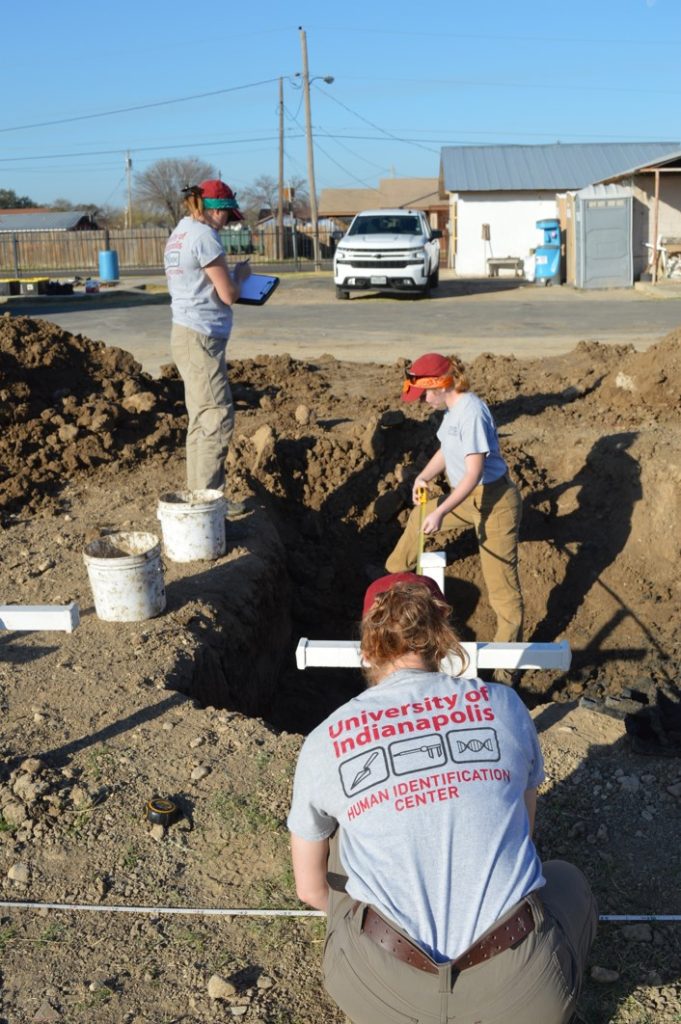
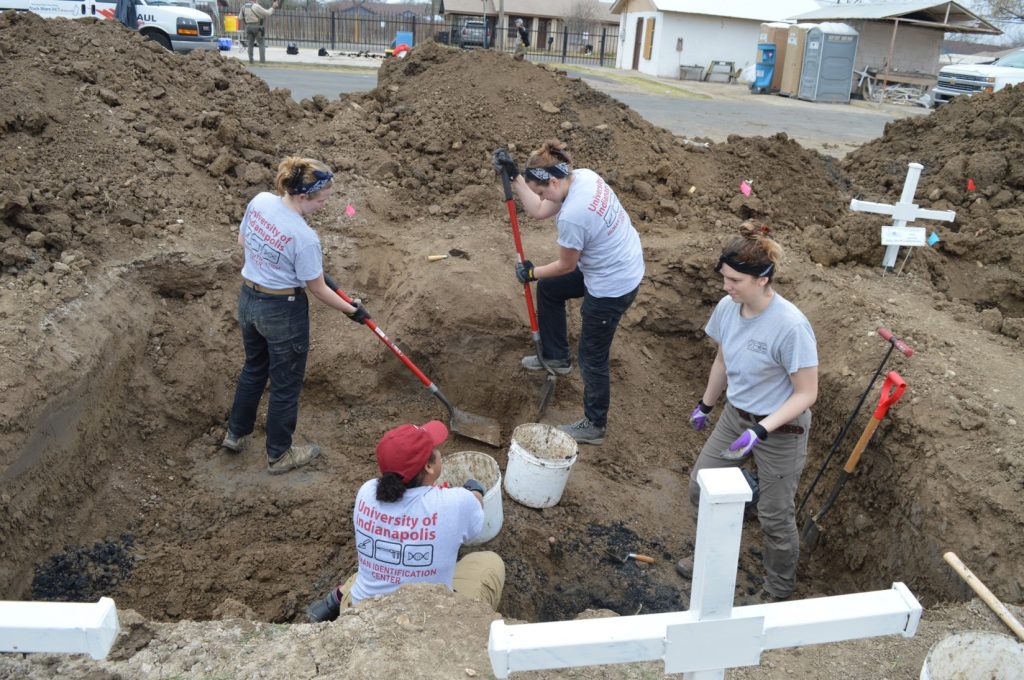
Team members taking measurements at the cemetery

This Beyond Borders trip was vastly different from the previous ones I have been on. There was a different emotional toll than that experienced when we search ranchland or fill water stations. Not to say that either of those activities is easy or enjoyable, but seeing the bodies of migrants tossed in hastily dug holes like trash, and oftentimes with actual trash, hits in a different way. It doesn’t take much to have even the smallest bit of compassion or human decency, yet these migrants are looked down upon and treated appallingly for the simple reason of being born in a different country or to circumstances beyond their control. It frustrates and saddens me and makes me question a lot of things.

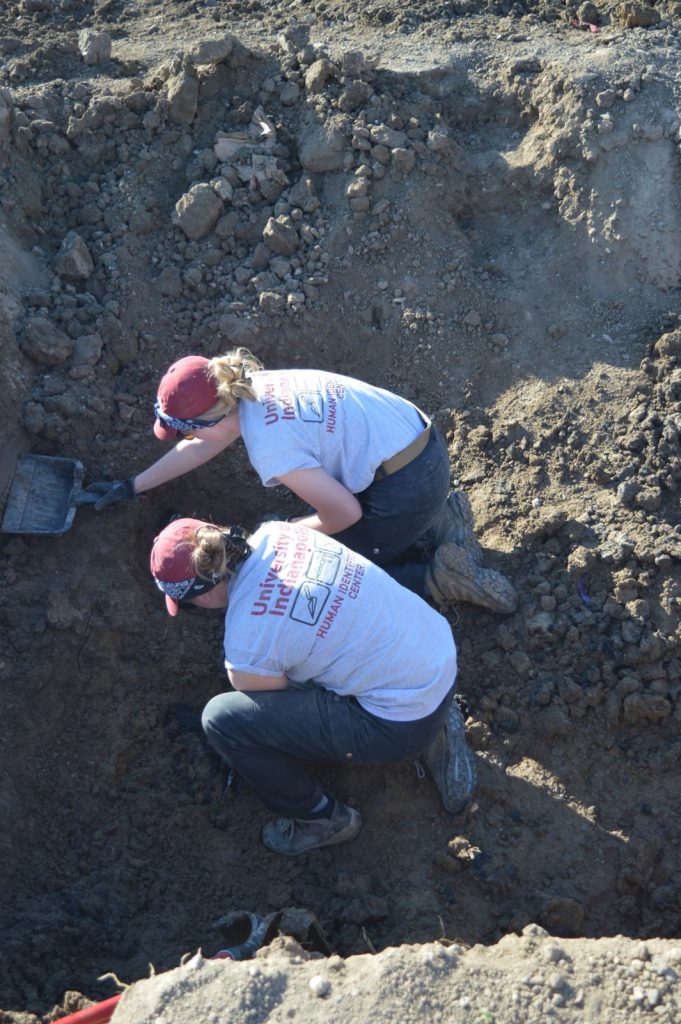
Team members digging at the cemetery

It is easy to villainize one person or another for the crisis, but, unfortunately, there is no easy solution and there is no single person to blame for what is occurring. There are many differing opinions and political discourses surrounding immigration and the US/Mexico border, but that will not stop migrants from crossing, with some perishing along the way. Funeral homes and cemetery workers are overwhelmed by the sheer number of migrants they end up in charge of. They are doing their best, but, at some point, they start to become desensitized to the atrocities they are seeing. This does not excuse what is happening to these migrants, but it is important to realize that this is a multi-faceted, complex problem with no simple solution.

Two team members removing dirt from a burial

As long as there are people such as Dr. Latham, Eddie, Don, Dr. Spradley and the Operation Identification team, and many other individuals and organizations who are taking the initiative and trying their best to give migrants and their families closure, I choose to believe that compassion and decency still exist. I wish we were never even needed down in Eagle Pass, but I am glad we were able to aid in the excavations and, hopefully, help provide some of the dignity and compassion these migrants, and all humans, are worthy of.

Working on this project with this team was a once-in-a-lifetime opportunity, and I am thankful for the opportunity to be a part of it. After my experiences with Beyond Borders, I am only more determined to use my education and abilities in humanitarian settings in order to help those who have been wronged in any way I can. I’m sad that this is most likely my last trip with Beyond Borders, but I’ve cherished every moment.

~ Olivia

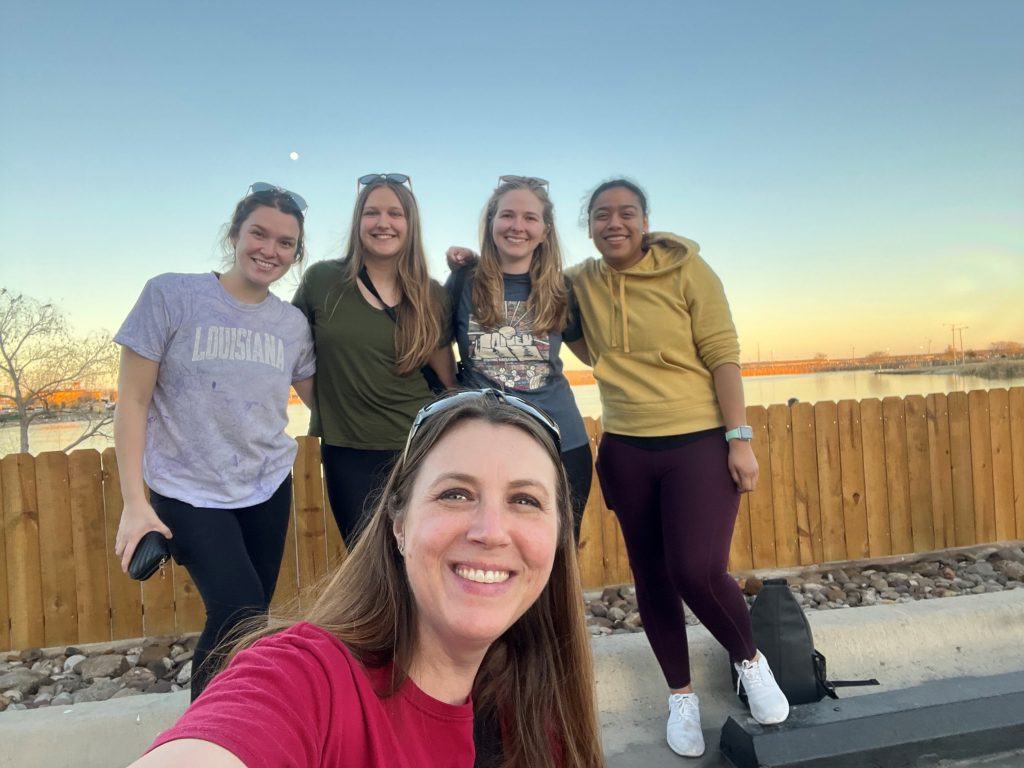
Jan 2023 Team