Category Archives: Reflections

Reflections on how we feel and how the mission is changing us

Reflecting on the Past to Prepare for the Future

As I was at this same time last year, I am currently preparing to travel to Falfurrias, TX with the 2026 Beyond Borders team. I find myself in the same boat as last year, where most of my preparation has been to get together all of my clothes, gear, and toiletries. Are all of my shirts clean, do my boots still fit the same? Do I have all of the gear necessary to be safe, such as a compass and a bright colored bandana? These are important things for me to consider, but I also find myself thinking back on how I was feeling while preparing for last year’s trip. I felt prepared because I had all of the right gear and I felt excited because this is similar work I hope to do in my future career. However, I remember my reflection at the end of the trip, where I looked back at my original post and noticed how surface level I sounded. We were there to be of assistance to individuals devoted to the search and recovery of individuals who lost their lives. Searching for a word, like excited or prepared, to describe how I feel going into this experience again is impossible. They were not the right words to use then, as I couldn’t truly know what to expect yet, and they are not the right words now, as no one experience will be the same.

This one lesson, that it is impossible to truly prepare for this experience, really stuck with me from last year’s trip. Getting ready for the upcoming trip is only proving this point. My goal for last year was to become a more empathetic and active listener in advocating for migrants. This was a goal I thought would be easily achievable through education of the situation and experiencing Falfurrias for myself. This was a limited understanding of the climate I was walking into, but I would like to go into this trip with the same goal. I realize this goal does not have an end game, but is an intention to consistently work towards during my time in Falfurrias, as well as in my everyday life. I am striving to be empathetic and attentive while conducting this work as well as in my communication to others about it. I also strive to keep in mind that this experience isn’t about me, but about the individuals caught in the cross hairs of the systemic injustices that neglect them. So while there is no way to truly prepare myself again, I know that listening to those who know more than me on the topic and to my team members who I know provide valuable input will be essential to beginning this experience again. Cooperating with those around me, who are my support system and who I would like to support, is the best kind of preparation that I will actively aim towards, knowing what I know now about participating in this experience.

Lilly

Beyond Borders Day 1 2025
Beyond Borders 2025 Team From left to right: Dr Latham, Dr Eriksen, Frankey, Lilly, Makenna, Chastidy

The Helpers

“When I was a boy and I would see scary things in the news, my mother would say to me, “Look for the helpers. You will always find people who are helping.” ― Fred Rogers

This quote is commonly shared after tragic events like natural disasters to emphasize finding the good in every situation.  Helpers are the ones that run into danger, fully aware of the potential risks as well as what needs to be done to provide aid and assistance.  Helpers are the ones who extend kindness, calm fears and treat those in need with empathy and without judgement. Helpers often occupy a space where they witness pain and suffering, but they continue to aid because the heart of a helper is focused on acts of kindness over all else. As I reflect upon our time in the Texas Borderlands this year, I want to focus on the helpers. We have met many people that volunteer their time to aid in various capacities at the border out of a sense of responsibility and not for personal gain. This year we spent our time working with Deputy Don White and Paramedic Ray Gregory of Remote Wildlands Search and Recovery, who volunteer their time and resources year-round for search, rescue and recovery operations in Brooks County.

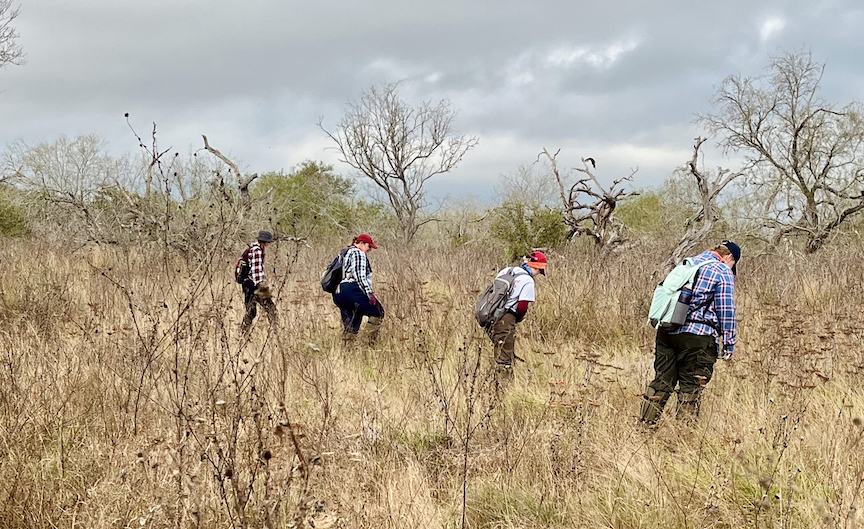
Deputy White and Paramedic Gregory in the Texas brush
Deputy Don White and Paramedic Ray Gregory talking during one of our breaks in the field

I enjoy our time talking with Don and Ray, learning more about them and hearing the stories of work they have done during the rest of the year. Don told us stories about the crosses he’s placed at recovery sites at the request of grieving families and the people he’s rescued and kept in touch with over the years.  Ray told us he does this work because everyone deserves to be found. He says he does this because he would hope someone would do it for him or his family if they were in a similar situation.  They have invested a lot into this work over the years, both financially and emotionally.  They have stories of time away from paid work, specialized equipment they personally purchased, injuries they suffered in the field, and traumatic stories from survivors and of the things they have witnessed. But they also have stories about saving lives and bringing answers to grieving families. They are the helpers who run into the brush when everyone else is trying to get out of it.

The helpers we’ve met at the border are a diverse group of people that range in age, experiences, educational and technical backgrounds, beliefs and political affiliations but they all come together to provide aide.  It demonstrates how the things we consider to be our differences don’t define us when faced with the harsh realities of the border where people are trafficked, assaulted, robbed, bribed and left for dead. It’s easy to ignore the situation when you haven’t heard the stories, looked in the eyes of parents fearful for the life of their children, translated desperate 911 calls for help, walked the clandestine paths through the brush or searched for the bodies of those that went missing. Once you experience this aspect of the border you never forget it and the helpers return again and again knowing the things they will see and the conditions they will face.

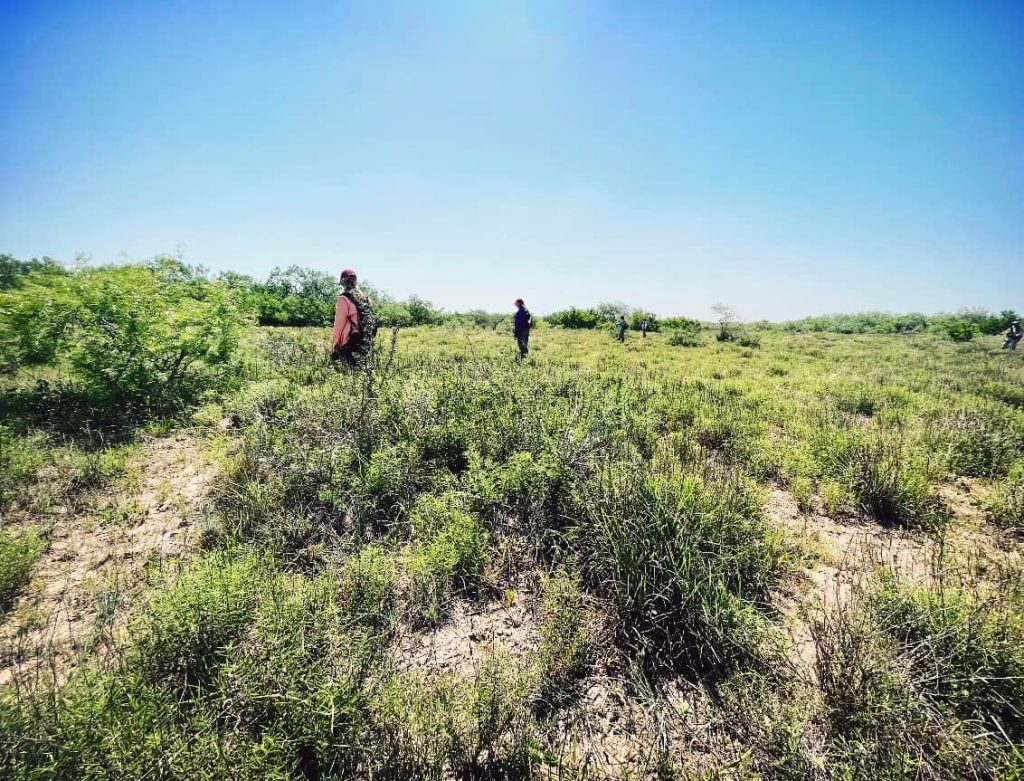
Our trip to Brooks County was successful in that we searched over 15 miles of clandestine wildlands and performed one recovery of an individual that will now begin the process of identification.  We were able to learn new techniques from Don and Ray regarding search and recovery work in this environment as well as strategies for our own personal safety here.  The trip was also successful in student growth. They honed their forensic skills, tried new things, met new people and got to experience a situation that challenged their assumptions and preconceived notions of the border.  Thank you for reading and following our journey. The groups you read about this year are all volunteer. You can support them here if you feel inspired to do so.

Remote Wildlands Search and Recovery

Beyond Borders

The 2025 Beyond Borders Team atthe start of day 2
The 2025 UIndy Beyond Borders Team (with Socks)

~KEL

HIC hat

Coping

Ant Highway
Ant Highway

Coming back from the 2024 trip was very tough for me. I was filled with so much guilt for the privilege I was given simply because I was born into the family I was. How is it fair that someone who has done nothing wrong is subjected to unimaginable hardships completely out of their control? Furthermore, when those individuals attempt to escape those hardships, they are met with opposition and hate rather than compassion. They risk losing their lives just to trade one bad life for the chance of another. I found it easier to process everything by removing myself. Over time, I was able to adjust and shift to using that privilege to advocate for and educate others. This became a way to make myself feel better and to feel like I was still able to do some good while away from the border.

Wind chimes in Sacred Heart Cemetery making music every time the wind blew.
Wind chimes in Sacred Heart Cemetery making music every time the wind blows.

This time, though, I think I was better able to anticipate the dramatic change of being thrown back into the normal world, so far removed from the crisis at the border. It did somewhat concern me that I could switch back more easily. I woke up Thursday morning knowing exactly where I was and resumed the position and habits I had before the trip. Same as last year, I can’t help but think, Did that all really happen? I believe this might be a response to the traumatic and polarizing things we experience at the border—a way to cope.

Socks

Today, as I look outside while it’s snowing and freezing, I think about how hard it is to get around. The sidewalks aren’t plowed, my boots hurt my feet, and my nose aches from breathing the cold air. While walking downtown, I saw flattened cardboard, a thin, ripped blanket, and various trash on the ground. I was instantly thrown back to the realities I had begun to suppress. We all learn about the sweltering heat in the Texas borderlands, but it’s easy to forget the freezing cold nights and days, especially with the current wind chills across the United States.

I remember the stories Don and Ray told us about migrants who, completely in the dark, don’t know the forecasted weather or how to survive it. As a result, they are vastly underprepared for such cold temperatures and unaware of survival strategies that could prevent hypothermia, all to keep them compliant with their guides. I can only begin to imagine how many lives could have been saved if migrants were adequately prepared with even the minimum supplies and information—like a cheap compass, instructions on making a water filter with sand, or tips for digging into the sand to conserve heat and escape the wind. What’s worse is the feeling that there is nothing I can do to change things.

Cattle cistern with unclean water sometimes used by migrants.

Now, my suitcase still sits in the corner of my bedroom, untouched. For some reason, I feel like the moment I unpack it, the trip will finally come to an end. Physically, I am in the Midwest, but mentally, I am still in Brooks County.

Lilly
Sheriffs Deputy Don White & Paramedic Ray Greggory.

This year, my goal is to embrace the experiences I had in Brooks County, no matter how uncomfortable they make me. Being professional in the field is important, but when we try to take that same mentality home, it becomes more damaging than productive. Doing so denies us the ability to grieve the true atrocities we’ve seen and heard while in Brooks. Accepting that these emotions are valid and real will help us adjust to life moving forward, but more importantly, it will empower us as students to share these experiences and advocate for change and education.

Frankey
Chastidy

Beyond Borders has taught me more than just the realities of the border crisis not covered by the media. It has also taught me humility, teamwork, confidence, critical thinking, empathy, and adaptability. I truly believe I wouldn’t be the person I am today without the opportunity to work with Beyond Borders. Now more than ever, I want to dedicate my life to helping reunite missing loved ones with families who love and miss them, because I know the torture of not knowing.

Makenna
Latham and Eriksen

Thank you to my fellow 2024 and 2025 team members for supporting each other while performing humanitarian work at the border. Thank you to Don White and Ray Greggory for teaching and showing us what dedication looks like. Finally, thank you to Dr. Latham for giving students this opportunity and for all the work she has done for hundreds of migrants and their families over the past 12 years.

Chastidy