Category Archives: Reflections

Reflections on how we feel and how the mission is changing us

The Butterfly Effect

“It has been said that something as small as the flutter of a butterfly’s wing can ultimately cause a typhoon halfway around the world”. The quote appears on the screen at the opening of the movie The Butterfly Effect. The premise of the movie is that everything that happens in this moment is an accumulation of everything that’s happened before it. This idea is not new and is rooted in Chaos Theory, a mathematical theory which states that small differences in initial conditions can yield widely diverging outcomes. It shows that what was once thought to be the randomness of a complex system is actually a system of interconnections, patterns and feedback loops.  Chaos Theory suggests that all of our actions, no matter how seemingly small, have consequences.
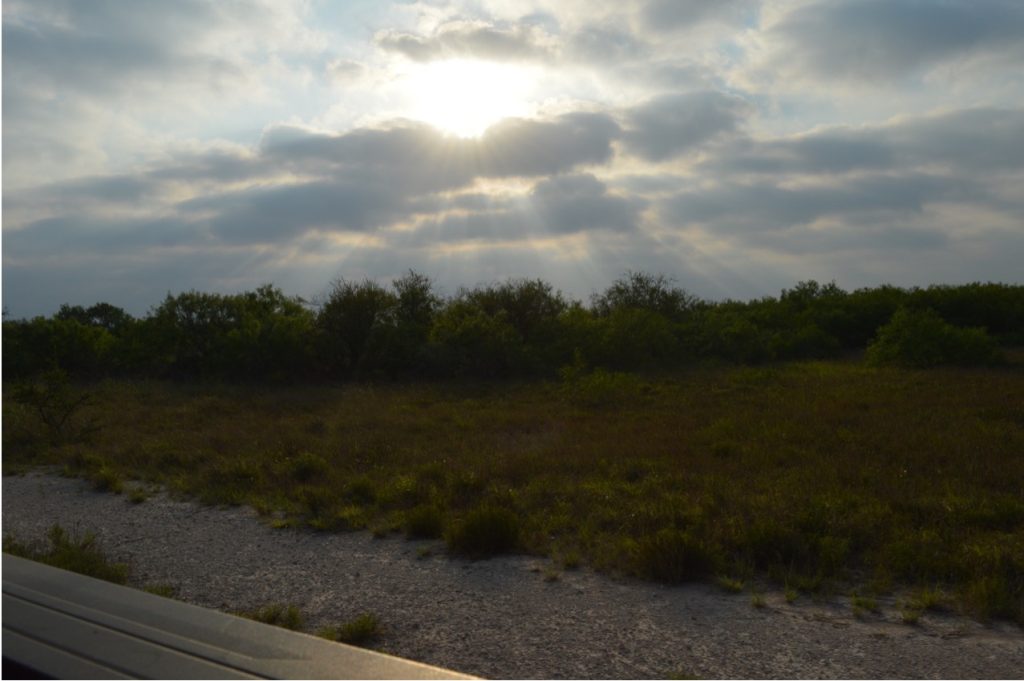
The south Texas brush
The South Texas brush

As someone who overthinks everything, Chaos Theory is quite a mental burden. Replaying every word I said to a jury wondering if I inadvertently biased them, hoping the foundations I have laid for my children send them in a trajectory that keeps them happy and safe, and always second guessing whether I’ve done enough to support my students or if my form of support is not the best approach.  You must be thinking that sounds incredibly egotistical and self-centered within the context of a prolonged mass disaster where people are dying daily.  That the last ten years I have emphasized this is not about me/us but about the conditions at the border, and that is true. What we’ve also seen over the last ten years is no real change in policies at the border that stop or slow the number of deaths. People are still dying in large numbers. The location may shift over time, but the situation is still dire.
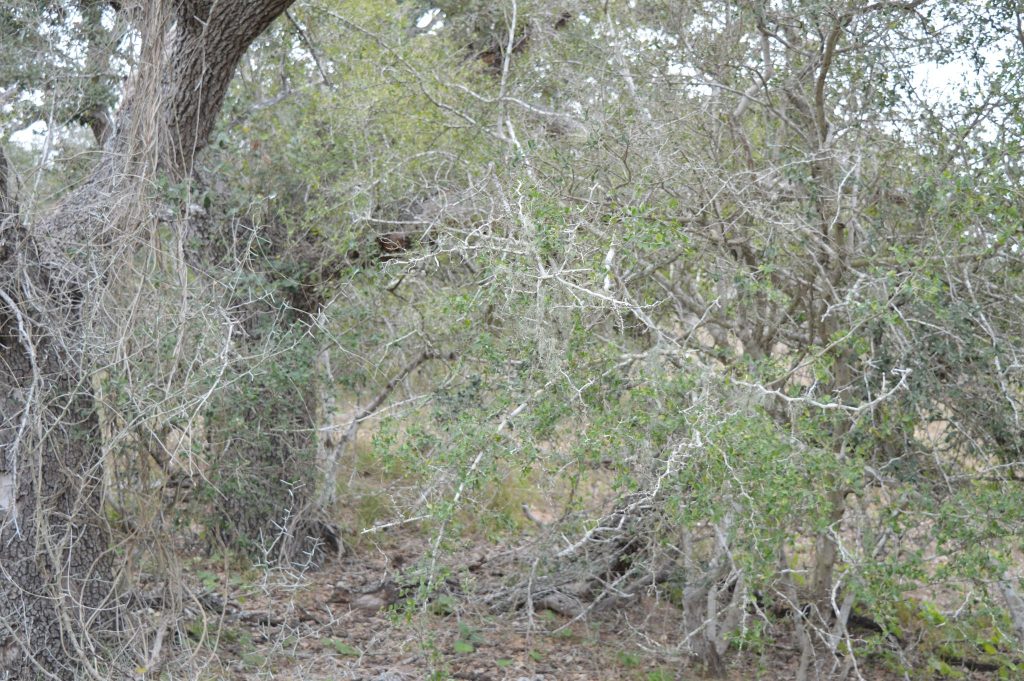
South Texas vegetation
An example of the vegetation in South Texas

Our forensic work within the massive scale of need at the border is small. We make a big difference to the individuals and families we directly contact, but after over a decade of work we are not seeing a tsunami of change. Instead, we are always left with questions – Did we do enough? What if we just searched more in that direction? What if we stayed out just one more hour? What if we stayed just one more day? But I do see the tsunami building within the hearts and minds of our young people. There’s over thirty faculty and students from the University of Indianapolis alone that have traveled with the Beyond Borders Team to participate in this work. We also work with numerous other universities and students in the Texas Borderlands. They are experiencing this crisis with a lens and perspective that my generation just does not have. I am able to quiet the questions and the overthinking knowing this experience sets them a trajectory quite different then had they not experienced this.
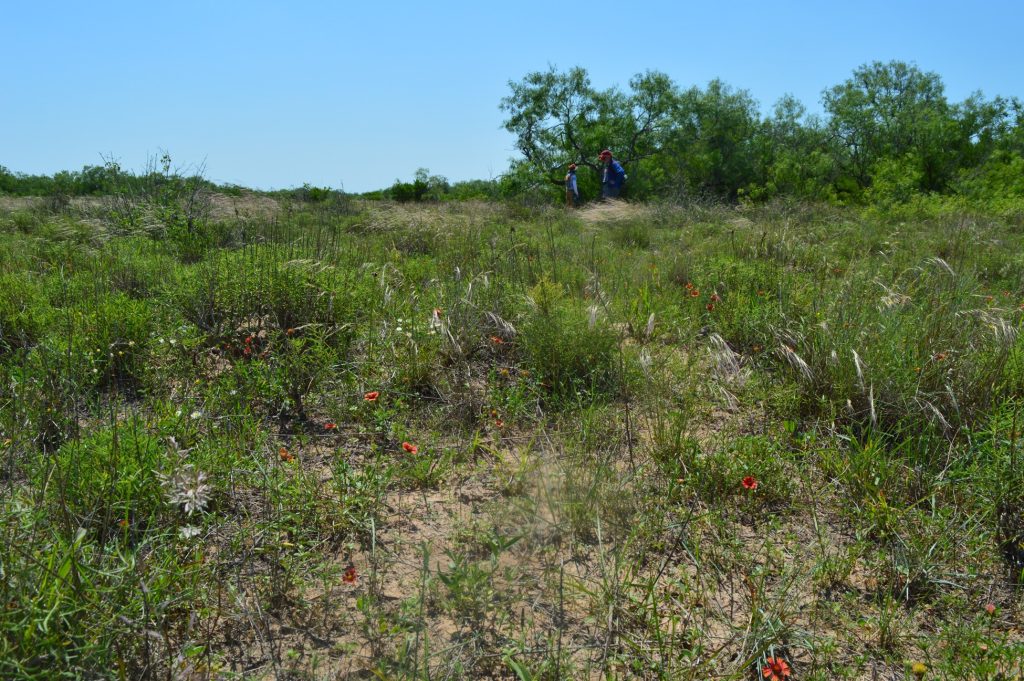
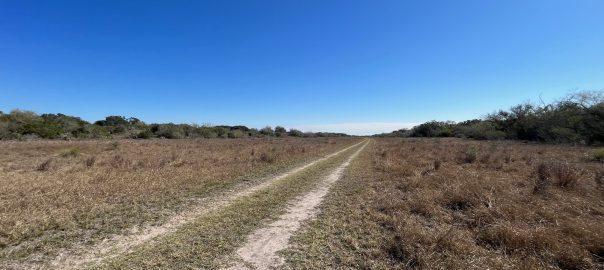
Remote wildlands
A previous search and recovery operation showing the environemnt in South Texas

This trip will be different. We will be working solely with Remote Wildlands Search and Recovery on large scale search and recovery efforts in clandestine ranchlands. I am excited to see Deputy Don White, Paramedic Ray Gregory, and any other members that may be able to join us. They are wonderful humans that do great work! We lost Eddie Canales, the Director of the South Texas Human Rights Center and my friend to cancer a few months ago. I still expect to see his smile, hear his laugh, listen to all his new stories and get scolded for not improving my Spanish since the last trip. Eddie also contributed to that tsunami, and I know we will make him proud this trip. The South Texas Human Rights Center continues, and you can make a donation is his memory here.
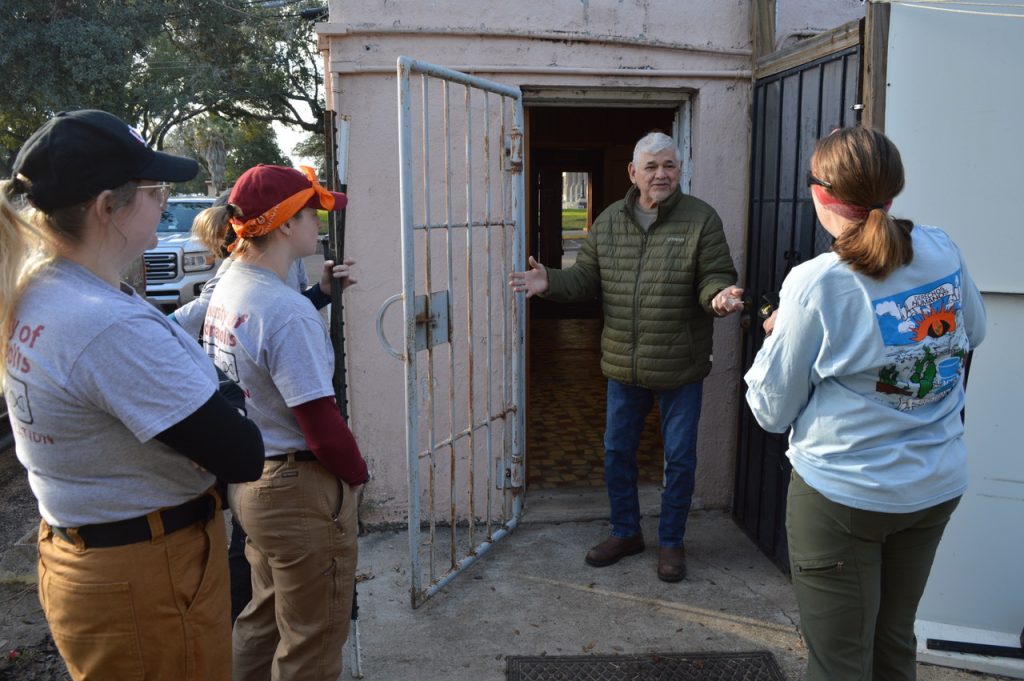
Eddie (male) speaking with the UIndy team about water stations and supplies.
Eddie speaking with the UIndy team (Jan 2024) about the water station route and supplies.

~KEL

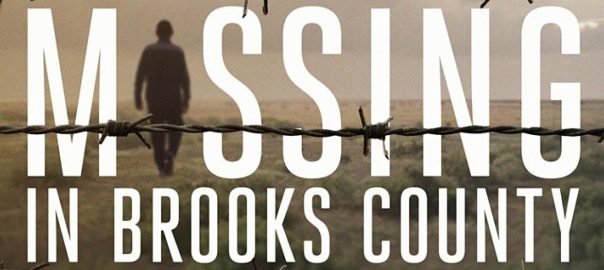
Documentary Poster for the Missing In Brooks County

In Their Shoes

It is about a week before the 2025 Beyond Borders Humanitarian Team’s mission to Brooks County, TX, as I write this. I am fortunate enough to have participated in last year’s mission. I have trekked through the heat and harsh vegetation, filled water barrels along frequent migrant routes, and helped recover individuals who fell during their journey. Nonetheless, the preparation for this trip remains as challenging as ever, both physically and mentally. Even now I am haunted by the potential atrocities we may encounter and what the future holds for migrants.

Since last year’s trip, I have done my best to advocate for and educate those around me about the human rights crisis at the southern border. It remains a silent issue despite sharing my personal experiences, providing links to this blog and additional resources, and inviting speakers to discuss the crisis. Brooks County is the site of a large mass disaster largely ignored and hidden in plain sight. After last year’s trip, I felt empowered by the purpose I found and the positive impact I made through search and recovery efforts. However, since returning, that sense of empowerment has been replaced by deep guilt and sadness.

I am not the first to say I am an extremely emotional person. I always have taken the experiences and emotions of others to heart making the written and oral stories I’ve read and heard so deeply disturbing and heartwrenching. It is neither fair nor just that such tragedies occur at the border. Ones in which no one should have to experience. This crisis is a matter of life and death—a stark and devastating reality at the U.S.-Mexico border.

In preparation for the upcoming trip, I decided to rewatch Missing in Brooks County, a 2021 documentary about the human rights crisis at the border. The film highlights the heartbreaking stories of individuals who have gone missing and the desperate efforts of their families to find them, aided by humanitarian groups like The South Texas Human Rights Center, Remote Wildlands Search and Recovery, Beyond Borders, Texas State, and others. Stories of people like Homero Roman Gomez and Juan Maceda Salazar.

At certain points in the documentary, you see conversations where family members send text messages to their loved ones crossing the border—desperate pleas asking where they are, if they are okay, and begging for a response just to know they are alive. The silence is deafening. It’s often said you cannot truly understand someone’s pain until you walk in their shoes. In 2022 I had a similar occurrence with my own family. I will never forget the overwhelming anxiety and terror I felt trying to reach them. I must have called more than a dozen times, left voicemails, and hundreds of messages. Inconsolable and completely in the dark, all I could do was think about every and any possible thing that could have happened. The anxiety making myself physically sick. The difference is that my situation was resolved after a couple of hours with my loved one being found alive and safe. Unfortunately, this is not the reality at the border. The harsh reality is that only a very small portion of missing migrants are ever found alive or dead.

Regardless of opinions or beliefs, the events at the border are not just numbers or statistics. They are real people—real mothers, real fathers, and real children with families who worry about them. I urge everyone reading this to imagine being in the shoes of a migrant’s family. Would you not want people doing their very best to locate your loved one?

I am fortunate to have been selected to join Beyond Borders in helping these families and ensuring that migrants are treated with the respect and dignity they deserve. I look forward to continue providing even the smallest change to the crisis and reuniting people to their families.

Please take some time and watch Missing In Brooks County to learn more about the crisis and work Beyond Borders works to do.

Chastidy

Wide Open Texas Spaces

Answering the Phone

Earlier this semester I sat with a student in my office for the first of several long conversations. His family came to the US from Ecuador when he was a child because his father had a work contract in Indiana. He graduated high school, enrolled at UIndy and is in his Senior year. While in college his family’s work visa expired and they returned home. He was able to stay to complete his degree. He hadn’t seen his parents or younger siblings since they returned to Ecuador. He was excited because his father was getting a new contract and was coming back so he was going to a hearing about the visa. The next time we met he told me his visa was denied because he is 20 years old and too old to be on the family visa. His parents and younger siblings are coming back to Indiana while he faces the reality of going back to a country he doesn’t know.  Is this the story of a migrant we encountered on our trip? No, but it could be. We fight over our broken system and we blame each other for the problems and in the process, we forget these are people. Every skeleton we recover or body bag we pull from the ground is a person with a story. Whatever their story, all I can think of is being on the other end of the phone. Waiting for the call that never comes. Making all the promises to God to just let them call or just let them answer when I call. That helpless feeling of just not knowing what is going on or what to do. While the answers we provide are not what many families want, at least we’re answering the phone when their loved one could not.

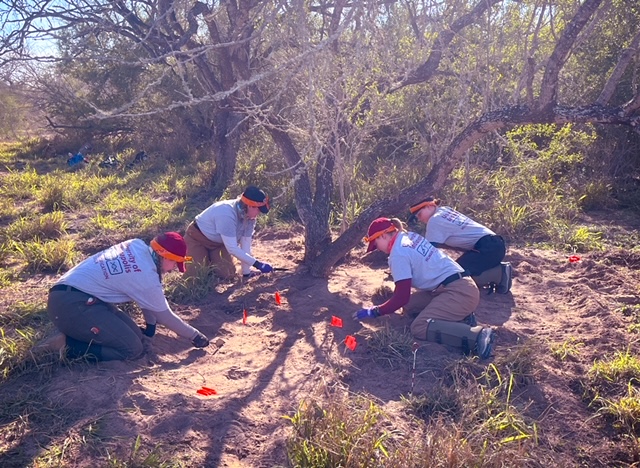
Beynd Borders Team members dig searching for skeletal remains
The 2024 UIndy Beyond Borders Team

All the people you read about on the blog are volunteers. They volunteer their time, use their own money and chose to dedicate themselves to answering that phone call from family members. Politics aside, the people we work with in the Texas Borderlands run the spectrum from right to left. Whoever you ask will say you cannot have an informed opinion until you spend a few days in the brush. And they all just want to bring some closure to families and return their loved one home. If you have the ability to donate to the cause here are some links:

Beyond Borders Humanitarian Forensic Science Team: Donate Here

Remote Wildlands Search and Recovery: Donate Here

South Texas Human Rights Center: Donate Here

Thank you for following our work. We appreciate your support and the ability to share our experiences with you. We will continue regular posts when we depart for another trip to the Texas Borderlands.

~KEL