Category Archives: Human Rights, Migrant Death

Talking about the project itself

Successful?

“Was your trip to Falfurrias successful?”

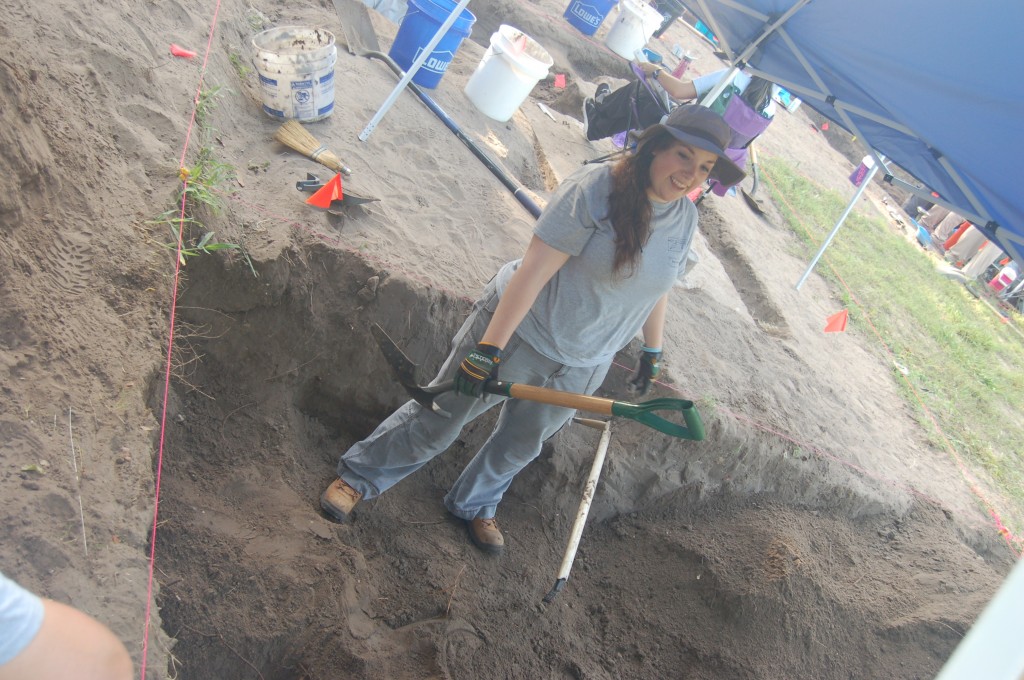
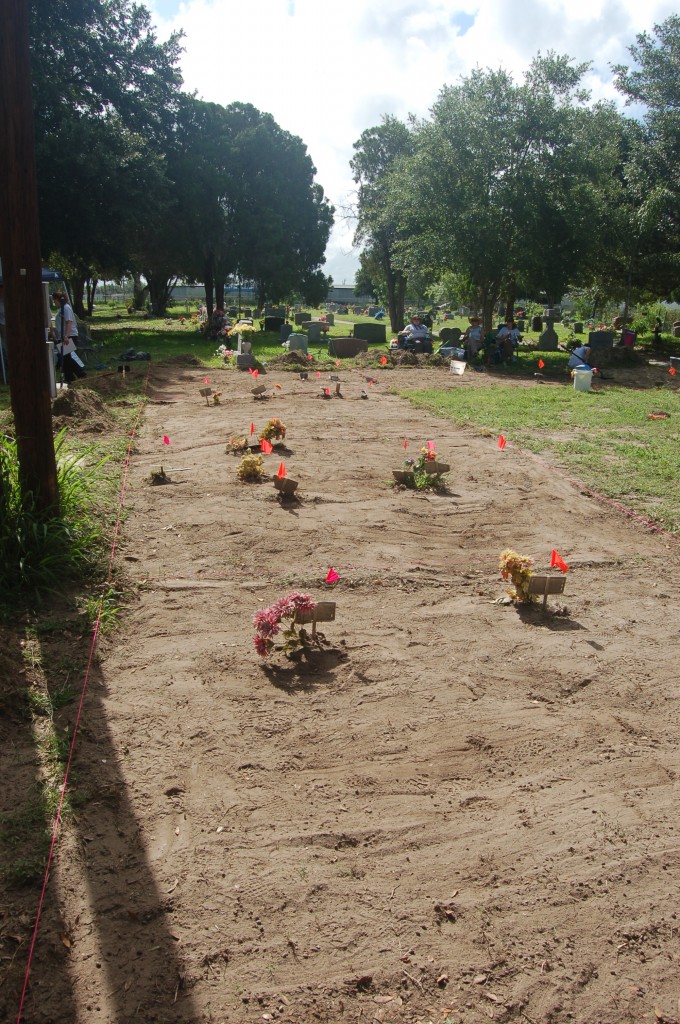
Well I guess that depends on how you define success. I think all of us that participated in the excavation would answer yes to that question. Yes, we systematically investigated a 16m by 12m plot of land in the Sacred Heart Cemetery for the burial of unidentified migrants.  We applied traditional archeological techniques to remove dirt using shovels and hand trowels to an average depth of 70cm below the ground surface.  If we did not encounter human remains by 70cm we dug test pits and probed to an average depth of 140cm below the surface, well below the deepest recorded burial depth.  Each exhumation performed by the UIndy team was conducted and documented in the same manner as any forensic case encountered by the University of Indianapolis Archeology and Forensics Laboratory.  Yes, I think we all feel pretty successful in saying that we recovered all the unidentified remains from that portion of the cemetery.
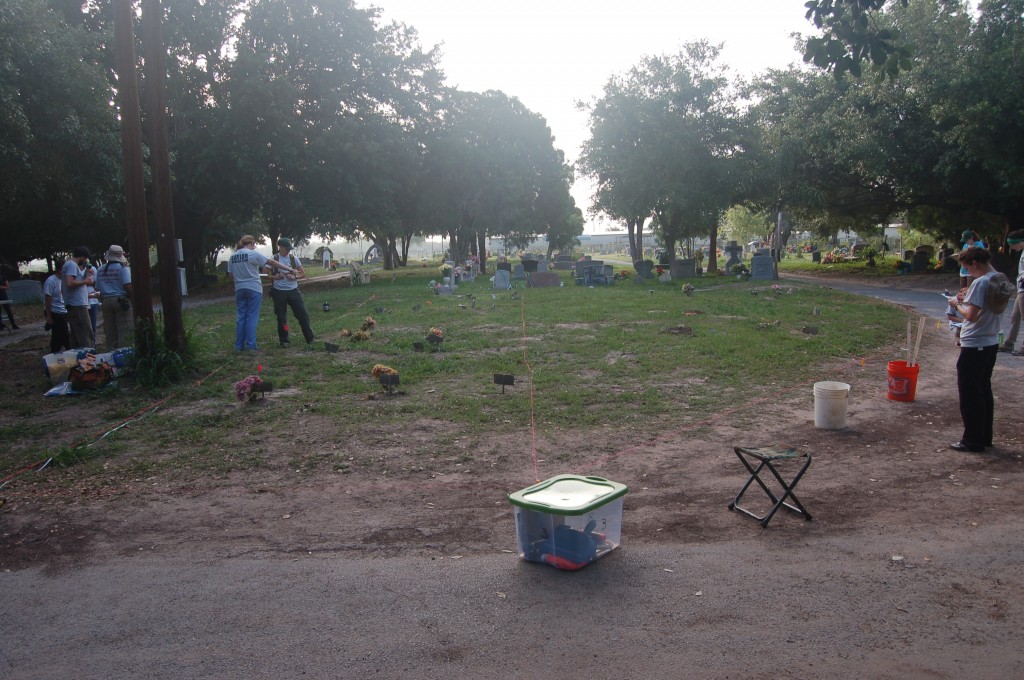
An area of the cemetery with small burial markers and string layed out by the team with team members surveying around
During

Yes, we successfully moved over half a million pounds of dirt (by hand) as a group.  Every Baylor student and UIndy team member wears their sore muscles, bruises and scrapes proudly as an indication of their physical commitment to the human rights work in Falfurrias.  In the process of moving that dirt we located the remains of over 52 individuals that will now begin the identification process and the long journey home to loved ones.  Those individuals would still be buried nameless if it weren’t for a successful field season.
The same burial area with burial markers still in place but all grass removed
During

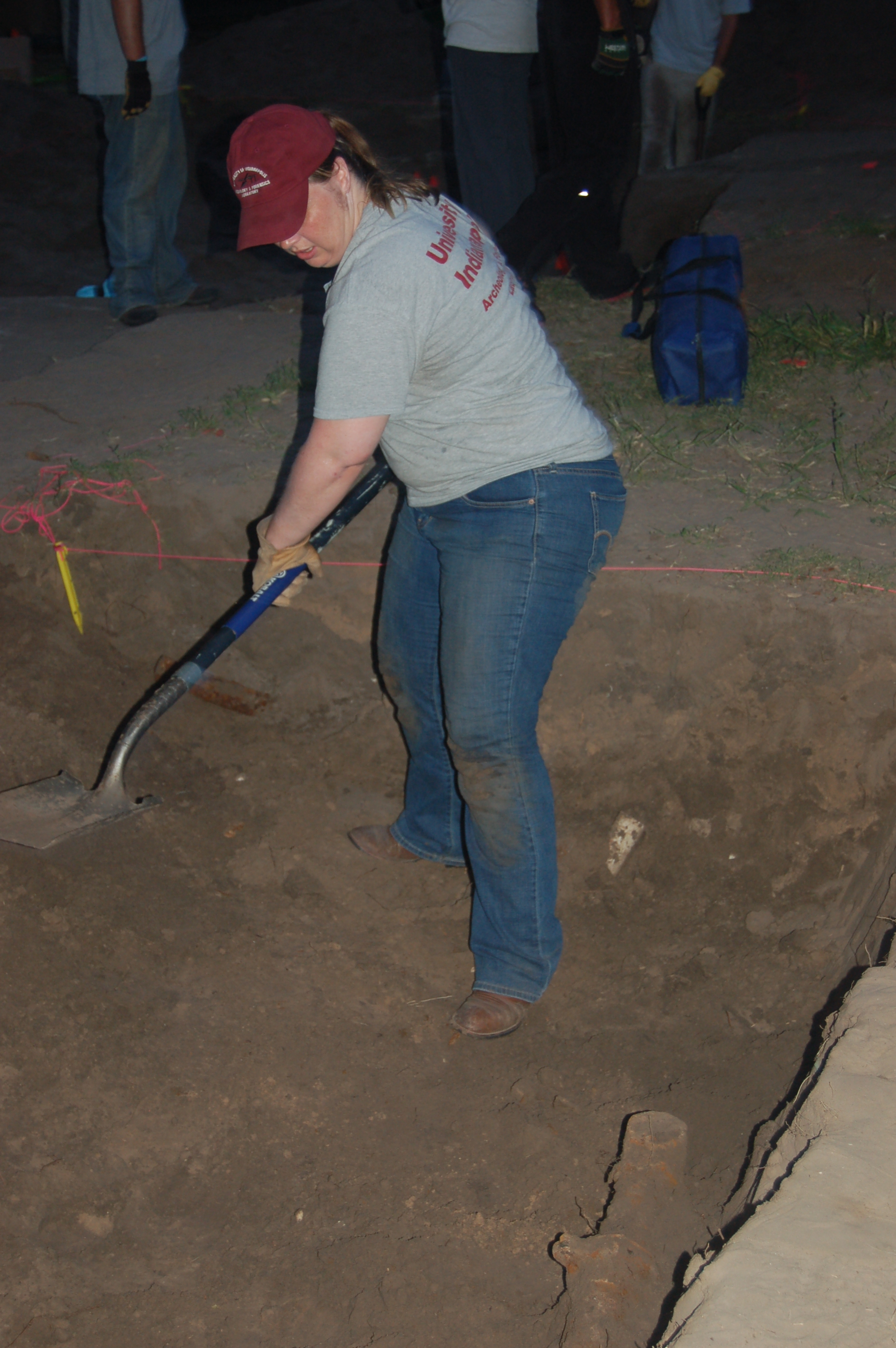
Yes, when we look back upon the once grassy plot of land that is now lacking  52 bodies (minimally) we feel successful.  We successfully recovered the nameless and left our blood, sweat and tears in return.  The environment tried to stop our success, but we were triumphant.  The sun burned our skin and dehydrated our bodies. The humidity made our thermoregulation via sweating a less efficient cooling mechanism. The mosquitoes, which we are all convinced became immune to our bug spray, made us swell and itch.  But we came back until the job was done.
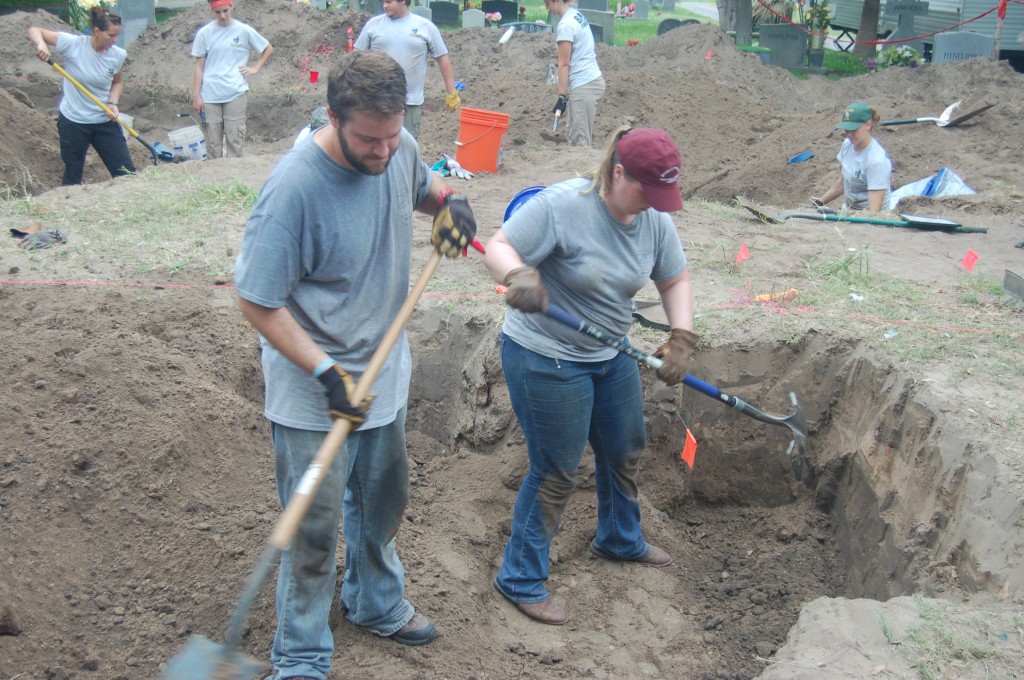
Team members digging in a burial with shovels
During

However, the exhumation process was completed in less than two weeks. Now begins the long process of identification. Each individual will travel to a university (Texas State University, University of Indianapolis, Baylor University) where they will begin forensic analysis.  This process begins with cleaning the bones, followed by skeletal analysis aimed at reconstructing the decedent’s living characteristics like biological sex, age at death and living stature.  This skeletal biological profile can be used to narrow down potential matches of reported missing persons.  A bone sample will be cut for isotope analysis that could contribute to detecting the country of origin of the individual and again narrow down potential matches of reported missing persons. A bone sample will also be cut for DNA analysis. The DNA profile obtained from the bone will be compared to a database of family reference samples in the hopes that a match will be discovered.  But if no missing persons report is filed or family reference DNA sample collected, the chances of identification are essentially zero.  So, can we say we are successful before they are all identified?
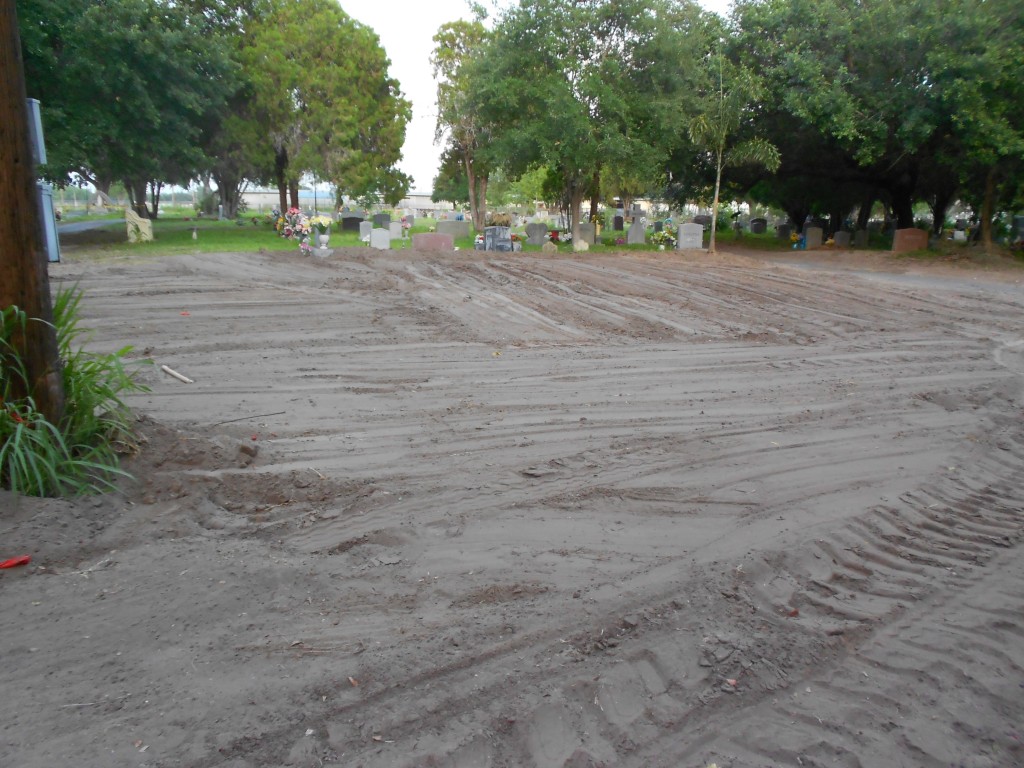
The same area of the cemetery leveled with dirt
After

Is success a situation that claims the lives of thousands of refugees fleeing institutionalized violence and extreme poverty? I don’t know if success is the term that any of us would choose to use to describe the work we did in Brooks County. I think we would all agree that progress is being made and that we completed the goal we set for ourselves.  We feel very accomplished and we feel proud of the job we did there. We can say that over 50 people are now starting their journey back home. For those families, we strive for success.

~KEL

Home, Sweet Home

At last, this season of fieldwork in Falfurrias has come to a close.  The time slipped by so quickly that it all seems like a haze.  When I recall our time in the field I see a patchwork of new and old faces, I picture a sea of sand with an endless supply of buckets that need to be moved (think Sisyphus), and a blur of hands ready to pass a trowel or give a lift out of the hole.  The heat tried to burn us down one by one, almost ending our work early by attrition.  The heat didn’t stand a chance.  What I remember the most was the dogged perseverance that compelled everyone in the field to finish.  Instead of breaking us, the heat and pressure forged us into something great.  Our work has changed us, and that is something I will never forget.

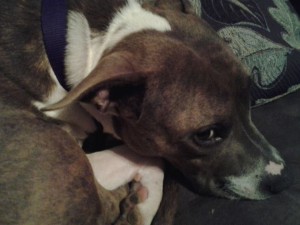
Bell, a cute brown dog curled up on a couch
Bell, lonely without Ryan

Our team is back in Indy now.  We have slept in our own beds, cuddled our loved ones (look how sad Bell was without Ryan), and experienced some of the finer points of home.  Home is good- it is safe, calming, and filled with the things and people we love.  To use an old and tired cliché, home is where the heart is.  While we consider ourselves home now, I believe that every one of us left a piece of our hearts in Falfurrias.  Some part of us will always be at home in Fal.

I have mentioned to some people that I often feel like a tourist in this humanitarian crisis.  I live nowhere near the border, and I travel down for two weeks in the summer to help.   Once my time has passed, I have the luxury of returning to back to Indy.  In Indy I don’t face the daily realities of people dying on my doorstep.  I don’t see tragic news stories so often to become numb to them.  I have the ability to literally distance myself from the situation, and yet I cannot.  I now find myself over a thousand miles away with much of my heart left in Falfurrias.

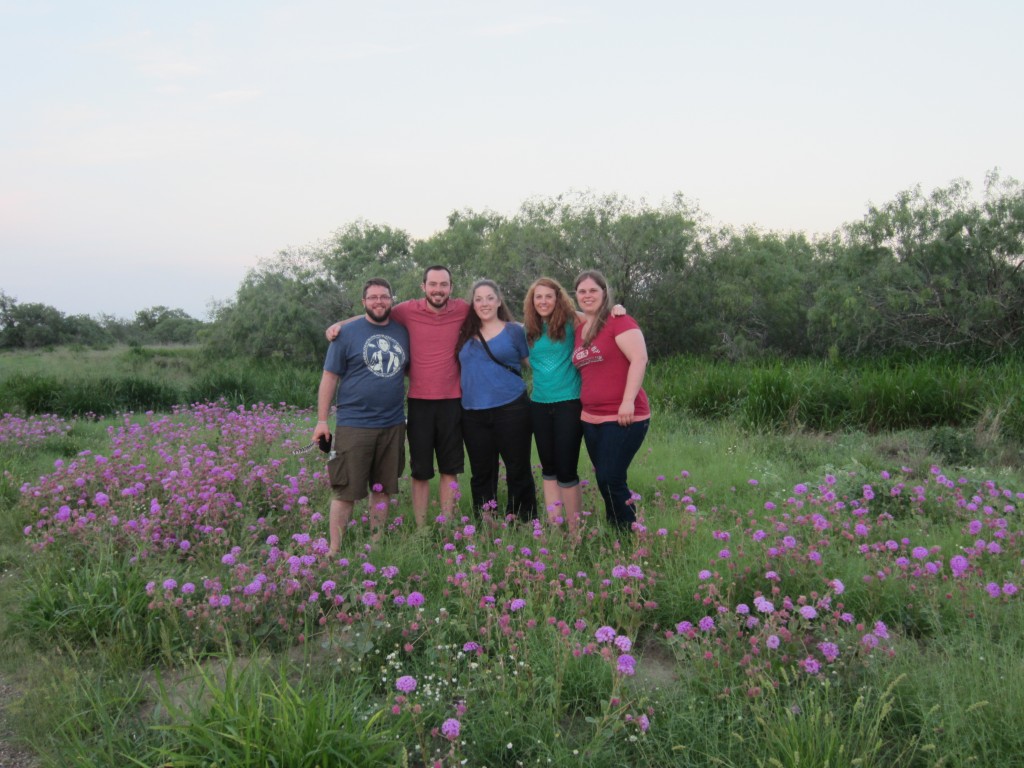
A group picture in a field of greenery and purple flowers

Fluttering Fields of “Heart’s Delight’

I know now that I am not a tourist.  I have made new friends and family, and became part of their community.  I have lived in many places, but I have never felt as loved and welcomed as I did in south Texas.  Every person in Falfurrias welcomed us with open arms (seriously, I have never gotten so many hugs in my life).  It is an honor to be considered part of their community.

Though we are back in Indianapolis, our work continues.  Hopefully our efforts will continue to shape policies surrounding the treatment of both the living and the dead.  Ideally we would have never been in Texas- no one would have died under the scorching Texas sun and we would live comfortably as armchair anthropologists.  In a perfect world people would die happy having lived a full life, not in the pursuit of happiness or in search of a better life.   For now, I rest knowing that I am doing what I can to help.  I will do everything in my power to ensure that each and every individual is identified and returned to their loved ones.  Families will be reunited, and souls can rest in a place they consider home.

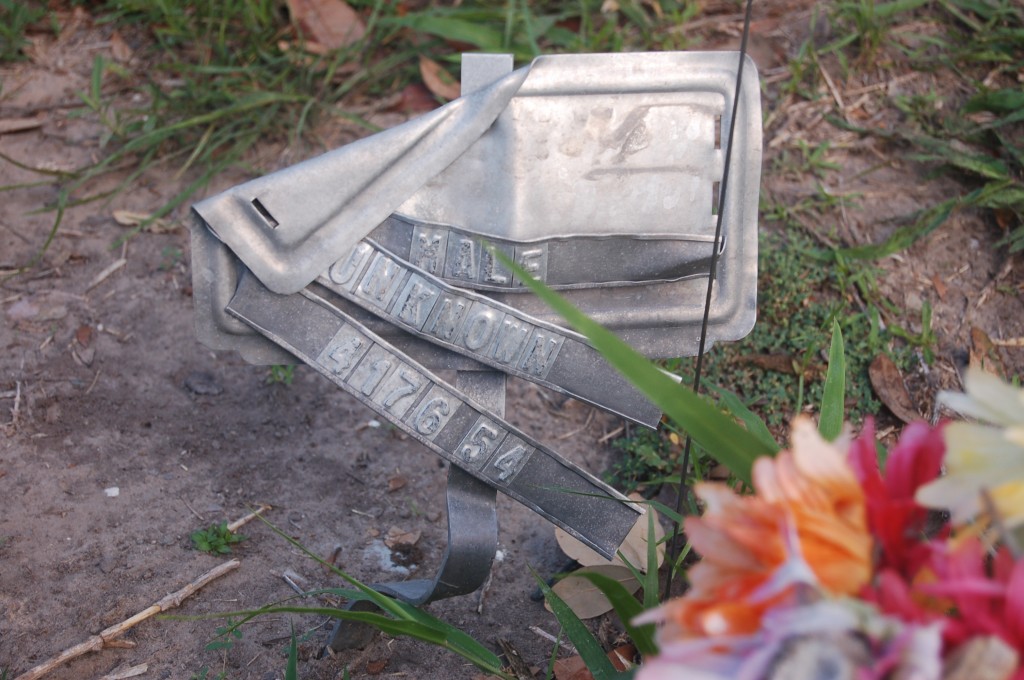
A bent metal burial marker with the words ""Male, Unknown, 417654" falling off

Lost, But Not Forgotten
Photo by Esy Casey and Sarah Friedland, Perinspire LLC

Why do you do this?

“Why do you do this?” is one of the first questions I am often asked about my work with migrant death.  This seems like such a simple question, one that would be easy to answer.  But to be honest I couldn’t find the words to answer the first few times I was asked. I’m not sure how I came off as I stumbled for a response, or how my pause was interpreted.  I was flustered not because I didn’t know how to answer, but I was surprised they had to ask. These are human beings who are refugees of extreme poverty and institutionalized violence. These are human beings who died trying to get to a place they thought would bring freedoms and safety. These are human beings who were invisible in life and who were being forgotten in death. These are human beings who have family members wondering what happened to them and where they are. But first and foremost, these are human beings.  “Why wouldn’t I do this?” I wanted to ask in return.  I am fortunate that I have a specialized skill set that allows me to contribute to the exhumations and identifications. I am lucky that I have a university that has “Education for Service” as its motto and supports my work on this mission. I am lucky I have graduate students who are passionate, dedicated and trained to work in these situations. I am lucky I have the support of my friends and family to do this. I am lucky. They were not. They are still human beings who have basic human rights and whose families have basic human rights. I do this not because I want to, because no one should want this amount of pain and suffering in our country. I do this because it’s the right thing to do. I wondered how my students would respond if I asked them the same question —Justin removing burial fill with a dustpan from inside of a burial

Justin:  The reason I am here in Texas is to give a voice to those who cannot speak for themselves.  The training we receive at UIndy has equipped us with a very special skill set.  We are taught to both recover and help to identify skeletal remains.  We are often the last resort, and can help to give a name to the unidentified when no one else can.  Our goals are simple: Locate the remains of those who have been buried unceremoniously without a name and identify them so they can be returned to their families.  I hope the work that we do will bring about closure for their families.  I cannot fix the past or offer any sort of justice, but hopefully I can give families a place to mourn the loss of their loved ones.

Team members working around a burial marker from the ground surface
Ryan:  First and foremost, I’m here to assist in any way I can, whether it is in the form of exhuming migrant remains in hopes of identifying them or in the form of interacting with locals to better understand and respect the depth of the crisis. As a student of anthropology I’m here to try and understand the culture behind the human rights crisis, including what it means to be a migrant, a border patrol agent, a human rights activist, a civilian living in a town affected by the crisis, a rancher, or any other individual with a unique perspective on the situation. As a field expert I’m here to teach students how to systematically, professionally, and respectfully exhume the remains while emphasizing the importance of the crisis. I also hope to instill in these students a sense of passion and drive to provide assistance and seek a better understanding of the complexity of the situation. But most importantly, as a human being I’m here to simply help in any way I can.

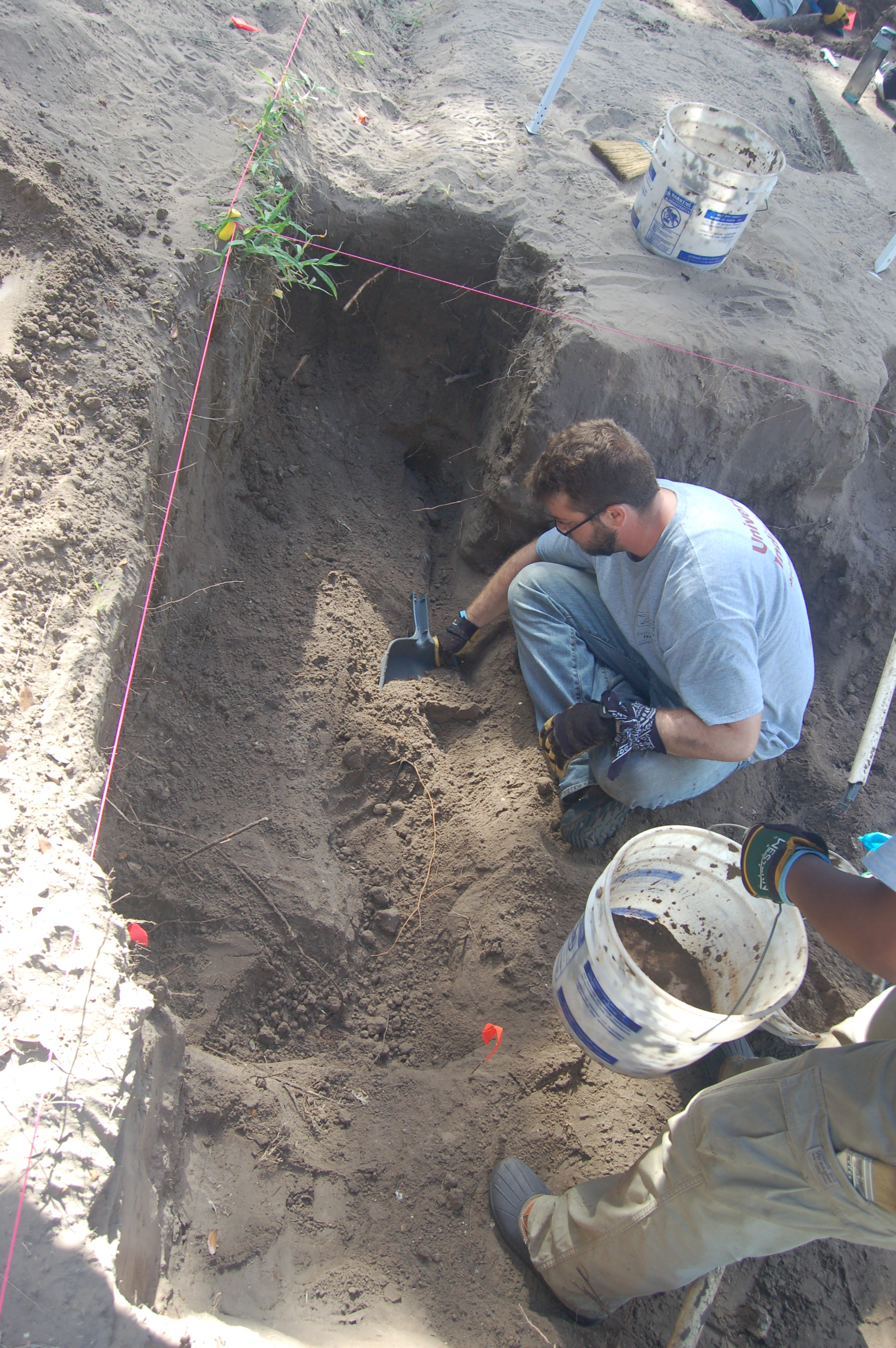
EricaErica standing in a burial with a shovel:  Last year when I was invited to participate in this project I had no idea how connected I would become to the issue and the community.  Research helped prepare me, but after being here last field season I knew I needed to return to Falfurrias. Hearing the stories from border patrol and locals are harrowing. This issue goes far beyond the scope
of Brooks County but no matter which side you are on, the number of individuals perishing alone in the desert is devastating. I came back this field season because this is just one small step to returning the missing to their despondent families, but it is a step to which I am able to contribute.  I am here to help the wonderfully gracious Falfurrias community, to shed light on the plight of those trying to make it North for a better life, and to help find the ones that have gone missing but who should never be forgotten.

Jessica removing burial fill with a shovelJessica:   The work we do in Falfurrias is extremely important.  I am here because there is a need for the skills I (we) have that allow the exhumation of unidentified remains, which is the necessary first step in the identification and subsequent repatriation of migrants.  Every unidentified in Sacred Heart Cemetery has a mother, father, brother, sister or children, that know they are lost and are looking for them, hoping for answers that will never come if they are not exhumed first.  I think, “How would I feel if my family member disappeared and I never found out what happened to them?”  These migrants sacrifice more than we can comprehend to come here for a better life for their families.  We have the knowledge and skills that can help give a voice to those that can’t find their way anymore.  Frankly, anything I can do to help this crisis in Brooks County, to help with the basic human right to life (and death) is why I am in in Falfurrias.

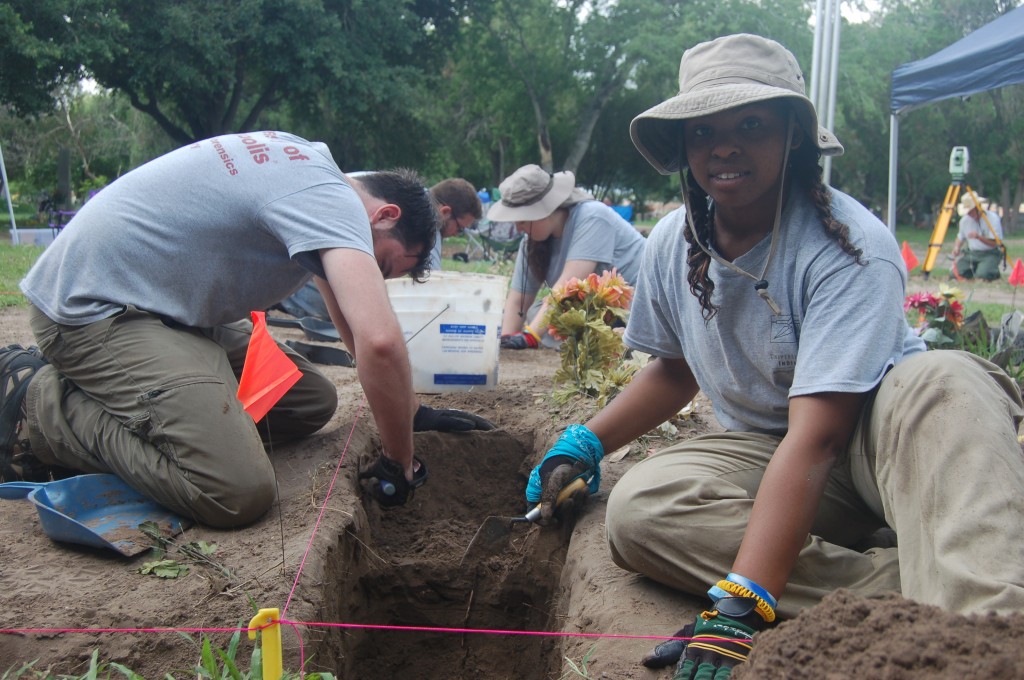
Beyond borders team members working with trowels in a burial from the ground surface

Cheneta:  Originally I came here because forensics is a career that I would love to be a part of.  I was asked to join the UIndy team and I knew that it would be a great opportunity.  If I were serious about forensic science this was a trip that would reassure if this was a career I wanted.  But it wasn’t until after I got to Falfurrias that I really learned why I was here.  While I have been here, I have been introduced to the story and the background of the work we are doing.  So now I know that I am here not only because it’s an opportunity but because it is making a difference.  The migrants coming to the United States trying to live a better life but not making it deserve to be found and identified to be returned to their families.  We are here – well I am here because people deserve to know where their loved ones are and it they are alive.  If there they are not they deserve to make peace with that individual.

I am continually in awe of the professionalism, maturity and dedication of the University of Indianapolis Human Biology Students.  The human rights crisis on the border is complex, and our work there is physically and mentally exhausting. Yet they don’t complain and they don’t think of themselves. They continually reflect on ways in which science can contribute to closure for the families and ways in which they can grow from this experience and bring awareness to the crisis.

~KEL