Latest Posts

When Moments Become Memories

My son was assigned a book to read in his English class and asked me to read it with him. It was called “The Giver” by Lois Lowry. What started as an effort to bond and find conversation with my son ended as a reflective experience, with many connections to the Beyond Borders Team and our work in the Texas borderlands. A major theme of the book focuses on memories. The characters in the book have none. There is no memory of the past, of other places or other experiences. Each person lives and believes there is only now. Memories are essential for growth and understanding. Our memories allow us to do well in school, to get everything we need at the grocery store, to drive a car, care for ourselves, and so much more. Our memories allow us to grow as humans and our memories allow us to avoid mistakes. These trips create core memories for the team that benefit them professionally and emotionally. With each trip I see how the team members mature in so many ways.

Team member Justin helping Dr. Latham dig
My memory from our first mission to Brooks County in 2013. Teamwork exemplified as Justin held my arm so I didn’t fall into the area I was excavating.

Our memories also hold our emotions. The Giver tells us that life is not complete without the good and the bad experiences. That is the irony of these trips. The team is purposely put in a terrible experience. It’s one in which death, despair, struggle and questioning is all around us. “He knew that there was no quick comfort for emotions like those. They were deeper and they did not need to be told. They were felt.” This blog is a way for the team to communicate their experiences and their emotions, but in reality, readers will never feel what we feel. And we will never feel what it feels like to be someone forced to cross into the US through clandestine paths. Yet, through these bad emotions and experiences, the memories are good. Team members leave with a sense of confidence in their abilities and in what they accomplished.

Dr. Latham analyzing skeletal remains
photo by the Houston Chronicle — My memory from our first lab mission to TX State University in 2015. We worked directly on skeletal analysis to aid in identification efforts.

That is because we tend to think of memories as absolute records of the past. But in fact, our memories evolve as we grow and change. They are colored by the reflection of who we are today. Often our memories are not what actually happened, but what we need to remember to support who we are today. That means our memories and experiences allow us to change our minds and our perspectives. Not because we were wrong, but because we are evolving and growing. In The Giver, Jonas longed for choice. Living in the now means accepting everything as it is. With memory comes choices and decisions. The decision facing Beyond Borders Team members is what they will do with the memories and experiences from their trip.

Team members paint AGUA on barrels
My memory from our first mission working with The South Texas Human Rights Center in 2015. Team members Justin and Amanda prep water barrels for us to place on migrant routes.

I saw a quote by another author that seems fitting here in talking about decisions in how you approach situations. “Sympathy is easy because it comes from a position of power. Empathy is getting down on your knees and looking someone else in the eye, and realizing that you could be them, and that all that separates you is luck.” -Dennis Lahane 

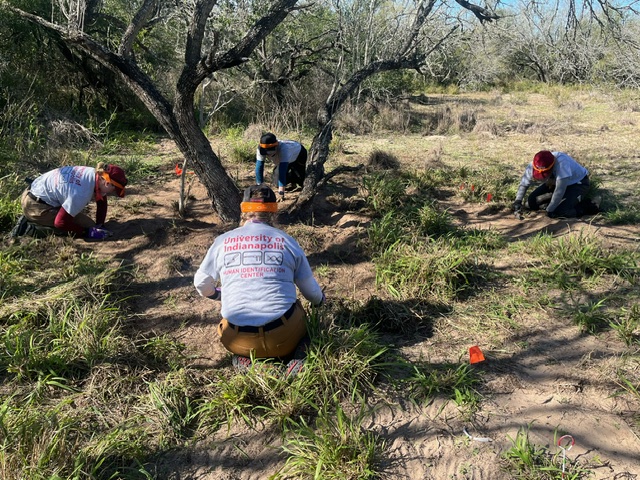
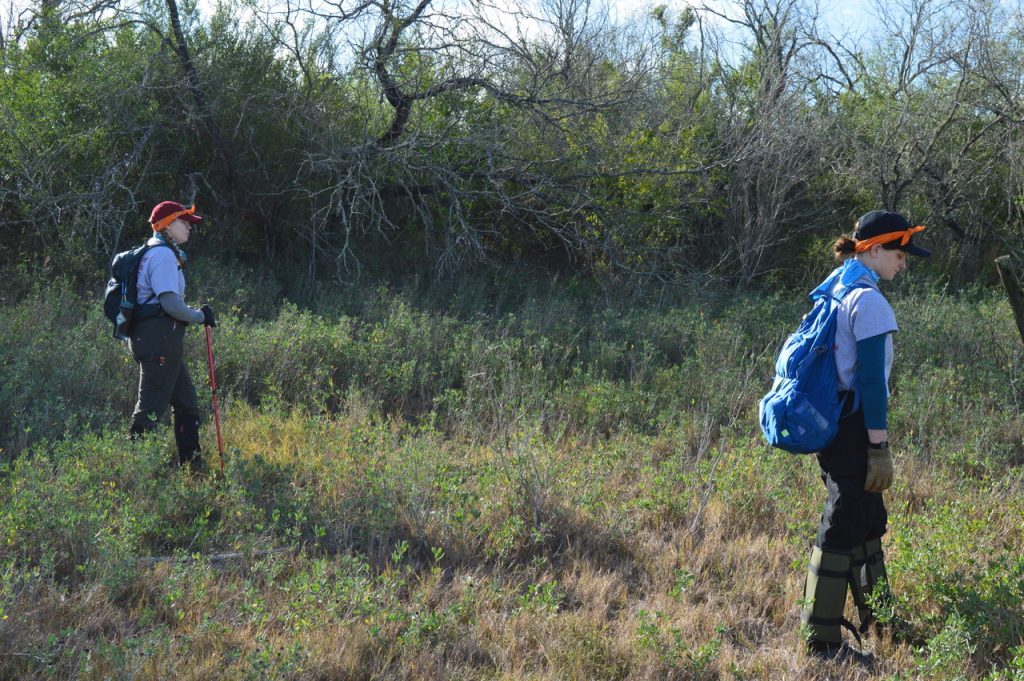
Team members with Deputy White on a search
My memory from our first search & recovery mission working with Deputy White in 2018. Team members are planning how to proceed with search the area.

Thank you for following us and sharing our journey.

~KEL

Pre-Reflections for the Trip of a Lifetime

Packing suitcases and my US passport to travel to Falfurrias, Texas.
Packing my suitcases and US passport to travel to Falfurrias, Texas.

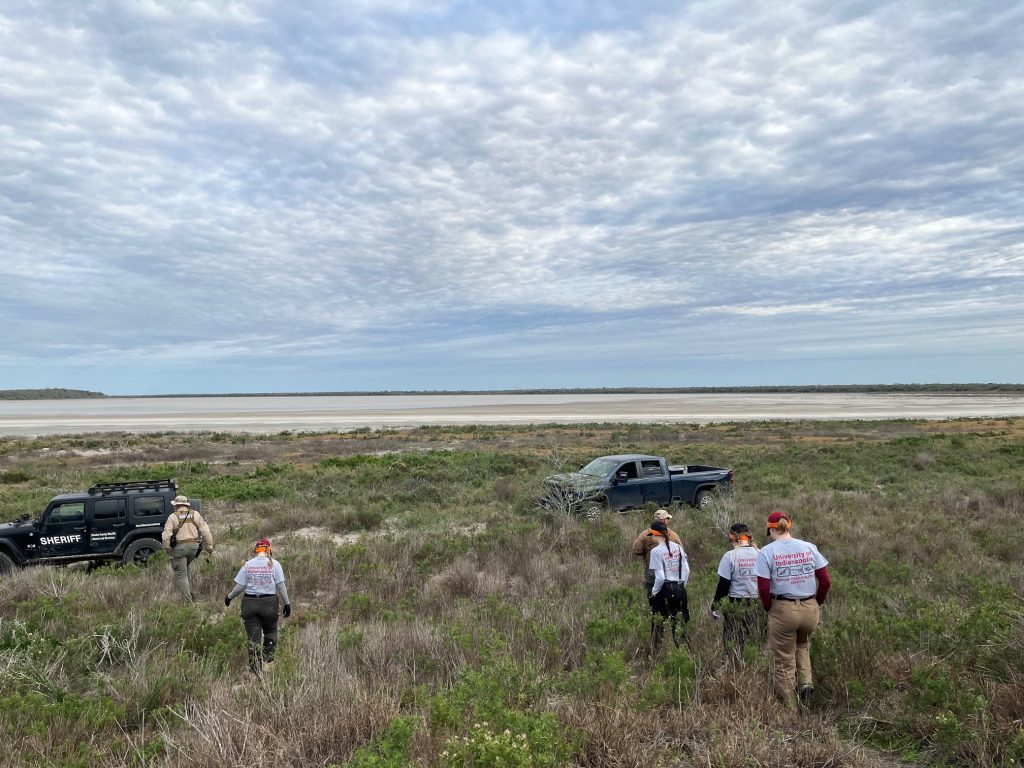
There is much I have been preparing for as it gets closer to the day we leave to travel to Falfurrias, Texas. I’ve spent days preparing by writing lists for everything I’ll possibly need, shopping, and packing my bags. I’ve thought about how I will be able to handle the environment of South Texas and what things I can preemptively do to help me physically in the field. In reflectance, I find that this is just another aspect of the privilege in how I live my life. Those who cross the border from Mexico to Texas don’t have the luxury to buy clothing to protect themselves from the harsh vegetation including thick pants and leather gloves. Migrants, likewise, don’t have the time or funds to prepare ahead of time like taking enough food, water, and medications to aid them on their journey. My teammates and I are privileged to be traveling with others who know the area, support us, and are very prepared in case of an emergency. These individuals embark on this journey with minimal supplies and guidance driven solely by a want for a better life. The experiences of migrants making the journey to cross into the United States will be nothing like our own. This experience will help me attempt to understand the challenges millions of migrants face entering and living in the United States.

I have gotten increasingly nervous each day as it gets closer when we leave on January 3rd. I’ve been most concerned with how I can mentally prepare for the things I will see while searching the Texas wilderness for migrants in distress. I’ve found that I am a very empathetic person and tend to place myself in other’s shoes in order to attempt and understand what they are experiencing. In reading literature on migrant experiences, it has become more and more clear how this experience will test my ability to handle my emotions in the field. The personal accounts that I read about are sometimes hard for me to understand or digest fully. Seeing the physical remains of migrants’ journeys in person and hearing stories from those who’ve dedicated their lives to searching will likewise be hard but necessary for my growth. Talking with everyone on the team and back home can remind me to keep a positive attitude amid such an emotionally challenged environment. I am very thankful that I will be traveling with a team with which I feel comfortable asking questions and expressing how I am feeling.

The Beyond Borders humanitarian mission to the Texas-Mexico border is a once-in-a-lifetime opportunity. There will be so much for me to learn and experience while in the field searching for individuals who may have gone missing en route. Being able to experience hands-on the reality of this humanitarian crisis and the culture of these areas will be truly enlightening. I am very excited to learn from and work with Remote Wildlands Search and Recovery and with the South Texas Human Rights Center. Hopefully, the work I get to do in the Texas Borderlands will help aid in individuals keeping the basic human rights they are entitled to. This experience, I foresee, will be life-changing and solidify whether I want to work as a forensic anthropologist in human rights contexts.

Chastidy

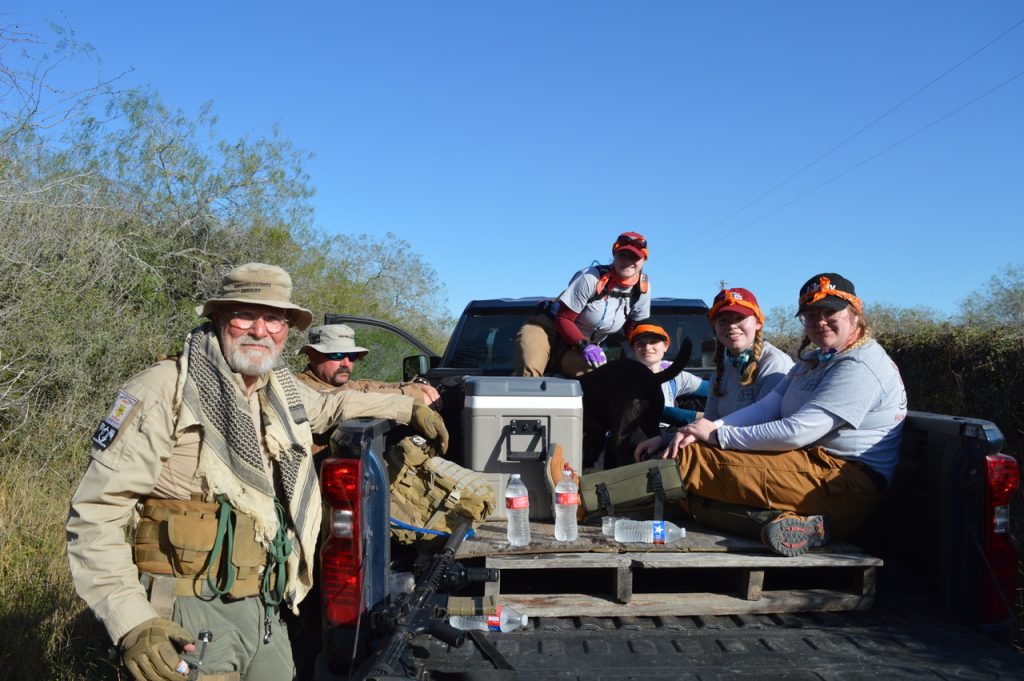
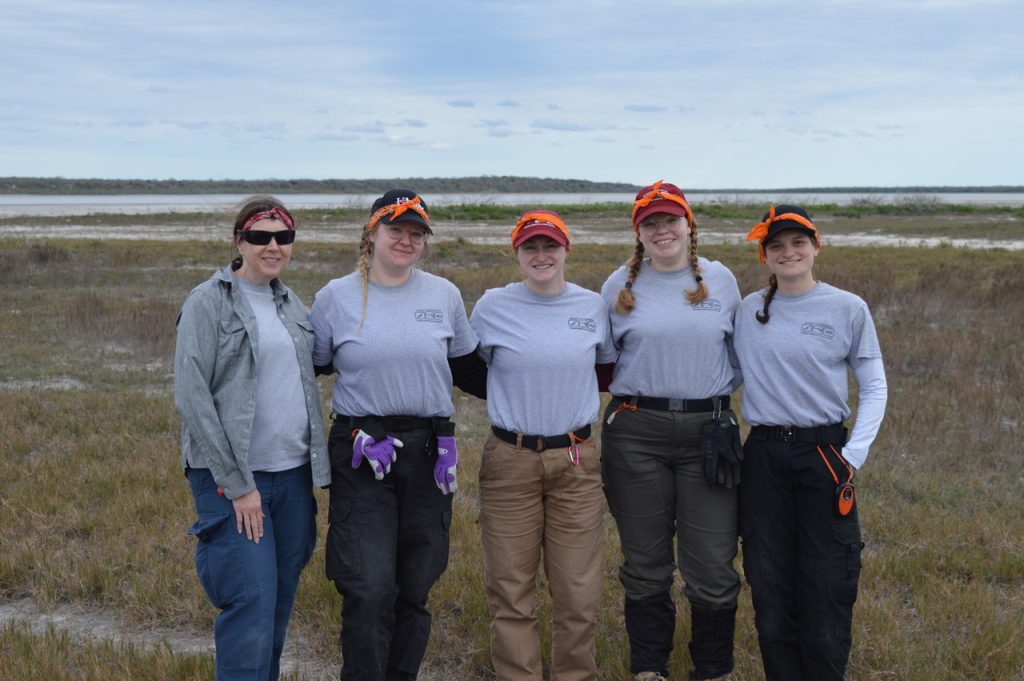
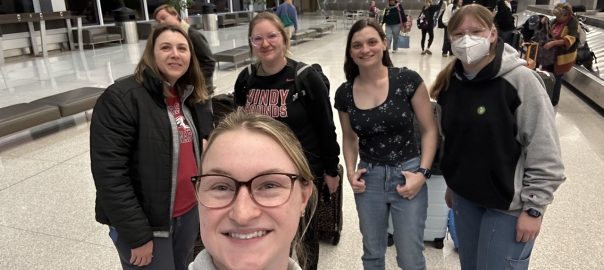
Image of the Beyond Borders team members in Eagle Pass, TX

We Decide What to Do With the Time That is Given Us

The field of forensic anthropology has grown due to disasters. While most of forensic anthropology practice occurs on single death cases, it’s the disasters that have brought attention to and interest in the field out of the need for it to grow. Genocide and mass graves in Eastern Europe and Latin America first warranted the training of large teams of forensic anthropologists. The September 11 terrorist attacks, Hurricane Katrina, aircraft crashes, large fires in the western US and the prolonged mass disaster along the US-Mexico border have drawn students to the field. Once each disaster is addressed we wonder if the field will be saturated with practitioners, but there’s always another disaster. Some of them are sudden, unexpected and relatively short in terms of investigation. While others are prolonged in terms of deaths and investigations.

Team members exhuming a grave in Eagle Pass with Deputy White in the background.
Exhumations in Eagle Pass

With all mass disasters we ask “why” and “how” this could possibly happen. With the US-Mexico border crisis these questions have lingered for decades with no response. Addressing immigration policy or the global circumstances that have created the mass migration event are often out of the hands of the forensic scientists, but we can address questions of and advocate for policies that focus on the forensic investigations and analyses. For decades I’ve watched colleagues in Arizona and Texas work to find creative ways to address the large volume of migrant deaths with little state provided resources. My colleagues in Texas are not paid to do this work, they have chosen to devote their time and resources to locating, identifying and repatriating those who died crossing the border.

Two team members removing dirt from a burial with shovels.
Removing loose dirt from above the burials in Eagle Pass

What I have always struggled with, second to the fact that a large number of deaths occur on our border in the first place, is the lack of support for this work. There are always family members and friends that vocally display their lack of support for the volunteers working in the Texas borderlands. Their opposition is usually politically driven and narrowly focused.  We decide what to do with the time given us. For my colleagues it means dedicating themselves to this work daily. For the Beyond Borders Team it means shorter bursts of intensive work and immersion in this crisis.  The students learn practical forensic skills that will prepare them for a future in the field. They are being provided with an opportunity to grow and expand their skills, which should be celebrated. Yet that is often overshadowed by the context in which they are working. Every member of the Beyond Borders team has chosen to spend their time working on this large-scale identification project. They have chosen to work towards providing closure to families of the deceased and have chosen to put themselves in often uncomfortable and difficult situations in order to grow as professionals and as people.

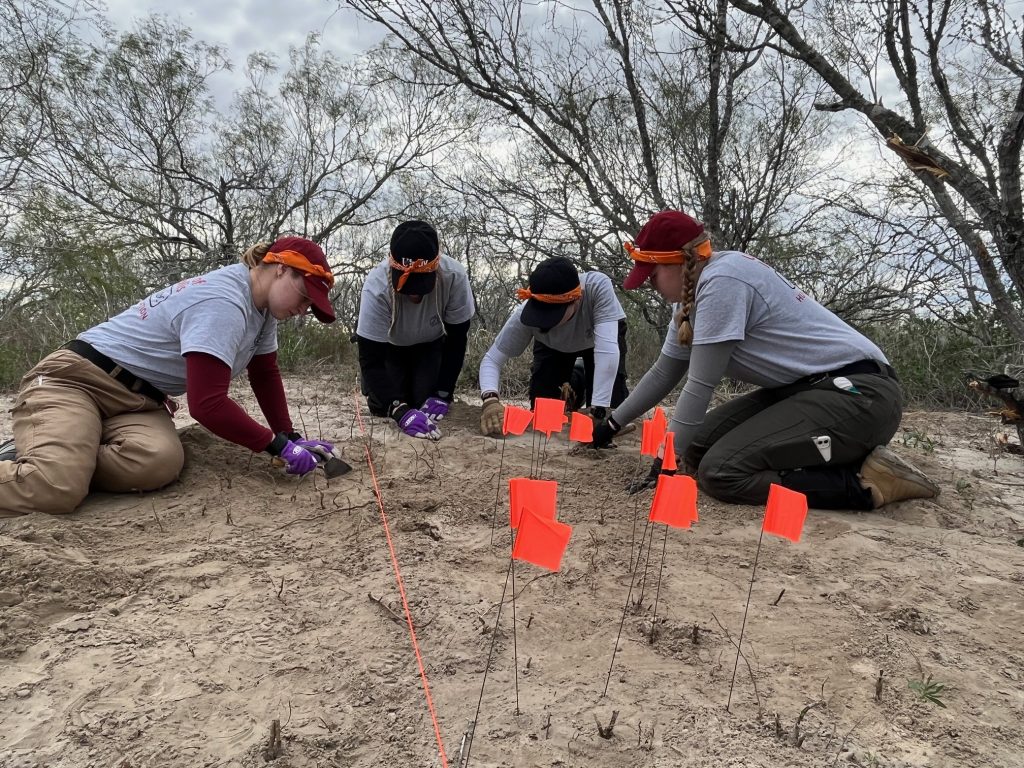
Three team members measuring the location of a grave marker to create a map.
Mapping in Eagle Pass

We decide what to do with the time given us. We can decide to be positive and work towards positive change, we can do nothing or we can work against it.  More and more often I find myself worrying about the physical and mental health of my closest colleagues working regularly at the border. With what I experience after just short trips, I can’t begin to imagine how they feel with the daily weight of this work. So, if you see a smile out of place in our work photos, do not misinterpret it as making light of the situation. It’s usually a smile at someone we admire, a smile at someone we are happy to see, a smile at someone we are watching grow or just a smile that helps us get though whatever difficult situation we are facing at the moment.  If you have a forensic scientist or last responder in your life, take a moment to check in on them. You have no idea what they see, hear and experience on a daily basis. Whether you agree with the context of their work or not, they are choosing to make a positive contribution to society regardless of the emotional and physical toll it might take on them.

Two team members removing dirt from a burial with a shovel and mattock.
Breaking up the hard top soil in Eagle Pass

The purpose of this blog is to bring awareness to the situation in the Texas borderlands through the perspective of the forensic scientists working there. We try to provide you an insight you will not get from watching or reading the news. While there are so many challenging, difficult and disheartening things I could focus on in my reflections of our time at the border, I always try to highlight something positive.  I am so incredibly proud of the hard work and growth I witnessed in all the students at the cemetery during this trip to Eagle Pass. It was physically challenging and emotionally difficult yet they started and ended each day with professionalism and motivation, learned to work as a team, witnessed the complexity of a crisis with no end in sight, and chose to spend their time serving others in a time of crisis and disaster.
~KEL