Latest Posts

The Stories I Carry Beyond the Border

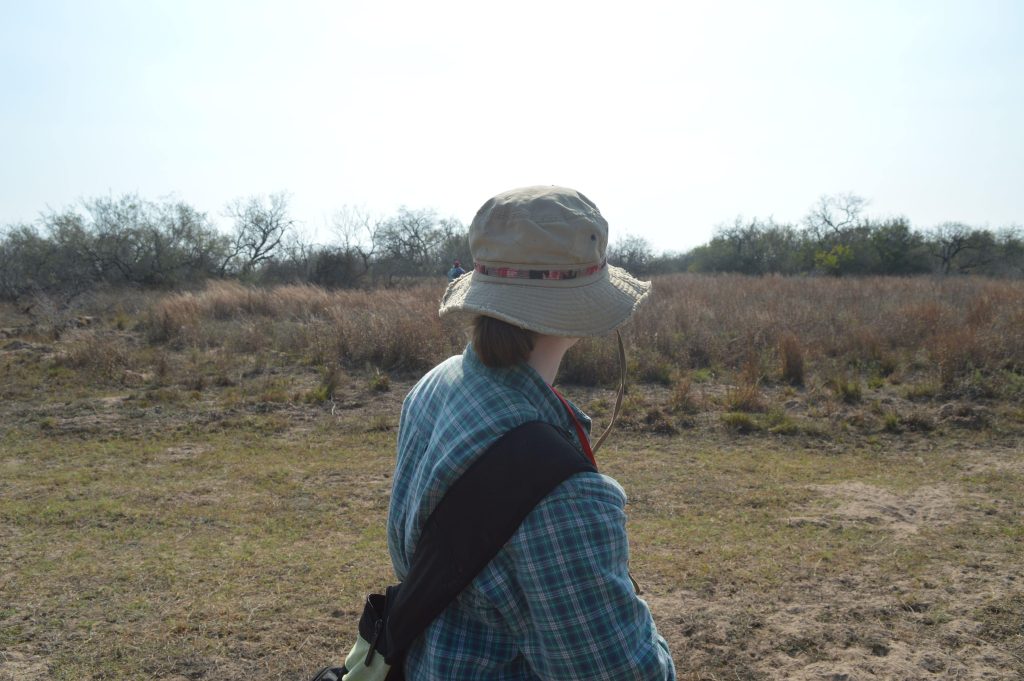
Taken from behind, Peytin stands looking out at the vast ranchland
Peytin looking out at the vast ranchland

Coming back to Indianapolis has been surreal. With the semester starting in just a few days, returning to a life of readings, laundry, and studying has felt trivial, knowing essential and valuable work continues to occur in Brooks County. My first thought waking up this morning was whether Don and Ray had geared up for another hot and grueling day on the ranches, hoping to provide families with more information about the status of their loved one(s). I was a bit saddened by this thought, thinking about how quiet it must feel for them after a week with a 10-person crew. Returning to my distraction-filled apartment has felt a bit isolating, so I can only imagine how lonely it must feel in the vast, seemingly infinite ranchland, filled with reminders of the trauma endured by those in search of a better life. Being amongst these spaces and seeing the residual artifacts left behind by migrants was extremely emotional. Having to grapple with these emotions while dealing with the physical exhaustion caused by traversing such rugged land has provided me with a greater empathy and respect for both migrants and individuals like Don who are committed to the search and recovery of migrant remains.
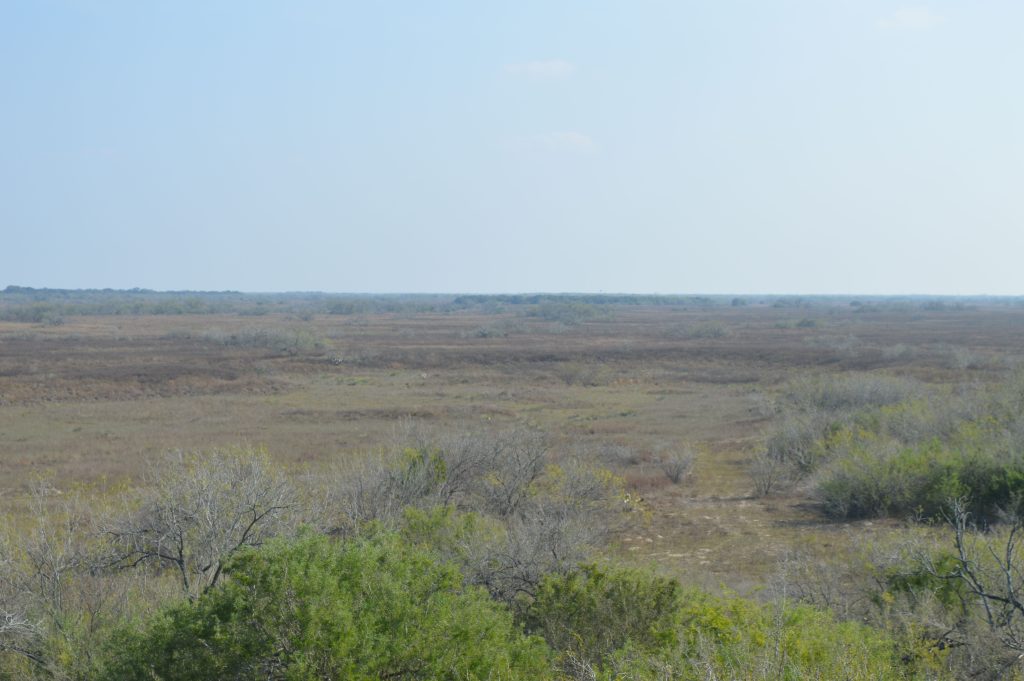
A view of the ranch from an observation deck, showing the ranchland traveling off into the horizon
A view of the ranch from an observation deck
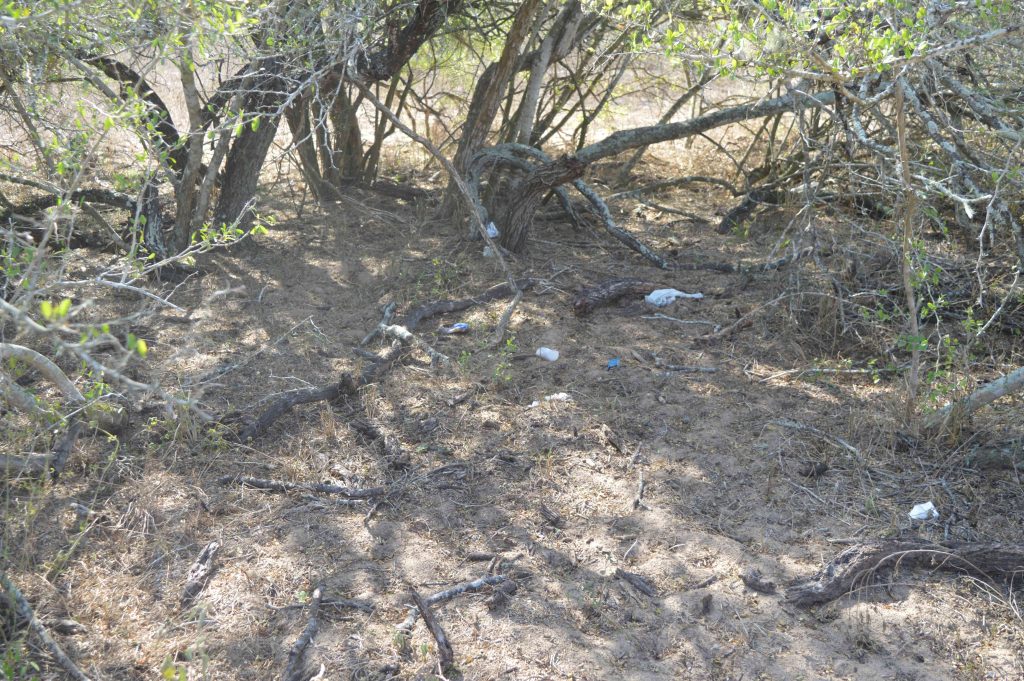
Motte that was used as a layup with discarded items left behind
Layup with residual artifacts present

Coming into this trip, I committed to preserving the stories of those I encountered, directly and indirectly, in Brooks County. To uphold that vow, I wish to share some of the most poignant moments from our trip and the emotions they stirred. Despite the previous knowledge I had regarding this humanitarian crisis, no level of research could prepare me for entering this harrowing space and seeing the reality of a migrant’s journey.

One of the most powerful experiences for me during the trip was on Day 5—our last day on the ranches. After several hours of not finding any signs of activity, Melissa alerted us to a layup she and Danny had located, containing black trash bags and a few pieces of clothing. Entering the layup, I expected the trash bags to look similar to the others we had found—discarded, brittle, and ripped. However, these trash bags were relatively new and had purposeful holes in them—one to go over the head and two to put the arms through. Don informed us that the bags were used as ponchos and likely discarded by a group of migrants as they exited the motte to continue their journey.
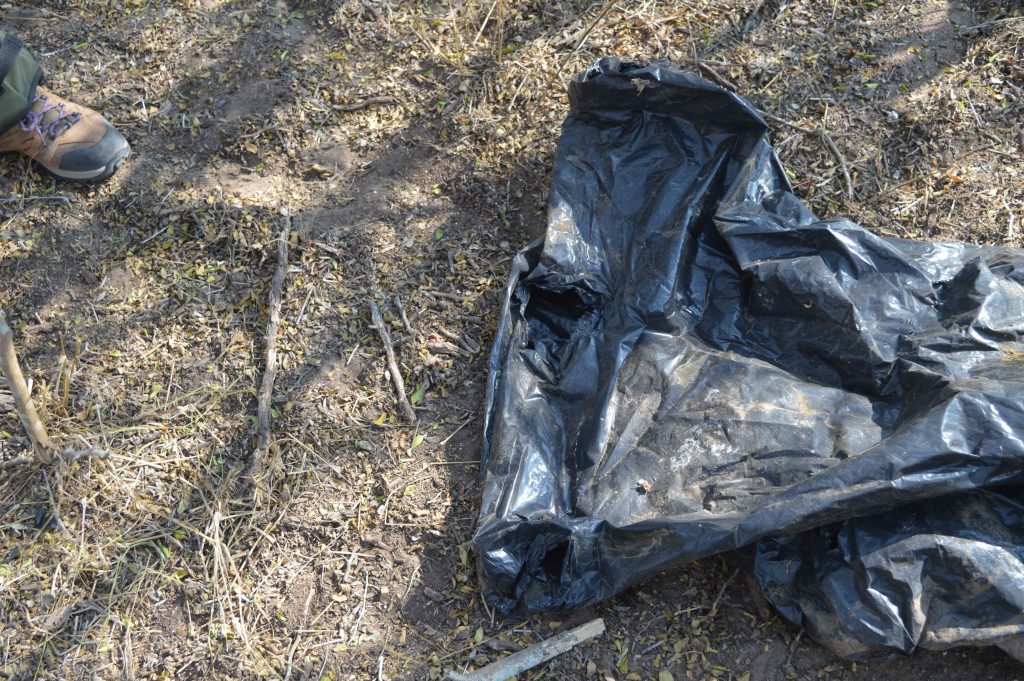
Trash bag found in layup with a hole in it to place one's head and two arms to place one's arms
Trash bag found in layup with holes in it to serve as a poncho

What struck me wasn’t necessarily the bags themselves, but their spacing. Rather than being thrown together in a pile or placed sporadically, the bags were organized in a somewhat circular shape, with bottles and clothing surrounding them. Standing there, I felt as though I could sense the people who once sat in that space, wearing those bags and taking a much-needed rest from their tiresome journey. This moment was very emotional for me, knowing these individuals had likely placed their lives in the hands of a coyote, accepting the likelihood of violence and potential for death. Given how far into the ranch we were and the conditions we had endured thus far, I hoped that wherever these individuals were, they were safe, healthy, and near the end of their journey. 
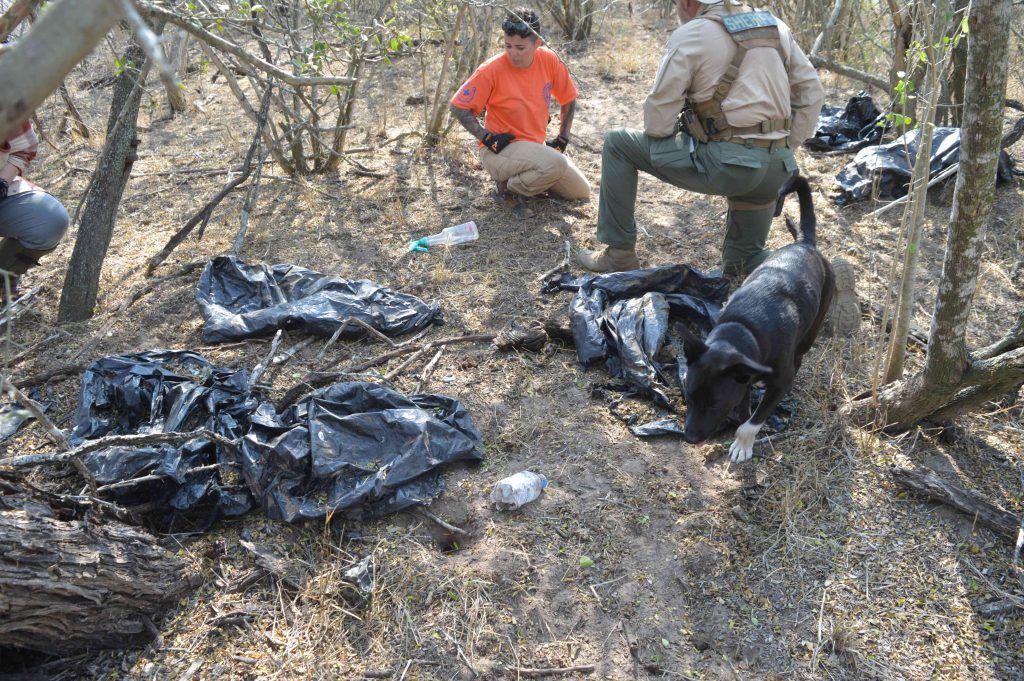
Melissa and Don look at trash bags within a layup
Melissa and Don looking at trash bags within a layup

Another profound moment for me was visiting the Sacred Heart Burial Park in Falfurrias, where the past Beyond Border teams had performed numerous exhumations of unidentified migrant remains. Stepping out of the van, I could feel the simultaneous love and loss radiating from the cemetery. The graves at the burial park were unlike anything I had seen before. They were heavily adorned with flowers, items the individual enjoyed during life, family mementos, and religious paraphernalia. Many graves often featured benches where family members could sit with their deceased loved one(s), indicative of how important and present these individuals remain in their families’ lives.
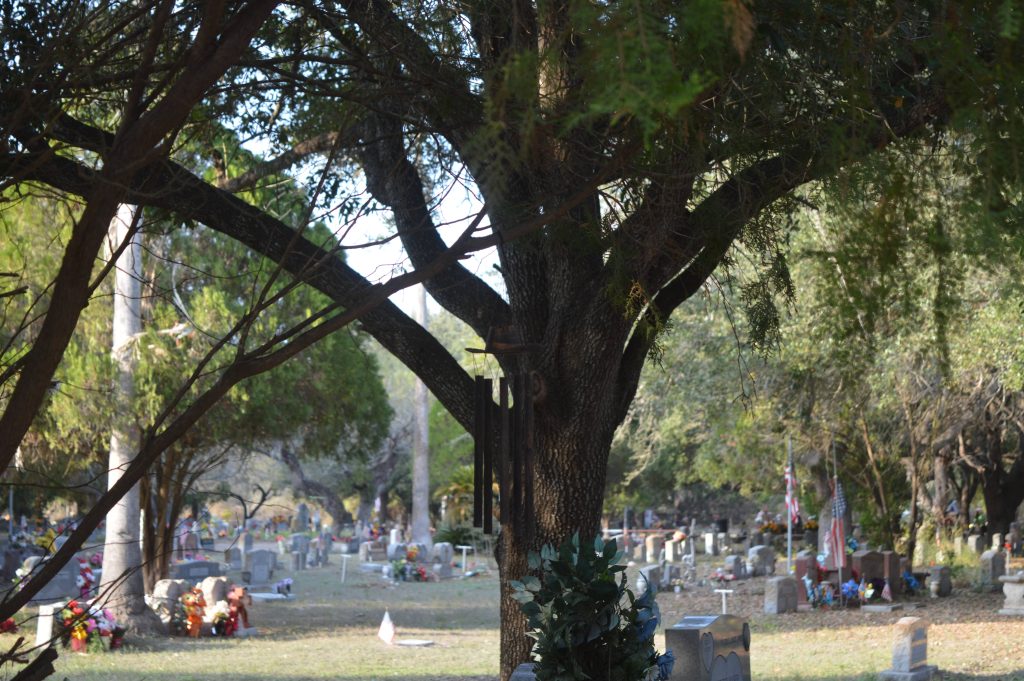
Wind chimes hanging from a tree at the Sacred Heart Burial Park with adorned graves in the background
Wind chimes hanging from a tree at the Sacred Heart Burial Park in Falfurrias

Witnessing this level of devotion, I thought about how many families are left without answers or the opportunity to properly grieve and bury their loved ones who have died while attempting to cross the southern US border. Dr. Latham taught us about Wilmer Guardado, a deceased migrant who was circumstantially identified due to an ID associated with his remains. Wilmer’s grave is still marked by the original temporary metal placard, pale and lonely in comparison to the graves around him. I found myself imagining how Wilmer’s grave might look if his family were aware of his death and burial in Falfurrias, and how both Wilmer and his family have been deprived of that connection due to the sociopolitical complexities surrounding migrant death.
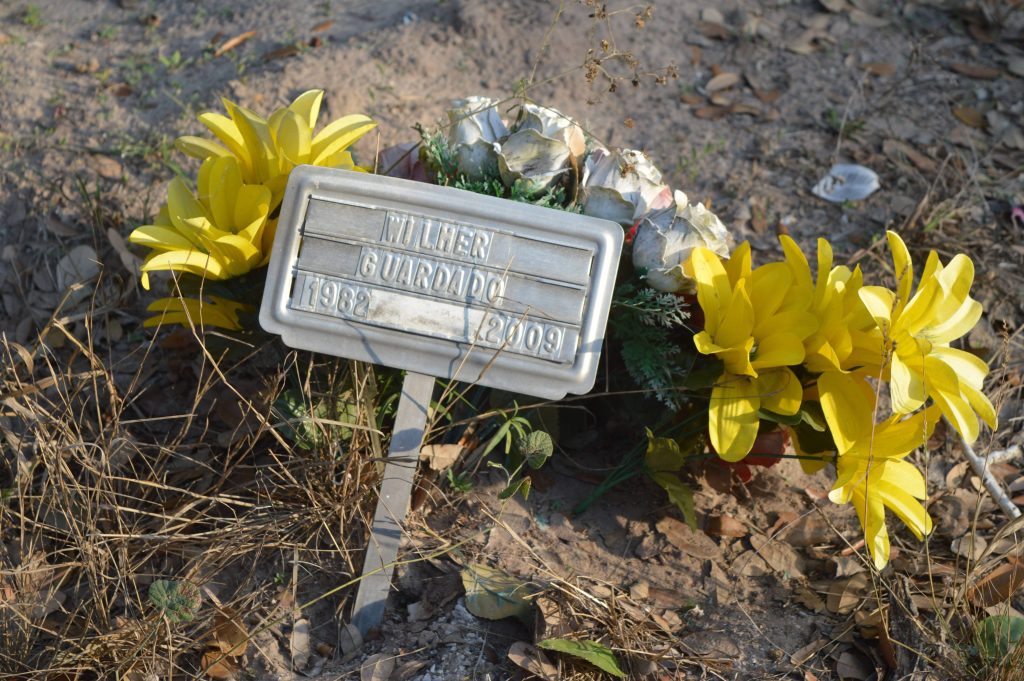
Metal grave placard with "Wilmer Guardado 1982-2009" surrounded by yellow and white flowers
Wilmer Guardado’s metal grave placard at Sacred Heart Burial Park

Without experiencing this complex sociopolitical environment firsthand, it is easy to question why more work isn’t being done to recover and identify these individuals. Coming into this trip, I had significant background knowledge about this humanitarian crisis and the variables that shaped the response of areas like Brooks County. Knowing that law enforcement and non-governmental organizations were overwhelmed in this area due to a significant number of migrant deaths, lack of funding, inadequate forensic resources, and privatized land composition, I expected Brooks County to be an area of neglect. However, this trip showed me that this is anything but the truth. I realize now that individuals like Don, Ray, and Melissa are doing everything possible to help reunite fallen migrants with their families. While their work may not be widely recognized, it does not go unnoticed by those they have helped reunite.

I feel extremely humbled to have shared this experience with Don, Ray, Melissa, Reed, and the 2026 Beyond Borders Team. Through the knowledge and experiences I gained on this trip, I hope to address the purposeful ignorance many Americans have regarding this humanitarian crisis. This intentional ignorance has allowed for the injustices occurring at the southern US border to continue for decades, separating families under the guise of border security. However, it is simply a lack of care for others that obscures the truth. While I cannot always be in Brooks County, assisting directly in the search and recovery of fallen migrants, I strive to care for these individuals by sharing what I’ve learned with others.
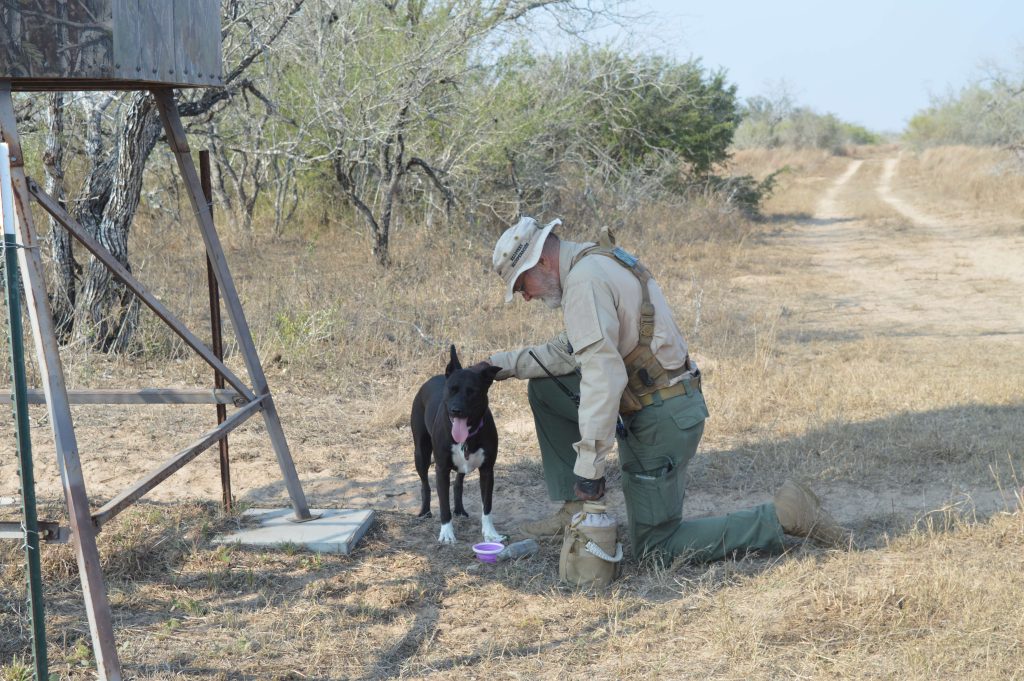
Don takes a knee to give Socks some water
Don and Socks

Peytin

What Is Left Behind and What We Carry With Us

Content Warning: This post contains references to sexual assault.

I woke up at 3:30 p.m. today. Yes, literally 3:30 p.m. I slept for 16.5 hours last night. After arriving back in Indianapolis, I felt exhausted and desperately in need of a shower. I decided that everything in my suitcase needed washing, even technically clean items, because everything felt like it was coated in dirt and smelled like sweat. That was after spending only five days intensely searching the remote Texas wildlands.

Every conversation I had opened my mind to perspectives I had never considered before. I intentionally asked Don and Ray difficult questions about what the journey for migrants entails, how coyotes operate, why people cross the border, and what they have witnessed through years of fieldwork. Each day, I learned about new hardships migrants face, including how they navigate the vastness of ranches and the challenges that follow.

Vastness of the ranches in the Texas border lands
Miles of remote Texas wildlands

The food, water, and belongings migrants carry are carefully calculated to minimize weight, conserve space, and remain essential. We saw countless empty tuna packets, cans, water jugs, discarded clothing, and other items. Every object brought serves a purpose, and once that purpose is fulfilled, it is often left behind. The less weight carried, the less energy expended. I also learned about the extreme measures people have taken in attempts to cross border checkpoints: hiding in small, concealed spaces inside vehicles, breathing through straws while submerged in barrels of sewage, and other dangerous conditions. Many of these attempts end when border patrol dogs detect them. Because of this, traveling through ranches is often viewed as the “safer” option, despite the prolonged exposure to heat, limited shelter, and scarce food and water.

American Eagle shirt turned inside out as to indicate it was taken off
American Eagle shirt turned inside out

One day, we came upon a very distinct tree. Certain items of clothing were on the ground and hung in its branches. I felt confused and unsettled. I didn’t even think about sexual violence. I was aware of the hardships of navigating the harsh environment and how physically and mentally exhausting it is to partake in the journey. I failed to consider how coyotes treated migrants during this journey. At this tree, a migrant’s personal items suddenly turn into a heinous message, a system to warn others what happens when someone disobeys the coyote. 

Blanket tied to a tree

Coyotes are supposed to be the ones to protect and help migrants cross the border. However, if a migrant pays them upfront, they become expendable and their payment can be used against them. If they wait to pay in full later, a migrant may be extorted for more money than initially agreed upon and forced into a human trafficking situation. Neither is a safe option. The thought about being tired, dehydrated, and afraid, only for one’s autonomy and dignity to be stolen, has stayed with me. Migrants are aware that this major risk exists and that it is common. Some even take preventative contraceptives before embarking on the journey- just in case. It is painful to confront how broken the system is when individuals feel compelled to place themselves in such vulnerable positions, enduring the abuse by those who hold power over them. Migrants often know the risks and still proceed to leave their current situation. It forces me to reflect on how desperate their circumstances must be to make risking their lives feel like the only option. Migrants do not want to cross the border illegally; many feel they have no other choice. From the stories shared by Don and Ray, when a migrant is found alive in the field, many are done and want to be turned in so they can go home. 

Finding remains adds another complex layer to this work. I have learned how bone scatters may appear, how sand, brush, and cacti may conceal bones, and how animals transport them. Rats often carry long bones to build their nests. Larger predators tend to move bones into protective spaces for eating. Some predators will ingest bones altogether, making it unlikely to find certain bones. I was surprised by how easily bones can be hidden. Bones can roll from strong winds, be stepped on by animals, or even be covered up by natural debris like blowing sand. The movement, location, and condition of the bones tell a story. I also did not fully understand how bright-white a sun bleached bone looked until seeing them for myself, as they closely resembled the bone casts we use in class. 

Non-human bones scattered in the distance

Throughout the trip, I felt an immense amount of privilege to be surrounded by my team every day. We all looked out for each other while also serving those who lost their lives on the journey. Every day, I had proper gear, plenty of water, protection, and nutritious food, and I was still struggling. By midday, I was usually already physically and mentally exhausted. However, I stayed grounded in my values. I showed up every day ready to work and empowered to make a difference. 

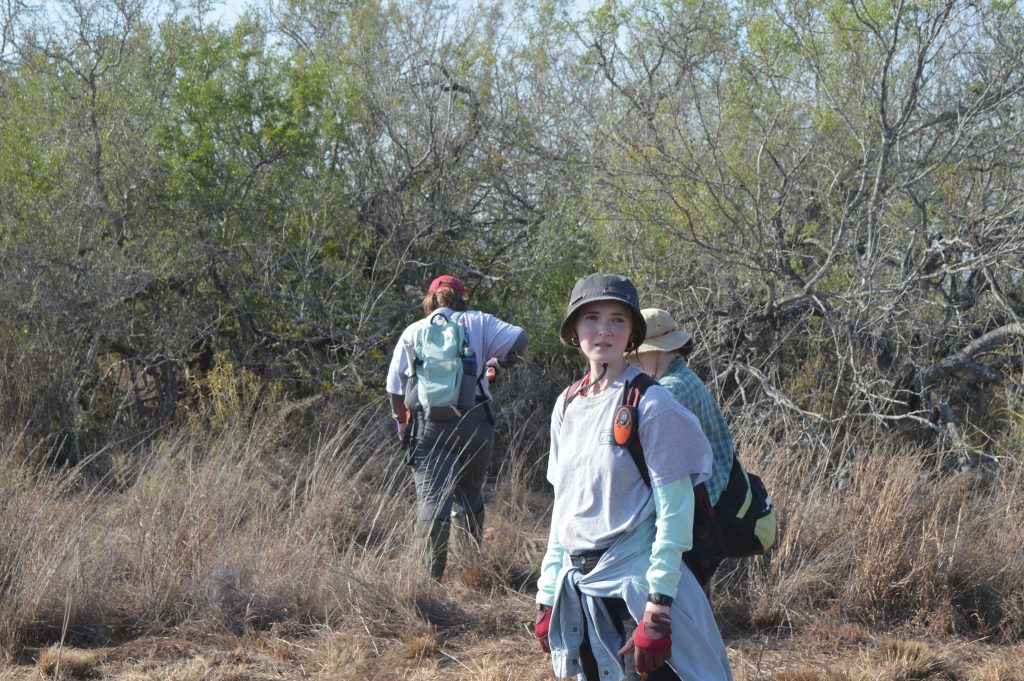
Amanda with Texas brush around her
Amanda hiking through tall grasses

The conversations, emotions, and experiences from this trip will stay with me. I will carry them forward to educate others and shape my future work. I told someone today that there is absolutely no combination of words that could truly convey what I experienced. You will never fully understand until you’ve experienced it for yourself. I left nothing behind on this trip, as every part had an impact on me. I will move forward with intentionality and respect, not only those who cross the border, but those who search for them. I will cherish my memories with Don, Ray, Reed, Melissa, and the 2026 UIndy Beyond Borders Team. I am deeply grateful for this opportunity and cannot put into words the emotions and growth I have experienced this trip. This experience has changed me; I have a responsibility now to continue to learn, educate, and stay up-to-date on what is happening at the Texas border. Ultimately, I strive to carry what I have learned forward in ways that continue to make an impact and ask hard questions to think deeply and reflect on my time in the Texas borderlands.

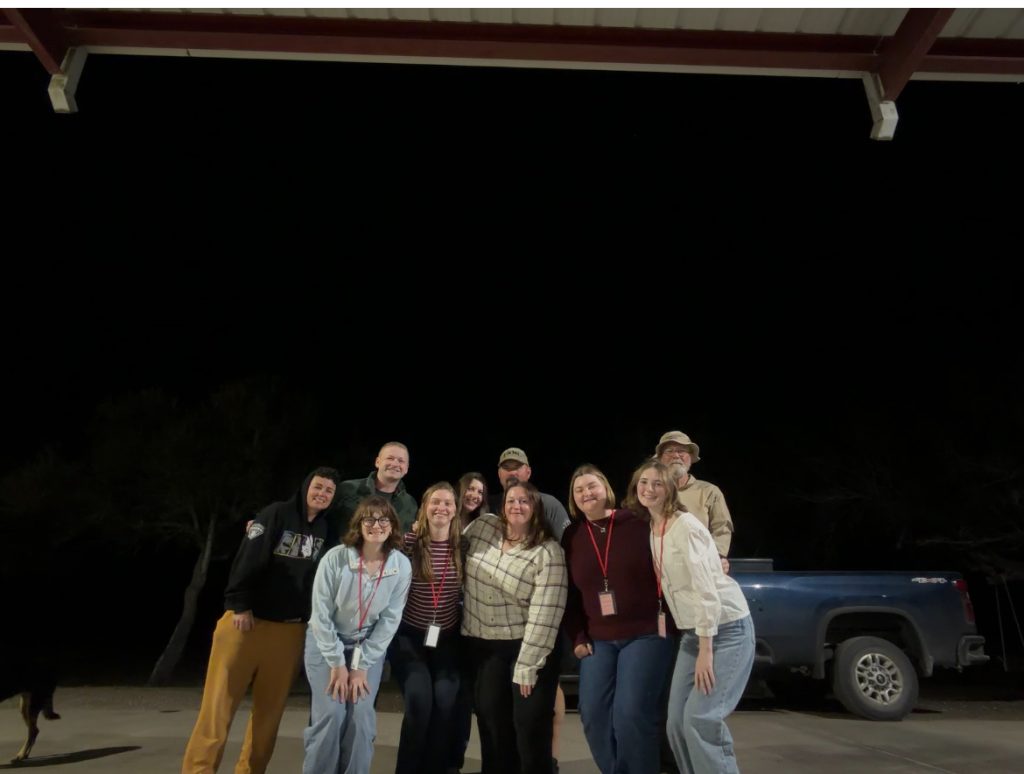
The Beyond Borders 2026 Team poses under the night sky for the last time
The Beyond Borders 2026 Team

Amanda

P.S. I did get plenty of dog time through Socks and Oakley, who were both very cute and sweet girls.

Amanda and Socks
Amanda and Socks

She is just so cute!

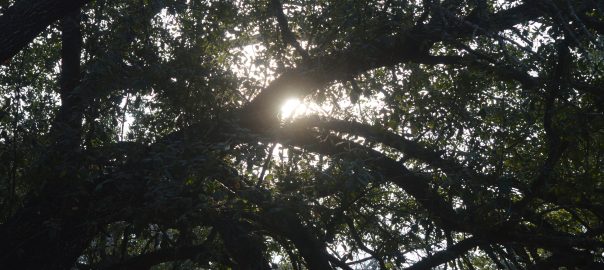
Sunlight through the trees as Sacred Heart Burial Park

Bearing Witness: Reflections on Compassion and Responsibility

I was unsure how I felt about the trip after last year. I remember sitting and trying to think of something meaningful to say, something that would help me seem intelligent, introspective, and as though I fully understood the experience. This year has shown me just how much I still do not know.

Very little was the same this year, aside from the knowledge that we would again be heading out onto ranches to assist in the search and recovery of migrants who had become lost or injured along their journey through Falfurrias and Brooks County. The heat was a real factor, hot and at times relentless, different from the cooler and often breezy days of last year. The heat made everything more difficult, not only the physical work, but the mental and emotional toll as well.

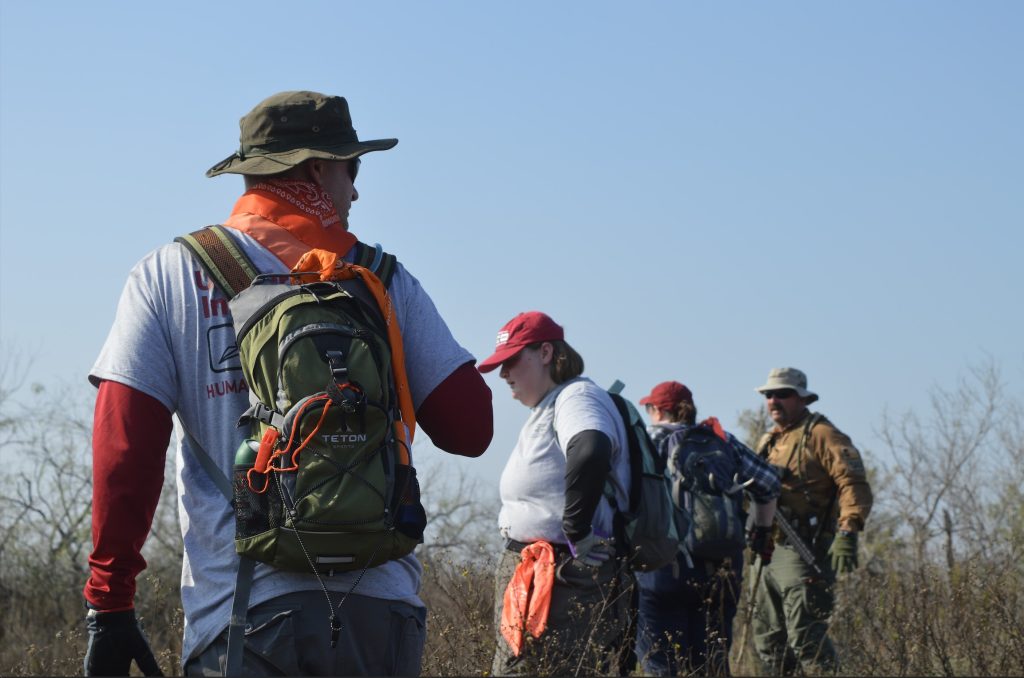
Team members lined up.
Some team members out in the brush.

Last year, the milder temperatures left me less exhausted. I felt more comfortable after the long days, allowing me the mental space to think and reflect in the evenings, to really sit with the reality of what we were there to do. This year, with the temperatures hot and the work hard, most evenings were spent simply waiting for bedtime or scrolling mindlessly on my phone, doing anything to give myself a break. To focus on something that did not require the mental bandwidth that I did not feel that I had.

I understand that this is exactly what I hoped to avoid when I wrote my initial post: avoiding difficult emotions and retreating into comfort. At the same time, I have come to understand how easy avoidance can be, especially when everything already feels so heavy.

Some team members lined up in the brush.
Some team members out in the brush.

On the last day of the trip, while sitting in an airport restaurant eating TexMex, we talked as a group about how there was no easy answer to how to solve this so-called “border crisis”. Because if there were, it would have been solved by now. I’ve thought a lot about that conversation, and about how I wish I had more answers after having experienced this trip twice now.

The conversation lingered with me because it underscored how uncomfortable it is to sit with problems that do not have clean solutions. How easy it is to push things aside when they get hard. As humans, we are a social species, and in a way, I think that relates to how we want resolution. Something concrete to point to as progress. However, what we encountered along the border resisted that kind of superficial closure that I think people are always speaking about. Because I’m not sure that there ever can really be “closure” for a person.

Instead, it demanded patience, humility, and the understanding of a shared humanity among us, the migrants, you reading this, and even those out there without any clue that this trip even took place. These values transcend culture, belief systems, and even time periods.

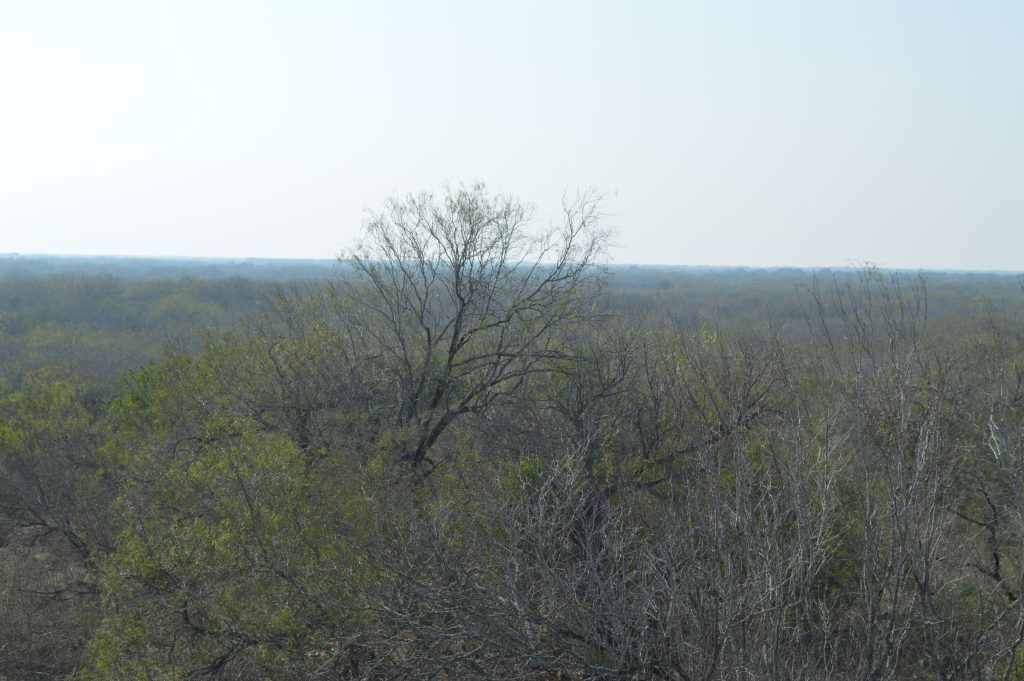
View from a lookout on one of the ranches.

While scrolling through my phone one night, a video popped up that featured a Bible quote: Leviticus 19:33, which speaks to how strangers are treated within a community. The message is strikingly relevant today: recognize the humanity of those who are vulnerable, displaced, or in trouble, and resist the impulse to view them as problems rather than people. In the context of this trip, that idea felt less like a moral principle and more like a quiet responsibility.

“When a stranger resides among you in your land, do not mistreat them” (Leviticus 19:33).

A responsibility to show compassion, to bear witness, and to treat every individual we encounter with dignity, even when the larger system feels overwhelming and unchanged.

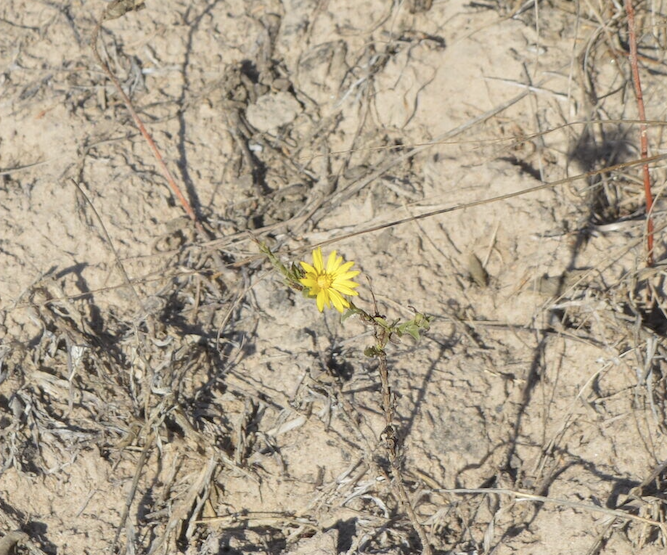
Photo of flower left in the dirt.
Photo of a flower left in the dirt.

I don’t think that I will ever have all of the answers, no matter how many times I reflect on this trip and the work that we do at the border. But I want to understand, and I think that it is that desire to listen, to learn, and to grow in compassion for the people directly and indirectly impacted in Brooks County and in so many other places like it, that matters most. It is a commitment to seeing individuals not as statistics or symbols, but as people whose lives are shaped by circumstances far more complex than any single narrative can capture.

Ultimately, this trip did not leave me with the clarity that I wanted it to. Instead, it left me more aware of my own limits of what I can know, what I can carry, and what I can change. As I write this, I think that is the point. Not to leave with answers, or a clear solution, but with a deeper sense of responsibility to keep paying attention, to resist indifference, and to remain open to the discomfort that comes with truly seeing others. If there is anything this experience has given me, it is the understanding that compassion is not a conclusion but a practice. The responsibility we have is not to attempt to solve everything, but to seek and recognize humanity where it is easiest to look away.

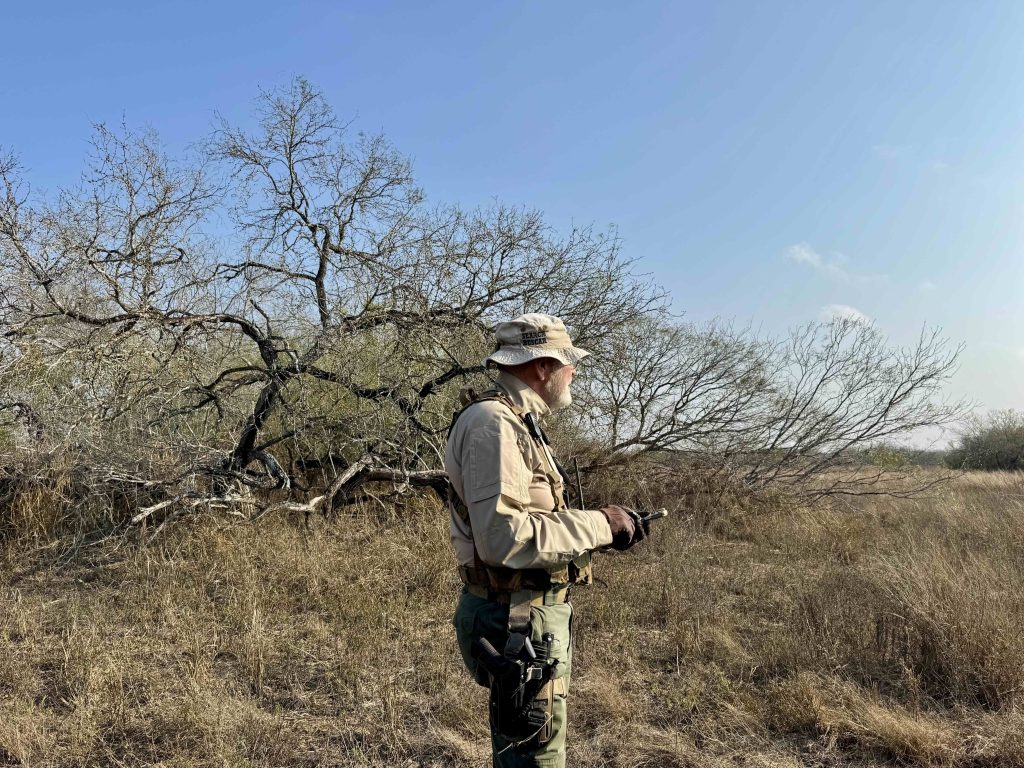
Photo of Don White.
Sheriff Don White determining the next location.

Thank you for all of your support this year—whether through reading this blog, sharing it, or donating. Your support does not go unnoticed. And thank you to Don and Ray, Reed, Melissa, Dr. Latham and Dr. Eriksen, Amanda, Lilly, and Peytin for walking this journey with me.

– Makenna