Latest Posts

Finding Missing Persons: Recent Cases

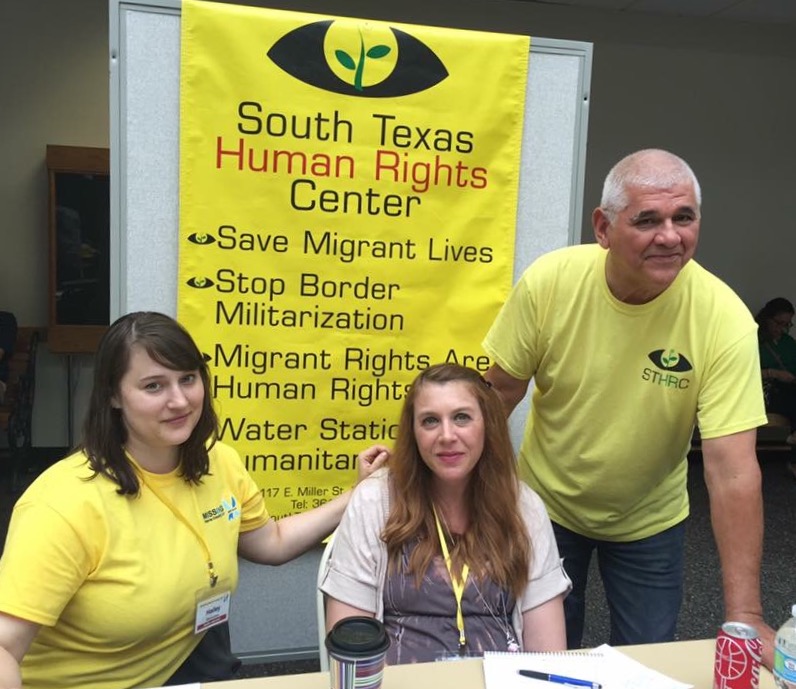
For this post, I will focus on some of the more recent challenges at the South Texas Human Rights Center. Most of the work done at the center in the past focused on identifying those who lost their lives in Brooks County. Legislation was pushed to allow death certificates of the unidentified to become public record so that investigations could be made into the deaths of these individuals. Processes in Brooks County changed to make the system more efficient and effective at identifying the unknown. Collaborations were formed with other agencies and non-government organizations so that more information about those who went missing could be shared, ultimately assisting families and agencies investigating disappearances find their loved ones.

More recently, however, the South Texas Human Rights Center has played a major role in locating those who go missing within the past few days. We’ve had several success stories within the past few months where those who went missing are found alive, taken to hospitals, and ultimately reunited with their worried family members. It’s always a difficult situation, but we’re proud to live up to one of our goals: save migrant lives.

Looking for missing people along the border is extremely difficult for a number of reasons:

– the land that migrants are passing through is private ranch land. We can not search this land without permission from the owner. Ranch owners are very aware that migrants are using their land, but unlike Arizona, there  is no option to search the land without the owner’s permission.

– the land lacks specific landmarks that are easy to locate. In Arizona, the mountain ranges in the Sonoran Desert often provide a constant landmark that can be used to navigate; Texas land is flat. Migrants use phone lines, pipe lines, and fences to navigate north-to-south. This makes most missing persons reports extremely vague, simply because there are not many landmarks to reference. Border Patrol often relies on descriptions of fences (short and square shaped, tall and rectangular shaped) to figure out where someone could be.

– Combining the above information, information is vague, and even when it isn’t, is still unaccessible.

But we’ve had successes, many successes. As of today, since February of this year, we have found 28 people who were recently lost. Most of these individuals are eventually deported, but that’s a different story. At this point, what matters is that family members who call us are able to find out that their loved ones are alive. Sometimes it’s as simple as finding out that someone was apprehended last week. But often times, it takes unique collaborations between Arizona NGOs, us, and Border Patrol, to effectively locate and save someone’s loved one from an almost-certain death.

There are so many political and ethical roles that could be debated about these rescues. And for us at the STHRC, we are open to these conversations. They are important. Regardless, however, we must remember that as of right now, we are saving human lives. People are being sent to hospitals to heal. And each case involves multiple collaborations involving agencies of all kinds. Of course, if we think of systemic issues in home countries, there are many issues that still need to be addressed all over the Western Hemisphere. But we must keep in mind the small roles that we are playing in saving lives, and right now, that’s what matters.

Every day we respond to these cases. And every day I thank the individuals who talk to the families and reassure them that everything is being done to find their loved ones. I thank the multiple NGOs who stand up for the rights of these families to make sure that proper investigations and searches are conducted. I thank the Border Patrol agents who search for those who are lost. I thank the consulates who do everything they can to make sure that all agencies are are being held accountable. When it comes to these rescues, expertise comes down to experience and to patience and a heart of gold. I constantly thank those who teach me, directly or indirectly, what it means to apply skills to saving lives.

Ryan

Ready, Set, Go!

Today was our first day at Texas State University doing skeletal analyses. Like last year, we were stationed at the Osteological Research and Processing Laboratory (ORPL), working with Dr. Kate Spradley and her graduate students. This laboratory is one of three labs at the Forensic Anthropology Center at Texas State (FACTS). ORPL is used for forensic anthropology casework and processing bodies that get donated to the Forensic Anthropology Research Facility (FARF), an outdoor decomposition research facility at Texas State.

Photo of the Texas State Osteological Research and Processing Laboratory
ORPL

We started off the day with a meeting, where we discussed the progress that had been made since our last visit. The conversation was filled with talk about dead ends, road blocks, and frustration all around, but the progress that they did make over the year kept everyone hopeful and motivated. This time there are less Texas State students around than we thought there would be. Unfortunately, we came during finals week, so many of the Texas State students are busy studying for exams.

Once the meeting was over, we split up into two skeletal analysis teams: the UIndy Team and the Texas State Team. Before we started, we set up a few different workspaces. We had our main table where we laid out the remains for skeletal analysis. We also had a clean table to set up all of our paperwork and another table where we could take measurements on the bones. Finally, we had a photography station to take pictures of the bones. We decided that the best strategy was to divide and conquer. We split up all the tasks that needed to be done for the analysis and went to our separate stations. We used this same strategy last year, so we were able to fall back into our routine pretty easily.

Beyond Borders Team Members looking through paperwork laid out on a clean table

I felt like we did a good amount of work today and hopefully the rest of this week will go just as well. As we ended the day and started packing up our supplies, we noticed something moving just outside the lab. I forgot to mention it before, but ORPL is actually located on a ranch. Outside of the lab, a few cows were walking near the building. Justin and I stopped what we were doing and headed outside to try and say hi to our new friends. Unfortunately, cows walk a lot faster than you think. We lost them and headed back to the lab. I can’t wait to see what tomorrow brings.

Cows outside the Osteological Research and Processing Laboratory on the ranch it is located on
The cows!

Amanda

32 Weeks

Each field season is a little different in terms of our goals, the team members and the experiences.  But this year is very different for me. I am 32 weeks pregnant with my daughter.  This has impacted out team in multiple ways from the way I packed and prepared, to our itinerary.

I had to very closely monitor the Zika Virus situation in South Texas. The CDC keeps an updated webpage with information regarding Zika cases in every state. While the number of reported cases in Texas to date is not significantly higher than in states surrounding Indiana, I still need to be cautious when outdoors.  I am following the CDC guidelines to prevent mosquito bites. This includes applying an insect repellent with at least 20% DEET and covering exposed skin while outdoors.  I also decided to pre-treat my outdoor clothing with Permethrin insect repellent. Permethrin is designed specifically for fabric and can last through multiple washes. All clothing that I will be wearing when we do outdoor fieldwork or outdoor events has been treated.

Dr. Latham 32 weeks pregnant in her UIndy Human Identification Center Lab shirt
32 weeks (still fit in an XL lab shirt!)

I do not anticipate the pace or volume of our contributions this field season to be impacted in any way. I am more fatigued at the end of the day than in previous field seasons, but we have a full schedule while we are in Texas. We will be working with Dr. Kate Spradley of Operation Identification on skeletal analyses at Texas State University until Friday. On Saturday we will be participating in Missing in Harris County Day. Our remaining time in Texas next week will be spent in Falfurrias volunteering with the South Texas Human Rights Center. I have an amazing team of University of Indianapolis students with me this year. They did a great job doing skeletal analyses today. In addition, there is a UIndy anthropology colleague working with us this year. Dr. Alyson O’Daniel is a cultural anthropologist embedding herself with our team.

Today we learned about the progress that is occurring in terms of identifications and repatriations across the state. I have dedicated friends and colleagues who are acting tirelessly to change policy and work to standardized the procedures.  This week there are students and faculty from both UIndy and Texas State working to complete as many skeletal analyses as possible to reduce the backlog of cases that currently exists.  Yesterday everyone worked smoothly and skillfully to complete several cases.   We are very excited to share more about what we are doing and the amazing progress our colleagues are making on issues of identification and repatriation. Stay tuned!

~KEL