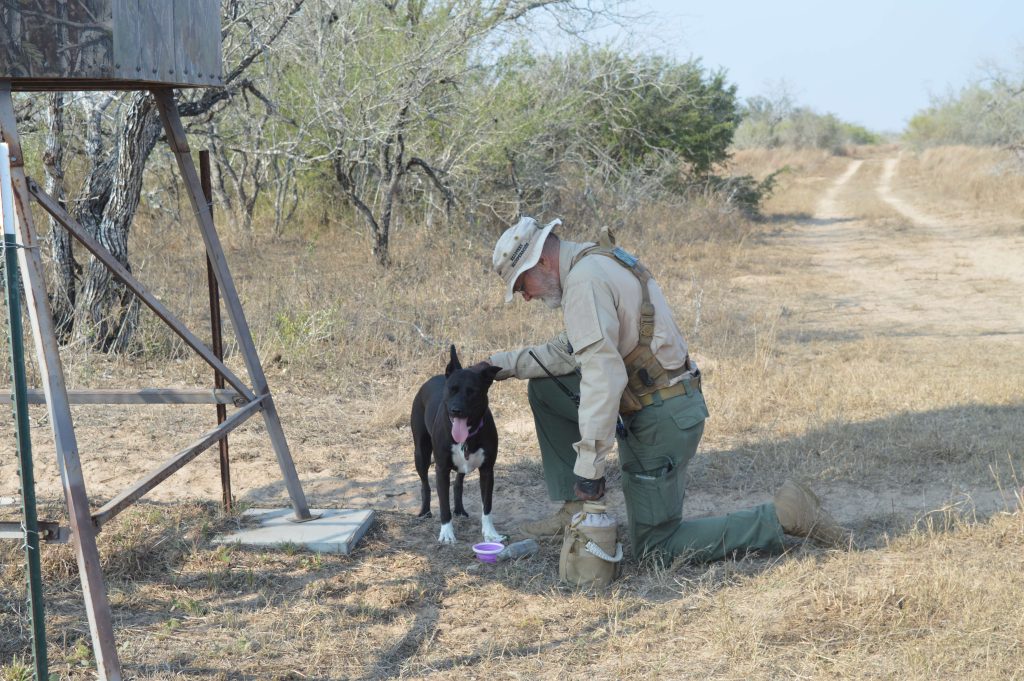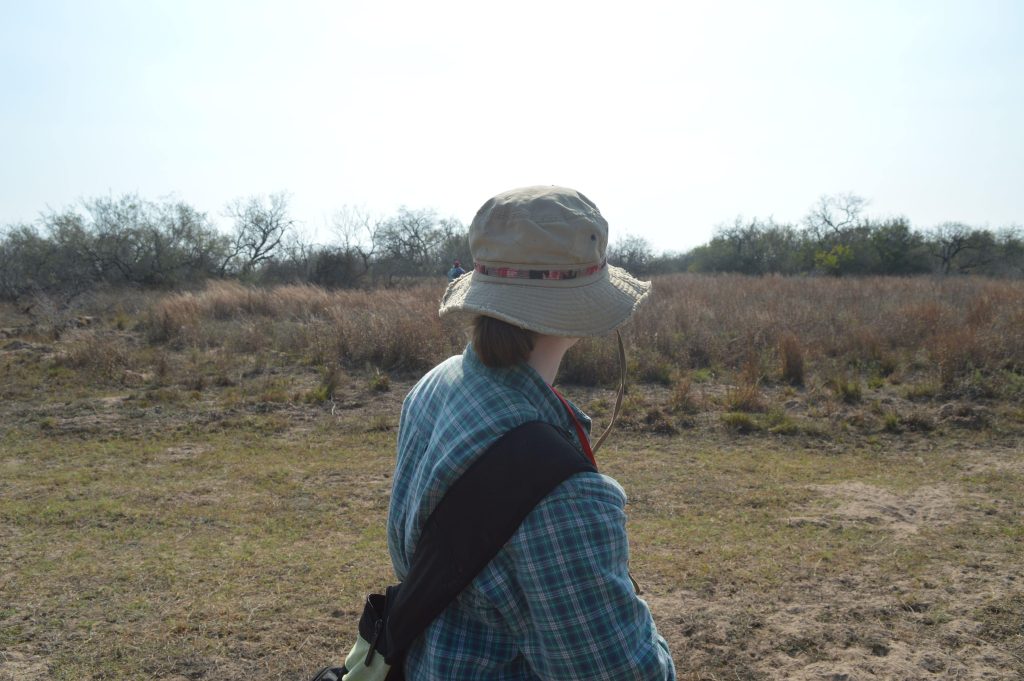
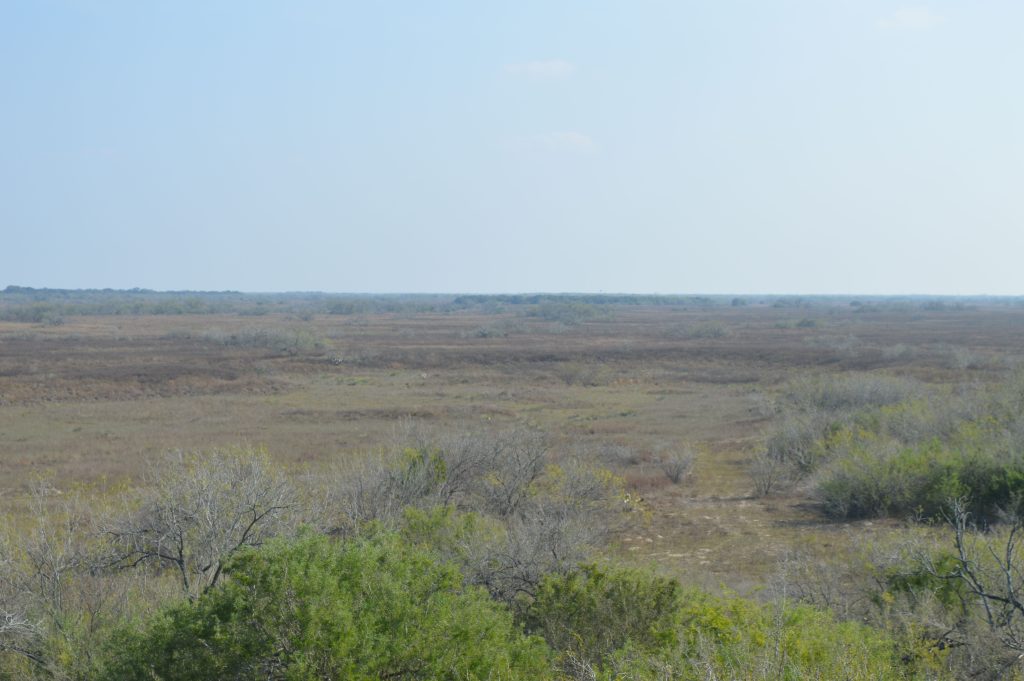
Coming back to Indianapolis has been surreal. With the semester starting in just a few days, returning to a life of readings, laundry, and studying has felt trivial, knowing essential and valuable work continues to occur in Brooks County. My first thought waking up this morning was whether Don and Ray had geared up for another hot and grueling day on the ranches, hoping to provide families with more information about the status of their loved one(s). I was a bit saddened by this thought, thinking about how quiet it must feel for them after a week with a 10-person crew. Returning to my distraction-filled apartment has felt a bit isolating, so I can only imagine how lonely it must feel in the vast, seemingly infinite ranchland, filled with reminders of the trauma endured by those in search of a better life. Being amongst these spaces and seeing the residual artifacts left behind by migrants was extremely emotional. Having to grapple with these emotions while dealing with the physical exhaustion caused by traversing such rugged land has provided me with a greater empathy and respect for both migrants and individuals like Don who are committed to the search and recovery of migrant remains.
Coming into this trip, I committed to preserving the stories of those I encountered, directly and indirectly, in Brooks County. To uphold that vow, I wish to share some of the most poignant moments from our trip and the emotions they stirred. Despite the previous knowledge I had regarding this humanitarian crisis, no level of research could prepare me for entering this harrowing space and seeing the reality of a migrant’s journey.
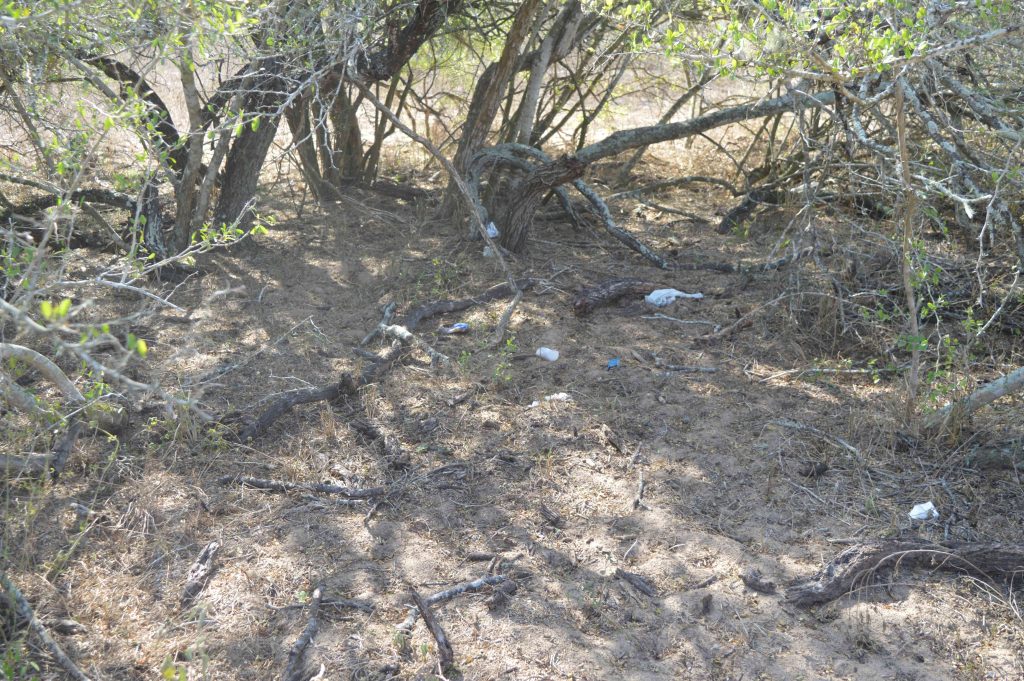
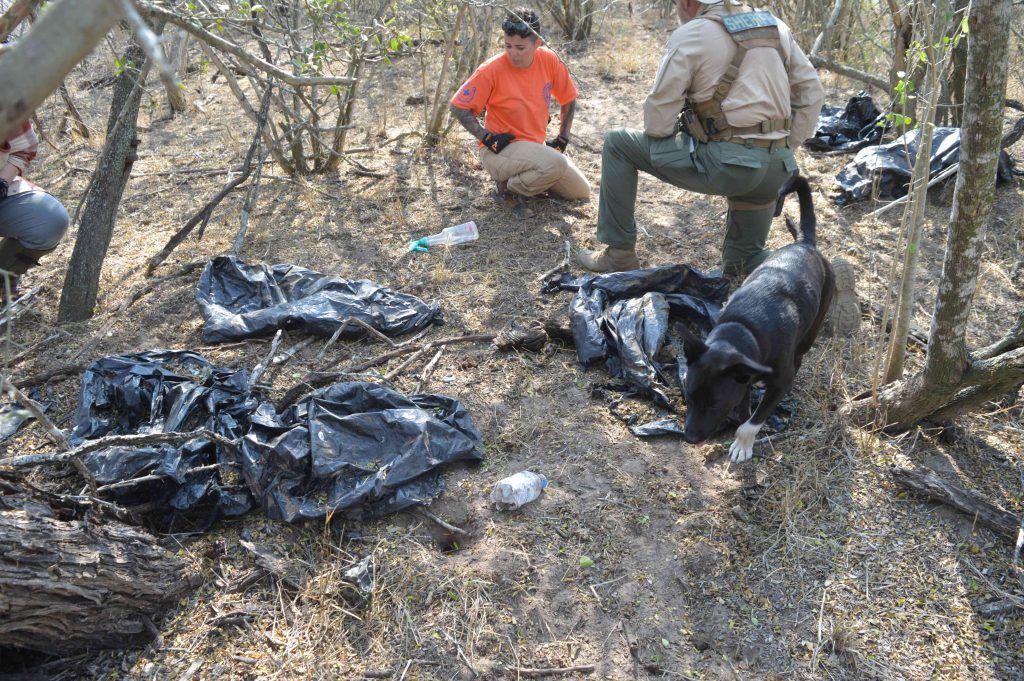
One of the most powerful experiences for me during the trip was on Day 5—our last day on the ranches. After several hours of not finding any signs of activity, Melissa alerted us to a layup she and Danny had located, containing black trash bags and a few pieces of clothing. Entering the layup, I expected the trash bags to look similar to the others we had found—discarded, brittle, and ripped. However, these trash bags were relatively new and had purposeful holes in them—one to go over the head and two to put the arms through. Don informed us that the bags were used as ponchos and likely discarded by a group of migrants as they exited the motte to continue their journey.
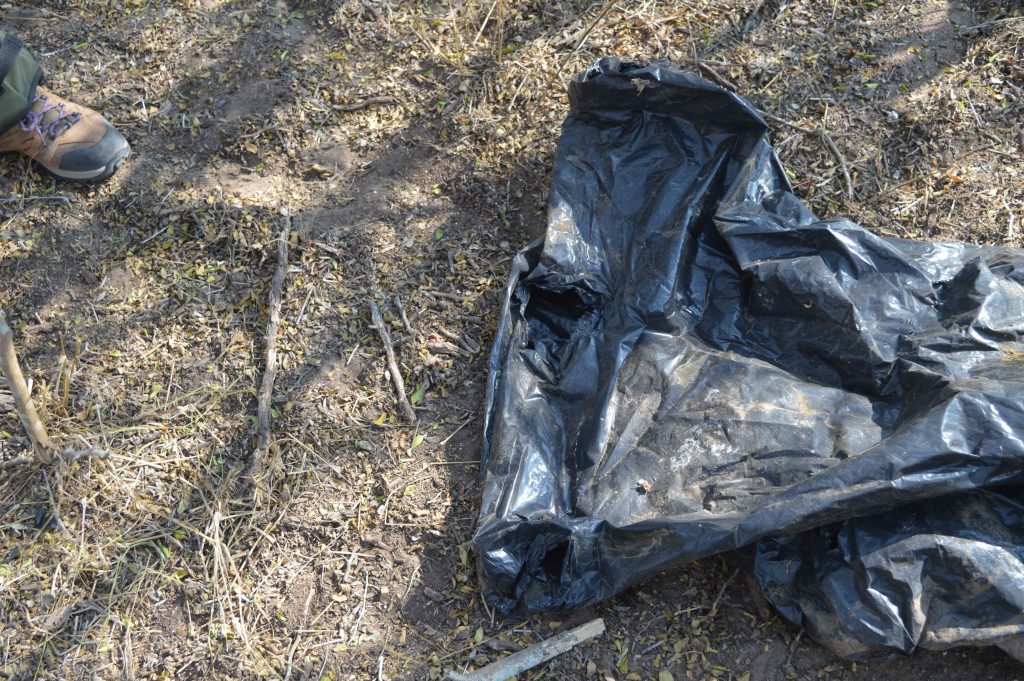
What struck me wasn’t necessarily the bags themselves, but their spacing. Rather than being thrown together in a pile or placed sporadically, the bags were organized in a somewhat circular shape, with bottles and clothing surrounding them. Standing there, I felt as though I could sense the people who once sat in that space, wearing those bags and taking a much-needed rest from their tiresome journey. This moment was very emotional for me, knowing these individuals had likely placed their lives in the hands of a coyote, accepting the likelihood of violence and potential for death. Given how far into the ranch we were and the conditions we had endured thus far, I hoped that wherever these individuals were, they were safe, healthy, and near the end of their journey.
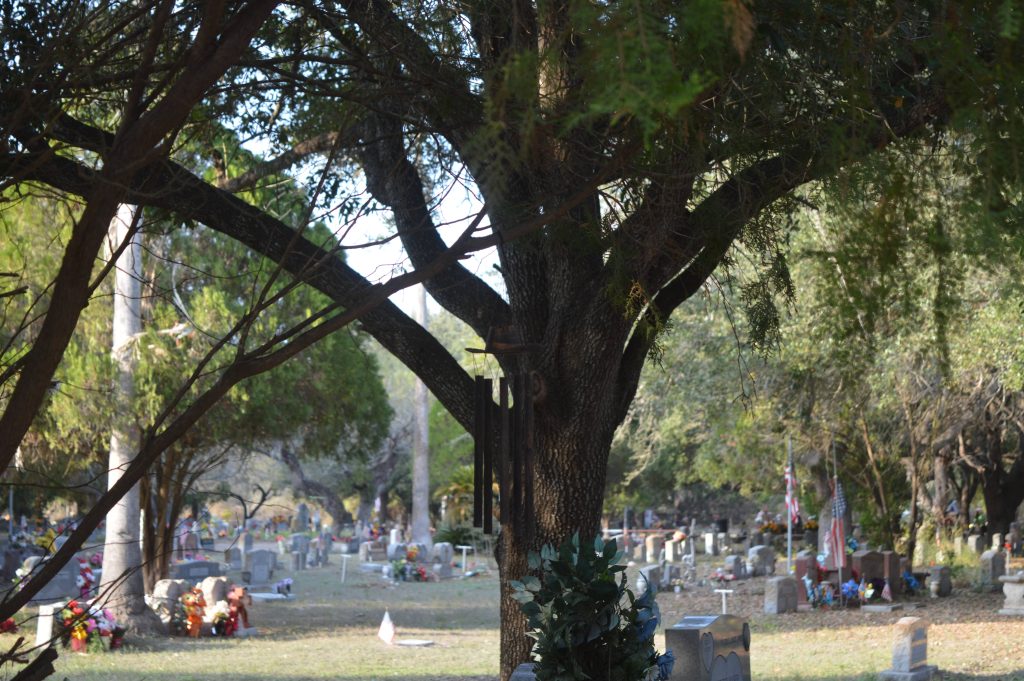
Another profound moment for me was visiting the Sacred Heart Burial Park in Falfurrias, where the past Beyond Border teams had performed numerous exhumations of unidentified migrant remains. Stepping out of the van, I could feel the simultaneous love and loss radiating from the cemetery. The graves at the burial park were unlike anything I had seen before. They were heavily adorned with flowers, items the individual enjoyed during life, family mementos, and religious paraphernalia. Many graves often featured benches where family members could sit with their deceased loved one(s), indicative of how important and present these individuals remain in their families’ lives.
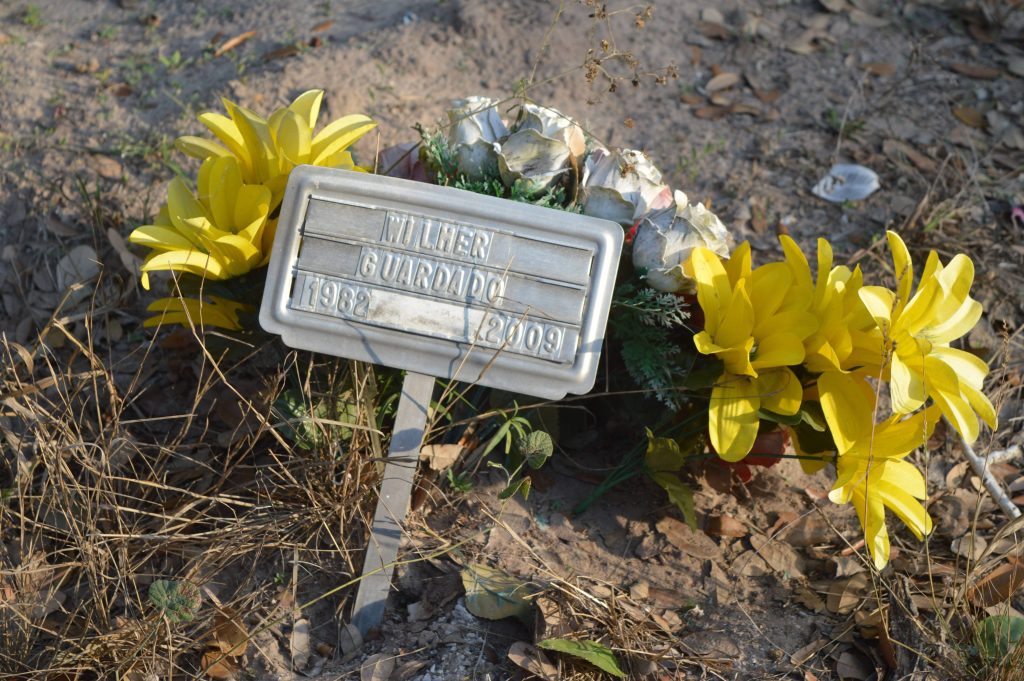
Witnessing this level of devotion, I thought about how many families are left without answers or the opportunity to properly grieve and bury their loved ones who have died while attempting to cross the southern US border. Dr. Latham taught us about Wilmer Guardado, a deceased migrant who was circumstantially identified due to an ID associated with his remains. Wilmer’s grave is still marked by the original temporary metal placard, pale and lonely in comparison to the graves around him. I found myself imagining how Wilmer’s grave might look if his family were aware of his death and burial in Falfurrias, and how both Wilmer and his family have been deprived of that connection due to the sociopolitical complexities surrounding migrant death.
Without experiencing this complex sociopolitical environment firsthand, it is easy to question why more work isn’t being done to recover and identify these individuals. Coming into this trip, I had significant background knowledge about this humanitarian crisis and the variables that shaped the response of areas like Brooks County. Knowing that law enforcement and non-governmental organizations were overwhelmed in this area due to a significant number of migrant deaths, lack of funding, inadequate forensic resources, and privatized land composition, I expected Brooks County to be an area of neglect. However, this trip showed me that this is anything but the truth. I realize now that individuals like Don, Ray, and Melissa are doing everything possible to help reunite fallen migrants with their families. While their work may not be widely recognized, it does not go unnoticed by those they have helped reunite.
I feel extremely humbled to have shared this experience with Don, Ray, Melissa, Reed, and the 2026 Beyond Borders Team. Through the knowledge and experiences I gained on this trip, I hope to address the purposeful ignorance many Americans have regarding this humanitarian crisis. This intentional ignorance has allowed for the injustices occurring at the southern US border to continue for decades, separating families under the guise of border security. However, it is simply a lack of care for others that obscures the truth. While I cannot always be in Brooks County, assisting directly in the search and recovery of fallen migrants, I strive to care for these individuals by sharing what I’ve learned with others.