All posts by Peytin Penny

The Stories I Carry Beyond the Border

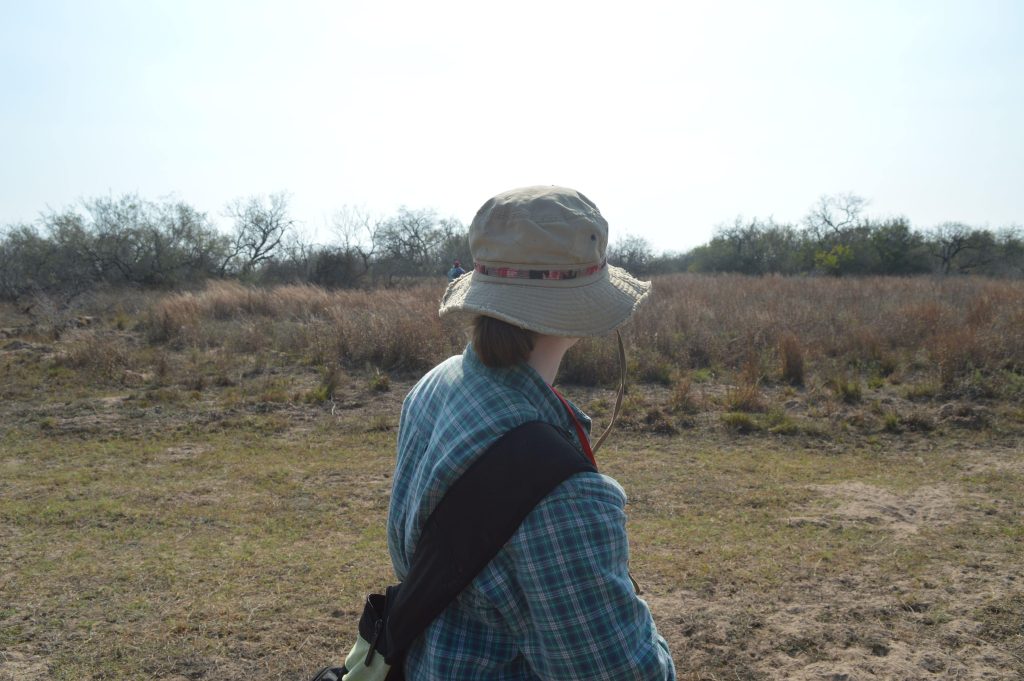
Taken from behind, Peytin stands looking out at the vast ranchland
Peytin looking out at the vast ranchland

Coming back to Indianapolis has been surreal. With the semester starting in just a few days, returning to a life of readings, laundry, and studying has felt trivial, knowing essential and valuable work continues to occur in Brooks County. My first thought waking up this morning was whether Don and Ray had geared up for another hot and grueling day on the ranches, hoping to provide families with more information about the status of their loved one(s). I was a bit saddened by this thought, thinking about how quiet it must feel for them after a week with a 10-person crew. Returning to my distraction-filled apartment has felt a bit isolating, so I can only imagine how lonely it must feel in the vast, seemingly infinite ranchland, filled with reminders of the trauma endured by those in search of a better life. Being amongst these spaces and seeing the residual artifacts left behind by migrants was extremely emotional. Having to grapple with these emotions while dealing with the physical exhaustion caused by traversing such rugged land has provided me with a greater empathy and respect for both migrants and individuals like Don who are committed to the search and recovery of migrant remains.
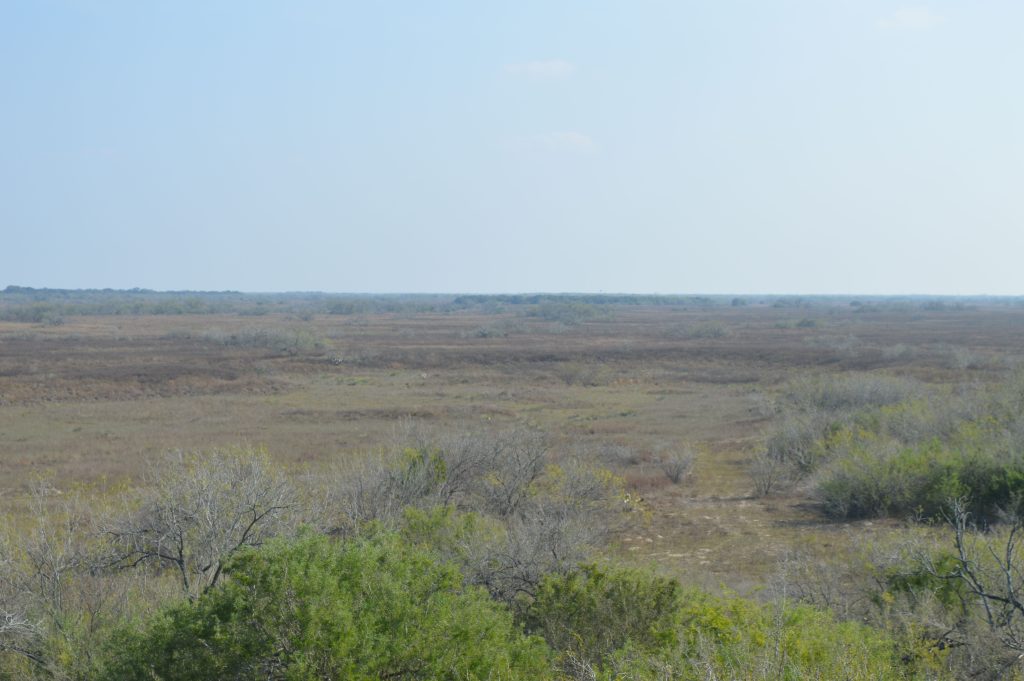
A view of the ranch from an observation deck, showing the ranchland traveling off into the horizon
A view of the ranch from an observation deck
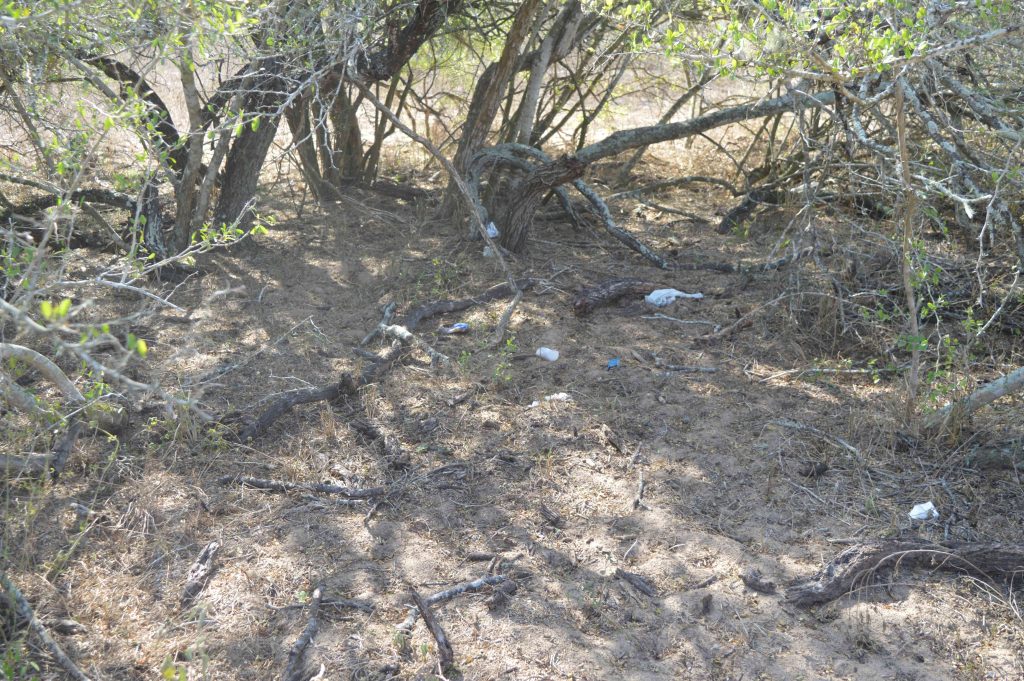
Motte that was used as a layup with discarded items left behind
Layup with residual artifacts present

Coming into this trip, I committed to preserving the stories of those I encountered, directly and indirectly, in Brooks County. To uphold that vow, I wish to share some of the most poignant moments from our trip and the emotions they stirred. Despite the previous knowledge I had regarding this humanitarian crisis, no level of research could prepare me for entering this harrowing space and seeing the reality of a migrant’s journey.

One of the most powerful experiences for me during the trip was on Day 5—our last day on the ranches. After several hours of not finding any signs of activity, Melissa alerted us to a layup she and Danny had located, containing black trash bags and a few pieces of clothing. Entering the layup, I expected the trash bags to look similar to the others we had found—discarded, brittle, and ripped. However, these trash bags were relatively new and had purposeful holes in them—one to go over the head and two to put the arms through. Don informed us that the bags were used as ponchos and likely discarded by a group of migrants as they exited the motte to continue their journey.
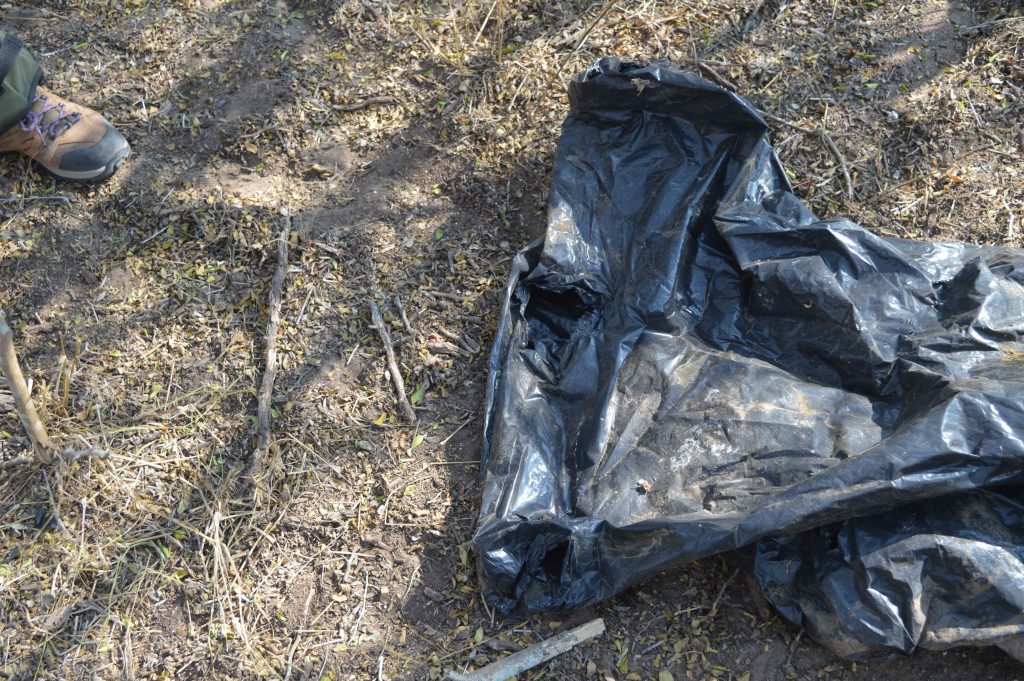
Trash bag found in layup with a hole in it to place one's head and two arms to place one's arms
Trash bag found in layup with holes in it to serve as a poncho

What struck me wasn’t necessarily the bags themselves, but their spacing. Rather than being thrown together in a pile or placed sporadically, the bags were organized in a somewhat circular shape, with bottles and clothing surrounding them. Standing there, I felt as though I could sense the people who once sat in that space, wearing those bags and taking a much-needed rest from their tiresome journey. This moment was very emotional for me, knowing these individuals had likely placed their lives in the hands of a coyote, accepting the likelihood of violence and potential for death. Given how far into the ranch we were and the conditions we had endured thus far, I hoped that wherever these individuals were, they were safe, healthy, and near the end of their journey. 
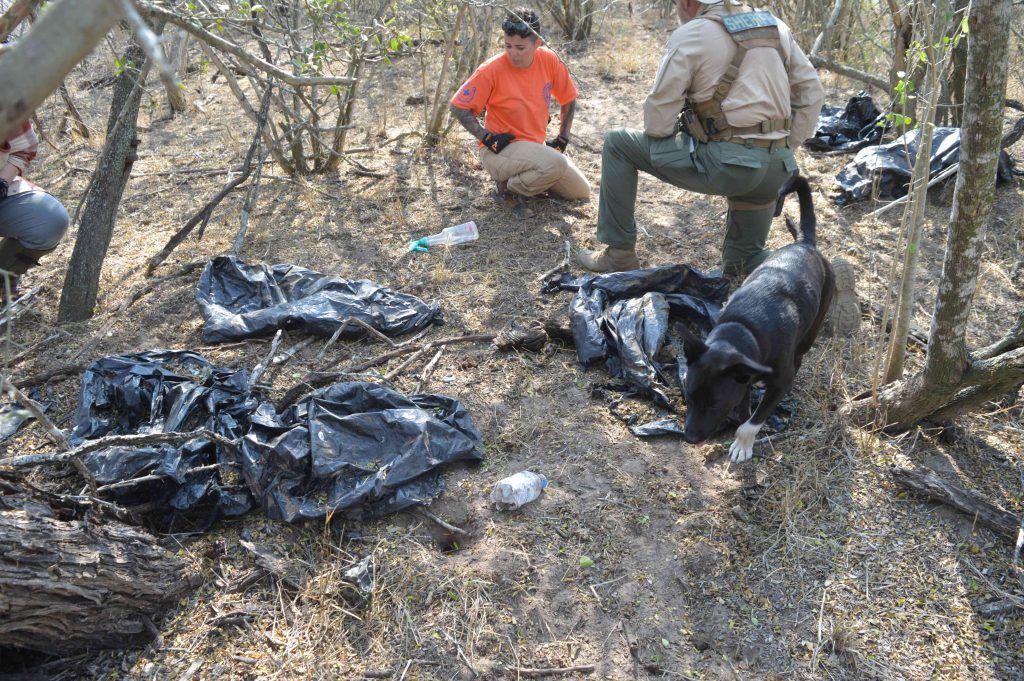
Melissa and Don look at trash bags within a layup
Melissa and Don looking at trash bags within a layup

Another profound moment for me was visiting the Sacred Heart Burial Park in Falfurrias, where the past Beyond Border teams had performed numerous exhumations of unidentified migrant remains. Stepping out of the van, I could feel the simultaneous love and loss radiating from the cemetery. The graves at the burial park were unlike anything I had seen before. They were heavily adorned with flowers, items the individual enjoyed during life, family mementos, and religious paraphernalia. Many graves often featured benches where family members could sit with their deceased loved one(s), indicative of how important and present these individuals remain in their families’ lives.
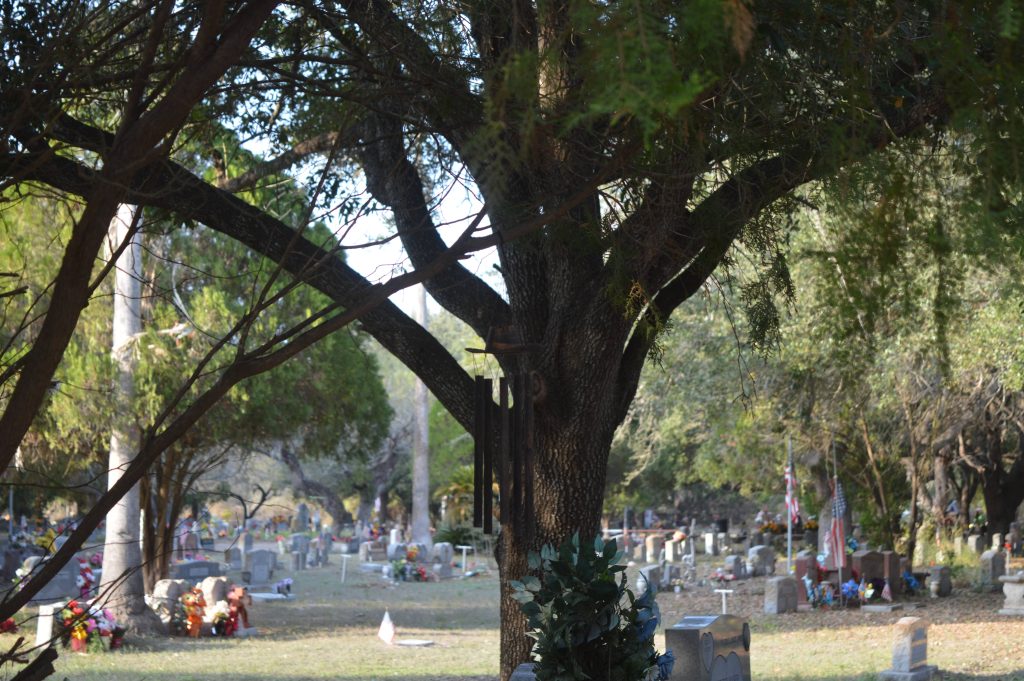
Wind chimes hanging from a tree at the Sacred Heart Burial Park with adorned graves in the background
Wind chimes hanging from a tree at the Sacred Heart Burial Park in Falfurrias

Witnessing this level of devotion, I thought about how many families are left without answers or the opportunity to properly grieve and bury their loved ones who have died while attempting to cross the southern US border. Dr. Latham taught us about Wilmer Guardado, a deceased migrant who was circumstantially identified due to an ID associated with his remains. Wilmer’s grave is still marked by the original temporary metal placard, pale and lonely in comparison to the graves around him. I found myself imagining how Wilmer’s grave might look if his family were aware of his death and burial in Falfurrias, and how both Wilmer and his family have been deprived of that connection due to the sociopolitical complexities surrounding migrant death.
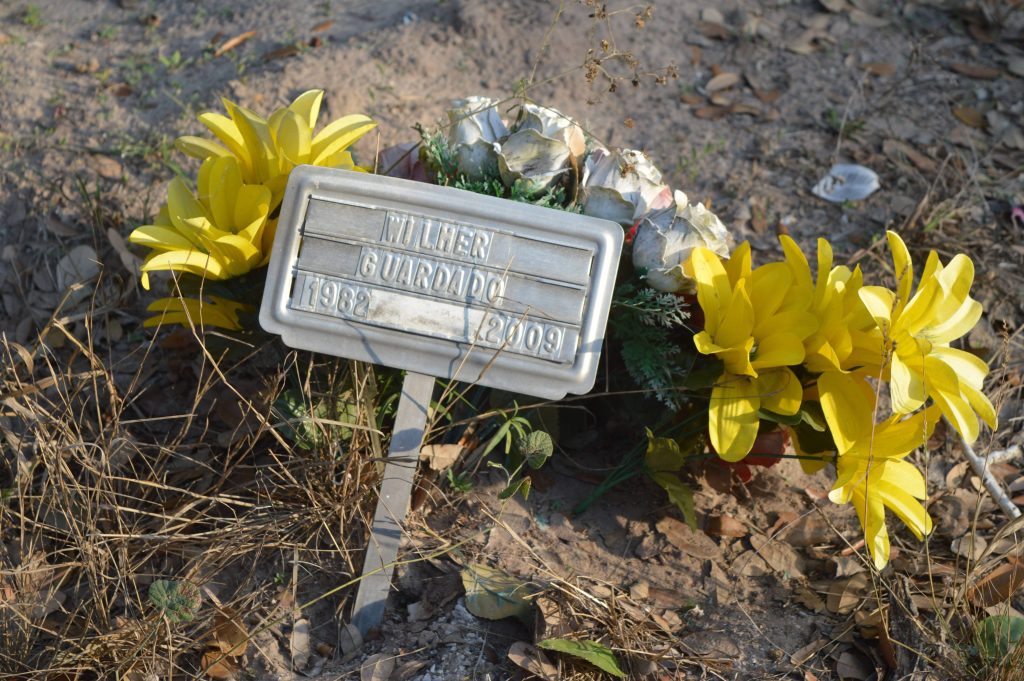
Metal grave placard with "Wilmer Guardado 1982-2009" surrounded by yellow and white flowers
Wilmer Guardado’s metal grave placard at Sacred Heart Burial Park

Without experiencing this complex sociopolitical environment firsthand, it is easy to question why more work isn’t being done to recover and identify these individuals. Coming into this trip, I had significant background knowledge about this humanitarian crisis and the variables that shaped the response of areas like Brooks County. Knowing that law enforcement and non-governmental organizations were overwhelmed in this area due to a significant number of migrant deaths, lack of funding, inadequate forensic resources, and privatized land composition, I expected Brooks County to be an area of neglect. However, this trip showed me that this is anything but the truth. I realize now that individuals like Don, Ray, and Melissa are doing everything possible to help reunite fallen migrants with their families. While their work may not be widely recognized, it does not go unnoticed by those they have helped reunite.

I feel extremely humbled to have shared this experience with Don, Ray, Melissa, Reed, and the 2026 Beyond Borders Team. Through the knowledge and experiences I gained on this trip, I hope to address the purposeful ignorance many Americans have regarding this humanitarian crisis. This intentional ignorance has allowed for the injustices occurring at the southern US border to continue for decades, separating families under the guise of border security. However, it is simply a lack of care for others that obscures the truth. While I cannot always be in Brooks County, assisting directly in the search and recovery of fallen migrants, I strive to care for these individuals by sharing what I’ve learned with others.
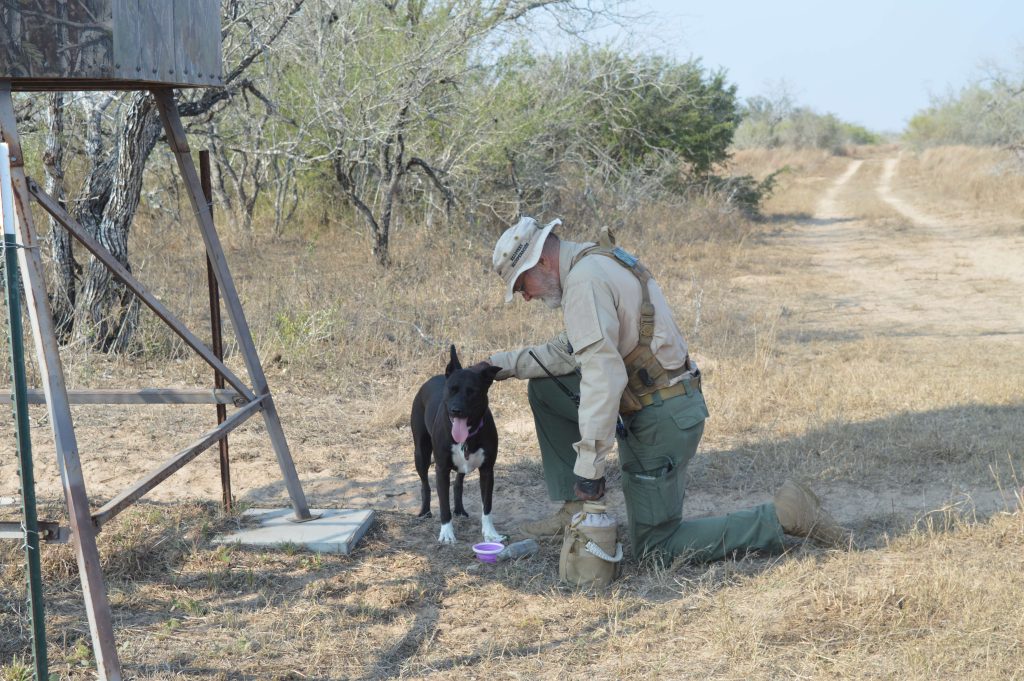
Don takes a knee to give Socks some water
Don and Socks

Peytin

The morning sunset with Don, Ray, and Melissa's trucks

Day 2: Getting Into The Thick Of It

Despite waking up earlier this morning, the group started off eager and ready to get out into the field, feeling more prepared and confident with a day’s work under our belts. We met up with Don, Ray, Melissa, and Reed at the ranch they are staying at around 7:30 AM while it was still cold and dark, hoping to cover more ground before the temperature peaked around mid-day.  As we were returning to the same ranch we searched yesterday, I felt less anxious knowing that I was able to navigate the unfamiliar terrain and uncertainties the day before.

The goal for today was similar to yesterday’s, searching for evidence of migrant activity around areas that Don had made previous recoveries or found residual artifacts left by migrants like cellphones, clothes, or recent food containers. Despite returning to the same ranch as yesterday, we focused our searches primarily on areas with dense brush, traversing through thorny bushes, uneven ground, pencil cacti, and many spiderwebs. This landscape made it difficult for us to conduct a traditional line search, forcing the team to adapt. However, we were able to make it through the brush with communication and patience, bonding us further as a group.

Long road with brush and mottes on either side
Caliche ranch road with dense brush on either side

Compared to the day before, we found a lot more evidence of migrant activity—recent and old—often contained within shaded mottes (clusters of bushes) that offered protection from the sun and a place to rest. However, these natural shelters are often surrounded by and contain thorny vegetation, making them difficult to get in and out of. While exiting one of the mottes earlier in the day, my shirt sleeve was caught on a branch and ripped, setting the tone for just how careful you have to be in these dense areas. I thought about how many migrants may have cut themselves while entering the brush for a moment of respite, potentially leading to a life-threatening infection. It’s the little moments like these that seem inconsequential at first, but which force me to realize the gravity of every decision in an environment like the Texas Borderlands.  

Reed and Dr. Eriksen ducking under branches in the mottes
Reed and Dr. Eriksen navigating the mottes
Pencil cacti with sharp thorns and small red blooms
Pencil Cacti

The items we came across most frequently when searching were tuna packages and black trash bags. Don taught us that migrants often use black trash bags as resting mats, or to protect from the elements, putting them over their heads to block the sun or wearing them as ponchos when it rains. Hearing stories from Melissa, Don, Dr. Latham, and Ray about their time spent working in the Texas Borderlands conducting searches and recoveries, I am struck by the resilience, determination, and innovation that seems to characterize the individuals they encounter. I think about how these stories challenge the rhetoric I have heard back home, often influenced by people who have never worked on the border or experienced what Melissa, Don, Dr. Latham, and Ray have. In just the few days I’ve spent here in Texas, the conversations I’ve had with these individuals have altered my perspectives regarding this humanitarian crisis, forcing me to think critically about topics that seemed black and white to me.

Peytin bending over in a motte inspecting a trash bag
Peytin inspecting a trash bag
Starkist tuna package hanging on a thorny branch
Tuna package

Looking out into the dense brush and seemingly endless land as we left the ranch today, I couldn’t help but think about the individuals that may have been traveling alongside us. Seeing evidence of life in such a desolate place like vast, empty ranchland has been emotional. While the things we have encountered have somewhat matched my expectations coming into the trip, the feelings I’ve had while actually being in the space have been unexpected. There’s a certain indescribable tension to the day, knowing that at any moment we could turn the corner and find an individual—living or deceased—in front of us. It’s not until I’m in the truck leaving for the day, that I feel I can truly relax. However, I realize that even this is a privilege, as migrants traveling through these areas are unable to relax, even after they reach their final destination.

The team standing on the road in a line holding up a number 2 with their fingers
The 2026 Beyond Borders Team after Day 2

Peytin

Approaching the Texas Borderlands with Intentionality

“But progress isn’t just about stopping bad things from happening. It’s about creating the conditions for new things to happen—things that otherwise wouldn’t have happened, would never even have been imagined.” — Paul Murray, The Bee Sting

As I am preparing to leave for Texas, surrounded by family and friends for the holidays, I have been thinking a lot about the individuals and communities we will encounter in Falfurrias. With the goal of our mission being to provide humanitarian forensic aid, I have thought extensively about those who have died while en route to the United States and what they may have experienced while traversing remote ranchlands and grueling terrain. However, more recently, I have found myself thinking about the other moments of these individuals’ lives; the moments before they were lost to this humanitarian crisis.

When encountering unidentified migrant remains in the Texas Borderlands, we are only encountering one juncture of the individual’s life—their death. Although we can hypothesize about a person’s life from their remains, there is a lot about an individual’s story that is lost when they die clandestinely, especially if they remain unidentified. Thus, we may never fully understand the circumstances that drove an individual to migrate, the loved ones they had to leave behind, or the fear they may have felt when making the perilous journey across the US-Mexico border. How can we prevent these individuals from going unidentified and their stories forgotten? These are just two of the questions I hope to investigate firsthand through our work in Texas.

Although my previous research has provided me with significant insight into the sociopolitical variables that have shaped this humanitarian crisis across the southern US border, my research took a more analytical approach, investigating the forensic response to this crisis. While I engaged with content that explored the migrant experience, it was often limited to individuals’ journeys crossing the border and came exclusively from secondary sources. Thus, while the primary objective of our trip is to assist in the search and recovery of unidentified and missing migrants, I have also set a personal goal of gathering as much information as possible about the experiences of both local community members and missing migrants, in life and in death.

I have chosen this goal because, recently, it feels as if the humanitarian crisis occurring at our southern border is becoming an increasingly normalized and more peripheral topic. With location and socially constructed barriers distancing many of us from the deaths occurring along the US-Mexico border, it can be difficult to recognize the efforts made to dehumanize migrants, especially when they have existed for our entire lives. However, I believe that when reminded of the similarities between us and those we distance ourselves from through language and politics, we realize that, despite these barriers existing in real ways, they are not inherent and can be challenged.

I hope our work can help remind people that those who are lost while traversing the Texas Borderlands are people with lives, families, and dreams—not just statistics. While our forensic efforts can help achieve this objective by assisting in the identification of migrant remains, I hope to personally contribute to this goal by preserving the memories of those we encounter—both living and deceased—and taking their stories/lessons with me. I feel that, equipped with these stories, I will be able to confront dehumanizing and criminalizing rhetoric I encounter post-Texas and realistically challenge the sociocultural barriers that seek to separate ‘us’ from ‘them’ and thus the unnecessary deaths occurring at the southern US border. As Paul Murray suggested in The Bee Sting, perhaps sharing these individuals’ stories and our own personal experiences in this liminal space will create the “conditions for new things to happen—things that otherwise wouldn’t have happened, would never even have been imagined.” It is when we begin having these conversations and becoming more comfortable discussing the harsh realities of this humanitarian crisis that progress can occur.

Peytin