Category Archives: Community

Interaction with the community of Falfurrias

“So, what do you do?”

Things are finally starting to take form in my brain. I’m learning my role at the STHRC, what I’m expected to do, and what gaps need to be filled. I’ve also found it difficult to answer the question “So what do you do?” to my friends and family who ask.

A quick answer to the question usually involves an extremely brief description of the humanitarian crisis happening on our border (“Wait, so kind of like what’s happening in the Mediterranean, but it’s only 6 hours away?!” Yes.) and then I explain that my role is to manage the incoming missing persons reports from families all over the world so that we can figure out how to best respond to each case. I’m also responsible for managing any and all data that is available on unidentified people that have perished in Brooks County. And then ultimately, I help create a system that allows the two sides to function efficiently so that unidentified people can be identified, providing closure for loved ones. Eddie refers to my position as a forensic investigator, and so that’s what I say I am.

But I don’t feel like that explanation really encompasses what I spend most of my time doing. In fact, it misses the skill that Eddie and Sister Pam find most important in our work; a skill, that, while emphasized to students pursuing careers in their field, is rarely fully understood by students (in my humble opinion…). That skill is building relationships. This process is often termed ‘networking’ or ‘collaborating’, but I think those terms miss the point that Eddie and Sister Pam are getting at. When Eddie and and Sister Pam network, they don’t simply mean saying “Hey, we should collaborate on this project together” through the phone or in a brief conversation after a meeting. They shake hands, call often, set up meetings with in-depth agendas, and most importantly, simply recognize each meeting as a human-to-human relationship. And so while my job description hits on this idea briefly, I feel like I spend most of my time building relationships, as part of STHRC, with so many people.

These past few weeks have been full of meetings. Some are large, some are with only a few people, but every single one is extremely meaningful and a step forward. Some are across the phone, some are across Skype, and some include simply showing up at someone’s office. But every meeting has a set agenda and has the intent of building trust and progress. We meet once a week on Skype with Derechos Humanos, a human rights group in Arizona that is focused on Search and Rescue efforts across the border. We share cases and build off of each other’s strengths and abilities. We’ve also met with Border Patrol to discuss ways to go about Search and Rescue missions, and ultimately to save lives. We continually meet with consulates, law enforcement, Justices of the Peace, and anyone else we can.

One of the best meetings I’ve ever been a part of happened yesterday while we were in McAllen with Dr. Kate Spradley. We decided to drop by a consulate’s office to introduce ourselves and let them know that we are all here to help in any way possible. We really didn’t know what to expect. The consulate quickly welcomed us in, and as soon as the meeting began, I realized how perfect a meeting this was. Eddie spoke on behalf of the families missing loved ones and was able to discuss efforts on search and rescues for people who had recently gone missing. I briefly talked about how I work with missing persons reports as well as unidentified people found on ranches. Dr. Spradley represented her lab and was able to affirm to the consulate the efforts made to identify those found on ranches. And Sister Pam, as she said, was there to provide spiritual support for all of us. Instantly, we all had each other’s trust. There we were, each one of us from a different perspective of this crisis, in McAllen, TX, in the consulate’s office to offer support and information. The consulate had so many of the same concerns we did, and was elated to know that all of the people she needed to help her with many of her issues as a consulate were sitting right there in her office, unannounced, voluntarily. These meetings can’t happen across the phone or email. This kind of trust can only be built face to face.
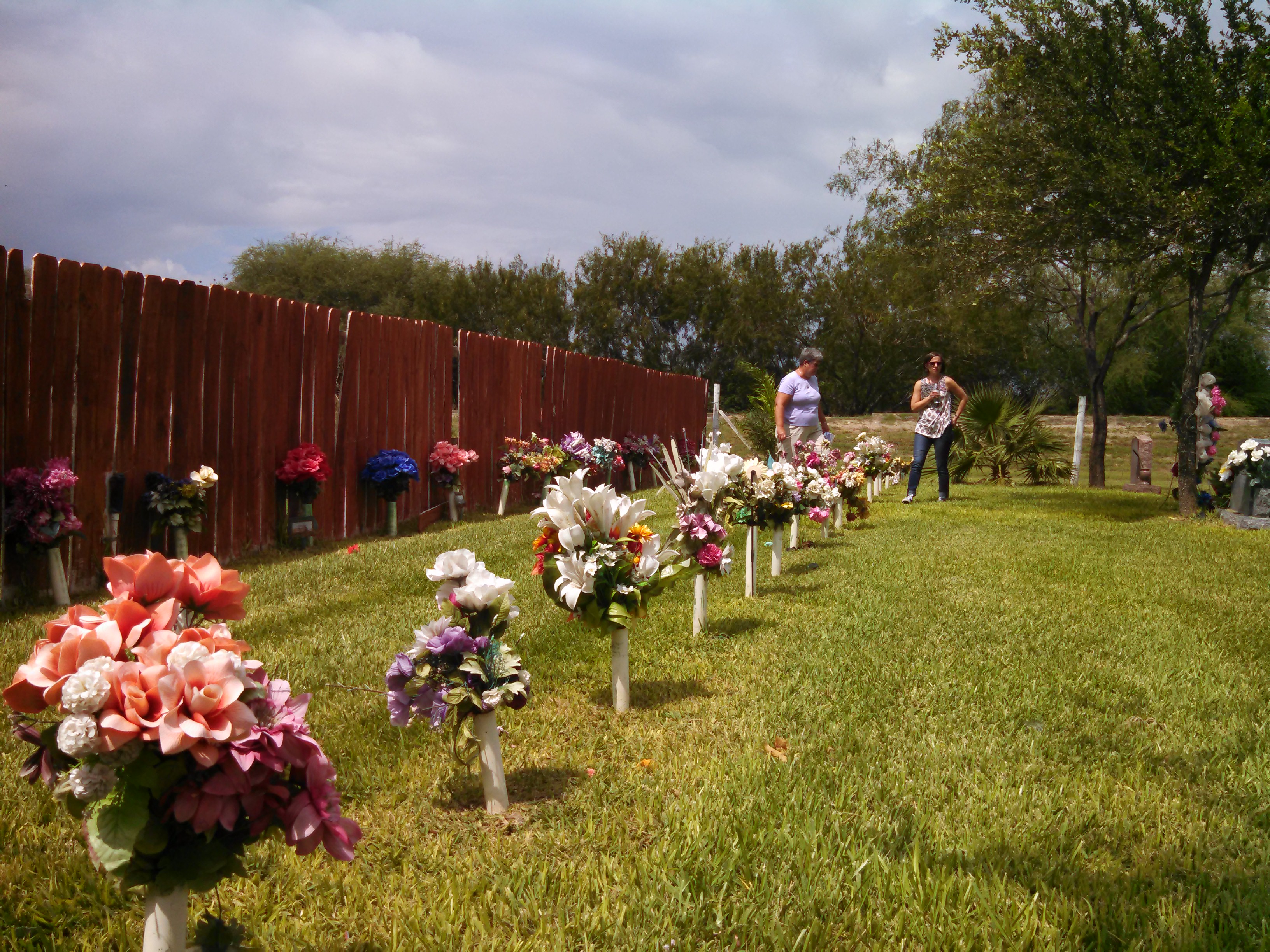
Dr. Spradley showing Sister Pam and Ryan a cemetery with the remains of unidentified individuals with white cross markers and flowers
Dr. Kate Spradley shows Sister Pam and I a cemetery in South Texas with the remains of unidentified individuals.

And so that’s what I do for the time being. I meet with people in person as much as possible with Eddie and Sister Pam. I email and call people from all over the country, trying to find ways to create a better system (it can always be better). I set up times to meet with people in person to have real discussions. And ultimately, as Eddie and Sister Pam put it, I build relationships and trust with people.

~Ryan
Through the Looking Glass

“Now, here, you see, it takes all the running you can do, to keep in the same place. If you want to get somewhere else, you must run at least twice as fast as that!” — The Red Queen (in Lewis Carroll’s Through the Looking Glass)

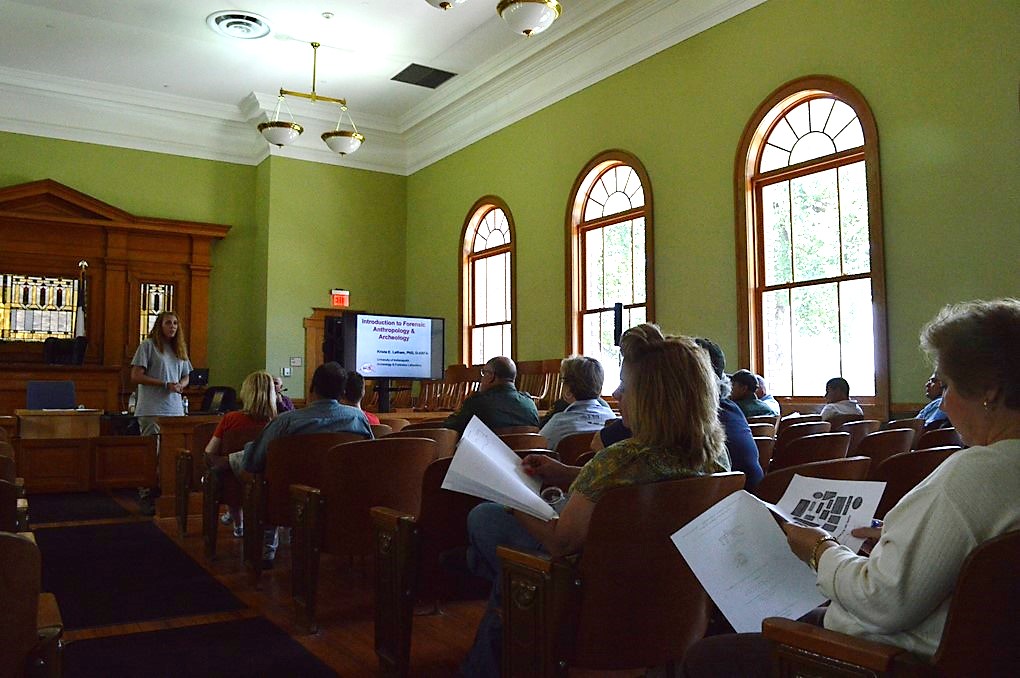
As I reflect upon our recent trip to Texas, I can’t help but think about all the work that was done while we were there.  In Falfurrias we worked with various community members to discuss ways that the recoveries of deceased migrants from outdoor death scenes can be done according to best practices within the context of  the limited time and resources of Brooks County.  We spoke with close to 50 people from various organizations that expressed a sincere desire to perform the recoveries using forensic archeology as a way to collect the maximum amount of information towards identification of the deceased.  They expressed frustration over the fact that they need resources towards these recovery efforts.

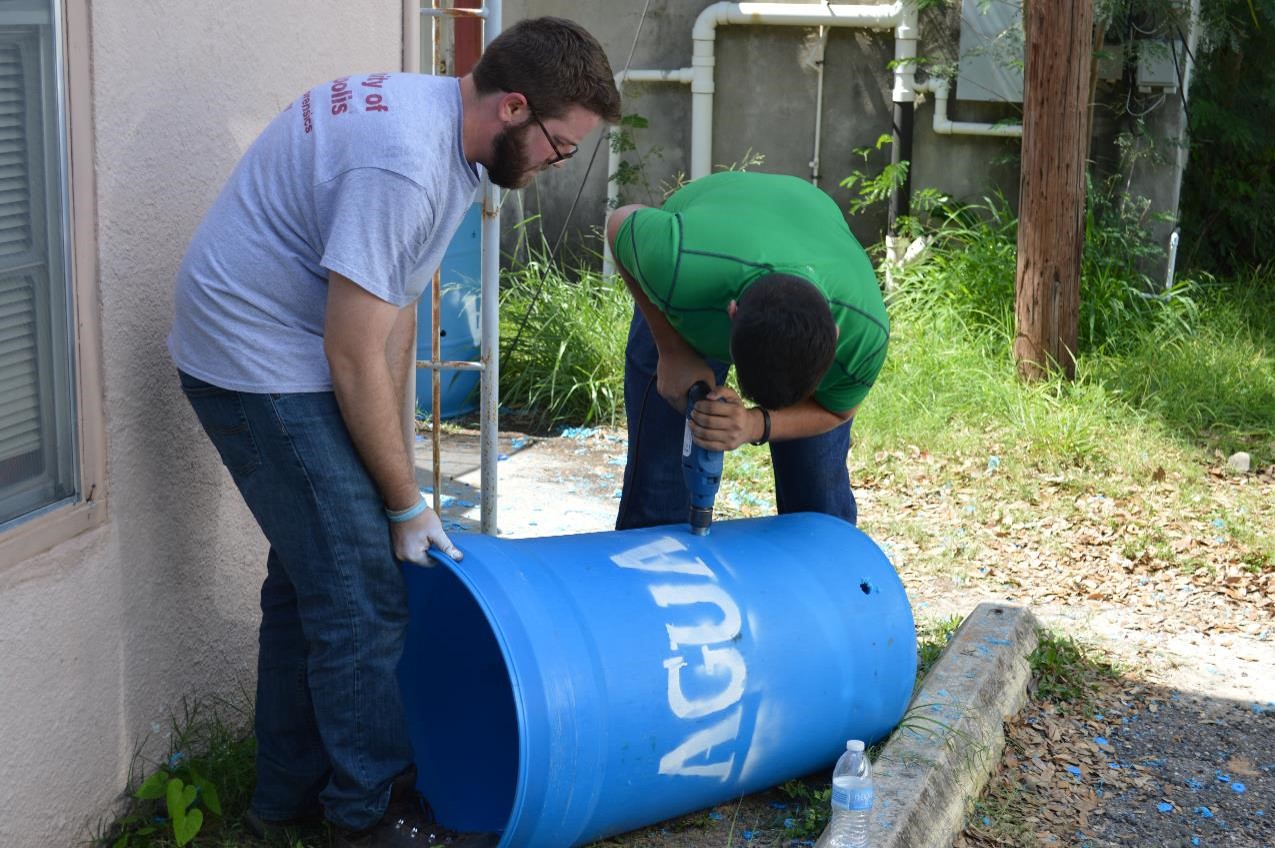
TrainingWe worked with community members to built, repair and fill the life saving water stations that pepper the landscape of Brooks County.  Not only did this include Eddie, Sister Pam and Hailey of the South Texas Human Rights Center.  But also volunteers from Falfurrias, other parts of Texas, California and Ohio.  People come from near and far to volunteer their time towards these life saving tasks.

H2OThe first week we also spent time with the volunteers at Sacred Heart Church, who dedicate time every day to caring for the refugees who are traveling to meet other family members. Then we traveled to Texas State University to volunteer with others from across the country to work towards identification of the migrants buried at the Sacred Heart Cemetery.

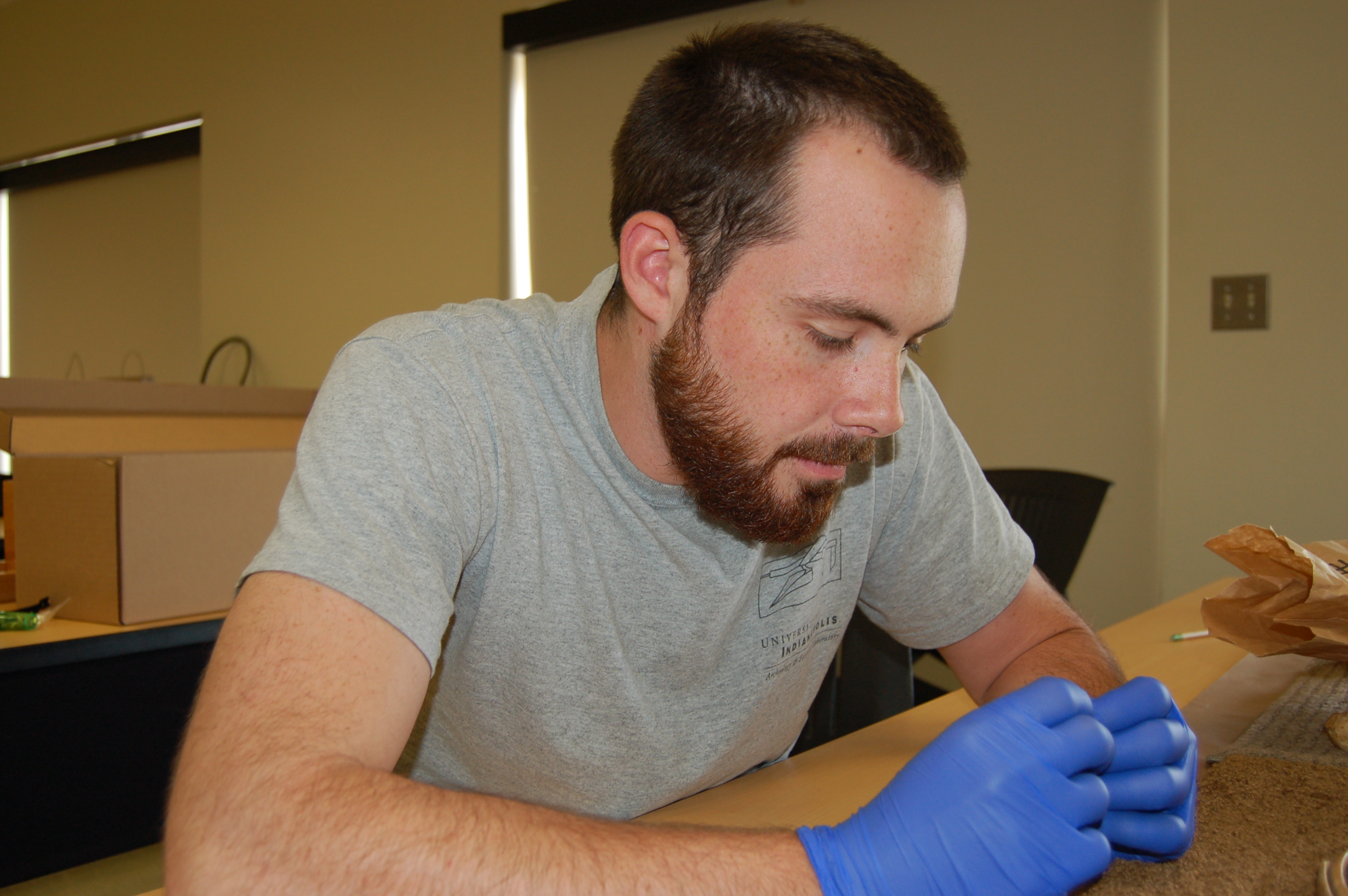
Beyond Borders member analyzing an element with gloves on Each day we were introduced to more and more people who are volunteering their time to assist in this crisis.  They are working to prevent deaths, to identify the deceased and to aid the living.  Each person doing their own small part, their own “small” part, to assist in this crisis.   But the more we do this work the more I see there is no “small” part.  The volunteers are giving days, weeks, months and years of themselves to this.  But the deaths continue, the bodies are still mostly unidentified and the living still suffer.  I see us all running as fast as we can to work towards our common goals and I see us running faster and faster just to stay in the same place just like the Red Queen tells us in “Through the Looking Glass”.

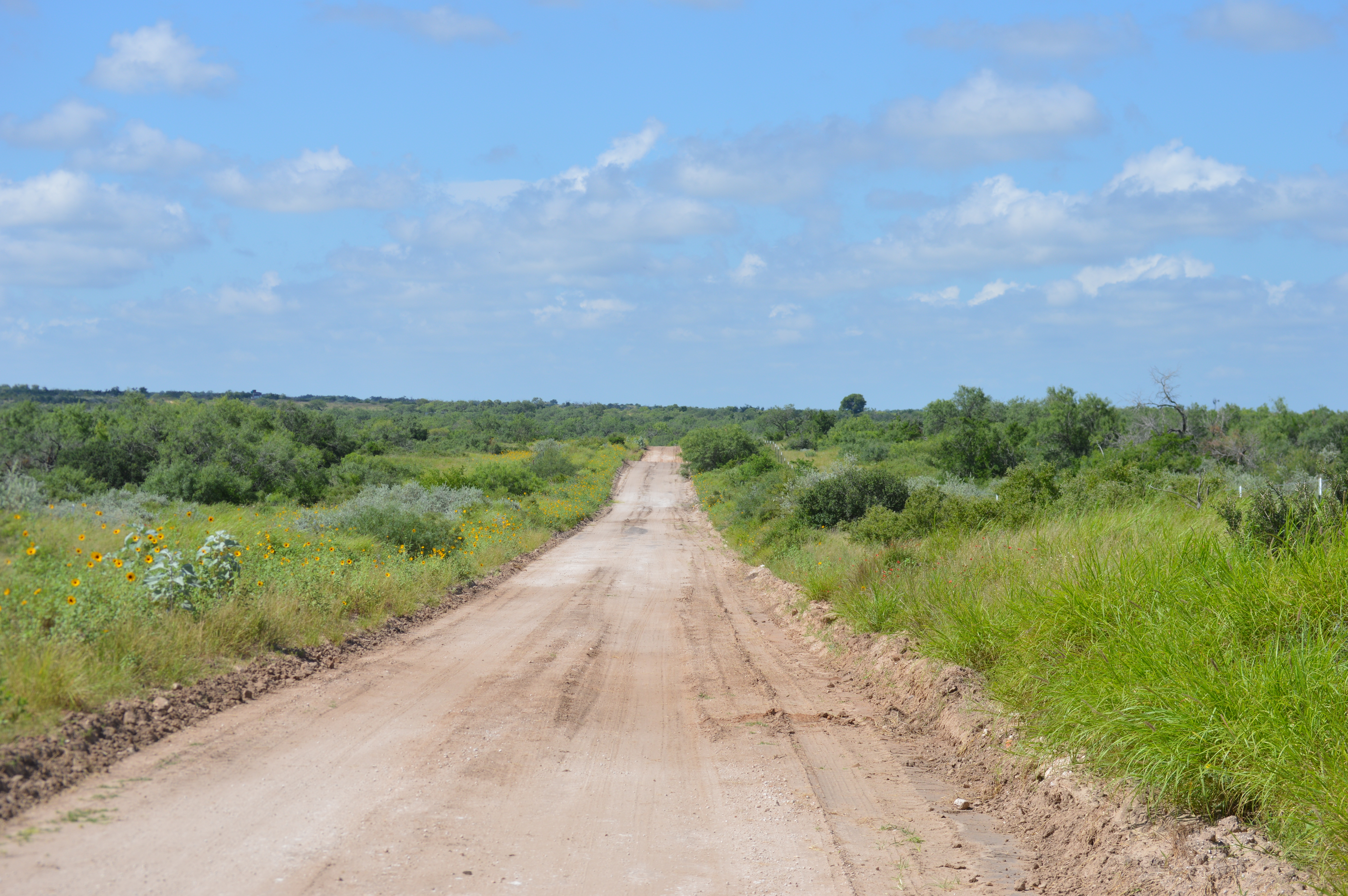
A road going down through the Texas Brush with blue skies and greeneryIt’s easy to get frustrated. It’s easy to see all that still needs to be done. But a wise man reminded us during this trip to not forget about the progress. Deputy Chief Martinez reminded us that huge strides have been made in Brooks County and continue to be made each day.  When the road seems long and unending we must step back and look at the big picture.  We’re not staying in the same place but slowly moving together.  All of our “small” contributions are slowly moving towards progress.

~KEL

A Quick Tour of the STHRC

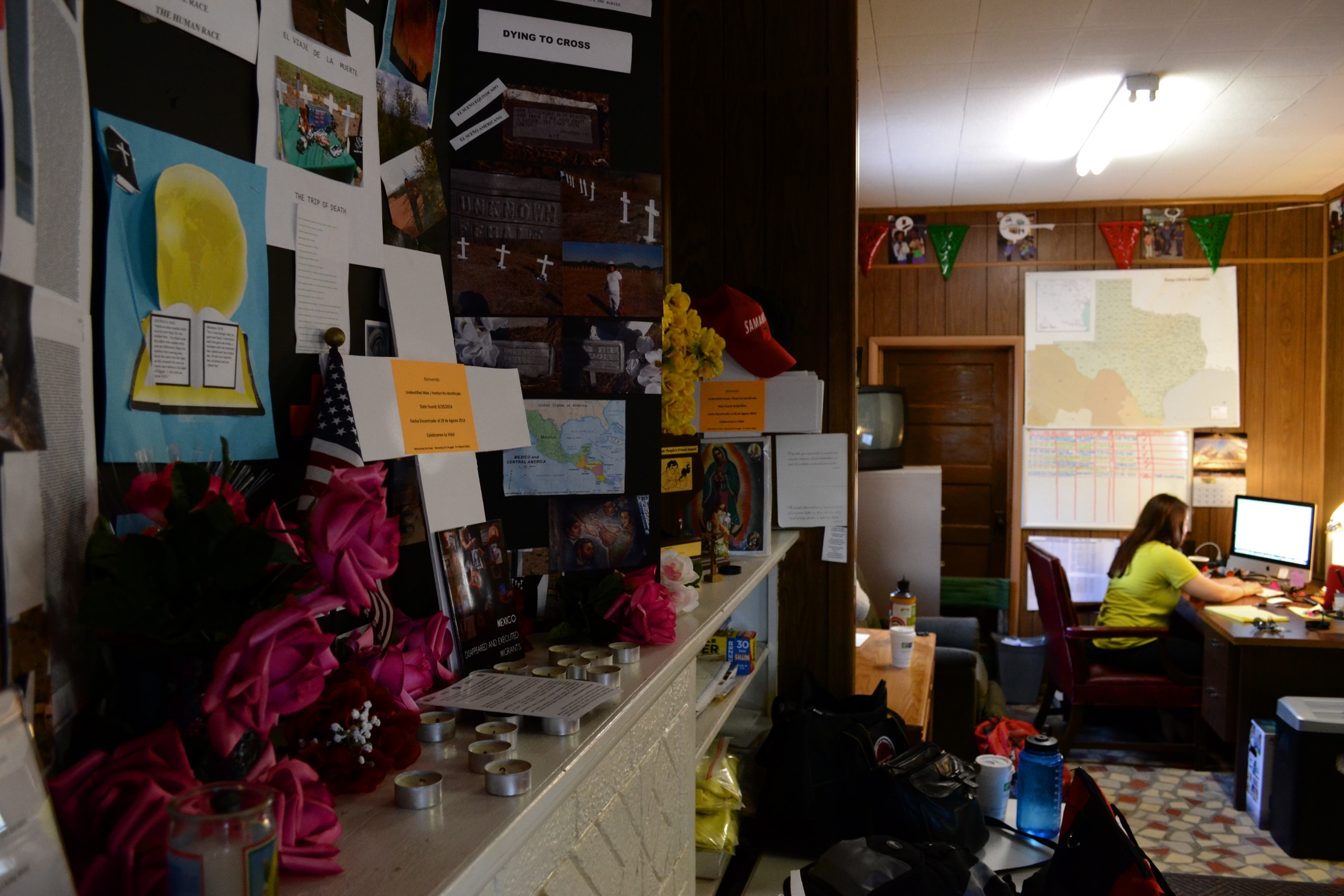
We’ve spent this week at the South Texas Human Rights Center (STHRC), and so I thought I would post a few pictures of what the center is like. The hub of all activity regarding this crisis in Falfurrias is situated in a tiny, yet cozy building right across the street from the Brooks County Courthouse. The main room contains a few desks with computers and papers, a central table and chairs, and is decorated by an assortment of posters, religious items, and colorful trinkets. Behind the main room is a small backroom that mainly contains water and donated supplies. Finally, the backdoor of the center leads to a small storage area containing buckets and poles used for making water stations.

Map of Brooks County with push pins labeled with numbers to identify where water stations are located
A map is used to keep track of all the water stations in Brooks County . Sister Pam makes sure all stations are checked, repaired and refilled every week.
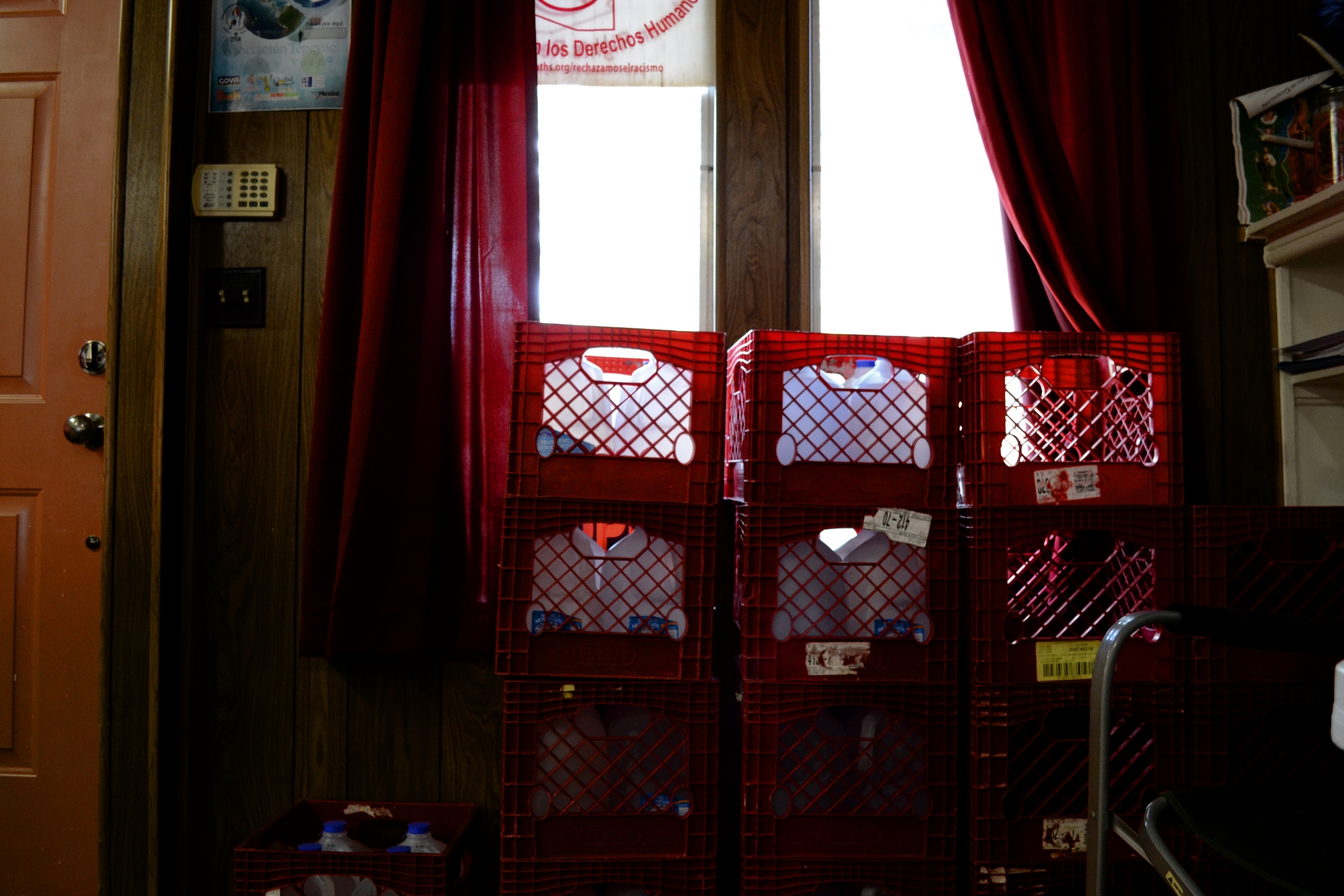
Stacks of milk crates filled with jugs of water infront of a window in the South Texas Human Rights Center
Stacks of water jugs sit in the front of the room, waiting to be placed in the truck during a water station refilling run. Water is donated by multiple organizations and people around the community.
Colorful Decorations and posters on a mantle near a workstation in the South Texas Human Rights Center
The colorful center is incredibly decorated by various signs and posters that generally symbolize hope and respect for migrants and their families. Many of these posters have at one time been used to bring awareness to the humanitarian crisis. Others are donations.
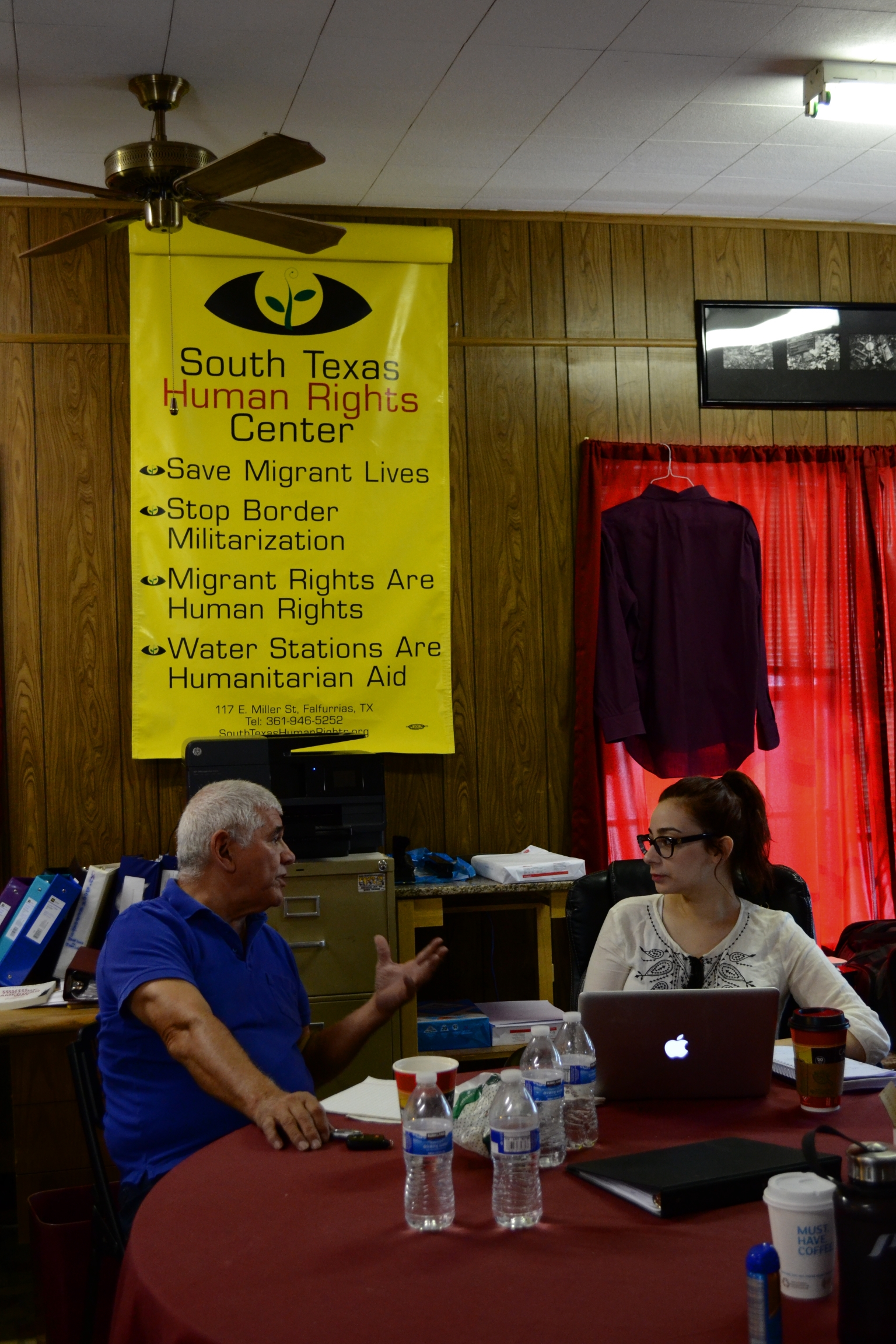
Director of the South Texas Human Rights Center, Eddie, engaged in a discussion with Priscilla in front of a South Texas Human Rights Center poster in the center
Eddie and Priscilla discuss upcoming strategies. Priscilla, an intern from the University of Pittsburgh, is often busy making phone calls to families of the missing in hopes of obtaining as much information as possible that could aid in finding their loved one. Eddie, the director of the center, continually offers advice and support for interns and volunteers. His passion for the human rights center’s work is unrelenting.
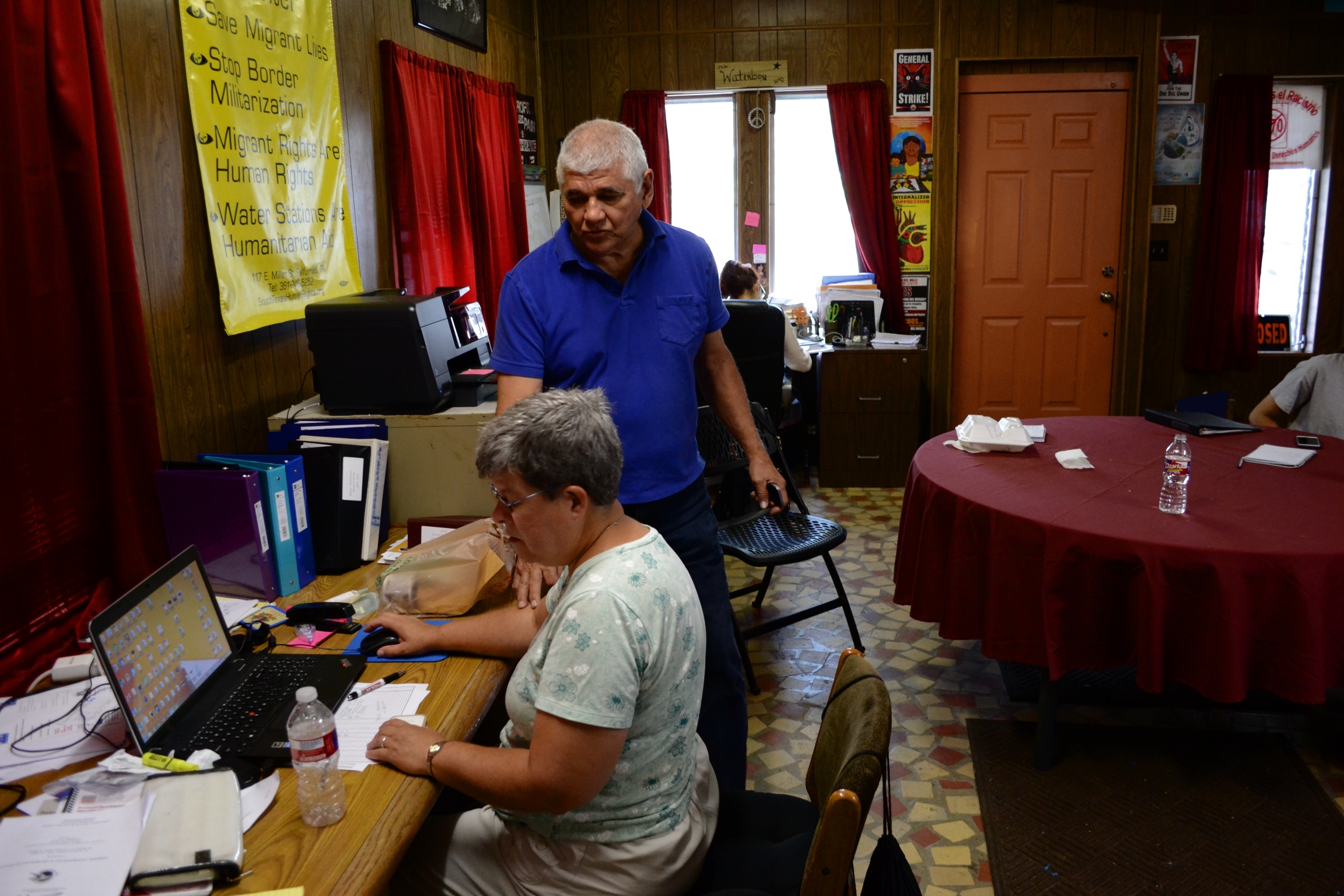
Eddie and Sister Pam discuss as she sits infront of a computer in the STHRC
Eddie and Sister Pam discuss recent the good news of obtaining additional missing persons reports. Sister Pam works tirelessly, approaching the crisis from every direction possible. The only time she isn’t smiling is when she is concentrating very hard. Her smile brings a positive aura to the center that resonates as bright as the colorful decorations that don the walls.
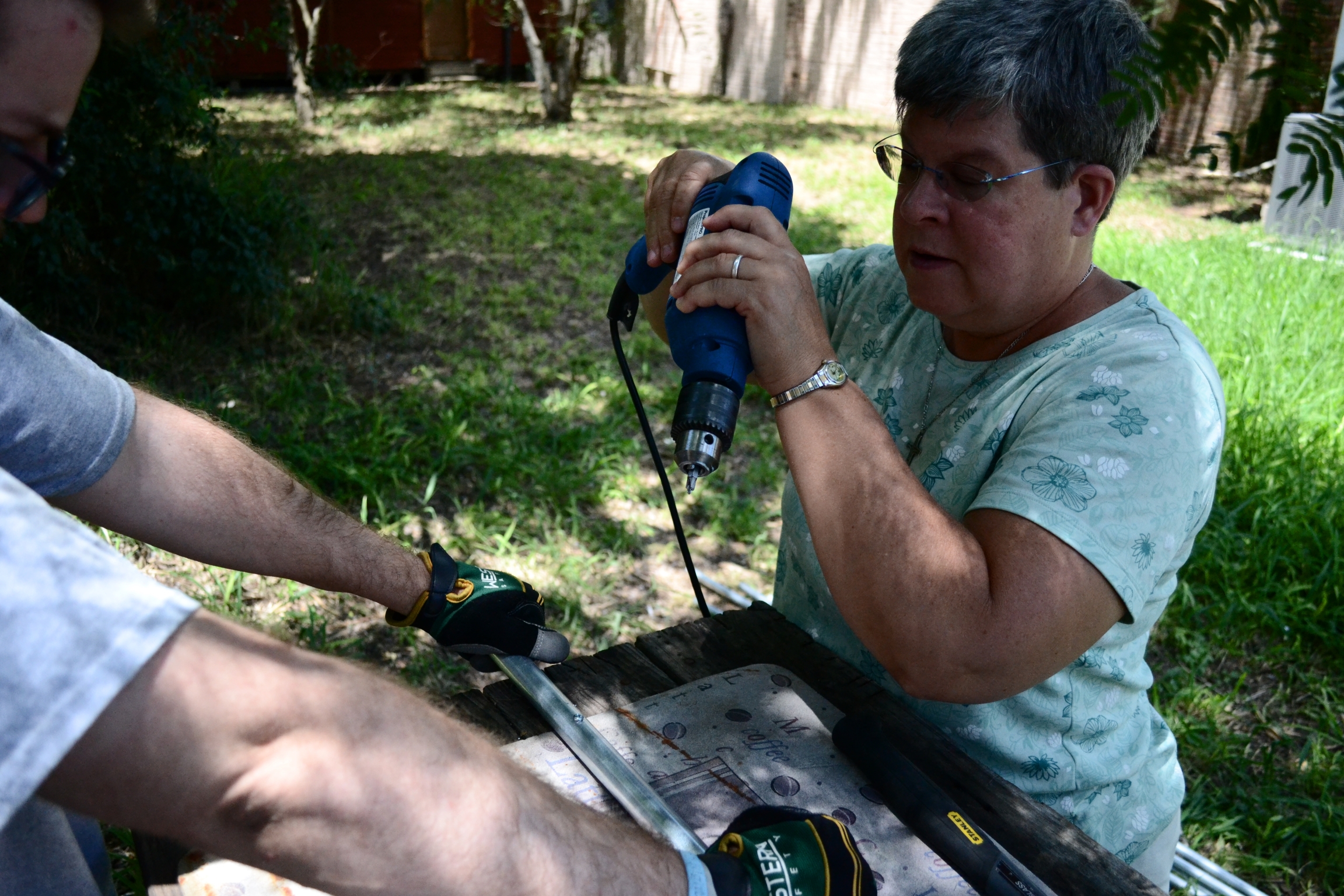
Sister Pam with a drill showing Justin how to build flag poles for water stations
Sister Pam teaches Justin how to build flag poles used for water stations. No job scares Sister Pam. From climbing over ranch fences to repair water stations to carrying giant buckets, Sister Pam constantly leads and inspires those around her and working with her.
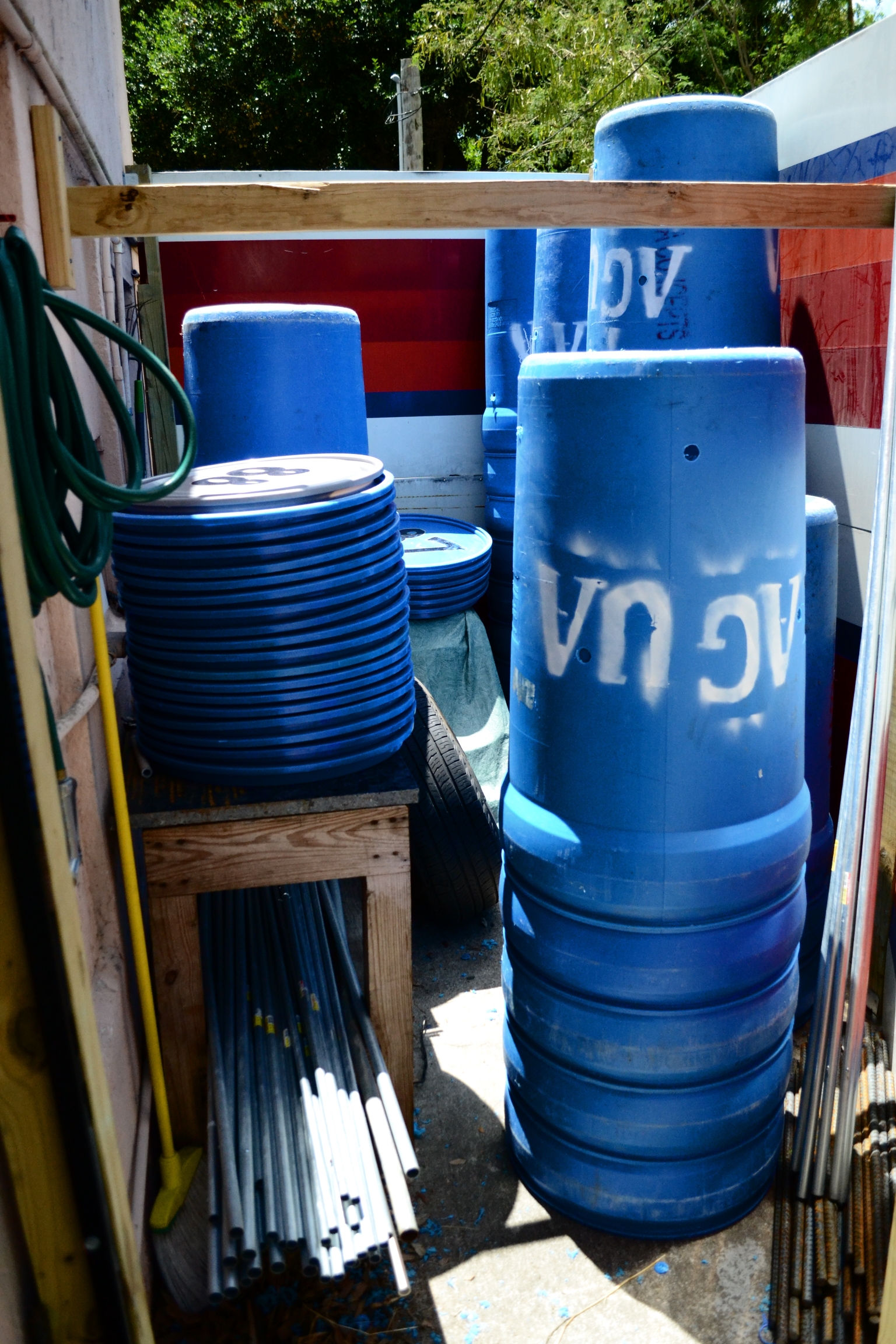
Stacks of water barrels, flagpoles, and barrel tops all organized in a storage area outdoors
Water buckets and DIY flag poles are stored behind the center. Sister Pam and the human rights center currently has around 70 water stations available around Brooks County for migrants to use if needed. Their goal is 100 as soon as possible.

This cozy center has been our home this past week, but can be home to anyone who would like to volunteer their time.

If you are interested in assisting the South Texas Human Rights Center, visit their website at http://southtexashumanrights.org/ and contact Eddie. I promise you will become inspired and proud in the process. The team at the STHRC is second to none, and has taught us new ways to engage and address this crisis. I am extremely thankful to have joined their team this week.

Ryan