Category Archives: Community

Interaction with the community of Falfurrias

Day 5: Digging and Don

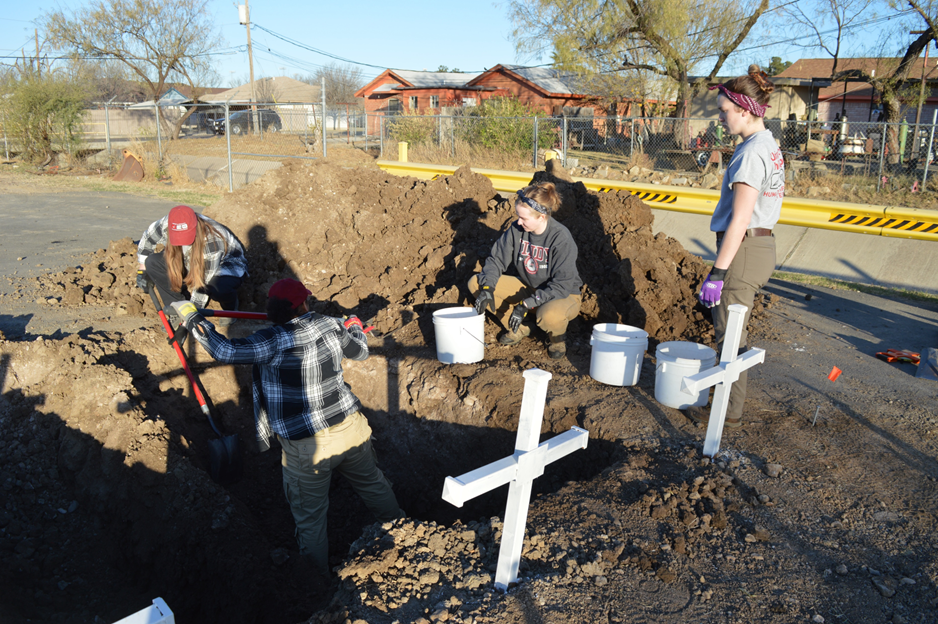
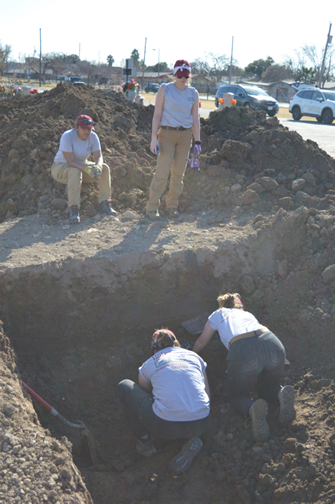
Team members removing dirt from a burial
Jordan and I excavating while Izzy and Kaitlyn look on

We woke up this morning sore from all of the work we did yesterday but ready to get back to it. We ate breakfast at the hotel, where Izzy had an awesome Texas-shaped waffle. After loading all of our gear, we hopped into Monica (who is not smelling too great after our long work days in the heat) and headed off to the cemetery.

We began working on the burial we had started to expose at the end of the day yesterday. This involved more use of the mattock to bring down a wall and removing larger chunks of dirt as we went. Somehow, Izzy and Jordan managed to hit rocks with the mattock hard enough that there were sparks flying. The weather was pretty cool in the morning, so we got to take longer turns, and the wall came down pretty quickly. Deputy Don White was standing by to provide his (sassy) advice and expertise and answer all of my random questions about his life while helping dump our buckets of dirt. Our team has really found our groove, and we worked very quickly and efficiently. Both Texas State and our team were able to remove individuals before lunch.

Our lunch break was extended for an extremely important visitor to the site. A family member of one of the identified individuals who had been removed on Texas State’s previous excavation in November 2022 came to see where their loved one had been laid to rest. It was an emotional time for everyone. I know nothing can bring their loved one back, but I hope they were able to find what they were searching for from their visit. For me, seeing their reaction helped reinforce how important the work we are doing here is. These are real people and real families that have experienced great tragedy. I wish the work we are doing wasn’t needed and that these families were still whole, but, hopefully, we can help them find at least a little bit of closure.
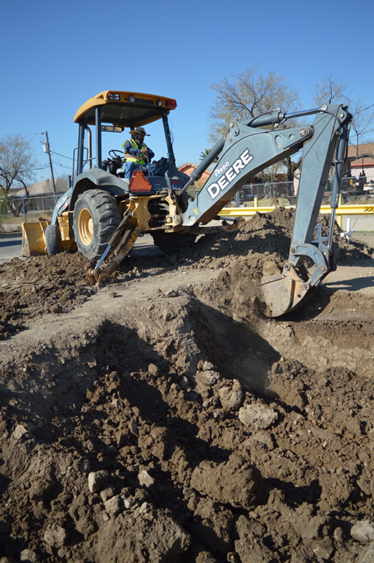
The backhoe working at the cemetery

When their visit was over, it was time for the backhoe to fill in the excavated graves and remove several feet of dirt from our next areas, so we didn’t have to spend hours manually digging through the rock-hard, sun-bleached top layer of dirt. When they were done, our team jumped in and got to work excavating the next burial. By this time, it was pretty hot and sunny, so we started up our timer and worked for 3-4 minutes in teams of two before switching. At least, we were only supposed to work for 3-4 minutes, but we always managed to finagle an extra minute or two because we didn’t want to stop.
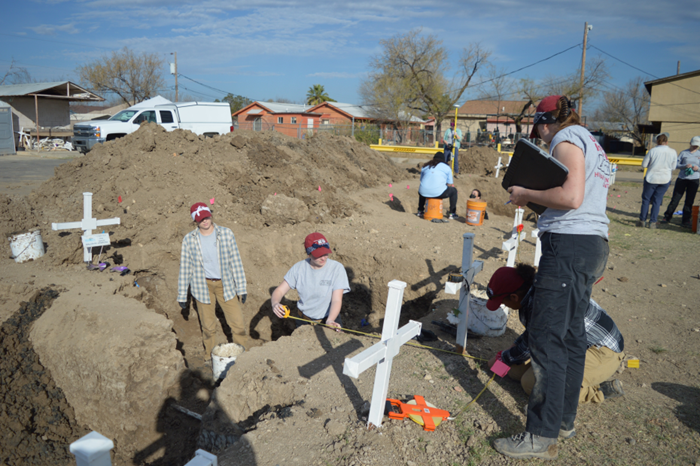
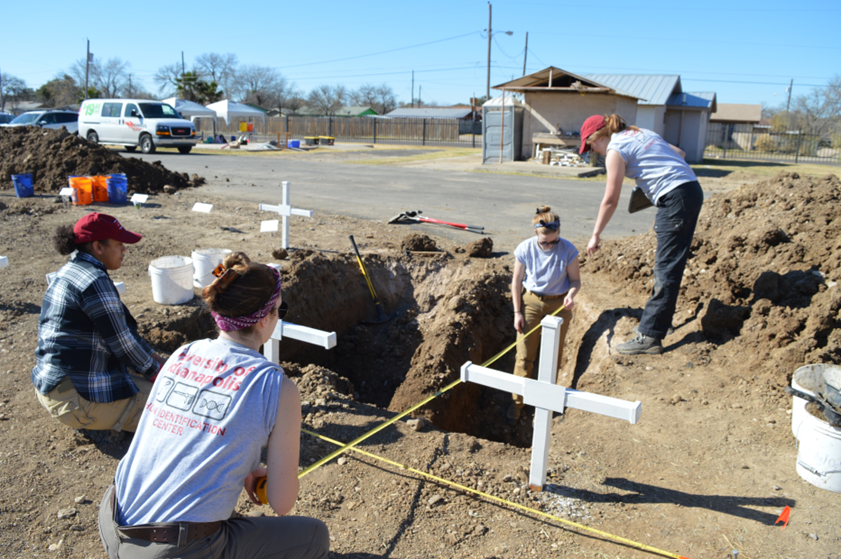
Team members mapping at the cemetery
Mapping in our points

We finished up for the day, took some quick showers, and went out for a delicious dinner at Yopo’s. I’m sad that tomorrow will be our last day working in Eagle Pass, but we have done a lot this week to be proud of. Our team has really learned to work well together. We check in on each other consistently to make sure everyone is taking breaks when needed and drinking enough water. This week has allowed us to learn valuable skills as well as grow closer as a team. We’ve come to expect the unexpected and be flexible, and the experiences we’ve had and the memories we’ve made are ones I will carry with me.
Selfie of team members taken on Dr. Latham's unattended phone
A surprise photo left on Dr. Latham’s (unattended) phone
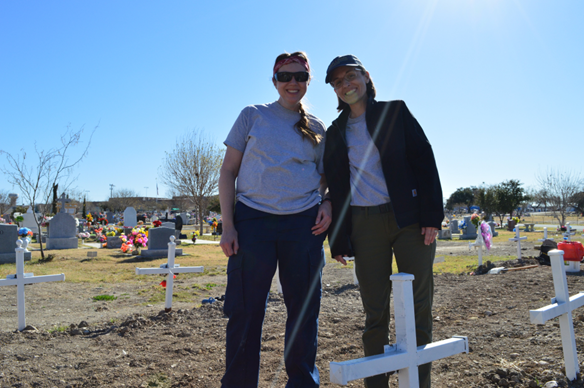
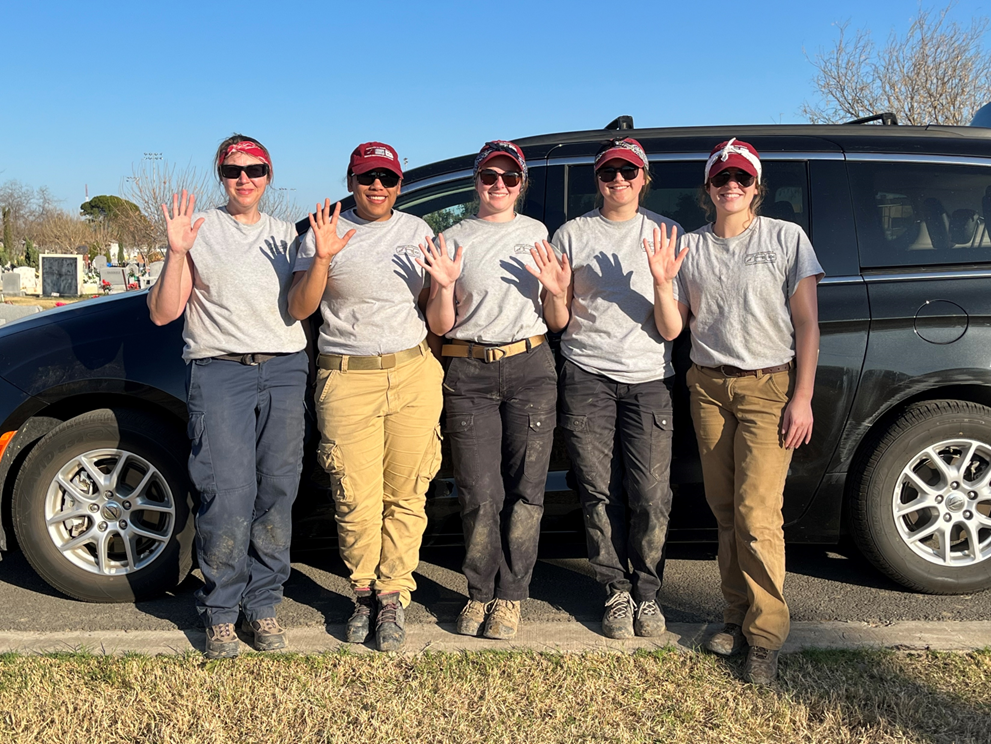
Team members on day 5

~ Olivia

Day 1: A Good Day for Digging

Our first day started bright and early – or should I say dark and early. With a meeting time of 7:00 am, we had to get up, dressed, and ready to work before the sun was up. Kaitlyn started her day with some Tai Chi while Jordan, Izzy, and I started with groans. Clearly, only one of us is a morning person. After a quick breakfast at our hotel, we were off in the minivan to meet up with the Texas State team and Deputy Don White at the cemetery.

Dr. Latham and Dr. Spradley

The Texas State team is bigger than ours and consists of master’s and Ph.D. students, but they all seem nice and ready to work. Dr. Ana Carina Marques and two of her students from the University of Texas – Rio Grande Valley are also helping with the project. After a quick introductory meeting, we unloaded all of our equipment from the van and got ready to work. The morning started out a little chilly, but by the time the sun came out and we started moving, the Texas heat was making its presence known.

Team members digging at the cemetery

The cemetery workers had used a backhoe to help speed up our excavation process and prevent us from having to manually dig down multiple feet through the hard clay-like soil that is in this part of south Texas. Our team took one area, while the Texas State and UTRGV teams took another. We started out by taking some measurements, so Jordan can create a detailed map of the area (which we learned is harder than expected because we can’t do math). Then, it was time to start excavating.

Team members mapping at the cemetery
Measuring in our data points

During the first excavation, we began to find our groove as a team, removing dirt the consistency of peanut butter, emptying buckets, and reminding each other to take breaks and drink plenty of water. We quickly learned that wet dirt/clay is not fun to work with and will only feel heavier and heavier the more you work with and lift it. When it came time to remove the individual from the grave, we donned our PPE and worked together to lift and remove the individual from the grave. They were then taken to the intake tent

Two team members taking a break and watching others work at the cemetery
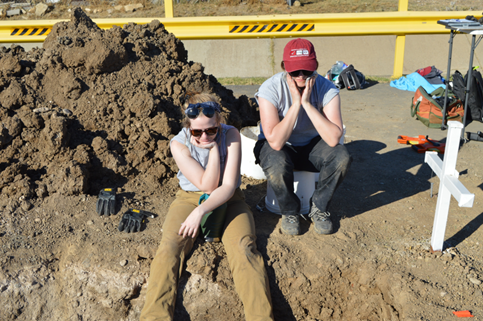
Jordan and I taking a break

While Kaitlyn went to the intake tent, Dr. Latham, Izzy, Jordan, and I started to work on our second excavation. The intake process, run by Texas State, is extremely detailed, recording as many features – both biological and material – as possible because you never know what may be the key to a positive identification. By the end of the work day in the field (approximately ten hours!), we had three individuals removed and through the intake process, with several more ready to remove first thing in the morning. We called it a day, had our bottles of ice-cold Coke from glass bottles (because it tastes better from a glass bottle. It’s a fact), annoyed Don a little (he loves us, even if he won’t admit it), and headed back to the hotel.

After quick showers that included a lot of soap and scrubbing, we headed out for a delicious dinner at Parilla de San Miguel. Once back at the hotel, we had our nightly debrief before Jordan started making her map, Izzy created a photography log for all of the photos we took throughout the day, and Kaitlyn watched the movie Stardust. We can already tell we’re going to be sore, but we’re excited to get back to work tomorrow.

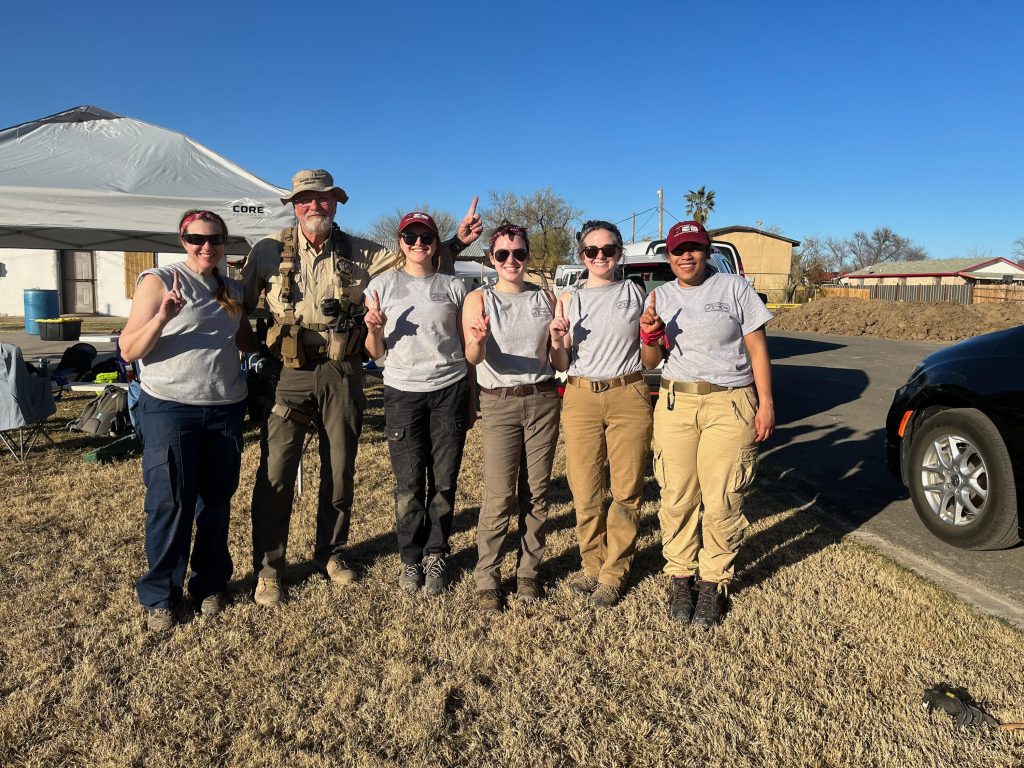
The team plus Deputy White on day 1

~Olivia

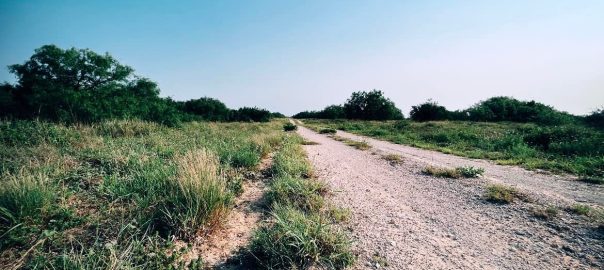
A country road in south Texas

Sometimes the Hardest Thing to Do is the Right Thing

My first trip to Brooks County Texas was in May 2013. With that initial and each subsequent trip, my understanding of immigration and the crisis along our southern border has changed. As have my thoughts on how the Beyond Borders team can contribute to the prolonged mass disaster situation facing many counties in south Texas. I will focus this post on what we learn and what we take from these trips. To date, thirty University of Indianapolis students and faculty have participated in at least one Beyond Borders mission to the Texas borderlands.  Our trips focus on quality over quantity, in that a small group of students travel each time for a truly immersive experience. The goals are 1) to provide the practical forensic anthropology and forensic archeology skills of our program and 2) to provide an immersive and transformative experience for the students that focuses on empathy and global interconnectedness.

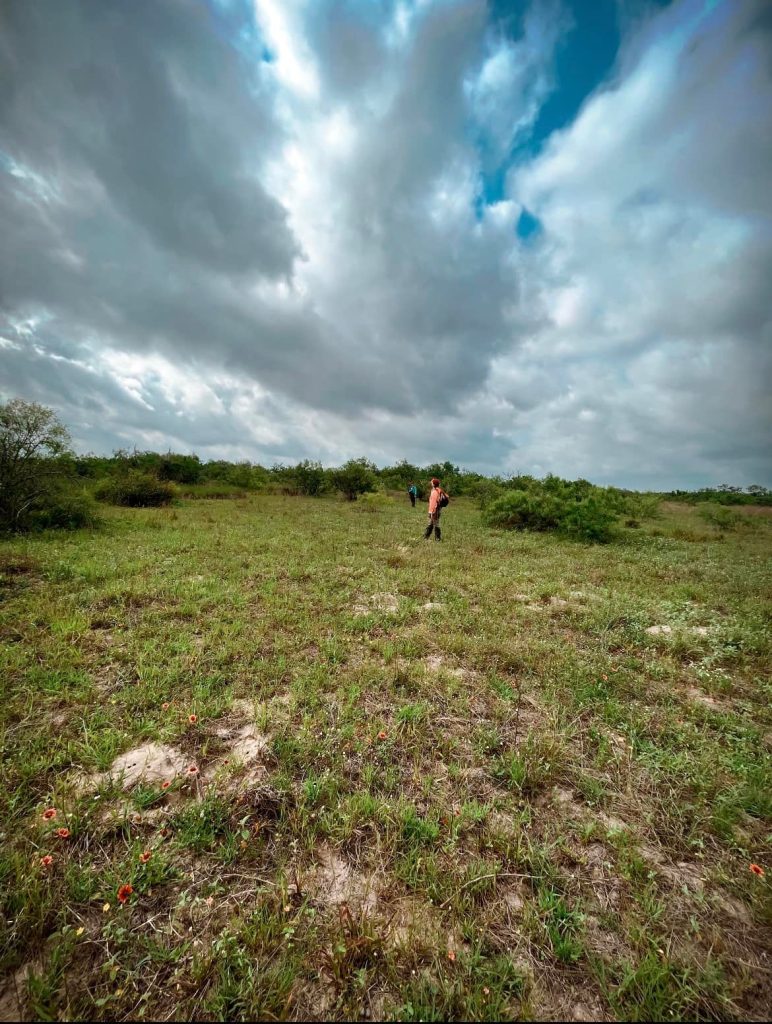
Team members searching the brush in south TX
Line Search

With every trip I learn from the people around me. From the community members who are immersed in this environment year-round, to colleagues who are also contributing in various capacities, to my students who depart Indiana full of energy asking just the right questions to consider things from yet another angle. This trip we were able to briefly meet with Sheriff Benny Martinez. I haven’t seen him since our January 2019 trip. He is a big reason why this work has continued and the success in exhumations and identifications in Brooks County has been a model for other counties in South Texas. He always says something that puts things into perspective for me. This time he said “Sometimes the hardest thing to do is the right thing”. He was telling the team about how things have changed over the years in regards to preventing deaths and immigration policies. Things have gotten so political that people say and do what they think that have to rather than what they know is right.

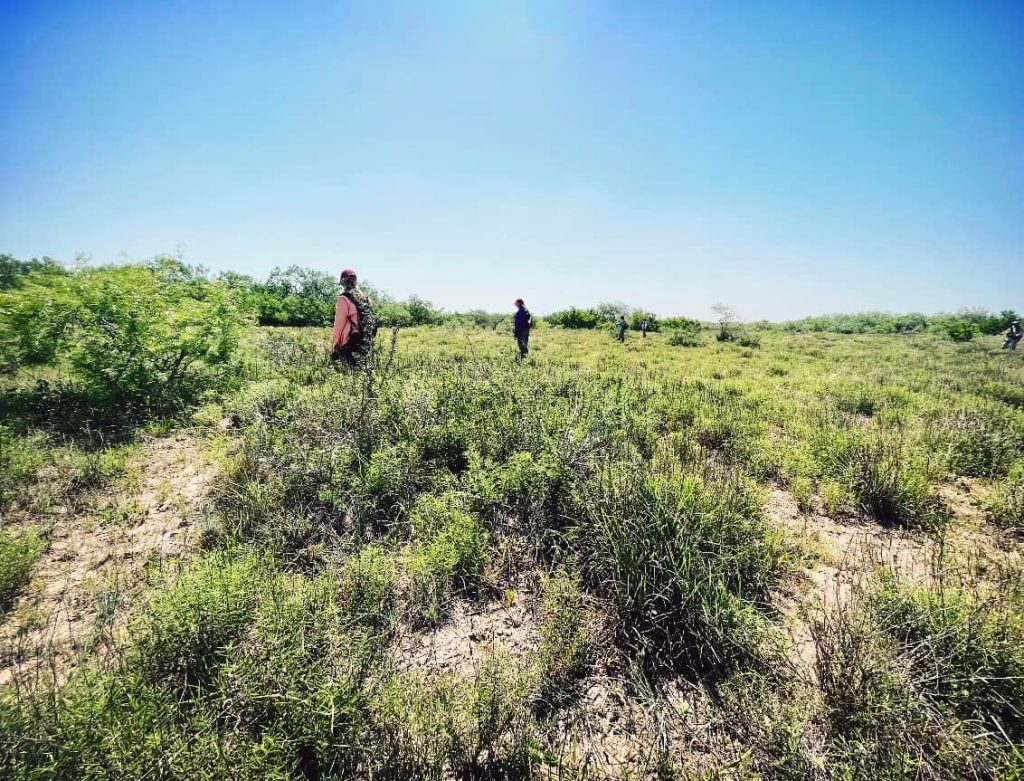
Team members searching the brush in south Texas
Line Search

Changes in perspective often do not occur until a person or someone close to them is directly impacted. That is why empathy is such an important goal of these trips. To experience how one’s own assumptions and perspectives influence their thoughts or behaviors, and how immersive experiences can be used to question those assumptions is powerful.  Extending that to understand that one’s own life experiences create the lens for how they view all situations and stepping back to consider another’s feelings or experiences can create a better understanding of the world we live in. I hope my team always chooses the right thing, even when it’s the hardest path. Experiencing global connections is also important in that it shows how we are all connected as humans regardless of geography, political or other social borders. We can work together to do the right thing, even we have different ideas and perspectives.

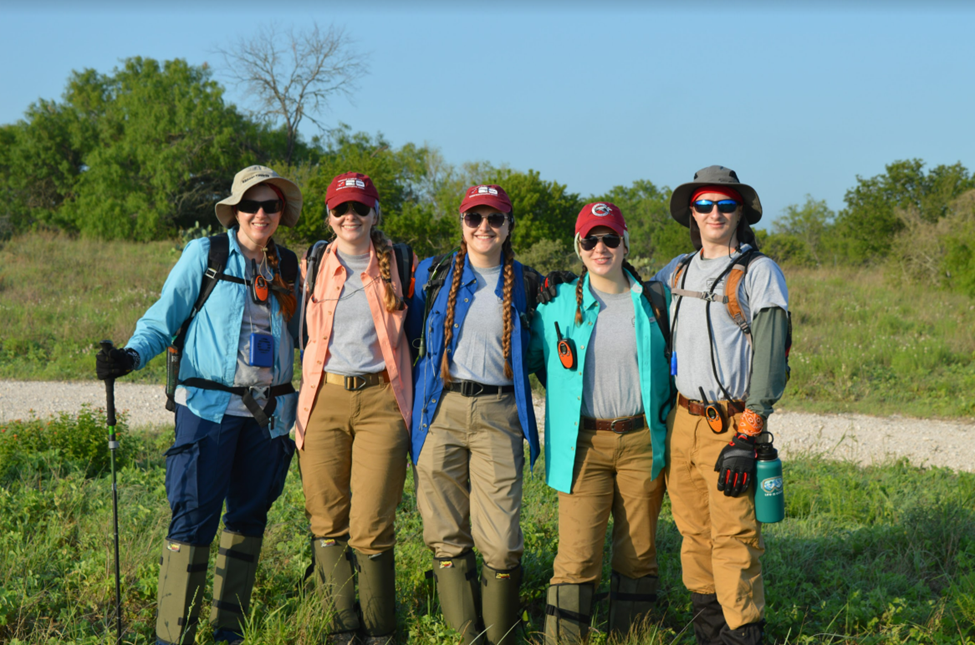
May 2022 Beyond Borders Team

Every trip I watch the team transform with each day in the Texas borderlands. They grow not only as professional forensic scientists but in so many other ways as well. They learn the power of teamwork and friendship. I allow each team member to contribute ideas to our plans to build confidence in their own abilities. Just telling them what to do does not help them grow. But placing them in an environment where their contributions are heard and valued is important for their personal and professional growth.  This group was no exception. I am proud of their work and growth in the especially harsh environmental conditions of this trip. I am proud of what we accomplished as a team.

~KEL