I’ve been home now for a little while, and everything seems out of place. I was only gone for a week, but coming home to my apartment and seeing everything exactly how I left it before I headed to the airport felt very weird. While the week went by fast it was so full of activity and new experiences that it felt more like a month than a week. Before heading to Texas I had a lot of hopes and wants, but I don’t think I fully knew what I was in for. I hoped that we would find someone and be able to do a recovery, I hoped that I would be able to handle the tough days full of walking in rough terrain, and I hoped that I would gain something from the trip that I wouldn’t be able to in other places. Luckily all of my hopes came true, though not necessarily in the ways I expected. We were able to make three recoveries, I definitely made it through all of our search days (though I was quite sore after a few of them), and I’ve learned so much from all of our experiences.
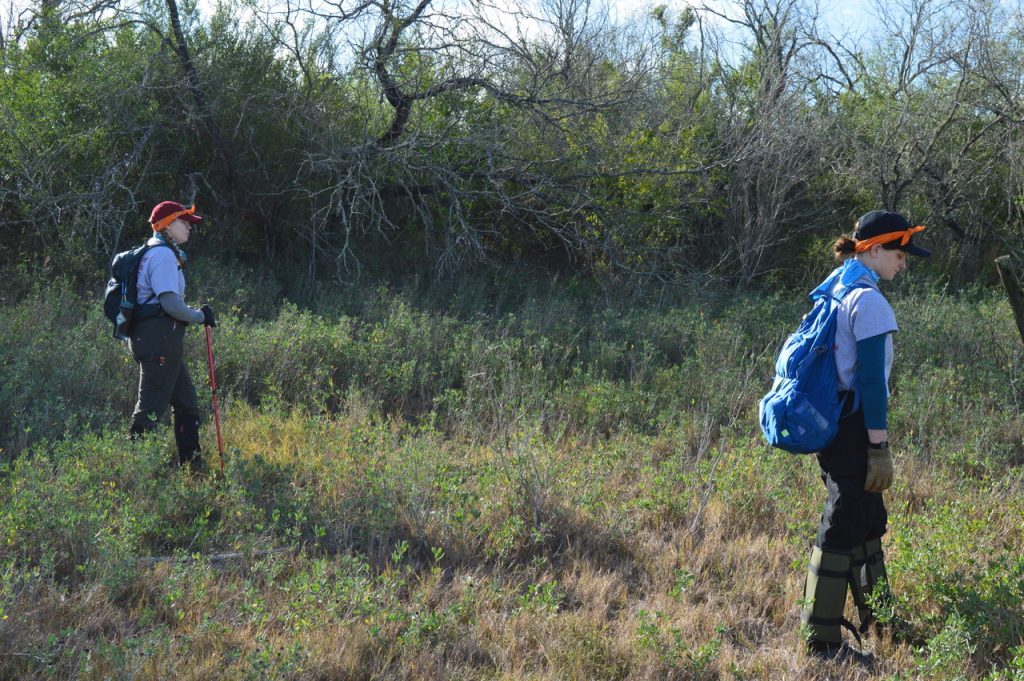
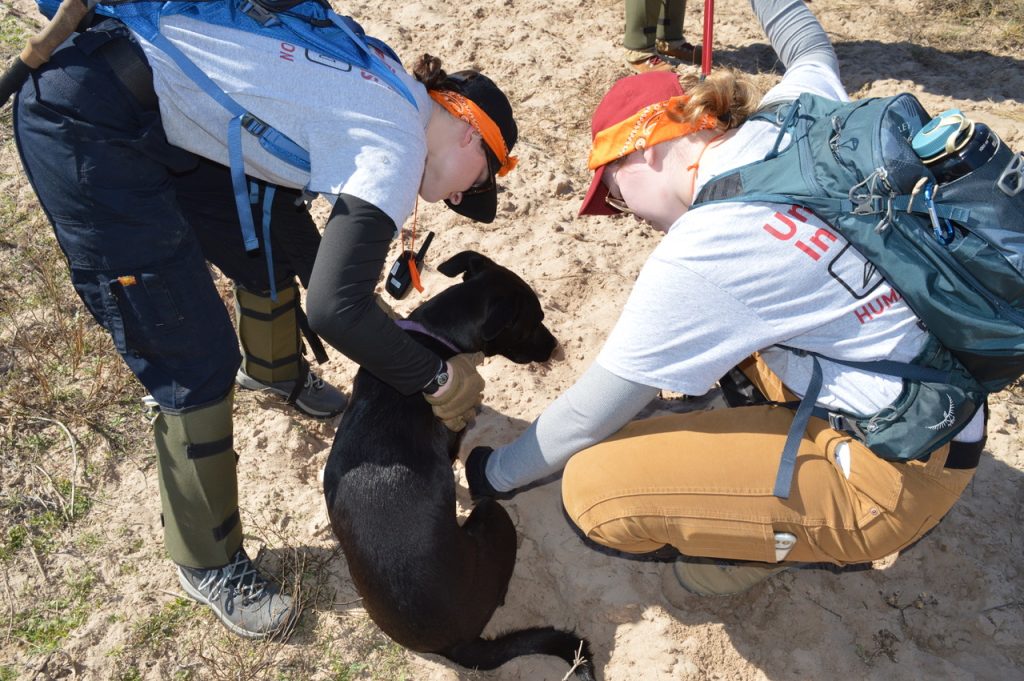
Claire and Ella in Line Search FormationThe team working to clear dirt from the search area
Going in I knew it was going to be tough, but I figured most of the difficulties would come from the physical work we would be doing. Dr. Latham warned us about the emotional toll this work can have on people and while I was cognizant of this, I thought I would be able to deal with it more efficiently than I did. While we were in Texas there isn’t much time to process what you are doing. We wake up, go to breakfast, finish packing our field bags and then we’re out the door heading to our next location. When we get done its shower time, dinner, a debrief with Dr. Latham and then looking through the pictures from the day and we’re off to bed. It wasn’t until I got home and could finally lay down in my own bed that I really thought about what we had done this past week. Three families will now have more closure, and be able to bury more of their relatives, even though we didn’t find every skeletal element we found more and impacted those three families in a positive way.
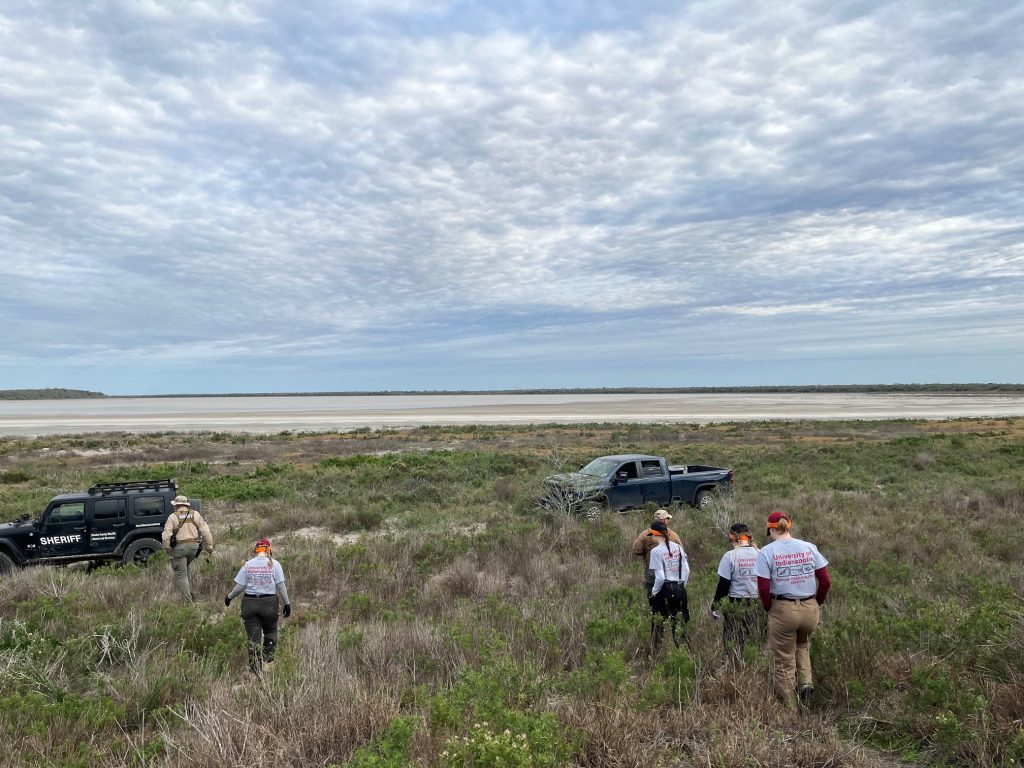
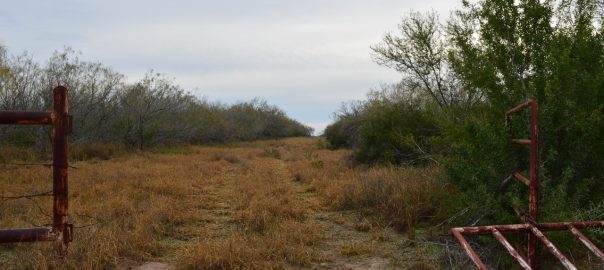
Heading back to the cars after a long day in the field
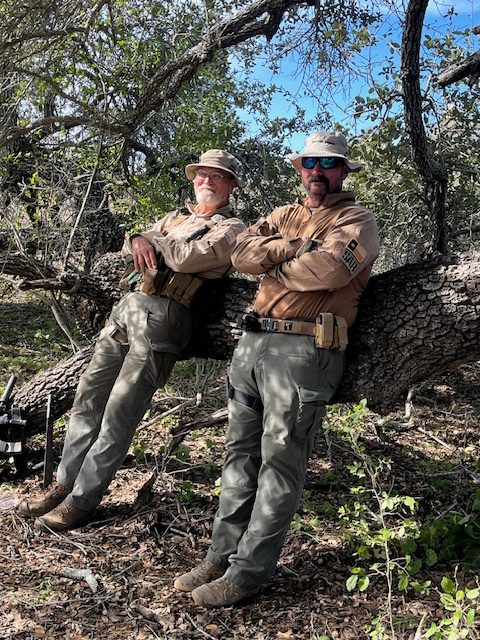
Don and Ray supervising our work
Before I went to Texas I was thinking very selfishly. I was hoping I would find something more so because then I could say I found something, and I wasn’t thinking about the impact it would have on others. I was thinking it would be cool to go to a different state and get to see parts of their culture that I haven’t experienced. Now that I’ve returned home, I think back to our trip to the Don Pedro Jaramillo shrine and reading the heartbreaking letters left for him, and finding socks out in the middle of the brush with little hearts on them or seeing your favorite snack wrappers littering the ground around a tree out in the middle of nowhere. There are so many aspects of the trip that will stick with me forever, reminding me of how other people live and why we make the trip down to help. I never would have guessed just how much work we would be able to accomplish in a week, and as tired as I am I would do it again in a heartbeat. I’m so proud of my teammates and I for using our knowledge to do something good and productive, and I’m incredibly grateful to have gotten to work with Ray and Don who taught us so much, not only about the work we were doing but about how to be a good person and to use your skills to help others. I’ll never forget our hotel breakfast meetings, flying an infrared drone on the side of the road, playing with Socks during our water breaks and getting teased by Ray and Don. Most of all, I’ll always remember the work we did and what we were able to accomplish together.
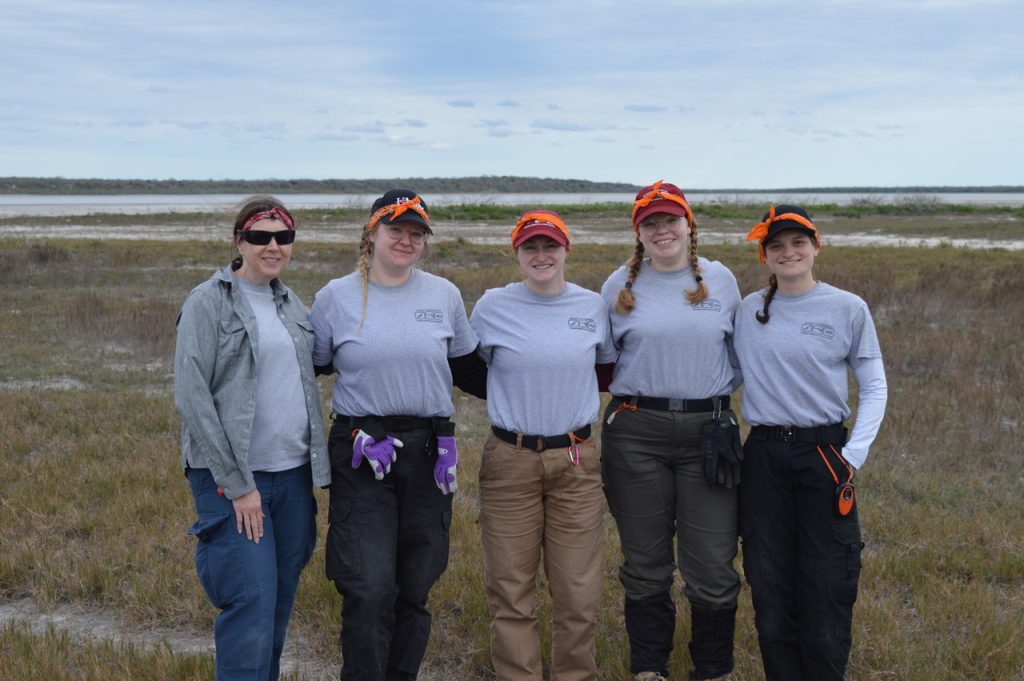
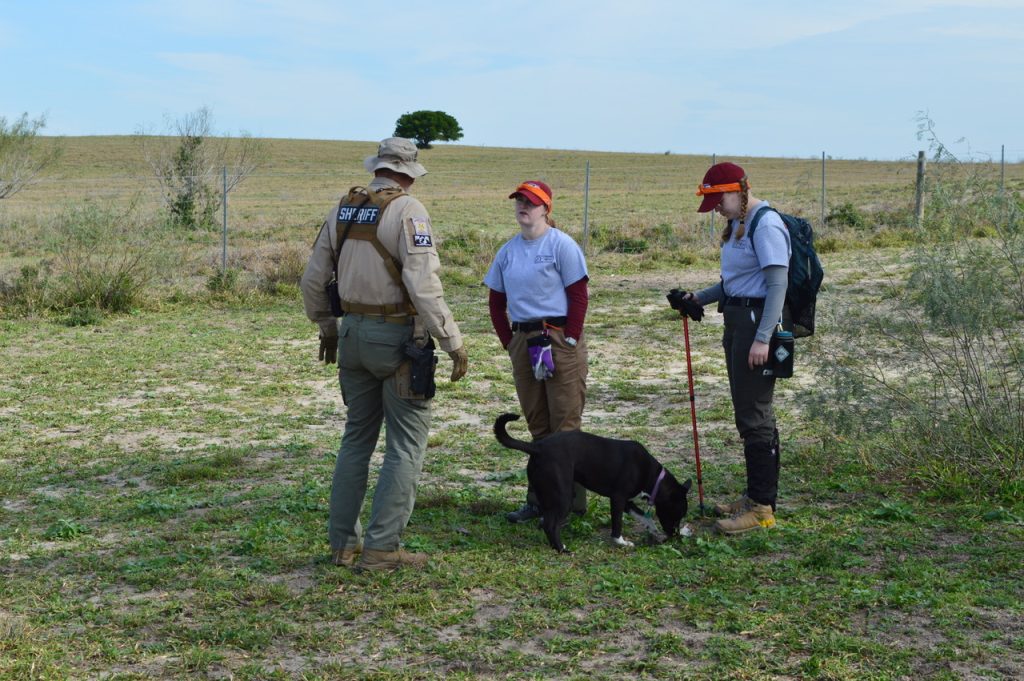
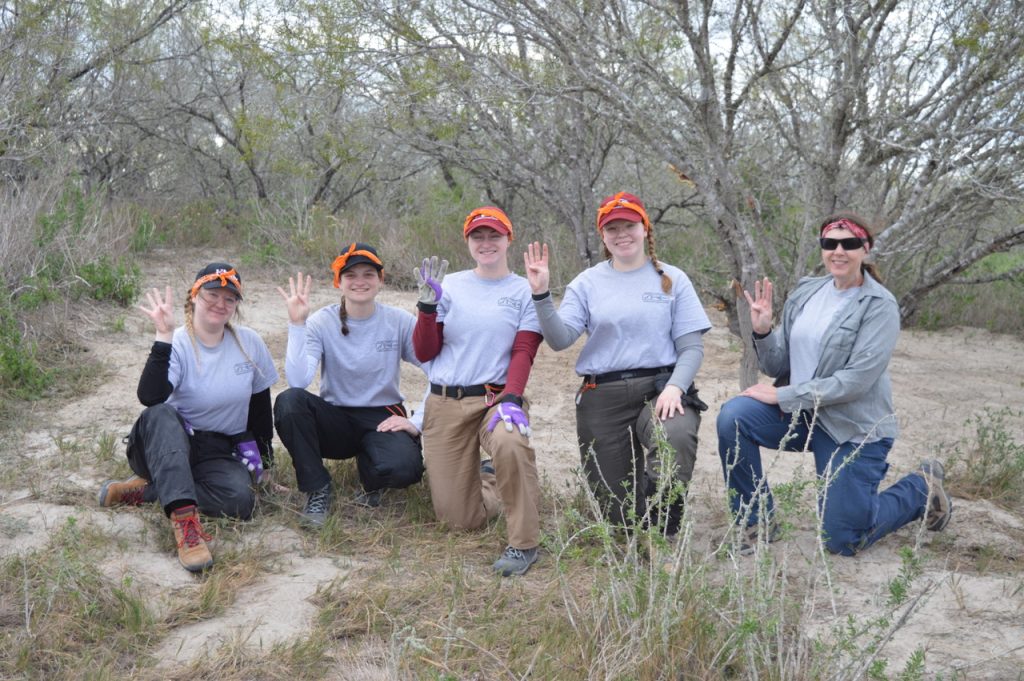
Taking a break to give some pets to Socks.2024 UIndy Beyond Borders team
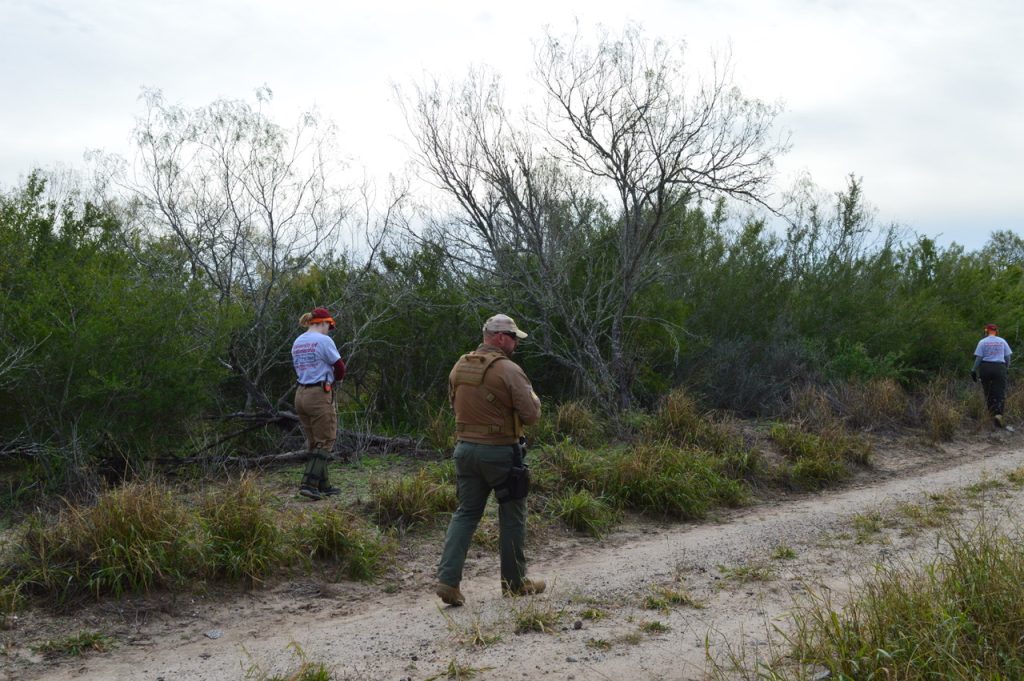
Day four started off very similar to the past few days. We’ve gotten pretty set in our routine at this point. It’s funny how quickly we’ve settled into life at the hotel and how to prepare for a day in the field. It feels like we’ve been here for a lot longer than four days, and at the same time its gone by so fast. It feels like we’re just getting started and now we only have two more work days to look forward to. We got up and were joined by Ray and Don for a hearty hotel breakfast. We all feel a lot more comfortable with each other after a few days so we joke and chat while we drink our emergen-c and eat our fill of oatmeal and cereal. The plan for today was to search alongside a couple backroads and then head out to a ranch for the afternoon where Don had found skeletal remains in the past. As we headed out we got to see more of the area around Falfurrias and enjoy the plethora of goats, dogs, cats, and nilgai that roamed the area. When we arrived at our first location we set out in a loose line search, focusing mainly on each side of the road, peering under cacti and trees searching for water bottles, backpacks, clothing or skeletal remains. Our search there only led to a backpack and an old shirt. When we find backpacks or clothing we typically search them for anything that can help us know who is passing through and make sure they are accounted for, things like IDs, passports, photos with names or phone numbers, etc. Any that are in good condition we hang on a nearby tree, both so others who are searching know it’s already been searched, and so those who are passing through can grab anything they might need. As we searched our second road, we began to hear gunshots in the distance. The purpose of many ranches in the area is hunting, so this wasn’t surprising, but because we didn’t know which way they were shooting or how close they were, we decided the best course of action was to stop this search early and move to our next location just to be on the safe side.
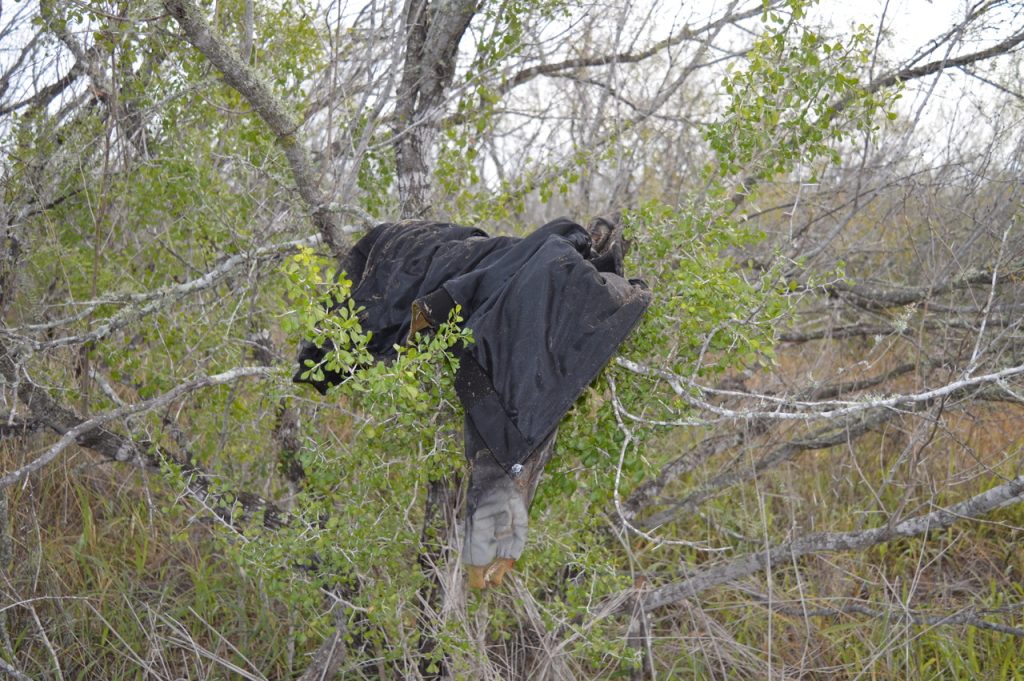
A jacket left on a tree branchHannah and Ella search the edge of the road with Ray
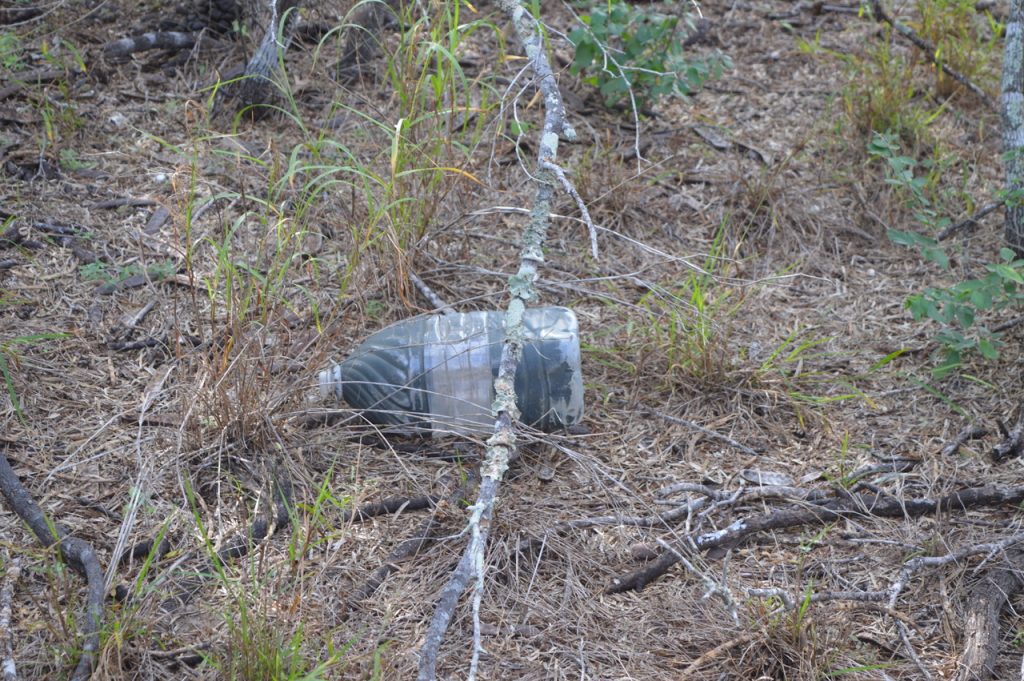
As we arrived at the next ranch, we paused for a snack break and to search the nearby mots (mass of trees) while we waited to ensure the hunters would be done for the day. Immediately we could see just how much debris was in the area, and Dr. Latham called us into the middle to point out some of the stuff we haven’t seen before. There were tuna packets, fruit cups, electrolyte drinks and juice cans spread all around. They looked fairly new, and we’d seen this kind of thing before in our other searches, but there were also some other things that were new to us. Many of the water bottles were spray painted with black or dark green paint, to prevent the clear plastic from reflecting light and giving them away.
A plastic water jug with the remnants of black spray paint
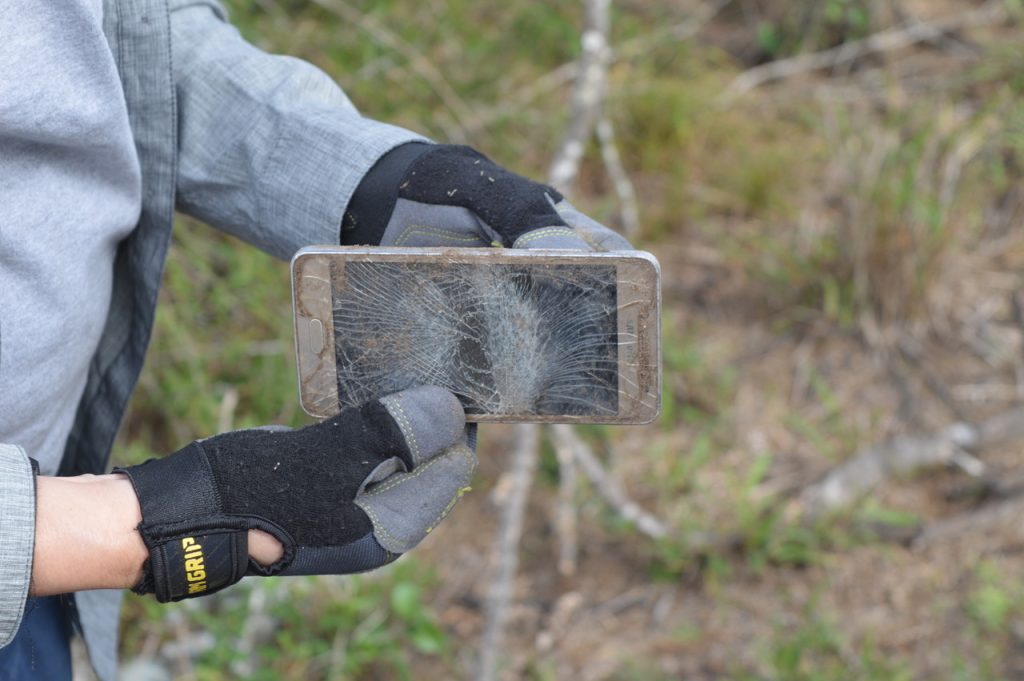
We also saw medicine bottles, a toothbrush and toothpaste, and a cracked phone missing its battery and sim card. Dr. Latham explained that this spot is probably a staging area where the migrants would get picked up, so what looks like garbage to many can also be seen a transition point in their journey, where they would have freshened up, ate, drank water, and prepared themselves for whatever the next step in their life would be. I can’t imagine the emotions and thoughts that would be running through their head as they waited here.
A cracked phone that was found in an abandoned backpack
We then moved into the first area Don had in mind for us to search. He explained what he had found here in the past and pointed out exactly where he made these discoveries. We then started walking to the brush, scanning the ground as we have so many times in the past few days. At this point I was starting to worry that I wouldn’t be able to spot anything even if I walked by it, the possibility that we’ve walked by someone’s remains and not even noticed terrified me. I knew clearing an area was just as important as finding someone, but I couldn’t help but question if we were doing things right, or if us being a team of rookies was the reason we hadn’t made any discoveries yet. It took about two minutes for our luck to change. Don called out for Dr. Latham and sure enough, the proximal end of an ulna was sticking out of the ground a couple feet from where we had begun our search. It was as if someone had lit a fire under us, we couldn’t wait to begin our search around this area to determine if there was anything else to find. It wasn’t long before I turned around and saw another bone sticking out of the ground, so we knew there was more here than just one isolated bone.
Don explaining the background of the ranch to Hannah and Ella
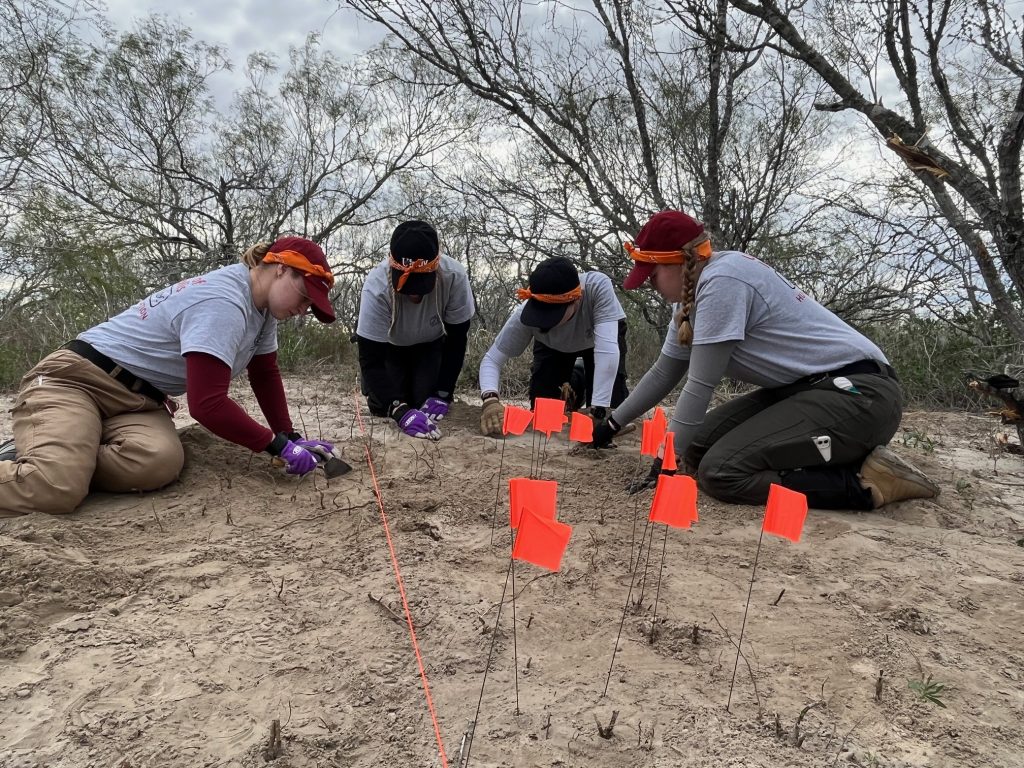
As much as we wanted to immediately begin searching for more in the area, we knew we had to make a plan. Dr. Latham examined the area and began giving us instructions. Before long we had cleared all the brush and ground cover of an area about 7 meters long. In the process we found more skeletal remains on the top but also more as we ripped roots out of the ground. This told us that we would probably find more if be dug down a few inches. That’s where we had to get creative. In the past, when teams would find skeletal remains they would all be on the surface, so there wasn’t a need for multiple trowels and digging equipment. We are limited in what we bring because Dr. Latham carriess all of our recovery gear in her backpack. In this case, the area we were searching was on an incline, meaning skeletal elements could have rolled down and had dirt roll down on top of them, making them a lot more difficult to spot. We weren’t going to let our lack of trowels slow us down though. After we formed a grid over the area to let us know where to search and were given our instructions, we did a quick search of Don’s Jeep and Ray’s Truck for what we could use. Luckily Don had a trowel and a small shovel we could use in additon to the one we brought, so we were all set. This was a new situation for all of us, and I can confidently say we proved my earlier anxieties wrong. We spent about four hours working on the area and by the time we had finished we were all covered in sand, sweat, and were very exhausted. We packed up all of our tools, hopped in the cars, and took a short drive to another spot Don wanted to show us.
The team working to clear dirt from the search area
Don showed us an area where he had previously found a woman who had gone missing. He explained that when she knew she was in distress, she first called her parents instead of 911 and that if she had called 911 in the first place she probably could have survived. Ever since he told us that I haven’t been able to stop thinking about her. Whenever I get into a difficult situation my first instinct is to call my dad. I just assume he’ll know what to do and can help me with any issue. Its such small decisions that can be the difference between life and death in these situations, it puts everything into perspective. I can’t imagine having to worry about being in a different country, trying to stay hidden while also surviving long enough to get somewhere safe. The next time my car breaks down, or my kitchen sink breaks, I’ll think about her when I call my dad for help. The difference is my situation is just an inconvenience, while she passed away because of that decision. I’m incredibly grateful to live the life I do and be able to help those in situations like hers.
I keep getting asked if I’m excited to go to Texas and I never know what to say. On one hand I am excited to get hands-on experience and to try to help in whatever way we can, but at the same time I feel like I can’t anticipate what we will encounter while we are in Texas. This is a very grave crisis happening in our own country and I myself haven’t put much thought into it in the past few years given my location. It makes me feel guilty that it only came back into my attention because it was something that could benefit me. I think that at the moment I feel more anxious, while in theory I know what we will be doing and can anticipate some of the challenges we’ll be facing, I know that there is a lot I don’t know. I’m looking forward to becoming more skilled in field techniques such as line searches and photography, and I’m looking forward to traveling and getting to experience even a fraction of what life is like in South Texas and understanding the difficulties of migrants forced to travel through rough terrain.
We are coming in effectively as foreigners. Meaning the culture in northern Michigan where I’m from is a lot different from south Texas. So, while I’m interested in seeing how “different” life is in Texas, I realize people living in border communities will view my experiences and perspectives as “different” as well. I recognize that my education and upbringing has given me privilege. I realize the way I say and approach things are a part of that privilege. I think that will be a big challenge for me, balancing my desire to help with my nervousness of doing or saying the wrong thing. I want to help in any way that I can, but I don’t want to give off the impression I think I can solve any part of this crisis.
We’ll only be in Texas for a week, and there’s only so much we can do to help in a week. So, we must push ourselves to get as much as we can get done safely and try to make as much of a positive difference as we can. Even though it is just a week I know we will do good work and through this blog hopefully show others that there is still a humanitarian crisis, and that the issues don’t end when the news stops reporting on them. While I am nervous and anxious about the work we’ll do in Texas I am also hopeful. I hope that what we do will help better the people affected by the migrant crisis, whether it’s a family member waiting for news on their missing relative, or a migrant who stops at a water station and gets a necessary break from their difficult journey. I think it will be important for us as a team to remind ourselves that whatever we get done is still progress, and by participating in this program and doing good work we can hopefully inspire more people in the future to donate their time or money to assist the volunteers who do this work in Texas year-round.