Category Archives: Reflections

Reflections on how we feel and how the mission is changing us

Take Me Back to the Start

Today we went  to visit the Sacred Heart Burial Park where the University of Indianapolis Archeology and Forensic Laboratory’s involvement in the human rights crisis in Brooks County all began. Back in June 2013, the UIndy team and the Baylor University team started doing work in this cemetery. For those of you joining our blog late in the game, our team helped with the exhumation of undocumented border crossers (UBCs). The UBCs found in this cemetery died while trying to travel through ranch lands after crossing the border. Brooks County lacked the funding and resources to deal with a crisis like this, so these remains were buried in the Sacred Heart Burial Park in pauper graves without identification. So far over 100 sets of remains have been exhumed by Uindy and Baylor.  These groups and Texas State University are working on identifying the individuals through skeletal analysis and sampling for DNA comparisons.
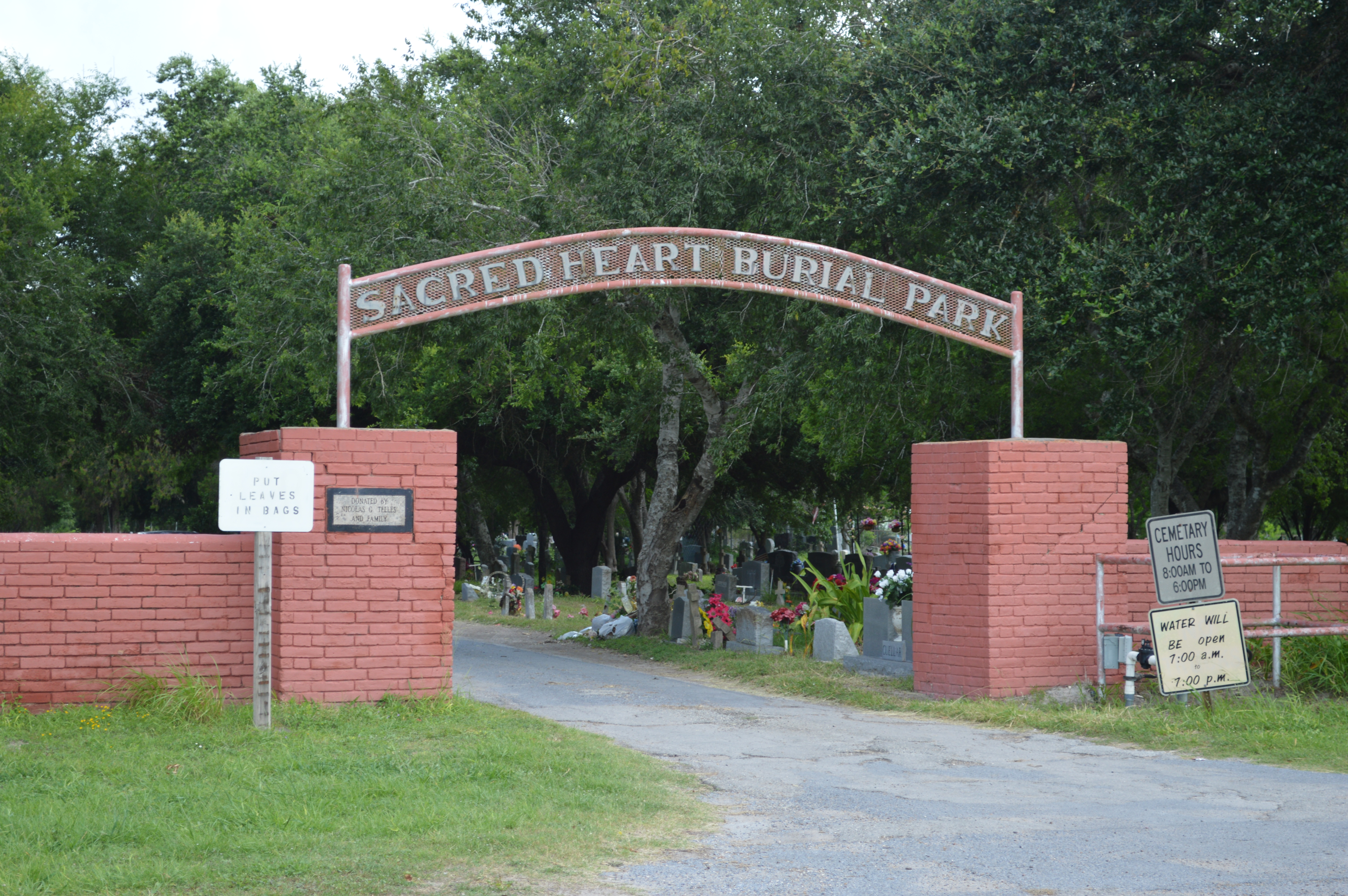
Sacred Heart Burial Park entrance sign over the road in red brick walls on each side

Since I’m new to the team this was my first visit to Sacred Heart. I had seen pictures of the cemetery and the exhumations through various presentations given by Dr. Krista Latham and the more seasoned members of our team. However, the pictures from these presentations failed to capture the essence of the cemetery. When you walk into Sacred Heart, the first thing you notice is the color. Sacred Heart is bright and vibrant with splashes of color at every turn. Hundreds of plastic flowers adorn the headstones making a seemingly solemn place oddly more lively.
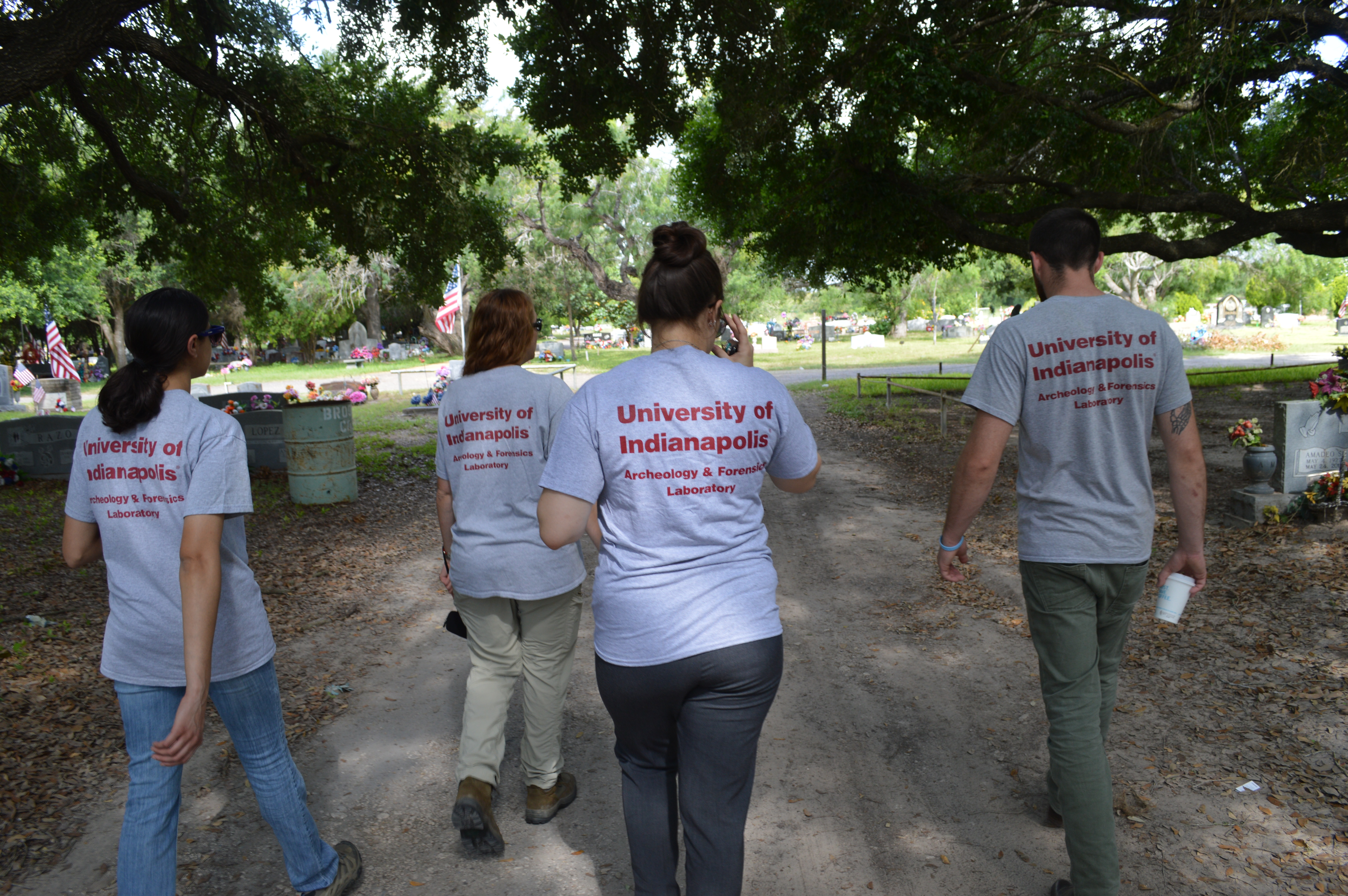
Beyond Borders team members walking through the cemetery with all UIndy Archaeology and Forensic Lab shirts on display

The cemetery seemed smaller in person and was more crowded than I imagined it would be. It was crammed pack with graves that were clearly being cared for. The love and devotion from the family members of the individuals buried at Sacred Heart was tangible, vibrating in the air as we walked through the cemetery. As I approached the area were the exhumations first started, I noticed how incredibly small it was. Pictures had made this area look so much bigger. I couldn’t believe that so many individuals had been placed in such a small space.

The next thing I noticed was a small metal grave marker that was being used to mark a UBC grave. The marker was small and flimsy, labeled with the words, unknown remains, and a death certificate number. Many of these markers had been removed once the exhumations began, but several of these markers still remain. Each marker had been used to mark the graves of the unidentified.  These markers were adorned with colorful  flowers and decorations too, showing that these people had not been forgotten, will not be forgotten, and that their identities will not be lost in the background of this ongoing crisis.
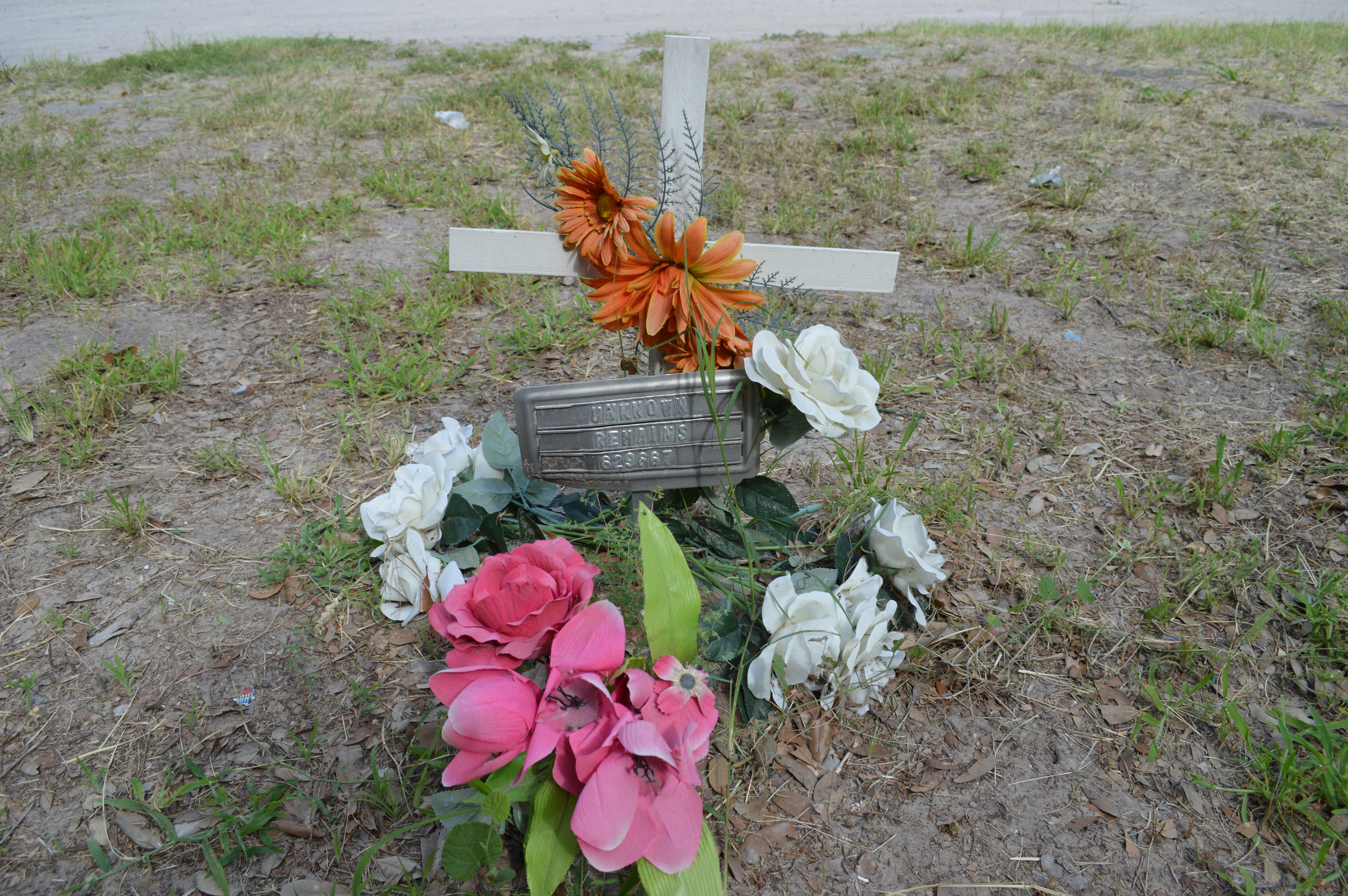
A cemetery marker labeled unknown remains with a white cross and colorful flowers added

Amanda

Day 2

Day 2
Day 2

Today we spent an emotional day near the border with Sister Pam of the South Texas Human Rights Center.  We spent the hour and a half drive to McAllen listening to Sister Pam tell stories of her work in Brooks County, and the triumphs and struggles she has encountered in her mission for human rights.  Our first stop in McAllen was the Home Depot where we purchased the supplies the make the flags for 25 new water stations.  After that we went to visit the wall.

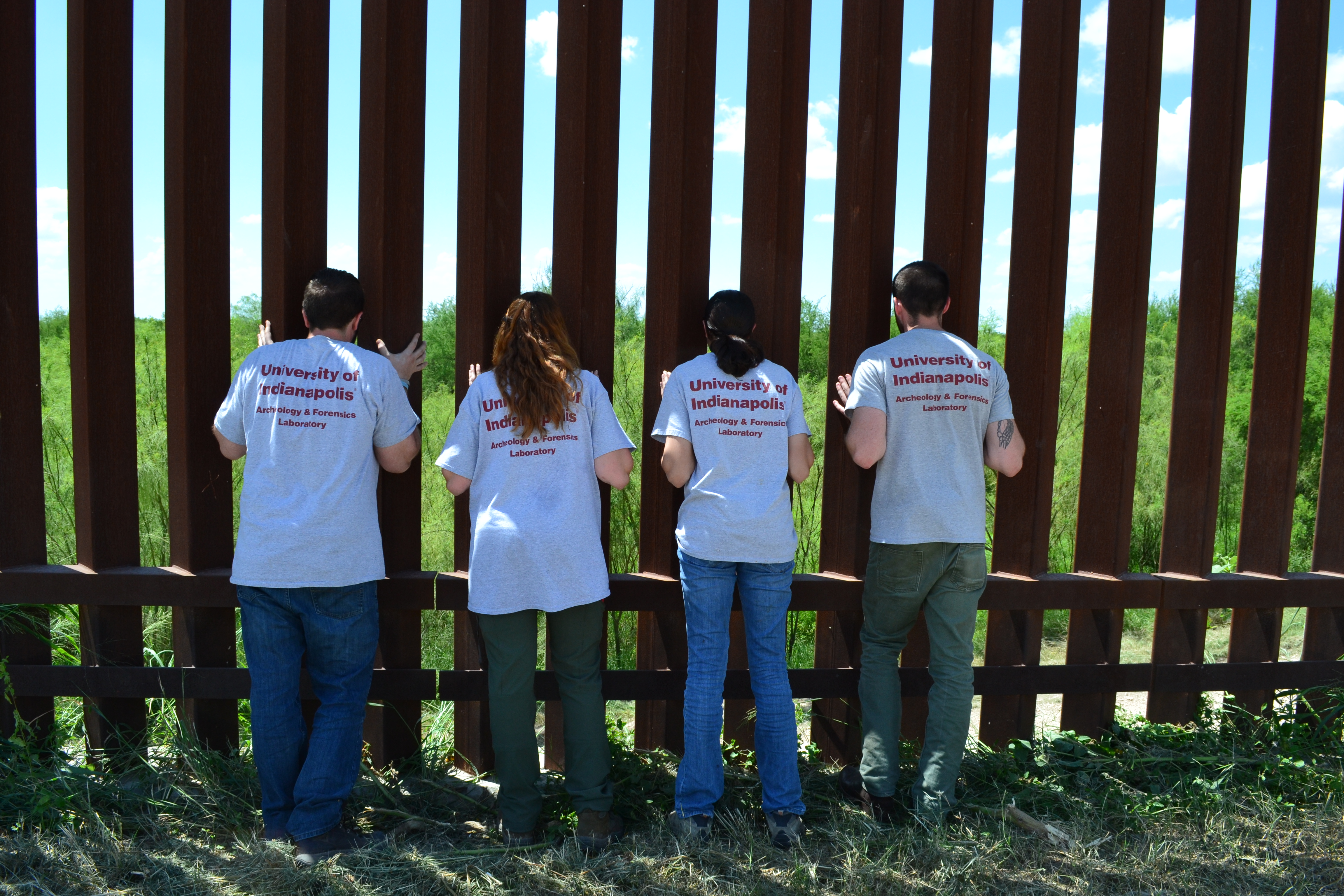
Our visit to the wall was short. We were there for less than ten minutes before being chased away by Border Patrol officers.  But it was long enough for all of us to reflect on what the wall is and what the wall means.  Portions of it were towering and ominous while other areas were made of smaller chain link fence materials.

12My first thought when seeing the wall was that people died to make that line and people are dying to cross that line. The ones that made it are considered the war heroes that helped to define our nations lower extent. The ones who cross it are considered the criminals who break the law.

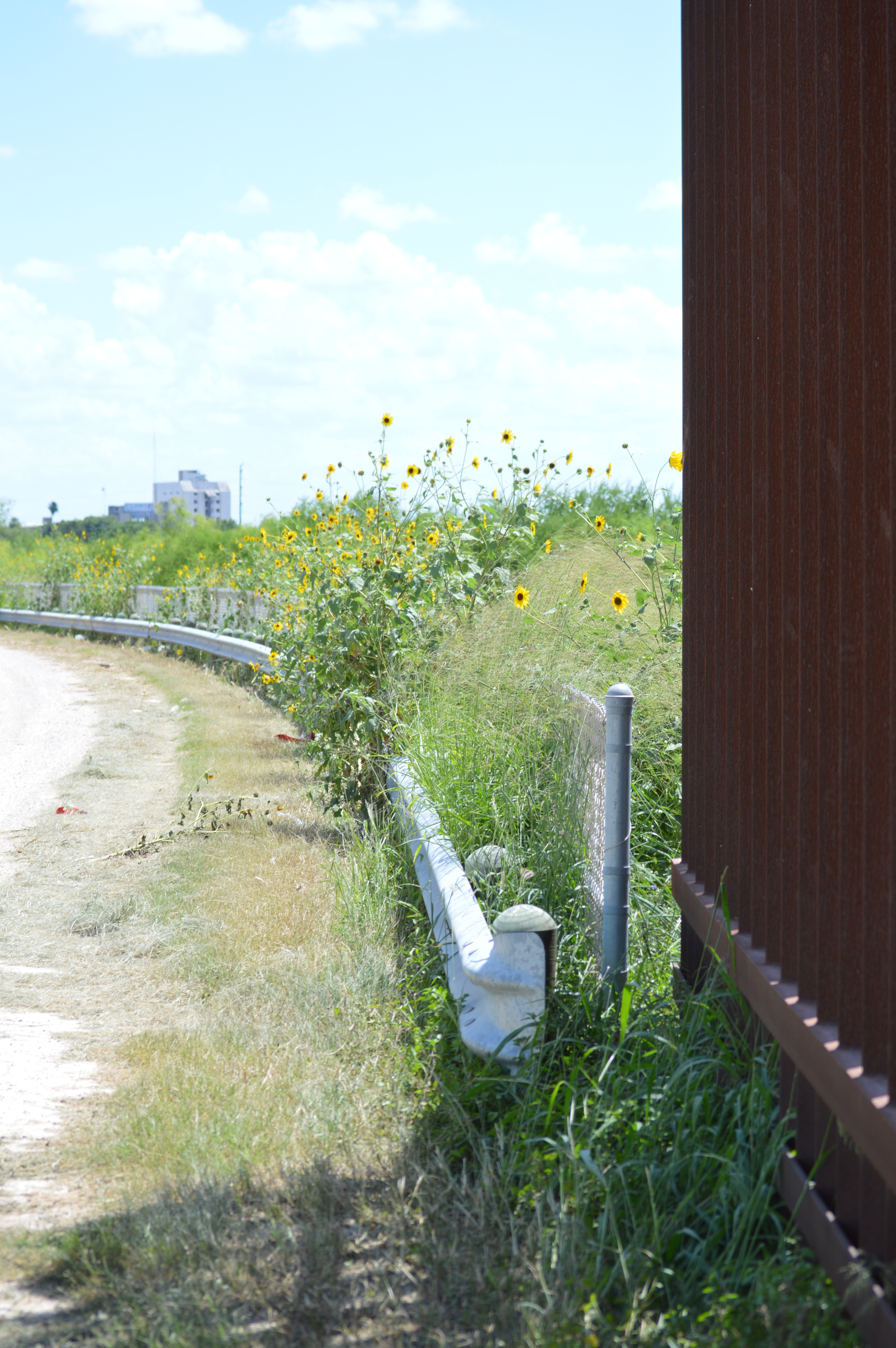
Yellow flowers growing over the border barrier attached to the border wall with Mexico visible in the backgroundAs you look along the fence the large steel bars stop and a simple chain link fence begins.  Wild flowers grow on either side with their roots in one country and their flowers blooming in another.  As I reached across the fence and picked a flower from Mexico I thought about the fluidity of that line for the flowers. They grow in the direction of the sun. They twist and stretch past the shade that blocks and oppresses them and stretch towards a place where they can get what they need to be healthy and thrive.

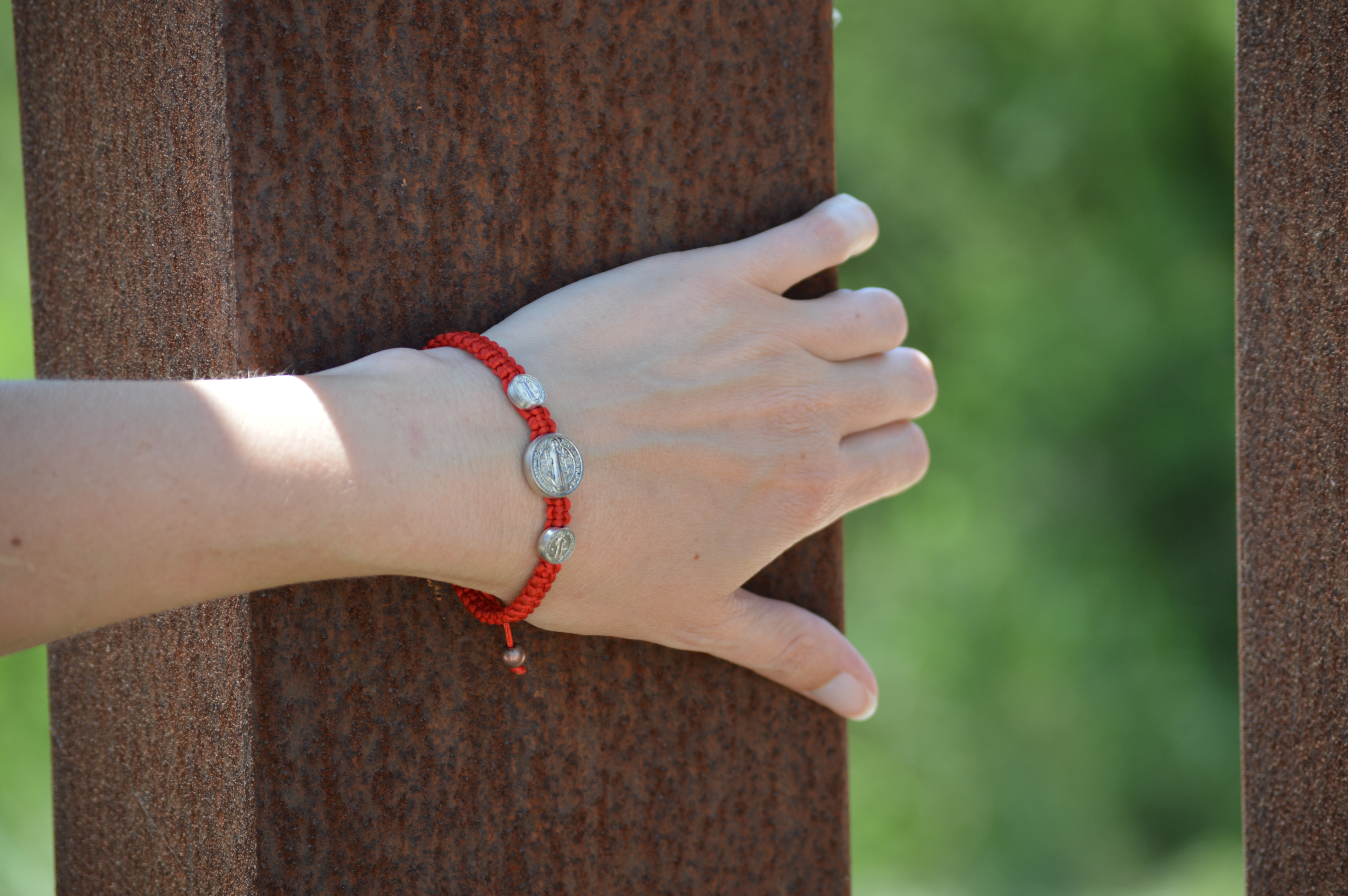
A hand with a red bracelet grabbing a pillar of the border wallAs I touched the bars I was thinking how this line has caused so much recent death. This is the reason so many bodies were (and still are) buried in Sacred Heart Burial Park, and so many bodies are being recovered from local ranches.

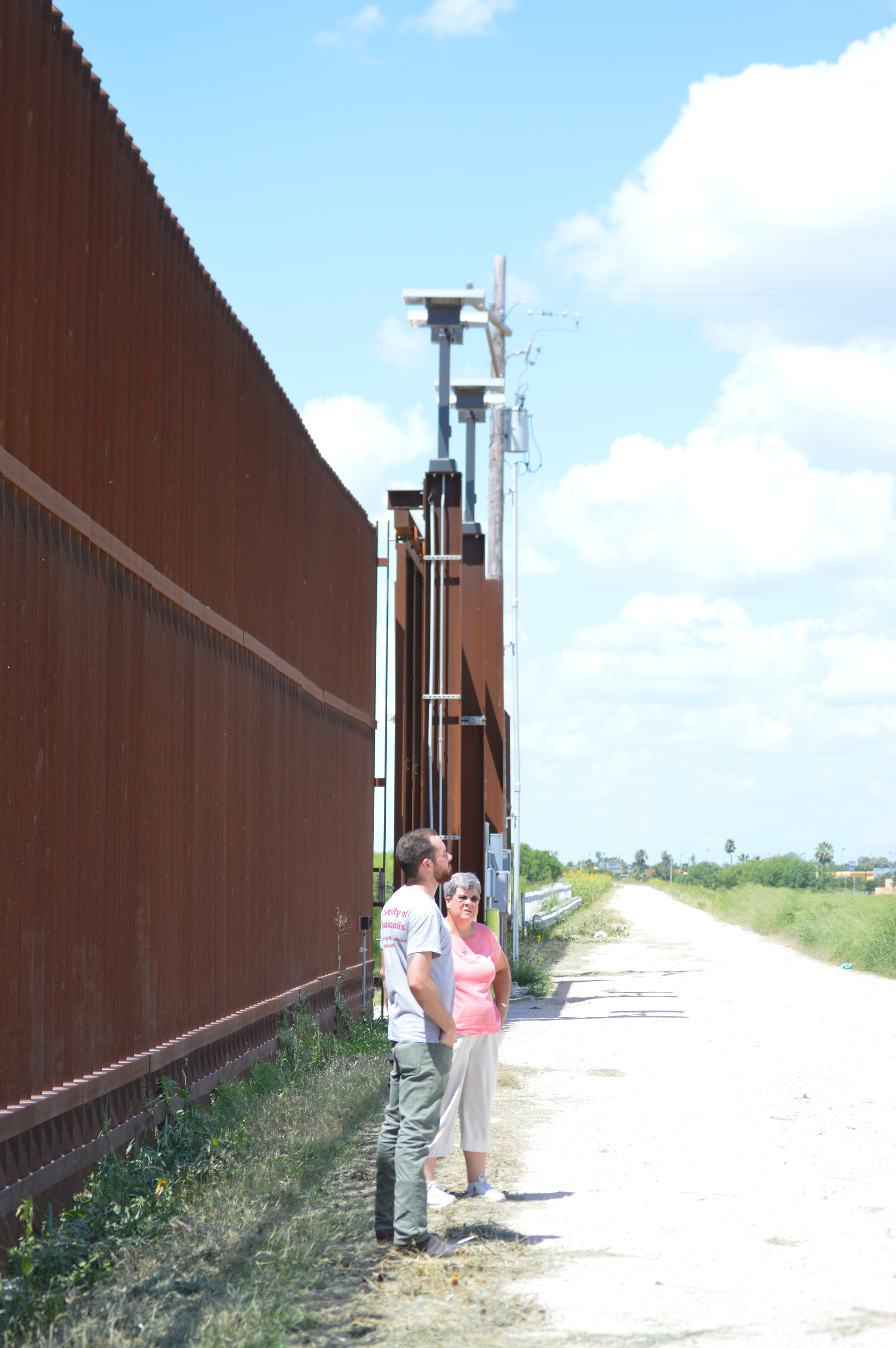
Sister Pam and Ryan standing infront of the border wallAfter the wall Sister Pam took us to the Sacred Heart Church where the Catholic Charities of the Rio Grande Valley provide humanitarian services at the Humanitarian Respite Center.  We got to assist a refugee family as the arrived at the Center.  My family was a young mother and her two daughters ages 3 and 5.  I’ve never seen faces look so completed exhausted.  The children came into the center with sad and vacant stares.  We made sure to smile as much as we could, especially at the children.  After helping the family get basic personal hygiene items and a warm dinner, I got to help the family pick out a clean set of clothing.  The items were used but clean.  I was paired with a local high school student who volunteers at the center regularly.  We brought colorful outfits and glittery shoes over to the girls and watched their faces change.  They held the little shoes and looked at the sparkles, not even realizing the glitter had already been worn off the toes of the shoes by the last owner.   Seeing their eyes start to shine is a moment I will remember forever.  They are like the flowers blooming on the other side of the fence.  They are finding their sunshine.

~KEL

Falfurrias Butter

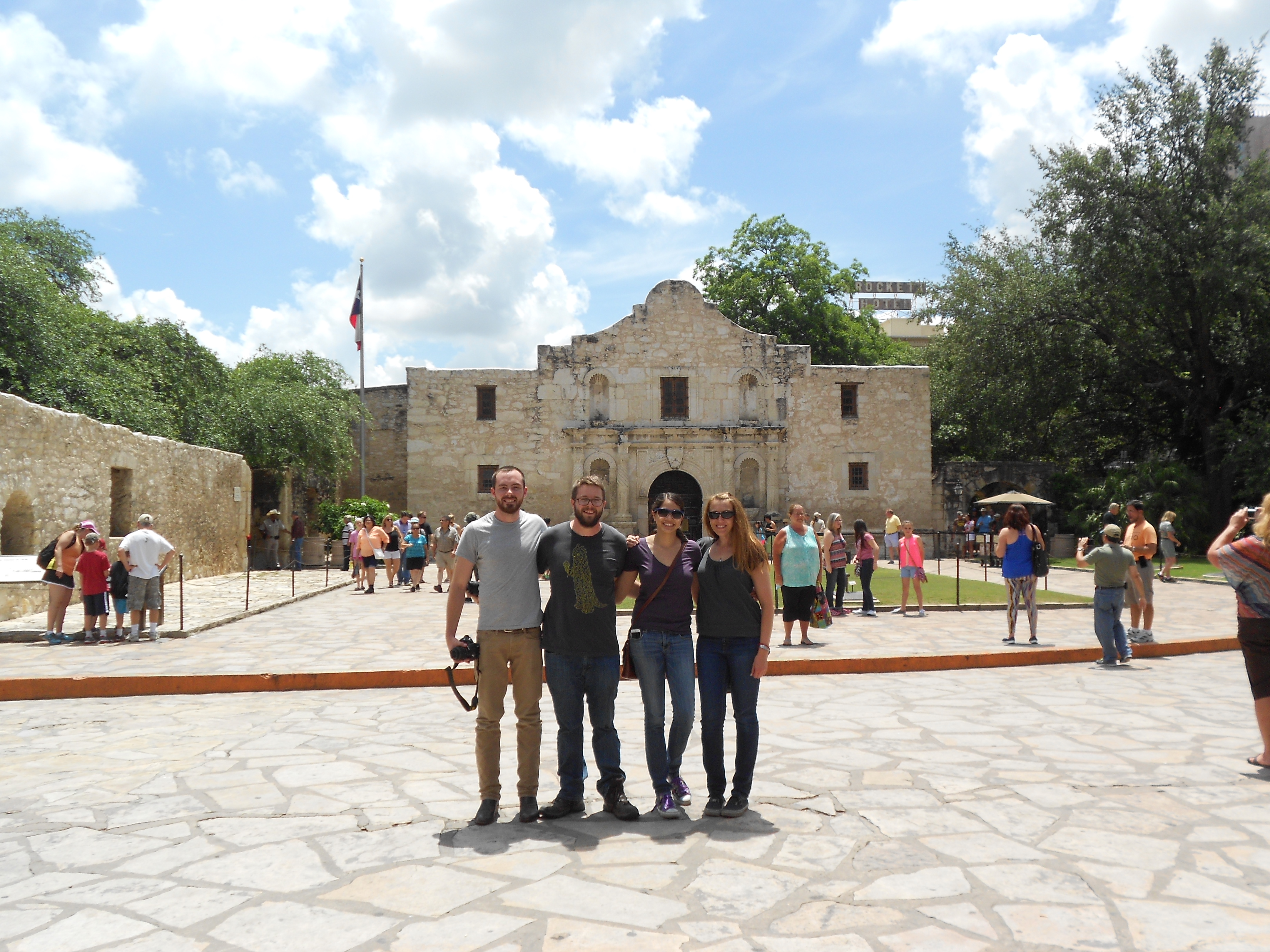
My first day in Texas was a whirl wind of activity. After an early morning flight into San Antonio, we still had a three hour drive down to Falfurrias. We piled all of our luggage into the soccer mom minivan that we rented for the trip and hit the road. After about 10 minutes into our drive we saw a sign for the Alamo and decided to take a quick detour. This had been one of the things I wanted to see while I was in Texas, so I was really excited to have a chance to go. The Alamo chapel was a lot smaller than I was expecting it to be, but no less impressive. I’ve only ever seen pictures of the Alamo in text books, so seeing this piece of American history in the flesh, was incredible.

After snapping a few pictures of the chapel, we ventured inside the compound to look at the gardens. We spent some time walking around and looking at the various monuments and plaques that held facts about the Alamo. At the end of this little detour I was beginning to learn how unforgiving the Texas sun could be.

Group picture in front of the Alamo

Later that day, after we made it to Falfurrias and checked into our hotel rooms, we made a trip to the La Mota Ranch. The Lasater family owns this ranch and was kind enough to invite us all over for dinner that night. For those of you who don’t know, the Lasater family founded the town of Falfurrias. This family also owned and founded a creamery that produced Falfurrias Butter. It’s this butter that made the town a familiar name across the state. The modern day Lasater’s are a very charming couple. They wowed us with good food and tales about their adventures around the world.

At some point in the night the conversation turned over to the issue that has been plaguing the Falfurrias community over the last couple of years. The Lasaters began to share their experiences with the undocumented border crossers they had come across on their ranch. They expressed nothing but concern for the people who were technically trespassing on their property. While listening to these stories, it hit me then how deeply this affects the entire Falfurrias community. It’s not just the UBCs, forensic scientists, investigators, and other legal entities that are affected by this issue. It’s everyone. This crisis affects all the ranch owners and everyone who is working to find a solution to end this crisis.

Amanda