I woke up alone for the first time in seven days with absolutely nothing to do.
Being back at home, it feels weird waking up without the rush of getting ready and moving around my teammates in the morning. No hotel breakfast or chatting about our plans for searching for the day, no vitamin C packets that we would drink every morning, and weirdest of all, having nothing to do. It feels wrong to not be going out and starting my day with the people I have been around for a week.
I find myself reflecting a lot about our trip. I am so proud of all of my teammates and everything we were able to accomplish over this short time. We successfully made a recovery and helped clear multiple areas of land in our searches on the ranches. Of course, the work we left in Falfurrias is never complete, and there will always be the ‘what if” feeling. What if we spent one more day, what if we searched a mile further or even just walked 20 more feet… There will always be a “what if” feeling, but we have to focus on what we did do, and use that to better prepare for future trips. Whenever I find myself thinking “what if,” I try to think about how successful our trip was, and what if we had never gone? It is easy to get caught up in the “what ifs,” but there will always be something more we could do or could have done. It feels wrong to be here in Indiana, in my home with my heater on, with access to water, food and everything I need. Sitting here, knowing there are so many people that do not have those things, and thinking about the people who risk their lives everyday coming to the United States in hopes of a different life.
The day feels heavy in my heart. I wish we could have stayed longer, but there will always be the idea of one more day. I am forever grateful for the days I was able to spend in Falfurrias. I learned so much about the wildlife, the area, the food, the culture, the people who live there, and more about the political climate and economy in South Texas. I was able to learn so much from Don and Ray, who are out in the field year round searching for the missing.
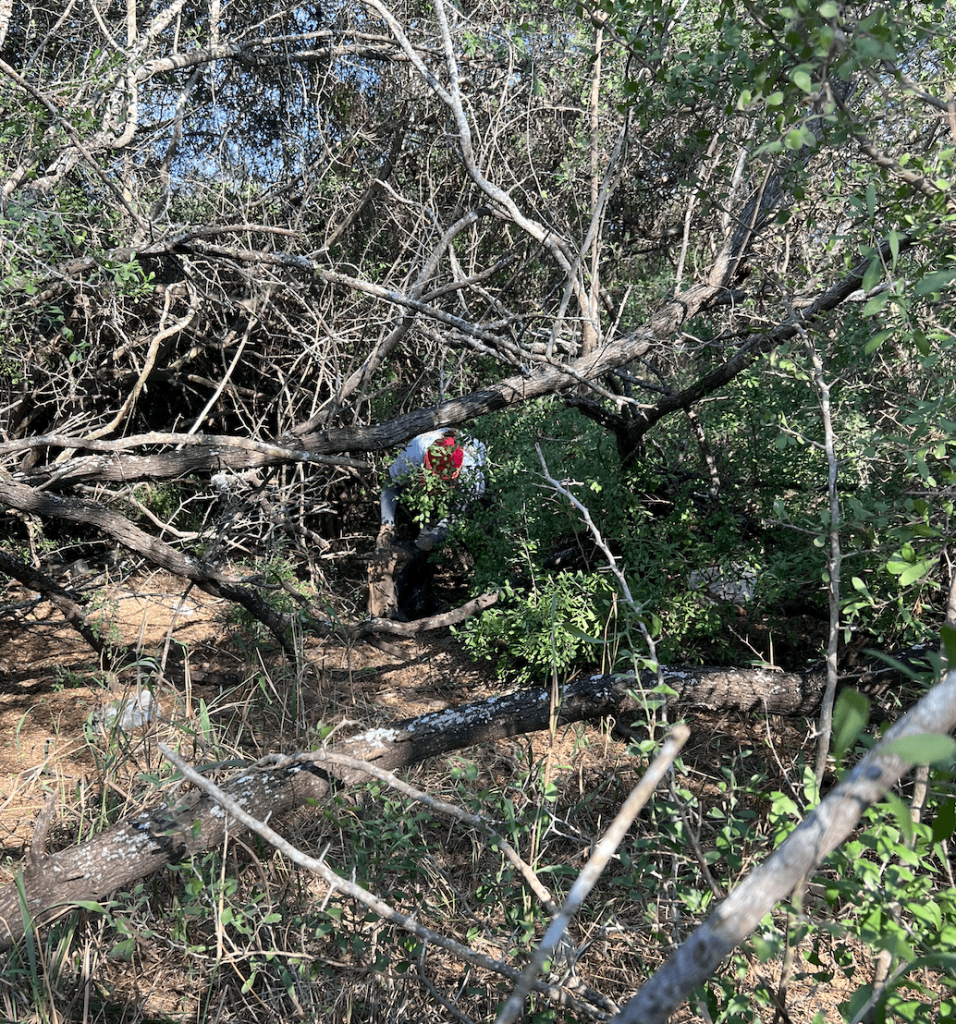
Searching under the trees to find artifacts left behind
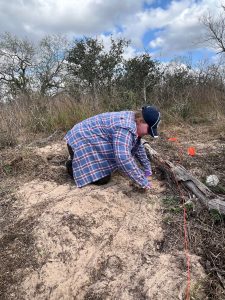
Although I will never truly understand what it is like for the people risking their lives to get into this country, I was able to see the artifacts they left behind, and how hard it was to find them. How socks, belts, bags and shoes were abandoned in the brush. Not in an open field or on a path, but underneath thorns and branches surrounded by cacti and scorpions. How food cans and bottles were left in spaces you could only crawl to get into. How the barbed wire fences were pulled down and articles of clothing were stuck in bushes. Even seeing all of those things, it is still impossible to understand how many people have made that journey and what each journey entailed. Where we were, there is no such thing as just crossing over. This trip not only opened my eyes to the situation, but changed my perspective on things I thought I knew. Although we were only there for a short time, I know this trip will stay with me and my teammates for a lifetime.
When I woke up Thursday morning at 6 AM, I was completely alone for the first time in a week. Not only was I alone, there was no reason for me to get out of bed. For some this would sound great, but it was a little disconcerting to me. Wasn’t I supposed to be doing something right now? Wasn’t there some place I needed to be? Of course there are things I need to do, like laundry or grocery shopping, but the drive to get my self to do anything was just not there. This past week, I had been driven by my own goals on top of my team’s goals and that was incredibly empowering.
As I think about my own hardships, they seem surface level and small. I sit here, reconciling that I feel alone in my apartment that has all my things: food, water, and a cell phone that could connect me to whoever I wanted in a second, when we just spent the week searching for migrants who have gone through the hardest physical and emotional labor that I could imagine. Experiencing just a fraction of the environment they face has opened my eyes. It takes three days to travel through Brooks County on foot, and during this time you cannot stop or you will get left behind. I knew this going in, as I knew we would be looking for the remains of these individuals, but knowing it and seeing it has hit me differently.
I am privileged to be able to return to Indianapolis easily by airplane and that I can go back to my life as a student, things that seem simple to me that can be complicated by the migration process. If they successfully make it through Brooks County and beyond, they have to rebuild their life in a completely different country, likely without speaking the language, where a lot of people are hoping for their failure. The rhetoric surrounding migrants and their path north can be extremely negative because people don’t truly understand what is happening. Or they don’t see these individuals as actual people. Derogatory terms are used to not only belittle their experiences, but to other them as a group of people. I do not know why the individual that we recovered decided to cross the border, but I do know that they were loved and had people looking for them. Doesn’t that sound like every other person you know? No matter the circumstances, if you lost a loved one, wouldn’t you want someone to care enough to find them and return them to you?
I find it difficult to think about my own feelings surrounding our trip when there are individuals we did not find. This trip was a considerable success, as we helped Don and Ray clear a lot of land and assess whether or not certain pathways were still active, but I can’t help feeling like I missed something. This feeling was discussed by our team at length as it is something that we all struggled with, but here I sit, still wrestling with the idea that I could have done more. I want to continue to do more, even back in Indianapolis, over 1,000 miles away. If there is one thing I learned from this trip, it is that this is the work that I want to do and that I will continue to do more.
Walking up this morning was hard. Although we are a bit sore and tired, the idea that it was the last day (and that once we were up and out) meant that our trip was coming to an end.
Rebecca’s Restaurant in Falfurrias, Texas
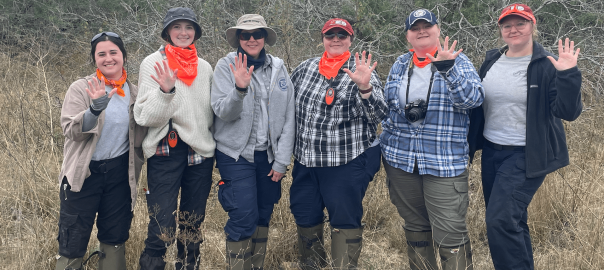
Last night, we decided that for our final field day, we wanted to write our last day blog post all together. This trip was not only an amazing, immersive learning experience, but we found ourselves relying on each other as a team, and understanding each other in different ways. Our trip was a successful one, and we are so grateful to have had this experience.
After scrambling to pack our bags and get ready for the cold temperatures today, we met Don, Ray, and Socks in the parking lot and drove with them to Rebecca’s restaurant. There, we ate amazing breakfast tacos and waffles while discussing our plan for the final field day, and talking about our favorite moments of the trip so far.
After breakfast, we loaded up in the trucks and drove out to a ranch our team has not yet searched to start our last field day. Due to hunting on the ranch, we were constricted to a four hour searching window before we had to be off of the property.
On our last day, our goal was to cover part of a fenceline within a 2,300 acre ranch. The fence line seperates two ranches. On the other side is the ranch we wanted to search on day one but could not because of hunting. Because the brush along the fence was so thick, it was important to inspect just inside the tree line as that is where people would find respite from the openness of the two-track that travels the fence line.
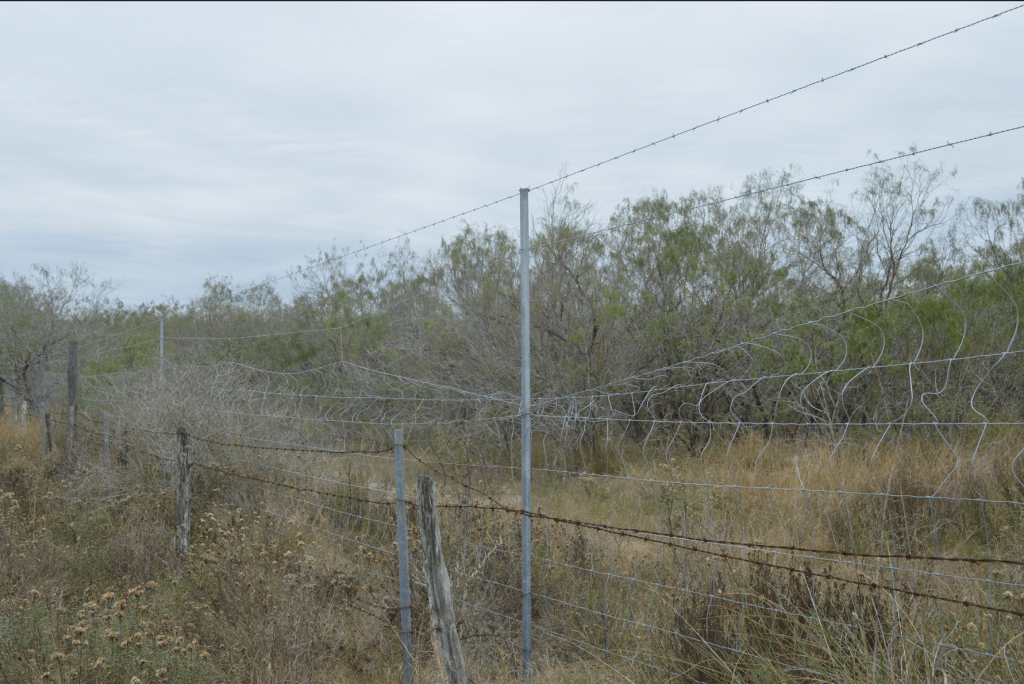
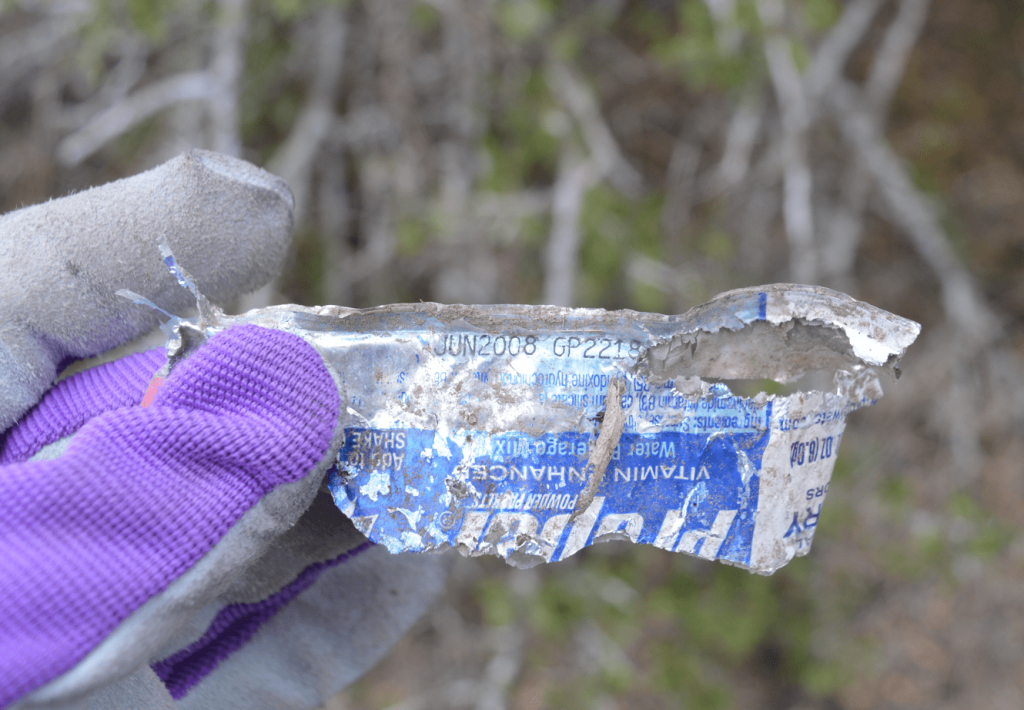
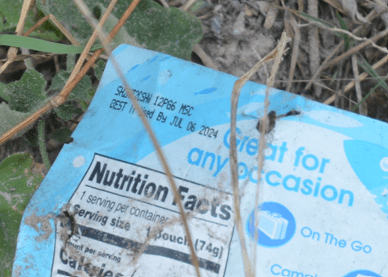
Bent fence from individuals crossingPropel wrapper expired in 2008Tuna packaging expired in 2024
One thing we noticed was the state of the fence itself. Because they are expensive to repair, the evidence of migrants climbing them and places that are popular crossing points are extremely evident. When looking for an active path that migrants are using, examining expiration dates on foods and the state of the artifacts is essential. For example, today we found several food and drink containers, one that expired in 2008, another that expired in 2024. We also found completely rusted cans alongside newer cans.
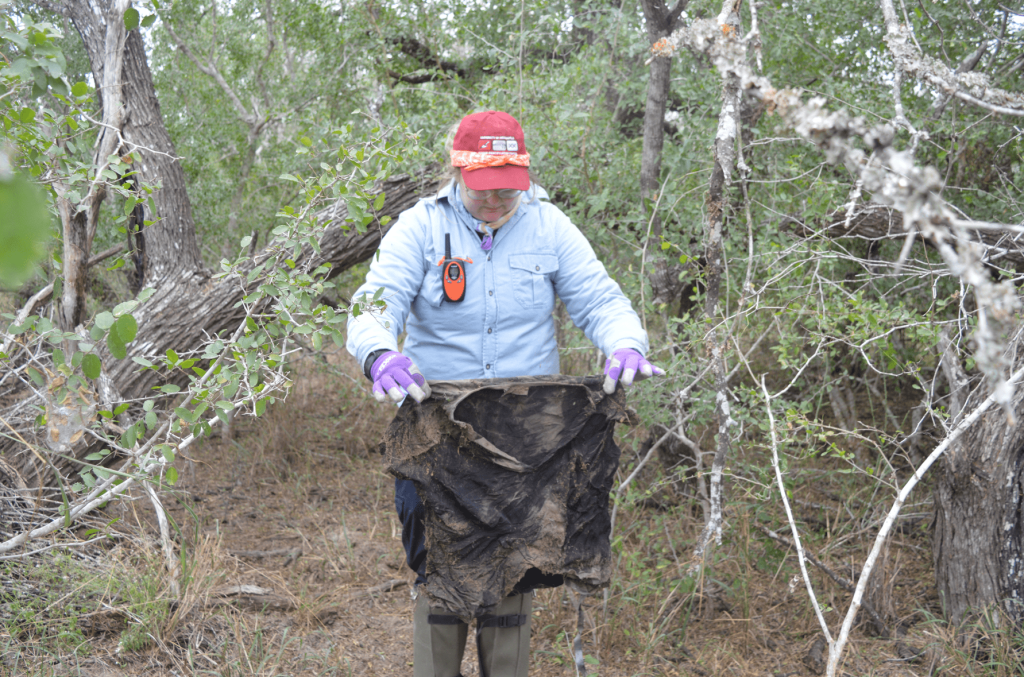
Chastidy holding up a woman’s blouse
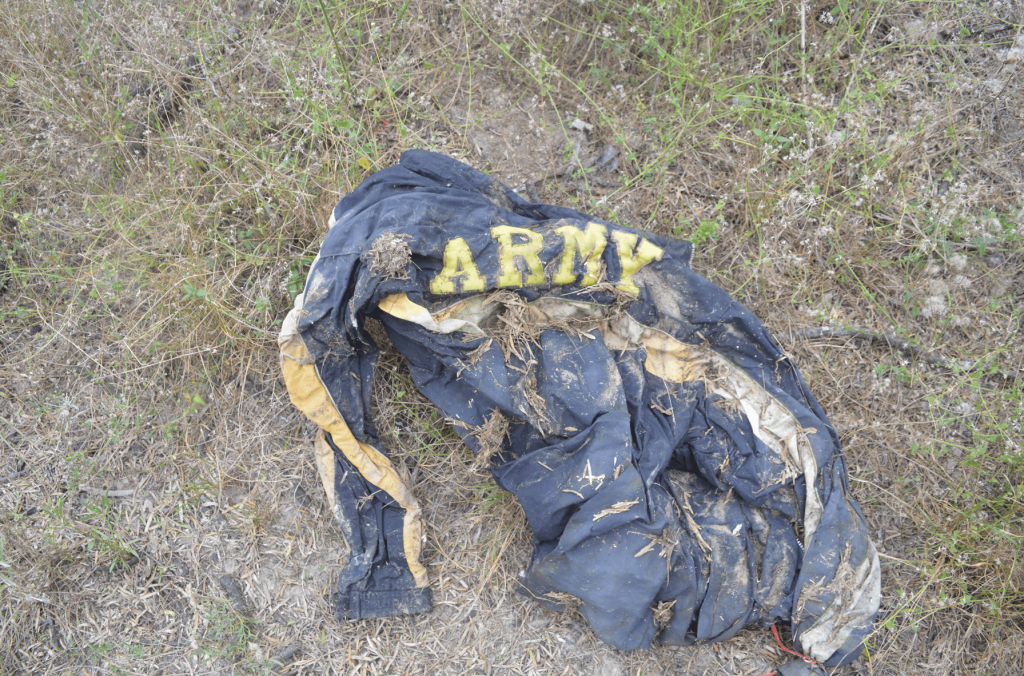
Because of these finds we know that this is and has been a relatively active path and this will be helpful for Don’s future searches. Finding food and drink containers is one thing, but we also uncovered multiple items of clothing. From a woman’s blouse and an army jacket, to a newer looking pair of boots, the similarities between ourselves and the migrants who walked these paths before us becomes clear. It becomes prominent in my reflections personally to think of what I would leave behind if I were in that position. My favorite sweatshirt or my most comfortable tennis shoes? What would cause me to leave those behind? I cannot consider these things without putting myself in their shoes and I only feel more drive to assist and compassion for their situation.
Army jacket
This week we have experienced only part of the physical hardships they endure, barely in their shoes, but enough to know that their journey deserves to be shared. I cannot think of a better group to have gone through this with and that is a privilege unto itself. These individuals possess an incredible strength to go through what they go through, and when I see the pictures of the artifacts they left behind I feel their strength, and my resolve to continue this work is reinforced.
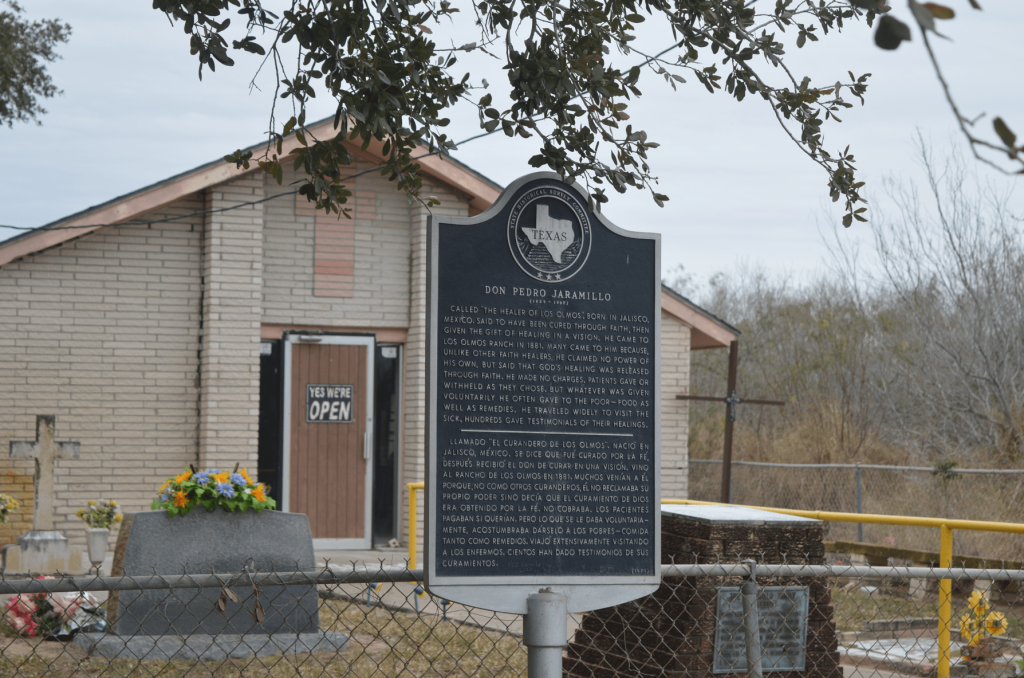
After we left the ranch we began driving towards the morgue, which Don wanted to show us. Before we got there, however, we stopped at the shrine of Don Pedro Jaramillo, a curandero faith healer who lived near Falfurrias for most of his life.
The outside of the Don Pedrito Jaramillo Shrine.
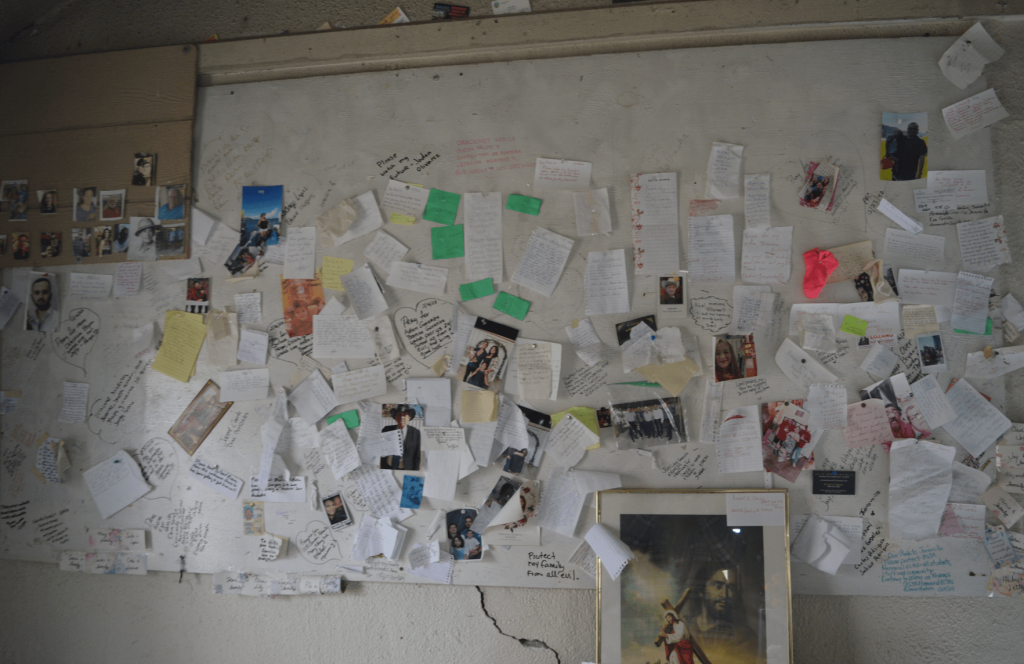
The shrine was similar to that of a church with a cemetery around it, but the real beauty came when we stepped inside the small chapel and came face-to-face with the legacy of Don Pedrito. A small, quaint room, filled with statues of Don Pedrito and Jesus, photos of loved ones who needed healing, a space for people to leave pictures of soldiers, and a small area set for candle lighting. Various kneeling pews were also scattered about the room, for use of any who wanted to, or needed to.
We had been laughing and joking on our way over, though when we entered the shrine it felt like everyone was quiet, likely out of respect for the area that we were in. It was comfortable, not a sad place, but rather a place of remembrance and further contemplation. I said a small prayer in my head before leaving, but who I was praying for I am still not certain, perhaps for the team, perhaps for the migrants, perhaps for Don Pedrito himself.
A wall adorned by those who visited the shrine.
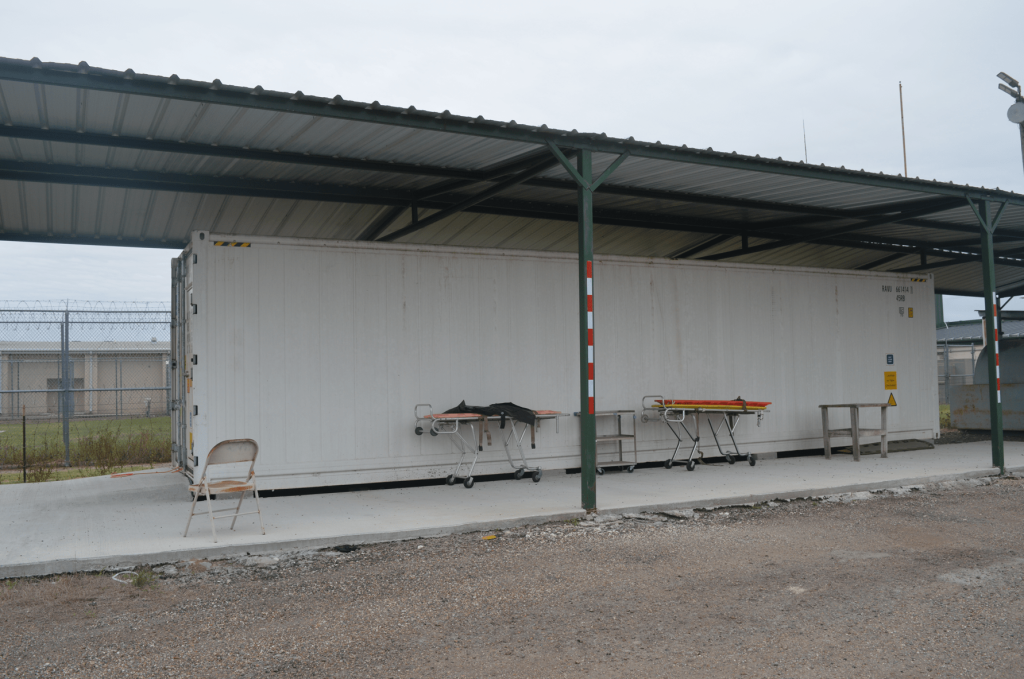
The outside of the morgue at the Falfurrias Detention Center.
After we left the shrine we headed straight to the morgue, little more than a temperature-controlled shipping container, a far cry from the morgues that we are used to both in Indiana as well as in our hometowns. But, as it was explained to us, this container is actually a luxury for areas like this: smaller counties currently dealing with large-scale caseloads.
As we stood before the container, just after visiting the shrine, I was struck by how different yet connected the two felt. Both served as resting places: one, a permanent site lovingly adorned by those who remembered him; the other, a temporary shelter for unnamed individuals still awaiting their identities for remembrance. Despite their contrasting purposes, they were located just minutes apart.
Back at our hotel, we were able to start packing our luggage. We piled all our leftover snacks to give Don and Ray and determined which animal bone souvenirs from the field we could cram into our suitcases. We piled in the car and made our last trip to our beloved HEB. We grabbed some side dishes, dessert, and Fritos for our homemade dinner with Don and Ray at La Copa North Ranch (I also purchased some Dramamine to prepare for our flights back home to Indiana tomorrow).
Frankey and Socks.
Don met us at the gate of La Copa to unlock it and we made our way inside ready for a classic Texas meal: Frito Pie and cornbread. Here we were able to catch a glimpse of Don and Ray in civilian clothes and it felt odd to see them out of their usual tan gear. Socks greeted us with jumps and plenty of kisses as we entered the trailer where Don and Ray stay.
The trip was nearing its end but we all felt like it only just began. All together for the last time, we reflected on our trip. What do we wish we had brought? What are things we learned? What memories will we never forget?
Listening to and laughing with Don, Ray, and my teammates has filled me with such joy and emotion. This trip has been absolutely life changing and I couldn’t have asked for a better group of people to share this experience with.
As we said our goodbyes and hugged at the edge of the ranch, we all held back tears. Even though we can’t be here all the time, this trip will stay with us forever.
Thank you to all of our faithful readers and wonderfully generous sponsors, donors, and supporters of the Beyond Borders Team.