Category Archives: Human Rights, Migrant Death

Talking about the project itself

Bienvenidos!

We had the privilege of working with the volunteers of Catholic Charities at Sacred Heart Church in McAllen, Texas.  McAllen is right across the border from Reynosa, Mexico.  The volunteers at Sacred Heart donate their time and efforts to welcome refugee families that have been released from the Border Patrol Processing Station.  Many of these families were detained for several days, possibly weeks before being released  into the loving arms of the volunteers at Sacred Heart.  Please allow me to take a moment to explain this phenomenal process.
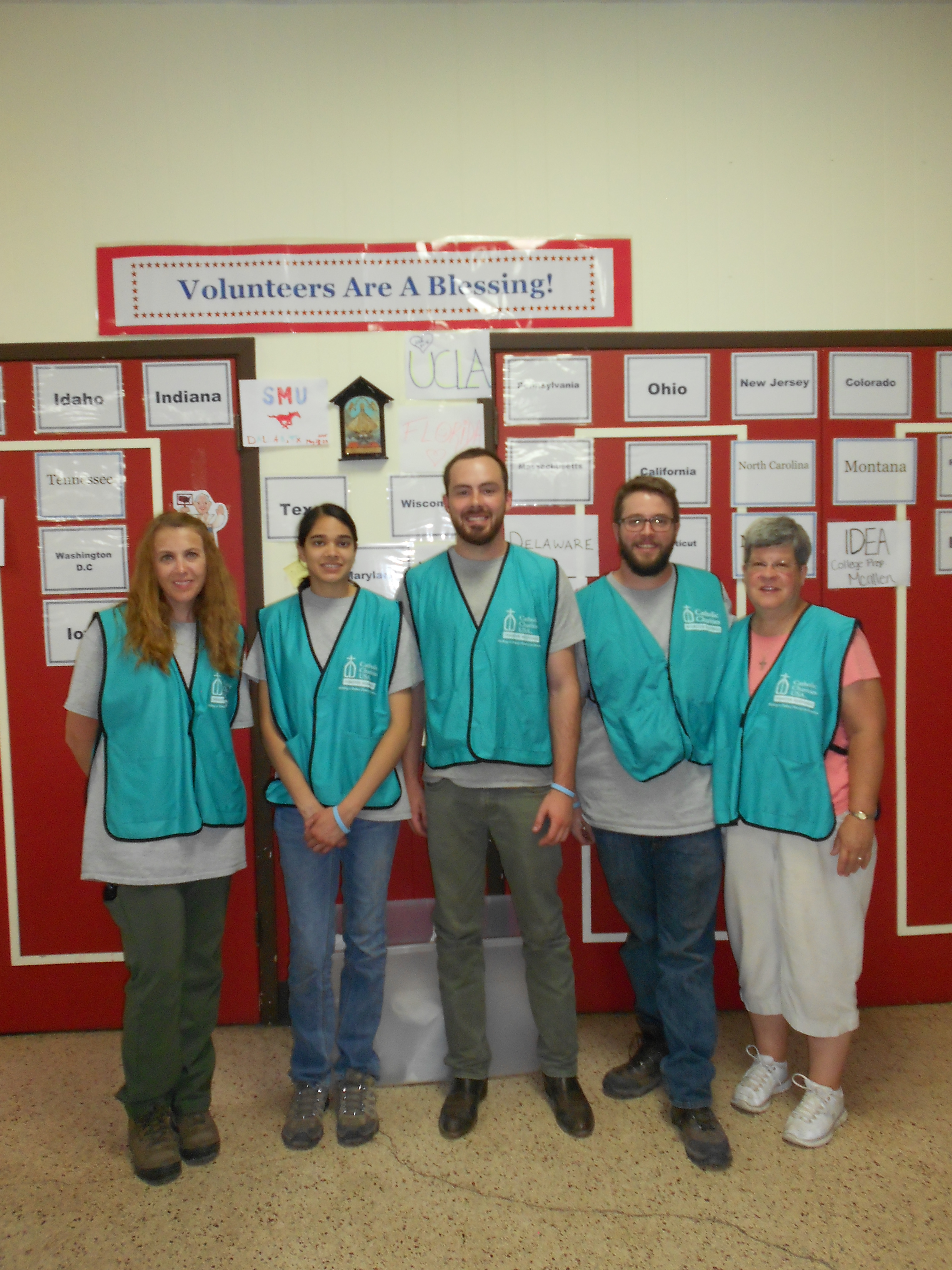
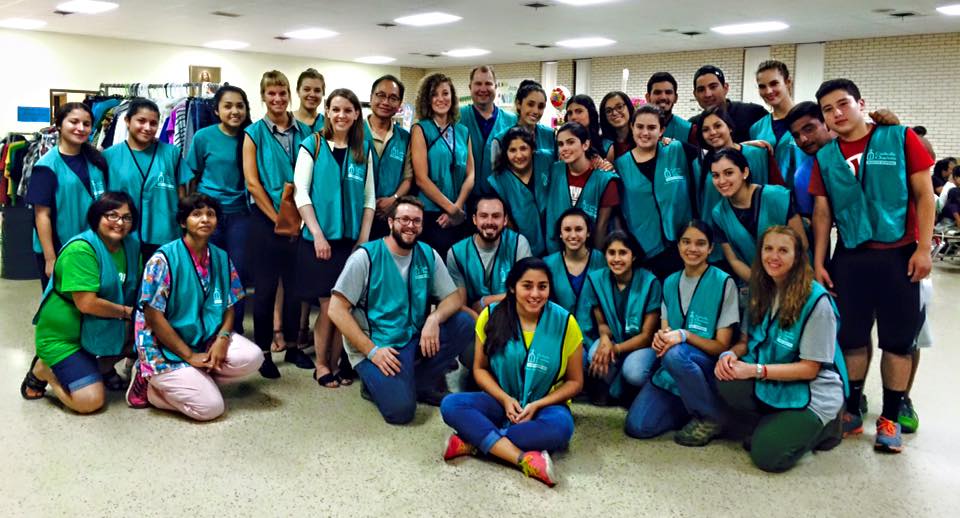
The UIndy family and Sister Pam at Sacred Heart Church wearing teal caution vests
The UIndy family and Sister Pam at Sacred Heart Church

All of the people coming into Sacred Heart are families.  Like I said earlier, these fathers, mothers and children have all spent a number of days in the Border Patrol Processing Station before being released in order to continue their journey into the United States to reunite with the rest of their families.  They are exhausted and disheartened from their detention, and it is the goal of the fine men and women of Sacred Heart to change that.

The first thing the volunteers do is line up for the arrival of these families.  When they arrived we all applauded and cheered to make them feel welcome.  We wished them “bienvenidos a todos” (or “welcome y’all” to my gringo friends) to let them know they are now safely home.  At first the families seemed shocked and surprised.  Slowly they seemed to realize that we were there to greet them and the smiles and tears of joy began to flow.  It was amazing to see these families finally get the welcome that they deserved.

After the families were checked in, they were given personal hygiene products (deodorant, toothbrushes, etc.).  If they had small children they were also given supplies such as bottles, formula, and diapers.  Next we brought the families over to a group of tables and gave them a hot meal.  While they were eating, we asked them what size clothing they wore.  Instead of eating, many of the small children chose to play with the massive amount of donated toys.  This seemed to transform them back into the playful, lighthearted children that they should have always been.  They continued to eat while we “shopped” through the donated clothes in the church.

The room looked more like a clothing warehouse than a church.  There was clothing everywhere, and it was all separated by size and into boys and girls clothes.  The young gentleman volunteer that I was paired with and I were tasked with finding an outfit for a mother of two.  Finding women’s clothes clearly made this young teenage boy uncomfortable, which the rest of the volunteers clearly enjoyed.  When it came time to picking out the undergarments he turned as red as a tomato.  Luckily, a young lady who was volunteering was kind enough to save him the embarrassment, and she picked those out for us.

When the families were done eating, they were taken to the shower.  As a man who is used to digging in the dirt all day, I know the power that a good shower can have.  It is invigorating and it makes you feel like a real person again.  After the shower, the families are allowed to stay at Sacred Heart until their bus rides out of McAllen.  This can range from a couple of hours to any number of days.  The volunteers provide these families with a safe and inviting place to stay until they make that journey.

They work they do at Sacred Heart is amazing.  It is heartwarming to see such care and affection for complete strangers.  There seem to be a lot of tangled threads of fate with the work UIndy does here in Texas.  Maybe it was a coincidence that both this church and the cemetery in Falfurrias are named “Sacred Heart”, but it is hard to shake the feeling that there is something more behind it.  We also had the remarkable luck to arrive on the one year anniversary of this program.  I would like to personally thank them for all of the incredible work that they do and I wish them all of the best for many years to come.
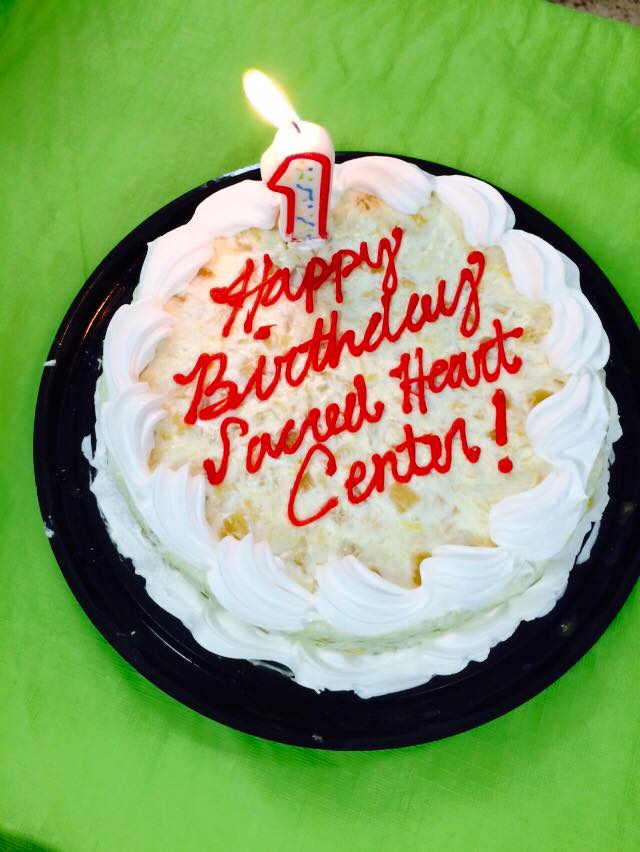
With cake with red icing saying "Happy  Birthday Sacred Heart Center" with a 1 candle

To donate please click here

For a list of items needed please click here

To volunteer please click here

Justin

Day 3

Day 3 group picture with smiles and three fingers in the air
Day 3

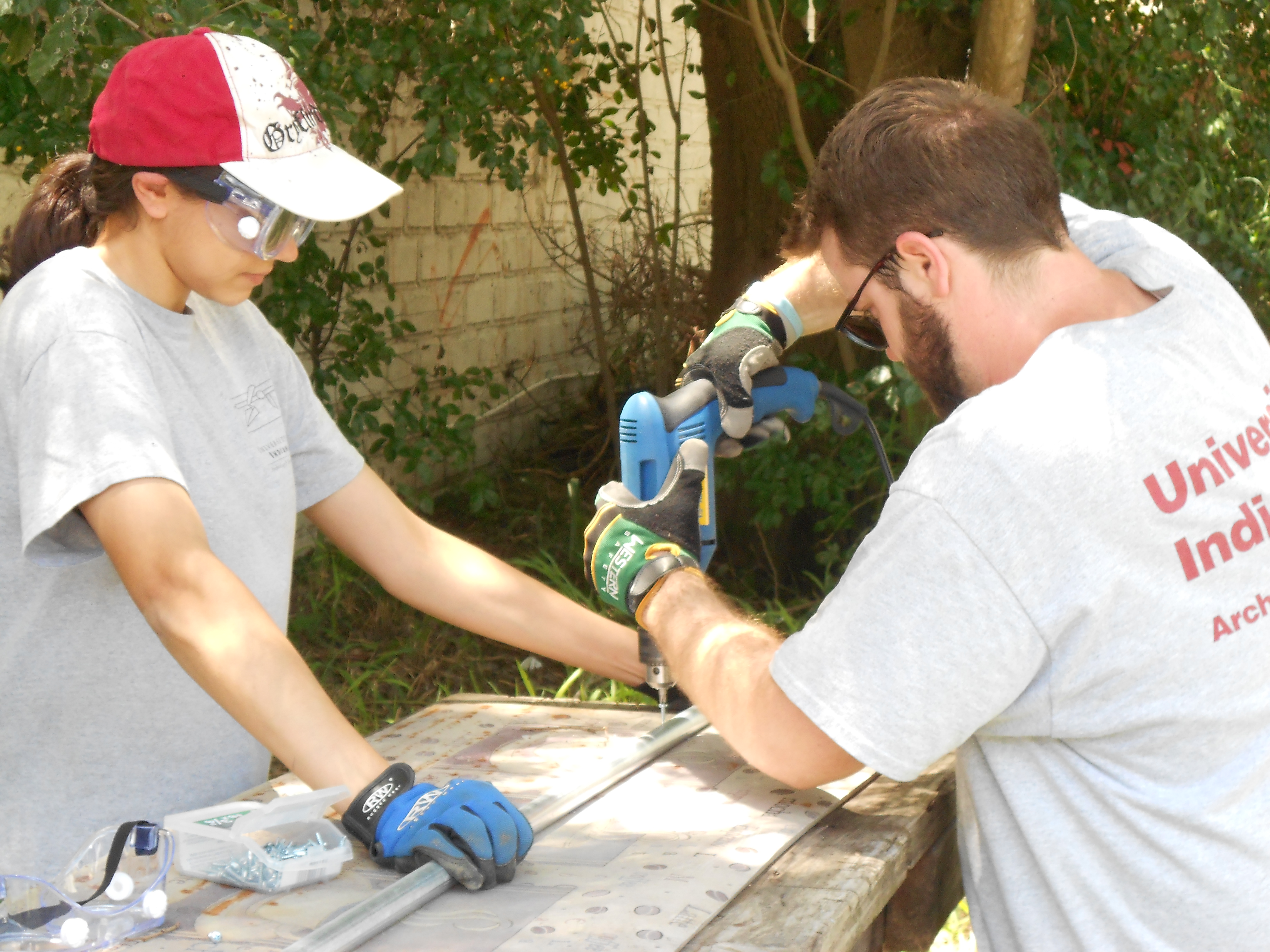
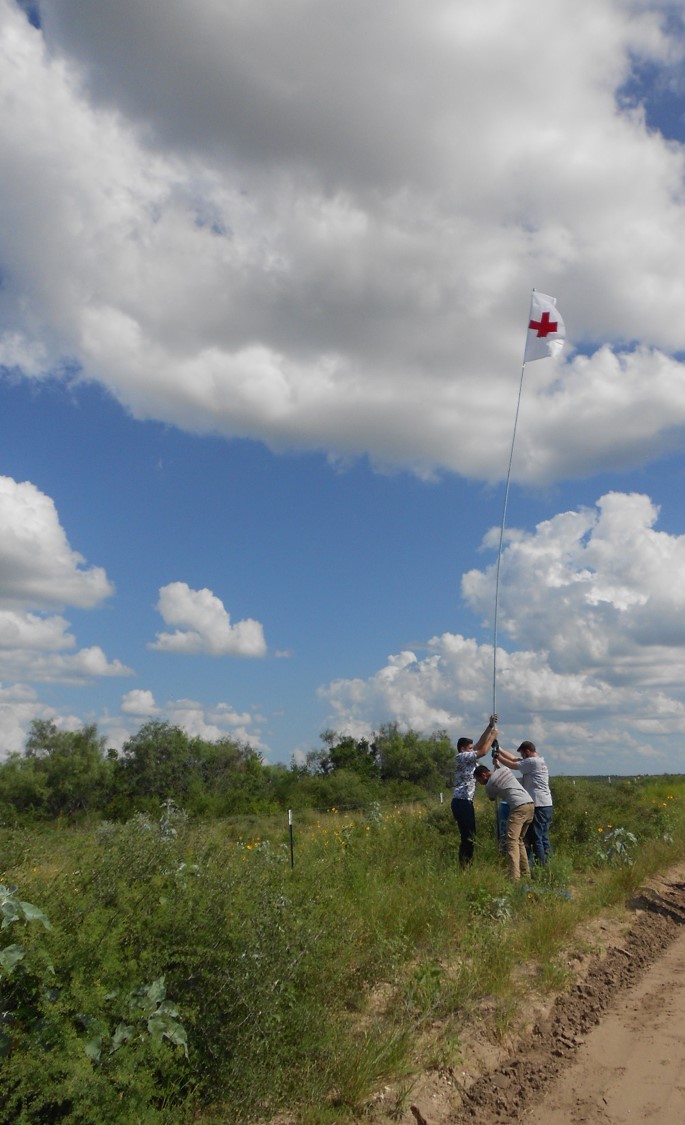
Day three started in a similar fashion to the others. Amanda and Justin went with Sister Pam to fill water stations, Ryan worked with Hailey filling in missing persons reports, and I worked with Eddie to make modifications to the training course that had been requested we repeat on Friday for a wider audience.  When Justin and Amanda returned we worked on constructing new water stations.  The barrels had been painted and drilled and the lids had been numbered, but the poles needed to be drilled in order to construct the long flag poles.  The poles are made from three pieces of pipe of different sizes nested into one another.  The largest in diameter was fitted upon a piece of rebar that had been pounded into the ground. The middle pole had a slightly smaller diameter and was nestled into the larger pole with a screw strategically placed to stop the smaller pole from sliding all the way down inside the larger one. The smallest in diameter carried the flag and was nestled into the middle pole in a similar fashion.

Beyond Borders team members drilling holes into a pole with safety gloves and glasses on

Ramon, a local Falfurrias High School student, was spending his summer volunteering at STHRC and arrived in time to help with this process.  After the poles were drilled, Sister Pam asked Justin, Ramon, Ryan and I to help her repair some of the damaged stations on one of the routes.  Amanda was to go with Eddie to fill stations on another route.  The repairs we needed to make mostly involved the flags and poles.  The long poles bend in the wind and eventually sag to the point that they cannot be seen as prominently as when they are placed upon a straight pole.  So we would take the long poles apart, straighten them and put them back together. We also had to repair a few flags.  I learned from Sister Pam that the cost of constructing a new water station is about $60.  The flags get damaged relatively quickly and cost about $20 a piece. In addition they spend about $50 a week on water. To construct and maintain the life saving water stations relies on donations to the STHRC.

Beyond borders team members setting up a flag pole with a white flag with a red cross on itThat evening Sister Pam invited us to dinner at her house.  When Eddie and Amanda arrived they had an additional volunteer with them.  We learned that this young man came into STHRC with five other family members to report his uncle missing. They had traveled from Las Angeles, CA to Falfurrias, TX because they knew he was last seen in Falfurrias.  His uncle was traveling through Brooks County and stopped to rest.  He didn’t feel he could continue with the group he was traveling with, so he told them to continue and that he would try to get to the road to turn himself in to Border Patrol.  That was a month ago.  They came to STHRC to file a missing person report and go everywhere they could think of to find their family member (hospitals, morgues, detention centers).  The missing man’s nephew wanted to help fill water stations and asked to volunteer. He then joined us for dinner.  He asked us questions about the identification process and told us more about himself and his family.  Then he looked at us and said “It’s sad, but it is life.” It’s hard for me to imagine a kind of life where going missing or dying is almost considered normal.  That statement speaks volumes to the hard life these migrants face.  The actions of this family speak to their strength and courage in a difficult situation.  They traveled to Texas and spent two days going to different organizations looking for their missing family member.  Even though their hearts were breaking they volunteered at STHRC to save others and took time to get to know us and share an evening with us.  After dinner we all watched Who is Dyani Crystal, a film that follows the identification process of a body discovered in the Arizona desert.  It must have been a difficult film to watch considering  their family was in a similar situation, but he wanted to see it to understand more about the journey and the identification process.  Sharing the evening with him was a special experience.  As we said our good byes we wished him luck in finding his uncle.  He hugged each of us and thanked us for helping his family.  What started at as a routine day filling water stations ended with a very unique experience that none of us will forget.

~KEL

“We got lucky with this one…”

“Here’s the spreadsheet that has all the details for this year’s missing persons reports.”

Dates of last known contact, what clothing they were likely wearing, whether there was any history of dental work or surgeries, and other possibly identifying information filled cells of the spreadsheet. There was a lot of data, but question marks and blank cells for missing data easily stood out.  I wasn’t really sure how to process the data. Where do you start? How do you start looking for connections?

“Oh no, these are just the reports from the Brooks County Sheriff’s Office. We’ll get to the other counties and all of the other reports sent to us from other states in a minute.”

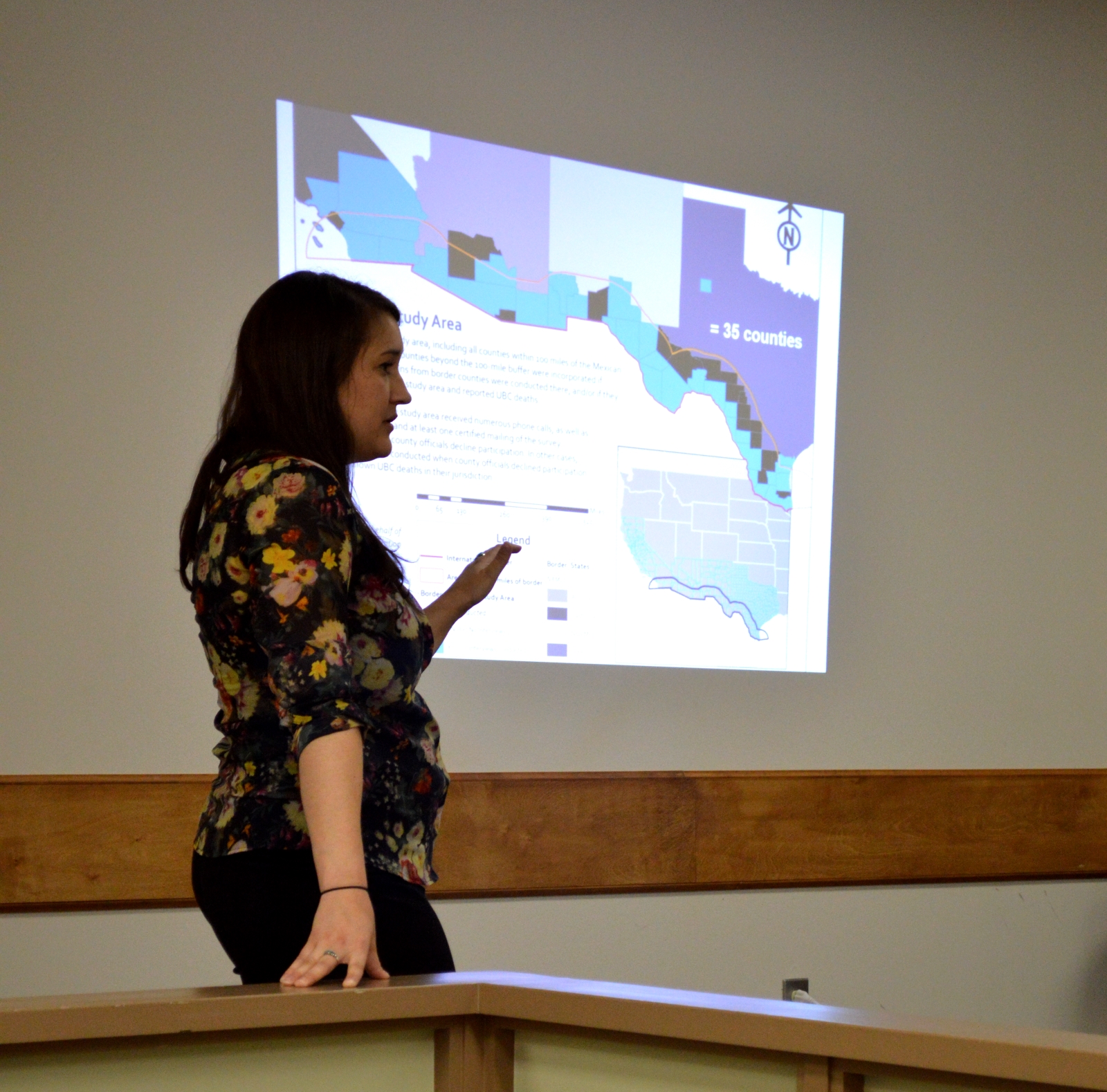
Hailey Duecker giving a presentation infront of a powerpoint depicting the Texas US border

Hailey Duecker, the forensic anthropology fellow at the South Texas Human Rights Center, pulled up a current missing persons case she was working on to walk me through the process of search and rescue/recovery that begins with a phone call from family or friends of the missing. This particular report was written entirely in Spanish.

“We got lucky with this one. Two separate organizations have information about this missing person, and so we have a lot of photos and a lot more information than we normally have about someone.” Hailey showed me the photos and explained how she inputs this data into a public database called NamUs, the National Missing and Unidentified Persons System. “If we’re really lucky, we’ll have a few possible matches with unidentified persons found here in Texas.”

It seemed simple enough. A family calls in, reports a loved one as missing, gives as much information as possible, promises to submit a reference sample for DNA comparisons, and the South Texas Human Rights Center makes sure the data can be compared with other cases. But what I learned today was that this ‘simple’ process actually takes months and months of painstaking organization, persistence and patience to complete. Multiple human rights organizations strive to collect as much information as possible to find the missing, which in spirit is incredible. At this point however, as Hailey is able to quickly show me, these intentions often lead to decentralization. This means that multiple missing persons reports often exist for the same individual, often with conflicting information. And when one missing person is assigned a different case number by each organization or agency, these multiple numbers can easily get mixed up, creating a tangled web of useful information.

While this sounds like a problem, I see this as an opportunity to learn and become immersed in each individual case, and I think Hailey does too. As I spend this week learning as much as I can from Hailey before transitioning into her position, I’m realizing our job is a tedious one as we condense and clean an extremely large dataset into something more suitable for making comparisons. Even after only a single day of working with her, we started to fill in the blanks on a few cases, make a few comparisons, and equally if not more importantly, make some exclusions. I felt both a sense of relief and urgency with each blank cell on that spreadsheet that we filled in.

“I think we can exclude this set of remains as belonging to this missing person because the remains were found a few days before the date that he was last seen. That’s really good news, really good news.” Hailey spoke with excitement and passion every time she talked about getting one tiny step closer towards an identification. “Look further down this spreadsheet here, you can see how some of these missing persons turned out to be people who were deported. They’re alive, and that’s always the best news.”

Dr. Latham eyed us looking over the spreadsheet, probably because Hailey was flying through the explanations with excitement. She definitely sensed my head spinning.

“What do you think Ryan, you think you can handle it?”

I definitely think I can. Today was an eye opener for me that this week of training is going to be an emotionally exhaustive experience that throws me out of my comfort zone. But that’s what this trip is about, and I’ve never felt more ready for this job than after today.

Ryan