Category Archives: Human Rights, Migrant Death

Talking about the project itself

Trying to Understand

Since last year’s excavation in Falfurrias, we have strived to learn more about the migrants that cross the South Texas border.  I would say, personally, my knowledge regarding our borders has been very basic.  I am a Midwesterner, which generally means that issues such as these are far enough removed that we have facts and news, but we are not personally touched by it.
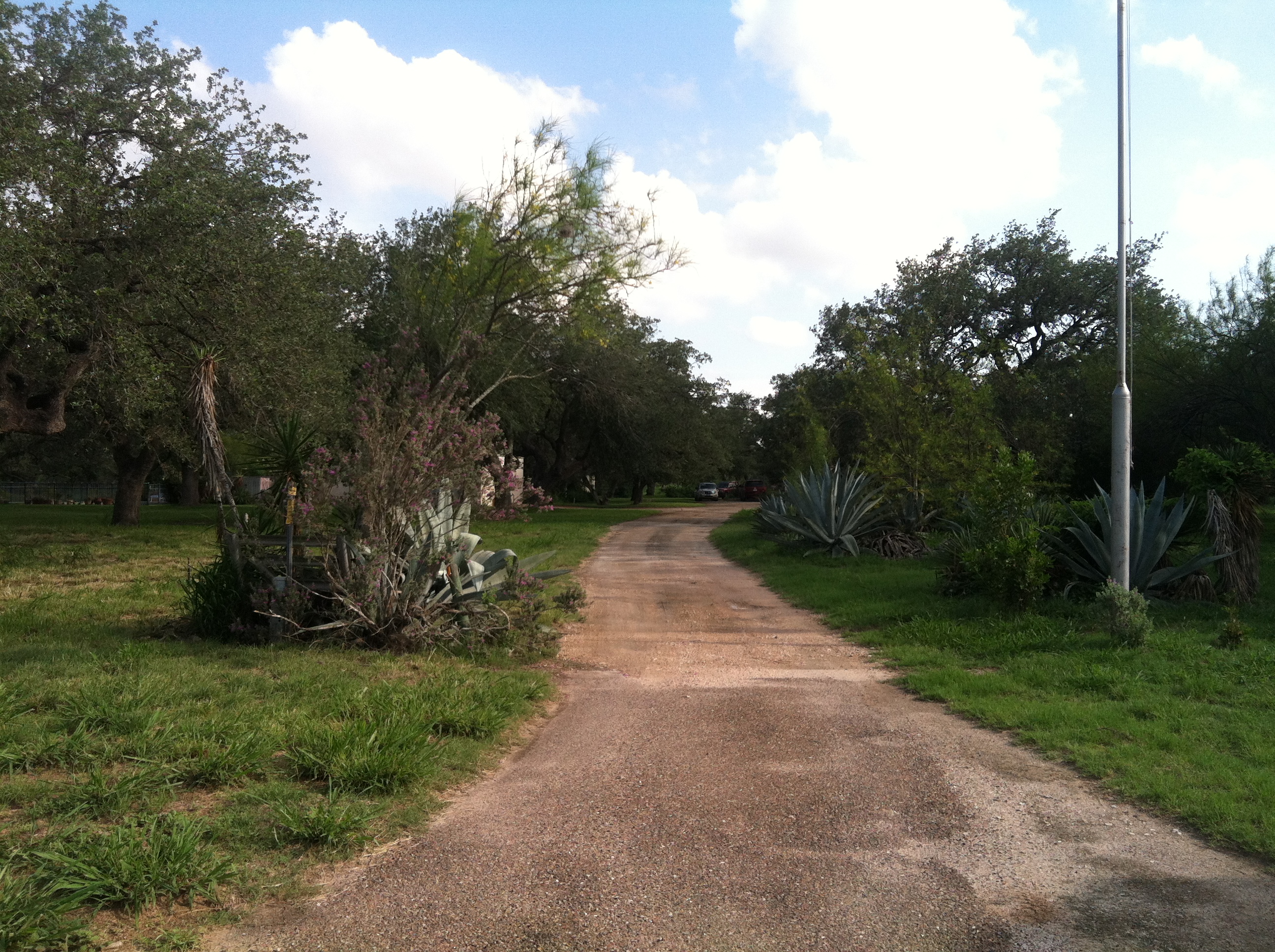
Driveway to the  Lasater Ranch with brush surrounding on both sides
Drive to the
Lasater Ranch

Let me explain a bit what I mean by that.  I remember visiting the Lasater Ranch last year, and being told by the ranchers that they would see a procession of several people walking across their land on a regular basis, close enough to be seen clearly from the house.  Reactions to this vary.  Some landowners set out water in an attempt to prevent deaths of these migrants who are so ill prepared to cross this very dangerous land.  Ranchers know their land is so expansive it can’t feasibly be monitored completely to prohibit entrance, so prevention is the next step.

The US Border Patrol does the same thing.  A lot of people misinterpret the mission of the border patrol, preferring to hold them accountable for stopping migrants at the border, and if that fails, for finding, detaining, and deporting any person without official documentation.  This is true, but it shouldn’t be overlooked that the US Border Patrol is concerned about preventing deaths and saving lives as well.  This fact didn’t really sink in for me until we were invited last year to attend a community meeting hosted by at the Falfurrias USBP station.  The first presentation started “We were able to save XX people this week…,” which was followed by a cheer.  Success in the mission is measured in lives saved.  They then went on to discuss strategies for saving lives that included various water stations with emergency phones for those in dire need, complete with instructions in English, Spanish, and Chinese.

Recently we returned from a professional meeting in NV, where we had a discussion with Robin Reineke of the Colibri Center for Human Rights.  One topic we discussed was whether the term migrant was an appropriate designation for the people crossing our southern borders.  It was proposed that refugee might be more appropriate.  The reason behind this was clarified further by Dr. Wendy Vogt of Indiana University-Purdue University Indianapolis in a guest presentation we hosted last year at UIndy.  Dr. Vogt is a cultural anthropologist that researches the journey migrants undertake to get to US border.  She also helped to illuminate why people would risk their lives and the lives of their children to reach the US.  People leave their homes, maybe starting in South America, and risk a perilous journey across Mexico.  A lot of the migrants climb to the top of a train they deem “The Beast.”  No tickets, no chairs, no seatbelts.  And what was most shocking was that it was a regular occurrence to fall from the train and lose limbs, if not their lives.

The people she interviewed at various stages of their journeys told her their stories.  I recall one of a young man and woman fleeing their country because he was given a choice to join the local gang or be shot.  There was also a mother that was fleeing with only one of her many children, who could have been no more than 10 years old.  The mother had fallen from the train and was in a wheelchair, stranded and unable to walk again without prosthetics.

A lot of migrants come from communities where shootings and randomized violence is a daily occurrence, and their lifespan and that of their children would be greatly improved anywhere outside of their country.  These countries are the ones that our US Department of State issues travel advisories that strongly advise against visiting.  We have an option of the level of danger we wish to face, many migrants do not.  It is very difficult for me to conceptualize this, having never been faced with a lifestyle or environment in which it would be healthier to flee than stay.  The people we hope to identify in Falfurrias have gone through so much, yet they still have a long journey to get home to their families.  With a lot of hard work and even more collaboration, we can hopefully supply some answers and closure to the many families missing loved ones.

Jessica

People of “Privilege”

What would you risk for the chance at a better life?  If you are like me, then probably not much.  That is not to say that I haven’t sacrificed a lot in the pursuit of happiness.  I am a poor graduate student who has spent the last three years living in a different state than my wife because we both are following our career paths.  I rarely ever get to see friends or family.  Sleep has become more like a fond memory than a regular occurrence.  I’m here in south Texas volunteering my time to dig in a cemetery in the summer when temperatures average around  100 degrees.  When I compare the things that I have forfeited in the hopes of a better existence, it seems trivial when considered next to the tribulations of the people who try to cross the border.

A few weeks ago, several UIndy students and I had a conversation with Robin Reineke, an anthropologist who works on migrant deaths in Pima County, Arizona.  One of the things we discussed was the concept of “people of privilege”.  Let me take a moment to be abundantly clear:  This is not a diatribe about class warfare, and has nothing to do with social status.  By Robin’s definition, “privilege” meant not fearing death from starvation.  “Privilege” means no fear from institutionalized violence, or being killed for your political views.  The “privilege” lies in never actually considering those horrific events and never believing that they would actually happen to you.

This is my second year in Falfurrias.  It is both the most difficult and rewarding endeavor that I have ever undertaken.  It is both incredibly rewarding yet emotionally draining.  When I talk to other people about my work, they inevitably ask, “How has it changed you?”  In truth, it hasn’t.  I am the exact same “person of privilege” that I have always been.  I do not fear for my life or well-being, nor do I fear oppression or starvation.  The only thing that has changed is but the smallest notion of what might motivate another human being.  The only real difference is but a few lingering questions in the back of my mind.

Now, Let me rephrase the question.  What would drive you to walk across the desert?  What would cause you to abandon everything and everyone you knew and loved, just for the opportunity that your life might be better?  What might you give up for the chance at a better life?  Would you be willing to die knowing that your children might live without those fears?  How far would you go for that “privilege”?

Justin

Stepping Towards Repatriation

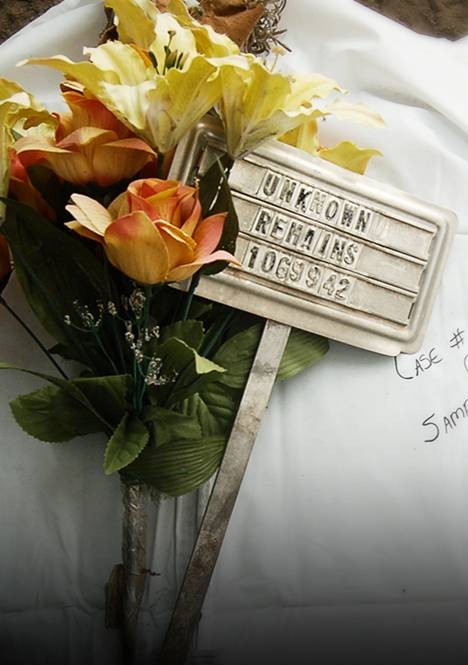
As we gear up to return to Falfurrias, I can’t help reflecting on the past year.  Our first trip didn’t end with our return to Indianapolis, it was just getting started.  If you had asked any of us at this time last year, before we traveled south, if we truly knew what we were getting into, we of course would have answered “Yes!”  But the truth is we didn’t have a clue.  The magnitude of the project floored all of us. Metal grave marker with "Unknown Remains" on it with orange and yellow flowers over a white body bagEven with Baylor University and Texas State University also working towards identification of the exhumed individuals, there were far more unidentified than what we anticipated.  So, after last year’s trip, we received thirteen individuals from the 2013 exhumations at the UIndy Archeology and Forensics Laboratory (AFL).  The AFL is a dedicated working and educational lab for the analysis of skeletonized remains.  Dr. Latham organized a formal class that would train us in every aspect of the process, which for many of us was an opportunity to put all of our previous training to use from start to finish.

In the AFL, we train on forensic cases when they are received, and we share the process with all graduate students.  For the thirteen individuals from Texas, we had no idea what we were going to receive.  With five advanced graduate students and Dr. Latham overseeing each case, we were each assigned two or three individuals to focus on.

After cleaning, we each went to work on establishing a biological profile which would hopefully provide an indication of age, sex, ancestry, and stature.  These factors can help to initially narrow down a search by eliminating the people who don’t fit the specific combination of traits.  We also looked for any other factors that could help in the identification process.

University of Indianapolis Archaeology and Forensics Lab LogoThis was also the first time for many of us to take case photographs, which turned out to be more challenging than we expected.  We even participated in a special two part photography workshop to train us on lab photography. The pictures had to be clear and capture every unique feature that might potentially aid identification.  With so little to work with, every detail matters.

After the full analysis was completed and reviewed by Dr. Latham , we compiled a report for each individual.  This report served as our “final exam” for the class, and it also would serve as a template for Dr. Latham’s official reports that would be submitted for each case.

Recently, we also scored stress indicators that could help us to understand a bit more about the health history of each individual.  We also cut samples for DNA and stable isotope analysis that will be sent to the University of North Texas and Chico State University, respectively.

Through all these collaborative efforts,  plus a few more I haven’t mentioned yet, hopefully we are a step closer to the identification of the exhumed individuals, and a step closer to returning them to their families and loved ones. We are grateful that we have the skills, resources, and support to move progressively towards this goal.

A pink Thank You with the beyond borders logo below it reading love, human rights, and peace

Jessica Campbell