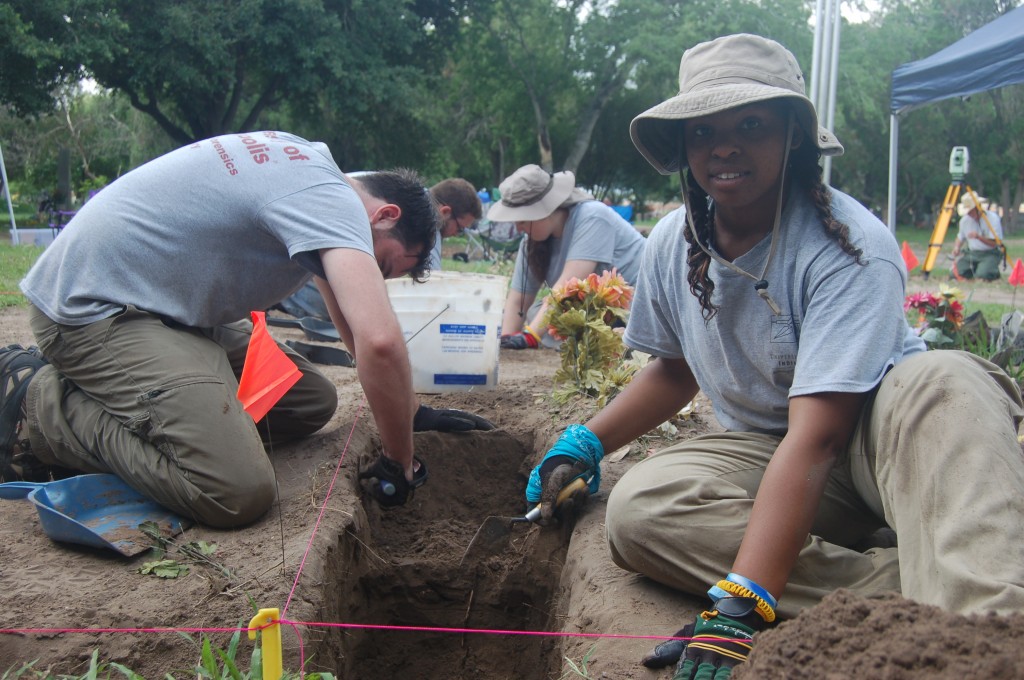
 As I reflect on my experience and my journey I am in awe of the path I have taken. I watched the first of many presentations on Brooks County my fall semester of 2013 and I was amazed at the work that was being done there. Knowing that it was a field I would want to pursue I was captured by every word Dr. Latham said. After receiving the invitation to become a part of the team, it did not take me long to respond “of course”. I was no longer a spectator. I became a member of the team and I listened to stories and more presentations, each one capturing me like the last. Then the day grew nearer, then I was in Falfurrias. Participating and helping the team accomplish another feat as they looked at me as one of their own. Throughout the whole trip I thought once I learned something that was it, however I was mistaken. I learned something every day I was in Falfurrias and I will never forget any of those things. I was able to spend two weeks with amazing people and would not trade that for anything. I cannot thank Dr. Latham enough for allowing me the opportunity to be a part of this miraculous group. My eyes have been opened to the situations that people are being faced with every day from the ranchers, to city officials, to the migrants and the community, to all the volunteers assisting. Everyone has a role to play and I am thankful that I was able to do my part.
Latest Posts
Beyond Borders- A Short Film
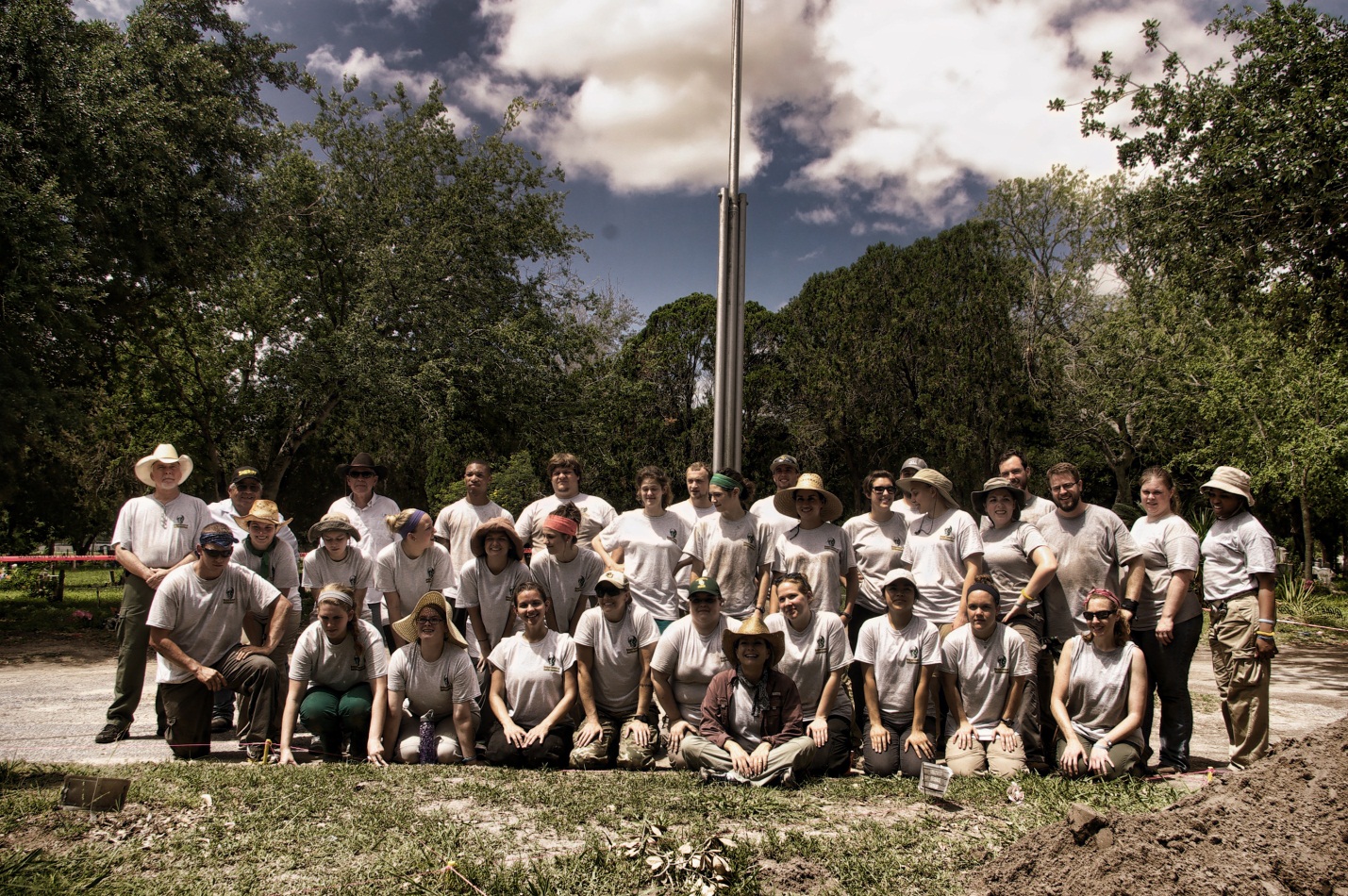
The Field Team photo by Guy Housewright
Well, I’ve been absent from this blog for over a week now, and I sincerely apologize for my lack of blog entries. As you might have read from previous posts, I suffered mild heat exhaustion which landed me in the ER for an evening and ended my field season a day early. Despite being upset from being held back by my health, I was extremely proud to hear how amazing the final day was and that our season finished up smoothly. I took the remaining time to rest up and organize video footage from the trip. I hope it makes up for the lack of posts on my part.
At long last, after a week of editing, I would like to present Beyond Borders – A Short Film. This is the most detailed film I’ve ever edited (hoping Sarah and Esy might throw a few pointers and comments my way, I would love to hear from the pros…!) I tried to give the viewers a succinct yet rich perspective of our time in Falfurrias, TX. I can’t emphasize enough how much I enjoyed reliving the memories through the editing process; the more I worked, the more proud I was of us as a team.
As always, thank you so much for reading, watching, and joining us!

Successful?
“Was your trip to Falfurrias successful?”
Well I guess that depends on how you define success. I think all of us that participated in the excavation would answer yes to that question. Yes, we systematically investigated a 16m by 12m plot of land in the Sacred Heart Cemetery for the burial of unidentified migrants. We applied traditional archeological techniques to remove dirt using shovels and hand trowels to an average depth of 70cm below the ground surface. If we did not encounter human remains by 70cm we dug test pits and probed to an average depth of 140cm below the surface, well below the deepest recorded burial depth. Each exhumation performed by the UIndy team was conducted and documented in the same manner as any forensic case encountered by the University of Indianapolis Archeology and Forensics Laboratory. Yes, I think we all feel pretty successful in saying that we recovered all the unidentified remains from that portion of the cemetery.
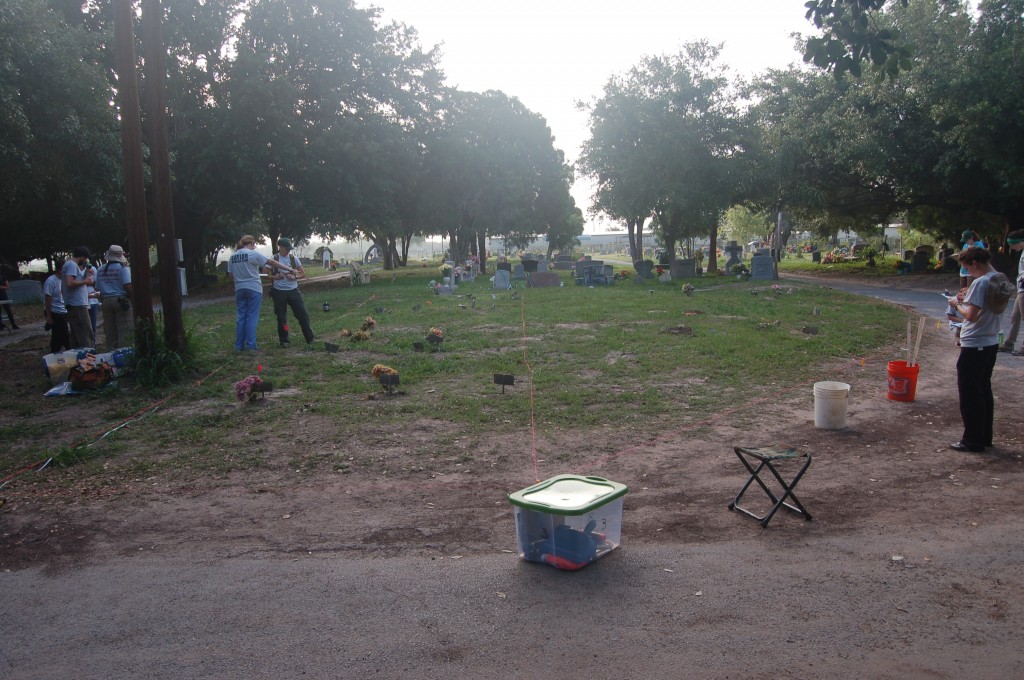
Yes, we successfully moved over half a million pounds of dirt (by hand) as a group. Every Baylor student and UIndy team member wears their sore muscles, bruises and scrapes proudly as an indication of their physical commitment to the human rights work in Falfurrias. In the process of moving that dirt we located the remains of over 52 individuals that will now begin the identification process and the long journey home to loved ones. Those individuals would still be buried nameless if it weren’t for a successful field season.
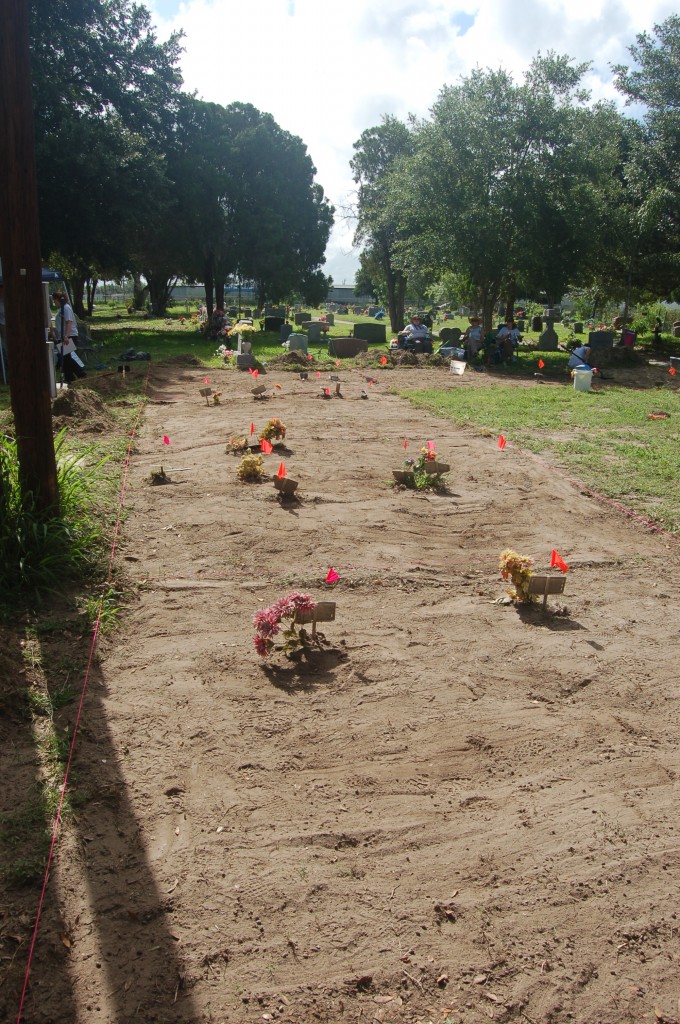
Yes, when we look back upon the once grassy plot of land that is now lacking 52 bodies (minimally) we feel successful. We successfully recovered the nameless and left our blood, sweat and tears in return. The environment tried to stop our success, but we were triumphant. The sun burned our skin and dehydrated our bodies. The humidity made our thermoregulation via sweating a less efficient cooling mechanism. The mosquitoes, which we are all convinced became immune to our bug spray, made us swell and itch. But we came back until the job was done.
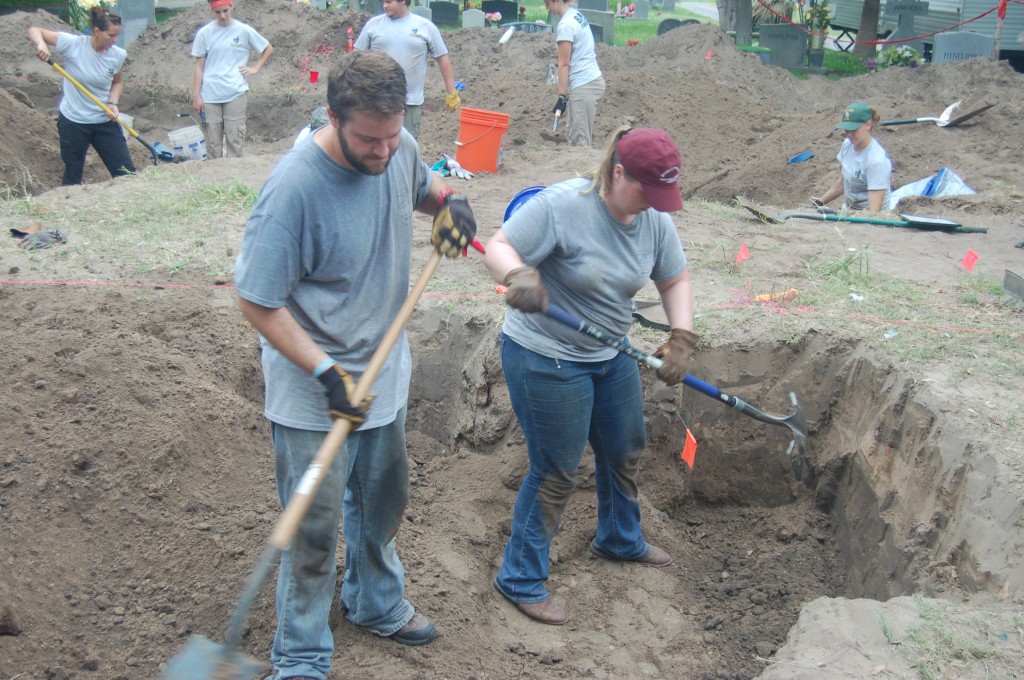
However, the exhumation process was completed in less than two weeks. Now begins the long process of identification. Each individual will travel to a university (Texas State University, University of Indianapolis, Baylor University) where they will begin forensic analysis. This process begins with cleaning the bones, followed by skeletal analysis aimed at reconstructing the decedent’s living characteristics like biological sex, age at death and living stature. This skeletal biological profile can be used to narrow down potential matches of reported missing persons. A bone sample will be cut for isotope analysis that could contribute to detecting the country of origin of the individual and again narrow down potential matches of reported missing persons. A bone sample will also be cut for DNA analysis. The DNA profile obtained from the bone will be compared to a database of family reference samples in the hopes that a match will be discovered. But if no missing persons report is filed or family reference DNA sample collected, the chances of identification are essentially zero. So, can we say we are successful before they are all identified?
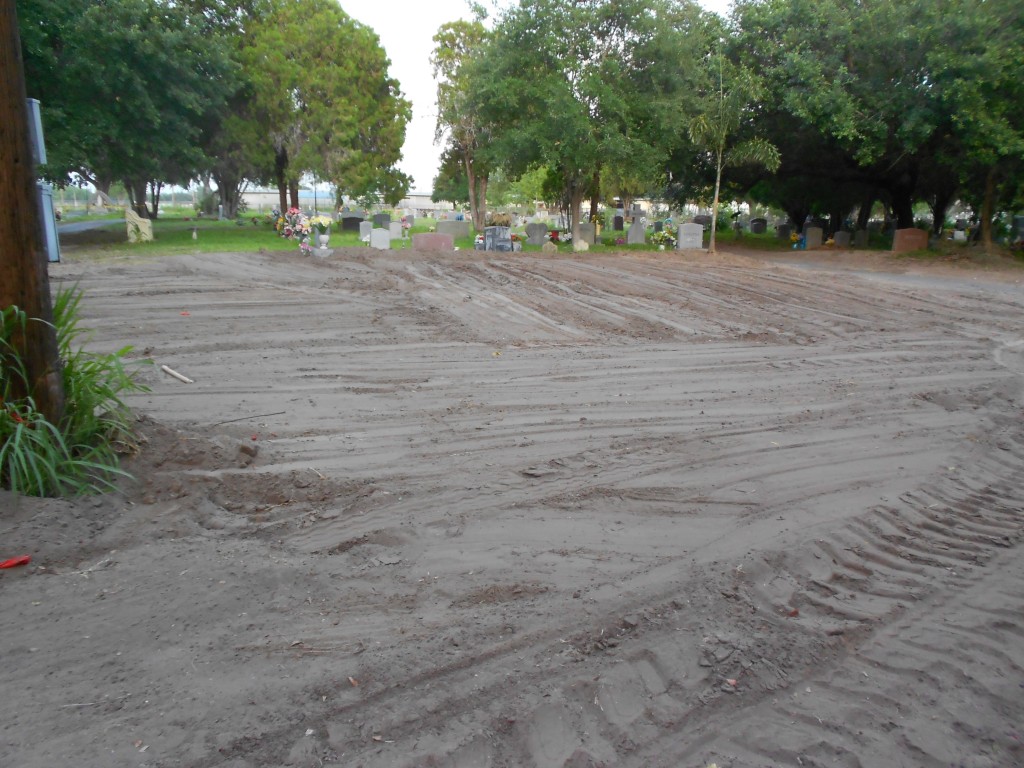
Is success a situation that claims the lives of thousands of refugees fleeing institutionalized violence and extreme poverty? I don’t know if success is the term that any of us would choose to use to describe the work we did in Brooks County. I think we would all agree that progress is being made and that we completed the goal we set for ourselves. We feel very accomplished and we feel proud of the job we did there. We can say that over 50 people are now starting their journey back home. For those families, we strive for success.
~KEL