Latest Posts

Five Years of Humanitarian Science in the TX Borderlands

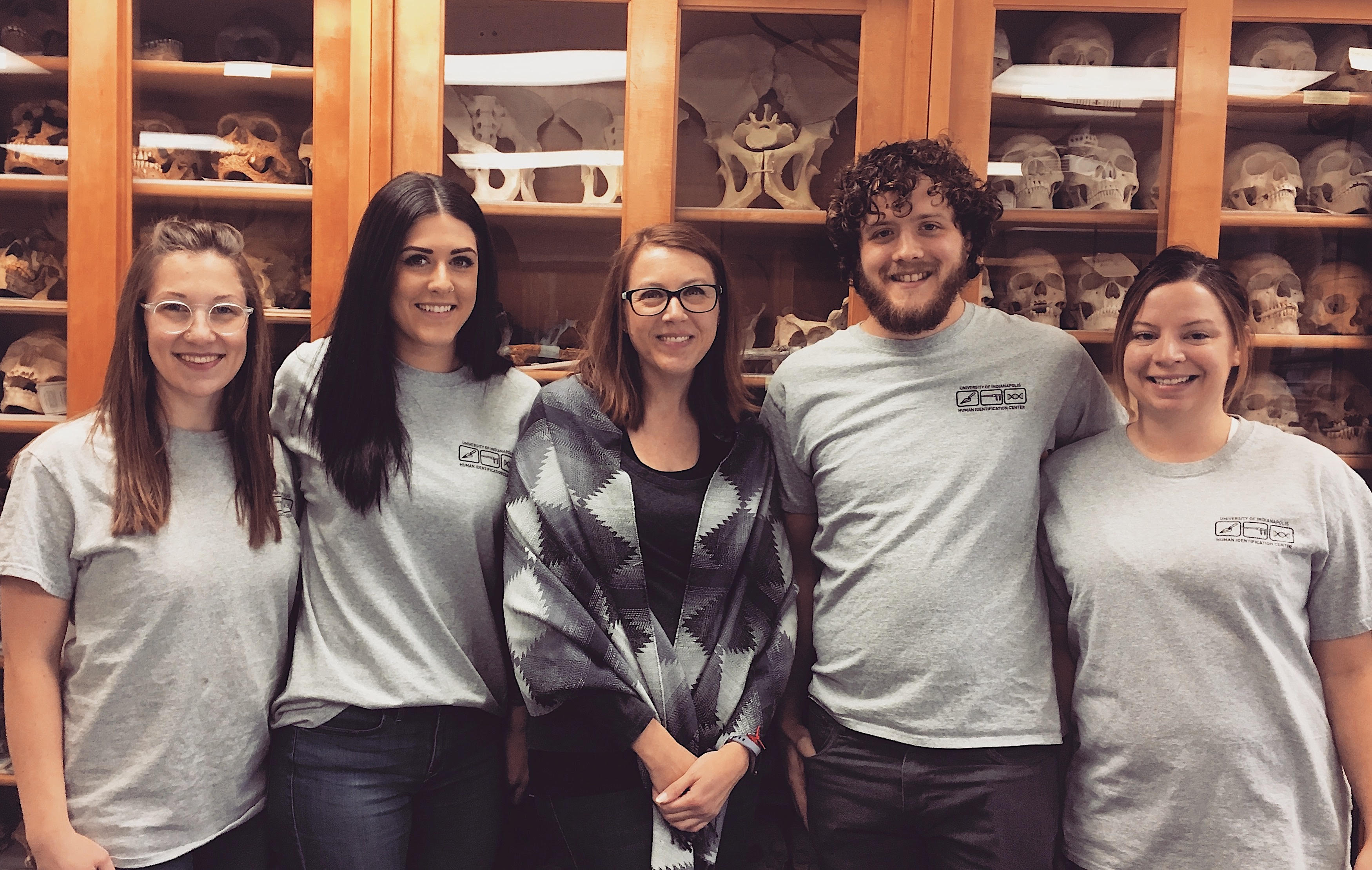
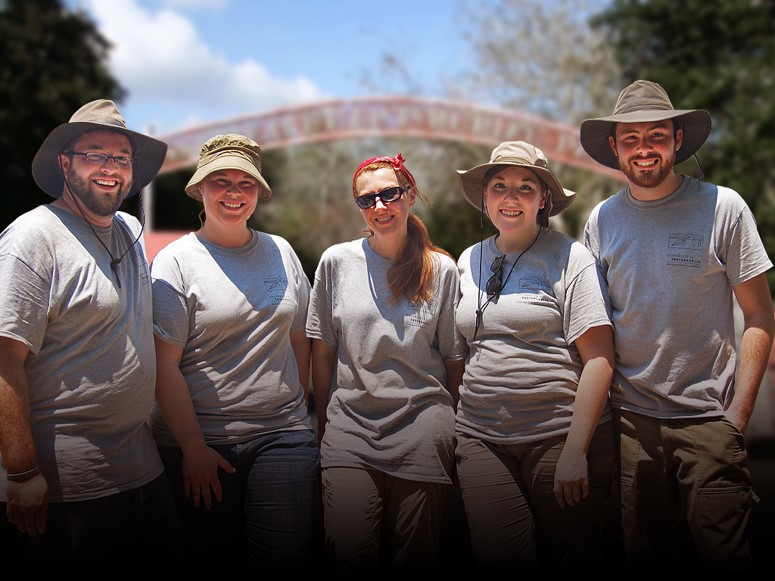
Jan 2018 Beyond Borders Team photo.
Jan 2018 Beyond Borders Team (Leanne, Sammi, Dr. Latham, Jordan & Jessica)

As our departure date of January 2nd quickly approaches, I can’t help but think about our work in south Texas over the last five years. Since 2013 I have volunteered with colleagues at Texas State University and Baylor University, among others, to aid in migrant identification efforts along the US-Mexico Border.  Tens of thousands of migrants have lost their lives crossing the border in the past decade. Changing border policies have funneled crossers from their traditional migration routes into more clandestine and dangerous routes. Since the number of deaths in Texas has only recently reached mass disaster proportions, resources for migrant identification and repatriation are sparse.  Many counties chose to bury the unidentified migrants discovered in their jurisdictions due to lack of funding to conduct the costly forensic investigations into their identity. In 2013, a group of volunteer forensic scientists began exhuming the unidentified migrants, so these individuals can begin their journey towards identification and repatriation home. With no governmental resources available, I made the trip with several UIndy students as volunteers to provide a needed forensic service to a marginalized group of individuals. In January I will make my 7th trip to South Texas with a UIndy team to volunteer our time and expertise to this humanitarian crisis.  We will be working with Texas State University to locate and exhume the remains of undocumented migrants who died after crossing the border and were buried without identification in pauper graves.

The US/Mexico border wall is 40 times more deadly than the entire history of the Berlin Wall.  More people have died in the desert in the southern US than Hurricane Katrina and 9/11 combined.  Those that migrate know their odds are slim. But slim odds are better than the institutionalized violence and extreme poverty they face at home. This is a silent mass disaster that many Americans are not aware of.  I volunteer not only to provide a specialized forensic science to a community that needs it, but also to immerse my students in a situation that will provide them a more valuable learning experience than any book.  Here they can practice the scientific skills they have learned at UIndy in a real world context, in addition to  learning social responsibility and an appreciation of common humanity.  Year after year I have seen my students grow as they experience a harsh reality very different from their own privileged lives.  I use this work to teach my students, children and family about being thankful, humble and kind. In a time when many question the entitlement of the next generation, I see many young people (from our university and others) leaning humility, compassion and understanding in a way that would not be possible without immersion in this humanitarian crisis.

~KEL
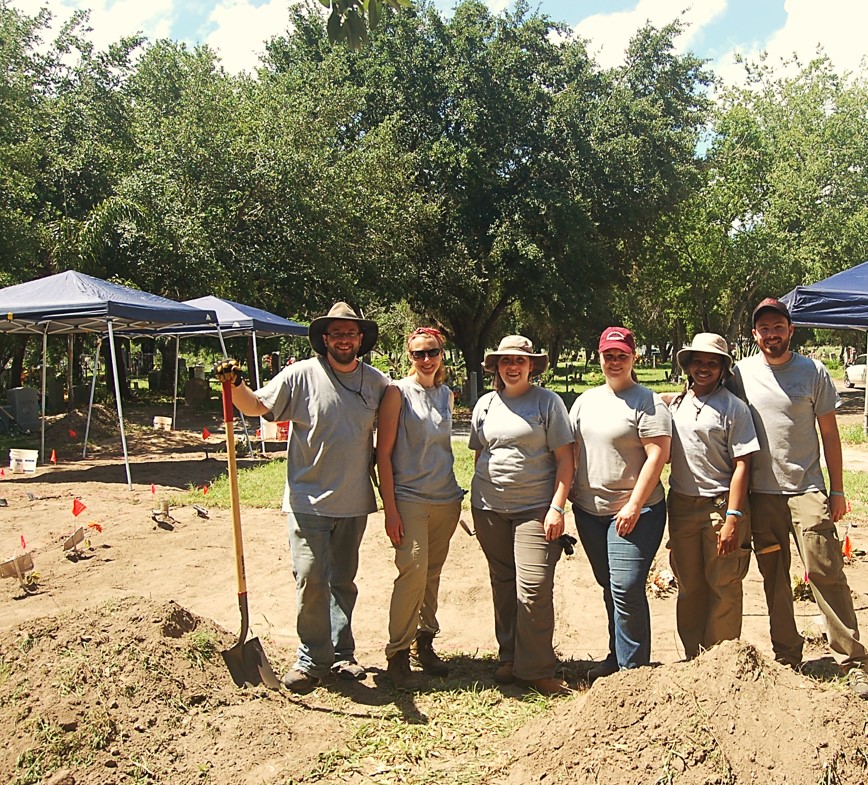
May 2013 Beyond Borders Team in the field.
May 2013 Beyond Borders Team (Justin, Jessica, Dr. Latham, Erica & Ryan)
June 2014 Beyond Borders Team photo in the field.
June 2014 Beyond Borders Team (Justin, Dr. Latham, Erica, Jessica, Cheneta & Ryan)
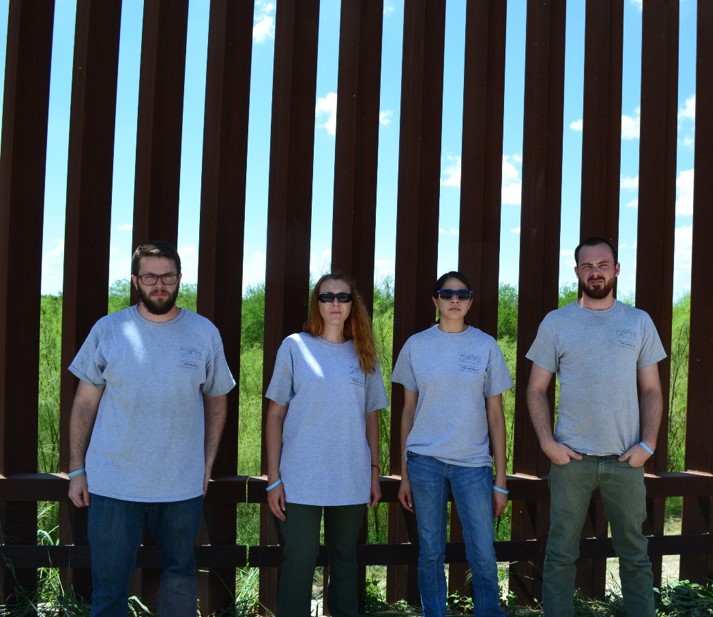
June 2015 Beyond Borders Team at the border wall.
June 2015 Beyond Borders Team (Justin, Dr. Latham, Amanda & Ryan)
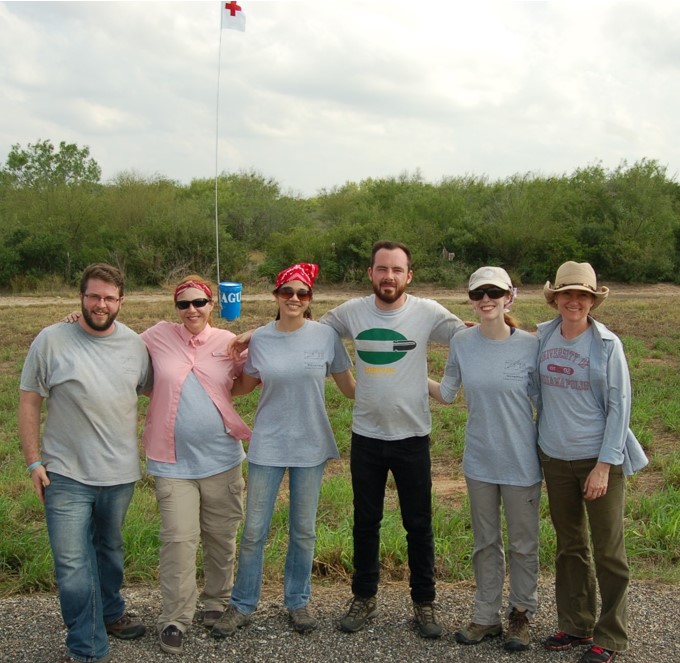
May 2016 Beyond Borders Team in front of a water station
May 2016 Beyond Borders Team (Justin, Dr. Latham, Amanda, Ryan, Helen & Dr. O’Daniel)
Jan 2017 Beyond Borders Team in the field.
Jan 2017 Beyond Borders Team (Justin, Dr. Latham, Jessica, Leann, Erica, Dr. O’Daniel, Rachel & Sarah)
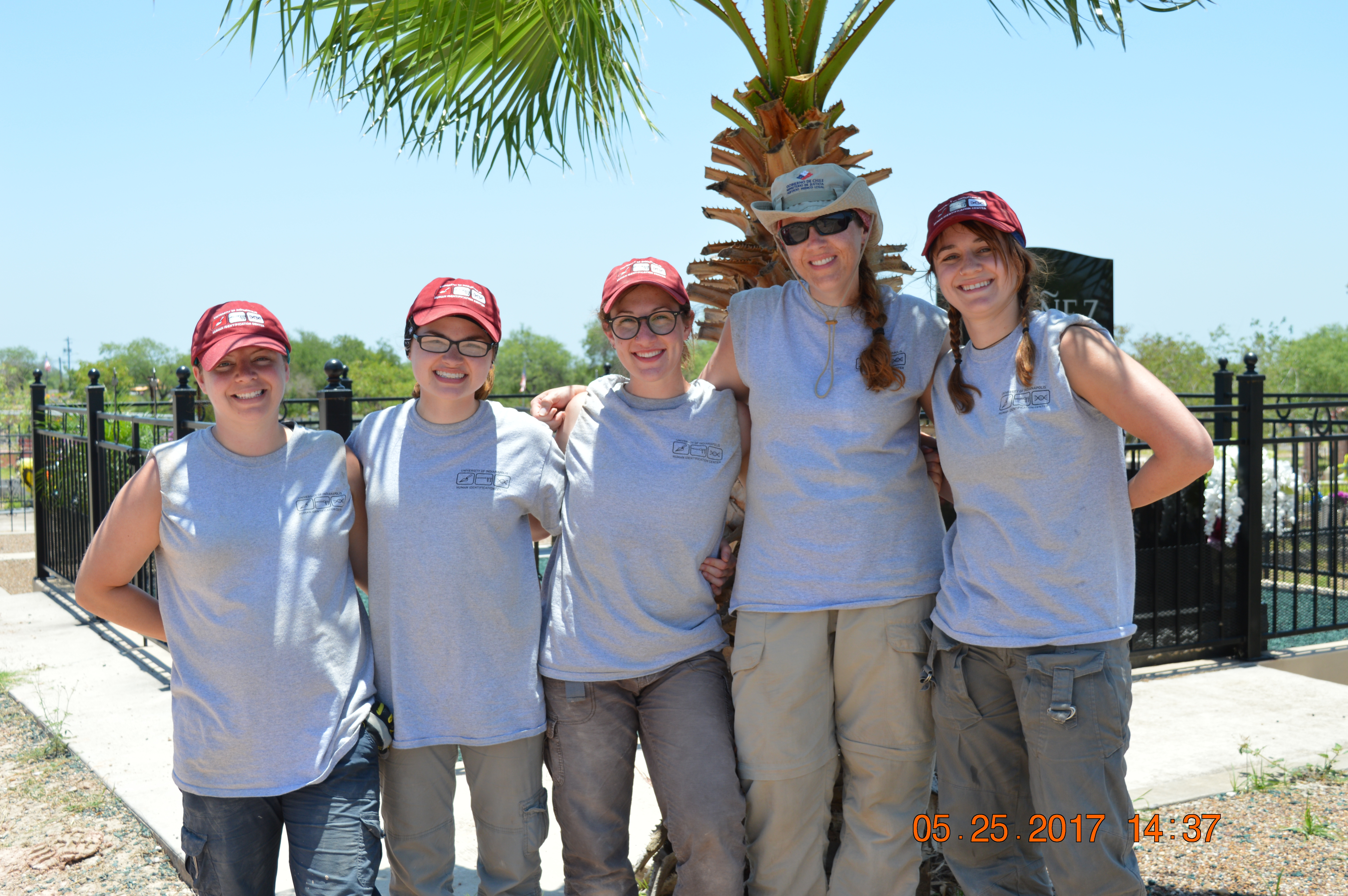
May 2017 Beyond Borders Team in the field.
May 2017 Beyond Borders Team (Jessica, Haley, Leann, Dr. Latham & Erica)

Looking back and moving forward

It has been almost two weeks since I have been home from Texas; well one week if you count the time that myself and other students spent in Boulder City, NV attending the Mountain, Desert, and Coastal Forensic Anthropology Conference. The thing with staying busy, is that it does not allow you to think or dwell on certain matters which can be both positive and negative. With traveling and then feeling under the weather (I’m highly allergic to Nevada apparently), I am just now able to process what happened down in Texas this field season. Everything was different compared to my first field season at Sacred Heart Cemetery in Falfurrias, TX in January 2017.

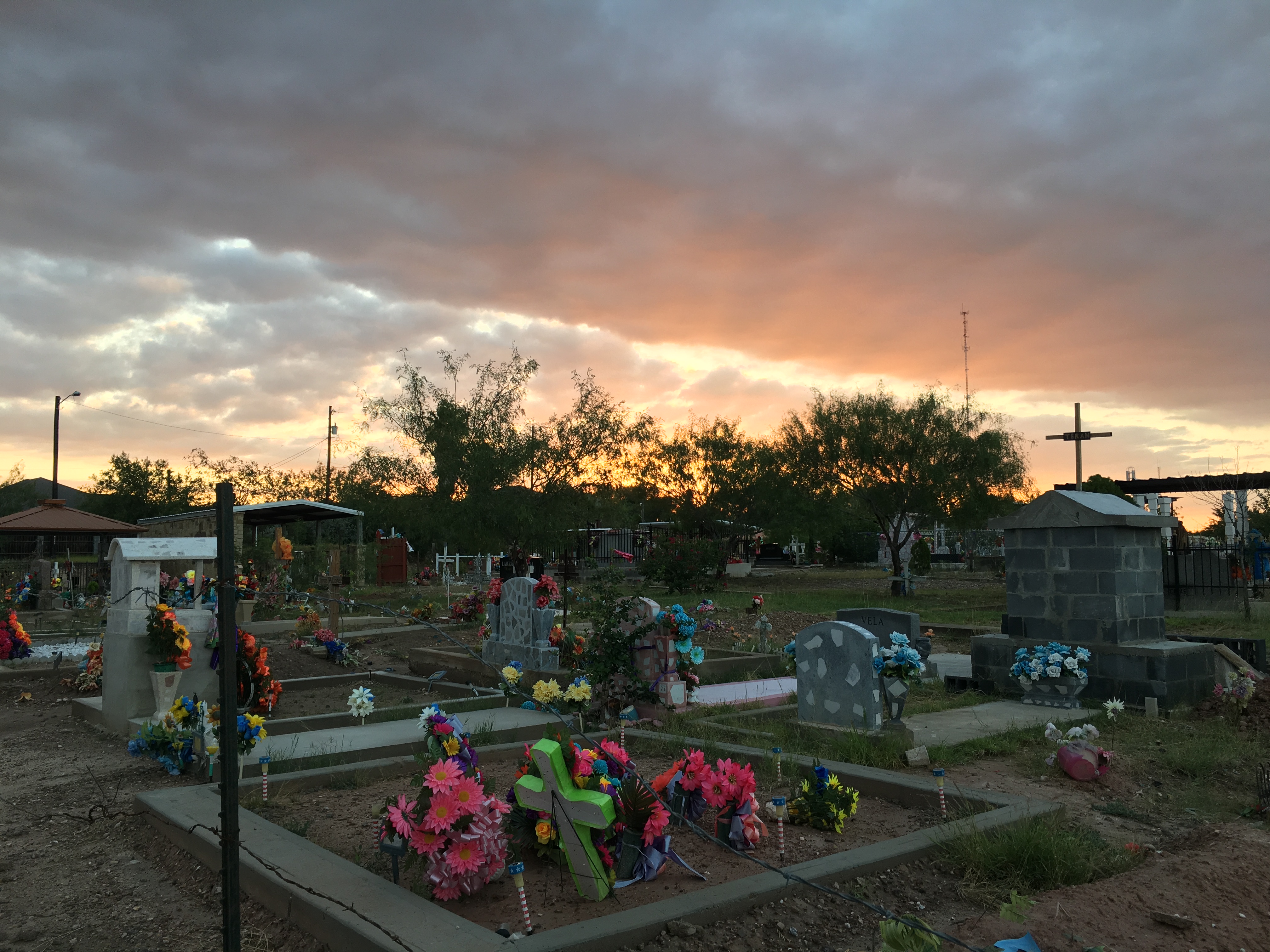
Sunrise over RGC Cemetery.
Sunrise over RGC Cemetery

After coming home in January, I was flooded with all sorts of emotions stemming from my time in Falfurrias. I attribute most of those emotions to visiting ‘the wall’ and volunteering at the Respite Center. During my trip, I did not allow myself to really process what was happening and the experience I had at the Respite Center. When I got home, I did not even make it through the drive home from the airport before I was so overcome with emotions that I cried most of the ride. I loved every minute that I spent at the Respite Center and I hope that in the future I can volunteer there again. When conducting field investigations at a cemetery, it is easier to remove yourself emotionally from the situation than when dealing with people who are still alive to tell their stories. In previous blog posts (from Jan), I know it was mentioned about the gentleman and his daughter who crossed the border, who came forward to tell us their story of how they got there. There was also another lady, who was traveling with her three daughters, who also shared her story. I’ll never forget those moments, I don’t think anyone in that room that day will ever forget.

When I came home in January, I felt motivated and inspired. I wanted to spread the news of what is happening and to educate those who may not understand completely the hardships people face below the border. This time, I still feel that same motivation and the need to continue volunteering in this effort. I am also amazed at how much more I have learned regarding the situation going on in South Texas as well as what is happening in Mexico.

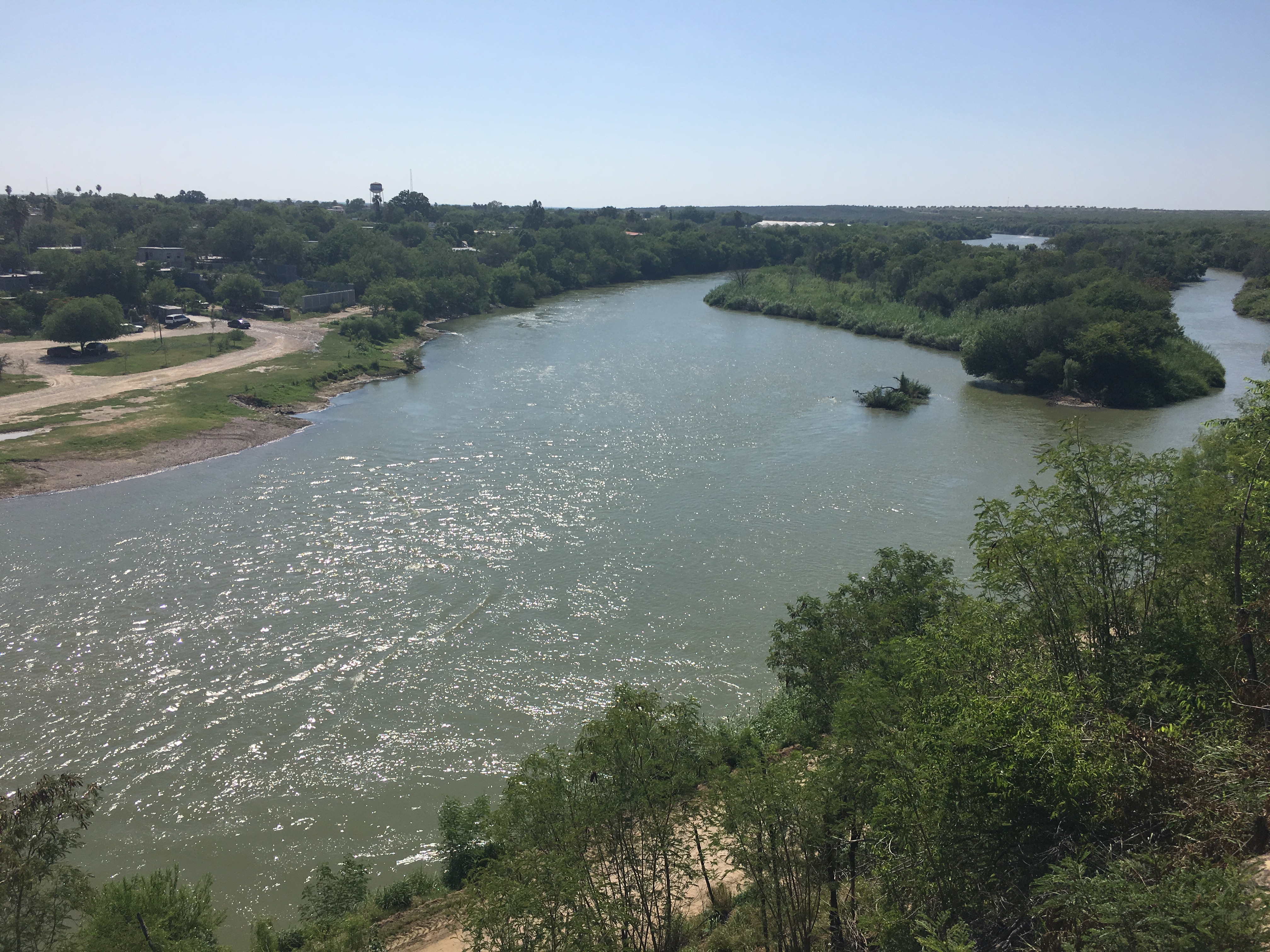
Overlook of the Rio Grande River into Mexico.
Overlook of the Rio Grande River into Mexico

The Mountain, Desert, and Coastal meeting could not have come at a better time. This year, the second day at the conference was a symposium on the ‘Sociopolitics of Migrant Deaths’ which had speakers from UIndy, the Colibri Center, the PCOME, Texas State University, and a journalist who is currently residing in Mexico. This symposium gave a whole new perspective about the humanitarian crisis in South Texas and what is also happening along the US/Mexico border.

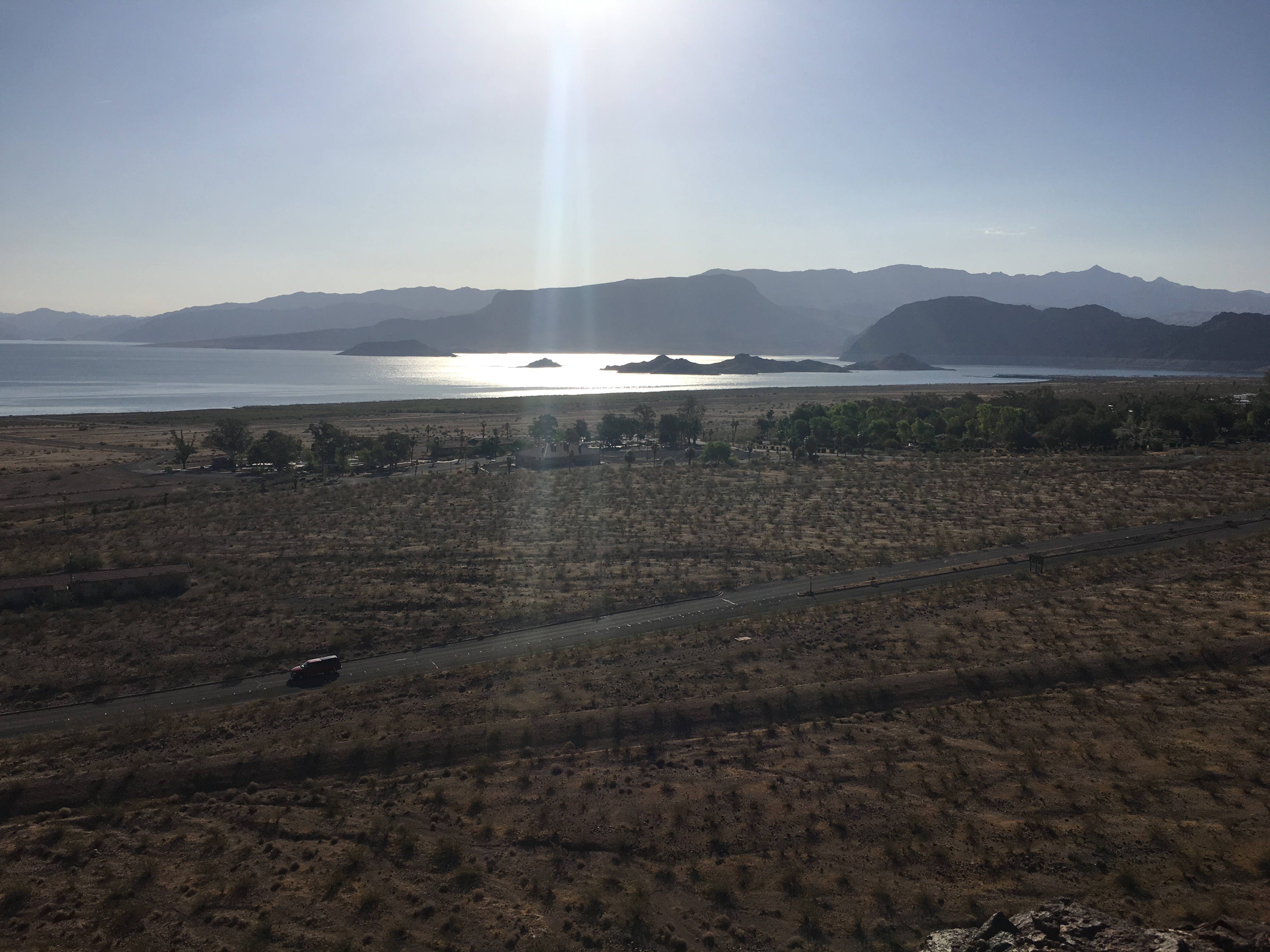
Overlook of Lake Mead in Boulder City, NV.
Overlook of Lake Mead in Boulder City, NV

Although I am not flooded with as many emotions as I had after being exposed to this humanitarian crisis for the first time, I feel that this trip has further solidified that this on-going effort isn’t about me or the other parties involved; it is about them. Them being those who have died that are still waiting to be identified and their families who are still waiting to find out what happened to their loved ones. After this trip, I have realized that this humanitarian effort isn’t something that will be completed in 1 year. This is an on-going effort and I would not be surprised if 10 years from now- this volunteer work is still be accomplished. I am forever grateful to have been able to be a part of this humanitarian effort and I hope to have the opportunity to continue volunteering in the future. As of right now, there is already another field season planned for January 2018 and again in May 2018. 

Group photo at MD&C Forensic Anthropology Conference

Jessica

Sociopolitics of Migrant Death and Repatriation: Perspectives from Forensic Science

We are pleased to announce a new book, based partly upon our fieldwork in the Texas borderlands, being released this fall!

Sociopolitics of Migrant Death and Repatriation: Perspectives from Forensic Science  Editors: Latham, Krista E., O’Daniel, Alyson J.

© 2017 Springer International Publishing AG

Summary: As scholars have by now long contended, global neoliberalism and the violence associated with state restructuring provide key frameworks for understanding flows of people across national boundaries and, eventually, into the treacherous terrains of the United States borderlands. The proposed volume builds on this tradition of situating migration and migrant death within broad, systems-level frameworks of analysis, but contends that there is another, perhaps somewhat less tidy, but no less important sociopolitical story to be told here.

Through examination of how forensic scientists define, navigate, and enact their work at the frontiers of US policy and economics, this book joins a robust body of literature dedicated to bridging social theory with bioarchaeological applications to modern day problems.

This volume is based on deeply and critically reflective analyses, submitted by individual scholars, wherein they navigate and position themselves as social actors embedded within and, perhaps partially constituted by, relations of power, cultural ideologies, and the social structures characterizing this moment in history.

Each contribution addresses a different variation on themes of power relations, production of knowledge, and reflexivity in practice. In sum, however, the chapters of this book trace relationships between institutions, entities, and individuals comprising the landscapes of migrant death and repatriation and considers their articulation with sociopolitical dynamics of the neoliberal state.

Table of Contents

Forward by Debra Martin

Preface by Robin Reineke

Part I: Beyond Local Jurisdictions: Science in a Global Web of Relations

Chapter 1 – Introduction by Alyson O’Daniel and Krista E. Latham

Chapter 2 – All that Remains by Adriana Paramo

Chapter 3 – Capitalism and Crisis in Central America by Dawn Paley

Chapter 4 – Naming State Crimes, Naming the Dead:  Immigration Policy and “the New Disappeared” in the United States and Mexico by Christine Kovic

Chapter 5 – Loss, Uncertainty and Action: Ethnographic Encounters with Families of the Missing in the Central America-Mexico-US Corridor by Wendy A. Vogt

Chapter 6 – The Geography of Migrant Death: Implications for Policy and Forensic Science by Gabriella Soto and Daniel E. Martínez

Chapter 7 – “Follow the Power Lines Until You Hit a Road:” Contextualizing Humanitarian Forensic Science in South Texas by Alyson O’Daniel

Part II: Producing and Situating Forensic Science Knowledge

Chapter 8 – Digging, Dollars and Drama: The Economics of Forensic Archaeology and Migrant Exhumation by Krista E Latham and Ryan Strand

Chapter 9 – Expanding the Role of Forensic Anthropology in a Humanitarian Crisis: An Example from the United States-Mexico Border by Angela Soler and Jared S. Beatrice

Chapter 10 – Identifying Difference:  Forensic Methods and the Uneven Playing Field of Repatriation by Eric J. Bartelink

Chapter 11 – Bodies in Limbo: Issues in Identification and Repatriation of Migrant Remains in South Texas by Timothy P. Gocha, Kate Spradley and Ryan Strand

Chapter 12 – Dialog across States & Agencies: Juggling Ethical Concerns of Forensic Anthropologists north of the U.S.-Mexico Border by Cate E. Bird and Justin Maiers

Chapter 13 – Charting Future Directions by Krista E. Latham and Alyson O’Daniel