Latest Posts

Reflecting on Texas

I have been home from Texas for approximately a week.  In the first three nights, I found myself waking up partially from a restless sleep thinking I was still in Texas digging in the field with my team.  The first night I woke halfway, sat up in my bed and thought I was waiting my turn to mattock.  While I truly do love mattocking, at 2am, I could hardly keep my eyes open while I was “waiting my turn.”  The second night I woke halfway and I again thought I was waiting my turn to dig.  The third night I again awoke thinking that we were digging and this time it was as if there was a pit between me and Erica and I had to get out of the bed and across the pit to help dig.  Each night I have found myself barely able to keep my eyes open and in my stupor, I feel badly because I feel like I am letting my team down as a result of not being able to keep my eyes open.
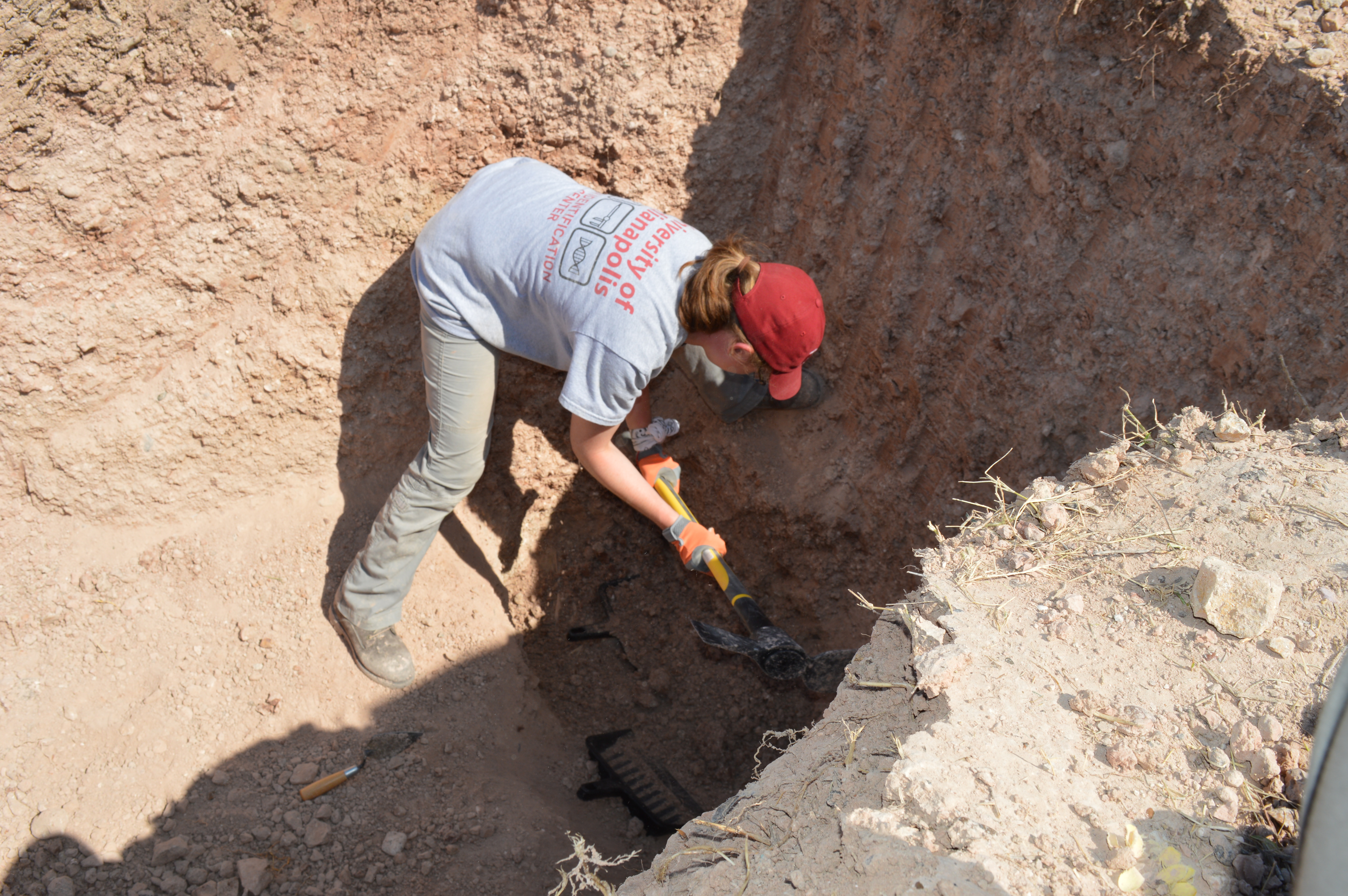
Team member excavating a burial.

While in Texas, the UIndy team worked at ORPL, the Osteology, Research and Processing Lab at Texas State University to analyze the remains of 9 individuals who were recovered by the UIndy team in January.  We also traveled to Rio Grande City, where we recovered the remains of 5 individuals from the Rio Grande City County Cemetery.

I am distinctly aware that the work we did in Texas does not put an end to the crisis at the border, but I feel so incredibly fortunate to have been a part of the work.  It was such an incredible experience and an emotional one indeed.  When we drove from San Marcos to Rio Grande City, we drove for roughly 4 hours on a road where we passed 1 or 2 cars our entire trip.  On either side of our vehicle were ranches where the brush, cacti and reddish-brown sandy dirt were overwhelming to onlookers.  Temperatures ranged from high 90s to low 100s.  We passed a border patrol checkpoint, and we saw water stations and paths where tires have been drug by border patrol so they may see any footprints of individuals trying to cross the border from Mexico into the United States.  During this road trip, it quickly became apparent why individuals often die when attempting to cross the border.  Heat exhaustion sets in quickly and individuals often do not have a clear idea of how long it will take them to cross from Mexico into the United States.  When we were working in the field on our last day in Rio Grande City, it was a heat index of 117 degrees Fahrenheit.  We each worked for 2 minutes mattocking and shoveling, and then we each took an 8 minute break.  To some this will sound absurd.  However, I can assure you that there was no way we could have worked for more than 2 minutes at these tasks without quickly finding ourselves in an emergency room at the nearest hospital.  We each drank incredible amounts of water to keep ourselves hydrated.

Our experience working in the field at the Rio Grande City County Cemetery and driving to Rio Grande City was an incredibly eye opening experience.  On our drive to Rio Grande City, I looked out the window from the back seat of an air conditioned van and my heart was heavy for individuals trying to cross into North America.  The journey seems terrifying from an onlooker perspective.  I feel so incredibly fortunate to have been able to be a part of this work.  Growing up in Michigan, I was not exposed to any happenings at the border.  This trip has grown my awareness tremendously.  I really enjoyed being able to tour the Texas State University facilities and getting to meet the graduate students and some of the faculty of the university.  Overall, this trip has had an incredible impact on me personally.  There isn’t a day that goes by now that I don’t think of those individuals who are lost or trying to cross the border.  I hope this work will continue for years to come to identify individuals lost in this crisis.
Haley

Baby Steps

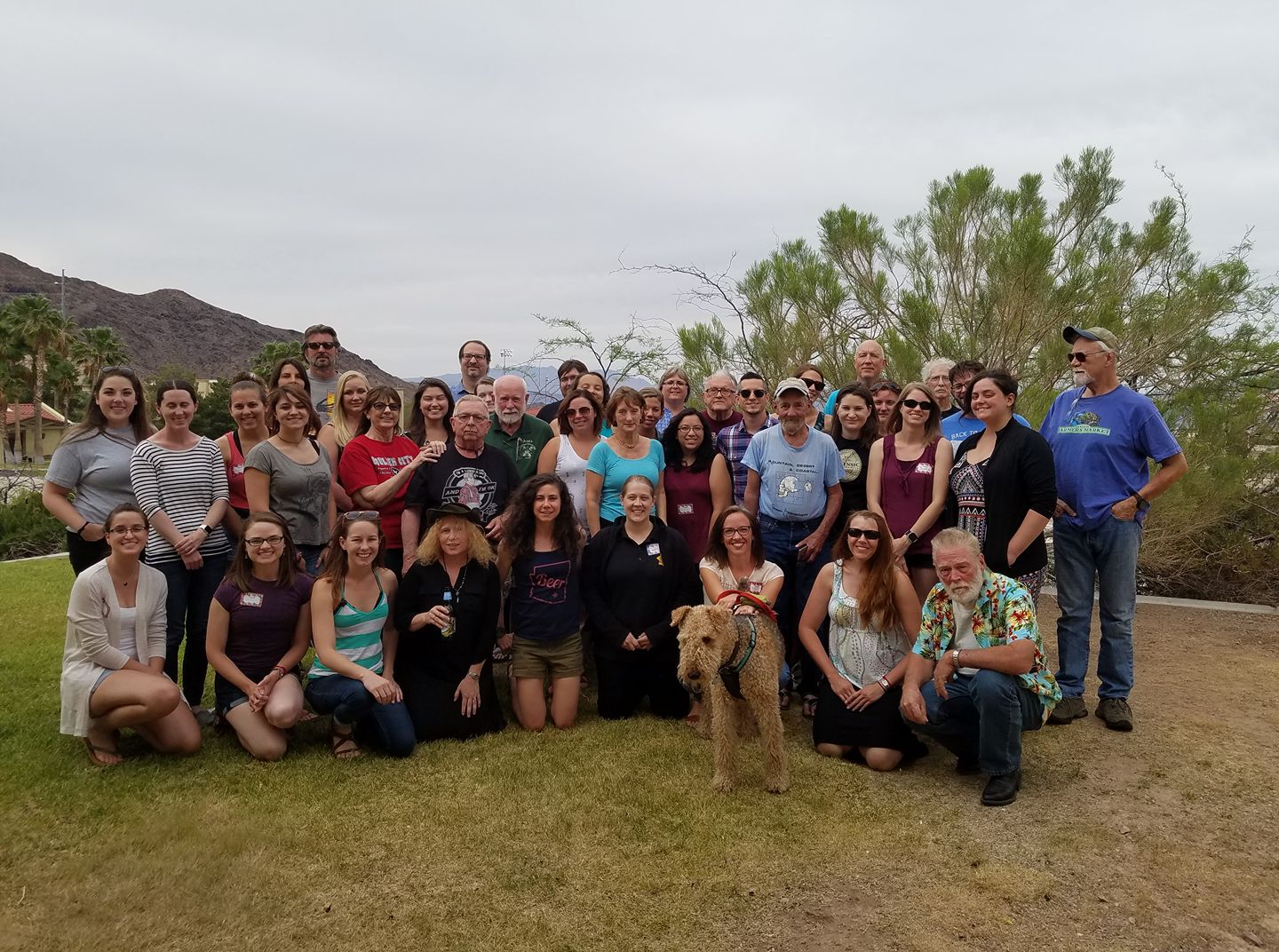
It has now been just over a week since we returned to Indianapolis from our trip to South Texas. After only two nights back in Indy, some of us returned to the airport to travel to Boulder City, Nevada for the annual Mountain, Desert, and Coastal Forensic

Group photo at MD&C Conference.
MD&C 2017!

Anthropology meeting, which was a great experience. The theme of this year’s meeting, in fact, was a symposium discussing the many aspects of the humanitarian crisis at the border. In addition to giving a presentation myself, there were many presentations from people involved with several different agencies. After having traveled to South Texas twice now, I consider myself fairly involved with the UIndy team’s role in this humanitarian work but it was amazing to see all the other people who are involved and how their roles differ from ours. It was also amazing to see just how many people are involved; it felt almost like a community of people, many of whom I had never previously met, who are connected by our service to this cause.

Thinking back to our trip to South Texas, I continue to feel proud of the work that we accomplished together as a team. We faced many challenges, especially in the field, but our ability to work together and use our critical thinking to problem

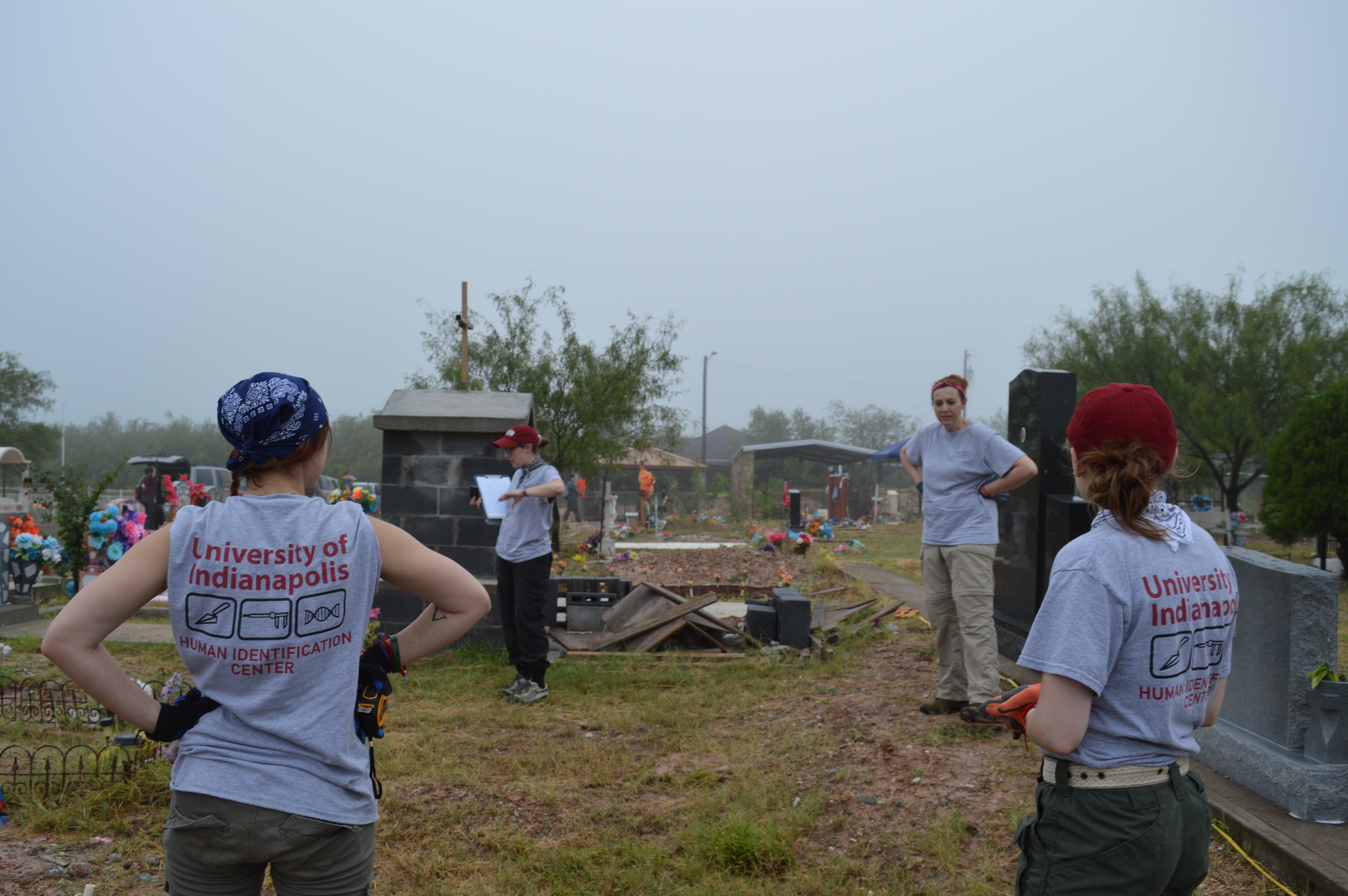
Team Meeting at the cemetery.
Team Strategy Meeting

solve allowed us to overcome those challenges, and relatively easily, I dare say. I don’t think I will ever cease to be impressed by how this team worked together – everyone contributed so much, I didn’t hear a single complaint except for the

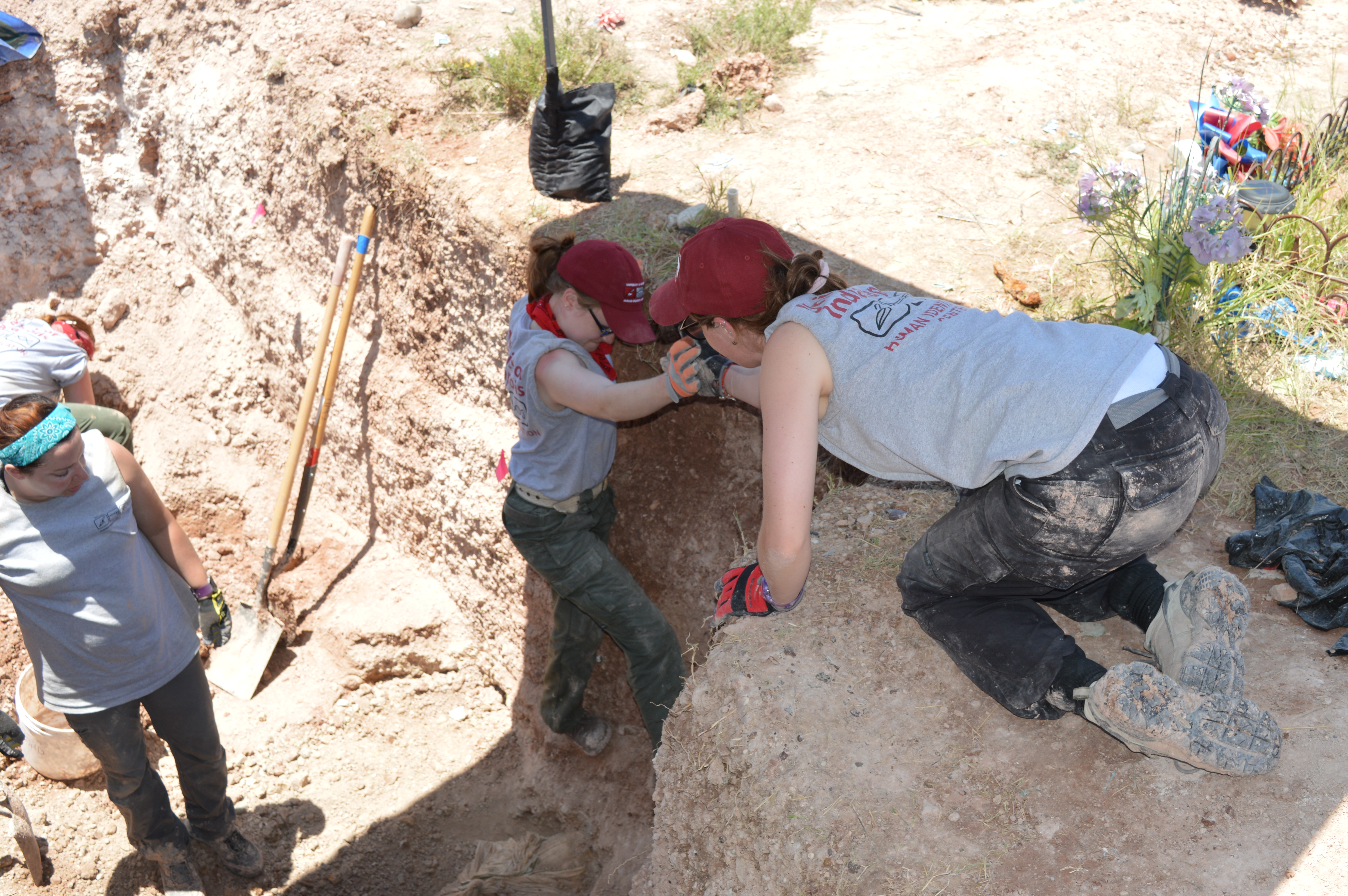
Team members helping each other out of the pit.
Teamwork was even necessary to get in and out of the pit

typical light-hearted groans about muscle soreness and “bucket bruises,” and everyone’s strengths complimented each other’s very well. I am proud to have worked with every member of our team and I know that we have formed a bond with each other, and with other individuals working with this crisis, that will last a lifetime.

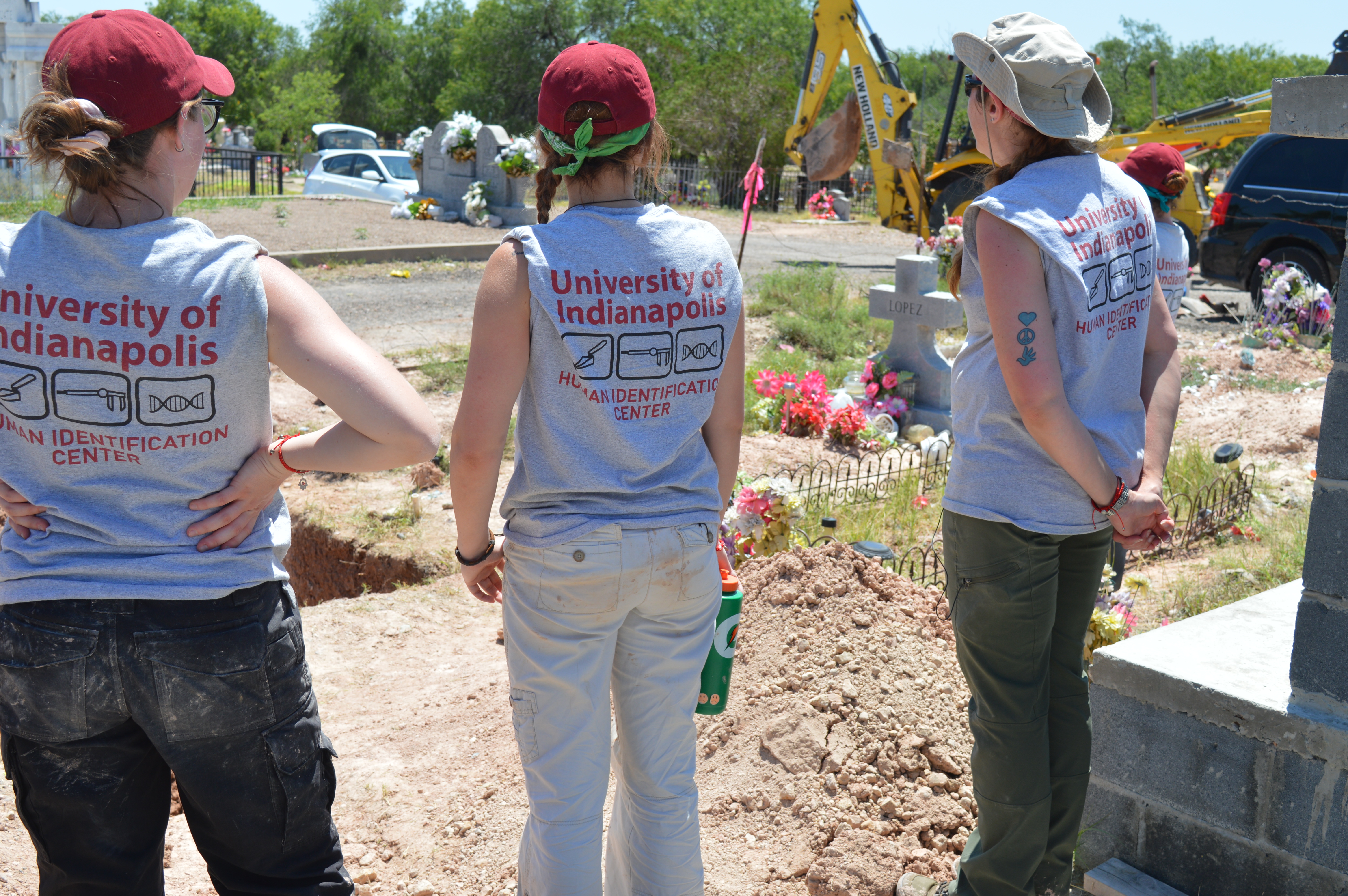
Accomplishing our goals in South Texas is only one small step towards exhuming and identifying all of the unidentified migrants who have been buried across South Texas. Some may consider it disheartening to think about how much work still needs to be done – not only would we like to return to Brooks and Starr county, but there are likely many many other cemeteries across South Texas that need to be visited. But these small steps are necessary and represent progress, and after this most recent trip, over 10 more individuals are finally beginning the process of identification. The UIndy teamTeam members looking over the cemetery. is just one of many who is slowly chipping away at this problem, and I can only imagine that progress will accelerate as more and more individuals become aware of the crisis situation at the border. I know that I will try and play my part in helping to spread this awareness while I am back in Indianapolis, and hope to be able to return to South Texas in the future to continue to make those small steps to eventually identify all of those that have perished crossing the border.

Erica

A New Purpose

I’ve been home from Texas for three days now and it’s always a weird transition back into normal life. In Texas, you wake up every morning with a purpose and it’s really hard to come home and wake up without that same purpose.  Additionally, it is hard to come back to a city where a great majority of the individuals have no idea of the atrocities occurring at the border.  While this disheartens me, it also fuels me.  It fuels me to spread awareness about this crisis and educate people about the true events occurring at the border, those that are commonly inaccurately portrayed by current media.

UIndy team photo.
My amazing team

I learned more than I could have ever hoped for on this trip to Texas.  Not only did I improve upon field techniques and forensic archeological skills, I also gained experience conducting lab analyses.  As this was the first trip I have been involved where skeletal analyses took place, I learned so much regarding each of the aspects I took part in, as well as the intricacies and variation behind each of the traits we looked at.  During the Human Osteology course offered at UIndy, I learned about some of these traits and how to correctly analyze them, so it was amazing to apply this education in a new context.

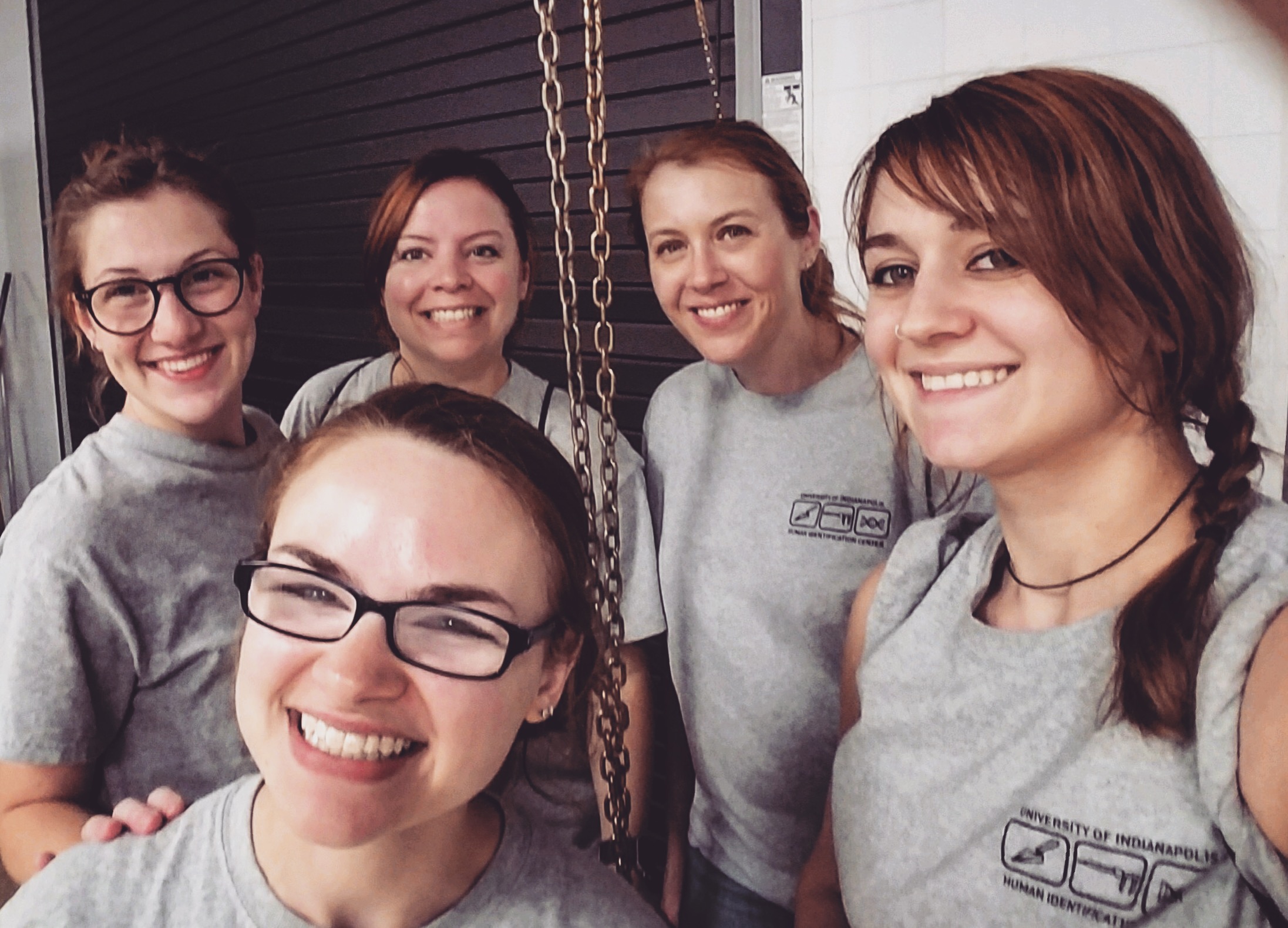
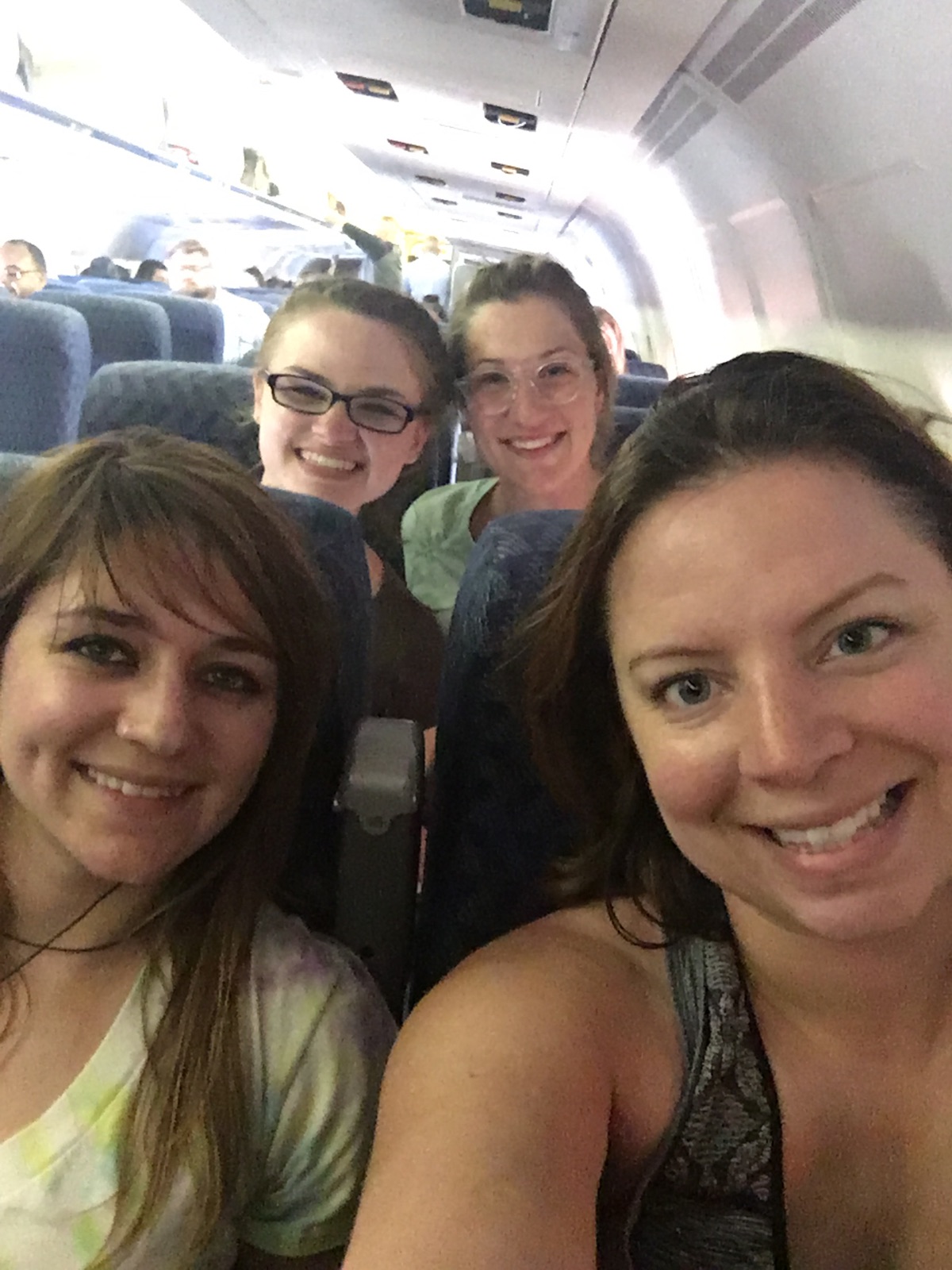
Team selfie on the plane.
On the plane and homeward bound

I also learned more about the sociopolitics surrounding this crisis in a town that is situated much closer to the border than Falfurrias is.  Because we don’t have the same five year long relationship with Rio Grande City as we do with Falfurrias, I believe we will continue to learn more about the sociopolitics surrounding this crisis as our relationship with this city grows and progresses.  I look forward to continuing to learn about the intricacies of this humanitarian crisis, and seeing how location and proximity to the border effects community views.  I believe that understanding these aspects of the humanitarian crisis can inform policies, procedures, and viewpoints that accurately address  and reflect the mass disaster occurring.  Only with this understanding can true change take place.

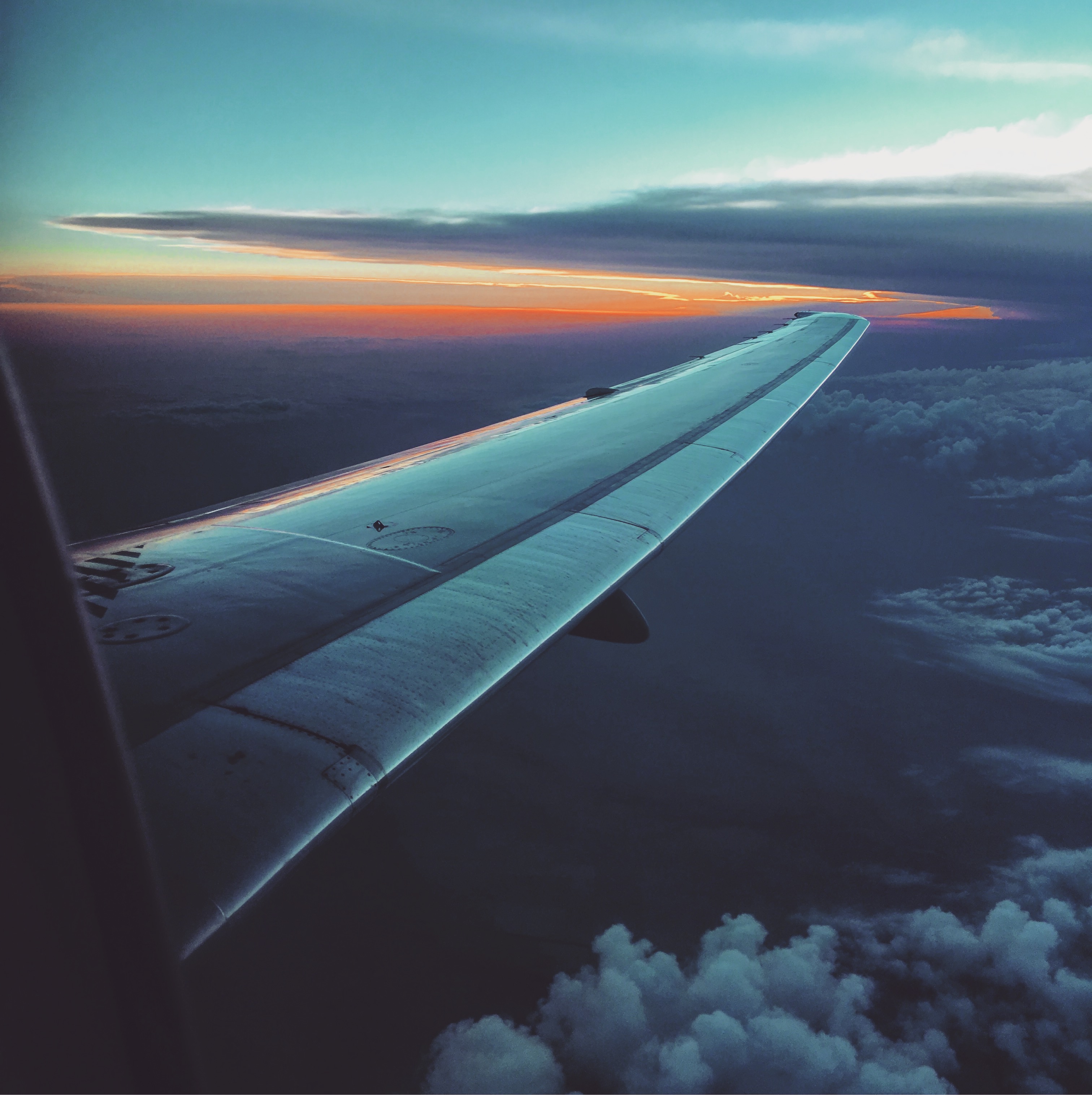
Photo taken out plane window over Texas sunset.
Goodbye Texas

I always miss the people I have met down in Texas.  The new friends I made this field season, as well as friends made last January; Sister Pam, Dr. Spradley, Dr. Gocha, JP… all of these incredible individuals that work so hard for this humanitarian effort. But the aspect of Texas I always miss the most is the purpose, knowing that what I am doing is helping return individuals to their loved ones.  Even though I don’t wake up with the same purpose as I do in Texas, I now wake up with a different purpose – spreading awareness, education, and advocacy.

Until next time, TX…

Leann