All posts by lathamke

Alone we can do so little, together we can do so much

There are so many dedicated and hardworking volunteers working in the RGC Cemetery this week on the excavations. There are five of us from UIndy and a large group from Texas State University.  We have already talked extensively about the challenges we face: the high temperatures, the difficulty digging in the ground here, and the depth of the burials (among other things). But, unlike what we faced in Sacred Heart Burial Park, each area of the cemetery where unidentified migrants are buried brings its own unique challenges.
Texas State team members excavating a burial.

The area that needs to be searched here is very large. While that might not be an issue in the sandy soil of Brooks County, here our normal search strategies are difficult or impossible. Probing the ground has proven impossible and the act of digging test pits or trenches is difficult and time consuming. Yet, they are still making progress and doing an incredible job facing the challenges of this particular site.
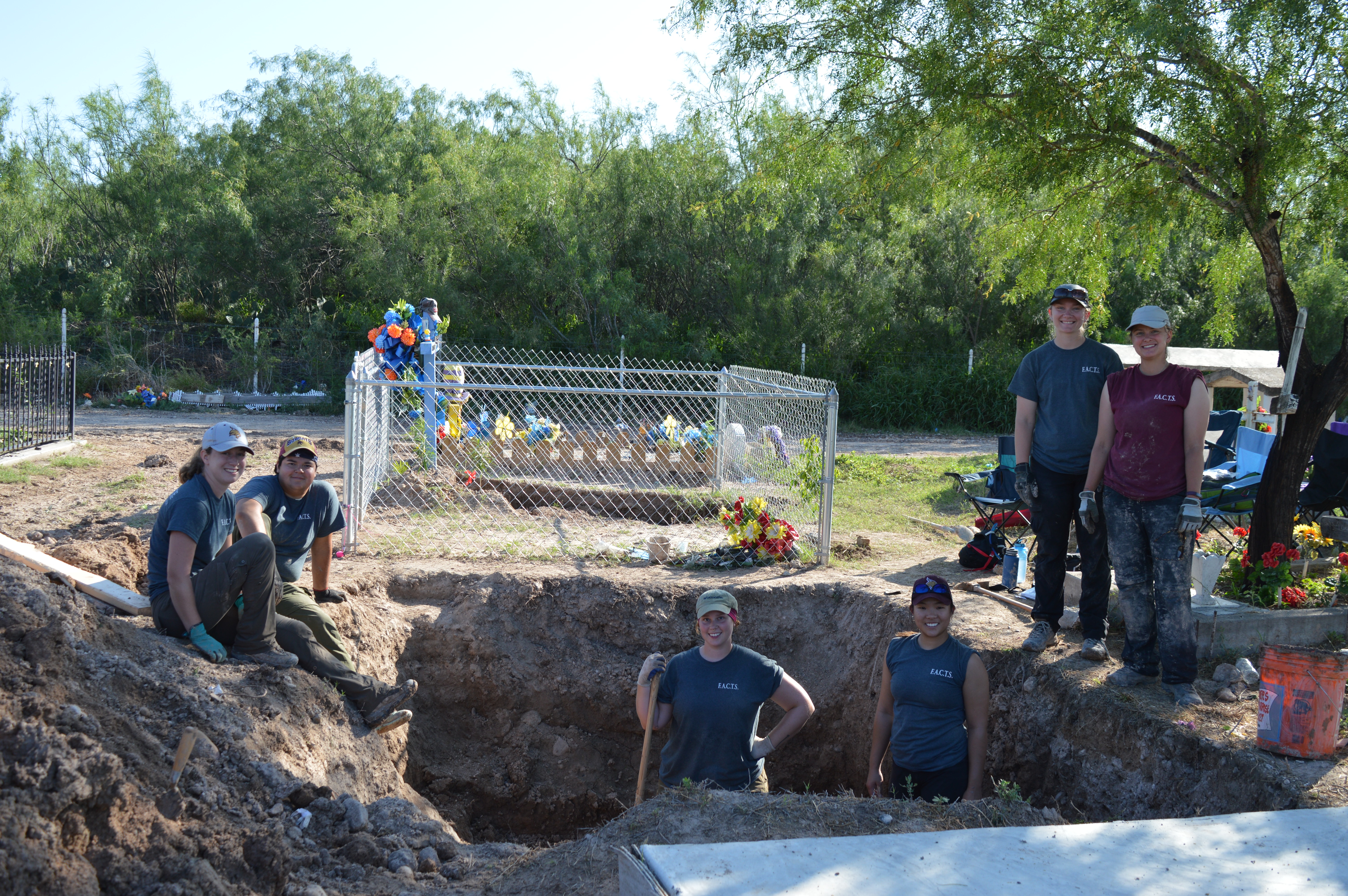
Texas State team members around a pit.

The area here is located on low ground. We had had several big overnight storms throughout the week that has left this area completely underwater.  Yet, this group came up with strategies to remove the water from the pit and continue to work without much delay.
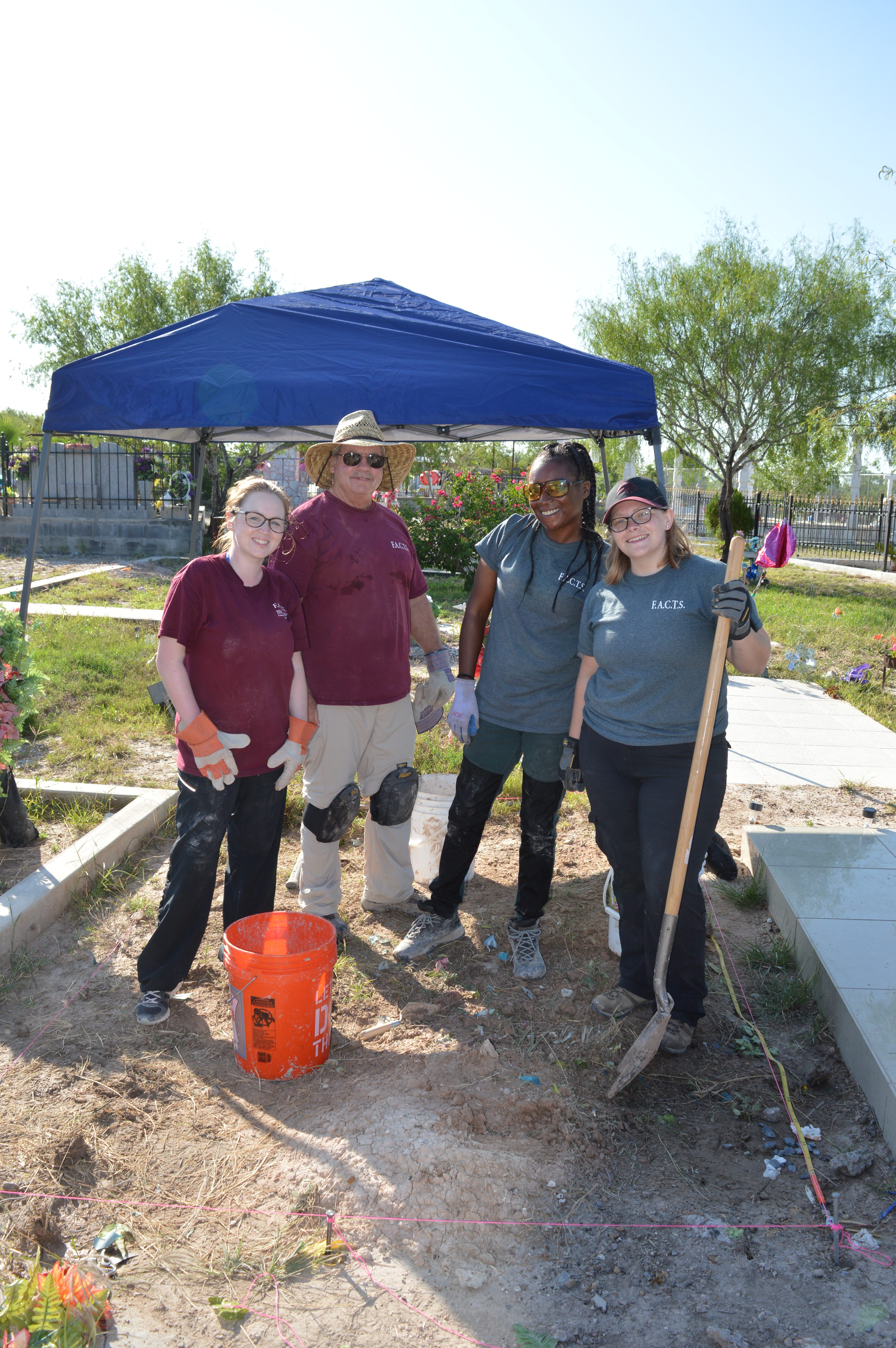
Texas State team members.

This group is digging their excavation area completely by hand. This burial is expected to be 5-6 feet below ground surface and is located in a place that the backhoe cannot reach.   So they are using shovels to excavate the entire pit by hand. In this environment that is quite a task!
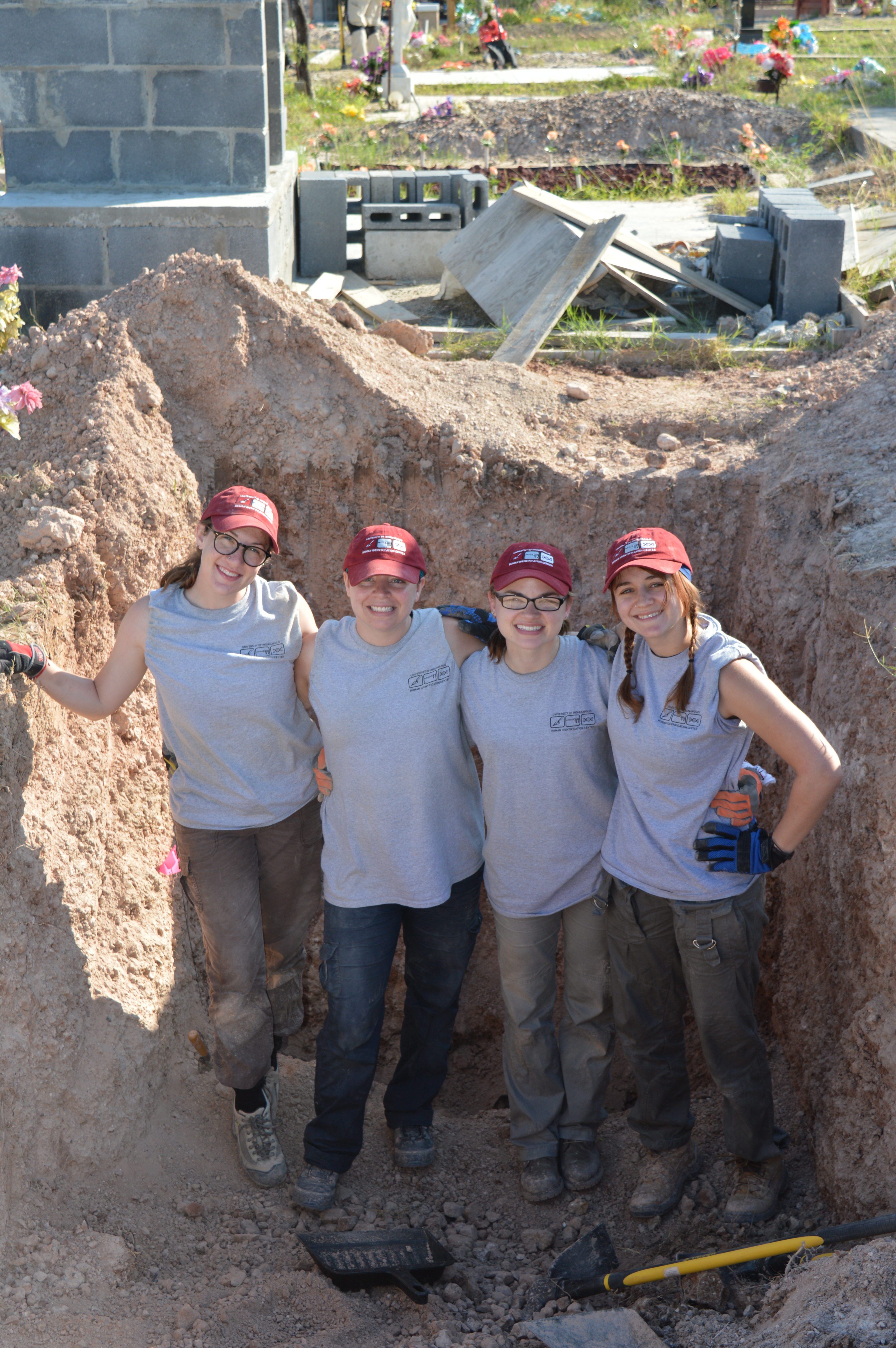
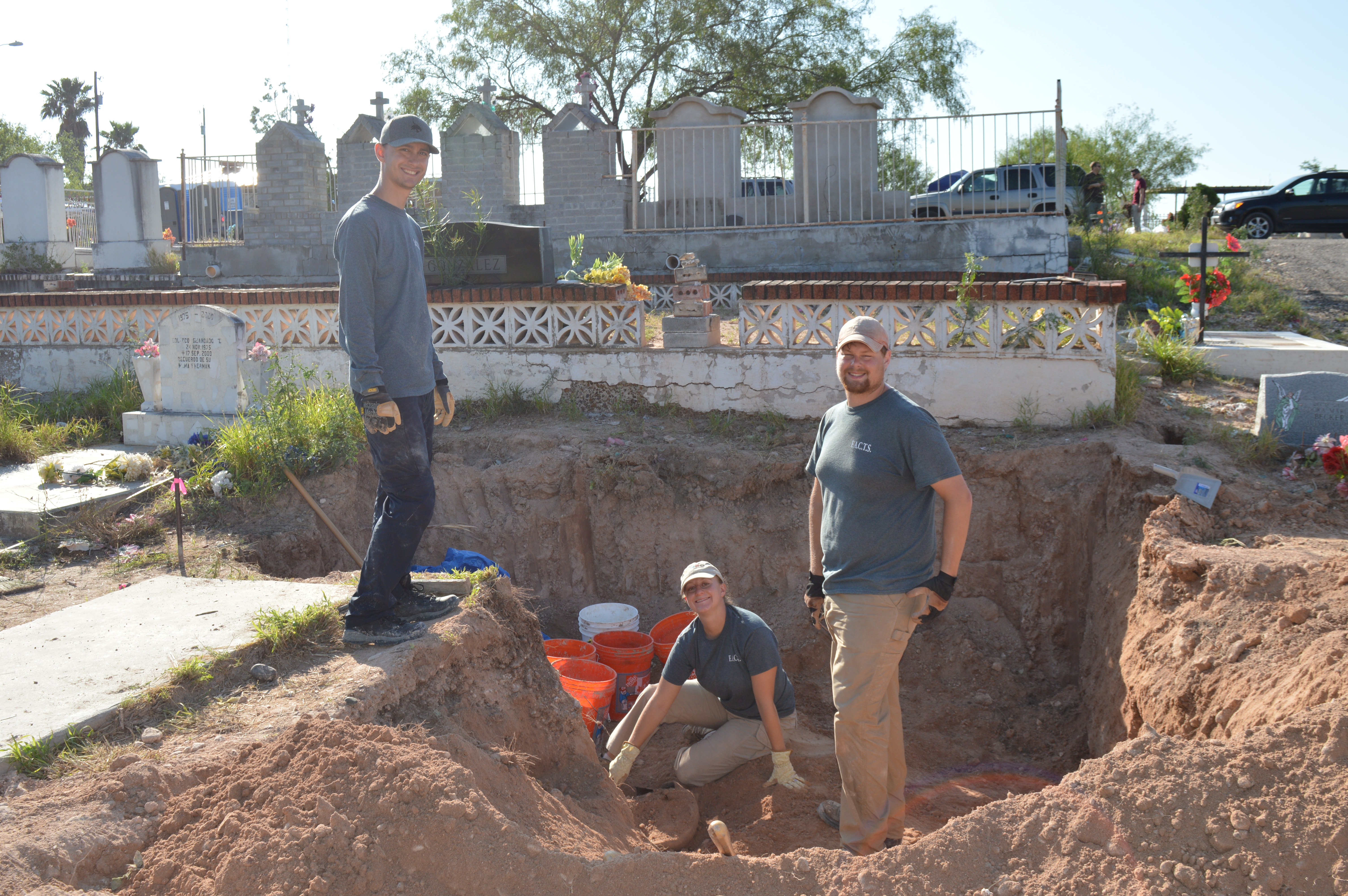
UIndy team standing in the bottom of an empty pit.

In this area of the cemetery the burials are deep! This has required a lot of digging to locate and remove each burial. Yet, this team has powered through it each day.

Every volunteer is facing the same collective challenges in addition to the unique challenges of their team’s particular excavation spot. It takes a lot of dedication, determination and strength to continue to make progress each day and we wanted to make sure all these hard workers are recognized!

~KEL
An Anthropological Perspective

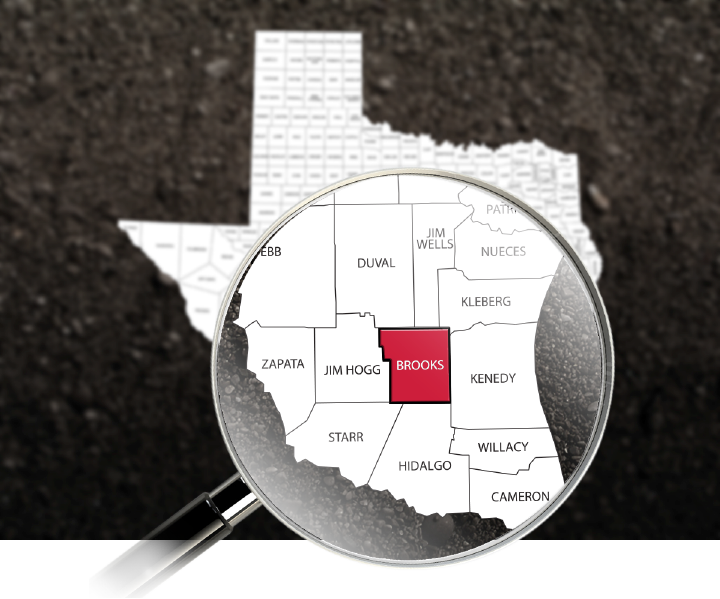
Map of Texas counties with Brooks County in red.

Forensic anthropologists not only have a specific set of scientific skills (forensic archeology Close up of an unidentified migrant's burial marker.and expertise in the human skeleton) and experience navigating the medicolegal system that allow us to play a vital role in the investigation of migrant deaths along the border, but as broadly trained anthropologists we are also able to approach this work in a culturally sensitive and appropriate way. We utilize the controlled and systematic approach of traditional archeological technique to recover the individuals from the cemetery while preserving the context of the burial information. We are able to analyze the skeletons and assess the living characteristics of each person (like how old they were when they died, were they male or female, how tall were they, etc…). We know that each person represents an open forensic case and approach this work in a way that preserves the chain of custody and produces proper documentation to allow for an investigation into personal identity.

As anthropologists we understand that while we serve an important practical role in the identification of the migrants, we are also situated within a very large and complex set of realities occurring not only in the Texas borderlands but also globally. Locally we must consider the various stakeholders impacted by this process. This includes the families of the missing, law enforcement, as well as the local community members (among others). Since the beginning of this project we have considered the feelings of the families of the missing. We have worked to treat the dead with respect and dignity as we work towards their identification. We are transparent with our findings and provide families of the identified with copies of the field recovery reports that pertain to their loved one as well as copies of the scientific reports, along with an explanation of what they mean and how that lead to an identification.  Invitations for us to work on these identifications come from the local medicolegal community, so our interactions with these stakeholders has been extensive. What we have learned over the years is that the law enforcement community must find ways to balance their resources, focuses and efforts between the living and the dead. They have a community to serve and protect, lives to save when distress calls come from the dessert and bodies to recover. As the number of bodies has increased dramatically over the last few years they have struggled to continue that balance as resources have not similarly increased.  While we are mindful of how we are working within a broader system and we can begin to use this awareness to guide our work, we are aware that we are only beginning to recognize how we fit into this sociopolitical landscape and that we currently have more questions than answers.

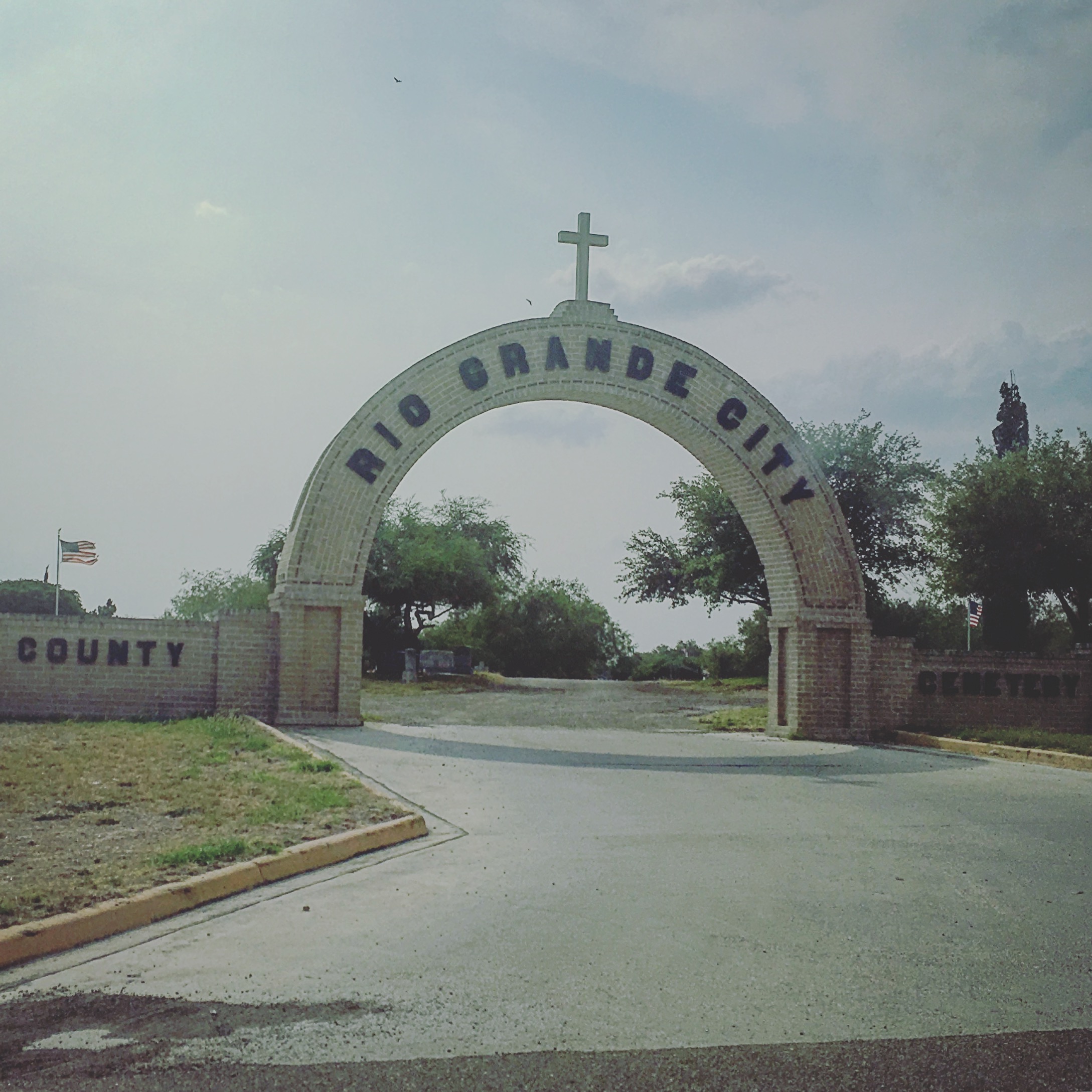
Entrance to Rio Grande City Cemetery.
Rio Grande City Cemetery

As we move into a new community it is especially important to consider how we are directly and indirectly impacting the community of Rio Grande City with this work. We must understand that the community, as a border town, has been entangled historically in migration issues that are shaped by larger forces of economic globalization, racial division, and various forms of privilege and disadvantage. At each step of the planning and excavation process we must continue to ask ourselves how we are influencing the community from the larger and more long lasting impacts to the daily interactions and encounters at the cemetery and in the town along the way.

~KEL

Day 2 (Lab) – Setting the Pace

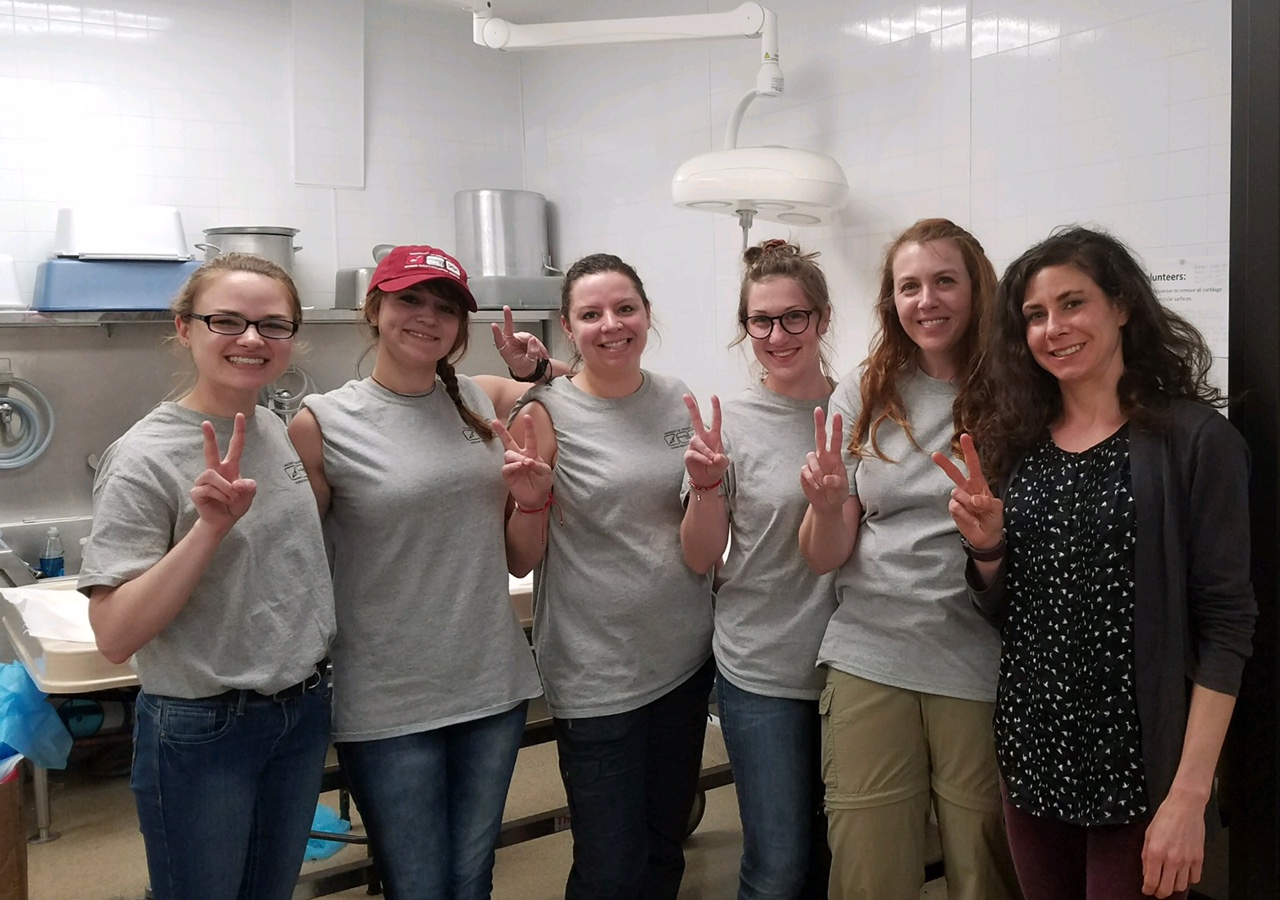
Day 2 team photo in the lab.

Today was our second full day at the Osteology Research and Processing Laboratory (ORPL) conducting skeletal analyses. Our first four cases were individuals the UIndy team exhumed from Sacred Heart Burial Park when we were there doing exhumations in January. It is especially motivating for us to be able to follow these individuals from the exhumation to the analysis phase of the forensic investigation. Once the skeletal analysis is complete a forensic anthropology report is composed to  outline the decedent’s living characteristics, such as an estimation of their age at death, how tall they were in life and a determination of whether they were male or female (among other things).  Once the forensic anthropology report is complete, a sample can be submitted for the generation of a DNA profile. The DNA information is then compared to DNA profiles in a database that were submitted by family members of missing persons.  If there is a profile that is similar, the information about the missing person is then compared to the information in the forensic anthropology report as well as other documents that might have important information about the unidentified person, such as when and where the body was found. If there are no major inconsistencies between all the various pieces of data, then a personal identification can be made. It is not an easy or a fast process. But the sooner the skeletal analysis occurs, the sooner they will enter this process and hopefully be identified and returned to their loved ones.

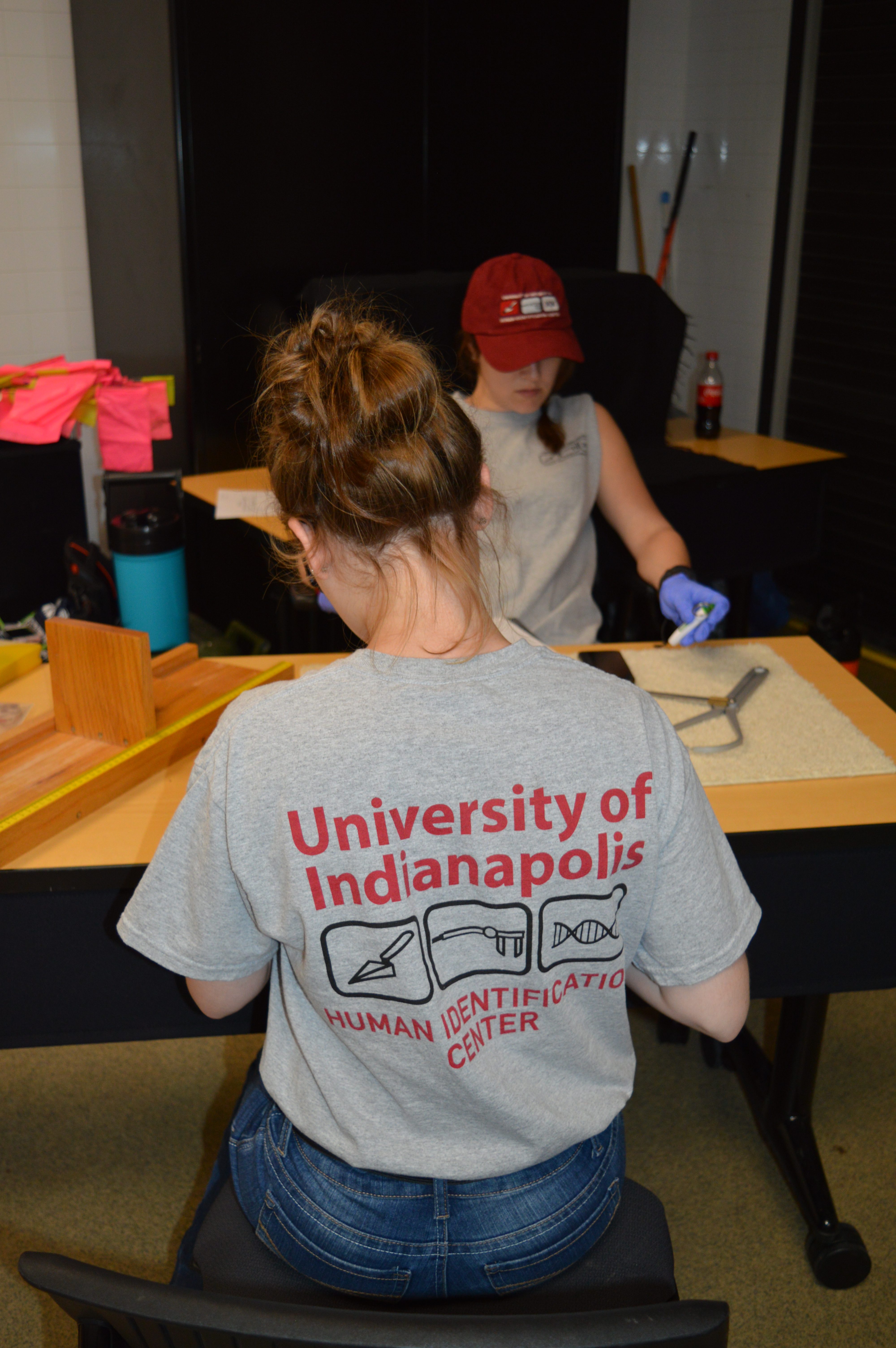
team members analyzing skeletons in the lab.
Skeletal analyses at ORPL

Today the UIndy team hit their groove. There was no stumbling over the various steps in the process or waiting on others to complete steps before others could be conducted.  While two people were taking measurements, two others were analyzing non-metric traits and one was taking photos.  It was a pleasure as a teacher to watch them find their confidence, work well as a team and help each other along the way. While our team was working on cases, there was a team from Texas State lead by Dr. Tim Gocha that was working on cases as well.  The goal is to get as many of the 20 cases that are processed and ready for analysis completed by the two teams in three days. Also at ORPL this week is UIndy alum Caitlin (posing with us in our Day 2 photo).  It’s great to see how well she’s doing since graduating from the UIndy Human Biology Program. Tomorrow is our last day of skeletal analyses.  We plan to get there early and hit the ground running so that our last day is the most productive day yet.

~KEL