All posts by lathamke

Texas State University

As previously mentioned, the UIndy team had the opportunity to visit the Forensic Anthropology Center at Texas State University (FACTS).  The majority of the unidentified migrants from Brooks County go to Texas State University to continue the identification process.  The massive endeavor, called Operation Identification, is coordinated by Dr. Kate Spradley. Unfortunately Dr. Spradley was not in town on the day of our visit, but we did get to spend time with Dr. Danny Wescott, director of FACTS.
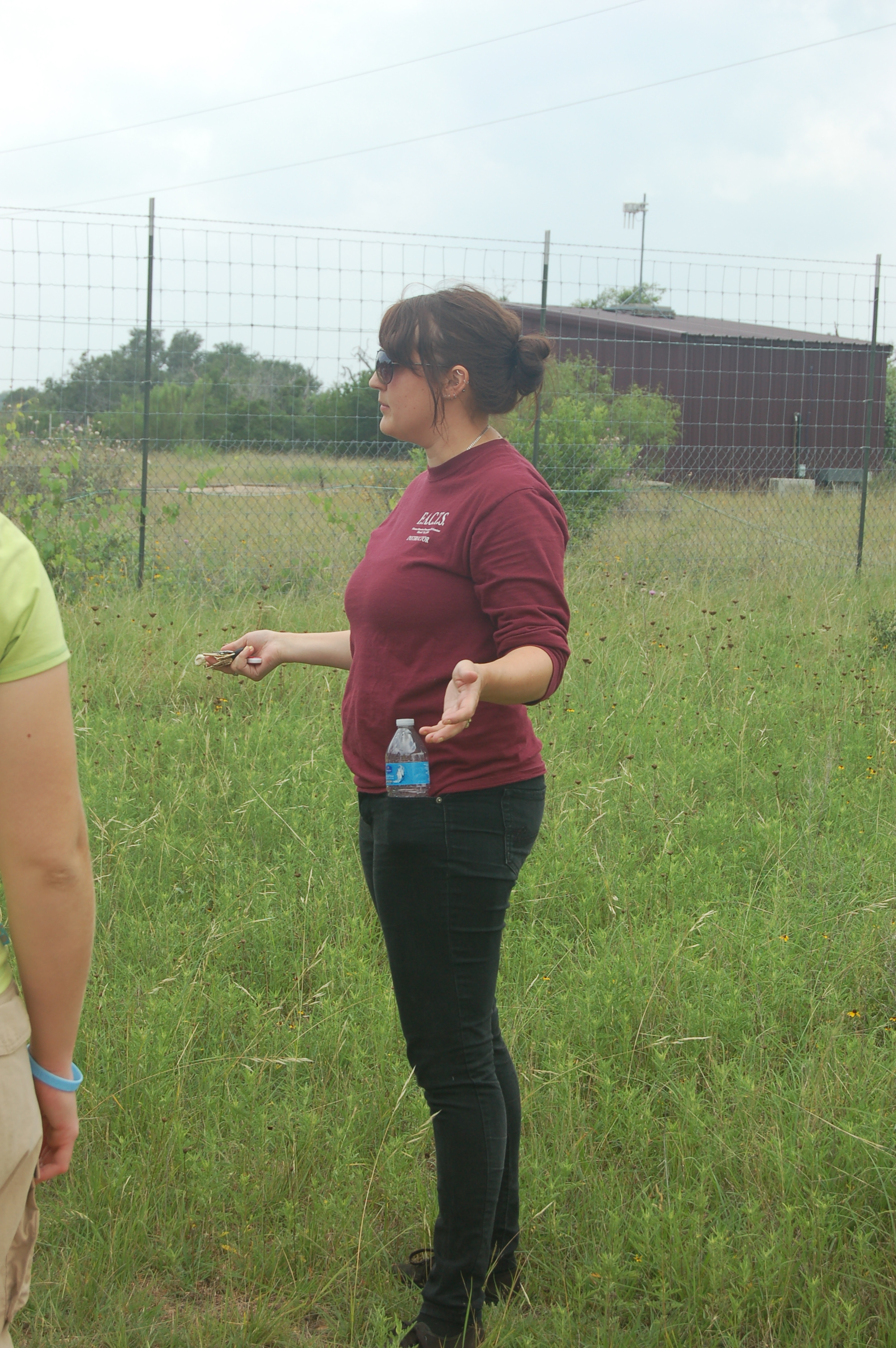
Hailey standing in a field giving an explanation with a visible fencing in the background
Hailey Duecker

Hailey Duecker, the graduate student assistant for Operation Identification, took the UIndy team and those Baylor students that wanted to see the facility on a tour. We began by seeing the Forensic Anthropology Research Facility (FARF).  The FARF is a 26 acre outdoor human decomposition research laboratory that also serves as a reservoir for the unidentified individuals as they await processing and analysis.  Hailey showed us the donated bodies that are used to study various aspects of the decomposition process, as well as the area of the FARF dedicated to Operation Identification.  Being a native Texan I had been to San Marcos before (mostly to tube in the river) but I was still shocked by the temperature. The sun felt just as hot as it had in Falfurrias. It will be interesting to see if the research coming out of the FARF can assist with time since death (postmortem interval or PMI) estimates for the individuals discovered on the ranches in Brooks County.  Any additional information about these individuals could potentially help with the identification process.
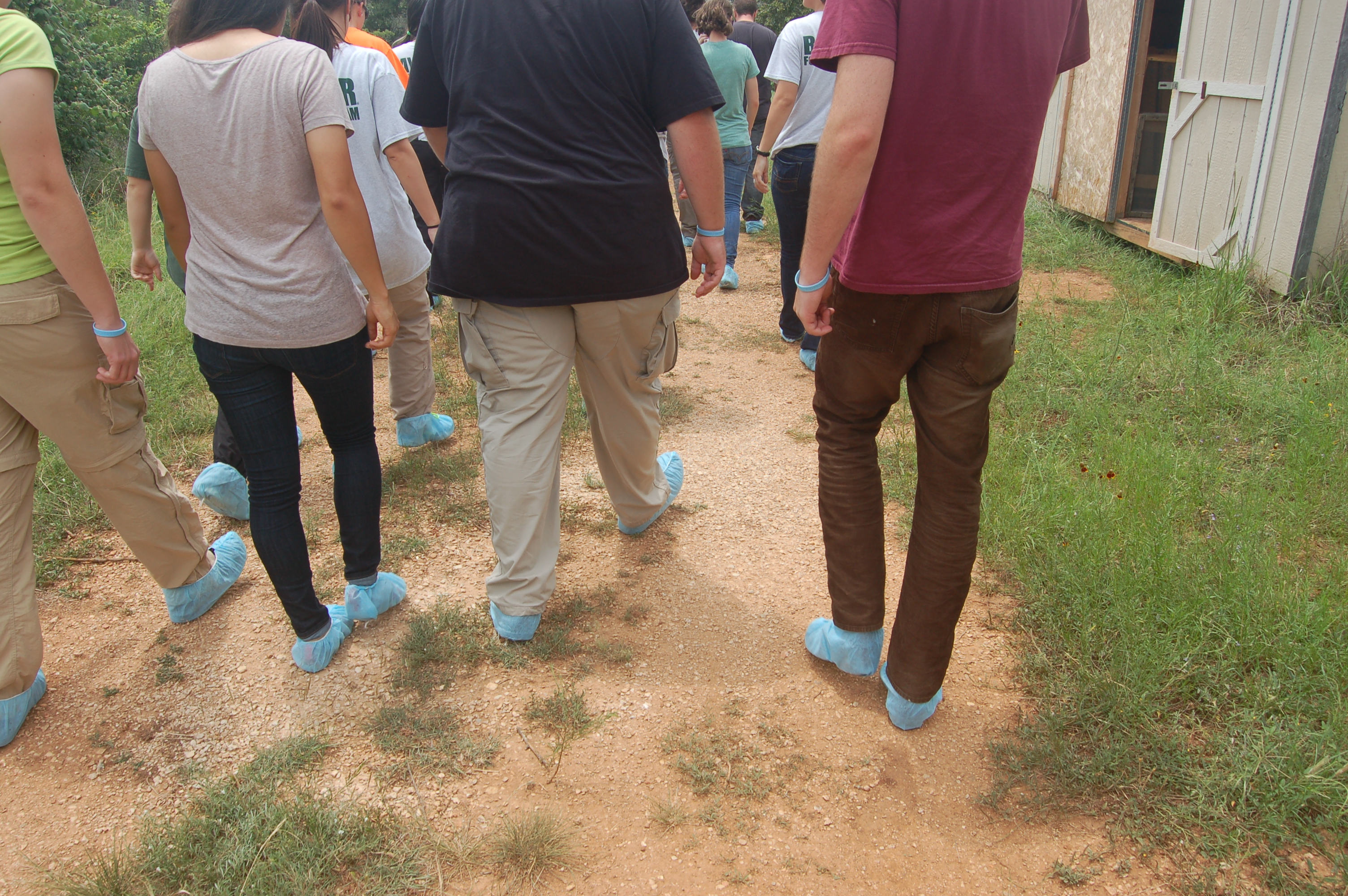
Shoulders down of the group walking away with blue booties around their shoes Next, Hailey took us on a tour of the Osteological Research and Processing Laboratory (ORPL) located at the Freeman Ranch Multi-Purpose Facility.  At ORPL the remains are processed by volunteers.  Once the skeletons are clean, they are analyzed and a biological profile (reconstruction of the decedent’s living characteristics) is constructed by the forensic Anthropologists at FACTS. In addition, samples are taken for DNA and isotope analysis. Associated personal effects are cleaned, cataloged and stored  as these can be important clues to the identity of the individuals carrying them.  Finally, the unidentified are prepared for curation until an identification is made and repatriation can be conducted.

Texas State University, like the other educational institutions participating in the identification of the undocumented migrants,  rely on volunteers (qualified faculty and students), as well as donations to participate in this mission.  The processing of one individual can take several weeks and as a result they have been working around the clock on the individuals exhumed last year and still have a backlog.  Add a portion of the individuals exhumed this summer and they are in need of support. Last summer Ryan spent several weeks at FACTS volunteering to process after we returned from the field. We are encouraging the Baylor students as well as other qualified students that have had osteology to volunteer in this effort. Additionally, the center could use monetary donations and donations of PPE (personal protective equipment).  The exhumations conducted by the University of Indianapolis and Baylor University are just the first part of the journay towards identification.

~KEL
To San Marcos

We met for breakfast at 7am on Thursday rather than the 5:15am meeting time we had become accustomed to over the past few weeks. Even though we slept a few extra hours the night before we were still exhausted. But despite the exhaustion we all felt strange that we were not packing up our field gear to go to the cemetery. Instead we were packing all of our things to drive to Texas State University in San Marcos, TX.

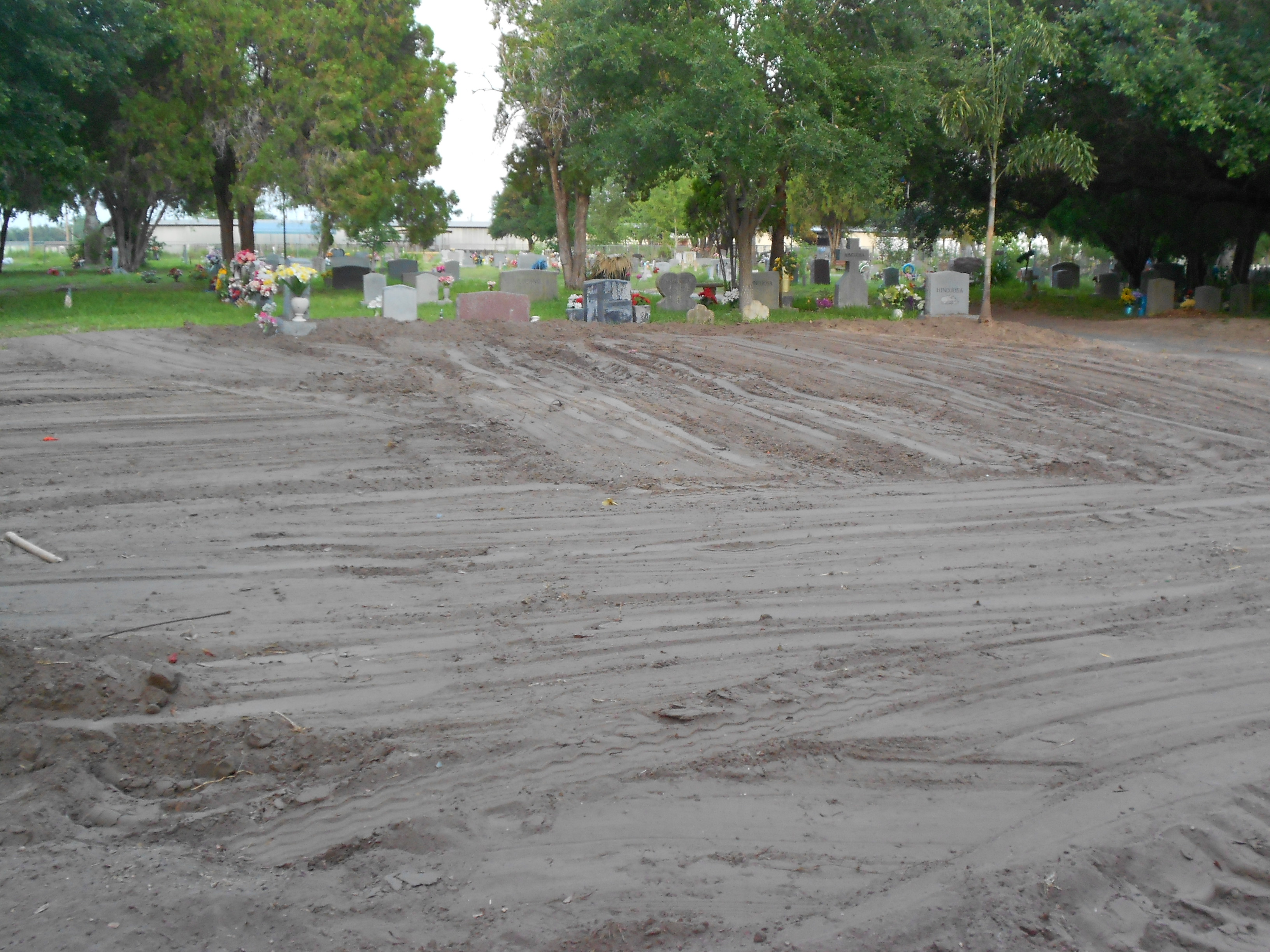
The abrupt stop to our work in the cemetery left us needing some closure and we decided to drive past the area in Sacred Heart Cemetery where we spent the past 10 days. The area had already been filled and flattened and looked so different to us. We walked around for a few minutes taking in the fact that our mission for this summer was truly complete.  We each took a few minutes to ourselves to reflect on what we did and then came together for a big UIndy group hug. We felt better having a few last minutes in the place that will forever contain a part of us and a part of our hearts. Then we filled the van and began the drive to Texas State University on San Marcos, TX.

Cemetery area leveled with dirt

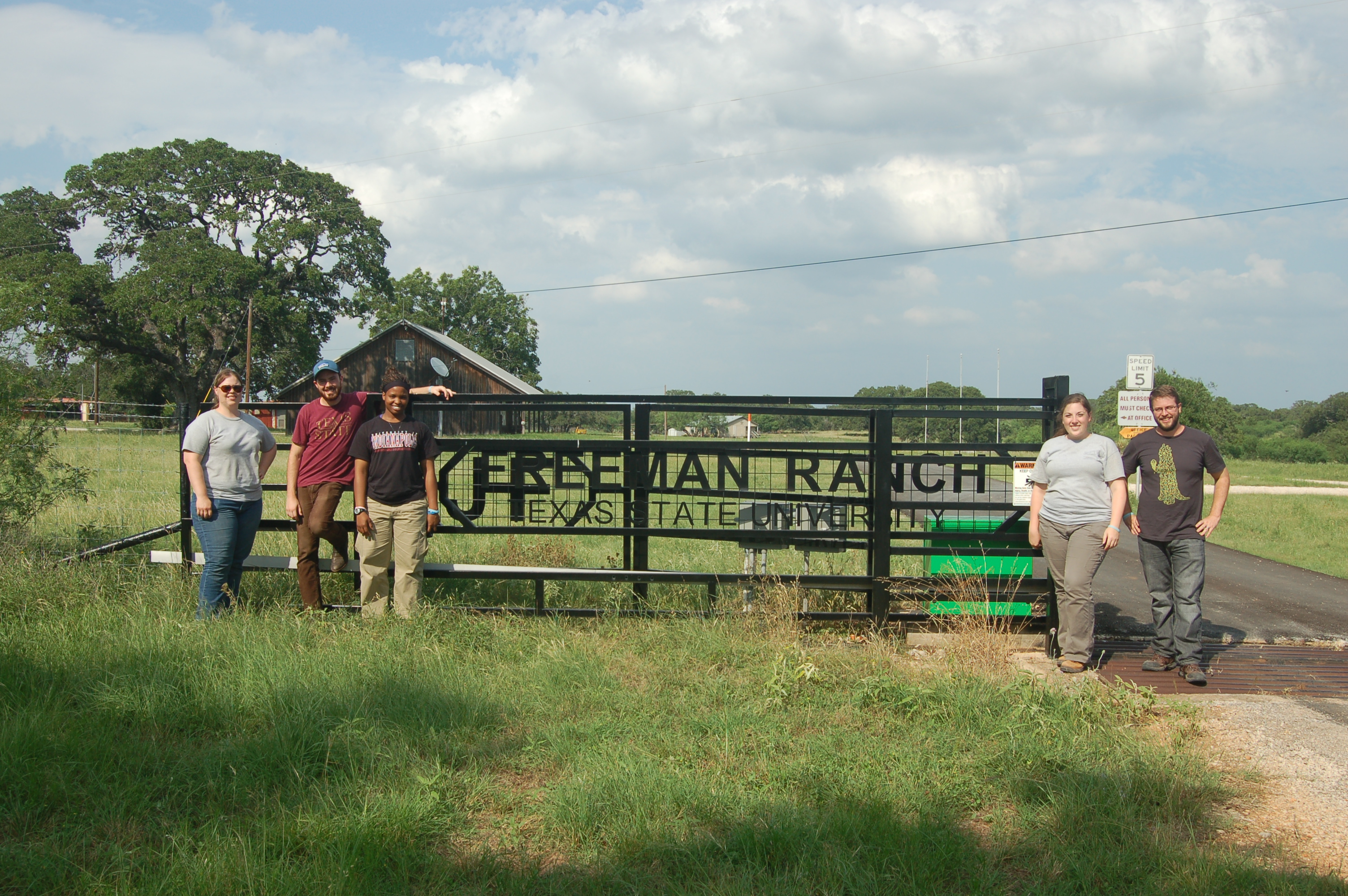
Group picture in front of the forensic anthropology center at texas state ranch front gate

Forensic Anthropology Center at Texas State (FACTS)

While at Texas State University we were given the opportunity to tour the Forensic Anthropology Center. Once the individuals are exhumed from Sacred Heart Cemetery they begin the identification process. The first step in forensic anthropological investigation is the processing or cleaning of the remains. FACTS is a state of the art forensic anthropology center that is processing and analyzing the bulk of the exhumations from Sacred Heart Cemetery through a mission that are calling “Operation Identification“. It was an amazing opportunity to be able to see the next stop on the journey of so many of these unidentified migrants. It was also amazing to see how many students and professors were volunteering their time to the efforts to Operation Identification.

After our tour of FACTS we decided to stay in San Marcos for the night. Since Ryan went to Texas State for his undergraduate degree we asked him for hotel suggestions. Well, this will be the first and last time that Ryan picks our hotel.  After having to change rooms because of the horrible smell at the hotel, the power went out.  That was our que to venture out for dinner. An evening of tacos and pool was exactly what we all needed to relax after our work in Falfurrias.

~KEL

Fulfillment in Falfurrias – Guest Blog by Guy Housewright

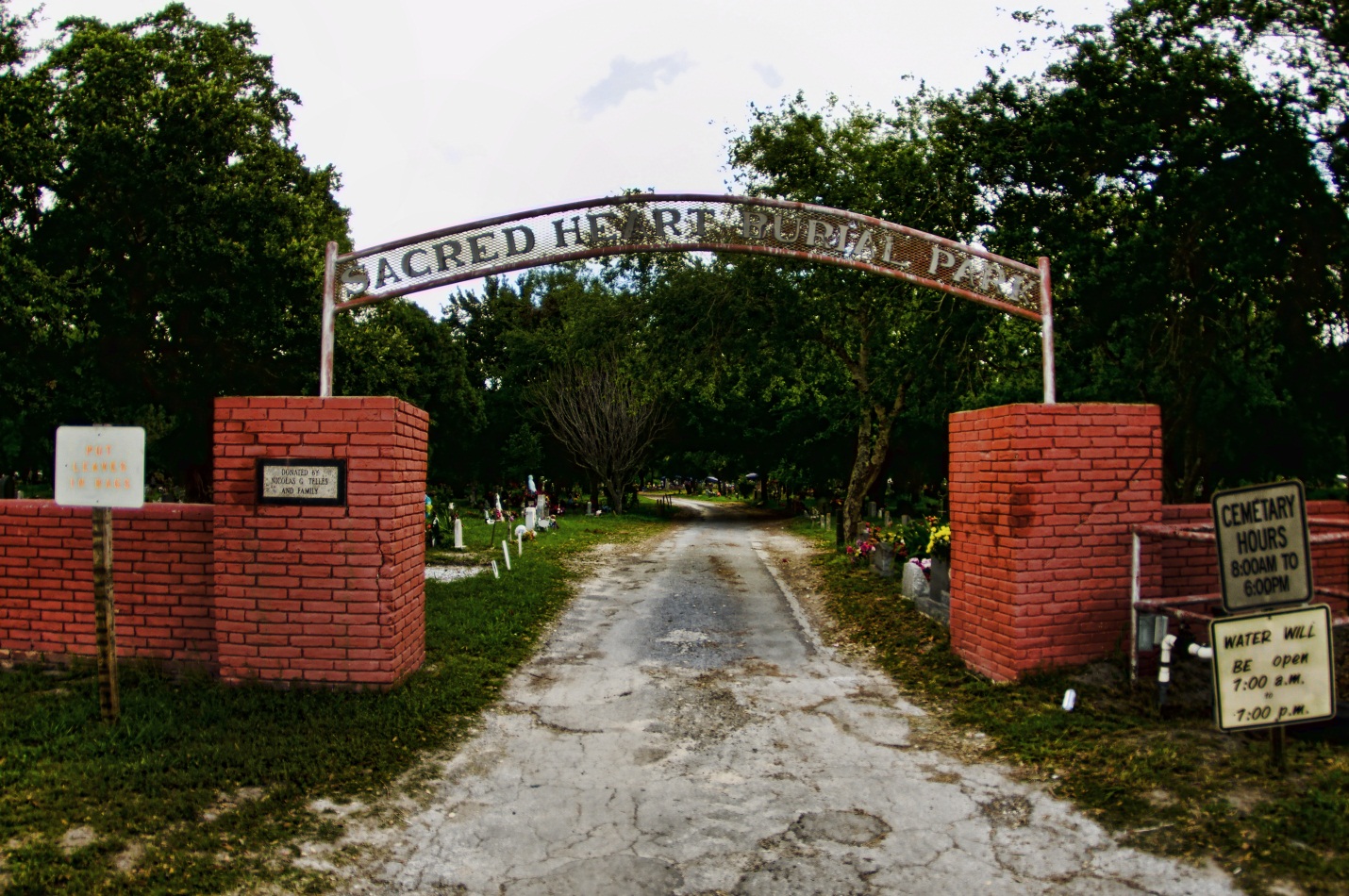
White iron Sacred Heart Park sign over the entrance to the cemetery set in red brick columnsAs I was preparing myself for my departure from the comforting biosphere of my air conditioned office at TCU to the oppressive heat of South Texas, I received a text message from Dr. Latham informing me that I needed to head out earlier than originally planned. You see, I was hired by the University of Indianapolis to document the UIndy team and their humanitarian efforts through photographs. The initial plan was that I would arrive on site late Thursday night or early Friday morning, the first week of June, with the directive to shoot the team on Saturday and Sunday. I wanted to arrive a day early anyway because I wanted to immerse myself into the scene to try and get a sense of what I wanted to show through the photographs.

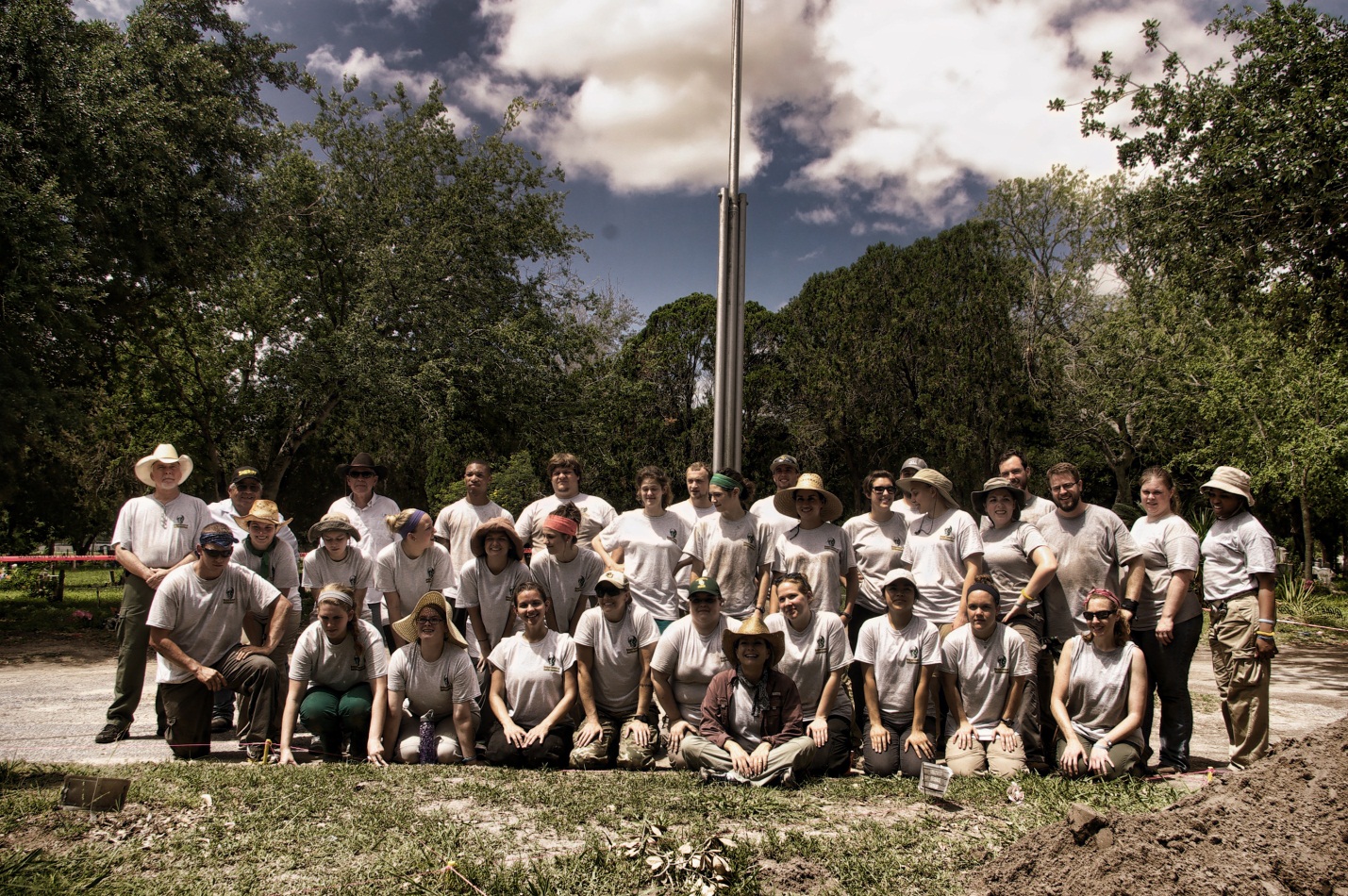
3 Rows of teams members sitting, standing, or squatting all in the same shirt with various hats and headbandsIt seems that Baylor University had sent quite a few more students than last year and Dr. Latham was concerned that the pace would be much faster with more people involved. So, I informed my superiors at TCU that I would be leaving the following morning (Tuesday, June 2) and I spent the remainder of that day charging batteries, cleaning sensors and lenses and packing my gear for the trip.

I have been a photographer for roughly 25 years. I started shooting photographs as a teenager – I would take photos of my friends skateboarding and while I tried to emulate my photography heroes whose images I salivated over in the pages of Transworld Skateboarding or Thrasher Magazine, but mostly we would use the photographs to document any progress we were making mastering our skills as skateboarders (I use the term mastering VERY loosely here.)

As time went on, I became increasingly interested in photographing the many abandoned structures scattered throughout our crumbling urban landscape. It started with an old barn in a remote part of West Virginia and before I knew it I was spending more time in spaces devoid of humans as the earth was slowly reclaiming the structures.

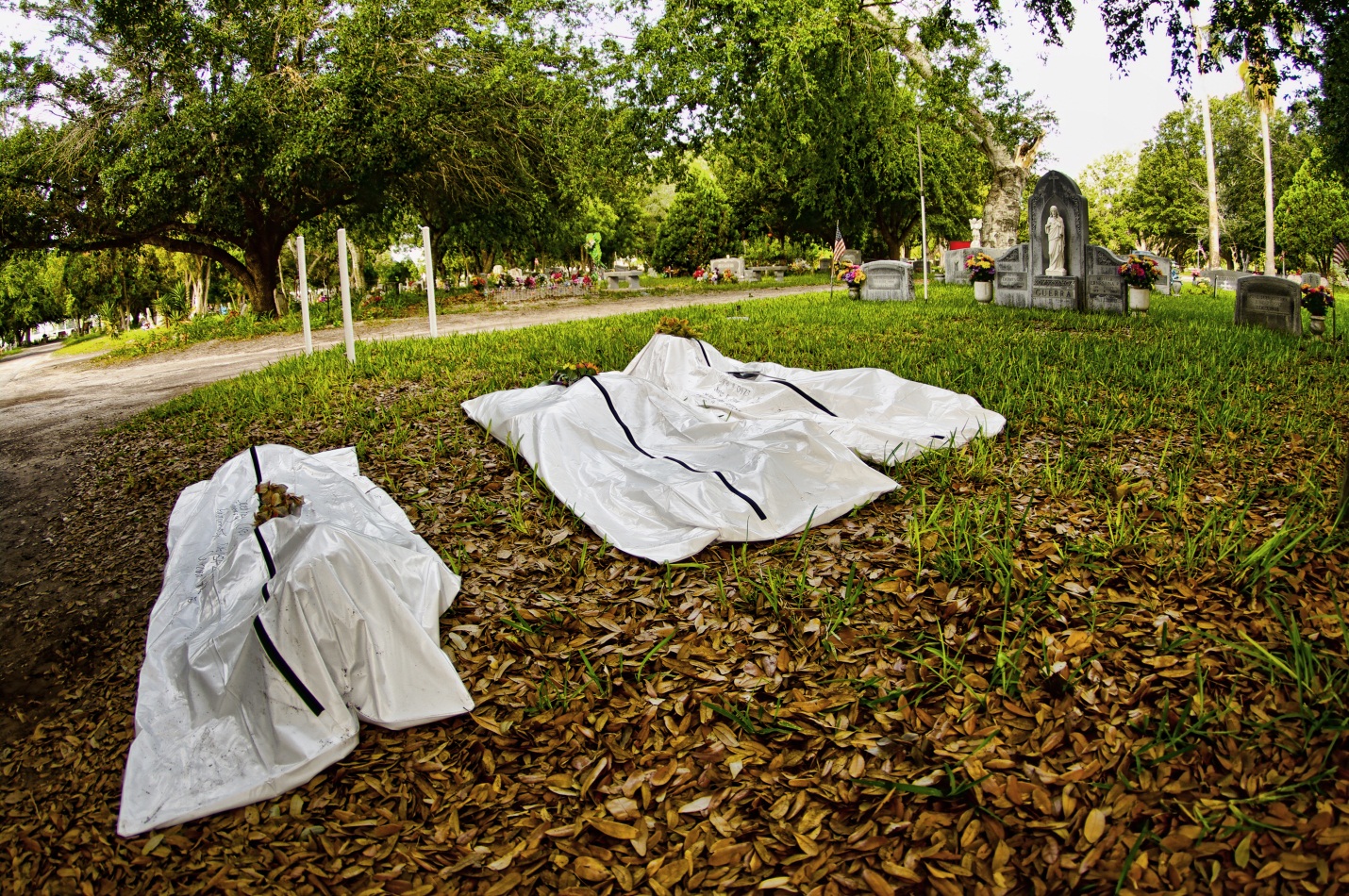
3 white body bags laid out on a grassy, leaf-filled areaWhen I was first approached by Dr. Latham about possibly photographing the work she and her team would be doing in South Texas, she presented it to me in a way that I had never even considered. You see, the human beings who have perished while trying to improve their quality of life by crossing the border into Texas, are essentially abandoned much like the locations where I spend the majority of my time. I was thrilled to even be considered for the project because, admittedly, I do not enjoy taking photographs of humans. But I knew this opportunity was something that I simply could not pass up. After exchanging several emails with UIndy Director of Media Relations, Scott Hall, I gladly accepted the offer to be a part of the “team”.

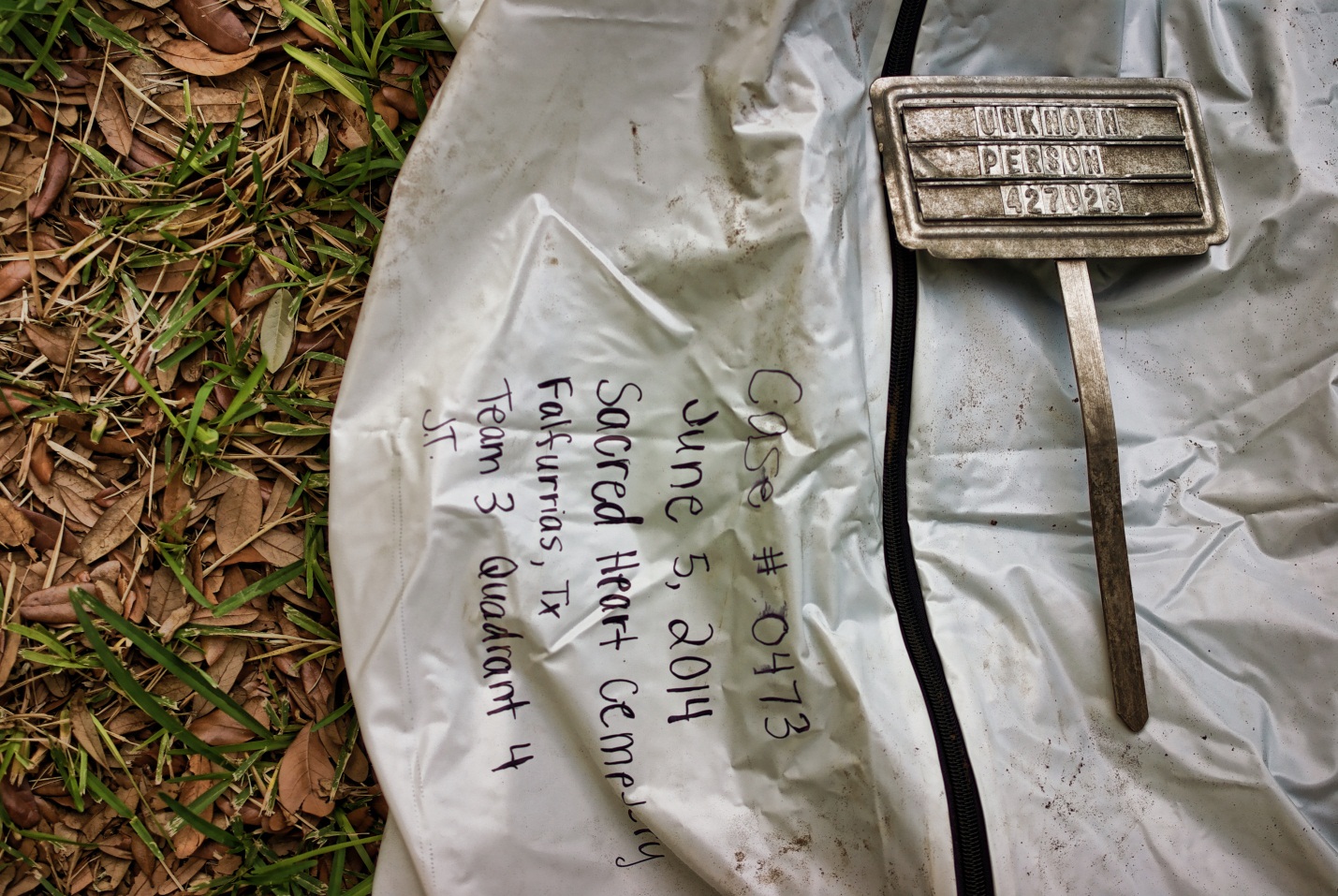
Upclose of the black writing on a body bag and a burial marker with "Unknown person" on itIn my preparation for this project, I really did not know what to expect, much less how I was going to capture it in photographs. Fortunately for me, the students from both Baylor University and the University of Indianapolis provided more than enough emotional content as well as physical content that it made my job seem simple in comparison. Quite honestly, their dedication and commitment to the work was incredibly inspiring to me – and it motivated me to do all that I could to capture those moments as best I could.

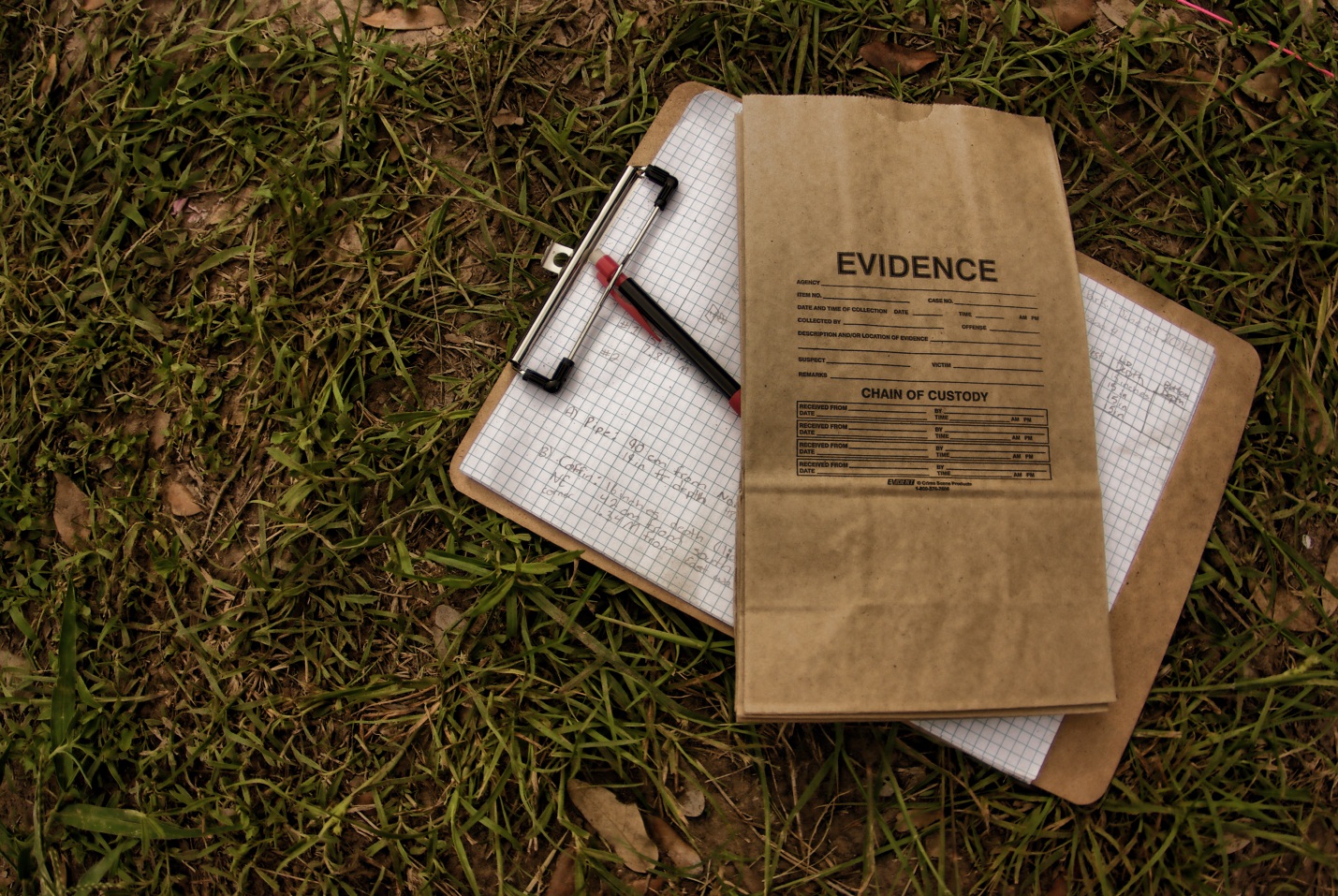
a brown evidence bag on a clipboard with a pencil and graph paper attachedOne thing that I did not prepare for was how deeply emotional this experience would end up being for me. Yes, hours spent out in the unrelenting heat took a physical toll on me but the emotional connection that I felt not only with the people involved with the project but also the community of Falfurrias, the documentary film makers who were there shooting, members of the local law enforcement…the list goes on. Basically – if you were on site at the Sacred Heart Burial Park while I was there…I felt some kind of emotional attachment/bonding with you – whether I expressed this or not, it happened and it felt very real to me.

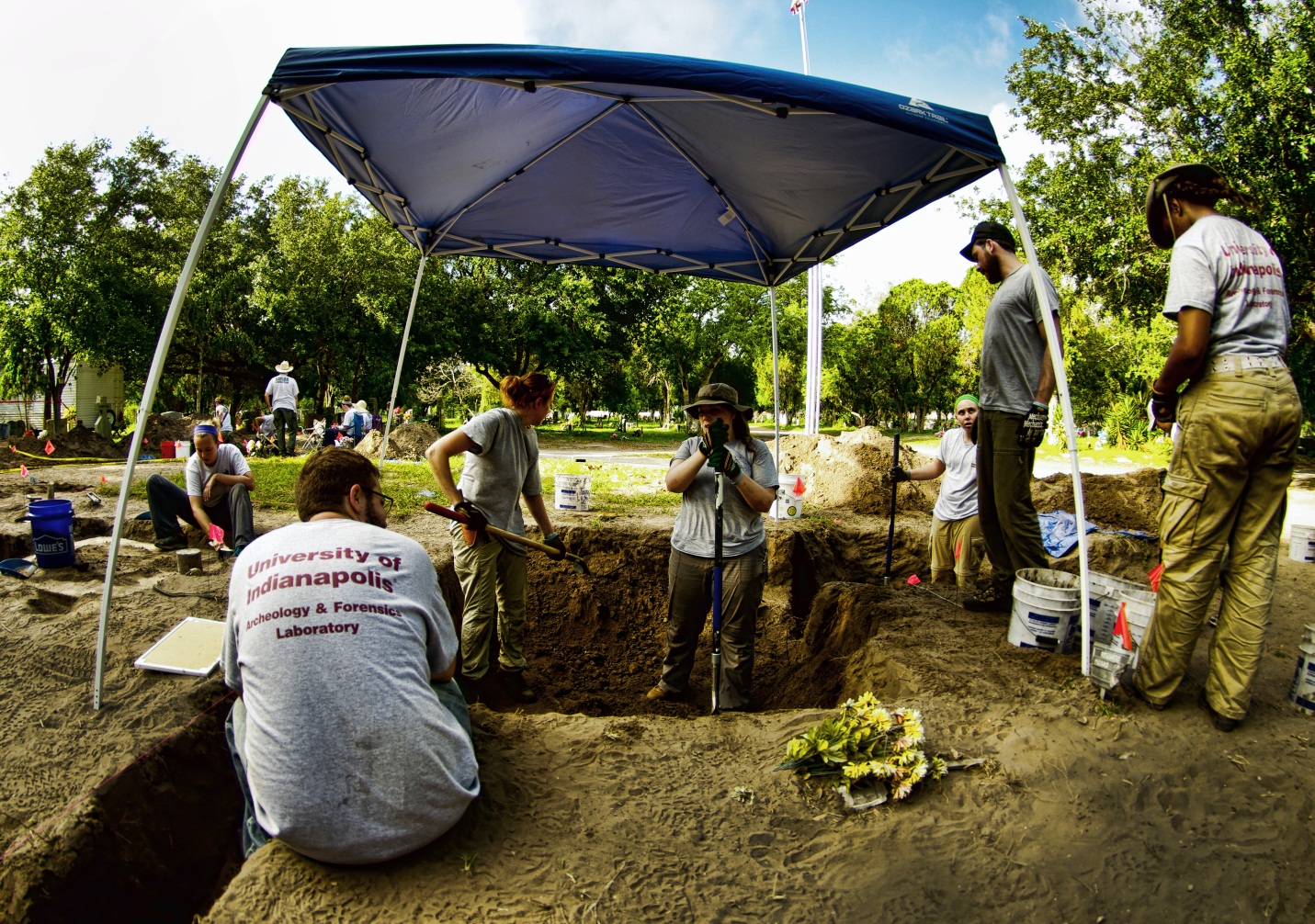
A burial covered with a sun tent with team members working in and around itThe experience was incredibly humbling, emotionally overwhelming and quite simply amazing. In the span of a little less than 3 days I can say without ANY hesitation that my life has changed forever. I will never complain about my life or its miniscule problems again. I (we) all have so much to be thankful for and I will never allow this feeling inside of me to leave. Falfurrias literally changed who I am in a very fundamental way.

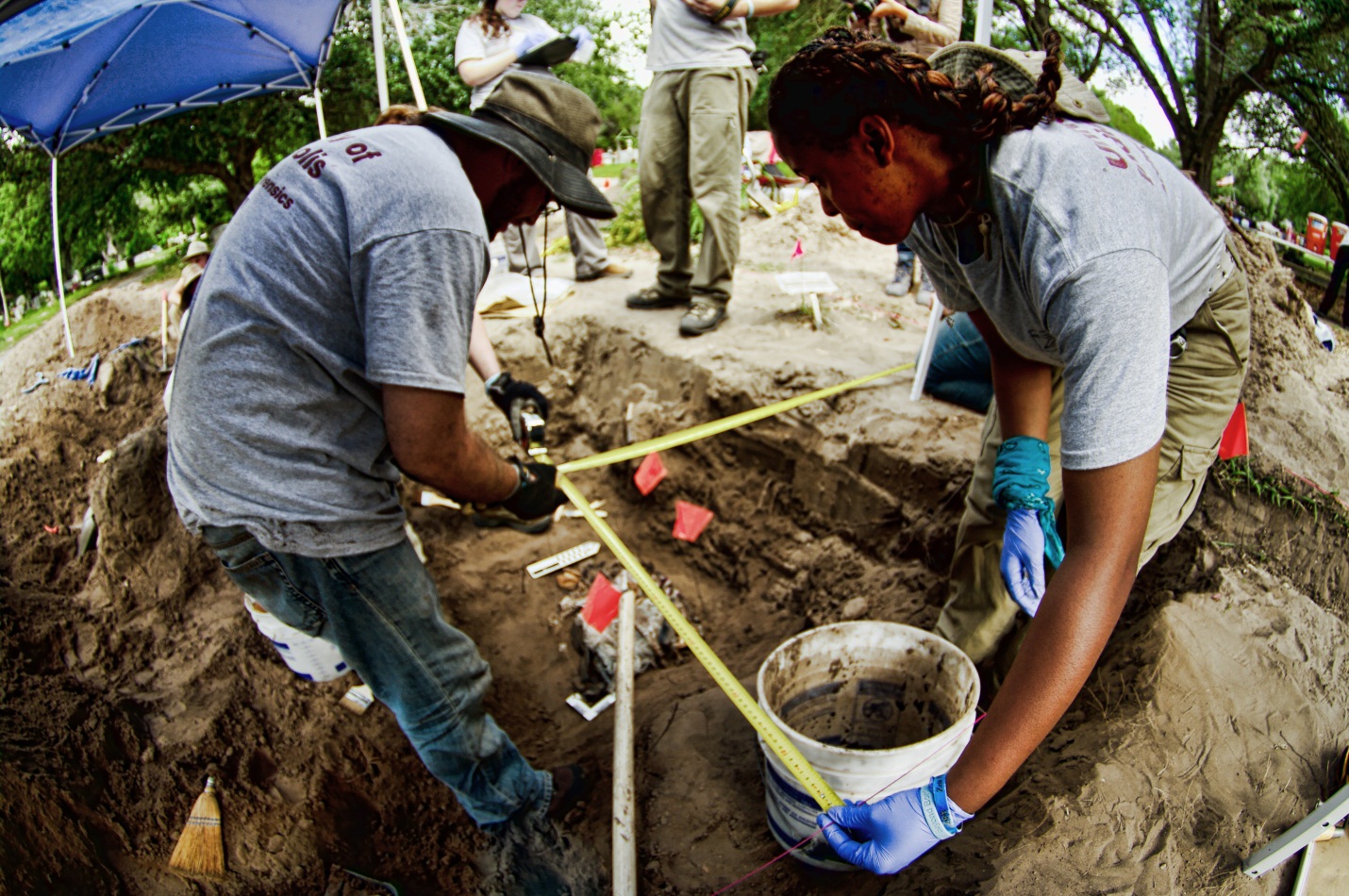
Beyond Borders team members crossing measuring tapes over an orange flag within a burial

As I drove home after my time in Falfurrias was over, I kept saying to myself “Just turn around Guy…go back…” Though any contribution I made to this project is minute when compared to the students, Dr. Latham and Dr. Baker, I do feel that I played a part by documenting their work and commitment to this humanitarian effort. I am hopeful that I will be given the opportunity to go back to Falfurrias next year to document what should be the final phase of this project. I am honored to have been even a small part of it and I feel blessed that I was able to experience it. A truly heart felt thank you to every single person I met while in Falfurrias – I hope we see one another again next year.

 Guy Housewright

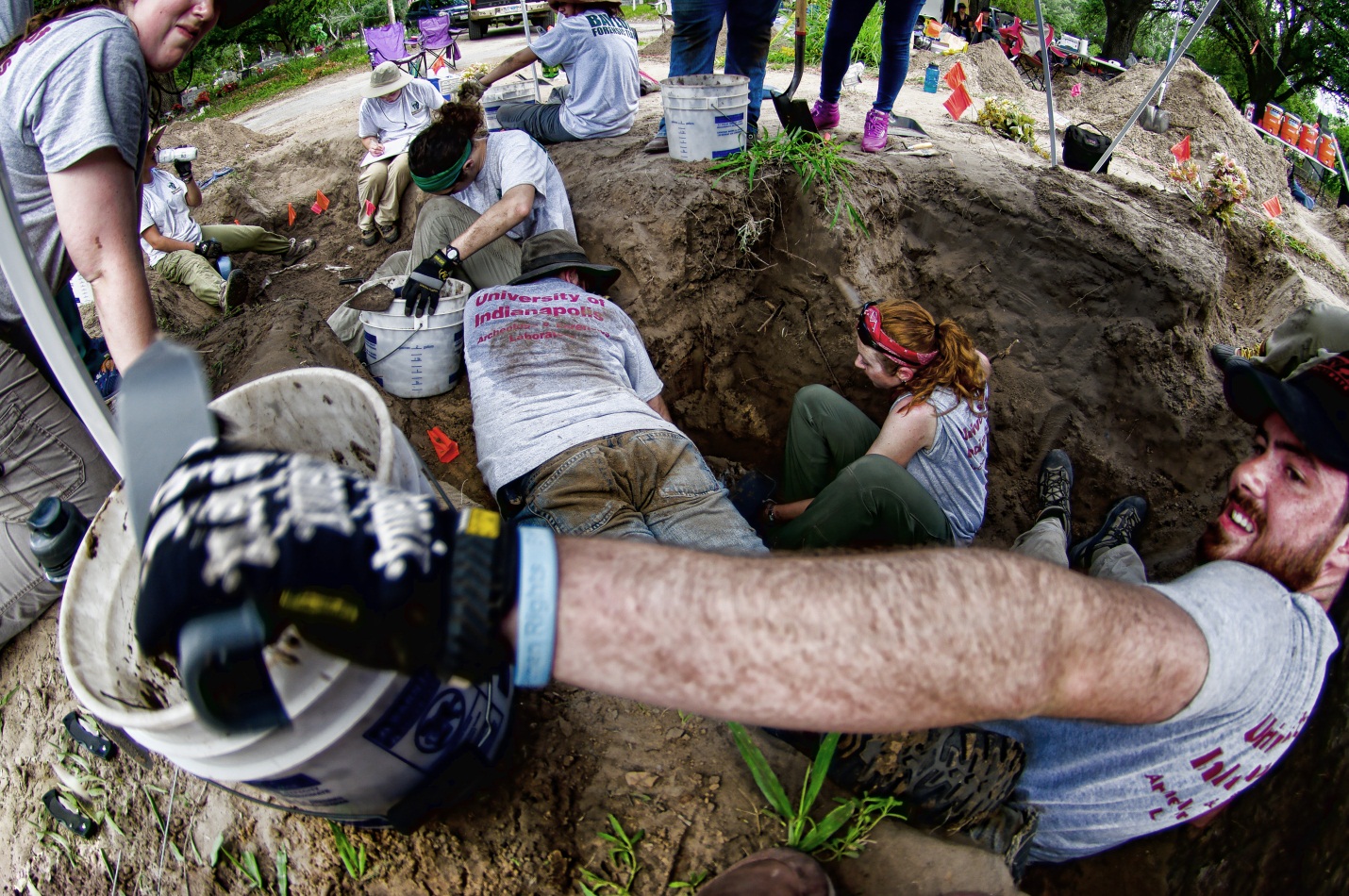
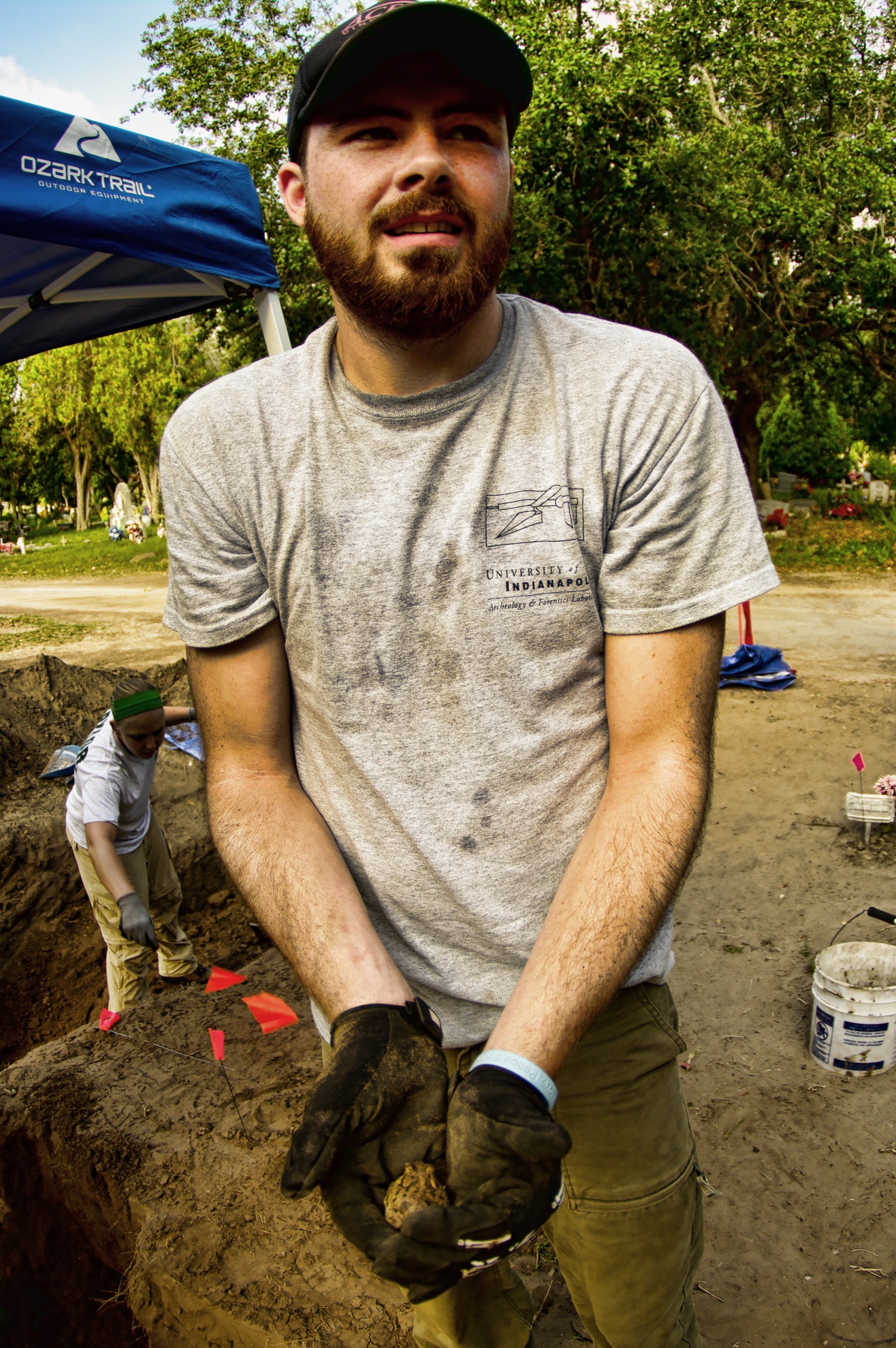
Jessica and Justin sharing a smile removing burial fill into a bucket within a burialBeyond borders team members within a burial excavating in various positions Ryan holding a frog