All posts by lathamke

Preparation

Today the panic of packing for two weeks on the border sets in. I have three different lists of things to take with me, but I still feel like I’m forgetting some thing.  For those of you that don’t know me, I’m a list maker. I have lists for everything and have introduced my students to the joys of the list. Our work requires special gear, and we are working in a very rural area which means we better not forget anything or it could potentially be a few hours drive to find it. My field gear list is color coded with items in pink that I needed to purchase before we left on the mission, items in blue that I could take from the lab and items in green that I could purchase in Falfurrias. While we feel slightly better prepared leaving this year than we did leaving last, we know that we must always expect the unexpected.
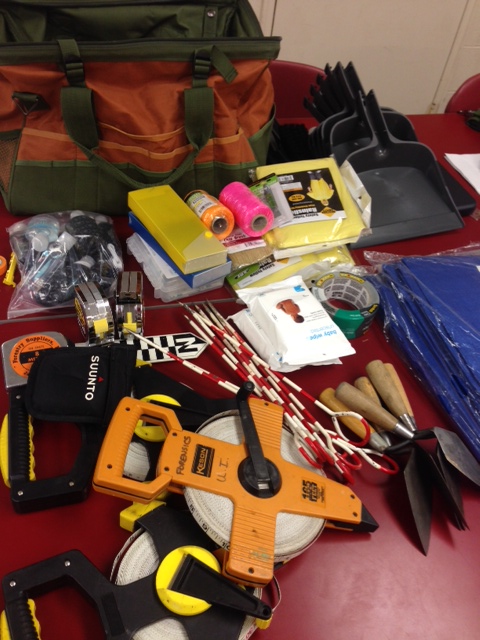
Field gear like measuring tapes, trowels, pins, north arrow, strings, and more all laid out before being put in the field bag
Field Gear

The highlight of my day was getting the field gear together. Dr. Baker brings the larger field gear to the site (shovels, screens, etc…), but there are certain things that we traditionally use in the field and like to bring along. After a little shopping and a little pillaging of the UIAFL (University of Indianapolis Archeology and Forensics Lab) we created a nice pile of gear to bring along. I have a sturdy field bag that we are transporting everything in.  But the field bag really seemed bigger to me before I realized I needed to fit two weeks of field gear inside. At this point I realized my experience as a UPS package car loader would be put to the test.  During my undergraduate years I worked the graveyard shift at UPS playing Tetris with cardboard boxes as I found  ways to make sure every package fit in the truck.  But that experience might not be enough in this particular situation, so I enlisted Ryan’s help. Ryan has a very special talent for packing large amounts of stuff into the smallest bag possible.  We tried several different combinations and after three tries we managed to get everything to fit in the field bag!  We were victorious!!
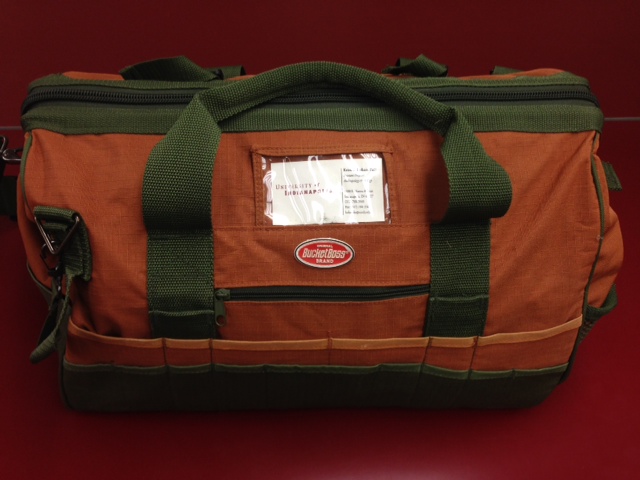
The orange and green field bag packed
Success!

For those of you following along with our posts you might see that – to date – the light hearted outweigh the serious. My hope is that no one interprets that as us making light of this crisis.  We, more than most of you reading this, know the true severity of this situation. I personally have lost track of the number of hours I have spent excavating the graves of the unknown, pouring over every detail of every bone of the individuals in my lab, negotiating gear or laboratory services, giving talks and presentations to bring awareness and advocating for those who were invisible in life and continue to be invisible in death.  I can say the same for my students. We bring humor and we bring light heartedness to this situation because there are days that we run out of tears and days that we cannot bear to have our hearts broken once again. As I write about packing I am also preparing myself for the mental and emotional challenges that wait for us in Falfurrias. The fact that I will cry more on any given day then I usually do in any given month. The fact that I will feel helpless and small in the face of something so large and disastrous. The fact that I have to be strong in front of my students and in front of the community and the families as they search for answers.  The fact that all this begins as our flight leaves in less than 12 hours…
Dr. Krista Latham

Connections

Last week over 40 forensic anthropologists and their students converged on Boulder City, NV for the 34th annual meeting of the Mountain, Desert & Coastal Forensic Anthropologists.  This provided the backdrop for amazing connections and motivation for the UIndy team that is focusing on issues of migrant death.  While the meeting emphasized scholarship and casework in all areas of forensic anthropology, the team was able to connect with some prominent people working in the trenches of this human rights issue.

UIndy group photo with Dr. Lori Baker

The Uindy team with Dr. Lori Baker

The UIndy team was able to spend quality time with Dr. Lori Baker, the director of the identification efforts in Brooks County.  This allowed us time to formulate an archeological plan for the field efforts that will begin next week in the Sacred Heart Burial Park. Ryan suggested that each student group do daily presentations on their progress in the field during our evening debriefings, an idea favored by Dr. Baker.  Each UIndy student team member will have a leadership role this field season and they were ecstatic to share their ideas with Dr. Baker.

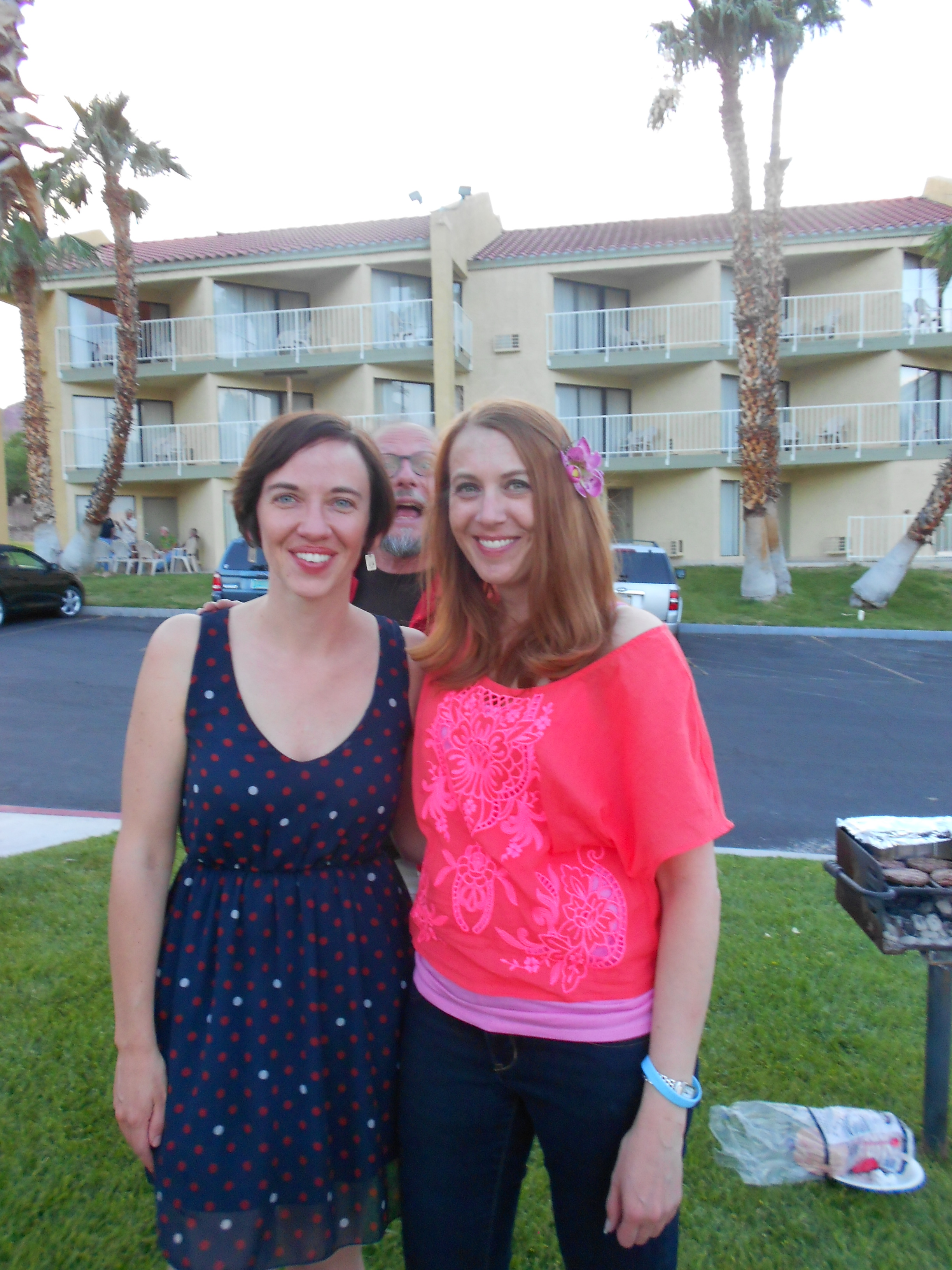
Robin Reineke and Dr. Latham smiling

Robin Reineke and Dr. Latham

We were also able to connect with Robin Reineke, executive director of the Colibri Center for Human Rights.  The mission of the Colibri Center is to improve the identification of human remains found on the US-Mexico border and to inform the public of this human rights issue by building a unique system for the collection, management, and sharing of data about the deaths and disappearances. Robin and her team are instrumental in reaching the families of the missing and collecting invaluable missing persons information to aid in the identification efforts. I tried to get a nice photo with Robin, but notice we were photo bombed by prominent forensic anthropologist Dr. P. Willey from California State University, Chico. You can’t say forensic anthropologists don’t have a sense of humor! 

We spent time interacting with Dr. H. Gill-King, Dr. Wendy Potter McQuade, and John Servello of the University of North Texas center for Human Identification. This Texas laboratory will be generating DNA profiles from all of our unidentified individuals with the hope of matching the genetic information to a family reference sample.

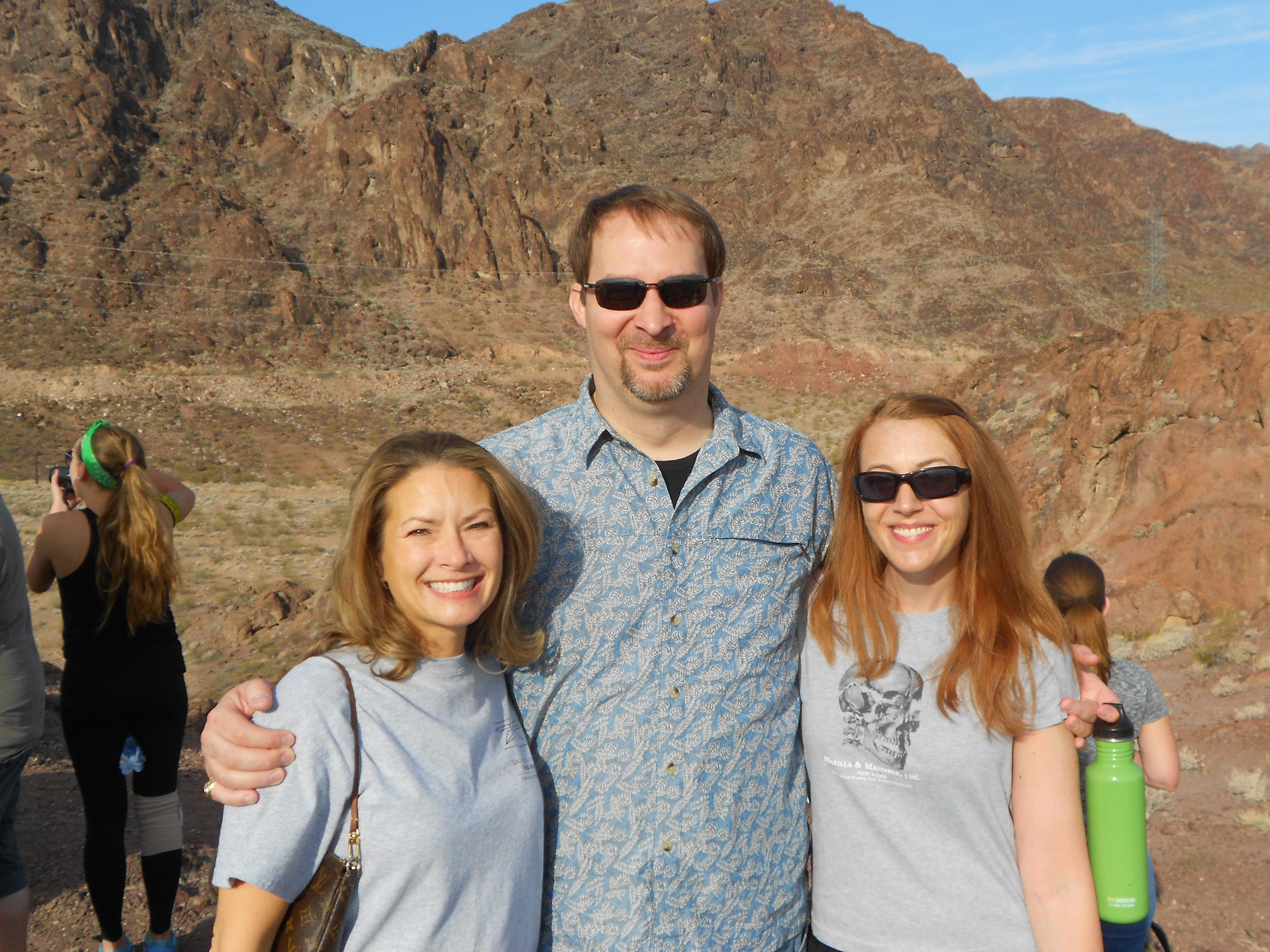
Dr. Bartelink, Dr. Baker, and Dr. Latham smiling for a picture infront of a mountainous background

Drs. Lori Baker, Eric Bartelink and Krista Latham

Dr. Eric Bartelink of California State University, Chico graciously offered to run isotope analysis on the 13 individuals currently being analyzed at UIndy. This type of molecular analysis has the potential to identify the country of origin of these migrants and will provide a geographic reference point to begin searching for families of the missing.  Dr. Bartelink is providing a valuable service and important step in returning these unidentified individuals to their families. He offered to cover the cost of supplies (which will run over $2000) out of his own pocket. Our hope is to continue our fundraising efforts to help compensate him for his efforts.

Our team was most humbled and most honored when Dr. Bruce Anderson of the Pima County Office of the Medical Examiner proposed that the MD&C donate some of it’s annual fundraising efforts to our mission.  Each person at that meeting has noble missions they support and the sincere gesture and assistance for our mission was overwhelming.  It gave us a boost of confidence and assurance that we are doing the right thing and making a difference.

Dr. Krista Latham

The Mountain, Desert & Coastal Forensic Anthropologists Meeting

Mountain Desert and Coastal Forensic Anthropologists logo, green with a puzzle of a skull missing its last piece
MD&C

Tomorrow we leave for the Mountain, Desert & Coastal (MD&C) Forensic Anthropologists meeting being held in Boulder City, NV on the shores of beautiful Lake Mead.  Jessica, Erica, Ryan, Justin and I will be traveling to present about our work on migrant death and interact with other forensic scientists involved in the same type of human rights work.  Cheneta is currently enrolled in a class for the first summer semester and unfortunately will not be able to join us.

 At this year’s MD&C meeting we will give a presentation on the skeletal analysis of the unidentified migrants we are currently analyzing in the University of Indianapolis Archeology & Forensics Laboratory.  This will allow us the opportunity to present the challenges associated with the identification of these individuals to the forensic science community.  In addition, we will get to interact with other forensic anthropologists working with issues of migrant death.  Dr. Lori Baker, who is directing the identification efforts in Brooks County, will be at the meeting.  Dr. Bruce Anderson of the Pima County Office of the Medical Examiner (PCOME) who works with unidentified migrants in AZ and Robin Reineke of The Colibrí Center for Human Rights will also be in attendance.  This will provide an invaluable opportunity to discuss the various approaches and challenges to migrant death issues with other individuals who work with these types of cases on a constant basis.

The University of Indianapolis will be well represented at the meeting this year. In addition to the presentation on human rights in South Texas, Jessica, Erica, Justin and Ryan each have a second presentation focusing on forensic casework or projects at UIndy, giving us a total of five presentations this year (An Interesting Case Study from Indiana by Jessica Campbell & Stephen Nawrocki, A Case of Dismemberment in Northern Indiana by Erica Christensen & Krista Latham, Over the River and Through the Woods by Justin Maiers & Krista Latham and No Bones About It: Projects at UIndy Outside of Forensic Anthropology by Ryan Strand) .  I will be moderating this year and organized the conference schedule. UIndy alum Meg Madonna will be handling fundraising.  The conference raises money for student travel and research grants.   Justin is coordinating the annual bone quiz, which tests the skeletal knowledge of its attendees.  Jessica is in charge of organizing the conference center and Ryan and Justin will be the grill masters at our annual Buffalo Chip dinner.

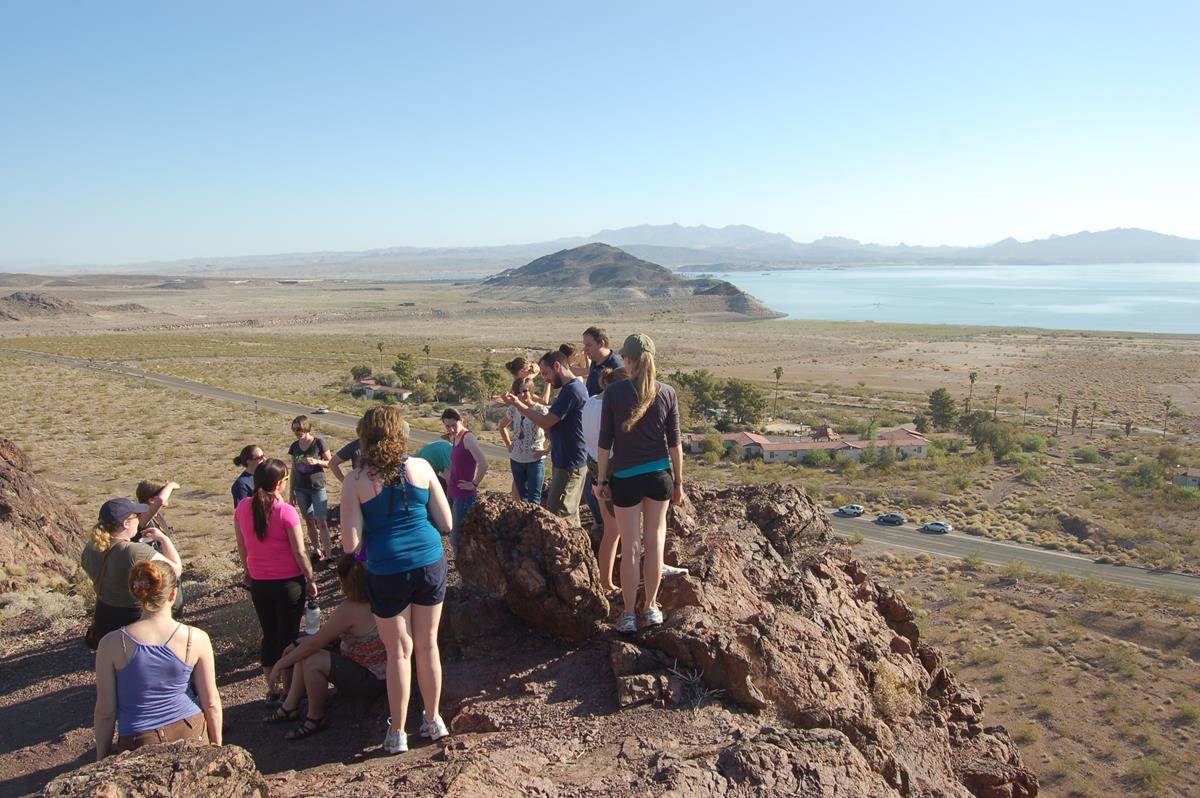
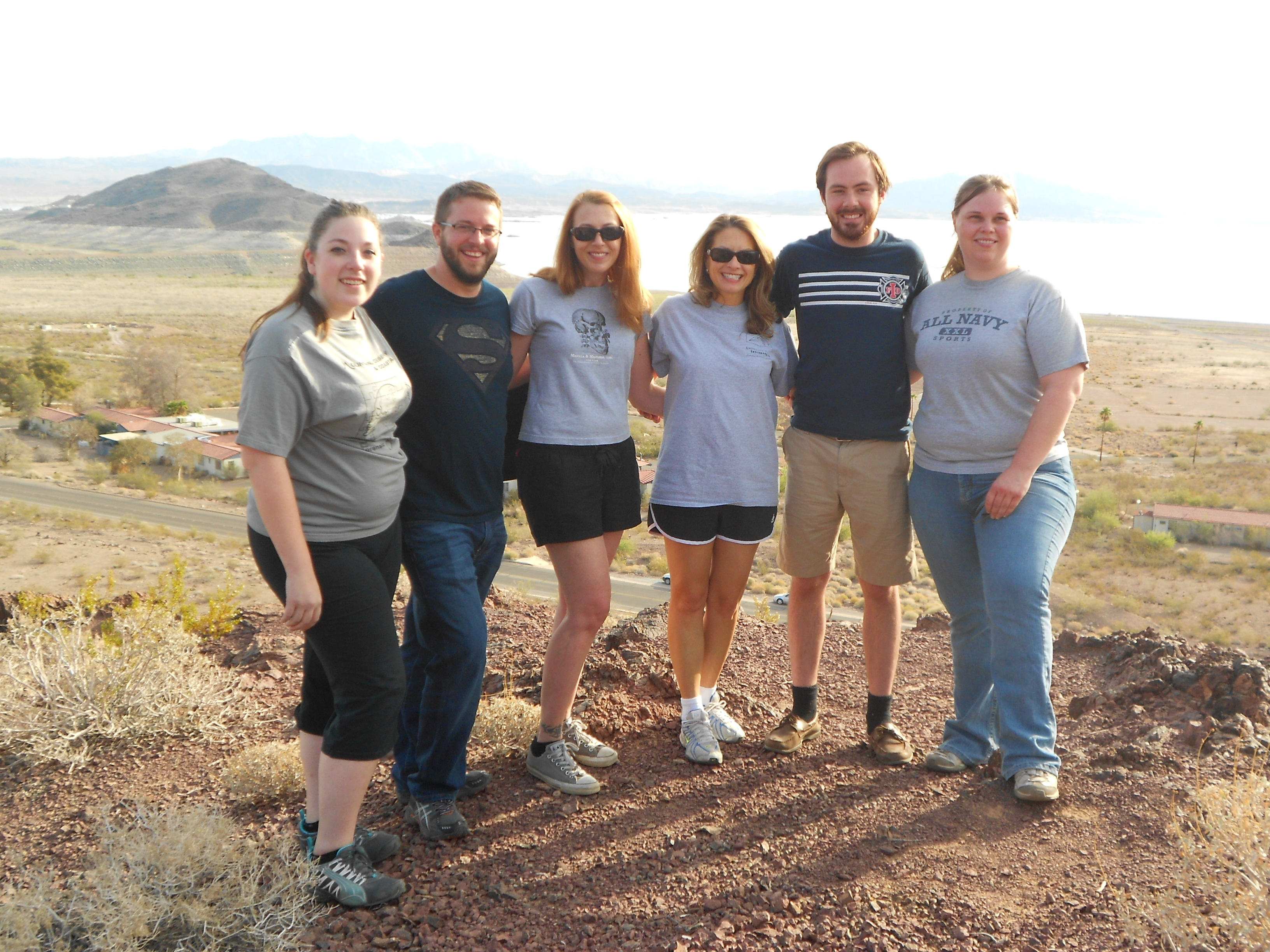
Many people on top of a rock hiking
Hiking near Lake Mead. Photo from the 2013 MD&C meeting.

In addition, the students will get to interact with some of the founders of the field of forensic anthropology and meet award winning author Aaron Elkins.  We will have time for some fun while we are there as well. We will get to do some climbing, swimming and sightseeing.  It will be a nice mix of work and a little relaxation before we leave for two hard weeks of digging in the Texas sun.

 Dr. Krista Latham