Latest Posts

Day 3

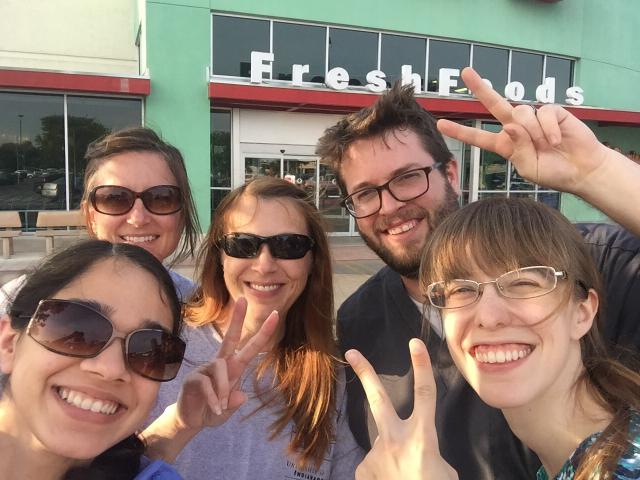
Beyond Borders Day 3 team picture

We have spent the last three days working at the  Texas State University Osteology Research and Processing Laboratory (ORPL) located on the Freeman Ranch. Our main goal in visiting the Forensic Anthropology Center at Texas State is to conduct skeletal analyses on unidentified migrants recovered in Brooks County Texas. Over the course of two years (2013-2014), the University of Indianapolis team worked with teams from Baylor University to exhume over 100 unidentified individuals from the Sacred Heart Burial Park in Falfurrias. Brooks County no longer buries its identifieds, so in addition to those exhumed individuals needing forensic anthropology analysis there are additional individuals that have been and continue to be recovered from the county needing attention as well. The recoveries and exhumations happen very quickly but the skeletal analyses take a much longer time. Therefore, there are still individuals needing a forensic anthropology analysis in order to begin the identification process. Many of these unidentified individuals were (and are) brought to Texas State University for analysis as part of their Operation Identification initiative. Last summer and this summer we volunteered to visit Texas State for a week of intensive focus on skeletal analyses. Last year the UIndy team and teams from Texas State and other universities completed 15 skeletal analyses in five days.  We are on track to do that again. It is amazing watching so many dedicated volunteers passionately working towards identifying these individuals.

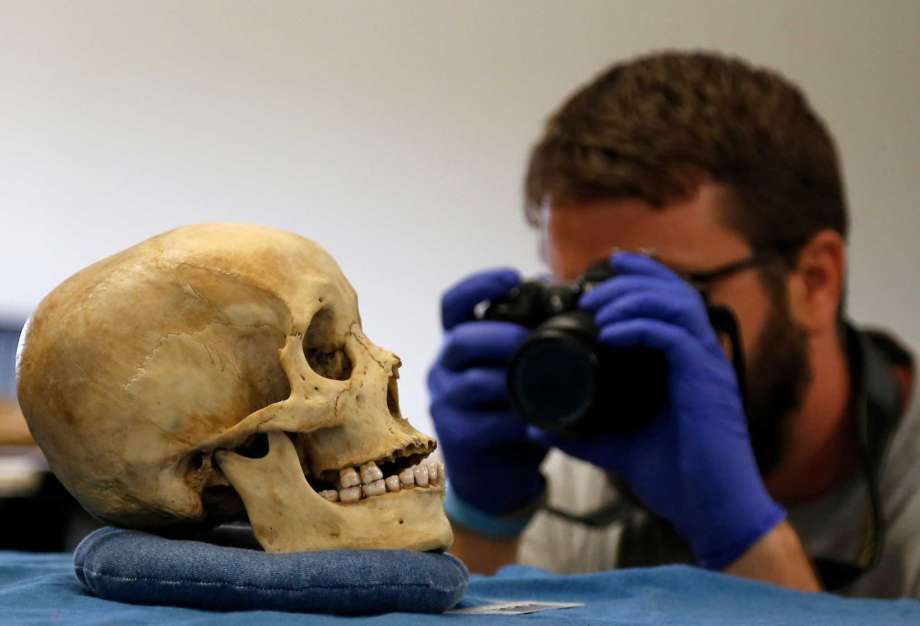
Team member Justin performing skeletal analysis
Justin

In addition to working on the skeletal cases, the UIndy team has been offered other opportunities to participate in the identification process.  We routinely do forensic casework in Indiana, but we only bring the skeletal elements back to our lab for a scientific examination. All personal effects and associated evidence go with local law enforcement.  This week the UIndy students were given the opportunity to work with the personal effects of the unidentified migrants. They removed the items during intake, washed them and documented the items (with photos and notes).  This is a valuable learning experience for the UIndy team. It not only provides a learning opportunity but also a way to see another side of this humanitarian crisis.

Dr. Latham and Helen working together on skeletal analysis
Dr. Latham and Helen

This week the UIndy and Texas State teams have analyzed 11 cases to date.  UIndy was given a goal of 8 cases and I think we will meet and might even exceed that number. That means more individuals that are entering the identification process. Plus, once we get through the backlog of individuals that need forensic analyses we can begin to focus on the exhumations again.

~KEL
No Rest for the Wicked

We are not rock stars.  Sometimes, though, the long hours of lab work and lack of sleep make us feel like we are.  There are a few things that keep us going every day; passion, coffee, and sometimes a good song.  We have been working hard at Texas State University for the last few days creating biological profiles.  Let me give you a little glimpse into how we kick off every day.

Click here to check out our video…

By Justin

Day 2

Beyond Borders Team Day 2 Group Photo

Much of the work we’re doing this week focuses on finishing as many cases as possible, but today we were given many chances to experience how individuals at the Osteological Research and Processing Laboratory (ORPL) contribute to this humanitarian endeavor in other ways.  One of the opportunities we had was working with forensic odontologist Dr. James P. Fancher.  He kindly offered to show us his methodology and gave us the chance to help him with some dental cases.  We were able to watch him take pictures and x-rays of teeth, and he even let us take a few radiographs ourselves.  Since we normally do not focus on the dentition in this way, it was great to be able to see this part of the process.

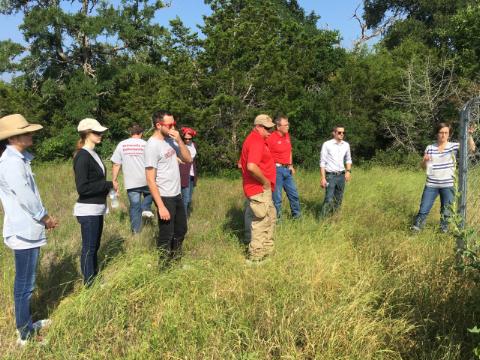
UIndy Beyond Borders team touring the Forensic Anthropology Research Facility
Uindy team touring the FARF facility

Another facet we got to experience was the Forensic Anthropology Research Facility (FARF).  I have never been to a decomposition facility before, so it was truly an experience to get to see all the research being conducted there.  The facility stretches 26 acres, and we got to see quite a few different types of studies as we walked through the fields.  We were given a tour by Dr. Kate Spradley about the research that’s being conducted there, including burials, surface taphonomy, and scavenging studies.  It was fascinating to see all the research and how it will contribute to our current understanding of human decomposition in different environments.

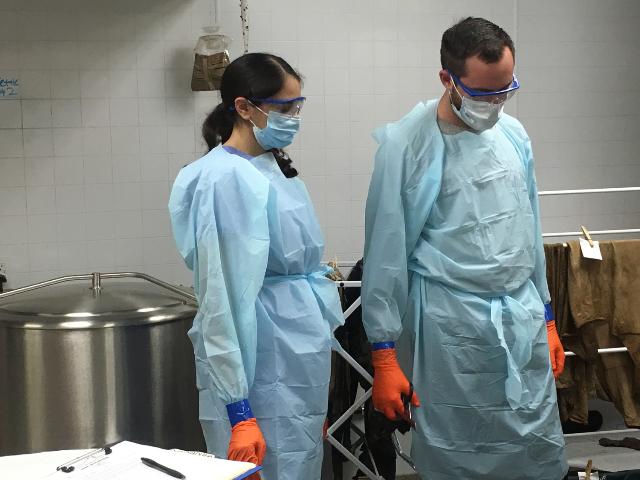
Beyond Borders Team members in masks, gowns, and gloves prepared for processing
Amanda and Ryan processing

A third opportunity we had was learning how to process human remains and personal effects the Texas State way.  Dr. Tim Gocha directed us as the other team members and I removed skeletal material from a body bag into a large pot for processing.  We also removed all of the clothing from the bag in order to be cleaned later.  I then got the chance to help take photos of the personal effects from another individual.  I was able to assist by laying out the clothes and arranging them for the photographs, as well as noting any labels or sizes that may help in the identification process.

Beyond Borders team members performing skeletal analysis
Amanda and me working on the Biological Profile

While I always really enjoy getting to participate in creating the biological profile, I have also really appreciated getting these opportunities.  Learning how casework is done at different facilities has really improved my skills as a student of forensic anthropology.  It was also really great to see how other members of this collaborative effort help in identifying missing individuals.  I can’t wait to see what new opportunities tomorrow brings.

-Helen