Latest Posts

Day 9

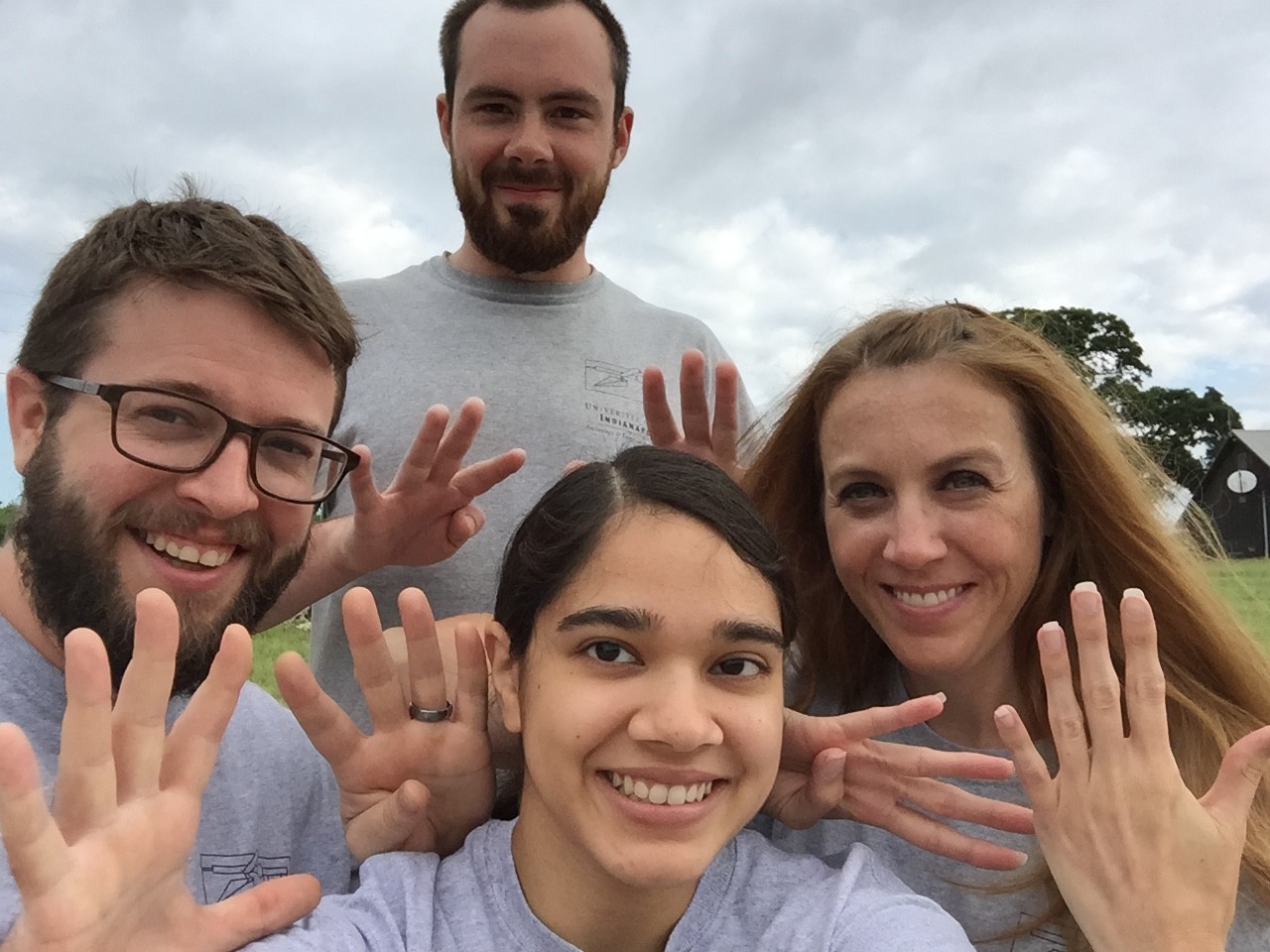
Group photo of Beyond Borders team members with nine fingers in the air on day 9
Day 9

Today we continued skeletal analyses on the unidentified migrants that are being curated at Texas State University.  It’s only Wednesday and the team of multiple organizations working at Texas State this week has accomplished a lot.  While the skeletal analyses don’t attract as much media attention as the exhumations, this is really the reason that the exhumations were conducted in the first place: to begin a forensic investigation into the identity of these unknown individuals.  The team has struggled this week to write blog posts because we are spending our days handling the skeletal remains and we don’t believe it’s appropriate to include photos of the bones in this blog.  But there is still a lot of progress being made that needs to be highlighted.

Students from across the country have come to participate in various aspects of the identification process. From processing the remains, to cleaning the personal items, to skeletal analysis, to database entry, to molecular and microscopic analyses.  This week demonstrates it truly takes a village to work towards each identification.
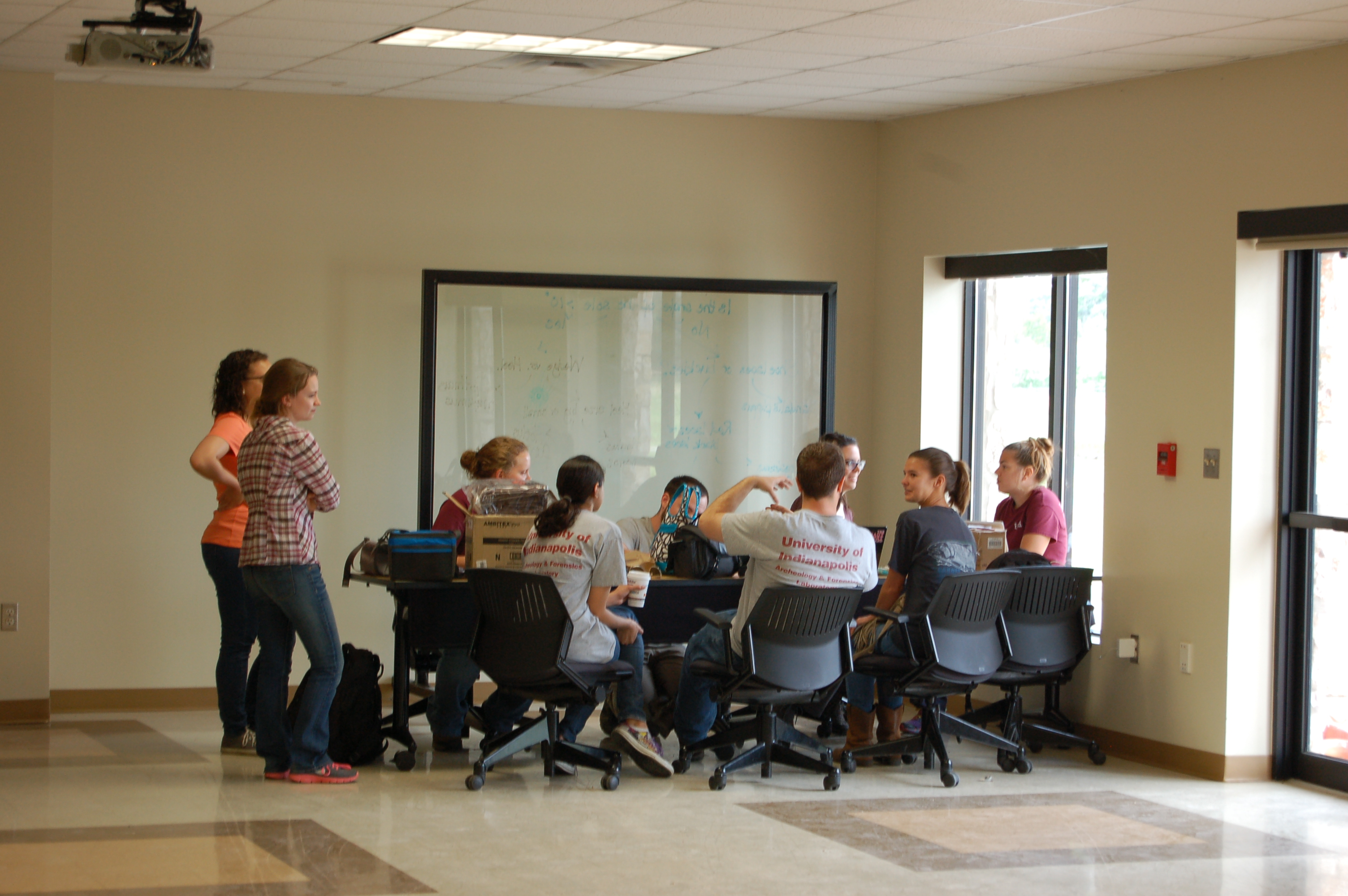
Group of students engaged in discussion at a round table in front of a white board

Most of the organizations involved are volunteering their time, so the processing and skeletal analyses usually proceed rather slowly.  There was a backlog of 15 individuals that have been cleaned but need skeletal analyses and case reports.  We are almost to that goal already.
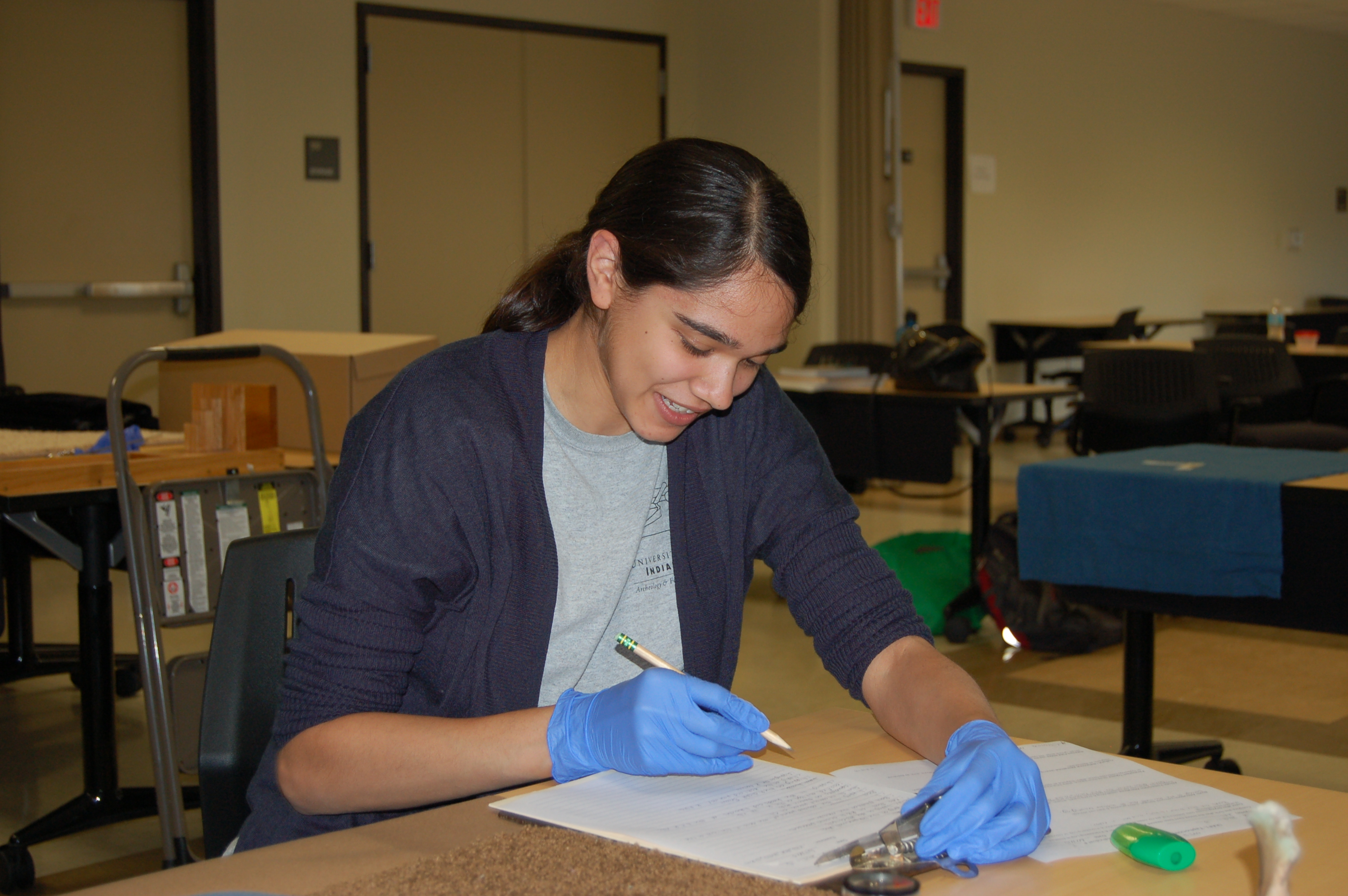
Team member working on case file paperwork on a clipboardAmanda recording information about the individual in the case file.
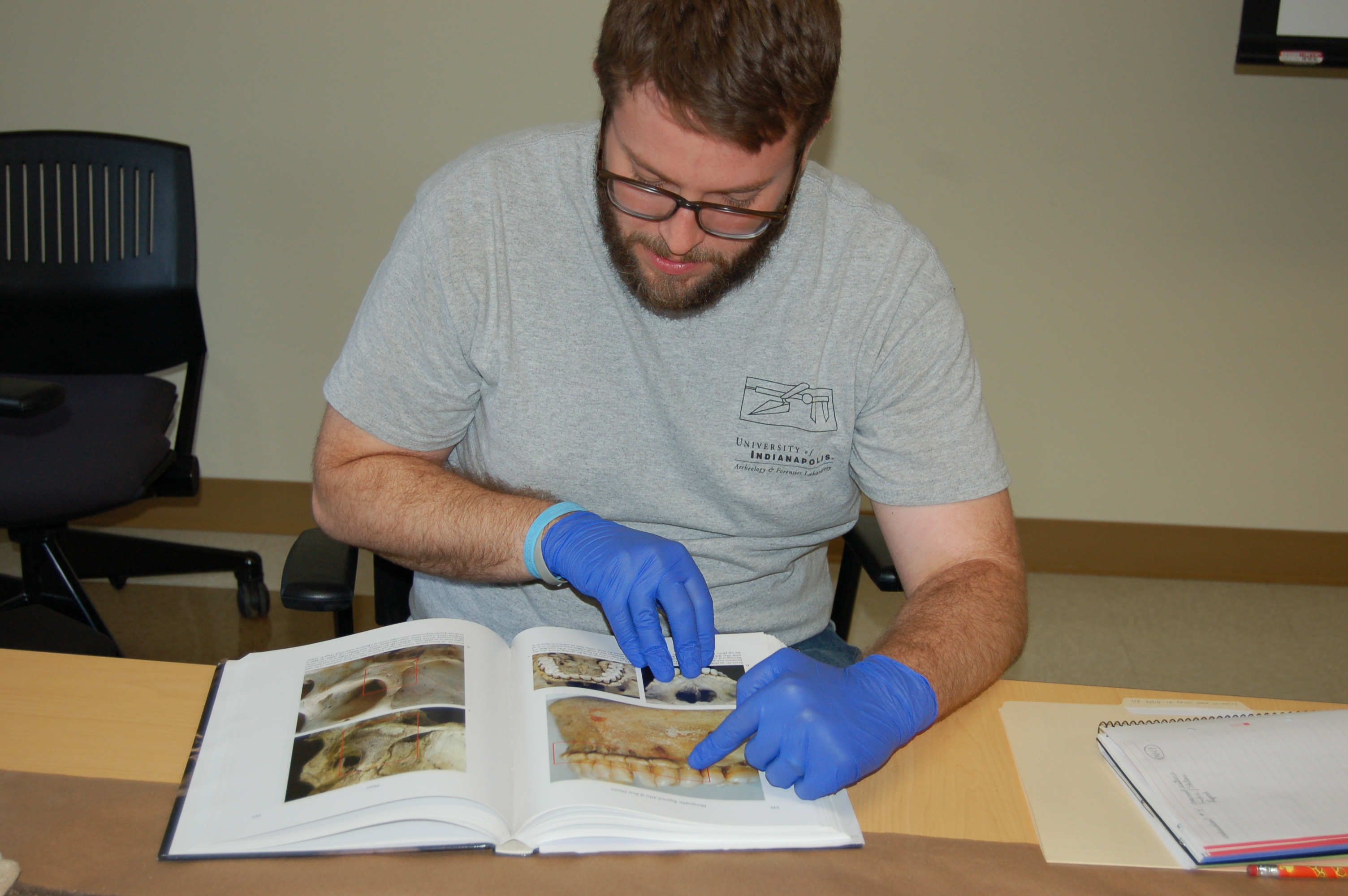
Team member looking through a pathology textbookJustin referencing a pathology book.

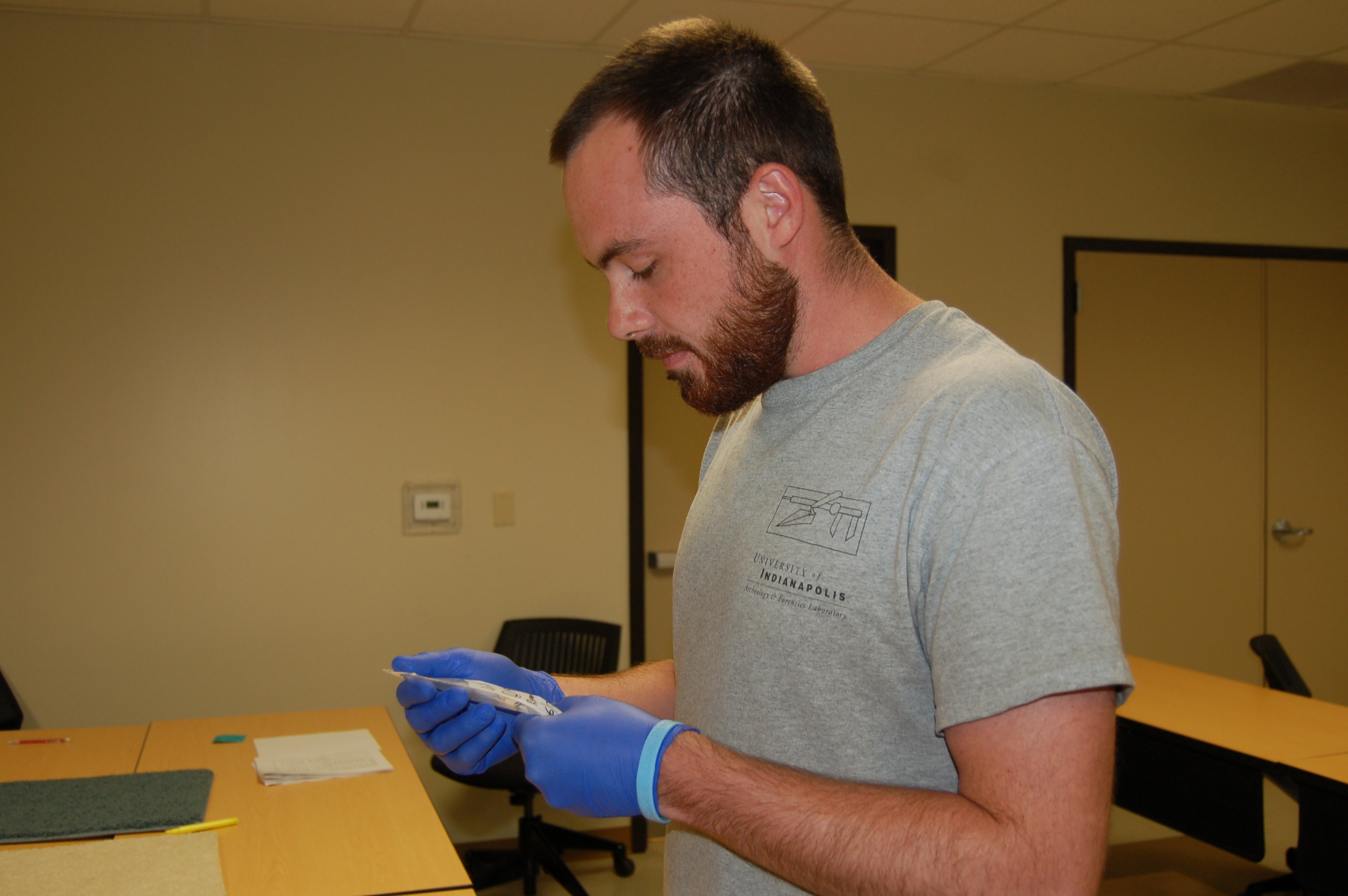
Team member handling a swab with gloves on for DNA sample collectionRyan collecting samples for DNA analysis.

~KEL

Day 8: Rain, Rain, Go Away

Group image of Beyond Borders Team members holding up eight fingers for day 8
Day 8

Since we’ve gotten to San Marcos, all it’s done is rain. Today was no different. It was pouring buckets of rain this afternoon, thanks to Tropical Storm Bill.  There are flash flood warnings for this area in effect till the end of the week and tornado warnings in effect for today. This is unusual weather for this part of Texas and I’ve had many Texans tell me that this weather is nothing like the real Texas weather. San Marcos is supposed to be sunny.

Day 8 was spent doing skeletal analyses, while worrying about the laboratory flooding or the roads leading up to the laboratory flooding and trapping us there. Our emergency plan was to bring our work with us to another Texas State University building, so that we could keep working on identifications no matter what.  A little rain isn’t going to stop the UIndy Team. Thankfully, we did not have to use our emergency plan today and we hope that we won’t have to use it at all.

None of us have wanted to venture outside in the rain, so we opted to stay in for the night. We’ve been amusing ourselves by playing around with some of the videos we’ve made since we got to San Marcos. Here are two of our best ones. Enjoy!

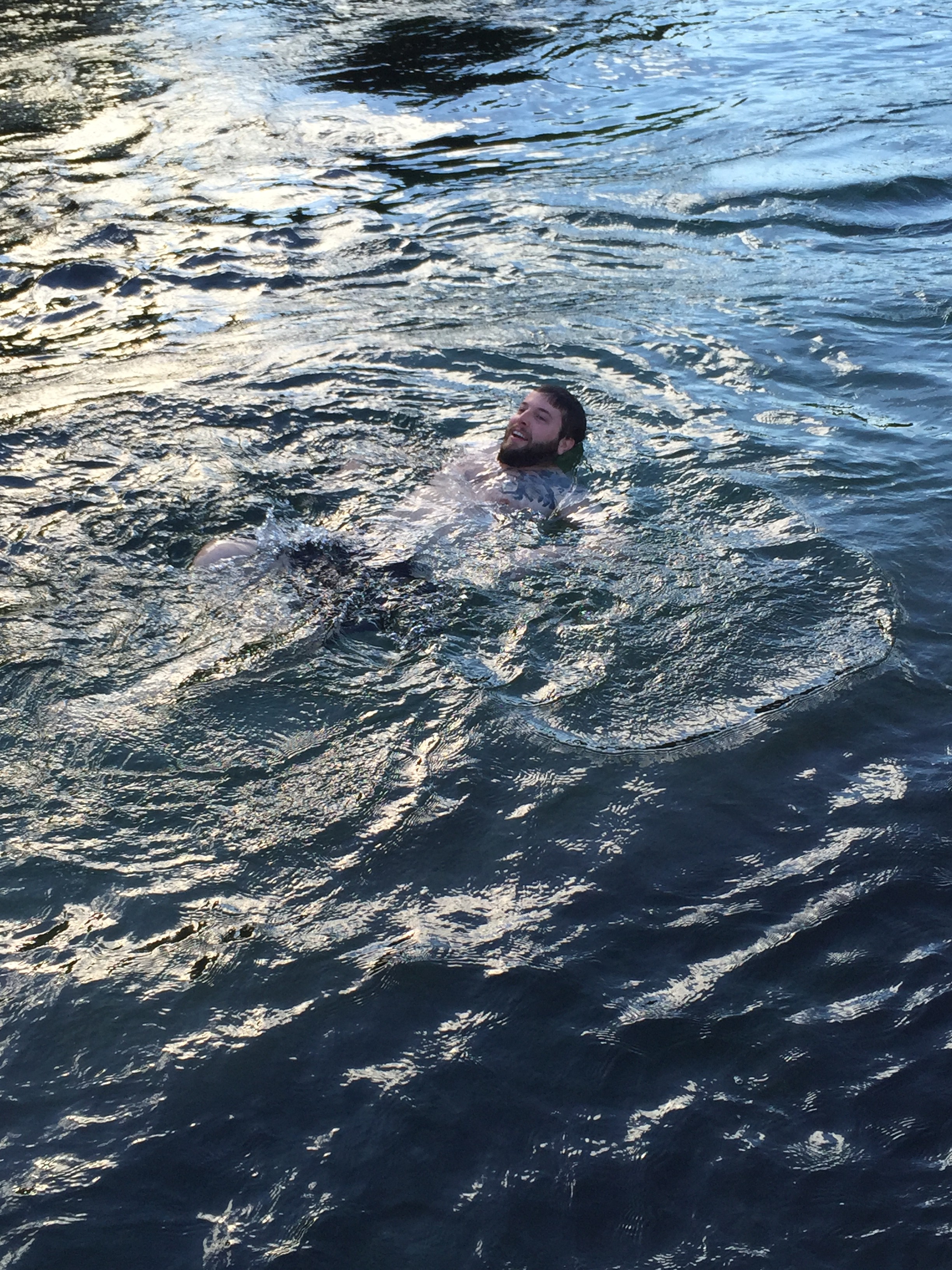
Team member Justin swimming in the river
Justin jumps into the river!

Video  1

Texas State University emblem
Time lapse video of our daily journey to Texas State University.

Video 2

Amanda

Patrolling the Border

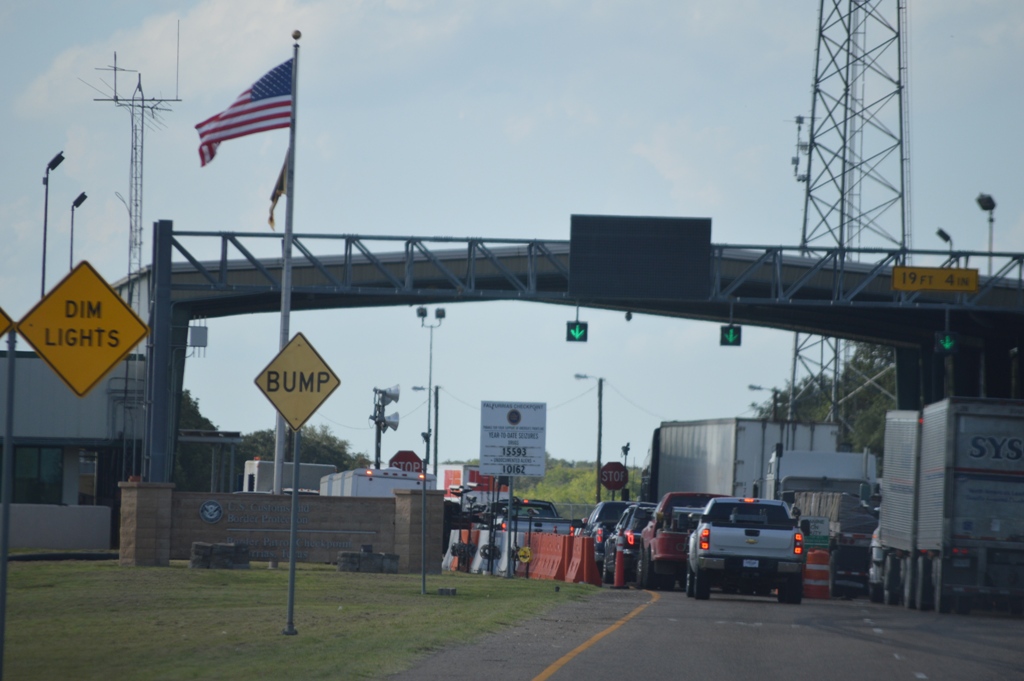
Pictured above is the Falfurrias Border Patrol Checkpoint.  The highway it blockades, US 281, spans from Mexico to the Canada border.  It is one of the many ways the U.S. Border Patrol polices our borders.

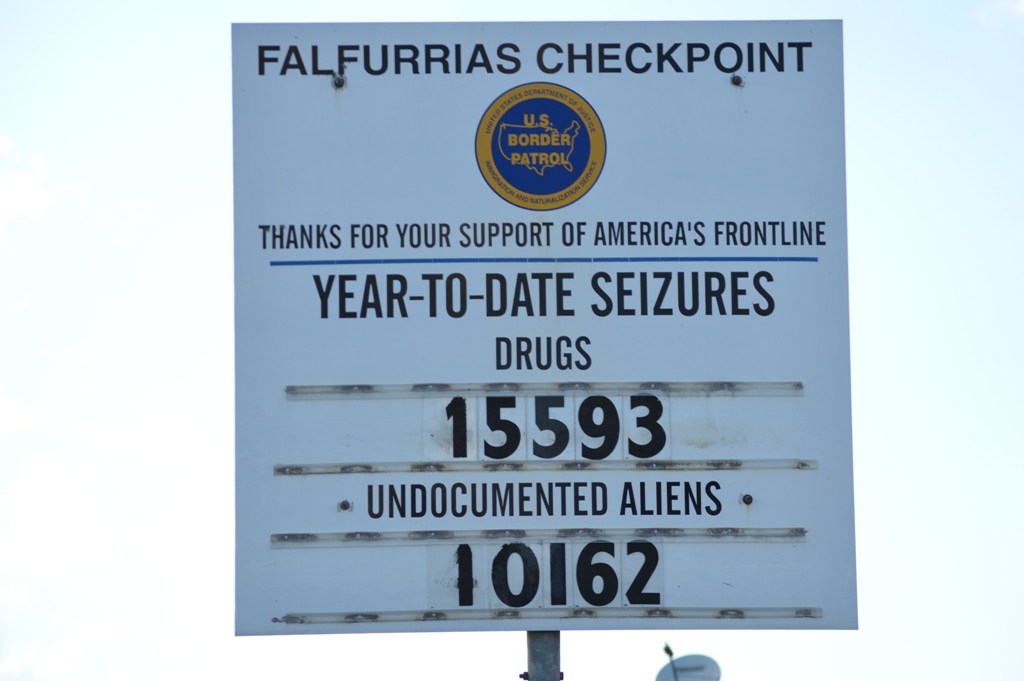
Falfurrias checkpoint sign stating year-to-date seizures of 15,593 drug seizures and 10,162 migrant seizuresI learned a lot about the different methods agents use on this trip.  Please allow me to give you a brief tour of a few of them.

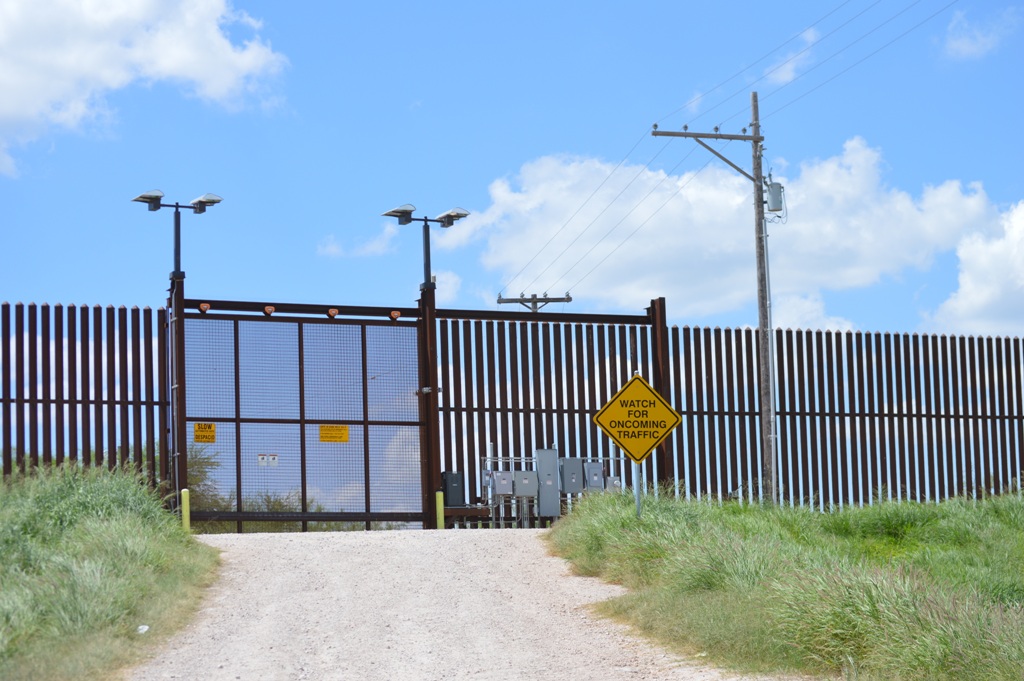
The border wall with a hazard sign outfront stating "Watch for oncoming traffic"Perhaps the most obvious is the fence at the border.  It lies on the U.S. side of the Rio Grande.  It is a stretch of steel and steep cliffs.  It is also lined with many remote sensing devices.  We were in this location for only a matter of moments before Border Patrol arrived to greet us.

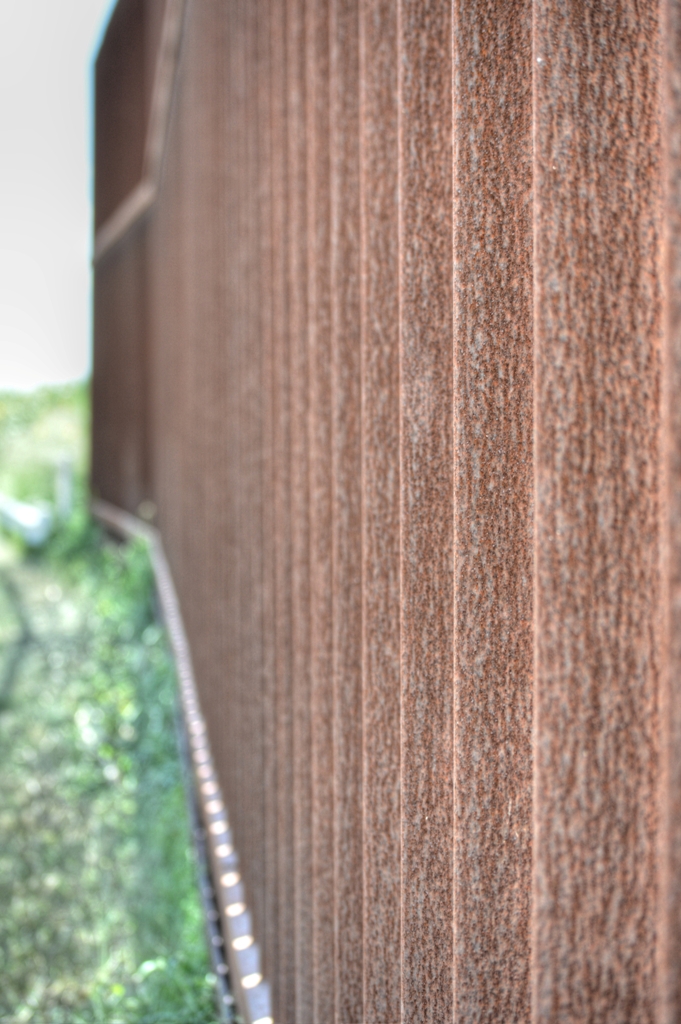
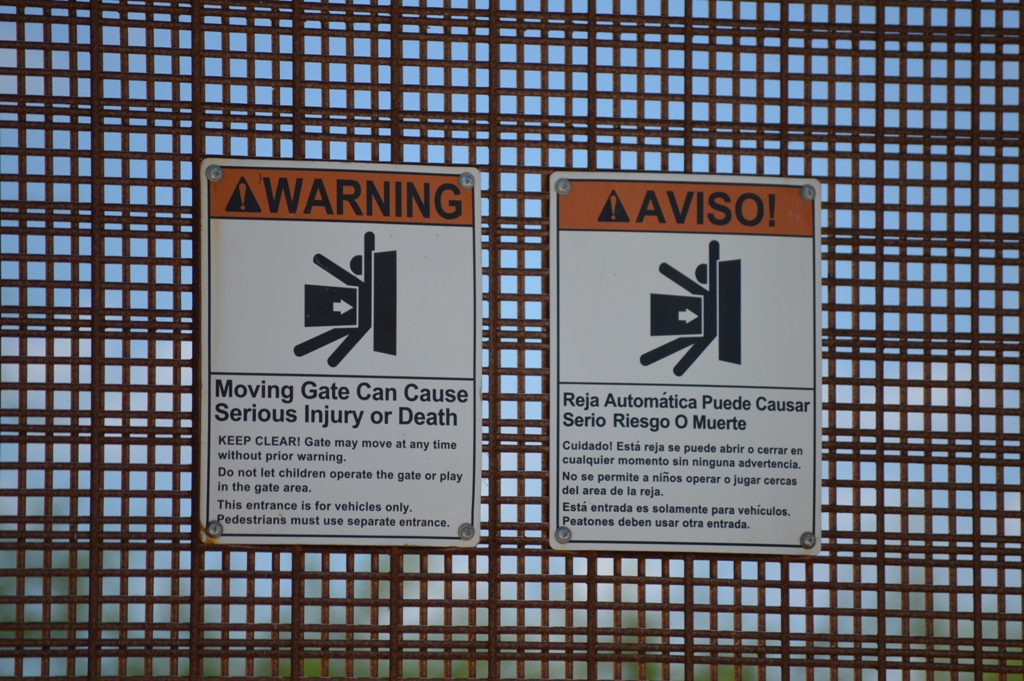
Upclose image of the metal panels of the border wallThe fence does not span, the entire length of the border, but where it does it is quite intimidating.  There are stories about migrants trying to sneak past, only to be killed by the slow crushing force of the mechanical gates.

Warning signs in English and Spanish stating "Warning Gate can cause serious injury or death"Another new addition to the arsenal of the Border Patrol is the aerostat.  The aerostat is a tethered dirigible that is outfitted with cutting edge technology.

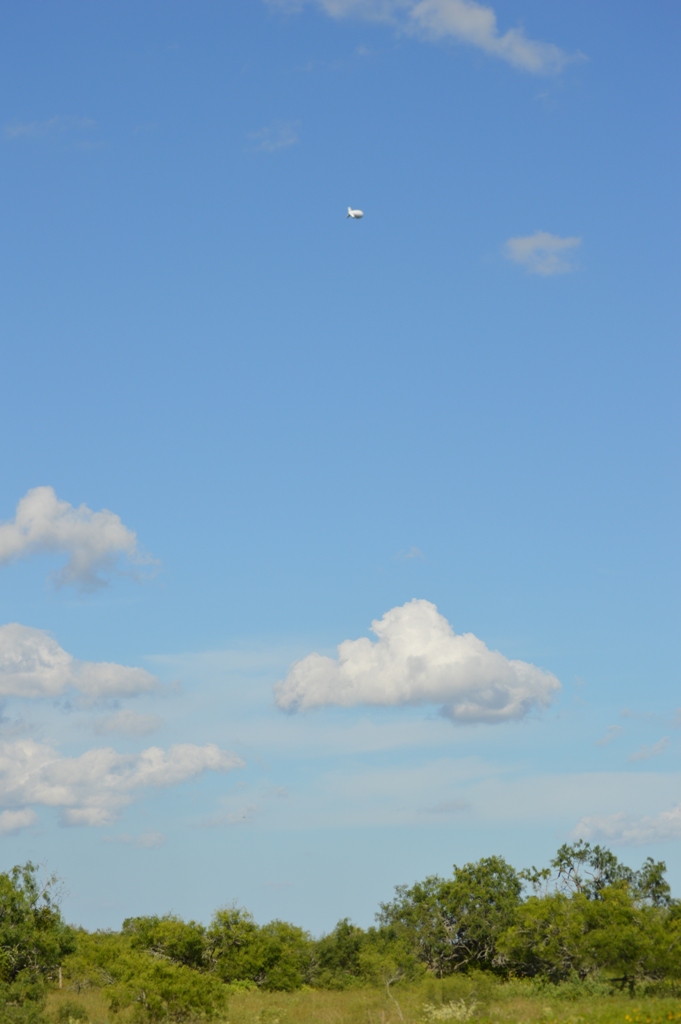
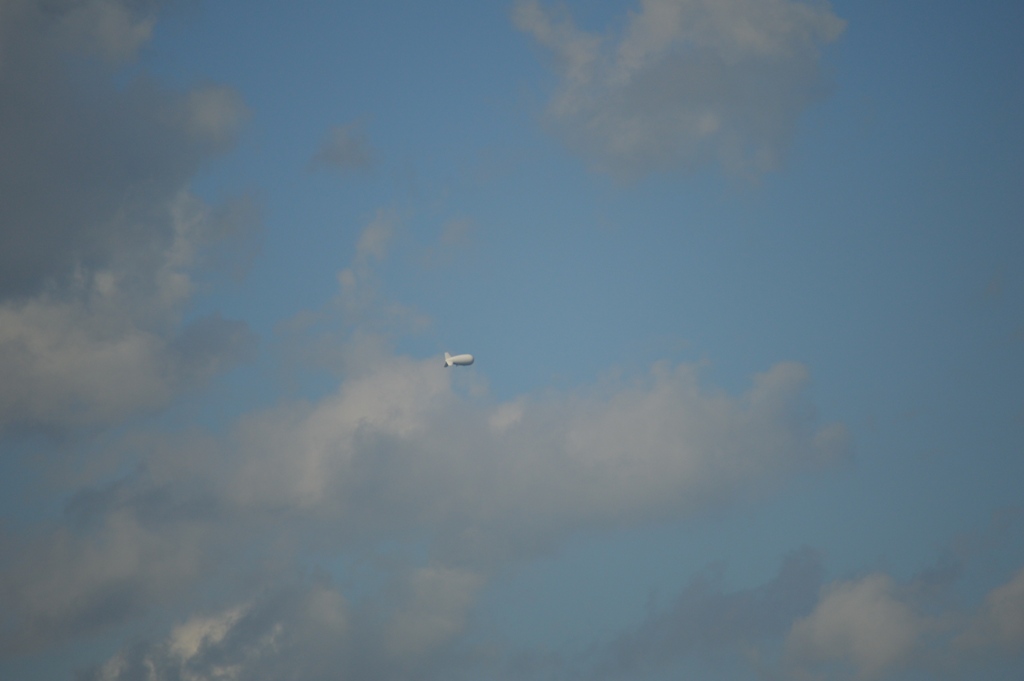
An aerostate surveying in the Texas sky over the brushThat tiny blimp in the background is the aerostat.  Each one costs roughly $2.5 millions dollars.  It has the capabilities of surveying over 20 miles.  It is also equipped with thermal and night-vision.  It can remotely survey vast areas of desert that would otherwise be nearly impossible.

A zoomed-in image of the aerostat in the Texas skyEven with my largest zoom lens,  the aerostat is barely visible in the distance.

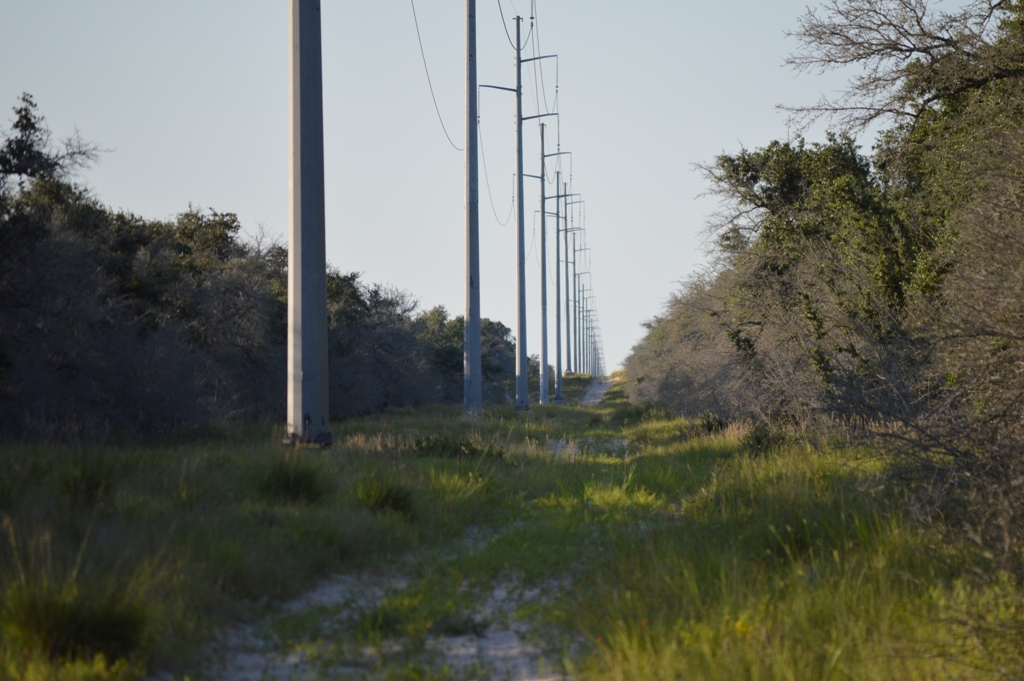
High-wire power lines extending as far as the eye can see in a small opening in the brushThe tract of land above is colloquially known as “The High-Wire”.  The high-wire is a swath of power lines that runs due north, making it a perfect landmark for migrants to follow (especially in an otherwise landmark-less terrain).  It is also peppered with remote sensing devices.  This makes it a powerful tracking device for Border Patrol, and a dangerous pathway for any migrants.

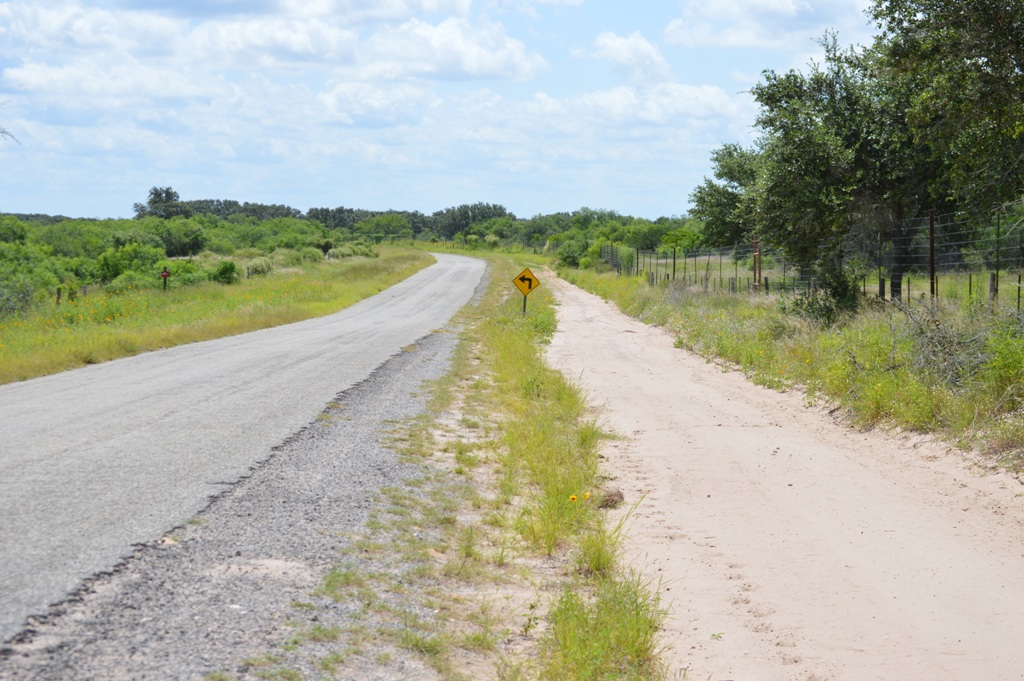
A paved road bordered by a dirt maintenance roadIn addition to all of the high-tech patrolling methods, border patrol also uses several low-tech methods.  Most of the ranches in South Texas are surrounded by dirt maintenance roads.  The maintenance roads on the inside of the fence are mainly used by the ranchers.  The maintenance roads on the outside of the fence are heavily utilized by the Border Patrol.

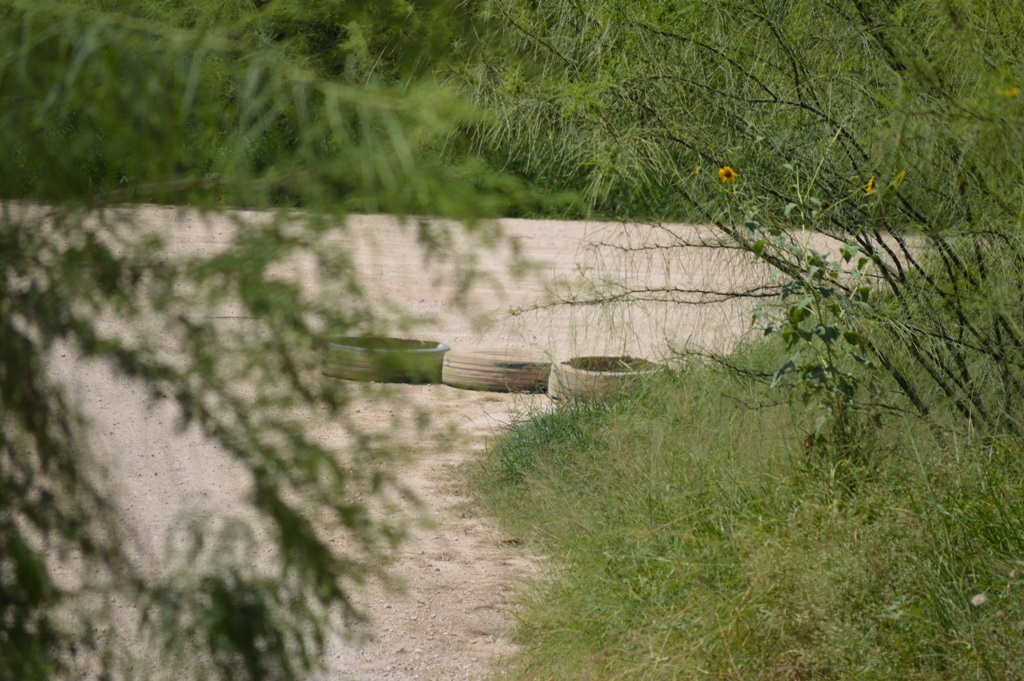
Three discarded tires viewed through trees on the dirt roadTires like these are dragged with chains behind vehicle to grate the road.  After the road is grated, Border Patrol can track footprints across the dirt pathways.

These are just a few of the many tools that the U.S. Border Patrol uses to detect individuals crossing the border.

Justin