Latest Posts

Day 1

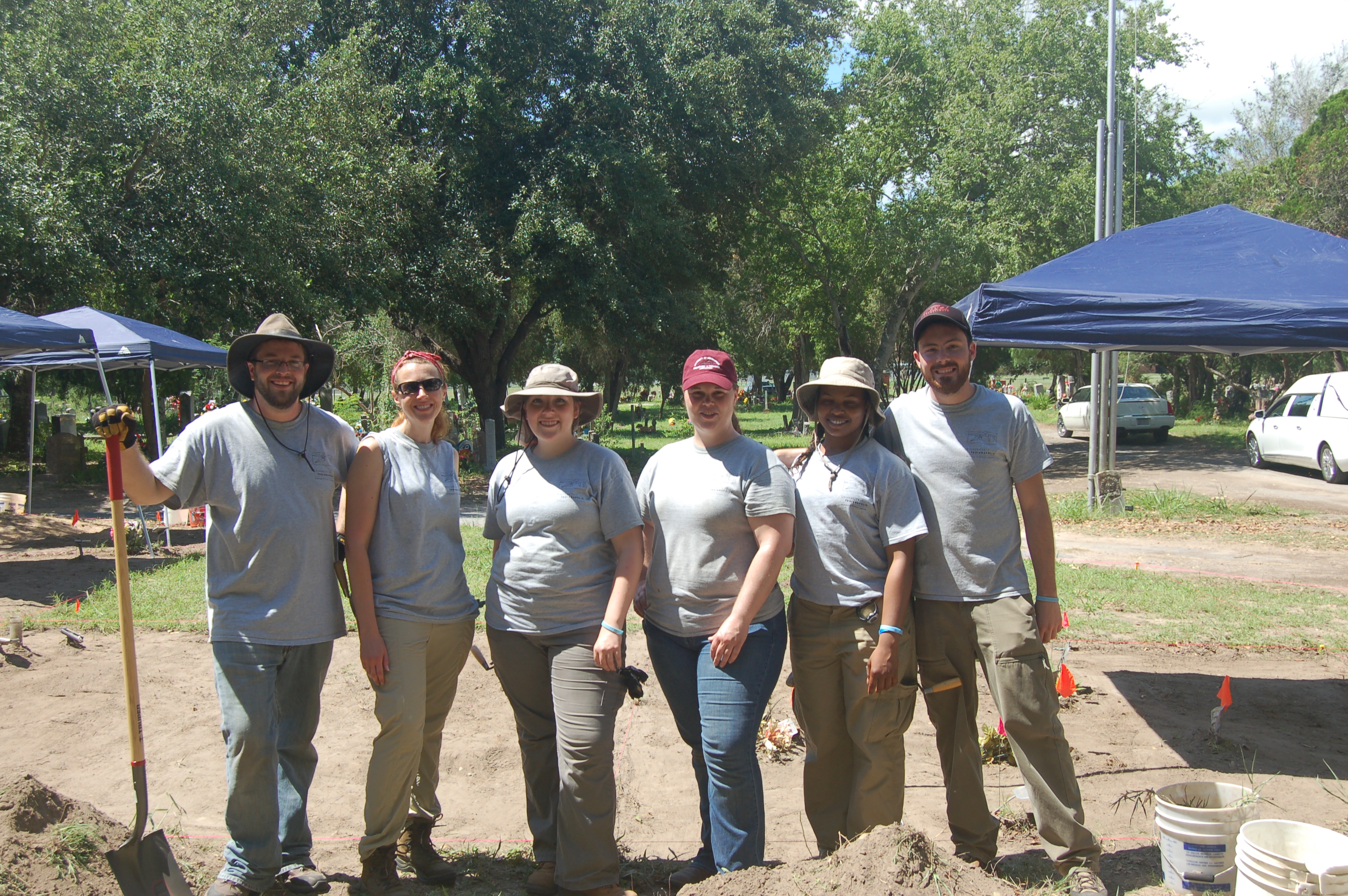
Group photo with everyone in their work uniforms

Today was our first day working in the field. The area of the cemetery we are exhuming has no shade and temperatures soared over 90 degrees today.  Our team knows the dangerous combination of heat and humidity means we follow two basic rules: 1) Hydrate, hydrate, hydrate and 2) work in 5 minute shifts (5 minutes on and 5 minutes rest). Five minutes may not sound like a long time to work, but when you are putting all your strength into digging in these temperatures, five minutes can be enough to bring you to heat exhaustion.
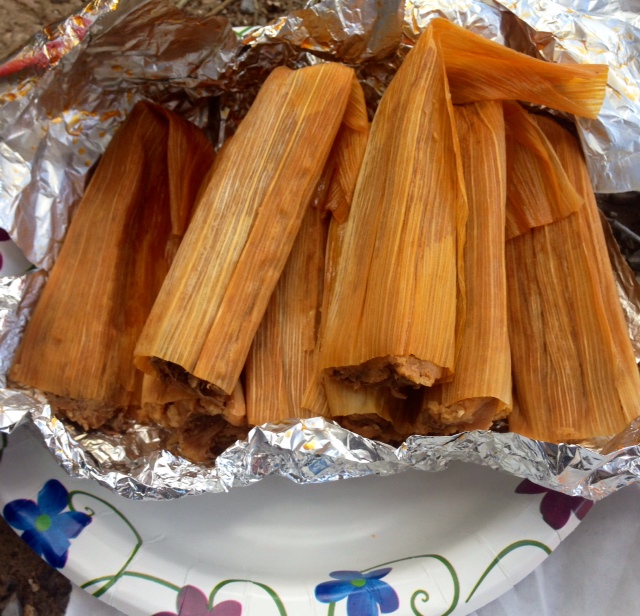
Plate full of tamales in corn husks

Tamales

We got to see some of our old friends from last year like Chief Benny Martinez of the Brooks County Sheriffs Department and Constable Arturo Garcia. We were fortunate to meet some new people today as well. Flavio Garcia, a local businessman, brought shredded beef tamales for the entire team to enjoy on our lunch break at the cemetery. They were the most amazing tamales I think I’ve ever had!  (I won’t tell you how many I had, but it might have been four…) Flavio was also gracious enough to supply six porta potties for us at the cemetery and cleaning services every three days.  This is an example of Falfurrias hospitality.  Everyone we meet is so gracious and so kind.

We were also able to spend some time speaking with Eddie and Irma of the South Texas Human Rights Center, a community based center dedicated to the promotion, protection, defense and exercise of human rights and dignity in South Texas. Their mission is to end death and suffering on the  Texas/Mexico border through community initiatives. Each day in Falfurrias we learn more about the many people and organizations dedicated to ending the preventable deaths on our border. We feel privileged to be a part of this mission, and while we are only one small piece we are proud that we are able to contribute in our own way to reuniting families separated by this crisis.

~KEL

People of “Privilege”

What would you risk for the chance at a better life?  If you are like me, then probably not much.  That is not to say that I haven’t sacrificed a lot in the pursuit of happiness.  I am a poor graduate student who has spent the last three years living in a different state than my wife because we both are following our career paths.  I rarely ever get to see friends or family.  Sleep has become more like a fond memory than a regular occurrence.  I’m here in south Texas volunteering my time to dig in a cemetery in the summer when temperatures average around  100 degrees.  When I compare the things that I have forfeited in the hopes of a better existence, it seems trivial when considered next to the tribulations of the people who try to cross the border.

A few weeks ago, several UIndy students and I had a conversation with Robin Reineke, an anthropologist who works on migrant deaths in Pima County, Arizona.  One of the things we discussed was the concept of “people of privilege”.  Let me take a moment to be abundantly clear:  This is not a diatribe about class warfare, and has nothing to do with social status.  By Robin’s definition, “privilege” meant not fearing death from starvation.  “Privilege” means no fear from institutionalized violence, or being killed for your political views.  The “privilege” lies in never actually considering those horrific events and never believing that they would actually happen to you.

This is my second year in Falfurrias.  It is both the most difficult and rewarding endeavor that I have ever undertaken.  It is both incredibly rewarding yet emotionally draining.  When I talk to other people about my work, they inevitably ask, “How has it changed you?”  In truth, it hasn’t.  I am the exact same “person of privilege” that I have always been.  I do not fear for my life or well-being, nor do I fear oppression or starvation.  The only thing that has changed is but the smallest notion of what might motivate another human being.  The only real difference is but a few lingering questions in the back of my mind.

Now, Let me rephrase the question.  What would drive you to walk across the desert?  What would cause you to abandon everything and everyone you knew and loved, just for the opportunity that your life might be better?  What might you give up for the chance at a better life?  Would you be willing to die knowing that your children might live without those fears?  How far would you go for that “privilege”?

Justin

Birds, Biscuits, and Baylor

A whataburger ad stating "Whataburger, just like you like it" with a hamburger beneath
Whataburger

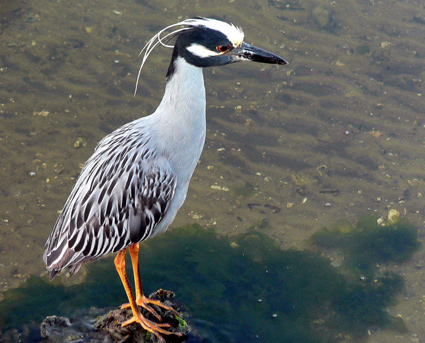
Thank you San Antonio for the biscuits and gravy! I thoroughly enjoyed breakfast.  While making our way to Falfurrias I heard the exciting makings of a couple remixed 90s songs, “Highway to Fal” and “The Fal and the Furious (movie title but potential song).  After failing miserably to bird watch from the car, I decided the time would pass a lot quicker if I went to sleep, so I did.  My plan worked! Once I woke up we were in Falfurrias.  Unfortunately, while I was sleeping I missed a bird that was seen by the team but I figured I would see it again later.  Shortly after we arrived I experienced one of many first experiences, which was WHATABURGER (very popular in Texas).  After eating I compiled my bird list for the day.  My list consisted of a red-winged black bird, black vulture, turkey vulture, laughing gull, scissor-tailed flycatcher and more birds that I have not yet been able to identify but I’m sure I’ll get another chance.  From the list of birds that I could recognize, my bird of the day would definitely have to be the scissor-tailed flycatcher.  I will be looking at birds while here, so each day I hope to post a bird of the day or every other day.  (Yesterday was a great day for birds in San Antonio; the team helped me find a yellow-crowned night-heron, great-tailed grackle, boat-tailed grackle, and a molted duck.  Along with the house sparrow, rock dove, and mallard that I see in Indiana all the time.  My day one bird of the day was the yellow-crowned night-heron).  After the food and the birds we met up with the Baylor students and we headed to the cemetery.

A yellow crowned night heron standing on a rock over water

A Scisso-tailed Flycatcher standing on a barbed wire line

Not being a part of the crew last year, this was going to be my first time going to the cemetery.  I was not quite sure what to expect as my cemetery visits are kept to a minimum when I’m home.  However I had a pretty basic idea of what I thought I was going to see.  For the most part my impression of a cemetery is green cut grass and headstones in rows and around the cemetery.  As we approached the cemetery the ideas of what I thought I would see, and what I actually saw were slightly different.  The cemetery was very congested.  There were far more headstones than I thought I would see.  I am also familiar with flowers being on graves, but here I saw toys left on headstones, decorations like wind mills, along with flowers.  Although some of these items look like they could be just decoration, they are surely sentimental and it gives that particular grave site its own identity.  We went to look at the area that we are going to be working in and it was the complete opposite.  There was no identity and although I am sure if has not yet sunk in completely, I was still saddened knowing that that there are individuals being buried with no identity to the naked eye (headstones, flowers, etc).  After attending a funeral this past month it is hard to fathom the idea of not knowing or even being there for that person.  I am grateful to be a part of this team and hopefully, although the graves are not distinguishable by some type of personality, we will be able to help identify these individuals and give some people peace of mind.

Cheneta Morrison