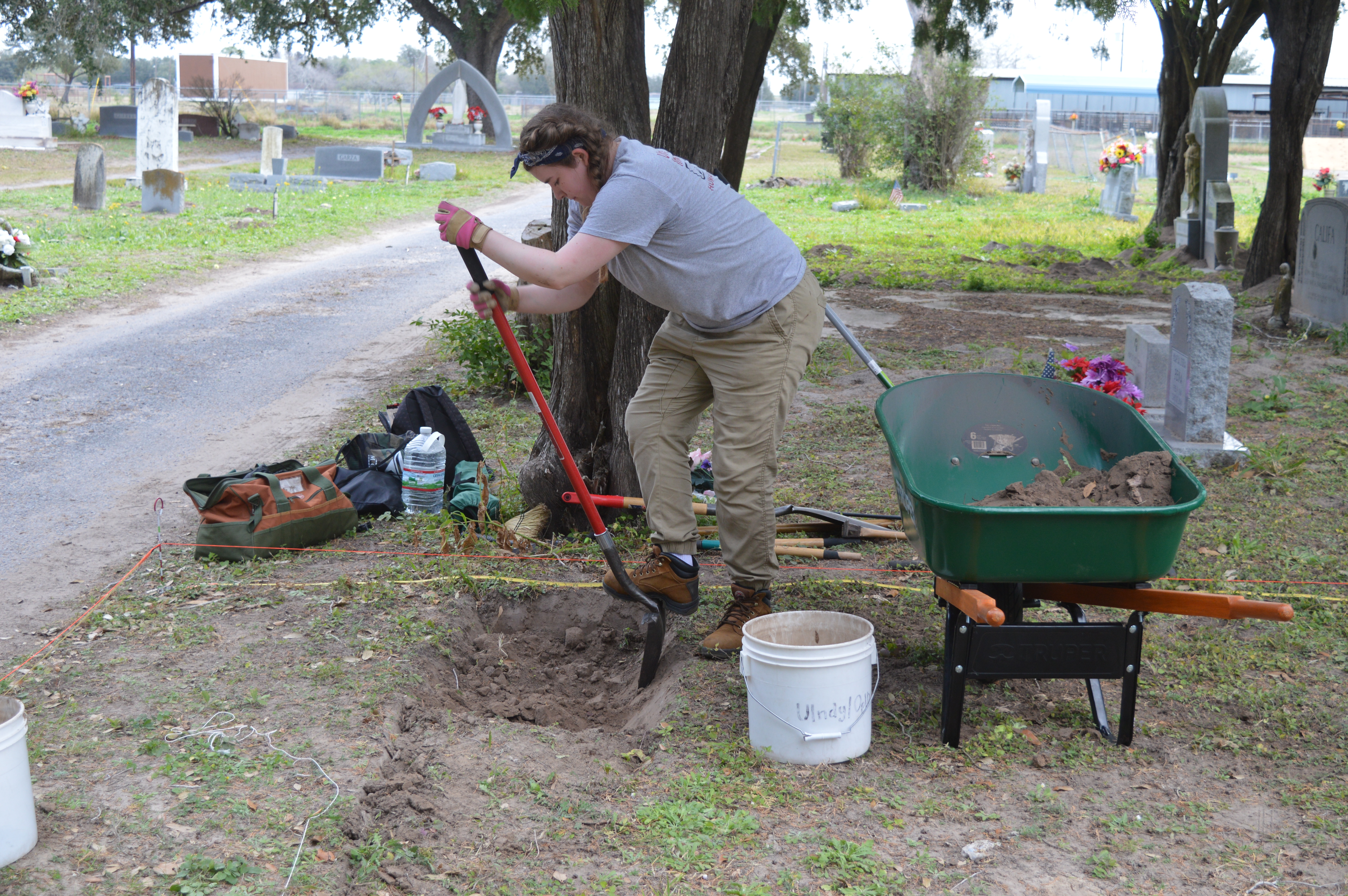
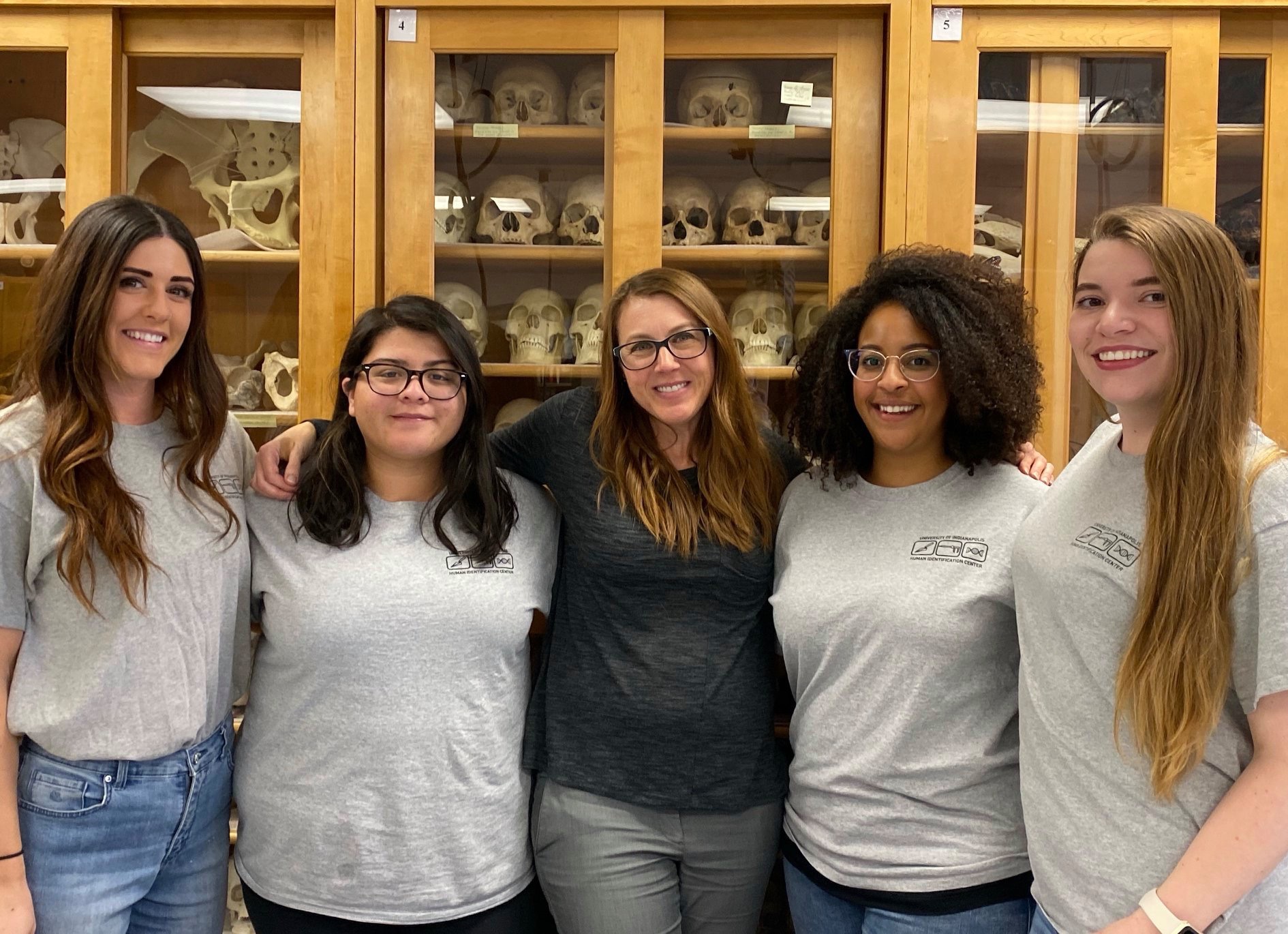
This morning brought the team to a local ranch where we were able to participate in a search and recovery exercise with Border Patrol and the Sherriff’s Office. I was very excited to participate, as part of my last trip to South Texas with the Beyond Borders team this past May focused on search and recoveries. I’m not sure if I was more excited because it reminds me of my first trip, or maybe it’s because I have had not had the time to reflect on the effects of this season, but something about participating in searches really resonates with me. I feel a closeness in walking the same paths that migrants are taking and observing materials they left behind. Water bottles, sweaters, and jackets – all necessary for the journey, and all items that we carry around ourselves. It’s a reminder that these are living and breathing people, with wants and needs just like our own. I was happy to be able to share the experience with Sammi, Sidney, and Arden, not only for the physical act of performing a search, but in all the other parts that encompass it: the sandy soil that requires a little more effort to walk in, the various spiders and wildlife we come into contact with, the mesquite and cacti that have to be dodged, the feeling of being completely alone and not knowing where you are because everything looks exactly the same. I have presented on our previous trip a few times over the most recent semester, but hearing about searches and actually doing them are completely different things. The team was even fortunate enough to be covered in ticks by the time the search was over – a truly authentic part of the search and recovery experience! Though we only participated in the search and recovery exercise in the morning, I feel like the whole team was able to take something away from it. A quote from Sister Pam that I stated in my final reflection post from last season still applies here, “You become different people when you put your feet in other people’s shoes…it changes you”.
Category Archives: Human Rights, Migrant Death
Day 6: Cleared
Day 6. We are officially more than halfway done with our trip here in Falfurrias. Yesterday gave our bodies time to recharge and showed us a broader scope of the migrant crisis. Even though some days felt like we were barely moving inches of dirt, our renewed sense of energy allowed us to finish our second root-filled section before lunch and move on to our third, and largest section yet. After dealing with enough roots to last all of our lifetimes, we were excited to find that our new section had very few roots, and areas with nice, soft soil.

Unfortunately, little roots meant no tree cover, and we were exposed to the sun on the hottest day of our trip thus far. Humidity levels were also high, and there were a few drizzle showers in the morning. We decided to tackle our large area by making two large trenches on either side and then shorter trenches perpendicular to those, much like rungs on a ladder.

Deputy Sherriff Don White was kind enough to help us move a lot of the dirt we were digging, allowing us to continue our trenches with fewer interruptions from emptying buckets – Thanks Deputy Sherriff White! The heat required more frequent water breaks, and by lunch, all of us were soaked in sweat and covered in dirt. Despite this, our team decided to take a later lunch than usual because we were so motivated to continue the work we came here to do – recover the remains of migrants who have been buried
unidentified so hopefully, one day they can be returned home, and their families will have the answers they most certainly wish for. By the end of the day, we reached our goal of finishing the two trenches left in our second (root-filled) section, and digging three trenches in our newest third section.

Even though the UIndy team has not made a recovery yet, we know the work we are doing is important to the greater Beyond Borders/Operation Identification project. Every area we clear is one less that future teams have to worry about searching. Every area cleared means that focus can be put on other areas of the cemetery that have not been searched. This season has not been easy – there have not been markers showing us where the unidentified are likely to be buried, and there seems to be no consistency in where remains are found. We have had to rely on past experiences with recoveries at Sacred Heart, as well as Ground Penetrating Radar (GPR), which can detect disturbances in the soil, but does not guarantee that these disturbances are the result of human burials. This means that the areas currently being searched are the areas considered more likely to have unidentified migrant remains. Often times this leads us to corners of the cemetery, which are considered undesirable locations to sell to the public, or areas between plots that may not be big enough for standard coffins. So even though we have not made a recovery, we remain determined to check every area we possibly can while we are here, because we know that there are more remains at Sacred Heart just waiting to be found. Our bodies may be tired, but our passion for this initiative keeps us going. The unidentified deserve to have a name, and their families deserve answers. Six days down. We have three digging days left, and I can guarantee you that this team will use every minute moving as much dirt as we possibly can.
Thanks for reading!

Day 5: The Other Side

Today was very different than the last four days we have experienced. We were able to take a day and rest our bodies, so we could be fully recharged to continue searching for the unidentified at Sacred Heart Cemetery tomorrow. However, the true purpose of this day was to take some time to immerse ourselves in the other side of the humanitarian crisis occurring at the US-Mexico border. The side that we are used to includes the sadness of previously voiceless decedents who died in search of a better life, but our experiences today extended beyond that. We found that the side in which you interact with the people living with the consequences of US immigration policy are equally heartbreaking in so many ways. Last night, the UIndy team purchased a few bags full of useful food items and supplies that we wanted to donate to the Humanitarian Respite Center operated by the Catholic Charities of the Rio Grande Valley. Today we were fortunate to be able to bring our donations to the center and receive a brief tour of their facility.
I have never woken up wondering if I would be pulled away from my family and held in a detention center. I have never feared that my family would be deported, that I would lose the progress of my education, that I would never see my home again, or my family, or my friends at school. Today I saw some of the sweetest and happiest children in the middle of some of the most difficult moments of their lives. I saw exhausted parents who had been desperately holding their family together after days in an ICE detention center, hoping to be granted asylum in this country. There were women and children who just wanted a meal and some guidance before heading on their way. They were helpful and grateful for the assistance, not greedy. They were lost in an unfamiliar place. They were non-English speakers. They were in need of bus tickets back to their family members. I tried not to think about it too much in fear that I would start crying. It was deeply heartwarming to see that so many people in the community volunteer their time and resources to help keep this operation running to serve vast numbers of people on a daily basis.
After leaving the Respite Center, we headed over to the border wall. This was my second time seeing it and it still gave me chills. The Rio Grande River marks the official border between countries, but there are tall walls with barbed wire or massive, rusty metal fences on the US side of the land by the river.

Within 90 seconds of walking over to the wall, a Border Patrol truck rolled up on us to interrogate our purpose in the area. He left us alone after hearing that we were white folks from Indiana just interested in seeing the wall, but I know he kept watch from afar. There was a broken ladder, probably from the journey of one traveler as he/she shimmied up and over this 20-foot fence.

We imagined the fear and adrenaline coursing through someone’s blood as they committed to this risky journey knowing they too, may only have 90 seconds before Border Patrol discovered them. Yet, all we could do was gaze at the other side of the fence, never knowing what it would feel like to make a run for our lives that could determine our future or the well being of our families in a faraway home.
The end of our day was marked by the most wonderful dining experience. Peggy and Bill Clark invited the entire team of volunteers to their house for dinner at their beautiful ranch home. We were able to gain some insight into the other side of the Falfurrias community; the thoughts, experiences, and daily lives of those outside our immediate circle of human rights volunteers. We arrived early to help set up and were incredibly thankful to develop relationships with the two of them. Peggy’s grandfather founded the town of Falfurrias, so she shared some incredible stories and family photos with us. Overall, they were just honest, kind, fascinating people who welcomed us into their homes with open arms and wanted to get to know us. I hope to be able to see them again in the future and value the conversations I was able to share with them.

There is a quote from Sister Norma Pimentel, the director of Catholic Charities of the Rio Grande Valley. She says, “Helping another human being is never wrong. It is never a wrong thing to do.” That really resonates with me, and I hope that people of all backgrounds can see the good in humanitarian work being done. I know we all learned a lot today, and I look forward to everything else to come.