Latest Posts

How to Bulk Up In 10 Days: The Field Workout Program

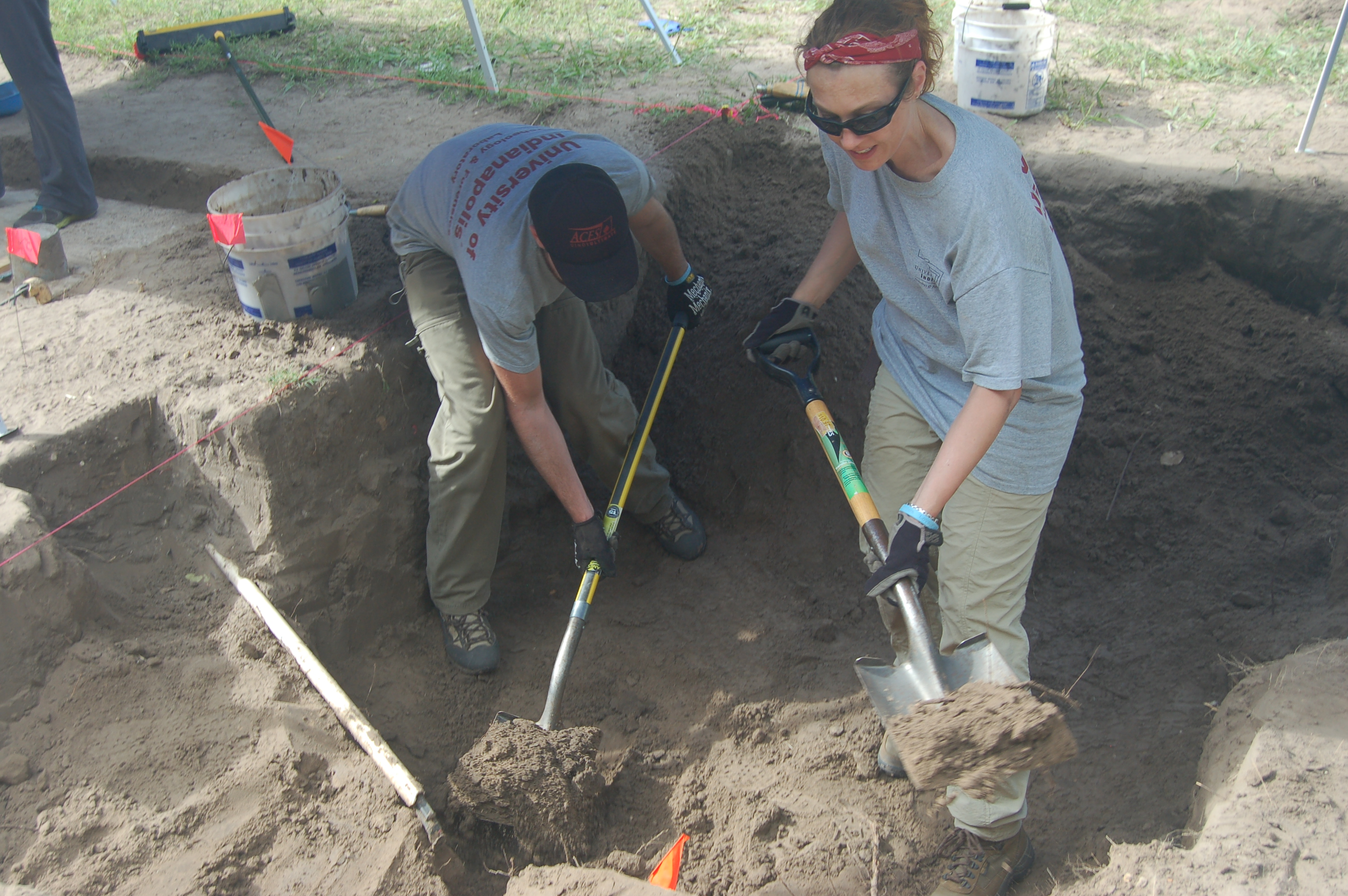
A week in, our muscles are finally starting to feel pretty sore. We’ve been shoveling, troweling, lifting buckets of dirt, pouring buckets of dirt, and moving equipment around all day. I got to thinking about the amount of work we’ve been doing and decided to put some math to work (with whatever part of my brain that isn’t fried from the heat) to get an idea of how much work we’ve been doing.

Each quadrant in our overall grid measures 4 meters x 4 meters. As of today, we have finished one entire grid and half of another grid (we have to give credit to Team 3 of Baylor for helping with much of our first grid, some of the remains they exhumed crossed into our grid too). Our standard is to remove at least 80cm of dirt before digging small test pits to about 100cm and probing down to 140cm to look for deep graves. So, I made some calculations based on our above standards.

With a depth of 80cm, each grid measures 12.8 cubic meters. A quick Google search reveals that the average weight of a cubic meter of soil is about 1600kg, or roughly 3,530lbs (the dirt we are moving is much more compact, however, and so 1600kg is likely an underestimate). That means the total weight of the dirt removed from each grid is about 45,150lbs. If we divide that equally between the six of us, assuming we’ve each moved the same amount of dirt, that comes out to 7,525lbs of dirt moved per person.

Of course, there have been artifacts and remains in the dirt that take up some space, but we’ve also been helping out with every other grid and have moved quite a bit of dirt in the demonstration and assisting processes. I decided to see what adding 20cm of dirt per cubic meter meant for total weight of dirt moved. With a depth of 1 meter, each grid measures 16 cubic meters, bringing the total weight of dirt for this volume to about 56,440lbs of dirt per grid. Divided between the six of us, that comes out to about 9,406lbs of dirt moved per person.

We’ve honestly probably moved more dirt than that. Not only do we move dirt out, but we also relocate our dirt piles to access other grids. But I think that we can safely assume that each of us has moved at least 7,000lbs of dirt so far. No wonder our muscles are sore.

Our friend Stevie of Team 5 from Baylor has decided that this normal amount of work just isn’t enough to satisfy her need for fitness, so she has created several exercises that can be done at the field using our equipment. She calls them her CrossFit Moves of the Day:
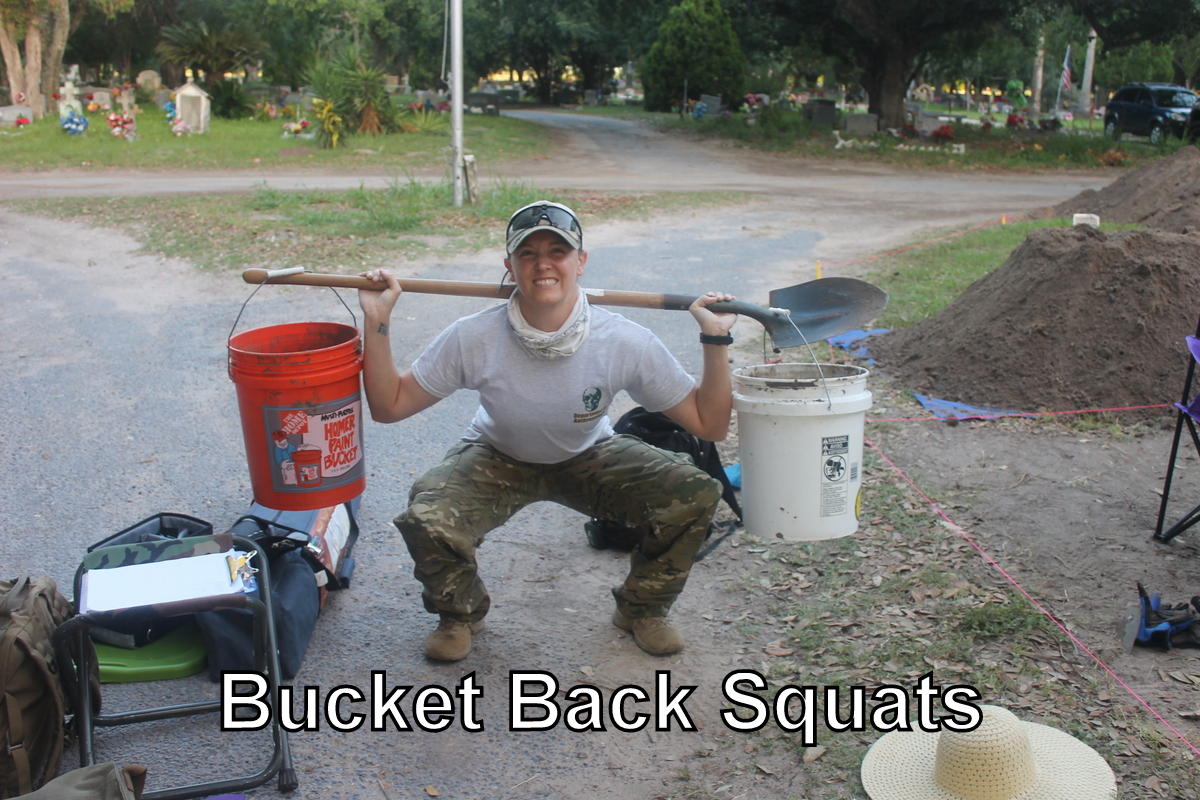
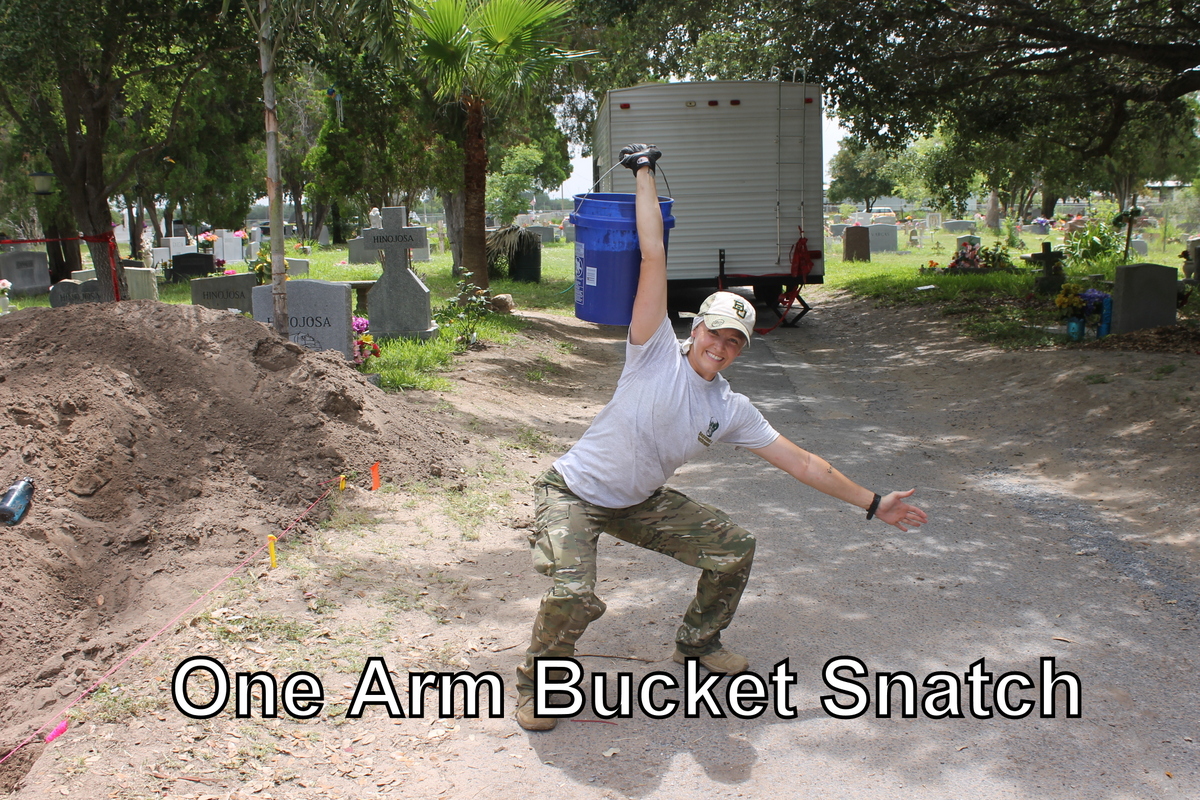
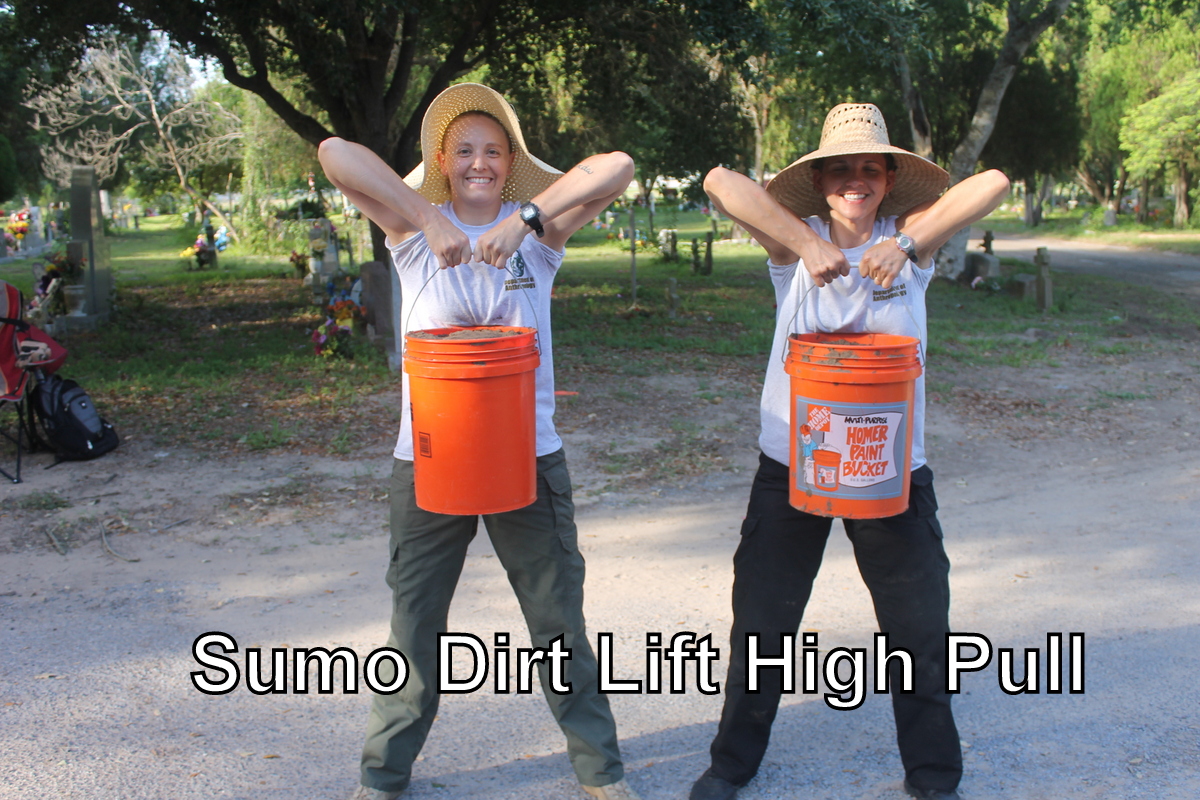
Team member squatting with a shovel over their shoulders and 5-gallon buckets on either side of the shovel Team member squatting holding a bucket in their hand, their arm fully extended up Team members standing with 5-gallon buckets lifted to their chestsStevie is just one of the many people from Baylor who inspire us and keep us going. You’ll never find her quitting because her constant drive to challenge herself and push herself to the limits drives her harder and harder with every day, all with a smile on her face. We’ve learned so much from these students, and it’s students like Stevie that keep us trying to better ourselves so that we can do the best job we can. Moving 10,000lbs of dirt is child’s play with Stevie’s attitude.
Ryan

Day 7

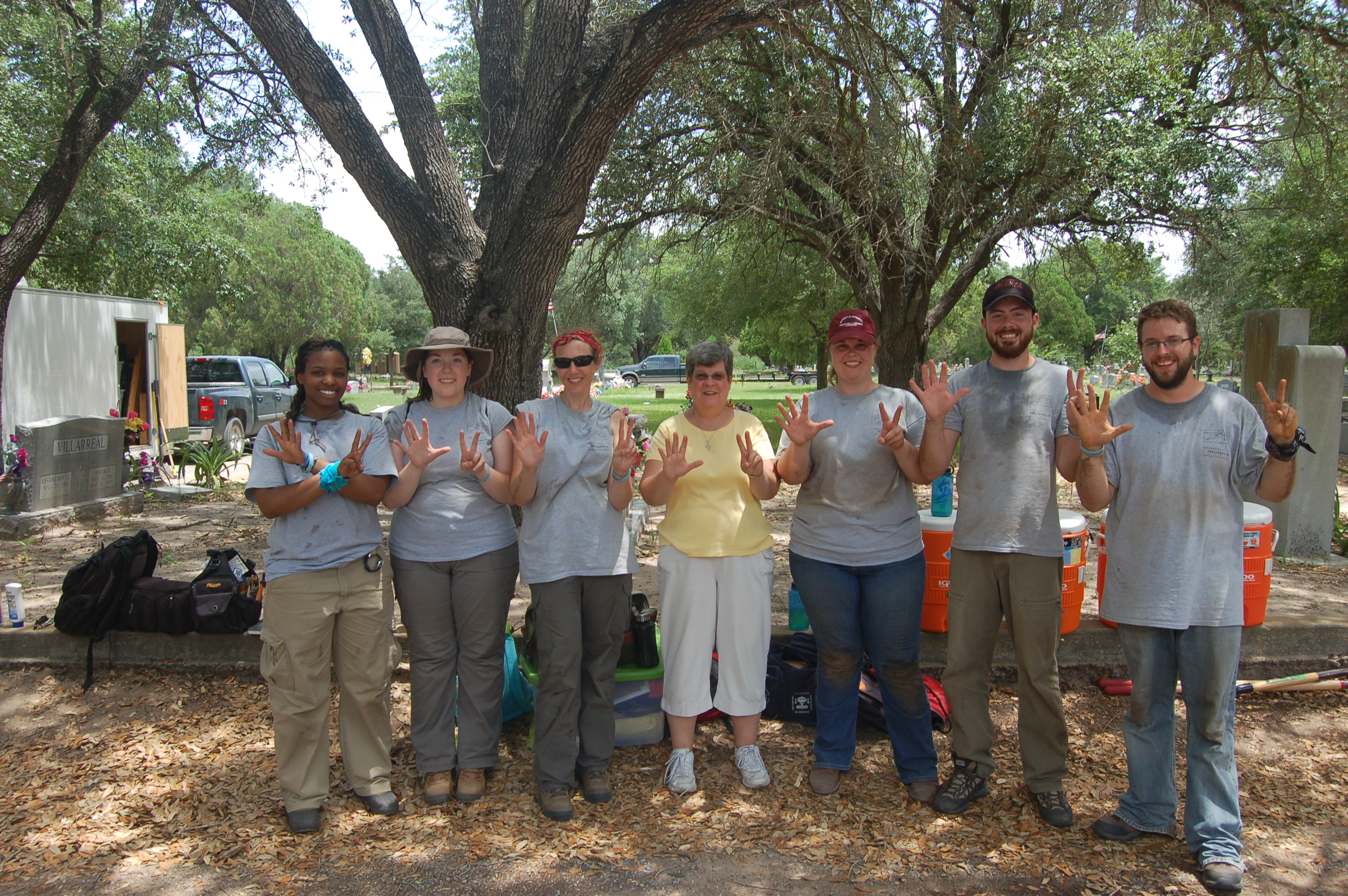
Group photo in dirty work clothes with Sister Pam, all holding 7 fingers up

Day 7 was a good day. We started with an amazing breakfast: kolaches! We were all bummed because we would miss the stop in West, TX to pick up kolaches this year.  But Ryan’s dad surprised us with a few dozen and we started off the day with savory sausage kolaches.  With full bellies we decided to head to work early. The sun gets dangerously hot around noon.  Since we spend so much time working with the Baylor groups each morning on technique and strategies, we don’t get to our own quadrant until mid-morning when it’s already getting pretty hot. We can’t stay late due to the heat, so we decided to work early today. We had loose dirt over a portion of our quadrant that we knew didn’t contain any remains. So we headed to the cemetery to shovel in the dark by flashlight. True UIndy dedication!

Team members digging with shovels in the darkOver the past few days we’ve had the pleasure of having Sister Pam at the site. Sister Pam is a Catholic nun who is currently living in Ohio. She feels the calling to move to Falfurrias and work with the human rights groups here.  She traveled to Brooks County to observe our work in the cemetery and look for a place to live once she moves here. Sister Pam has been a pillar of support for our group as we maneuver through this intense situation, and I’ve relied on a few Sister Pam hugs to make me feel better.  You can see Sister Pam with the team in our day 7 photo.

Team members digging with shovels within a burialWe had to move a lot of dirt today.  When we have a sense of urgency to get a task done we call it “Beast Mode” and we embraced the beast mode today! This occurs when we kick into high gear, we jump into certain roles and get them done with no questions.  Today the “Beast Mode” allowed us to get one half of our new quadrant completed.

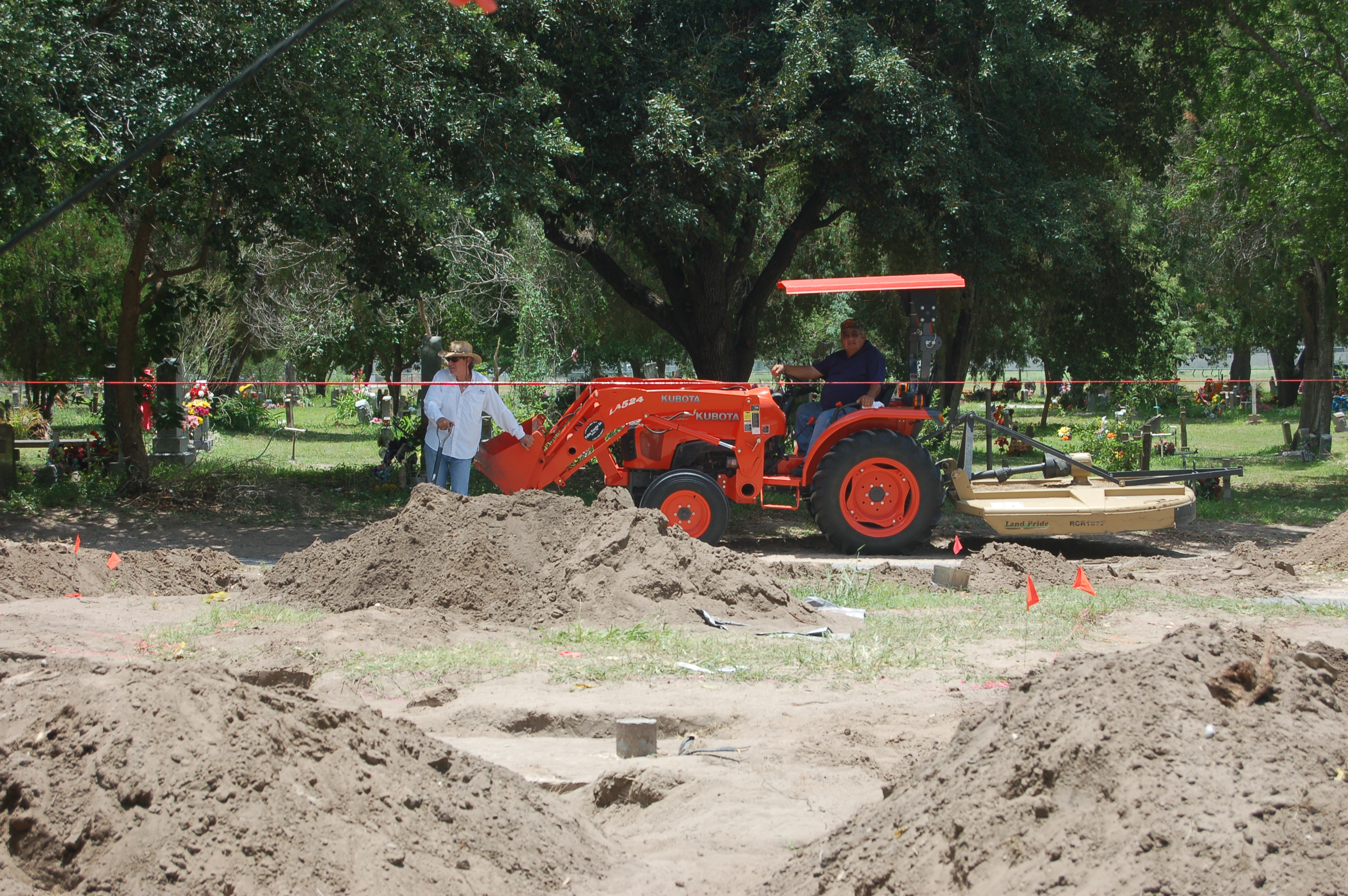
The Sheriff and Chief Benny were kind enough to bring in equipment and move some of our back fill dirt today. We have managed to pretty much surround our grid with large dirt piles, and only small pathways leading in and out.  The Sheriff moved our large dirt mountains to an area of the cemetery out of our way. This is really going to help us as we move into the final days of the excavation.

Large red backhoe in the distance behind multiple mounds of dirt~KEL

Broken

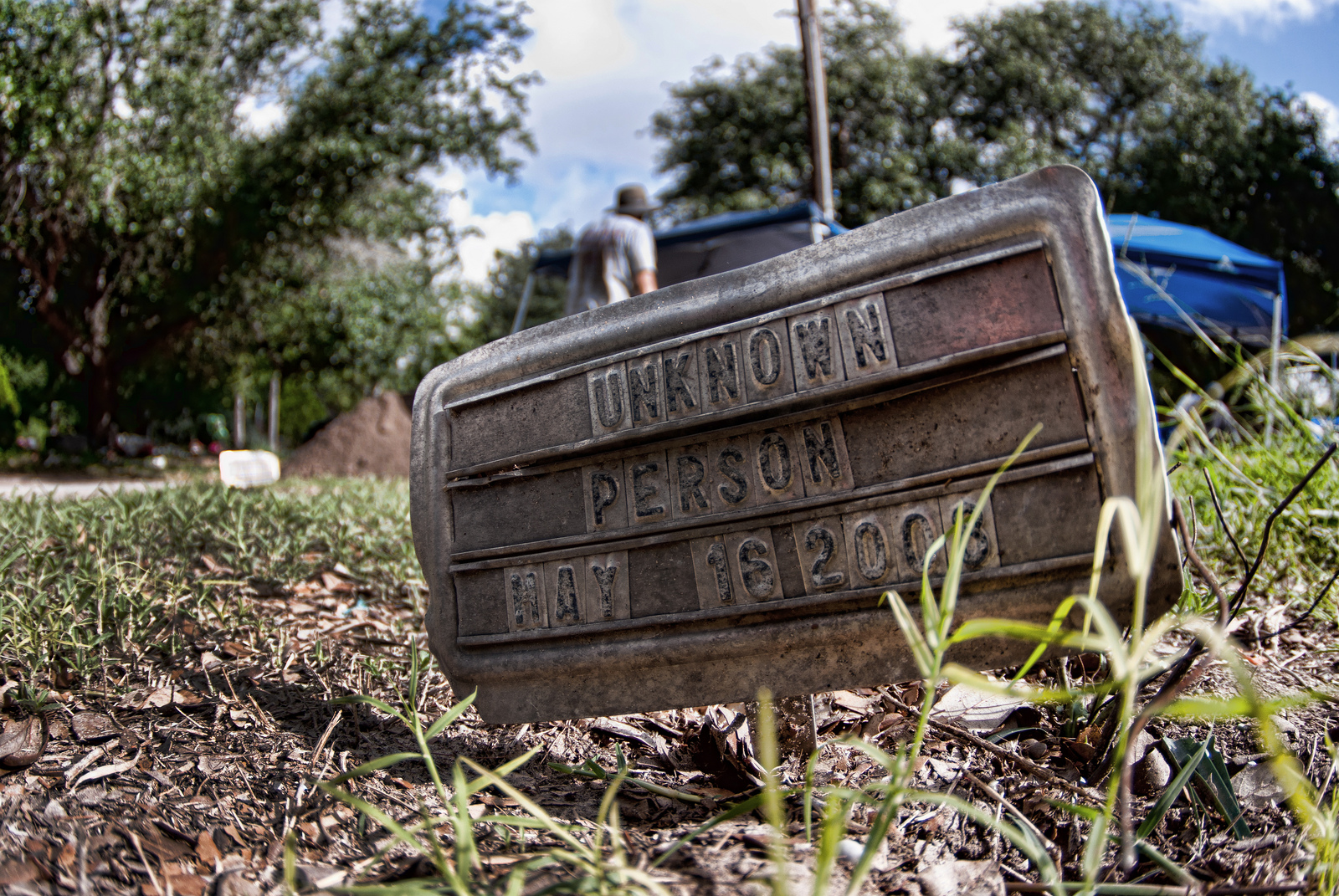
Metal burial Marker reading "Unknown Person May 16 2008"

University of Indianapolis photo by Guy Housewright

Yesterday I said I was broken. My Day 6 post from yesterday was superficial and to the point because I was afraid of completely breaking down.  The physical exhaustion is numbing. Every muscle in my body hurts. My hands throb from holding a shovel or a trowel all day. My legs are so swollen that I don’t have ankles and I am covered in bruises. There are times in the field that I just can’t physically stand up without help. But the emotional exhaustion is worse. I was once told that my passion would be my greatest success and my greatest downfall. My passion is what keeps me going and drives me to succeed. But it wasn’t really until yesterday that I understood the second part. My passion is what naively leads me to believe that everyone loves the way I do and feels the way I do about being fair and being humble. My passion is what drives me to build and mentor the people around me (students) because I am only a successful teacher if they succeed. My passion is what brings me here to try to give a voice to the invisible and the forgotten. But my passion is what makes my heart heavy when I hear the stories and witness the reality of what is happening here.

Previously Cheneta reflected on the sense of accomplishment migrants might feel once they get all the way to Brooks County. Yesterday we met a woman in the cemetery that was visiting her mother’s grave. She asked what we were doing and told us she worked on a ranch. She said she sees people coming through regularly and they are desperate for food and water.  She said she tells them the only thing she can do is call Border Patrol because there’s too many, she can’t help them all. She tells them they will die unless she gets the Border Patrol. Many say they are headed to Houston and want to know how far. She says six hours by car and watches their hearts break as they realize their dream of a better life is likely over. Many ask her to call Border Patrol because they know there is no hope. Others walk into the desert with the passion for a new life burning inside. Those are the ones whose bodies we find.

I am a forensic anthropologist and have worked many crime scenes. Some of them grisly homicides that show the dark side of what one person can do to another.  But here it’s different. These deaths aren’t the result of one bad person, they are the result of a dream. They are the result of being born on the wrong side of an imaginary line drawn in the dirt. They are preventable. At the ranch recovery I was in awe of how beautiful the landscape was. The blue sky and big white clouds. I thought about how nice it would be to lay out a blanket and look up at the big beautiful sky and relax. Then it hit me that this was the last thing that individual saw in their lifetime. To this person the blue sky represented oppressive heat and the green grass represented a thorny and dangerous path toward a new life. Something so beautiful to me is in fact killing people in staggering numbers.

Today I watched as the media that came to talk about the mistreatment of these individuals during life disrespect them during death. They interrupted our work, attempted to put tripods and equipment in the holes we were digging and in effect exploited and sensationalized them. I wondered how they could report on this story without really feeling it. That was almost my breaking point. I had to walk away. I ran into Chief Benny. He deals with this issue everyday. He told me it was OK to cry and that I needed to or I would break. He said there are days that he reaches his breaking point and that it’s natural with what we see here. But he told me I needed to pull it together and lead my team through the day because so many people were relying on me. I have had the utmost respect for Chief Benny since the day I met him. I didn’t think I could respect him any more, but today that level of respect went even higher. He is a smart man and I took his advice. I walked back to the grid and went back to work.

I went back and forth on whether I should post this. If it was too much about me or too heavy. But I decided to do it because I see other people at the cemetery breaking and I want them to know it’s OK. I want to tell them it’s OK to cry. Just like Chief Benny told me.

~KEL